Side Gallery
Side Gallery
WishlistFollow





Follow
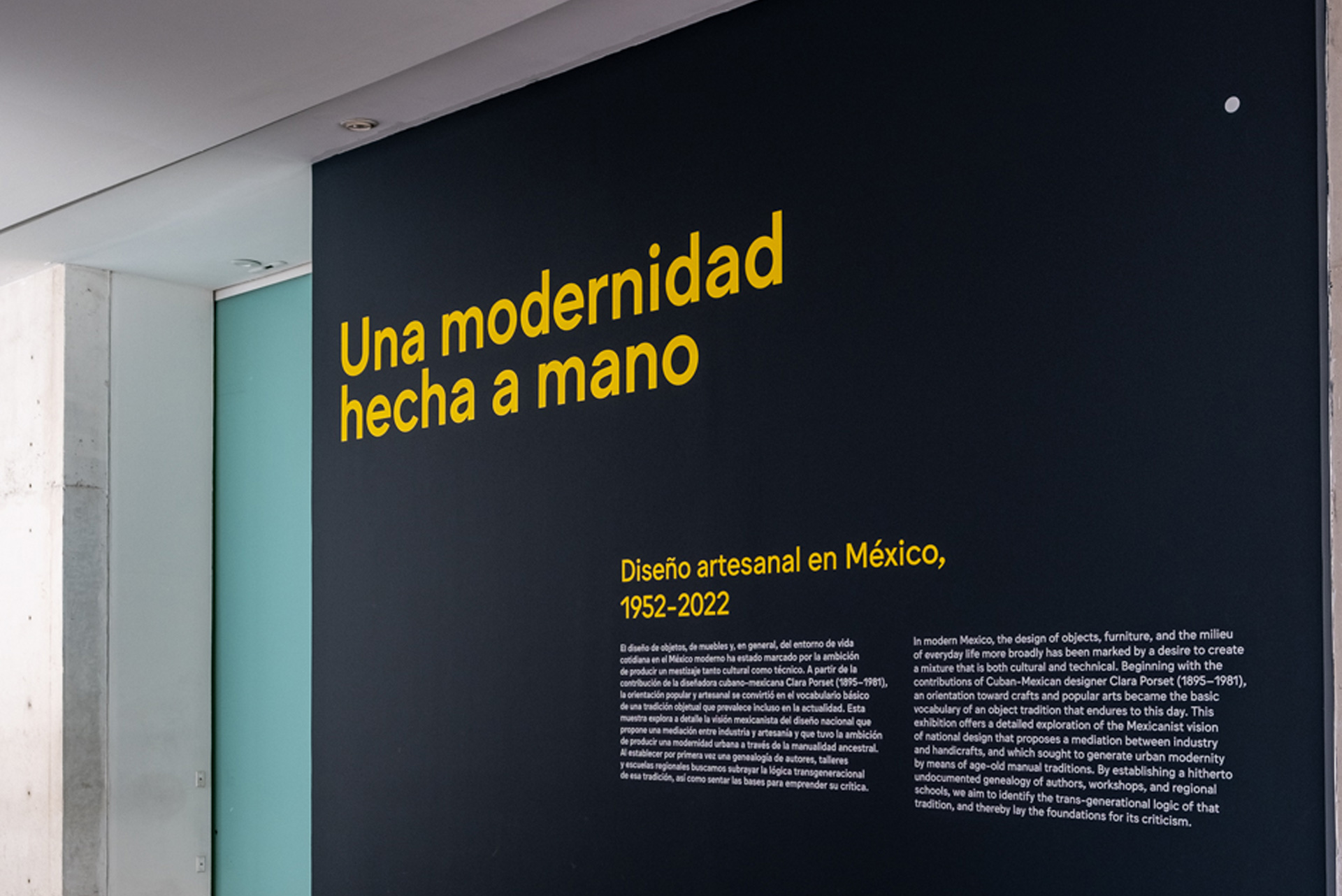
A HANDMADE MODERNISM: ARTISANAL DESIGN IN MEXICO, 1952–2022
MUAC — MUSEO UNIVERSITARIO ARTE CONTEMPORÁNEO, MEXICO CITY
2022
The exhibition A Handmade Modernism: Artisanal Design in Mexico, 1952–2022, presented at the MUAC — Museo Universitario Arte Contemporáneo in Mexico City, explored the development of modern Mexican design through the intersection of craft traditions, vernacular forms, and industrial production. Taking the work of Cuban-Mexican designer Clara Porset as its starting point, the exhibition revisited the historical dialogue between modernity and local craftsmanship that shaped Mexican design culture throughout the twentieth century.
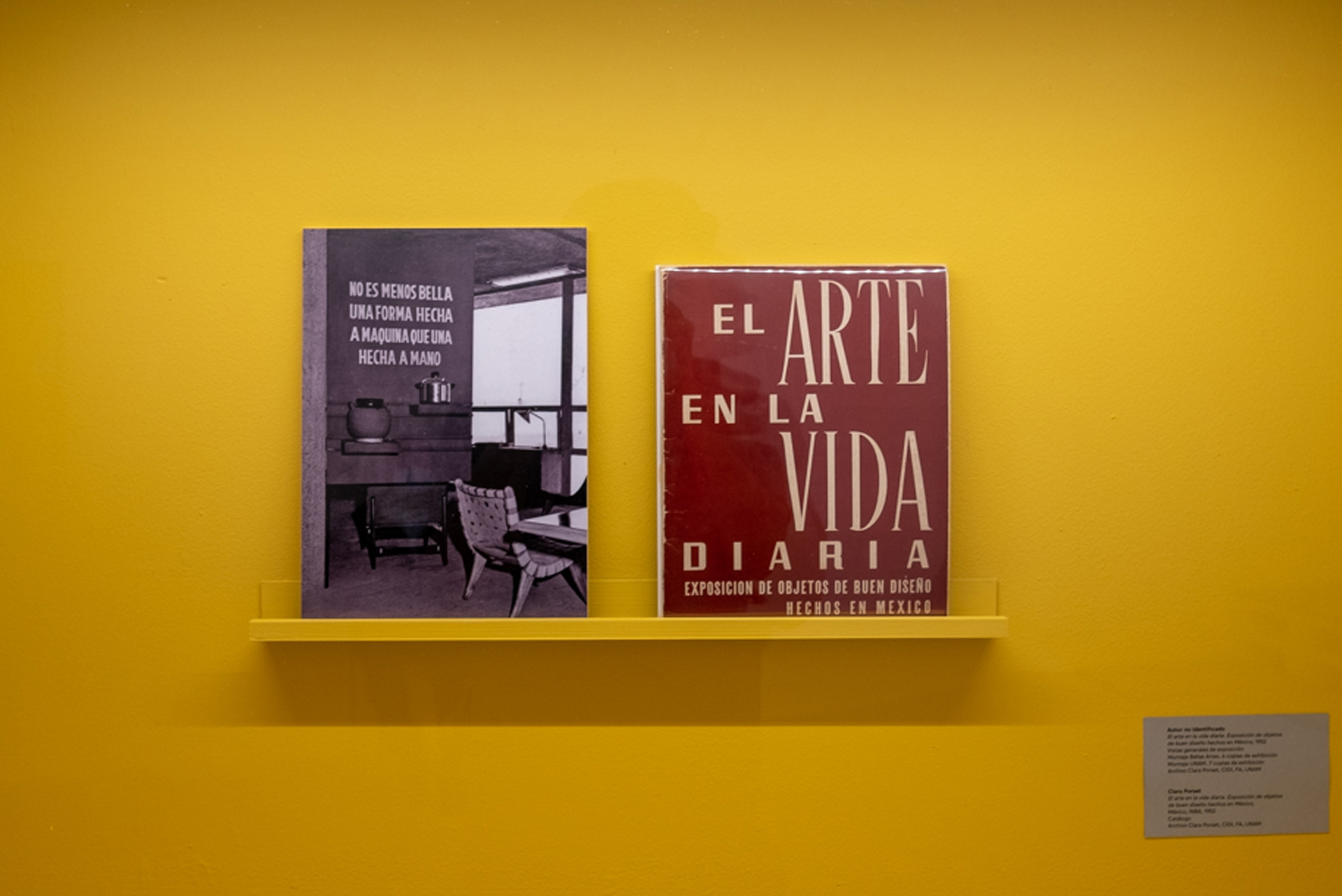
The exhibition drew inspiration from Art in Everyday Life, the landmark exhibition organized by Clara Porset in 1952, widely considered the first major design exhibition in Mexico. That original presentation sought to define what Porset described as “good design” produced in the country, bringing together furniture and objects that combined modernist principles with regional materials, artisanal techniques, and popular traditions.
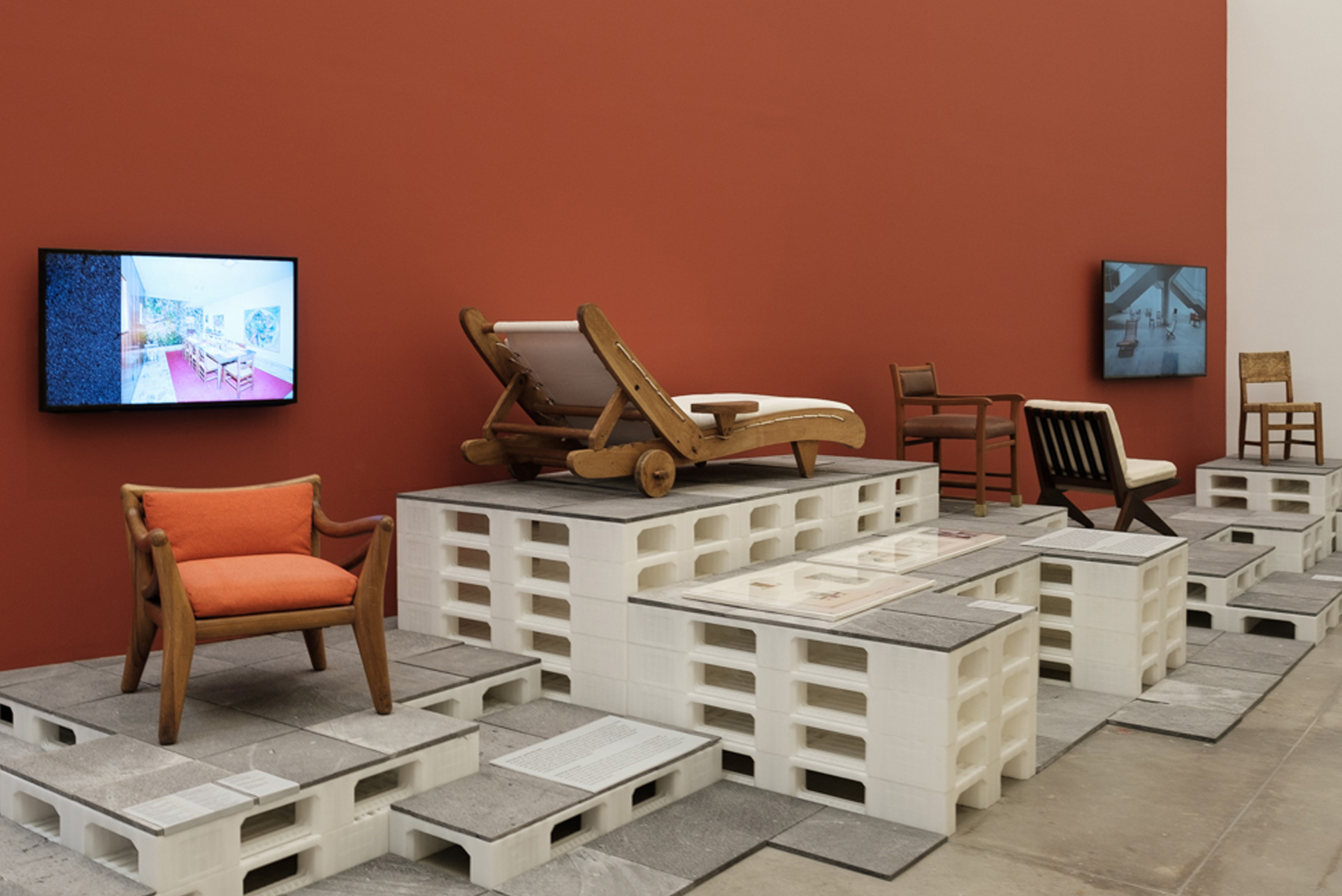
Among the historic works revisited in the exhibition was Michael van Beuren’s celebrated Alacran chair, originally included in Porset’s 1952 exhibition and previously awarded in the Museum of Modern Art’s Organic Design in Home Furnishings competition in 1941. The exhibition positioned this piece alongside works by later generations of Mexican architects and designers, tracing how these ideas continued to evolve across decades.
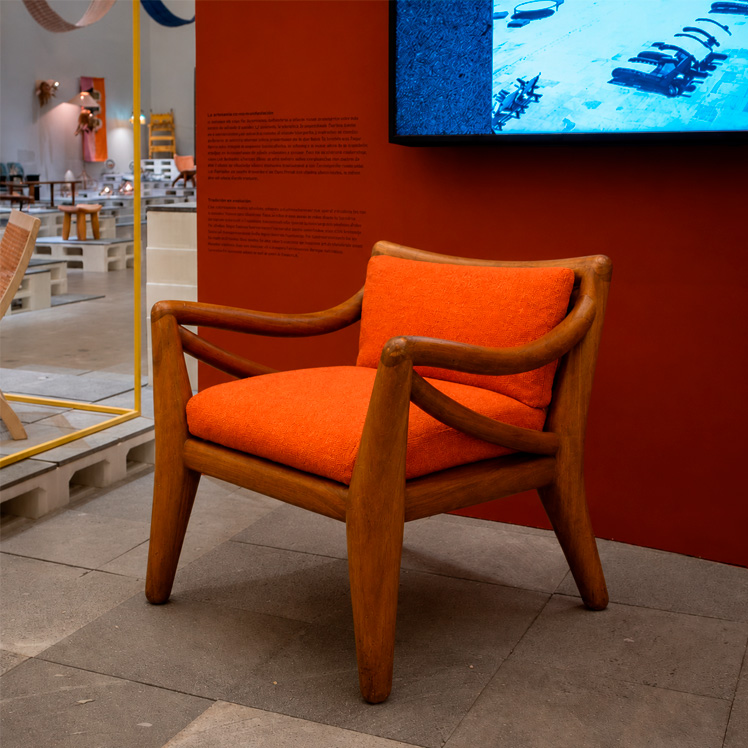
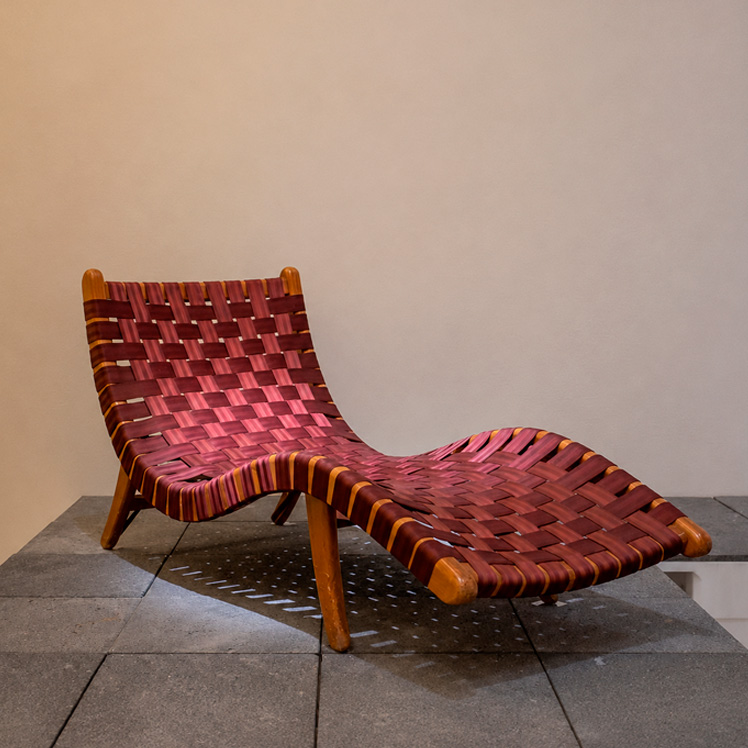
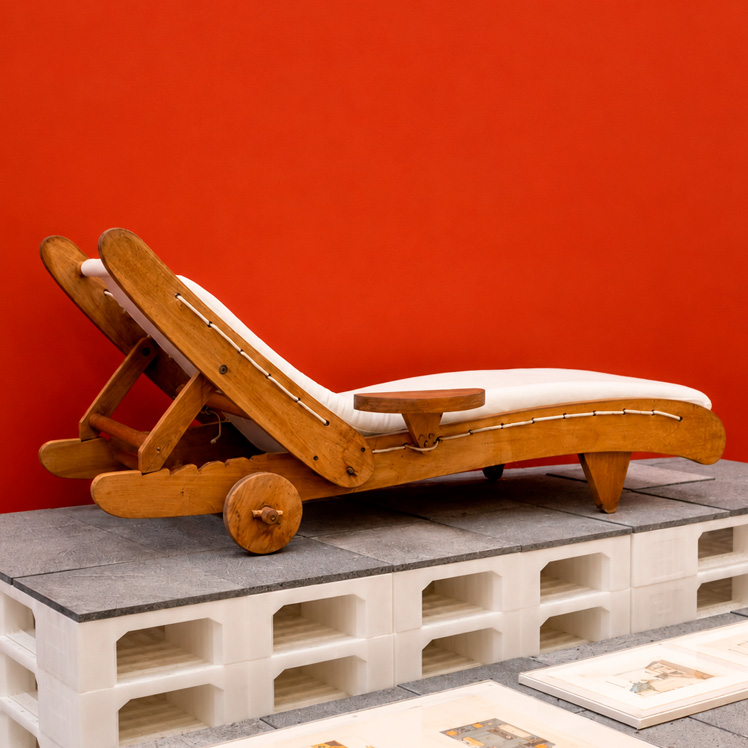
Curated by Ana Elena Mallet, the exhibition proposed that modern Mexican design emerged through the synthesis of industrial aspirations and vernacular culture. As Mallet explained, the incorporation of modernity into everyday life in Mexico required the reinterpretation of local traditions and craft practices rather than their disappearance. This perspective formed the conceptual foundation of the exhibition.
Divided into four thematic sections, the exhibition culminated in New Mexican Typologies, a section examining how traditional Mexican seating prototypes were transformed by modern architects and designers. Here, works by Antonio Attolini Lack and Ricardo Legorreta reinterpreted the traditional silla de palo, translating vernacular forms into contemporary architectural furniture.
A particularly significant inclusion was Ricardo Legorreta’s original Vallarta Chair, presented as part of the exhibition’s exploration of modern Mexican seating design. The piece exemplified the balance between simplicity, craftsmanship, and geometric clarity that became central to Legorreta’s work. Alongside Attolini’s furniture, the exhibition revealed how multiple generations of designers reimagined traditional Mexican domestic objects through the language of modernism.
Through furniture, archival material, and historical references, A Handmade Modernism ultimately demonstrated that Mexican modern design cannot be understood purely through industrial or international modernist frameworks. Instead, it emerges from a continuous negotiation between local identity, artisanal production, and modern architectural thinking.

Clara Porset born in Cuba (May 25, 1895 – May 17, 1981), was a furniture and interior designer who lived and worked in Mexico for the best part of her working life, and it is there she is considered a pioneer in furniture design.
Born into a wealthy Cuban family in 1895, Porset had the opportunity to travel and, as a result, collected a wide range of artistic and political influences. She studied in New York from 1911 to 1914 and attended technical courses in architecture and design in her home country of Cuba. In 1925, Porset returned to New York City and continued her studies in art, architecture, and design at Columbia University's School of Fine Arts and the New York School of Interior Design.
In the latter part of the 1920s, Porset traveled to Europe where she met Bauhaus teachers Walter Gropius and Hans Emil "Hannes" Meyer, with whom she remained in contact for many years. From 1928 to 1931, she studied architecture and furniture design at the designer and architect Henri Rapin's Paris studio and attended classes at the École des Beaux-Arts, the Sorbonne, and the Louvre.
She returned to Cuba in 1932, where she served briefly as artistic director of the Escuela Técnica para Mujeres (Technical School for Women), but due to her outspoken political views, she was forced to leave Cuba in 1935. She then moved to Mexico, where she met and married the painter Xavier Guerrero. Through their partnership, she was introduced to the folk arts and the prominent artists of the country, who in turn influenced her career. The couple collaborated on a proposal for the Museum of Modern Art's (New York) 1940 competition, Organic Design in Home Furnishings. The pair were the first time Latin American designers included in the museum's call for proposals.
In the 1950s, Ruiz Galindo Industries (IRGSA), regarded as the best furniture manufacturer in Mexico, considered Porset, the finest designer. They hired her to design and develop furnishings for architectural projects they had going on in Mexico. She signed a contract to develop two collections: The E-series (quality wooden office furniture) and H-series (metal office furniture). These lines became popular in Mexico due to their: quality, high design, durability, and relatively low cost.
In 1952, Porset curated the exhibition Arte en la vida diaria: exposición de objetos de buen diseño hechos en México (Art in Daily Life: An Exhibition of Well-Designed Objects Made in Mexico) at the Instituto Nacional de Bellas Artes (Mexico City).
Porset returned to post-revolutionary Cuba in 1959. President Fidel Castro commissioned her to design the furniture for the school of Camilo Cienfuegos, an institution symbolic of the new society envisioned by revolutionaries. Before returning to Mexico in 1963, she also created furniture for several other universities after her plans to establish a new design school in Cuba were not comprehended.
In 1969, designer Horacio Durán founded an industrial design program at the Escuela Nacional de Arquitectura (now part of Universidad Nacional Autónoma de México, UNAM) and invited Porset to give a seminar. She continued teaching for the remainder of her life.
The Instituto Nacional de Bellas Artes recognised Porset as a pioneer of modern Mexican design by awarding her a Gold Medal in 1971. The Clara Porset Design Prize has been awarded to Mexican design students since 1993.
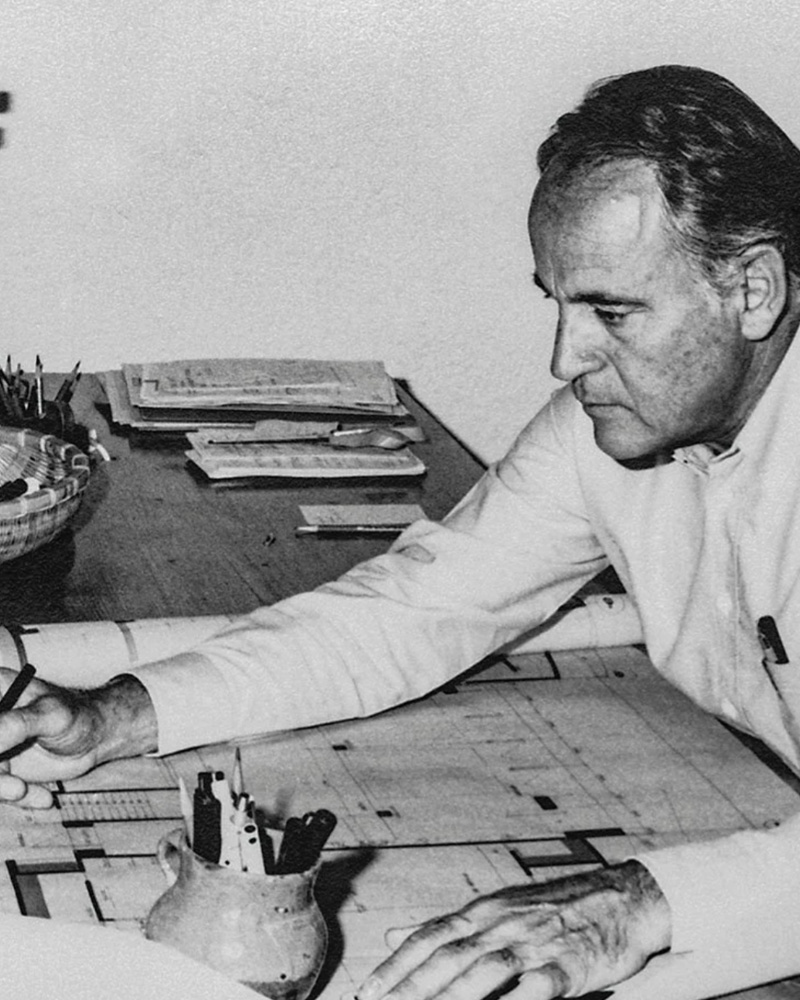
Antonio Attolini Lack was one of the most singular and refined figures in twentieth-century Mexican architecture. Born in Ciudad Juárez, Chihuahua, on April 24, 1931, and educated in Mexico City, Attolini developed a body of work distinguished by its emotional use of light, austere geometry, artisanal craftsmanship, and profound understanding of space as a human and spiritual experience. Although he is primarily remembered as an architect, his legacy also extends deeply into furniture design, lighting, decorative arts, textiles, and handcrafted objects, fields in which he pursued the idea of a “total work of art,” where architecture and every object within it formed part of one coherent vision.
Attolini studied architecture at the Escuela Nacional de Arquitectura of the Universidad Nacional Autónoma de México (UNAM), graduating in 1955 with honors after presenting his thesis Vertical Cemetery in Mexico City. During his formative years he studied under important masters such as José Villagrán García, Vladimir Kaspé, Francisco J. Serrano, and Carlos Lazo. He also worked in the studios of Manuel Parra and Francisco Artigas, whose modernist sensibilities strongly influenced his early development. Yet Attolini gradually distanced himself from orthodox International Style modernism and evolved toward a deeply personal language rooted in Mexican materials, vernacular traditions, monastic spatiality, and the poetic use of natural light.
From the beginning of his career, Attolini demonstrated extraordinary attention to detail. Unlike many architects who limited themselves to designing buildings, he believed architecture should encompass every element of lived experience. Doors, hinges, lamps, furniture, rugs, handrails, fountains, hardware, and even ceremonial objects became extensions of architectural thought. This holistic philosophy would become one of the defining characteristics of his work and places him within the lineage of architects such as Frank Lloyd Wright, Luis Barragán, and Carlo Scarpa, who conceived architecture as an inseparable union of space, object, material, and atmosphere.
His architecture evolved through several important phases. Early projects reflected modernist influences and the legacy of Mexican functionalism, but by the mid-1960s his work had developed a more introspective and monumental character. One of the decisive moments in his career was the completion of the Church of Santa Cruz del Pedregal in Mexico City, a project originally initiated by his teacher José Villagrán García. In this building, Attolini articulated many of the ideas that would define his mature language: controlled light entering from above, dramatic shadow, geometric purity, thick textured walls, silence, and a spiritual sense of enclosure. The church also demonstrated his commitment to total design because he conceived not only the architecture itself, but also the lamps, furnishings, liturgical objects, carpets, and interior details.
Among the residential projects that best synthesize Attolini’s mature philosophy is the celebrated Casa Atrio, considered one of the masterpieces of late twentieth-century Mexican residential architecture. Conceived around an interior courtyard that functioned as the emotional and spatial center of the house, Casa Atrio exemplified Attolini’s extraordinary ability to sculpt light, shadow, silence, and movement through architecture. Thick walls, hidden openings, textured materials, patios, and carefully choreographed transitions between interior and exterior created an atmosphere of contemplation and intimacy that distinguished the project from the more extroverted tendencies of international modernism. The residence also embodied his philosophy of total design: Attolini conceived not only the architectural structure, but also many of the furnishings, lighting elements, and decorative details that inhabited the space. Casa Atrio became an ideal expression of his belief that architecture should elevate everyday life through serenity, proportion, craftsmanship, and emotional depth.
Throughout his career, Attolini rejected superficial formalism and fashionable trends. He insisted that architecture must improve human life and create emotionally meaningful environments. His buildings avoided spectacle; instead, they cultivated intimacy, serenity, contemplation, and tactile richness. Water, patios, skylights, textured masonry, white walls, and handcrafted materials became recurring elements in his projects. Critics often compared his work to that of Barragán and Ricardo Legorreta, but Attolini’s architecture possessed a distinct austerity and structural honesty that made it uniquely his own. His interiors were frequently more minimal and monastic, stripped of decorative excess in favor of spatial intensity and carefully orchestrated light.
An equally important dimension of Attolini’s legacy is his work as a furniture designer. In recent years, scholars and collectors have increasingly recognized that his furniture was not secondary to his architecture but rather an essential continuation of it. His chairs, benches, tables, lamps, and objects reveal the same concern for proportion, material integrity, and emotional atmosphere found in his buildings. Many of his designs combined references to Bauhaus rationalism with Mexican artisanal traditions, producing works that were simultaneously brutalist, regionalist, minimalist, and deeply tactile. Pieces such as the famous “Attolini Chair,” originally designed for his own home in 1955, demonstrate this synthesis. Constructed in pinewood and leather, the chair combines monumental simplicity with artisanal warmth and structural clarity.
Attolini often designed furniture specifically for individual architectural commissions rather than for industrial production. As a result, many of his pieces existed only inside private residences, churches, or custom interiors for decades before being rediscovered by contemporary galleries and historians. Exhibitions organized after his death revealed the remarkable breadth of his design practice, including chairs, tables, rugs, textiles, jewelry, hinges, door handles, and lighting fixtures. Curators noted that his furniture offered an abstracted version of his architectural thinking: massive yet restrained, rustic yet refined, modern yet profoundly Mexican.
Particularly significant were his ceramic lamps, many of which explored sculptural forms inspired by vernacular pottery, pre-Hispanic volumetry, and the material honesty of handcrafted clay. These works occupied a space between sculpture and functional design. Their heavy geometric bodies, textured surfaces, and diffused light transformed illumination into an architectural experience. Rather than treating lamps as decorative accessories, Attolini conceived them as luminous volumes capable of shaping mood, shadow, and spatial rhythm.
Among the most admired examples are the ceramic lamps developed in collaboration with Hugo Velázquez. These pieces have become increasingly valued within Mexican collectible design circles because they represent Attolini’s commitment to artisanal production and interdisciplinary collaboration. Working with Velázquez, Attolini explored high-temperature ceramics and handcrafted glazing techniques, producing lamps that combined brutalist solidity with an almost meditative softness of light. The pieces reflected his fascination with the intersection of craft and architecture: they were objects meant not merely to illuminate rooms but to construct atmosphere and emotional presence.
The ceramic lamps with Hugo Velázquez also reveal Attolini’s broader philosophy regarding materials. He believed that architecture and design should preserve traces of human labor and regional identity. For this reason, he preferred handcrafted surfaces, imperfect textures, stone, wood, brick, leather, and ceramic materials that carried visible evidence of making. In the lamps, the tactile quality of clay became inseparable from the quality of light itself. The resulting objects embodied what many critics describe as Attolini’s “Mexican modernity”: modern in abstraction and geometry, yet deeply rooted in local craftsmanship and cultural memory.
His studio and workshop in San Nicolás Totolapan, built in 1969, became an important laboratory for this experimental approach to design. There he developed furniture, ornamental objects, rugs, and lighting pieces alongside architectural projects, often collaborating directly with artisans and craftspeople. The workshop environment reinforced his belief that architecture should remain tied to making, construction, and material experimentation rather than becoming a purely theoretical discipline.
In addition to his professional practice, Attolini was a highly influential educator. Beginning in 1955, he taught at UNAM and later at Universidad La Salle and Universidad Anáhuac del Sur, where he shaped generations of Mexican architects. His teaching philosophy centered on learning through practice and cultivating passion for the craft of architecture. Former students frequently recalled his insistence that architecture required discipline, honesty, and emotional conviction.
Throughout his lifetime, Attolini received numerous distinctions, including the Gold Medal at the Second Mexican Architecture Biennale in 1992 and the Mexican National Prize of Architecture in 2002.
Antonio Attolini Lack died in Mexico City on February 28, 2012. Yet his influence has continued to grow in the years following his death, especially as historians and collectors have rediscovered the richness of his furniture and object design. Today he is increasingly regarded not simply as an architect, but as a complete designer whose work dissolved the boundaries between architecture, furniture, sculpture, craftsmanship, and light.
His buildings remain extraordinary spatial experiences, but his furniture and ceramic lamps reveal another dimension of his genius: an ability to transform everyday objects into vessels of atmosphere, silence, and human warmth. In both architecture and design, Attolini pursued the same goal throughout his life — to create spaces and objects capable of elevating daily existence through beauty, proportion, light, and emotional depth.

Ricardo Legorreta (May 7, Mexico City 1931 – December 30, 2011 Mexico City) graduated in 1952 from the UNAM National School of Architecture, the same city in which he was born and died. His professional work began in 1948 in the office of the architect José Villagrán. He collaborated as a draftsman and eventually became a Project Manager, becoming a Partner in 1955. From 1961 to 1963, he devoted himself to free professional activity, and in 1964, he founded Legorreta Arquitectos together with Noé Castro and Carlos Vargas Senior. Ricardo Legorreta became renowned for his creative interpretation of original Mexican architecture: vibrant colors, geometric shapes, fountains, light-filled spaces, and intimate patios are hallmarks of his style.
His career spanned over more than fifty years. He designed more than 100 projects, from museums and hotels to offices and factory buildings, university campuses, urban spaces, and private residences in Mexico and abroad.
His work was inspired not only by deep-rooted Mexican culture but also by the colonial period. Islamic architecture features in his work, as seen by the incorporation of courtyards in many of his projects. The monumental architecture of Louis Kahn, was also a great inspiration to the innovative Mexican designer. One of his first buildings, the Camino Real Hotel in Mexico City (1968), was one of his favorites; he said it helped him discover his Mexican roots. He had been very ill, and during his recovery, he created a building that is now one of his most famous works. Legorreta continued his work with the design of the Casa Montalbán in Los Angeles (1985), the Museum of Contemporary Art in Monterrey (1991), the Metropolitan Cathedral of Managua (1993), Pershing Square in Los Angeles (1993), the Central Library from San Antonio in Texas (1995), the Technological Museum of Innovation in San José, California (1998), the Visual Arts Center of the University of Santa Fe, New Mexico (1999), the Juárez Complex in Mexico City ( 2003-2005), Carnegie Mellon University of Business and Computer Science in Qatar (2009), Georgetown University School of Diplomacy in Doha, Qatar (2011), and many other public and private urban buildings and spaces.
Legorreta was an artist and designer who’s worked was always aligned to the environment. He never forgot to design buildings for the people who used them. In 1999, he received the Gold Medal from the International Union of Architects (UIA). In 2000, he became the first Latin American to receive the prestigious Gold Medal from the American Institute of Architects (AIA) for his enduring influence on the history and practice of architecture. He is the only Mexican who has received the prestigious Praemium Imperiale awarded by the Japan Art Association (2011).

Michael van Beuren was born in New York in March 1911. He arrived in Mexico in 1937 looking for opportunities, keen to work as an untitled architect. First, he spent a season in Acapulco, took over the construction and interior design of the Flamingo's Hotel bungalows, and headed to Mexico City. His first jobs in the capital were a series of houses that would carry numbers 1, 2, and 3 on Liverpool Street.
Once settled in the country, Van Beuren realized that it would be difficult to practice architecture without going under the title of an architect. Still, with his skillset and the knowledge he acquired in the Bauhaus, he ventured into the furniture industry. He offered Mexican society a new type of design, contemporary in nature and adapting to the modern architecture that was starting to dominate the design society of Latin America.
In the late 1930s, he began to design furniture with his colleague of the Bauhaus, the German designer Klaus Grabe. They formed a small company that operated under the name of Grabe & Van Beuren.
Following the formation of his first company, Michael van Beuren created Domus, a second furniture firm and probably his best known. The brand opened its first store at number 40 on Hamburg Street in the 1940s; this company served as an umbrella for various brands that flooded the Mexican market with exciting designs and a much more international and modern approach, leaving behind the "Mexican style" created in the search for a national identity.
In 1941, Van Beuren participated in the Organic Design for Home Furnishing contest, organized by the Museum of Modern Art in New York. This contest, for the first time, included Latin American designers. This contest was where the pair formed by the marriage of Clara Porset and Xavier Guerrero and the trio formed by Michael van Beuren, Klaus Grabe, and Morley Webb won an award. After this, the chaise lounge that Michael had named Alacrán went for sale in Bloomingdale's for 69.98 dollars.
In 1950 Fredderick T. van Beuren, Michael's brother, was appointed to overlook the production side of the workshop to make it more efficient and increase the scale to actual factory size. The company then became Van Beuren S.A of C.V. Within five years, Van Beuren, S.A of C.V was already able to produce in series, which allowed them to make several lines simultaneously and preserve quality.
In addition to Domus, Van Beuren produced other successful lines, which were developed at a time when Mexico was looking for a more international aesthetic. For example, the Calpini brand was reported to have a strong Bauhaus influence, according to Espacios magazine in 1951, and Descapóls in 1961. It was one of the more famous lines of the period and had significant sales success in The Port of Liverpool.
Michael van Beuren continued designing and retired to live in Cuernavaca, where he died in 2004. Today his furniture represents one of the most fruitful moments of furniture production in Mexico and has become an essential part of Mexican twentieth-century design history.