Dining Table
Manufactured by Tendo Mokko
Japan, 1950s
Teak wood
Measurements
80 × 80 × 72h cm
31,5 × 31,5 × 28h in
Details
Manufacturer's Label
Provenance
Private collection, Japan
Literature
Tendo Mokko, Book Chair 70th Anniversary, 2024, manufacturer's historical documentation of the matching table and its original teak specification.
About
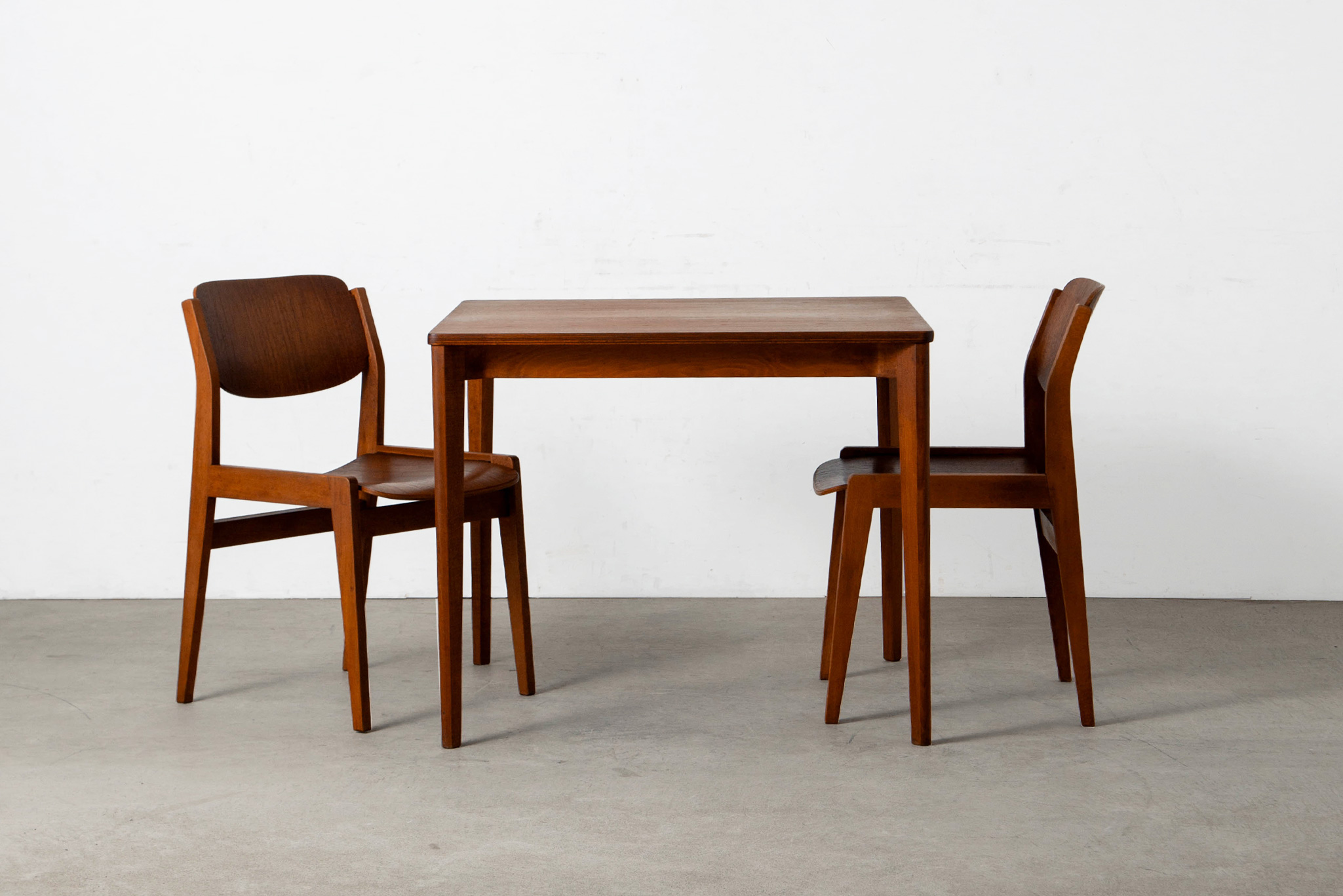
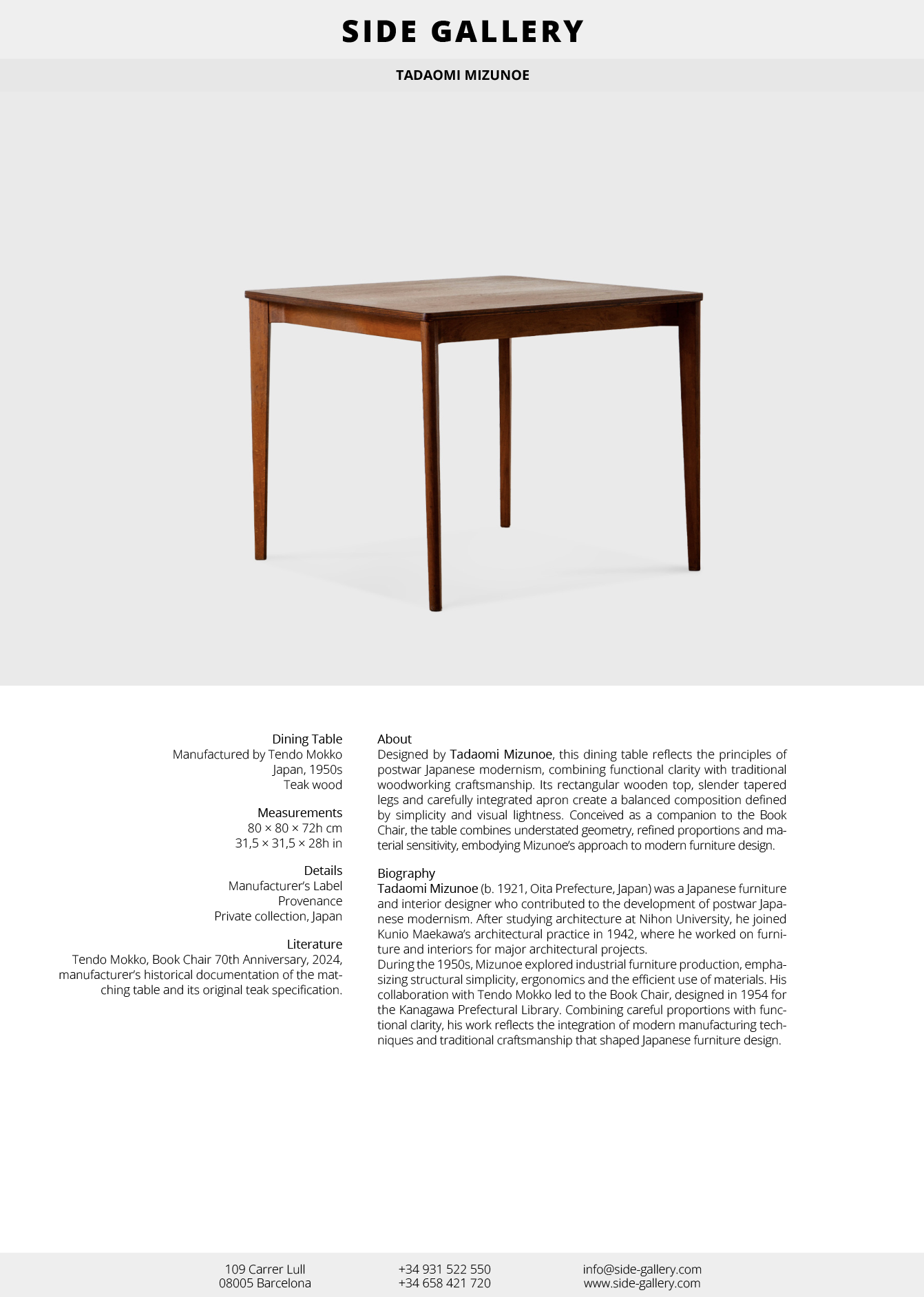
The Dining Table, designed by Tadaomi Mizunoe, reflects the development of Japanese modern furniture during the postwar period, when architects and designers increasingly explored the relationship between domestic interiors, industrial production, and traditional woodworking techniques. Conceived as a companion to the celebrated Book Chair, the table embodies a restrained approach to furniture design in which structural clarity, proportion, and functionality become the principal elements of expression.
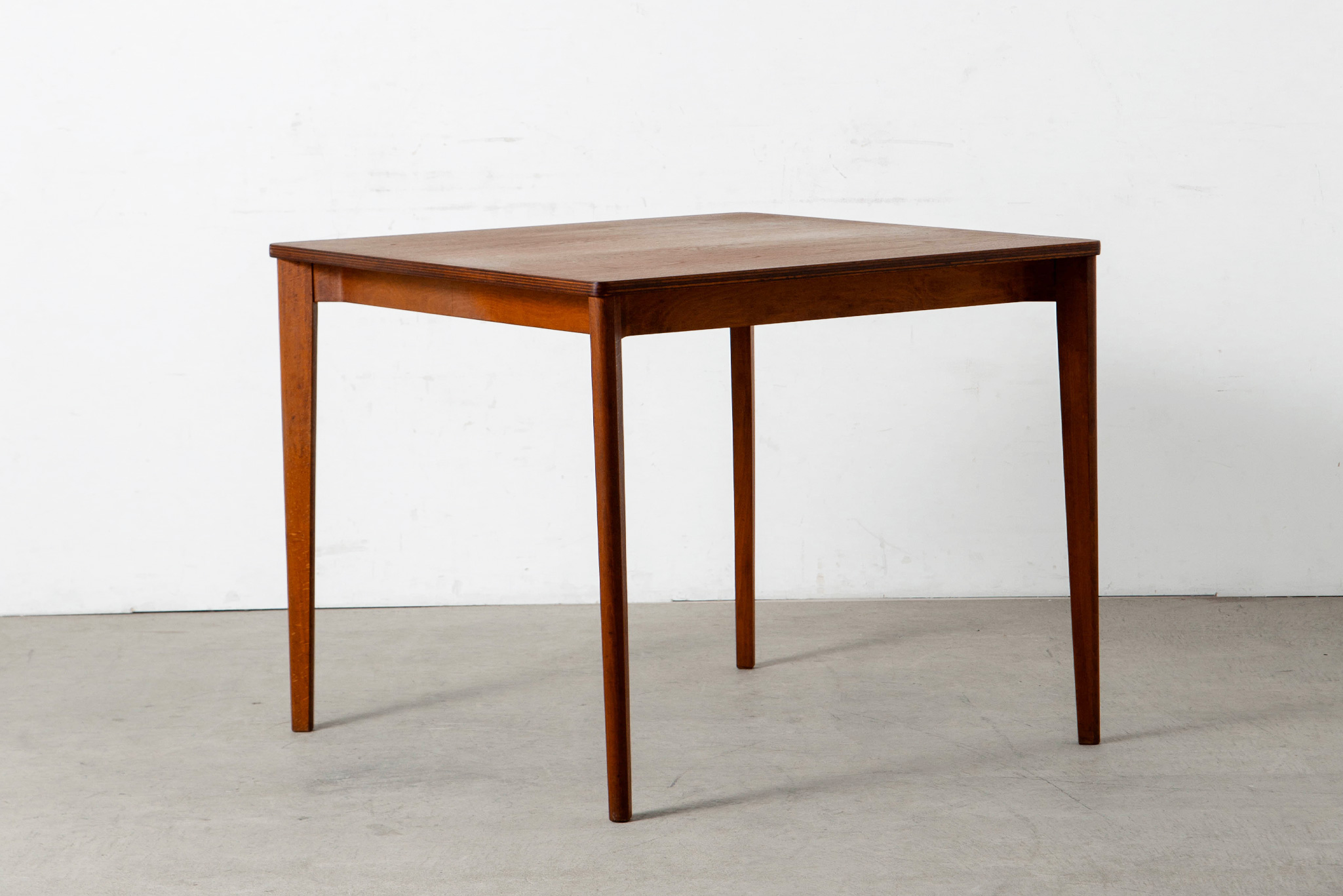
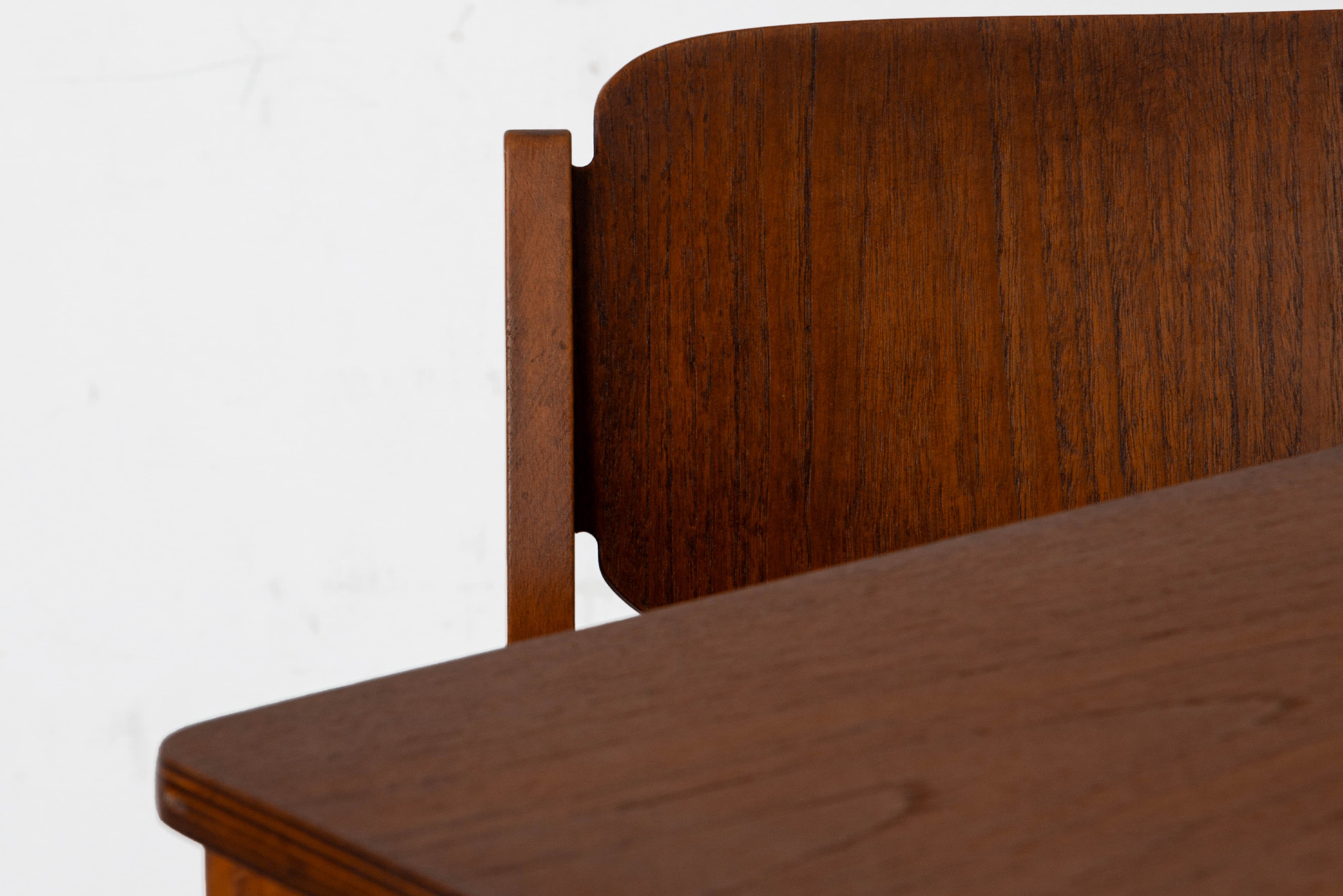
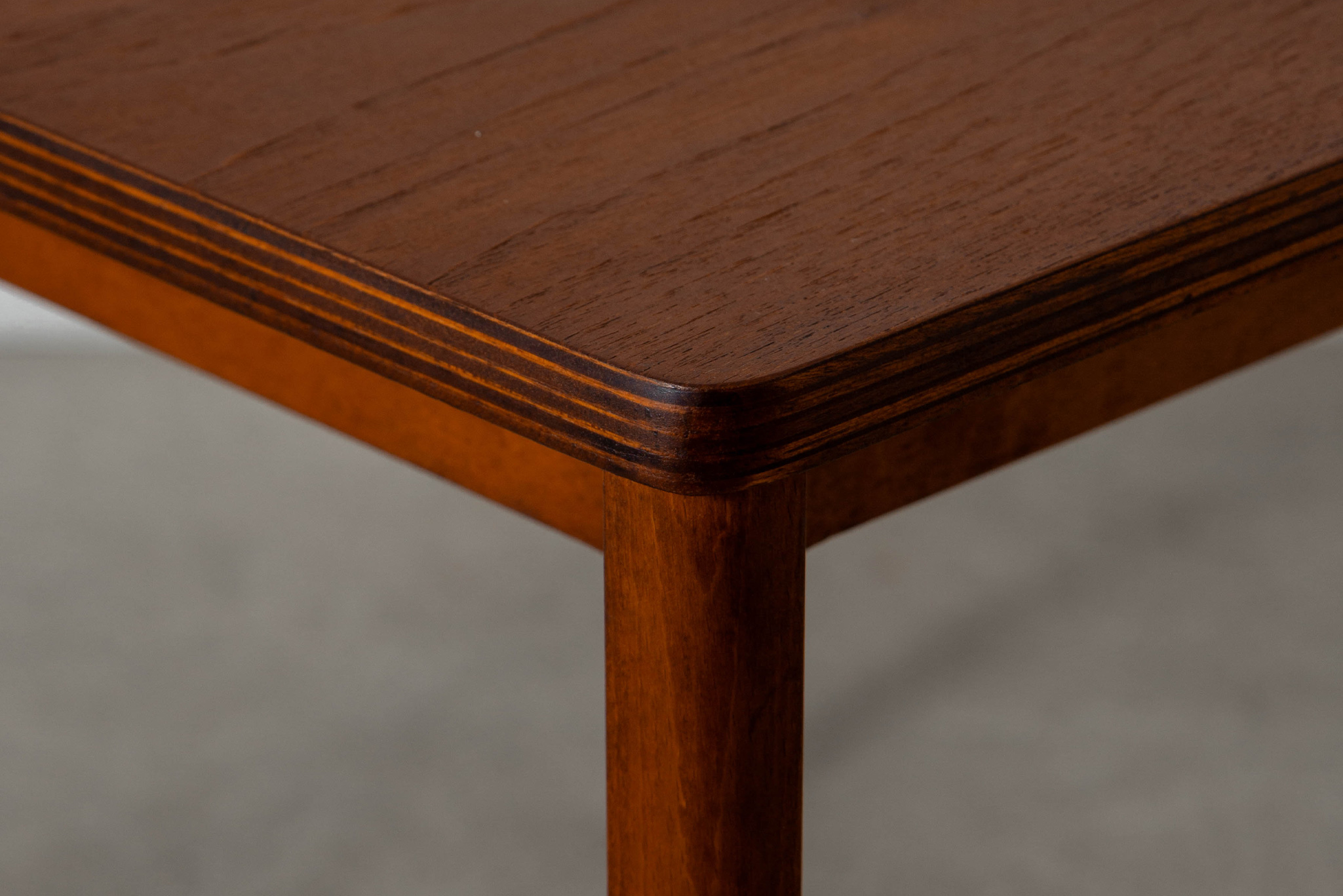
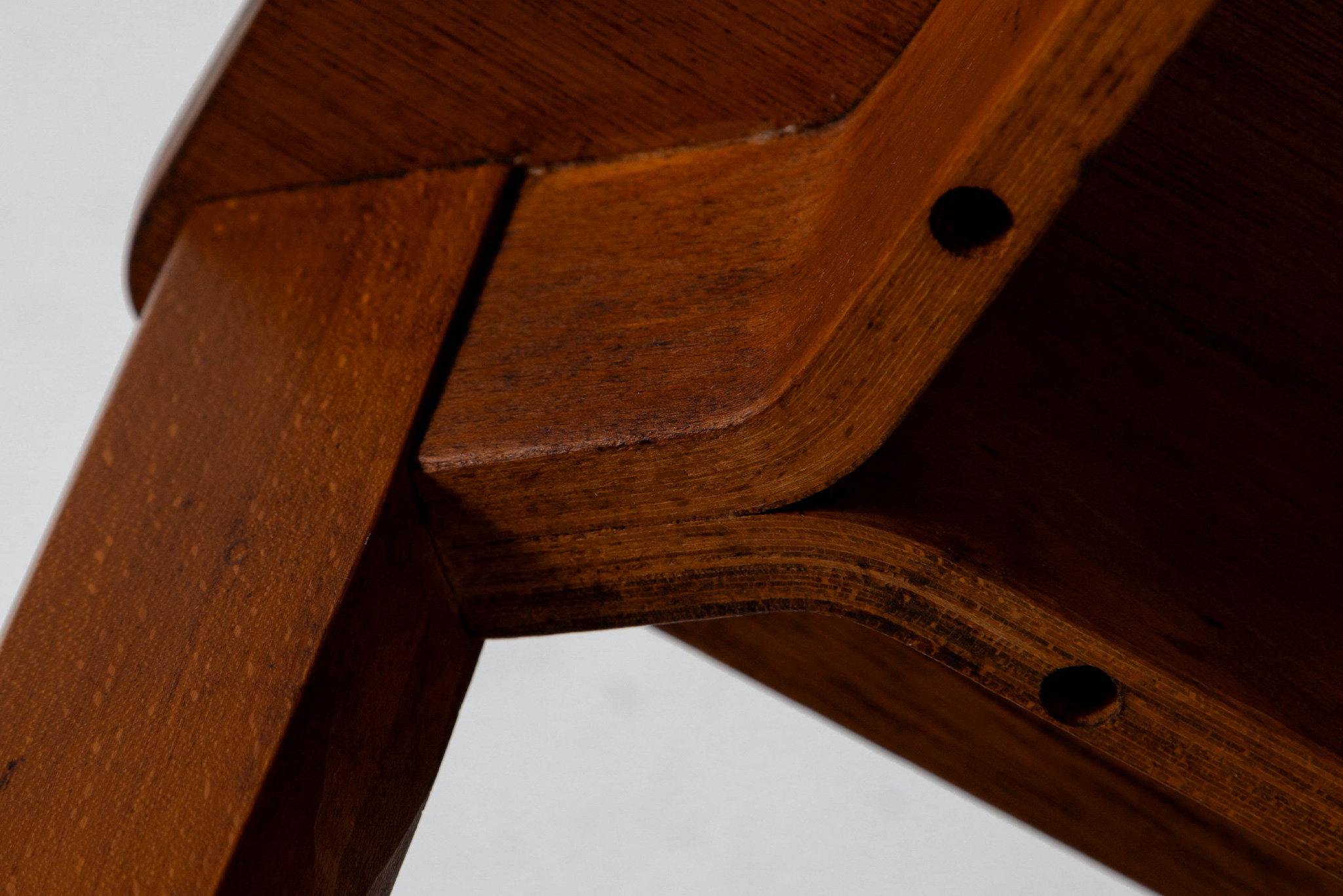
Its rectangular wooden tabletop is supported by four slender, tapered legs connected through a carefully integrated apron. The subtle projection of the tabletop beyond the supporting frame emphasizes the horizontal character of the composition, while the recessed structure beneath creates an impression of visual lightness. The warm wooden surfaces and precisely articulated edges reveal an attention to material continuity and the relationship between construction and form.
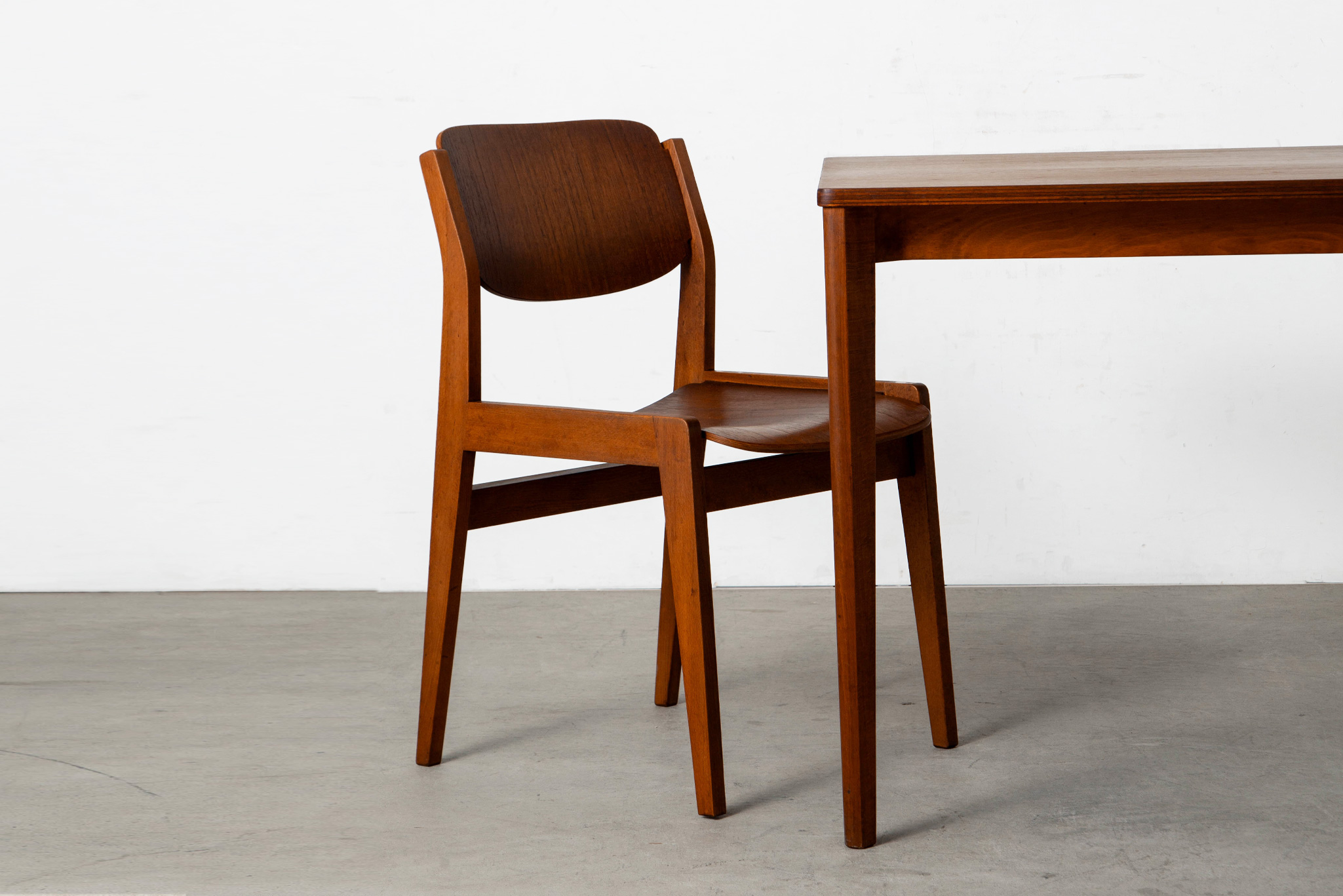
The table illustrates Mizunoe's commitment to furniture that responds to the practical requirements of everyday life without sacrificing architectural coherence. Its understated geometry and carefully balanced proportions complement the organic curvature of the Book Chair, establishing a dialogue between the two designs. Together, they represent an important expression of mid-century Japanese modernism, where industrial techniques and traditional material sensitivity converge in objects of enduring simplicity.
Biography
Tadaomi Mizunoe (born 1921 in Oita Prefecture, Japan) was a Japanese furniture and interior designer whose work contributed significantly to the development of modern furniture in postwar Japan. After studying architecture at Nihon University, he joined the architectural practice of Kunio Maekawa in 1942, where he became involved in the design of furniture and interiors for major architectural projects. His work developed within an environment shaped by the principles of modern architecture and the integration of furniture into spatial design.
During the 1950s, Mizunoe explored the possibilities of industrial furniture production, focusing on structural simplicity, ergonomic considerations, and the efficient use of materials. His collaboration with Tendo Mokko resulted in the development of the Book Chair, designed for the Kanagawa Prefectural Library in 1954. The project demonstrated his interest in refining everyday objects through careful attention to proportion, construction, and the relationship between the human body and furniture.
Mizunoe's practice reflects the broader transformation of Japanese design during the twentieth century, when traditional craftsmanship increasingly intersected with modern manufacturing techniques. His furniture is distinguished by its functional clarity, understated elegance, and commitment to enduring design. His contributions remain closely associated with the emergence of a distinctive Japanese modernist furniture language.