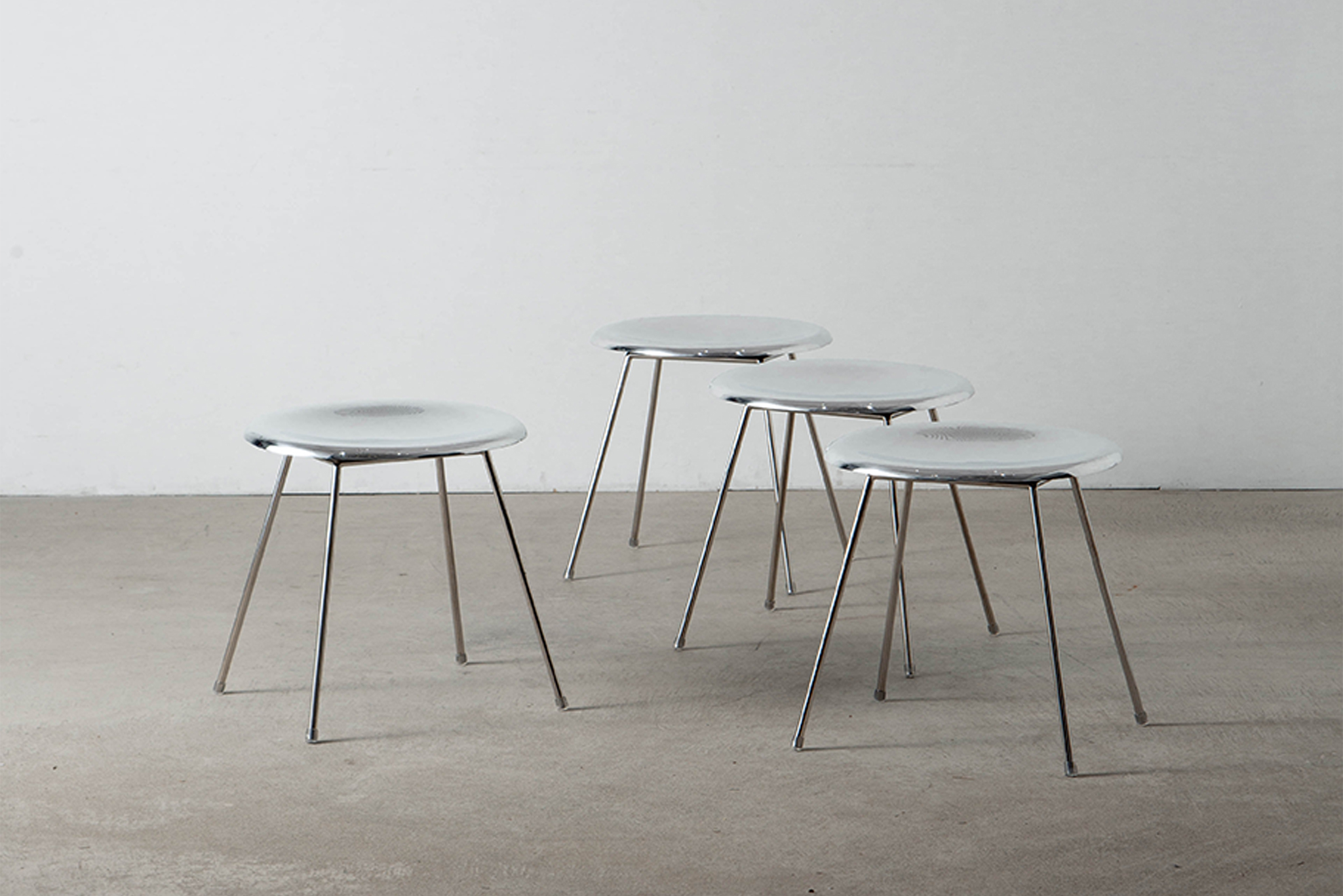
Chair model "Osaka"
Designed by Kazuyo Sejima Associates (KSA)
Japan, 2025
Metal, mirror-polished finish, tubular steel
Measurements (each)
40 × 40 × 45h cm
15,7 × 15,7 × 17,7h in
About
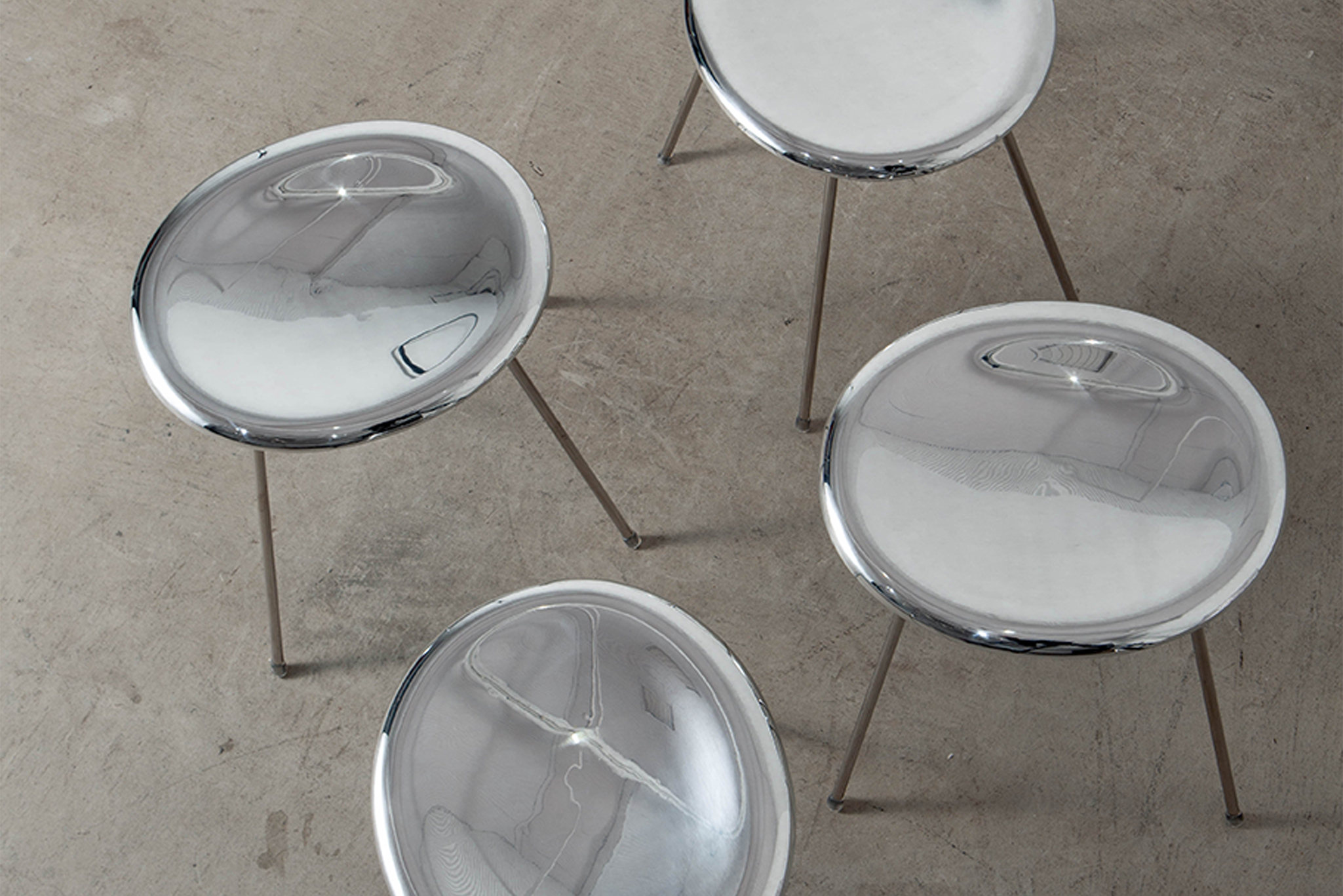
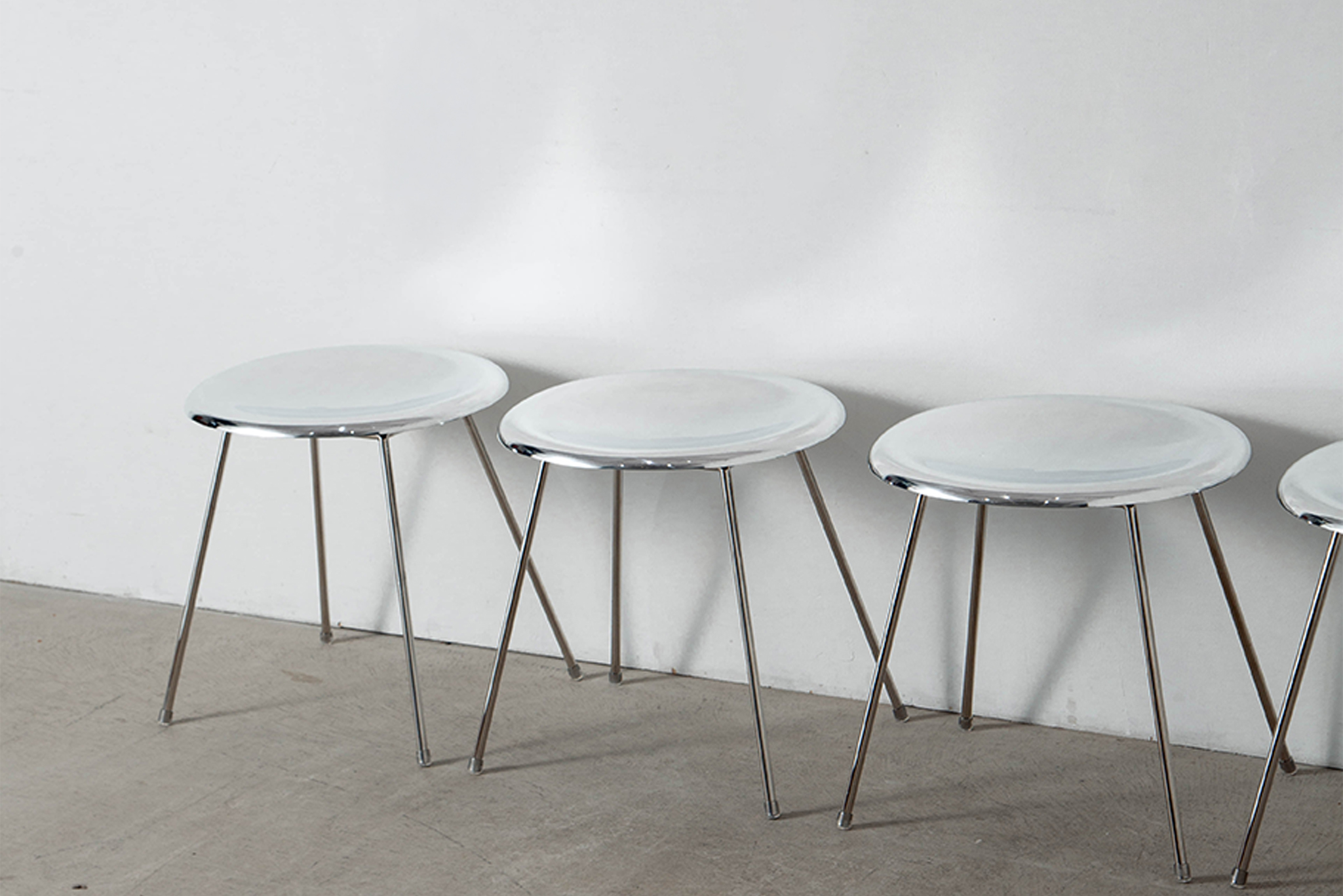
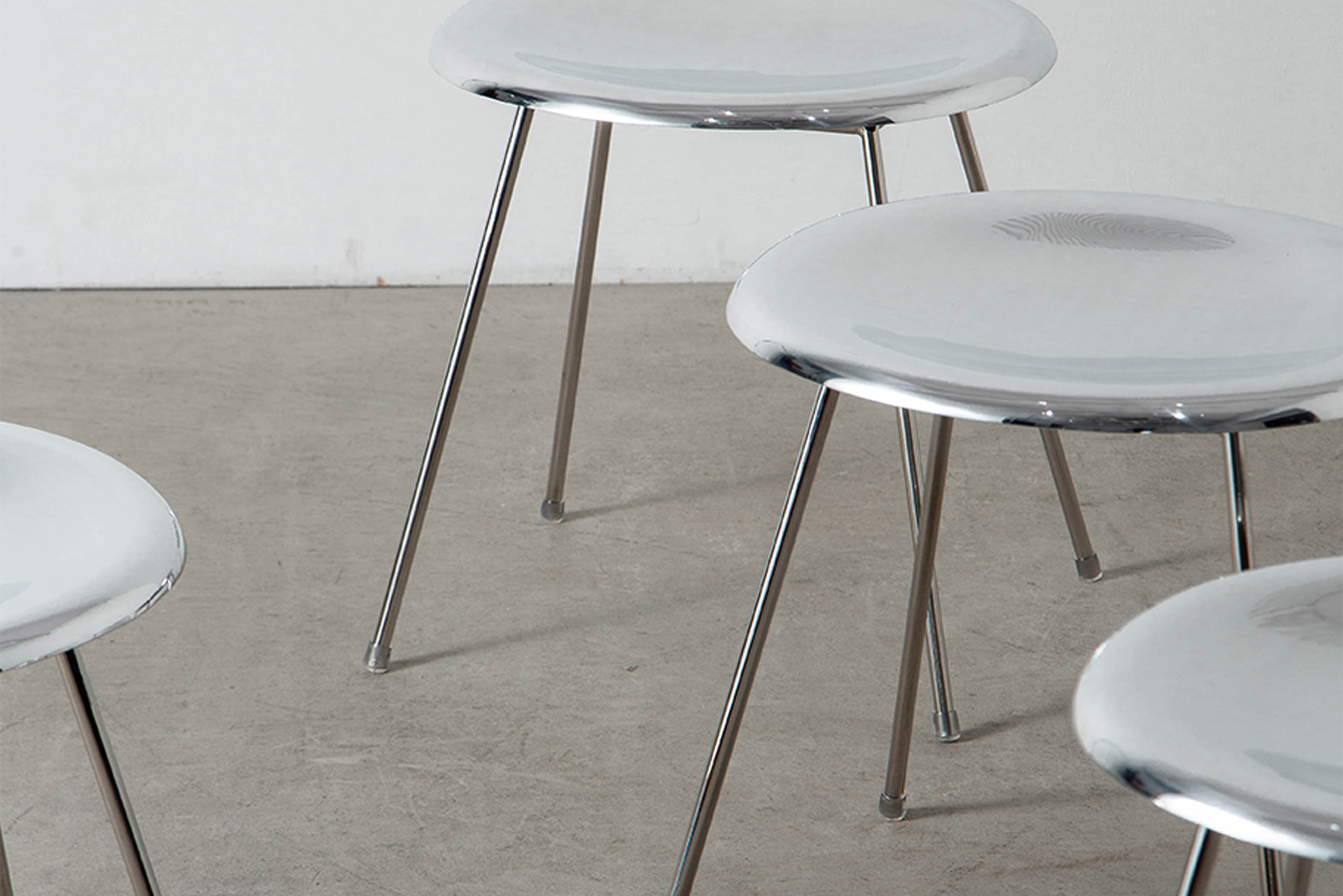
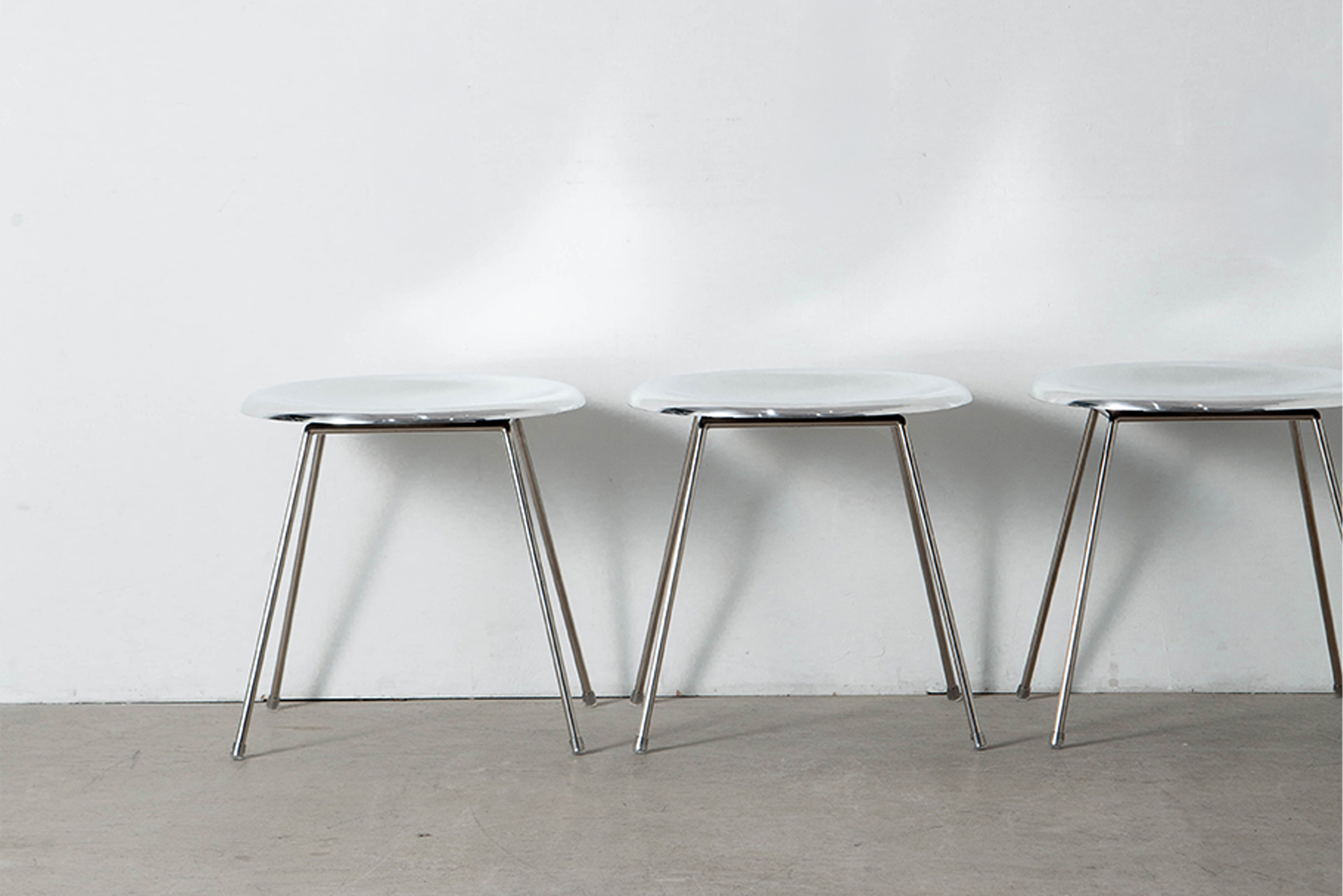
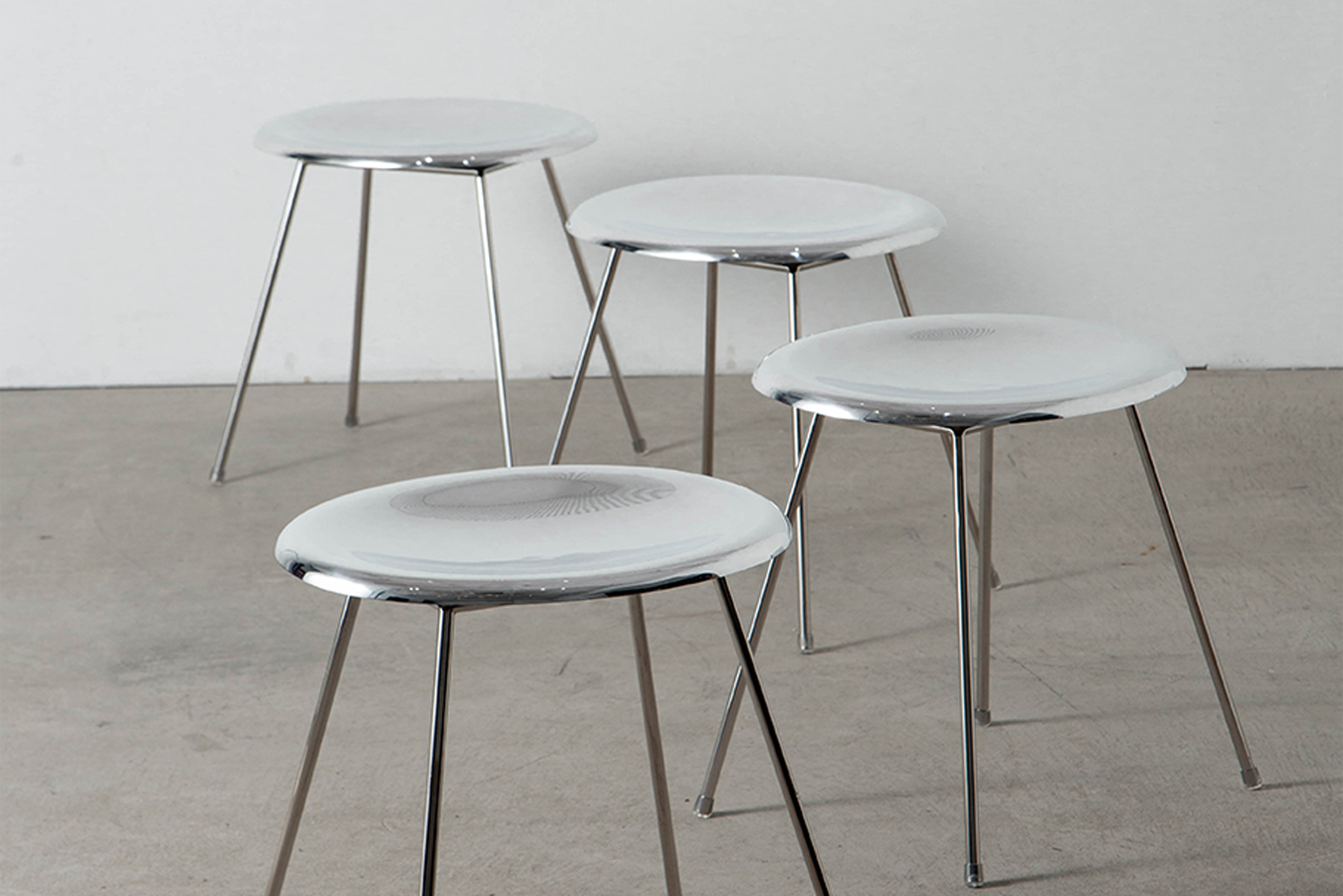
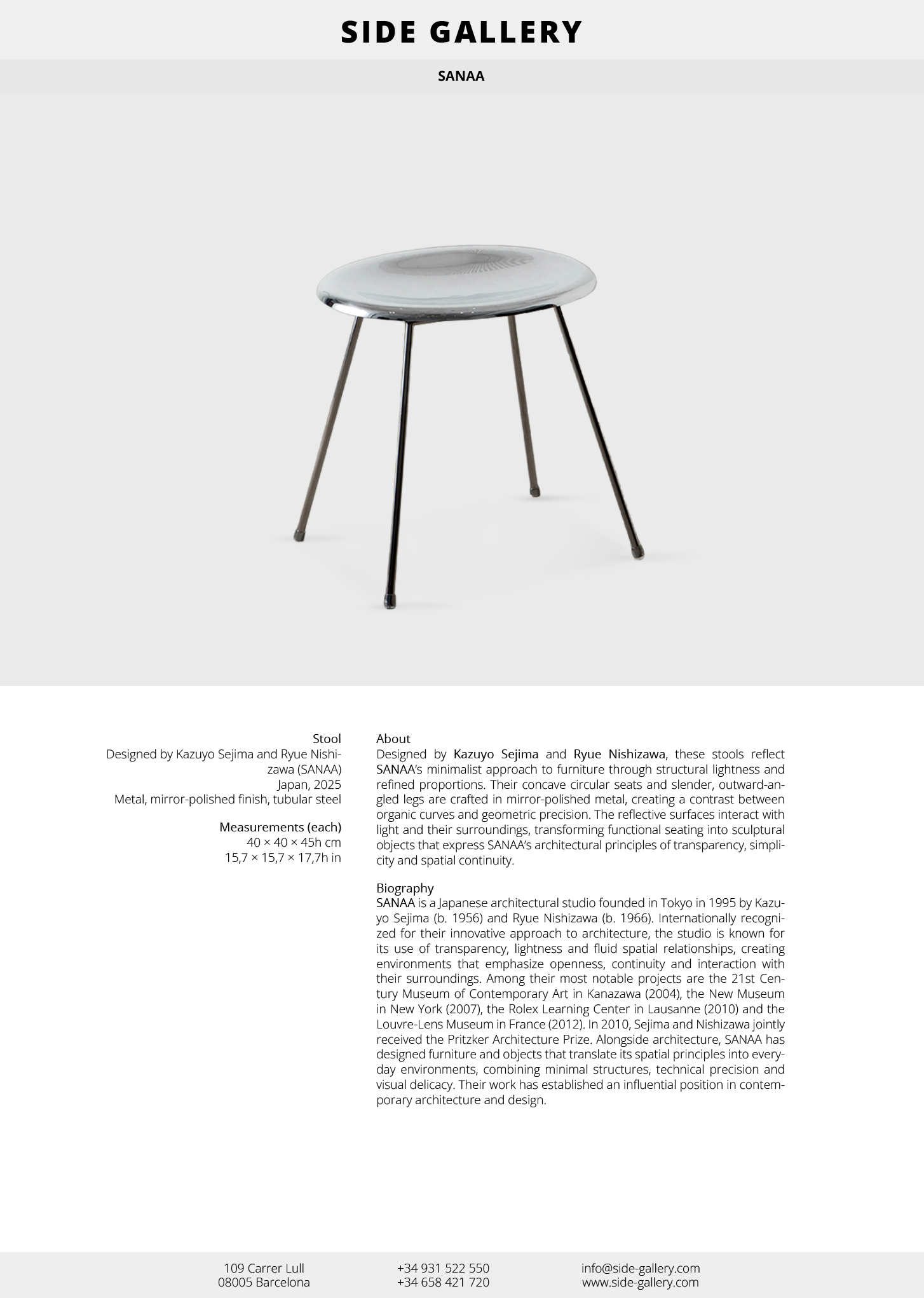
Designed by Kazuyo Sejima and Ryue Nishizawa, these stools reflect SANAA's distinctive approach to furniture design, characterized by structural lightness, refined proportions, and a close relationship between objects and their surrounding environment. Each stool features a gently concave, circular seat supported by four slender, outward-angled tubular legs, creating a delicate balance between sculptural presence and visual simplicity.
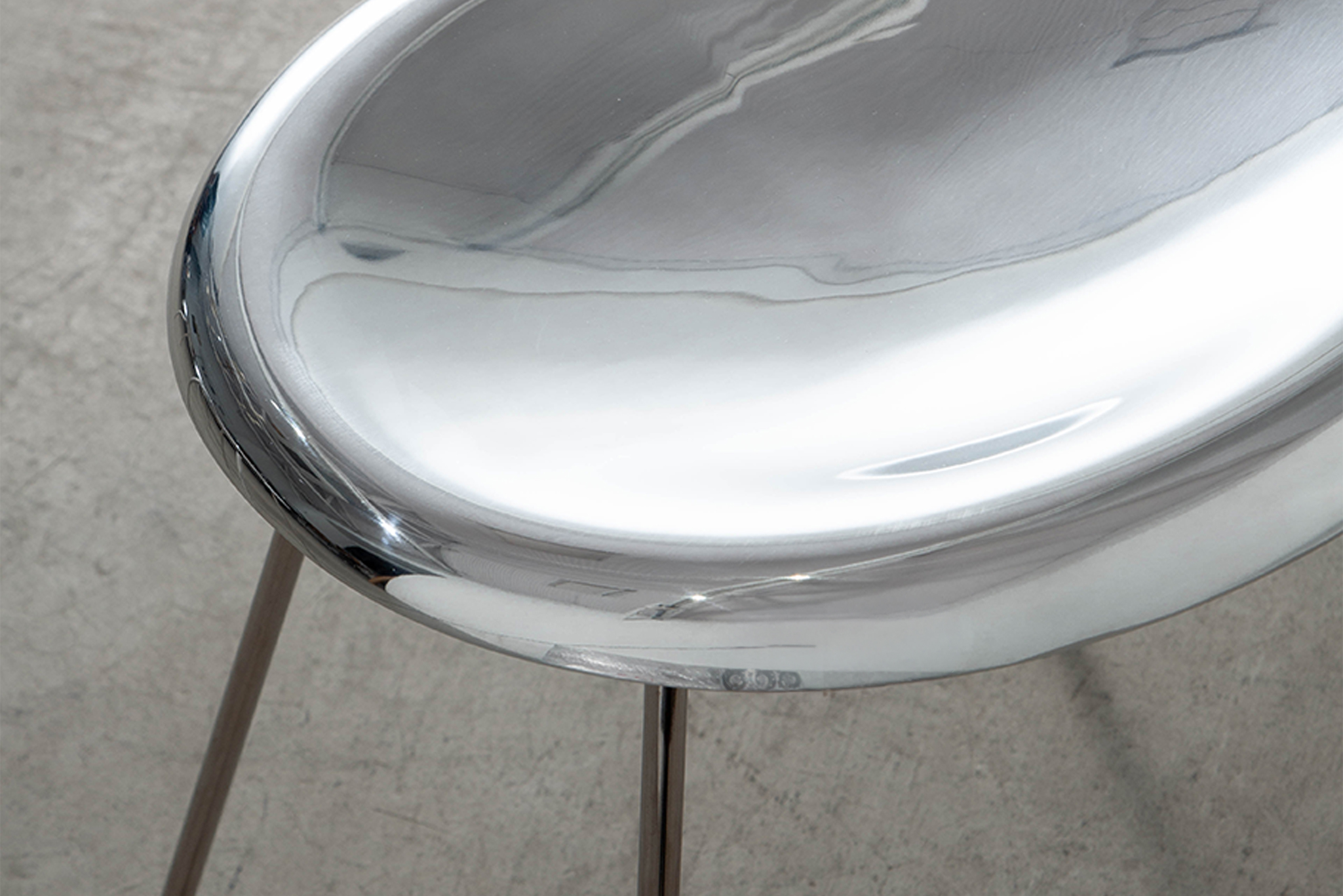
The mirror-polished metal surfaces introduce an additional dimension to the design, reflecting and subtly distorting light, movement, and the surrounding architecture. The smooth, continuous curvature of the seat contrasts with the linear precision of the supporting structure, emphasizing the relationship between organic form and geometric restraint. Despite their minimal construction, the stools possess a distinctive spatial presence, appearing almost weightless within their environment.
Through their reduction of form to essential elements, these stools embody SANAA's broader architectural philosophy, in which transparency, materiality, and spatial continuity play a central role. Their reflective surfaces allow them to engage dynamically with their surroundings, transforming functional seating into objects that explore the boundaries between furniture, sculpture, and architecture.
Biography
SANAA is a Japanese architectural studio founded in Tokyo in 1995 by Kazuyo Sejima (b. 1956) and Ryue Nishizawa (b. 1966). Internationally recognized for their innovative approach to architecture, the studio has developed a distinctive design language characterized by transparency, lightness, fluid spatial relationships, and the careful integration of architecture within its surroundings. Their work challenges conventional distinctions between interior and exterior, structure and enclosure, creating environments that emphasize openness, continuity, and human interaction.
Among their most significant architectural projects are the 21st Century Museum of Contemporary Art in Kanazawa (2004), the New Museum in New York (2007), the Rolex Learning Center in Lausanne (2010), and the Louvre-Lens Museum in France (2012). In 2010, Sejima and Nishizawa were jointly awarded the Pritzker Architecture Prize in recognition of their contribution to contemporary architecture.
Alongside their architectural projects, SANAA has developed furniture and objects that translate the studio's spatial principles into a domestic scale. Their designs often combine minimal structural elements with unexpected formal gestures, exploring the relationship between function, material, and perception. Through an approach that balances technical precision with visual delicacy, SANAA has established an influential position within contemporary architecture and design.