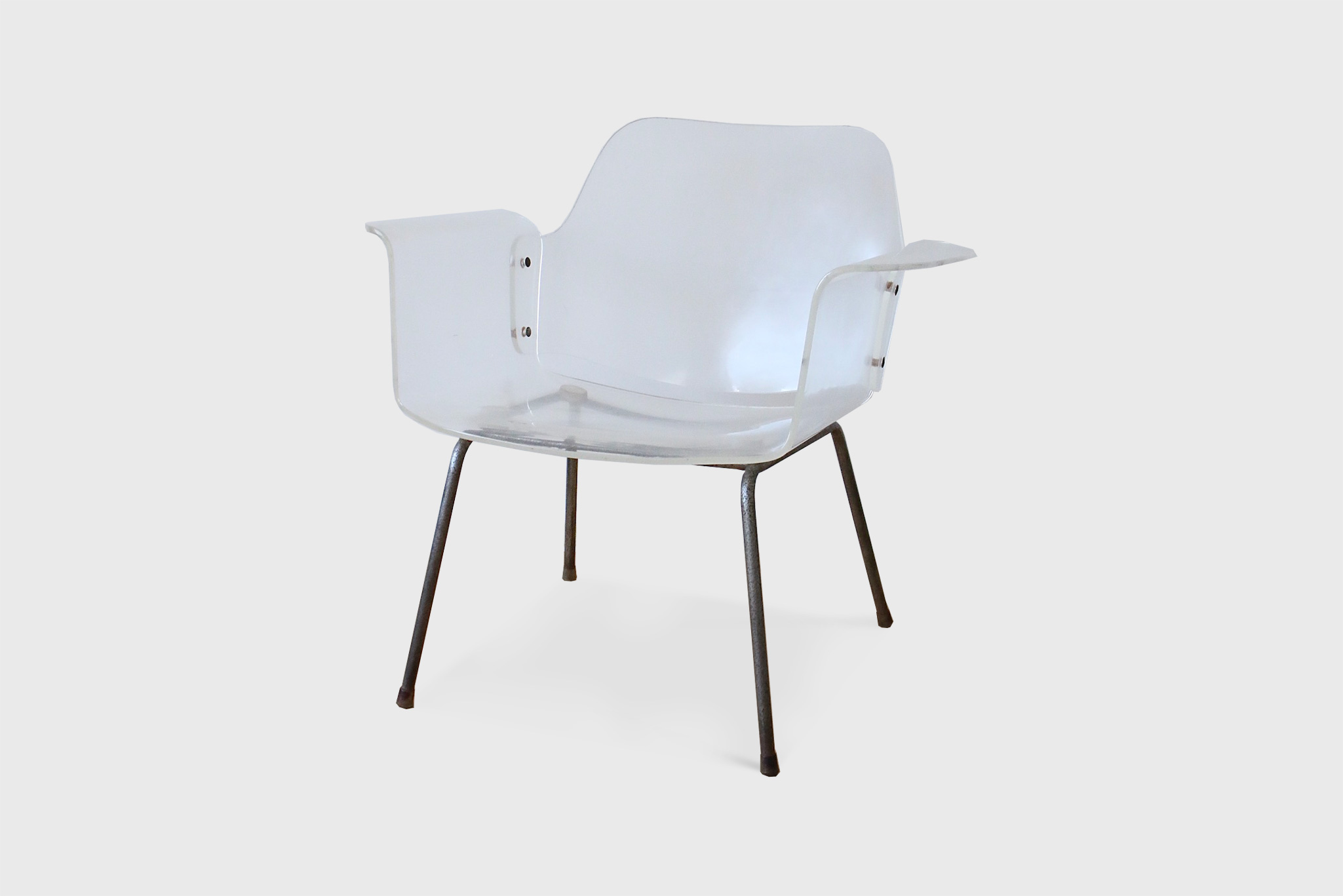
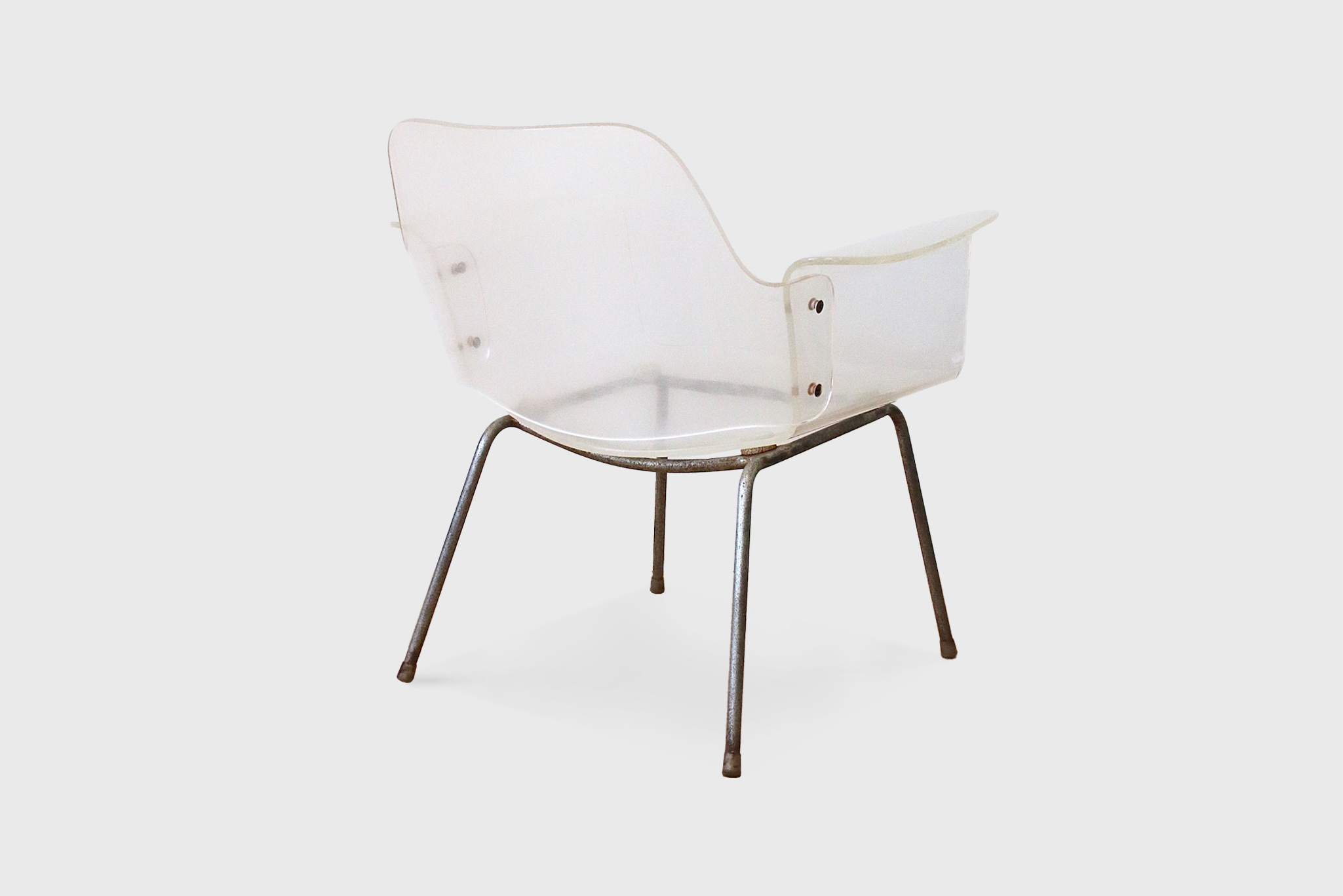
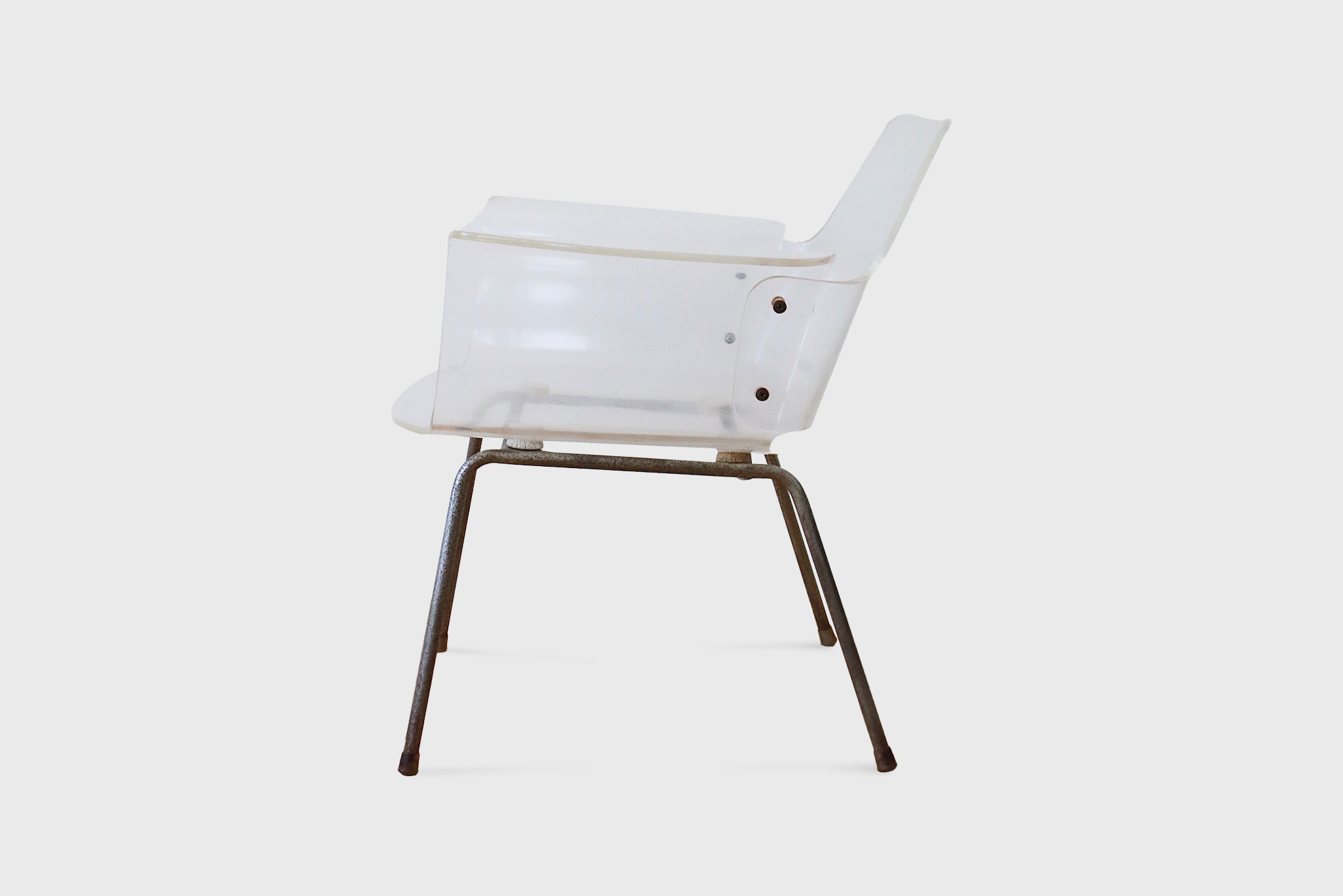
Chair model "Ply" (Acrylic Edition)
Manufactured by Tendo Mokko
Japan, 1970
Acrylic, Steel
Measurements
74 x 63 x 68h cm
29,1 x 24,8 x 26,8h in
Seat height: 35,5 cm | 14 in
Provenance
Private collection, Japan
Details
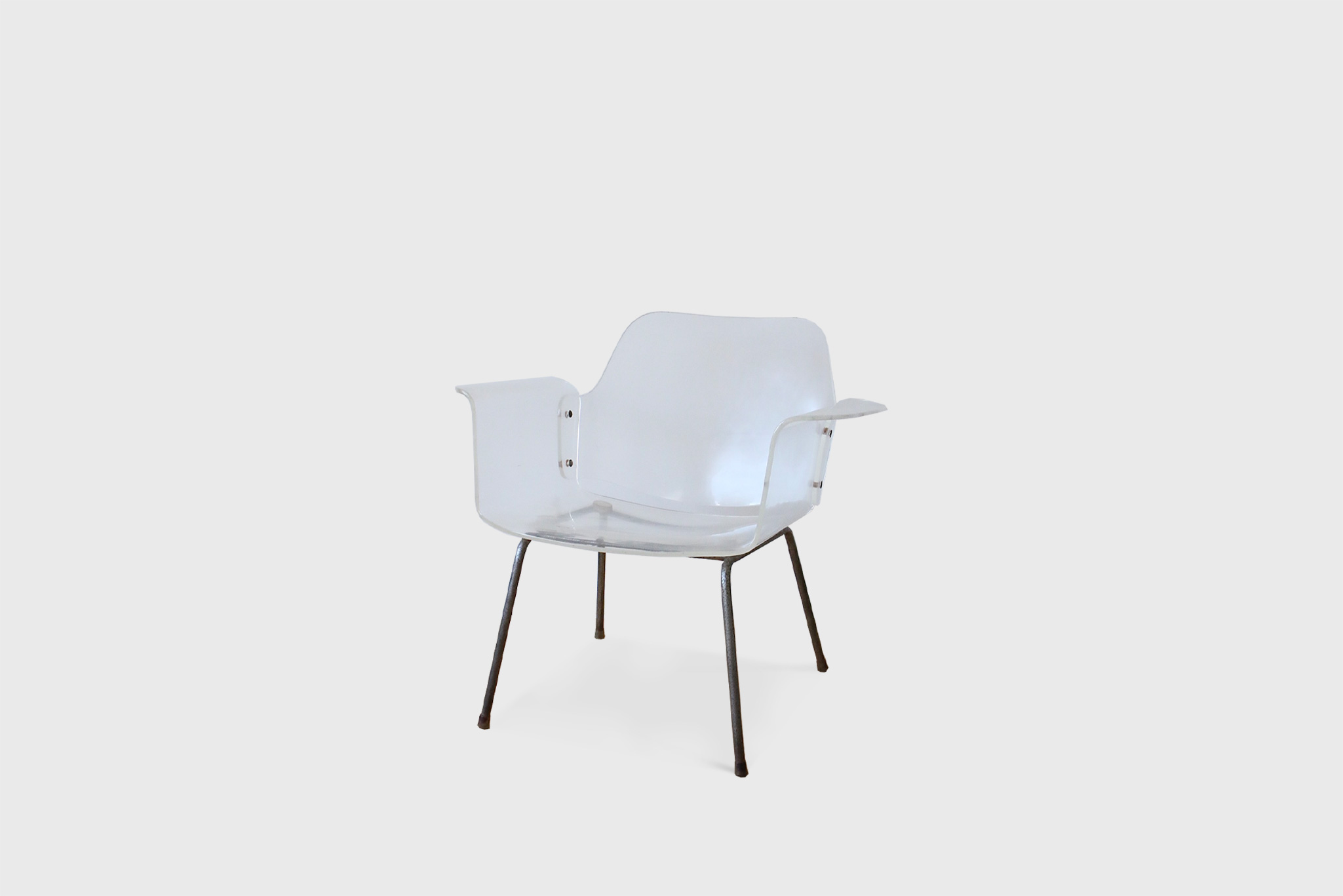
This rare acrylic edition of the Ply Chair was produced only for one year, in 1970.
About
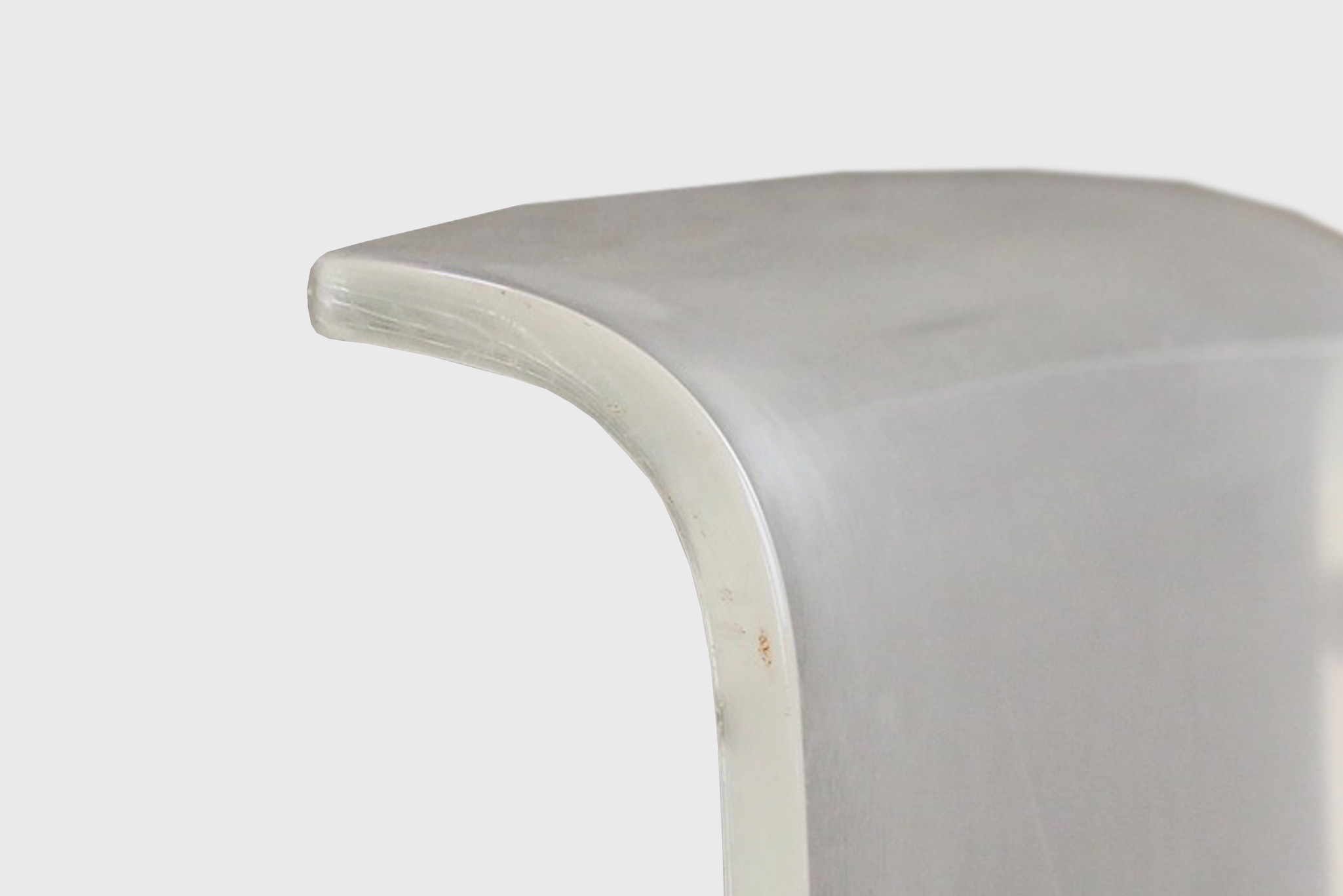
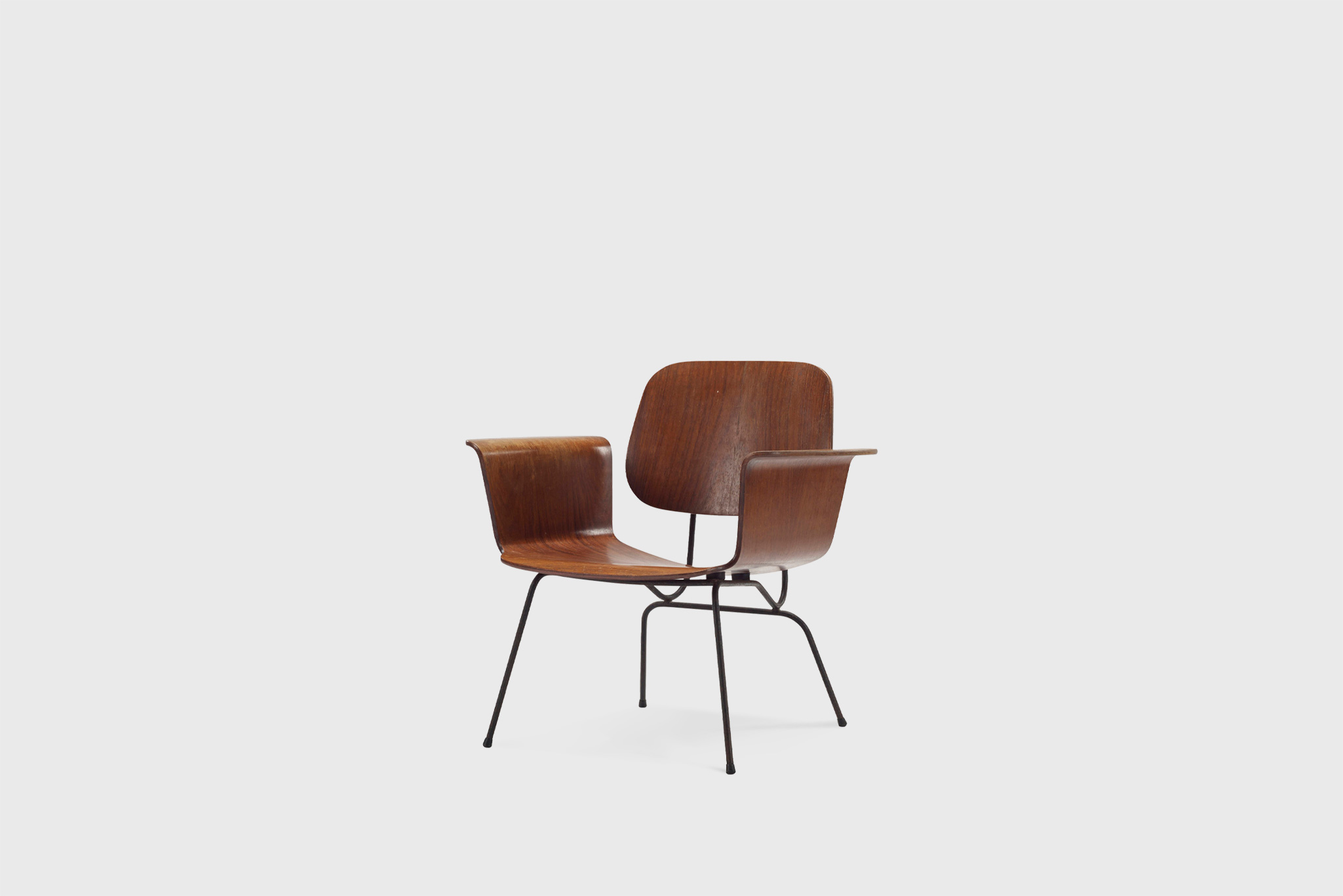
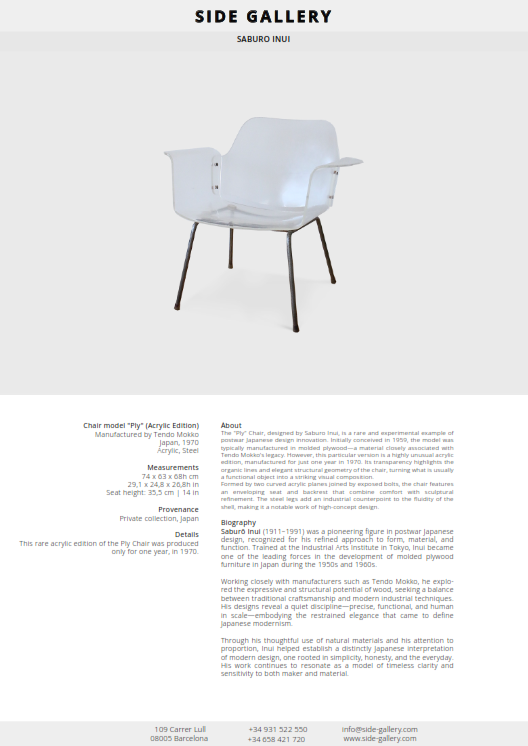
The "Ply" Chair, designed by Saburo Inui, is a rare and experimental example of postwar Japanese design innovation. Initially conceived in 1959, the model was typically manufactured in molded plywood—a material closely associated with Tendo Mokko’s legacy. However, this particular version is a highly unusual acrylic edition, manufactured for just one year in 1970. Its transparency highlights the organic lines and elegant structural geometry of the chair, turning what is usually a functional object into a striking visual composition.
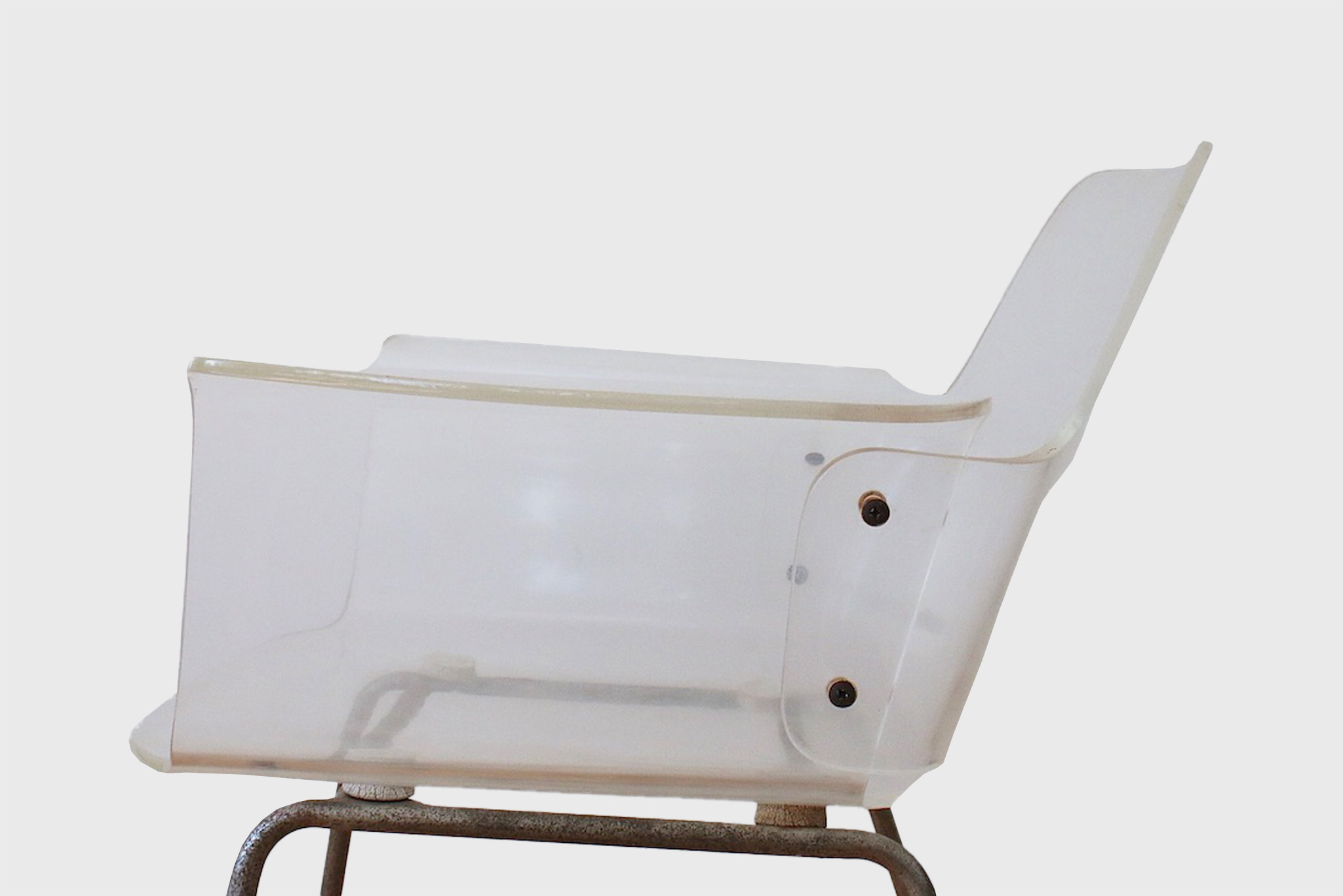
Formed by two curved acrylic planes joined by exposed bolts, the chair features an enveloping seat and backrest that combine comfort with sculptural refinement. The steel legs add an industrial counterpoint to the fluidity of the shell, making it a notable work of high-concept design.
Biography
Saburo Inui (b. 1920 – d. 1982) was a Japanese designer and architect whose work emerged during a transformative period in postwar Japan, marked by rapid modernization and a renewed search for national identity through design. Educated at the prestigious Tokyo University of the Arts, Inui was part of a generation of creatives who redefined Japanese aesthetics by blending traditional craft sensibilities with modern industrial materials.
Inui’s most iconic design is the Ply Chair, originally conceived in 1959. While best known in its molded plywood version—still in production by Tendo Mokko—Inui also experimented with highly limited editions in acrylic. The rare transparent model, manufactured only for one year in 1970, is a striking example of the Japanese avant-garde approach to materials and transparency, aligning with global modernist trends while retaining a minimalist, organic sensibility. The clear shell allowed the chair’s sculptural form and construction logic to remain visible, pushing the boundaries of functional art.
Inui was also influenced by the political and social shifts of the 1960s and 70s in Japan, a time when design was seen not only as aesthetic production but as a cultural statement. His work resonates with the goals of the Metabolist movement—a group of architects and designers who imagined modular, flexible urban systems—although Inui’s designs were more introspective and focused on domestic scale. Still, he shared their vision of a future shaped by innovation, structure, and the integration of new technologies.
Collaborating closely with Tendo Mokko, a pioneering manufacturer known for its partnerships with architects such as Sori Yanagi and Kenzo Tange, Inui helped define a new direction in postwar Japanese furniture: democratic, elegant, and technically refined. His work continues to be collected internationally and serves as a key reference in the study of 20th-century Japanese design.