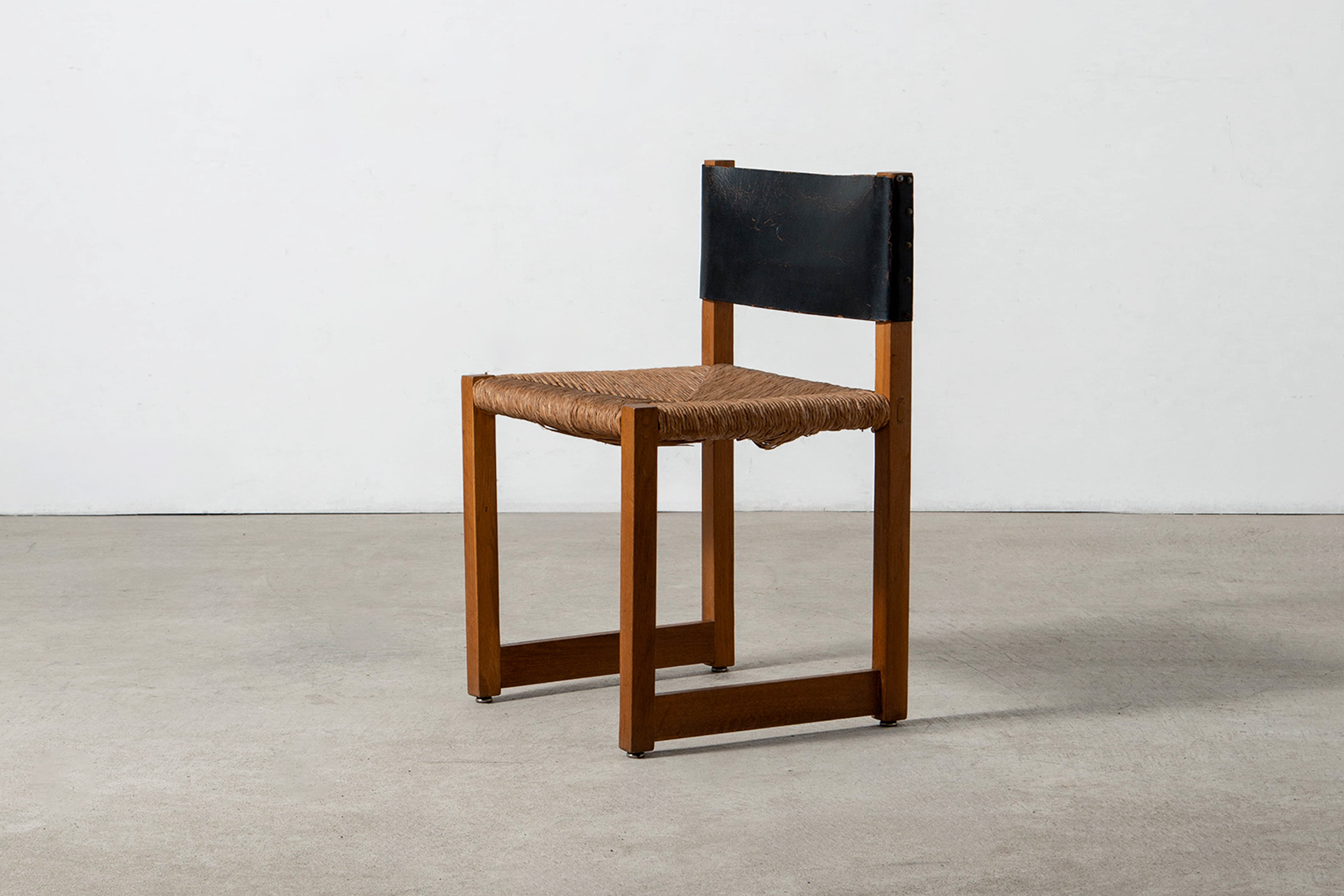
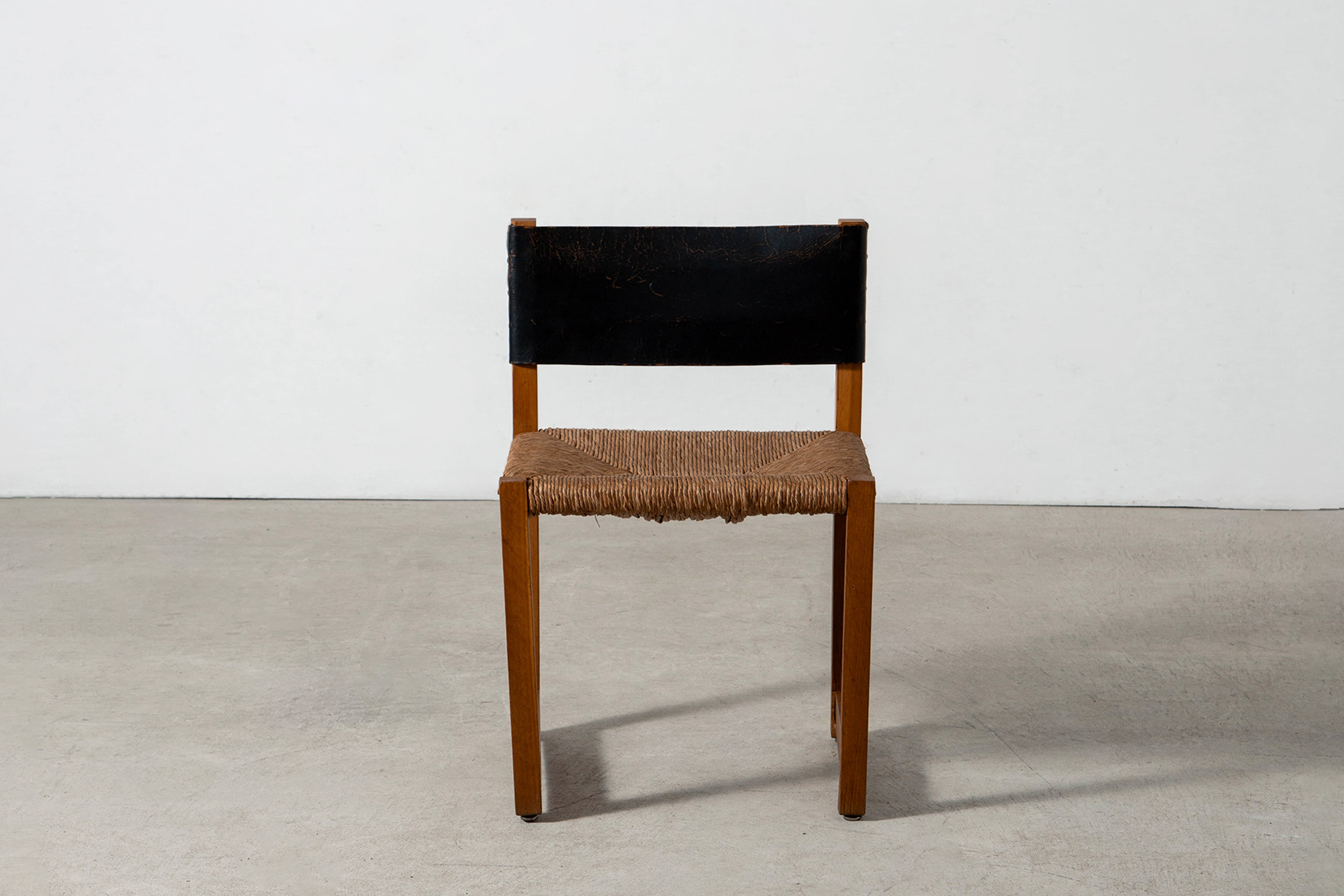
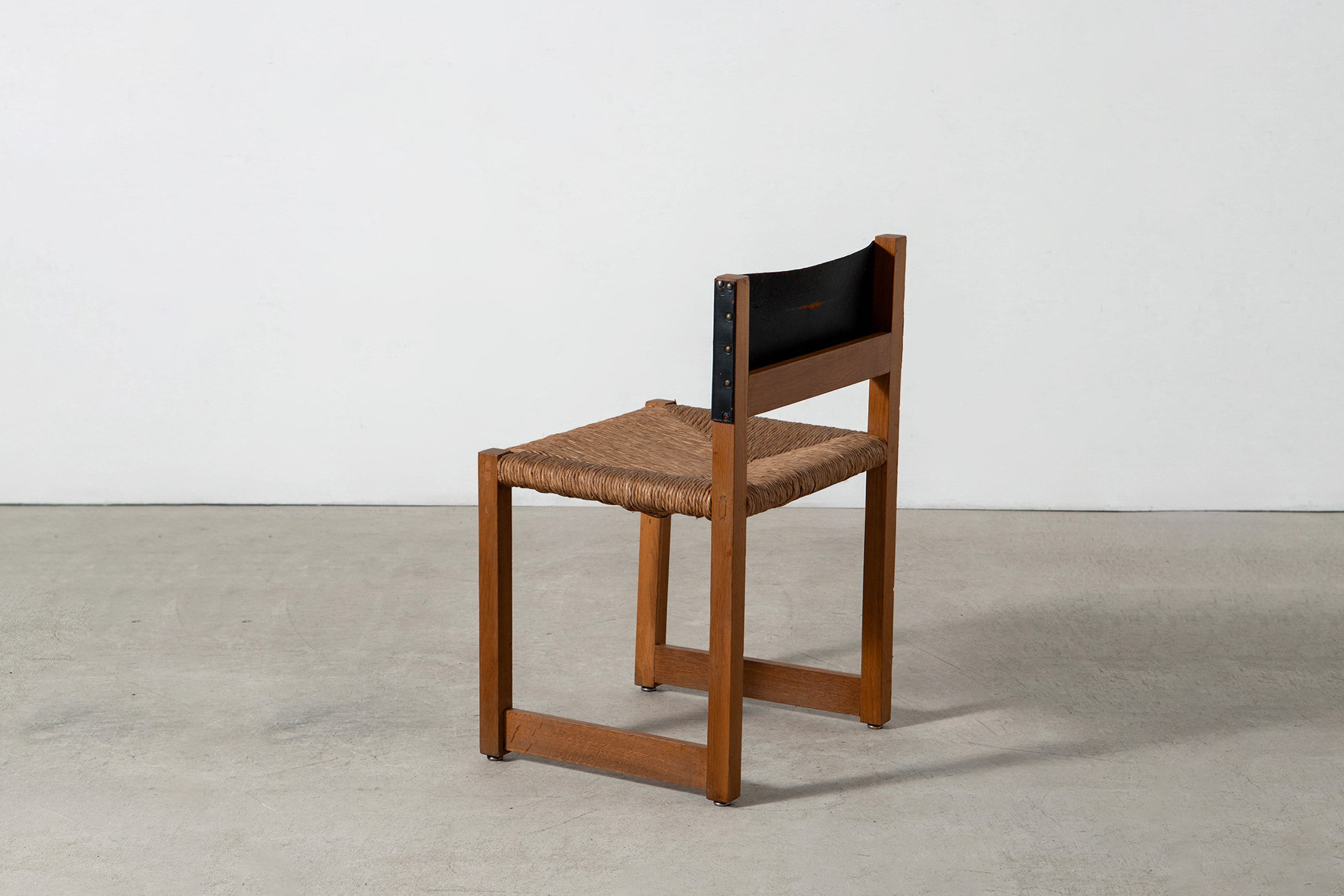
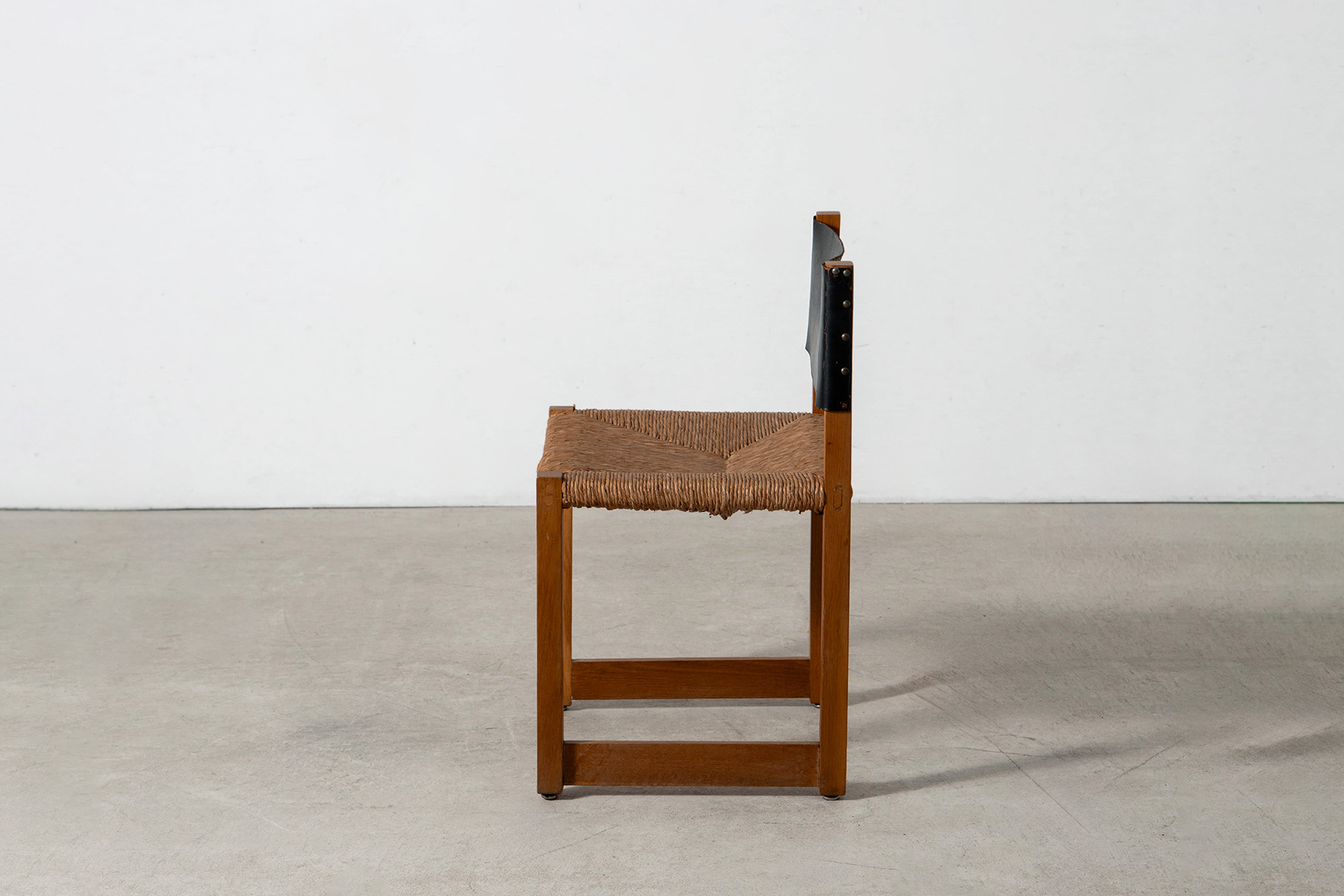
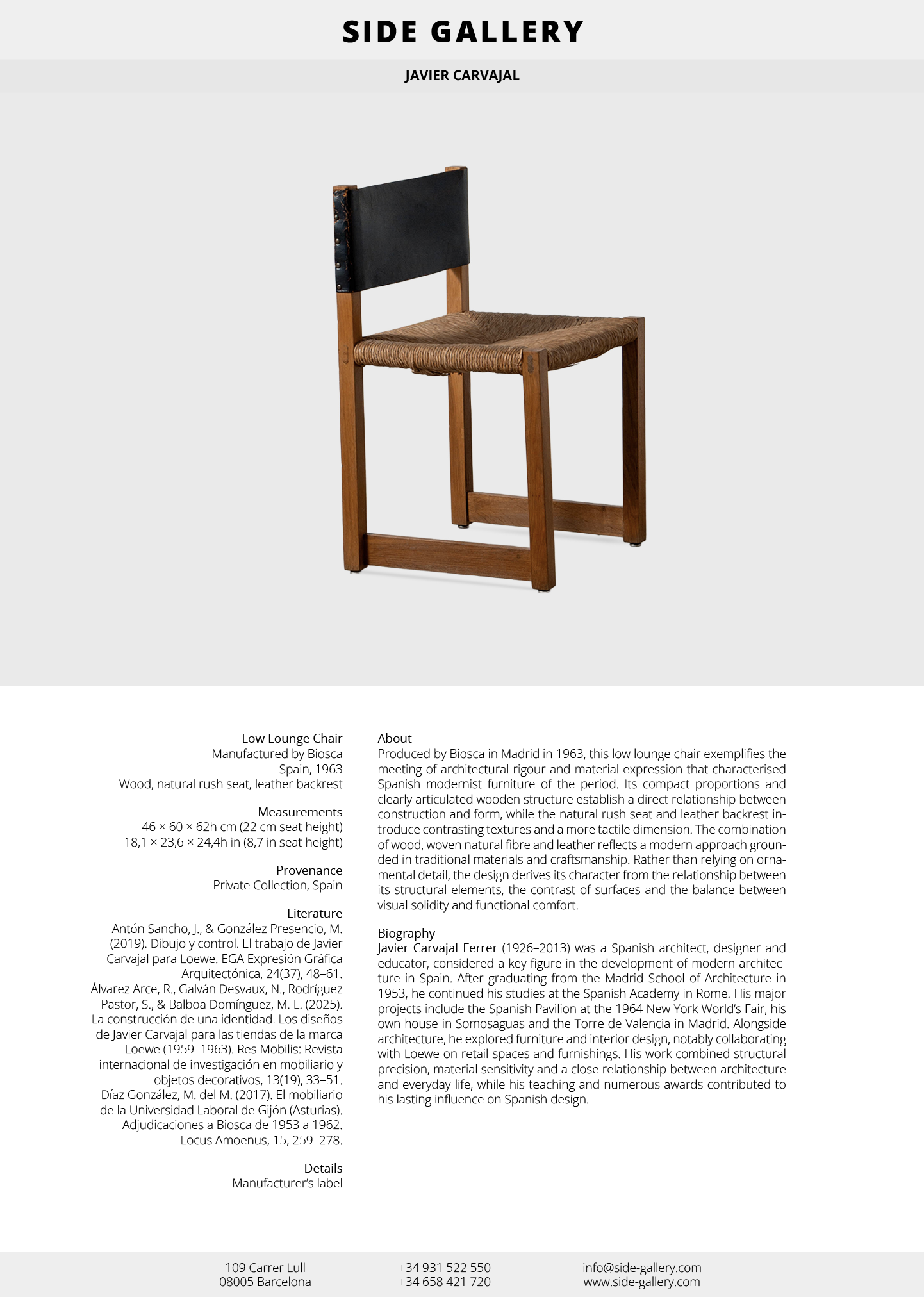
Low Lounge Chair
Manufactured by Biosca
Spain, 1963
Wood, natural rush seat, leather backrest
Measurements
46 × 60 × 62h cm (22 cm seat height)
18,1 × 23,6 × 24,4h in (8,7 in seat height)
Provenance
Private Collection, Spain
Literature
Antón Sancho, J., & González Presencio, M. (2019). Dibujo y control. El trabajo de Javier Carvajal para Loewe. EGA Expresión Gráfica Arquitectónica, 24(37), 48–61.
Álvarez Arce, R., Galván Desvaux, N., Rodríguez Pastor, S., & Balboa Domínguez, M. L. (2025). La construcción de una identidad. Los diseños de Javier Carvajal para las tiendas de la marca Loewe (1959–1963). Res Mobilis: Revista internacional de investigación en mobiliario y objetos decorativos, 13(19), 33–51.
Díaz González, M. del M. (2017). El mobiliario de la Universidad Laboral de Gijón (Asturias). Adjudicaciones a Biosca de 1953 a 1962. Locus Amoenus, 15, 259–278.
Details
Manufacturer’s label
About
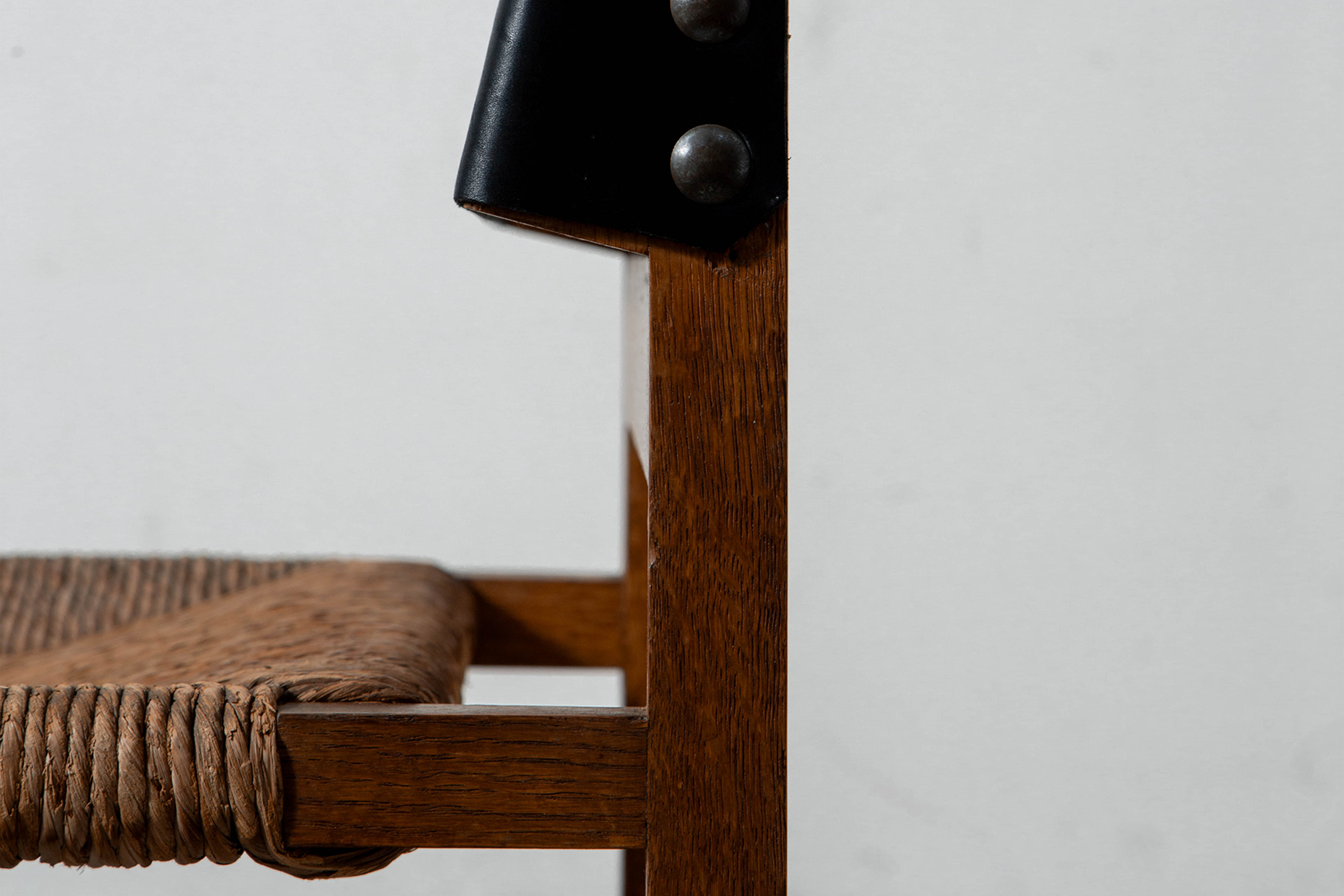
Produced by Biosca in Madrid in 1963, this low lounge chair exemplifies the meeting of architectural rigour and material expression that characterised Spanish modernist furniture of the period. Its compact proportions and clearly articulated wooden structure establish a direct relationship between construction and form, while the natural rush seat and leather backrest introduce contrasting textures and a more tactile dimension. The combination of wood, woven natural fibre and leather reflects a modern approach grounded in traditional materials and craftsmanship. Rather than relying on ornamental detail, the design derives its character from the relationship between its structural elements, the contrast of surfaces and the balance between visual solidity and functional comfort.
Biography
Javier Carvajal Ferrer (1926–2013) was a Spanish architect, designer and educator born in Barcelona, Spain. He graduated from the Madrid School of Architecture in 1953, receiving the Extraordinary Degree Award, and continued his studies at the Spanish Academy in Rome from 1955 to 1957. He became one of the key figures in the development of modern architecture in Spain, combining rigorous construction, expressive forms and a careful consideration of materials, light and spatial experience.
Carvajal’s architectural career brought him international recognition. Among his most significant projects are the School of Higher Commercial Studies in Barcelona, completed in 1961, the Spanish Pavilion at the 1964 New York World’s Fair, his own house in Somosaguas (1964–1965), and the Torre de Valencia in Madrid (1970–1973). His work for the Spanish Pavilion received an award from the American Institute of Architects in 1964, while his house in Somosaguas earned him the Fritz Schumacher Prize in 1968 for outstanding European architecture.
Alongside architecture, Carvajal developed a practice in furniture and interior design, notably collaborating with the Spanish leather-goods house Loewe on the design of retail interiors and furnishings. These projects reveal his interest in the relationship between architecture, objects and everyday life, extending his attention to proportion, structure and material quality to a smaller scale. His work was recognised with numerous distinctions, including the Gold Medal of the Spanish Council of Architects in 2012. Throughout his career, he also maintained a strong commitment to architectural education, teaching at several Spanish schools of architecture and influencing generations of practitioners.