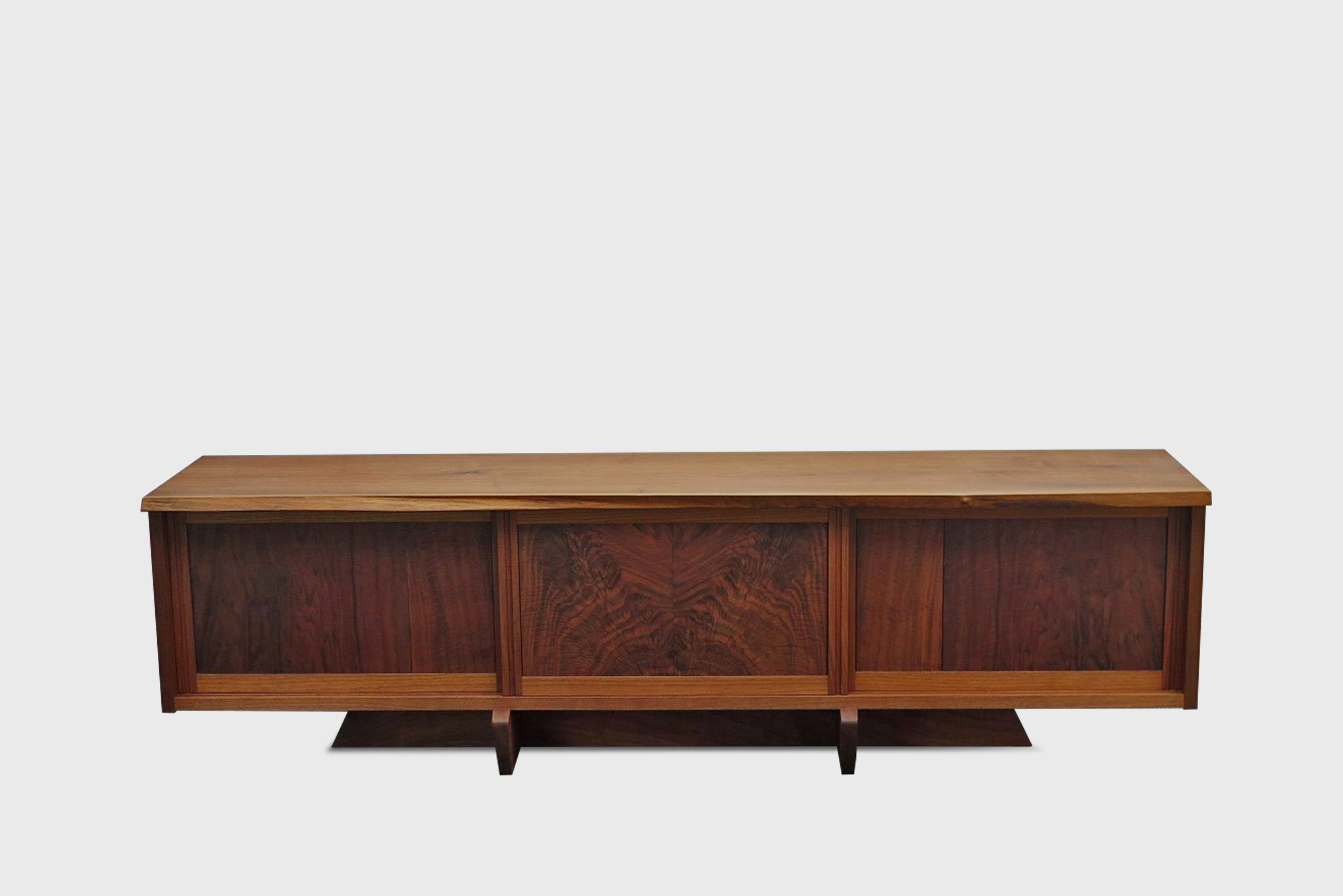
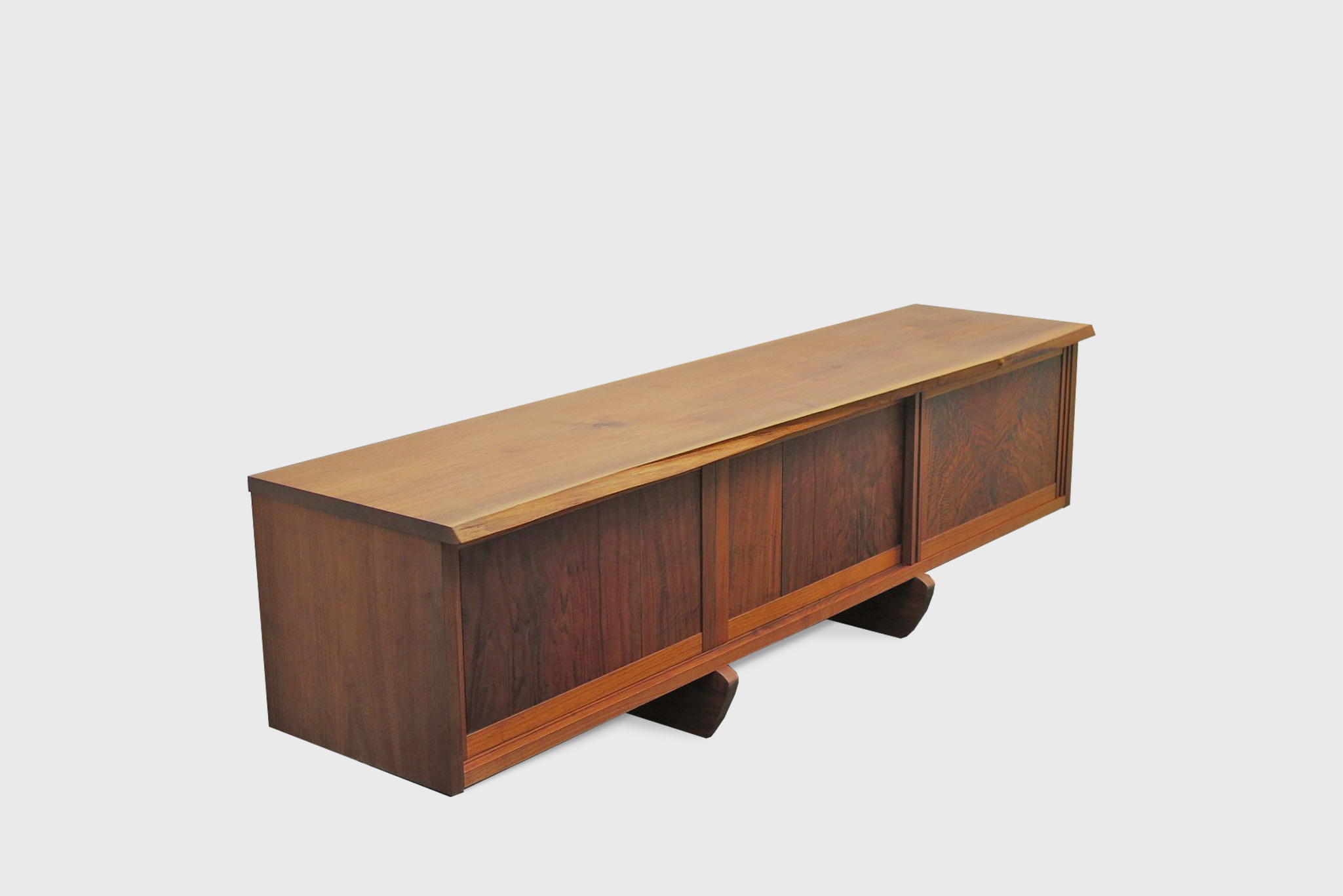
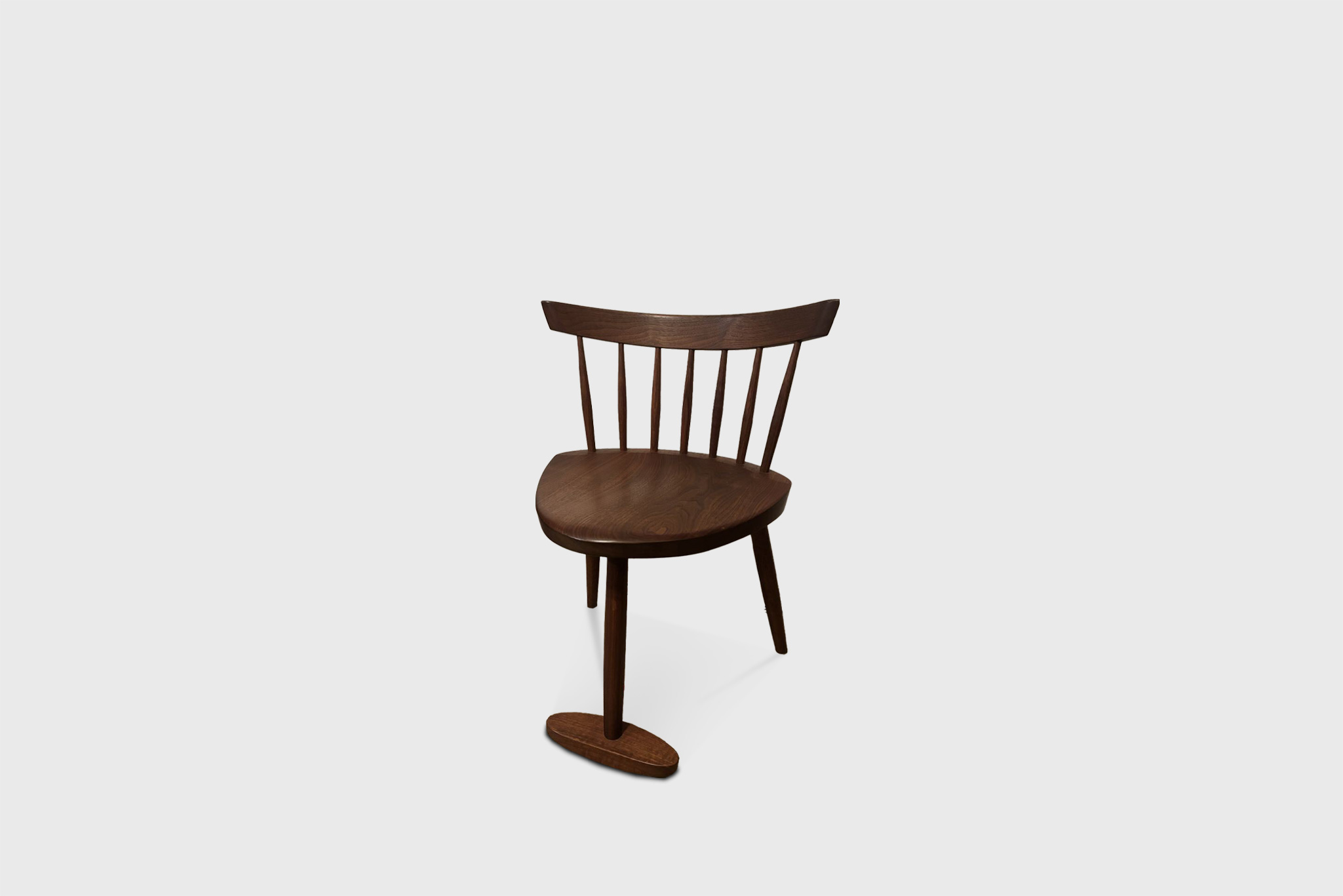
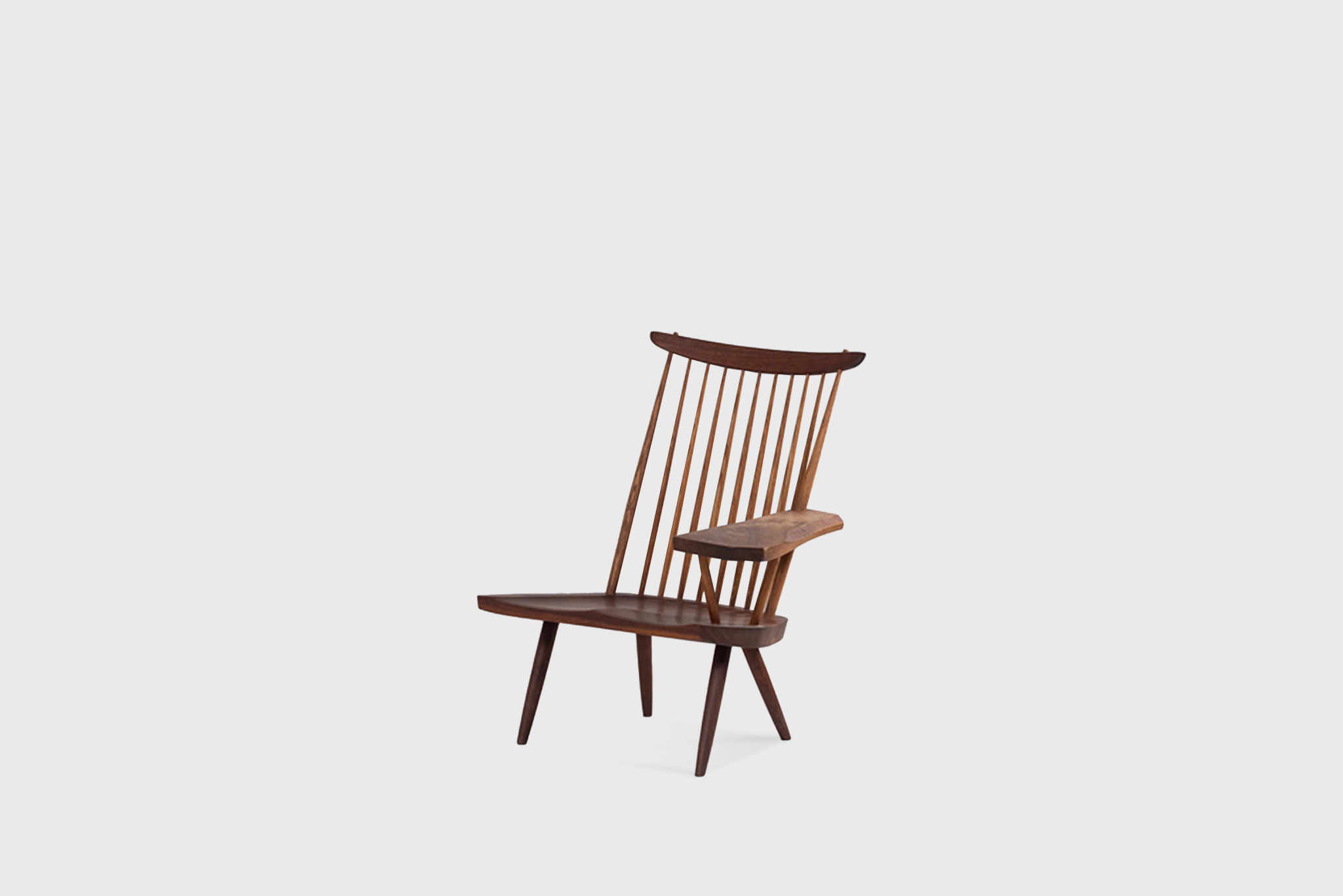
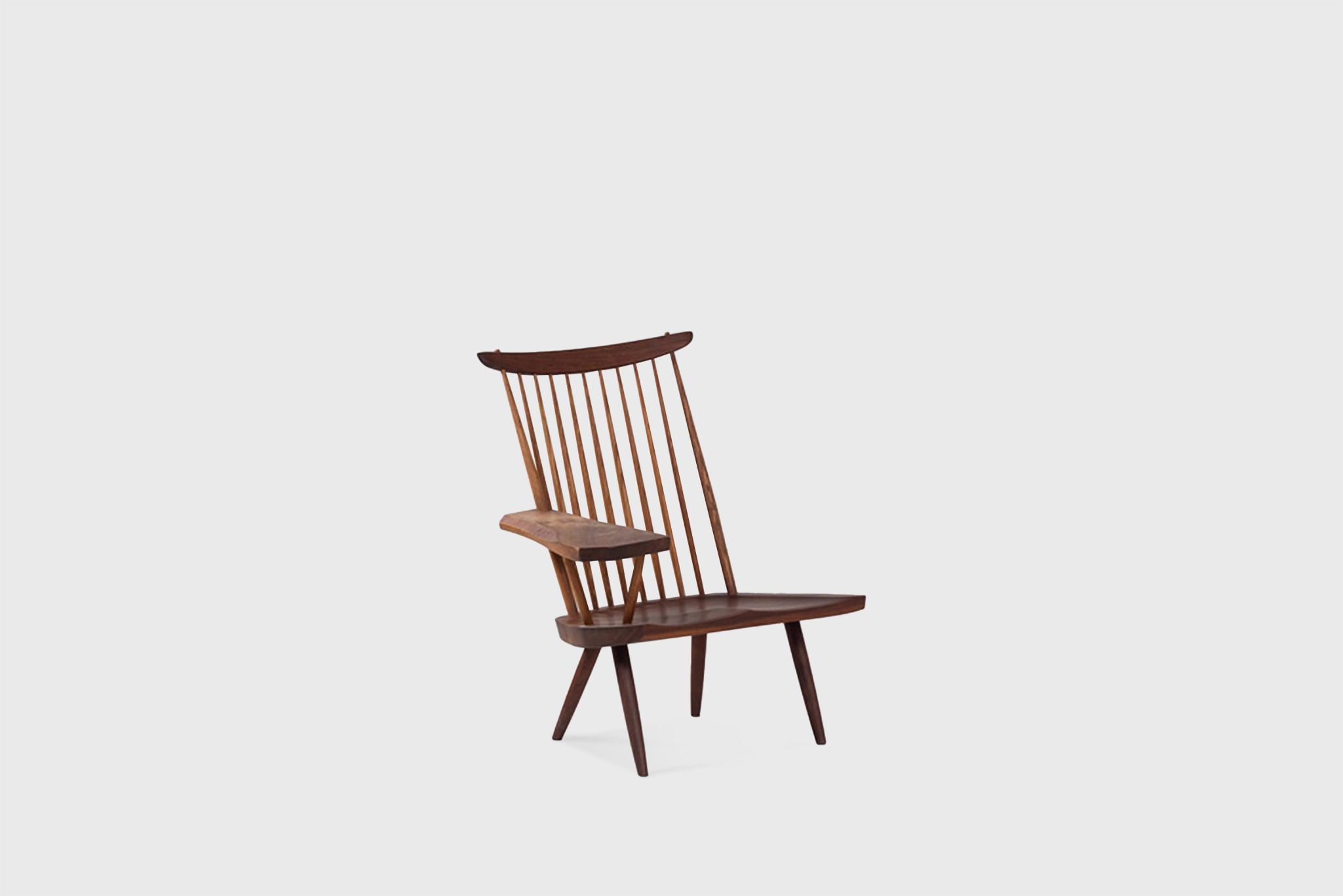
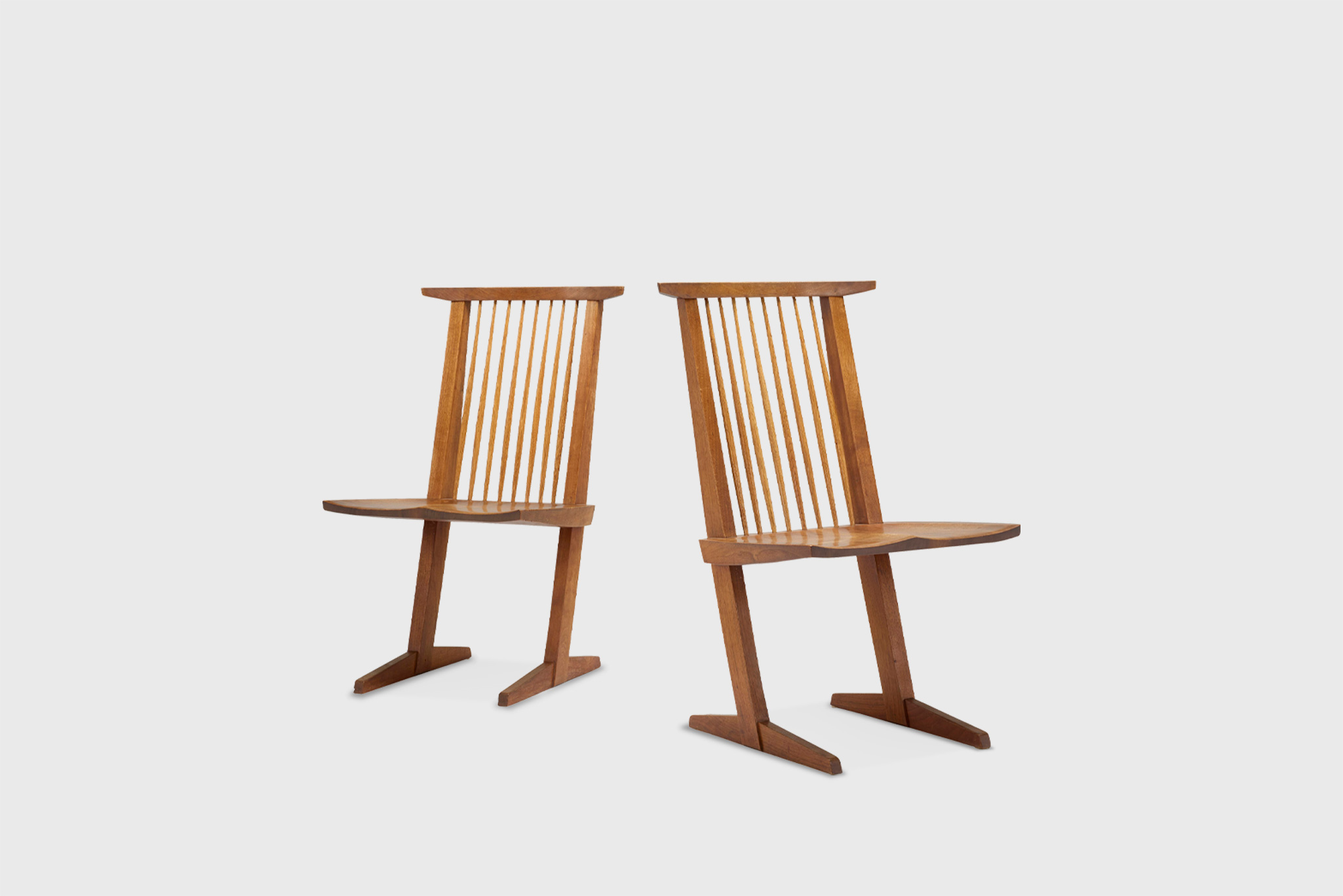
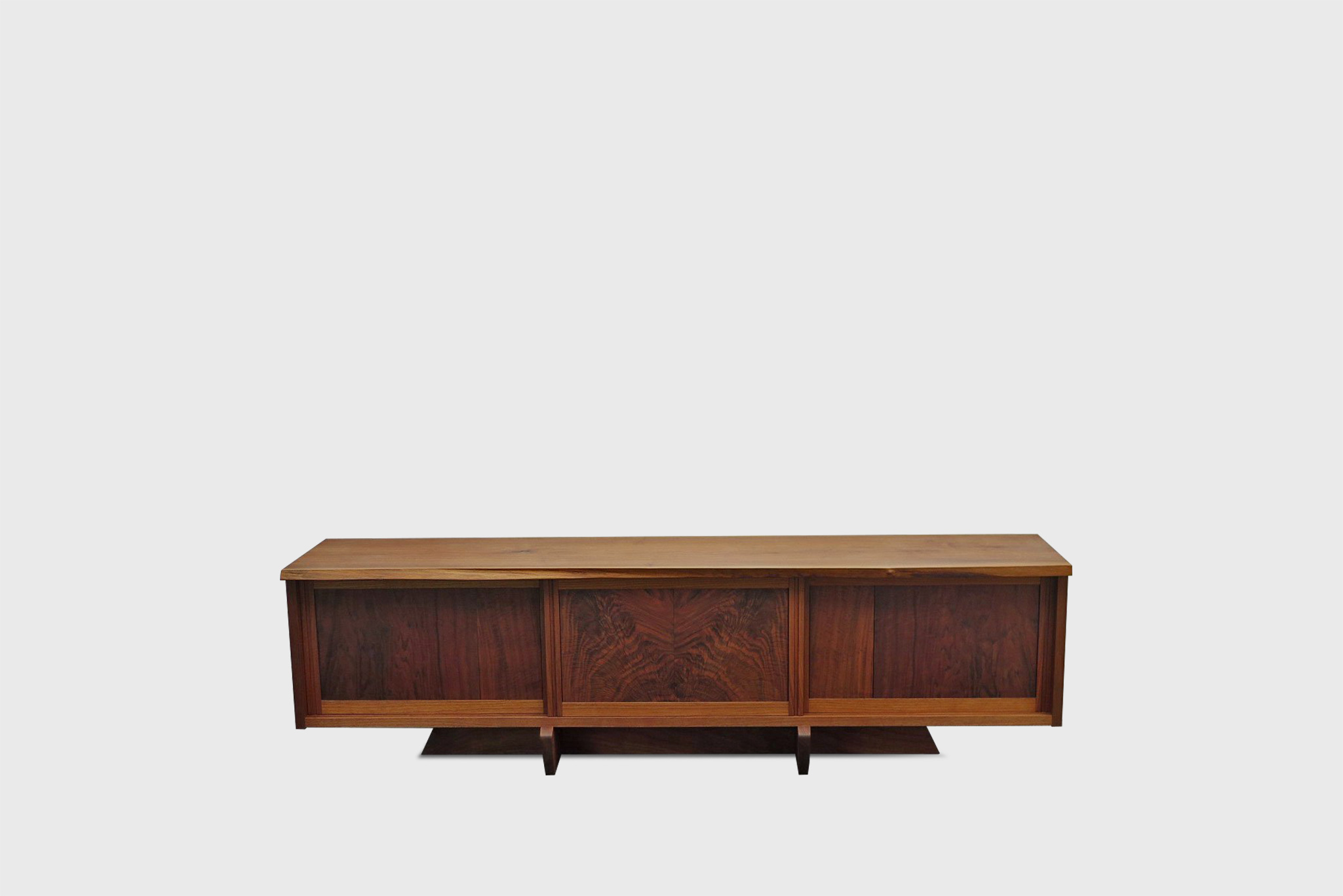
Buffet model "Conoid"
Manufactured by Sakura Seisakusho
Japan, 1973
Solid walnut
Measurements
210 × 52 × 59,5h cm
82,7 × 20,5 × 23,4h in
Details
Manufacturer's label
Literature
Nakashima, G. (1990). George Nakashima Woodworker: New Hope, Pennsylvania (Studio catalog, ca. 1990). New Hope, PA: George Nakashima Woodworkers.
Nakashima, G. (2003). Nature, Form & Spirit: The Life and Legacy of George Nakashima. New York, NY: Abrams. (See discussion on his collaboration with Sakura Seisakusho.)
Nakashima, G. (1955). George Nakashima, Woodworker: Photo‑Illustrated Furniture Catalog (Catalog with price list, September 1966 edition). New Hope, PA: George Nakashima, Woodworker.
Provenance
Private Collection, Tokyo
Biography
Born in Spokane, Washington, to Japanese immigrant parents, Nakashima’s life straddled two worlds: the modernist movements of the West and the deep, meditative traditions of Japanese craftsmanship. He trained in architecture in the United States and Europe, yet it was Japan—its philosophy, artisans, and ancient techniques—that profoundly shaped his approach to furniture.
In the 1930s, Nakashima worked in Japan under Antonin Raymond, the Czech-American architect who introduced modernist ideas to the country. It was here that Nakashima first absorbed Japanese woodworking’s reverence for natural materials and subtle joinery. Later, during his internment in World War II, Nakashima honed these skills under traditional Japanese craftsmen, learning to see wood not merely as material but as a living entity, each knot and crack a story to be honored.
By the 1960s, Nakashima sought a way to produce his designs with the meticulous care he demanded but beyond the confines of his Pennsylvania workshop. This led him to Sakura Seisakusho, a Japanese studio and workshop renowned for its craftsmanship. In 1964, Nakashima formalized a collaboration: Sakura would produce his furniture in Japan, strictly adhering to his designs and philosophy. The pieces they made—tables, chairs, and benches—were more than furniture; they were conversations with the wood itself.
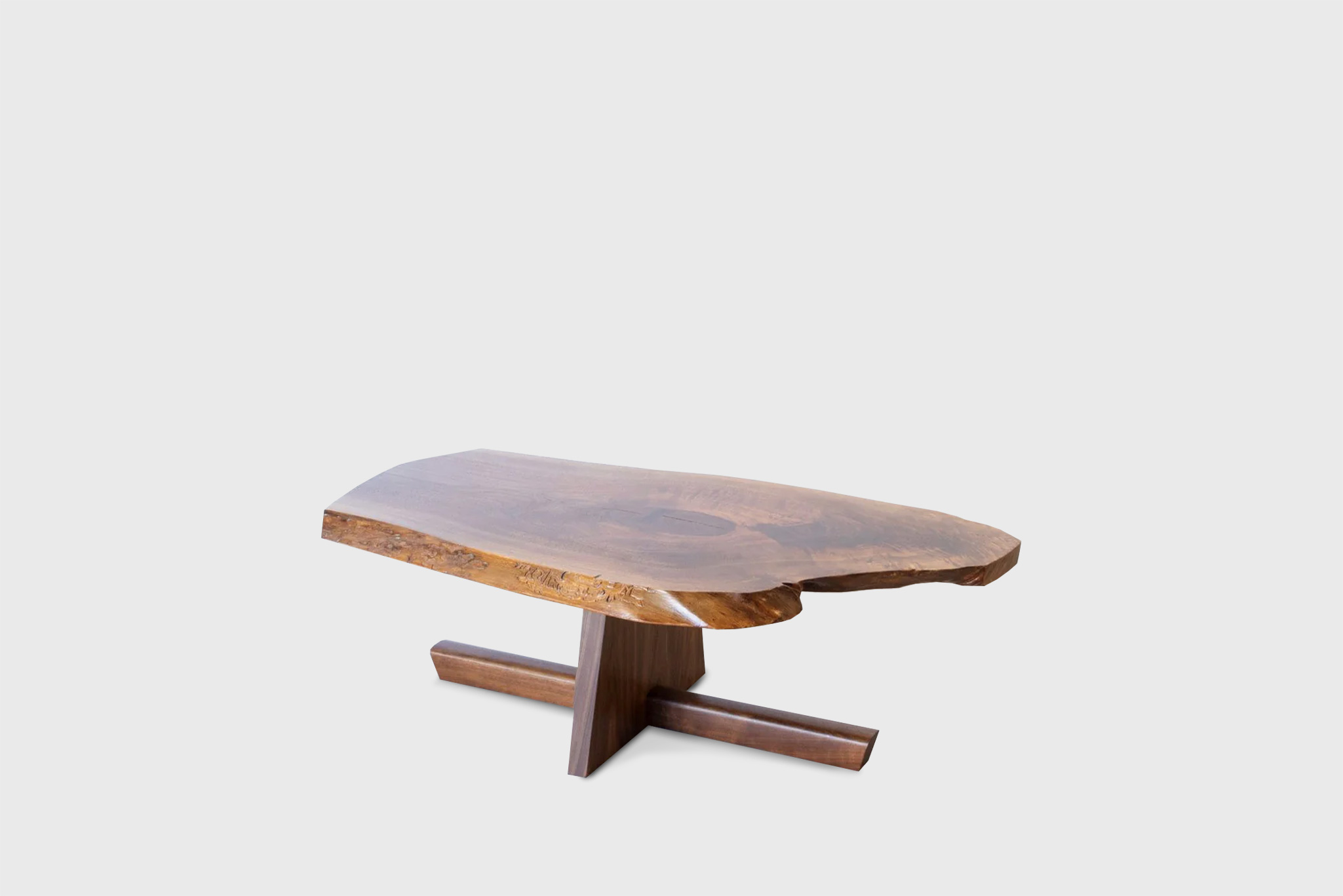
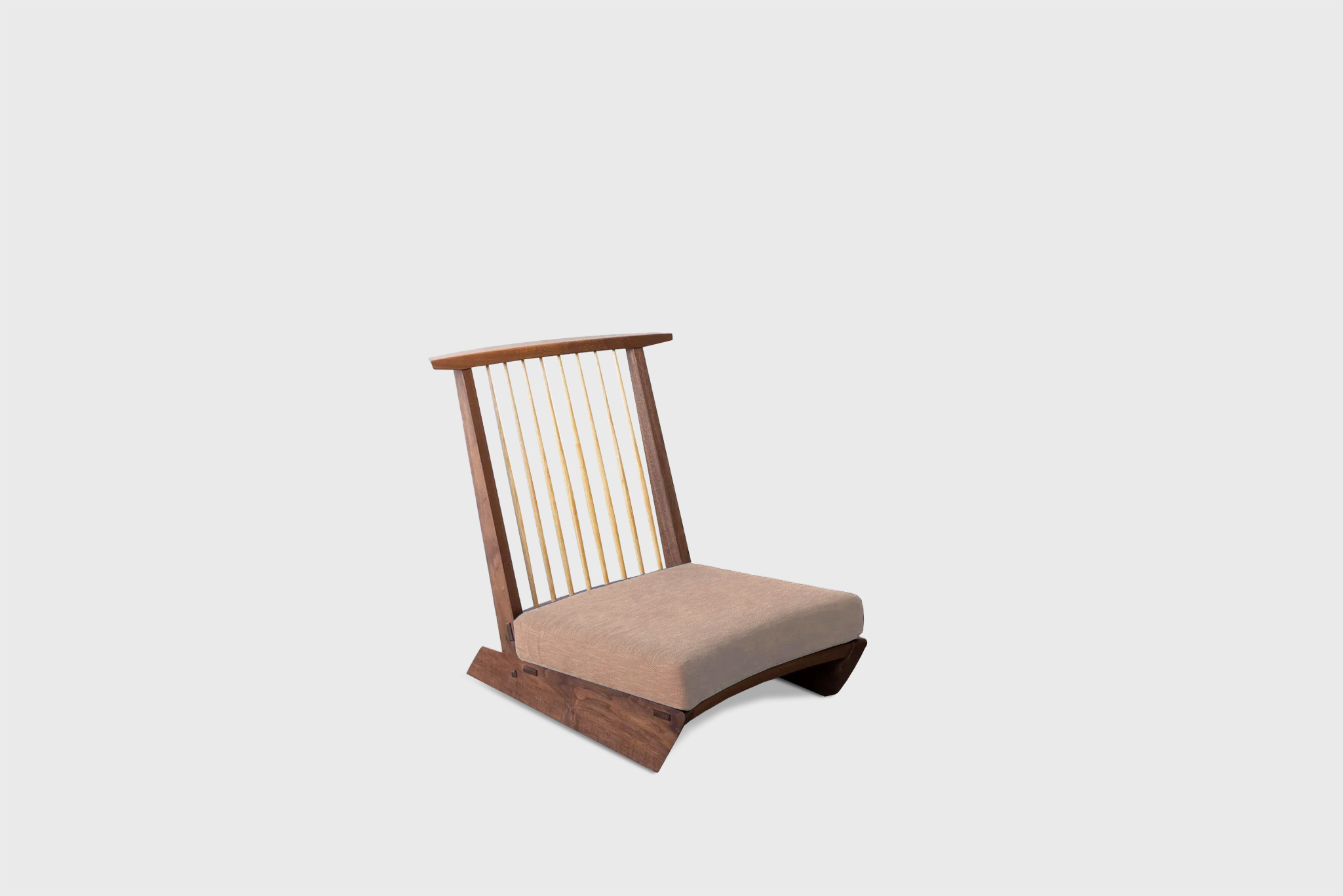
The tables crafted for Sakura were his signature live-edge designs, massive slabs that retained the natural contours and imperfections of the trees. Saws and planes could not erase the grain’s story; every crack was joined carefully, every surface respected. Chairs and benches combined elegance with ergonomics, simple yet profoundly human in their presence. Nakashima personally guided the artisans at Sakura, ensuring that the delicate balance between precision and spirit—the soul of his work—remained intact.
This partnership was not purely commercial. It was a meeting of philosophies. Nakashima and the artisans of Sakura shared a belief that furniture should endure, that making something beautiful was inseparable from making it well. The Sakura pieces, though produced in Japan, carry the same poetic essence as those made in New Hope, Pennsylvania—a testament to Nakashima’s vision and the workshop’s dedication.
Through this collaboration, Nakashima’s work bridged continents. Japan offered not only skilled hands but a continuity of tradition, a lineage of craft that resonated deeply with his own convictions. Today, furniture produced for Sakura Seisakusho is celebrated in exhibitions, archives, and private collections, standing as a living memory of Nakashima’s time in Japan and his dialogue with wood across cultures.
Nakashima’s legacy is more than tables and chairs—it is a philosophy: respect for material, reverence for tradition, and the courage to let nature speak through craft. His Japanese period, crystallized in his work with Sakura Seisakusho, represents the perfect fusion of East and West, art and utility, human hand and living wood.