Side Gallery
Side Gallery
WishlistFollow





Follow
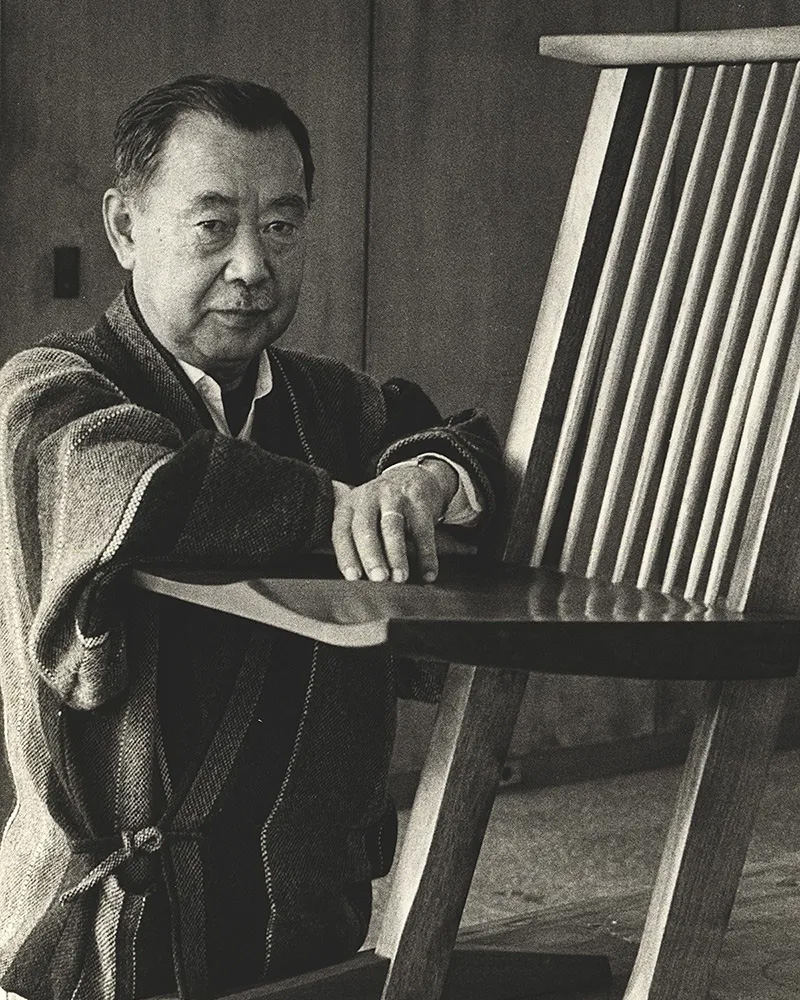
The life and work of George Nakashima (1905–1990) unfolds as a continuous negotiation between architecture, craft, spirituality, and cultural displacement. Trained as an architect at MIT and shaped by extensive travels through Europe and Asia in the late 1920s and early 1930s, Nakashima emerged at a moment when modernism was redefining both form and ideology. His early collaboration with Antonin Raymond in Japan introduced him to a synthesis of Western rationalism and Japanese building traditions, grounding his understanding of structure not merely as engineering but as an ethical and cultural act. In Japan—particularly through periods spent in Tokyo and later in Takamatsu on the island of Shikoku—he absorbed the rigor of temple carpentry, the discipline of hand tools, and the philosophy of joinery as a system of invisible intelligence. His collaboration with the company Sakura during these years marked an early attempt to reconcile artisanal values with controlled production, foreshadowing the balance he would later strike between studio craft and limited manufacture.
A decisive turning point came in 1937, when he traveled to India to oversee construction of the Golconde Dormitory at the Sri Aurobindo Ashram. Immersed in the spiritual environment of the ashram—where he adopted the name Sunder Nanda—Nakashima began designing and fabricating furniture for the first time. These early works, often executed in local teak, were modest in scale but profound in implication: they marked the moment when architecture condensed into the intimacy of the object. The horizontality of the forms, their structural clarity, and their quiet presence responded directly to the contemplative atmosphere of the ashram. Here, craftsmanship became a spiritual discipline, and the act of making assumed moral responsibility.
Upon returning to the United States, history intervened. In 1942, like many Japanese Americans, Nakashima was interned at Minidoka, Idaho. There he encountered the master carpenter Gentaro Hikogawa, from whom he absorbed refined Japanese hand-tool techniques and advanced joinery methods. More than a technical apprenticeship, this period consolidated a lifelong devotion to patience, exactitude, and reverence for wood as a living entity. The discipline learned in confinement paradoxically clarified his artistic purpose: the tree was no longer raw material but collaborator.
After his release—facilitated by Raymond—Nakashima settled in New Hope, Pennsylvania, where he established the workshop that would define his mature practice. It was here that he developed the vocabulary for which he is now internationally recognized: monumental tables formed from single or book-matched slabs, their natural edges preserved as “free edges”; butterfly joints articulating structural repair as visible beauty; surfaces hand-finished to reveal, rather than suppress, the narrative of grain. His production expanded steadily from bespoke commissions to carefully calibrated series, yet he resisted the anonymity of mass industrialization. Even when collaborating with firms such as Knoll or executing major commissions—including Nelson Rockefeller’s residence in Pocantico Hills in 1973—he maintained a workshop ethos in which each board was individually selected for its knots, burls, and figured grain.
This philosophy also informed his significant engagement with the National Institute of Design (NID) in Ahmedabad in November 1964, later revisited in the 2016 exhibition The Free Edge – George Nakashima’s Legacy at National Institute of Design. Invited by Gira Sarabhai at a formative moment in the institution’s development, Nakashima worked closely with students and faculty to produce thirty-two pieces of furniture, twenty-six of which remain in the NID collection today. These works—chairs, benches, tables, daybeds, shelving units—represent a refined synthesis of Japanese woodworking discipline, American studio sensibility, and Indian cultural context. Low-set seating acknowledged the subcontinent’s floor-based living traditions, while exposed joinery and material honesty aligned with NID’s pedagogical ambition to root modern design education in craft knowledge. His residency was not merely productive but formative: it reinforced a model of design practice grounded in cross-cultural dialogue and ethical material engagement.
Throughout his life, Nakashima cited diverse inspirations: the concentrated ritual of the Japanese tea ceremony, the structural integrity of American Shaker furniture, Zen aesthetics, and the metaphysical pluralism encountered in India. He famously described himself as a “Hindu Catholic Shaker Japanese American,” a formulation that encapsulates the layered hybridity of his worldview. This was not stylistic eclecticism but philosophical integration. Architecture, furniture, industry, and spirituality were for him extensions of a single inquiry—how to listen to the tree and translate its life into form.
In the final decades of his career, this ethical and global consciousness crystallized in the conception of the “Altars for Peace,” monumental works carved from extraordinary walnut logs and intended for placement across continents as sites of meditation and gathering. These altars synthesized the transnational arc of his life: Japanese technical rigor, Indian spiritual reflection, and American civic aspiration. Following his death in 1990, his daughter Mira Nakashima assumed leadership of the studio, continuing both the production of historic designs and the realization of the peace altar initiative.
Today, Nakashima’s home and workshop complex in New Hope are recognized as a National Historic Landmark, while a workshop and museum in Takamatsu maintain his Japanese legacy. His influence on the Studio Furniture movement and on contemporary woodworking remains profound. Yet beyond the widely imitated “free-edge” aesthetic lies a deeper contribution: a model of modernism forged through migration, exchange, and moral conviction. Nakashima demonstrated that modern design need not erase cultural memory, that craft can coexist with innovation, and that the object—patiently made—can serve as a site where history, identity, and spirituality converge.
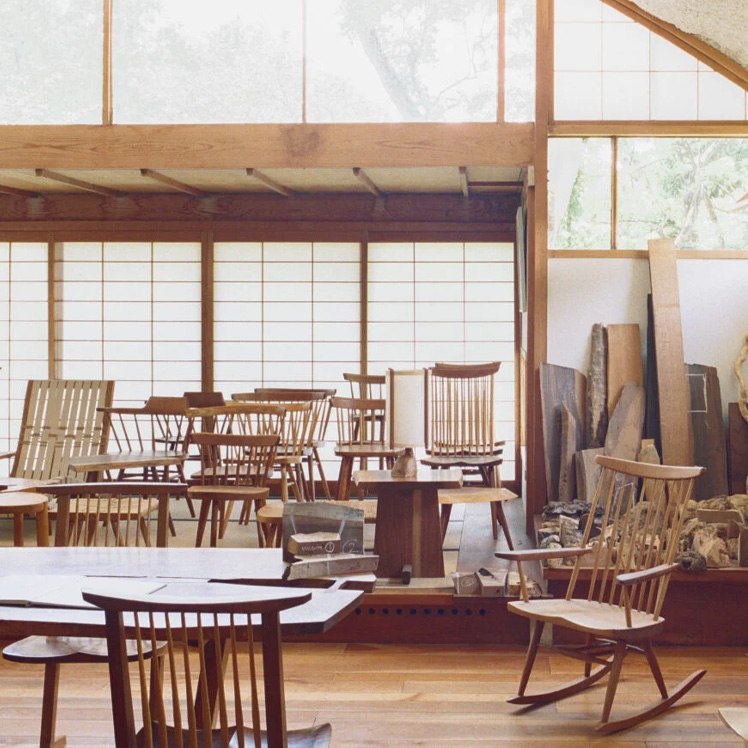
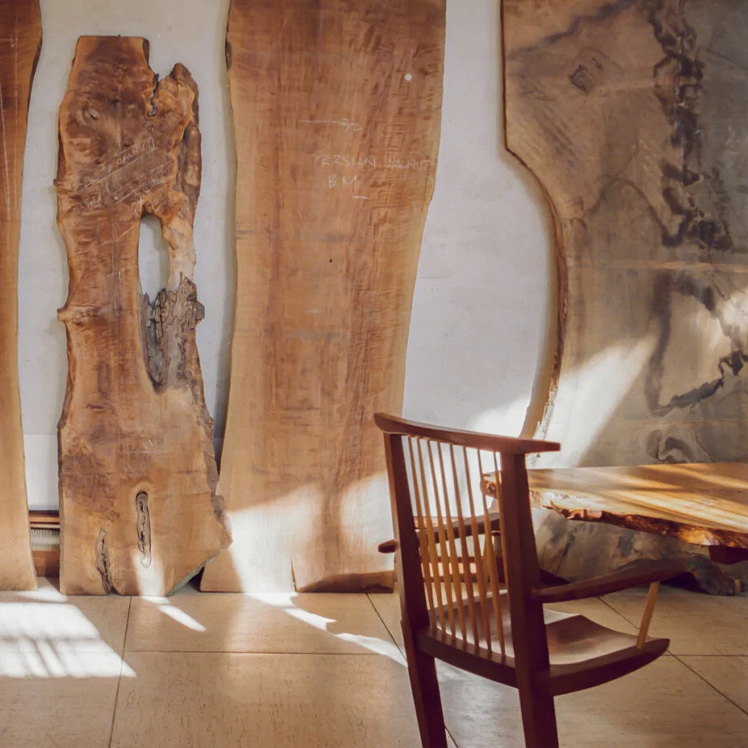
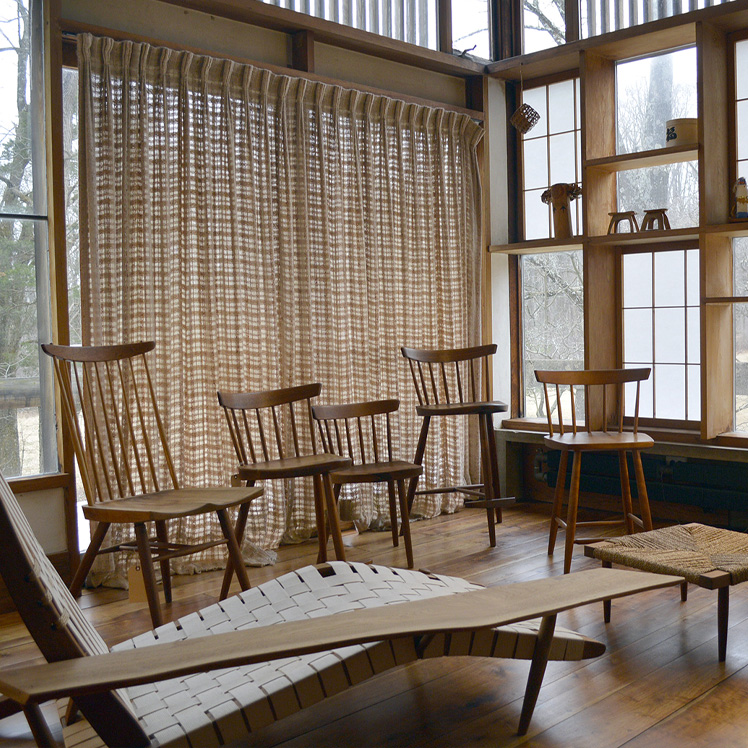
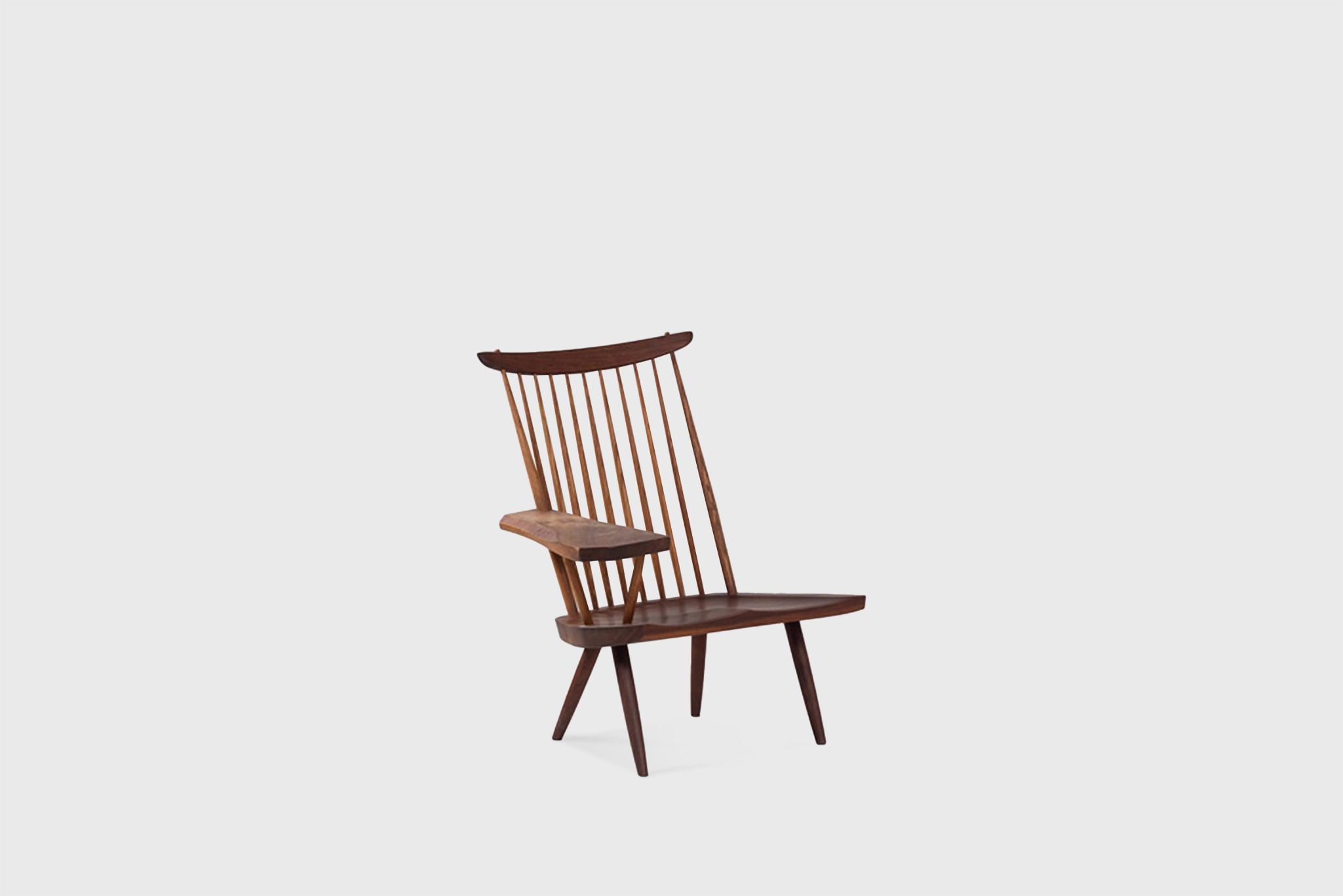
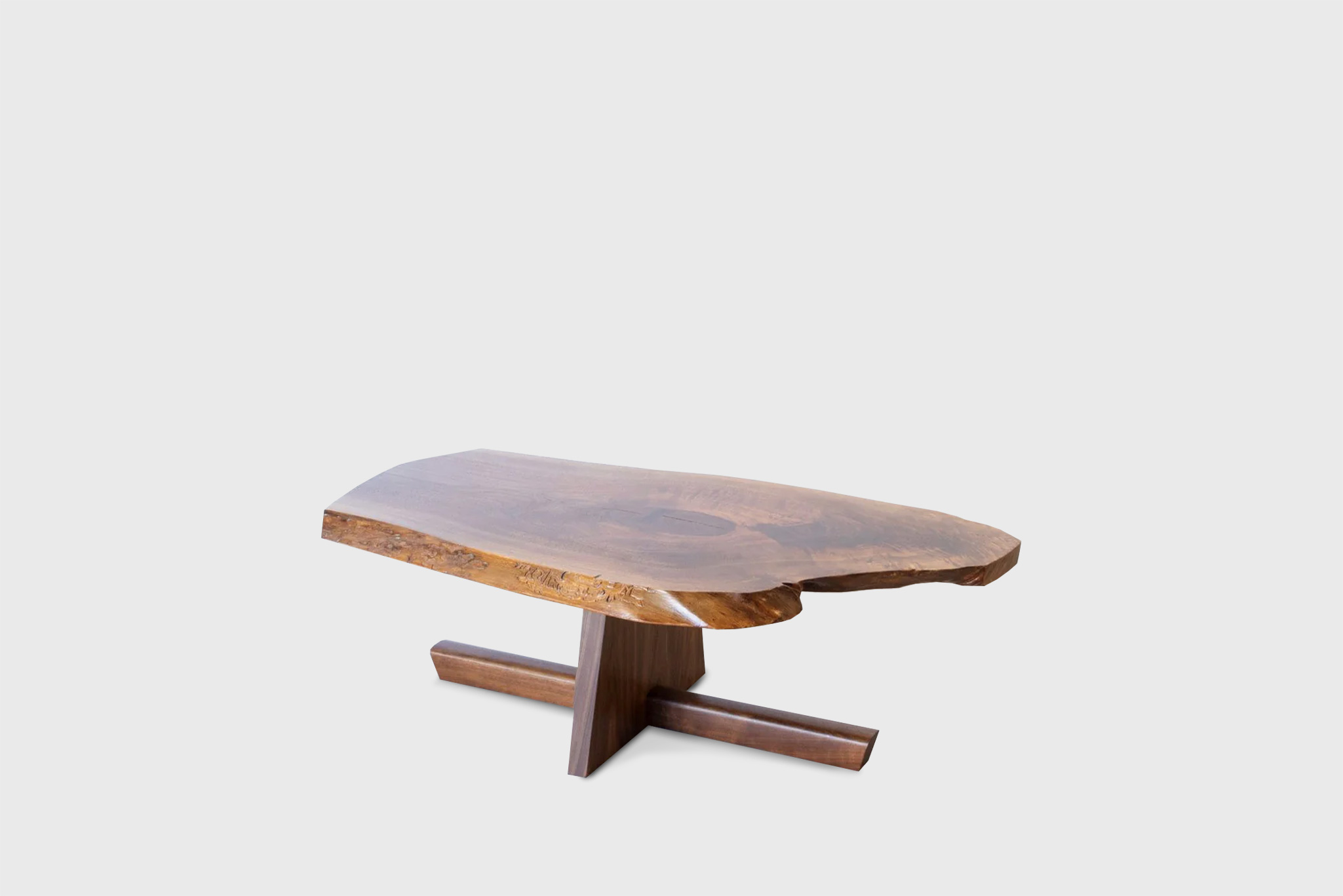
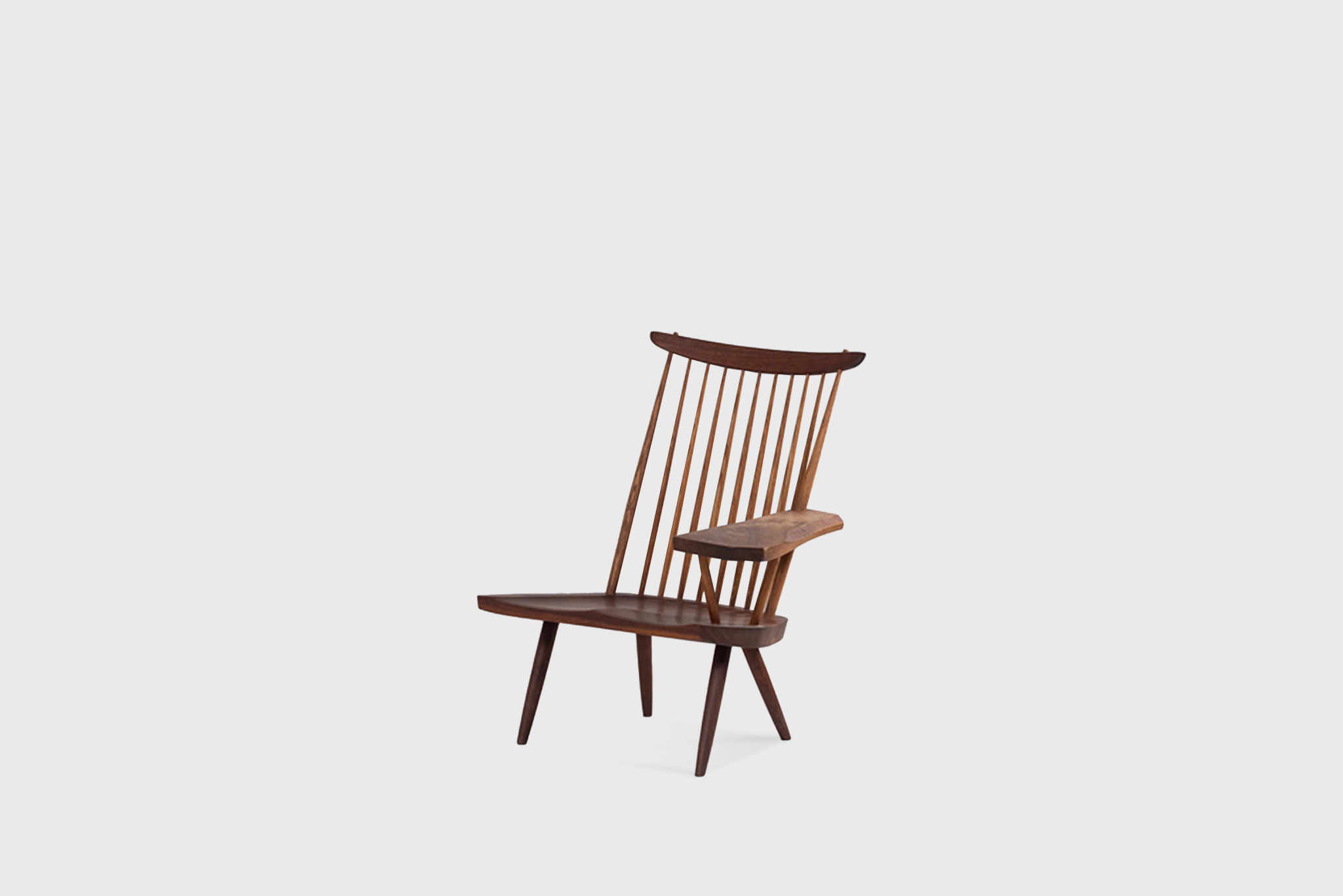
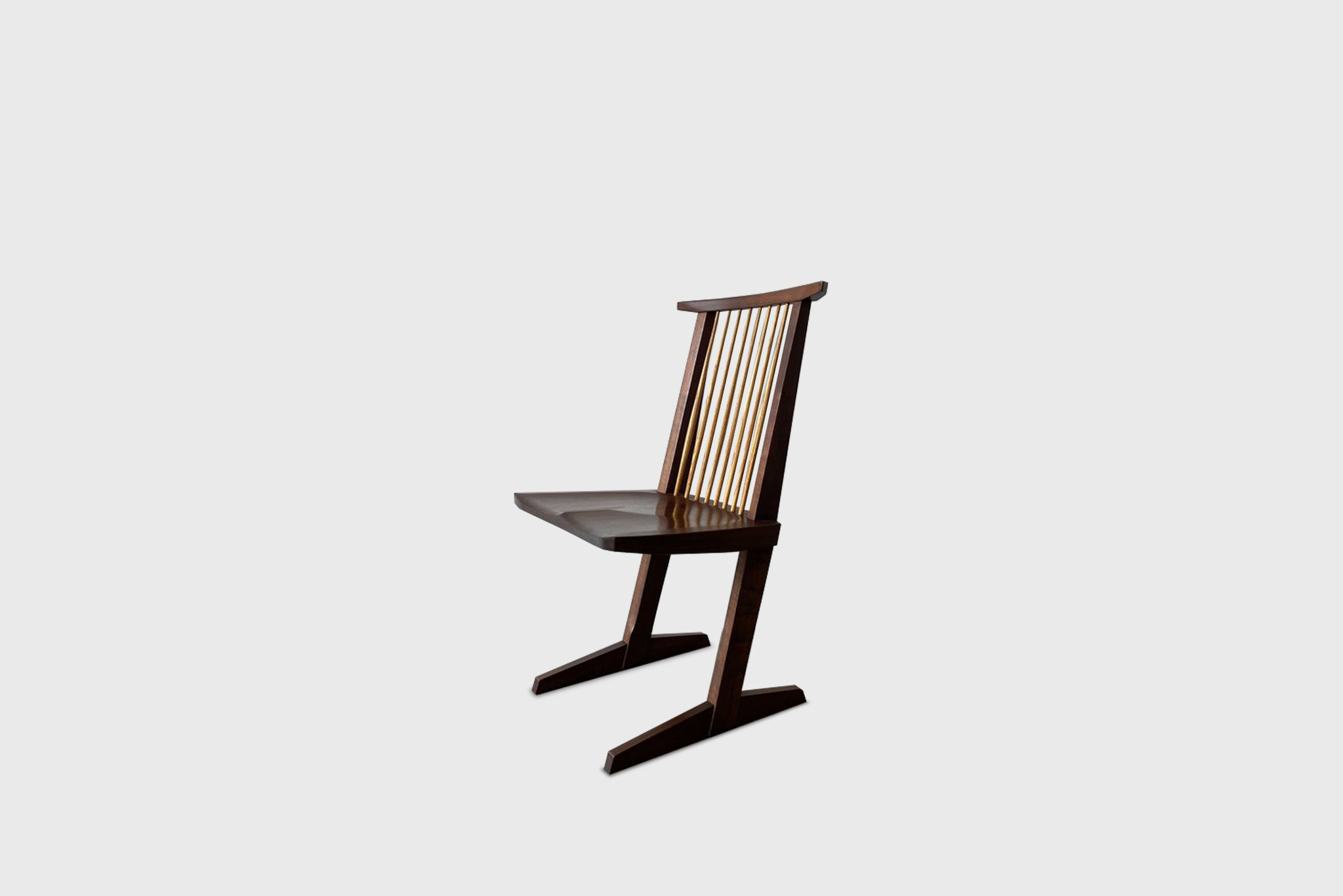
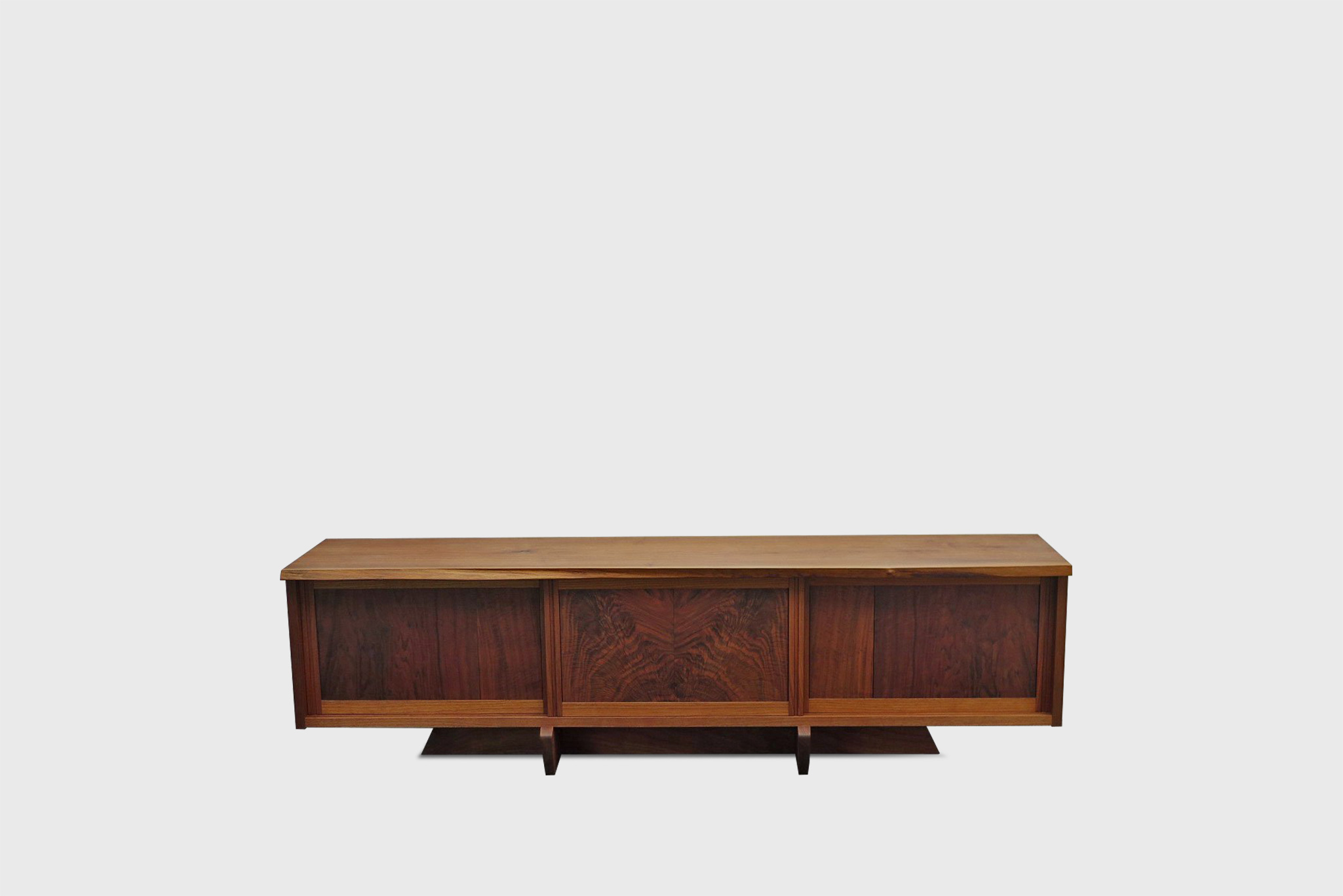
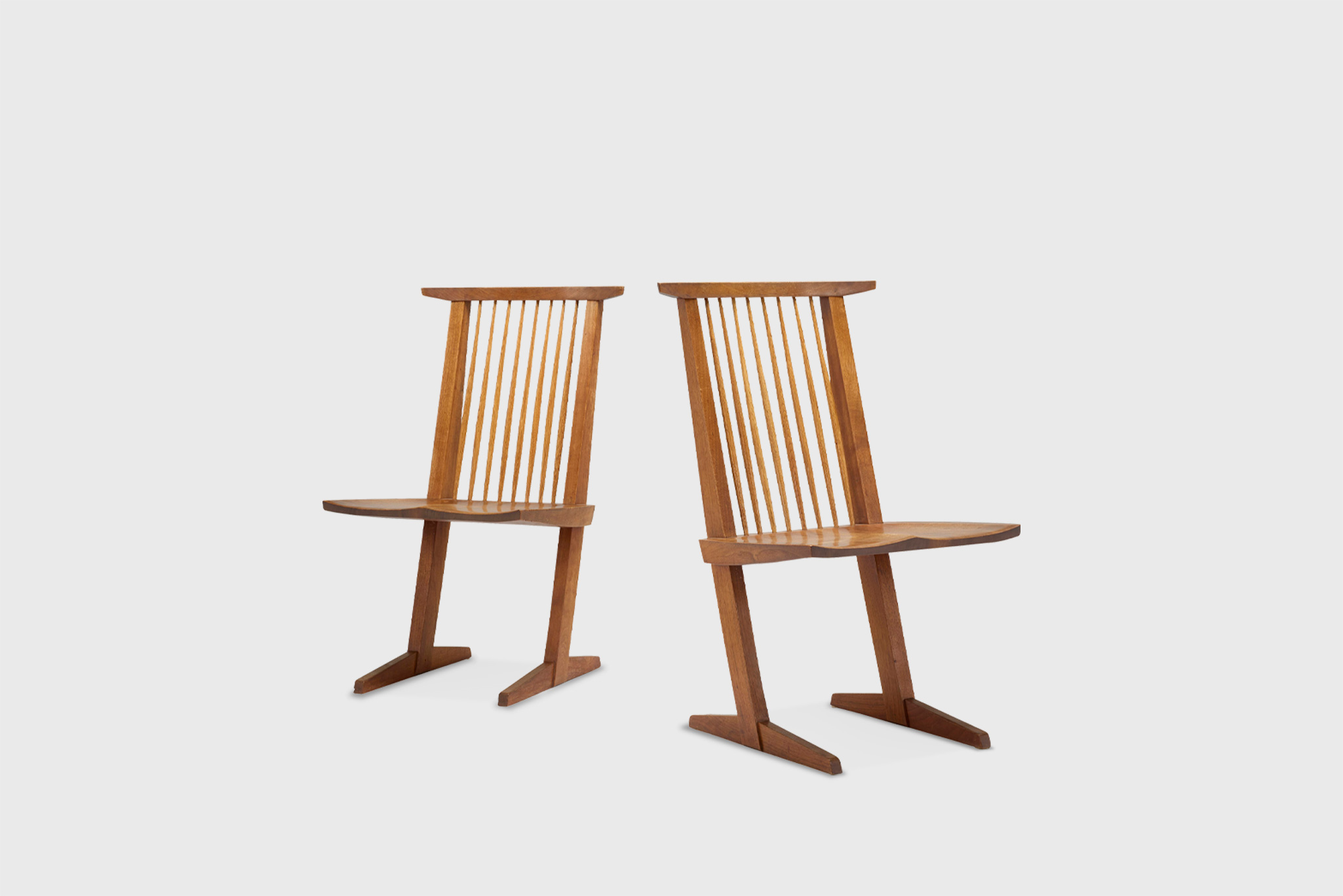
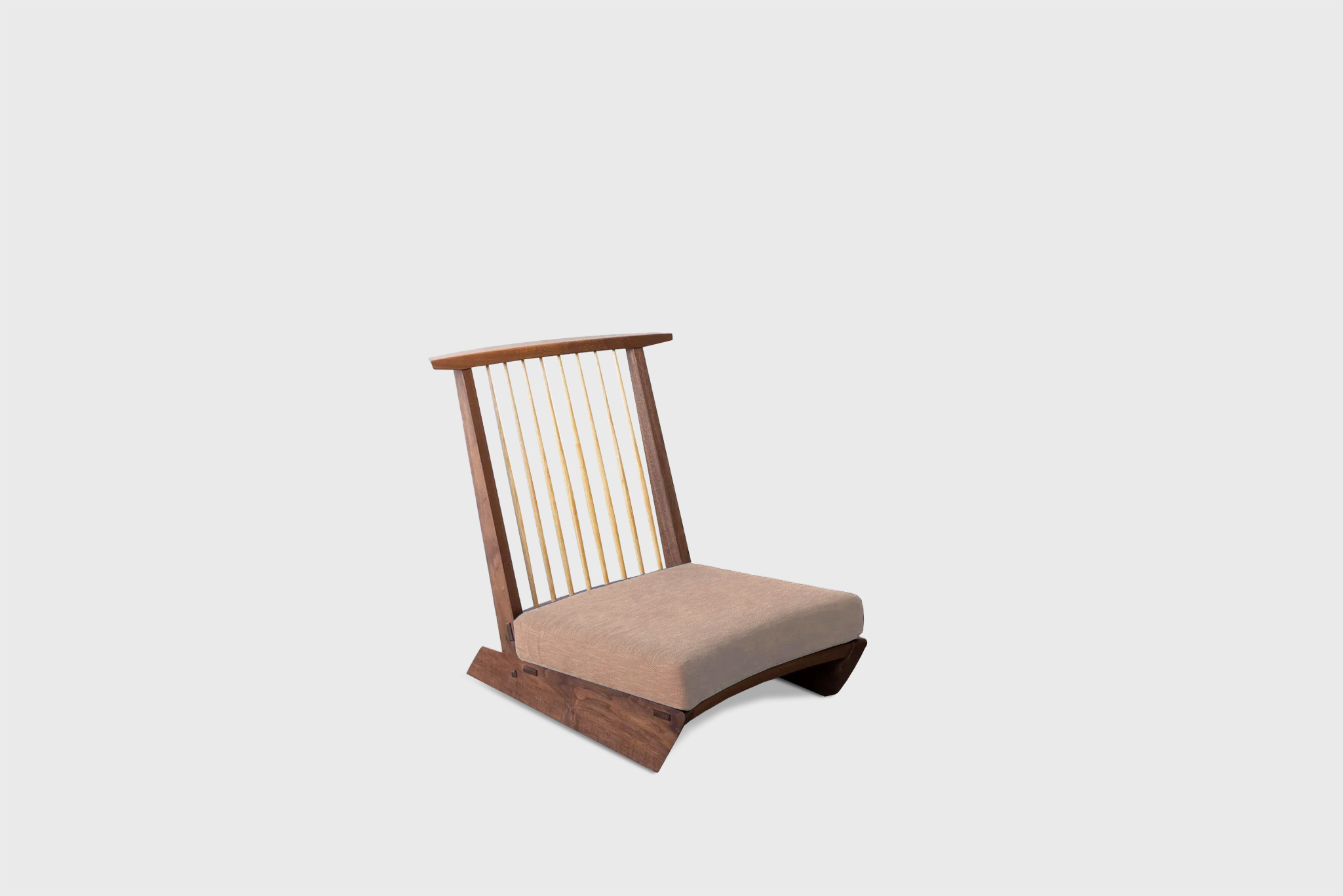
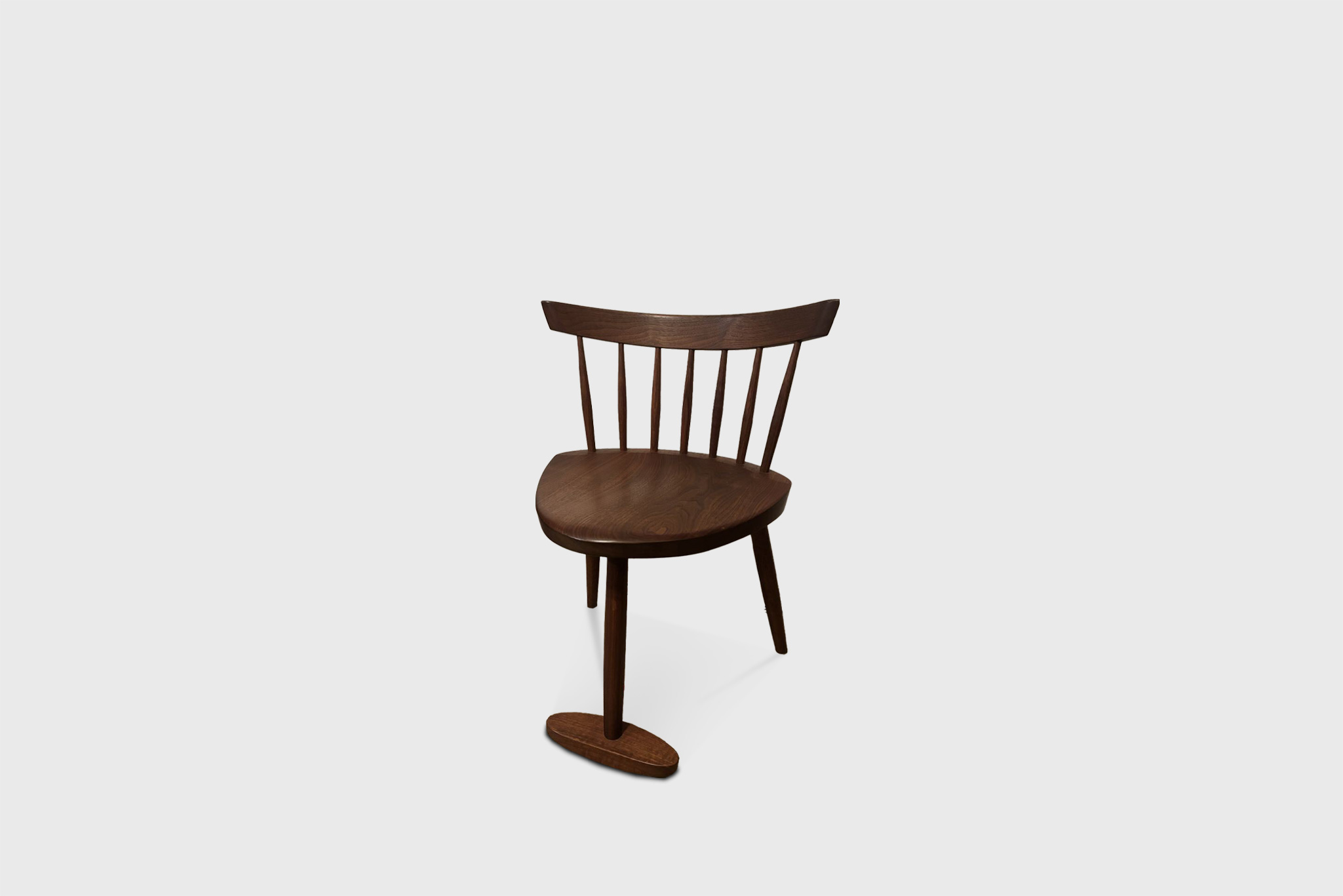
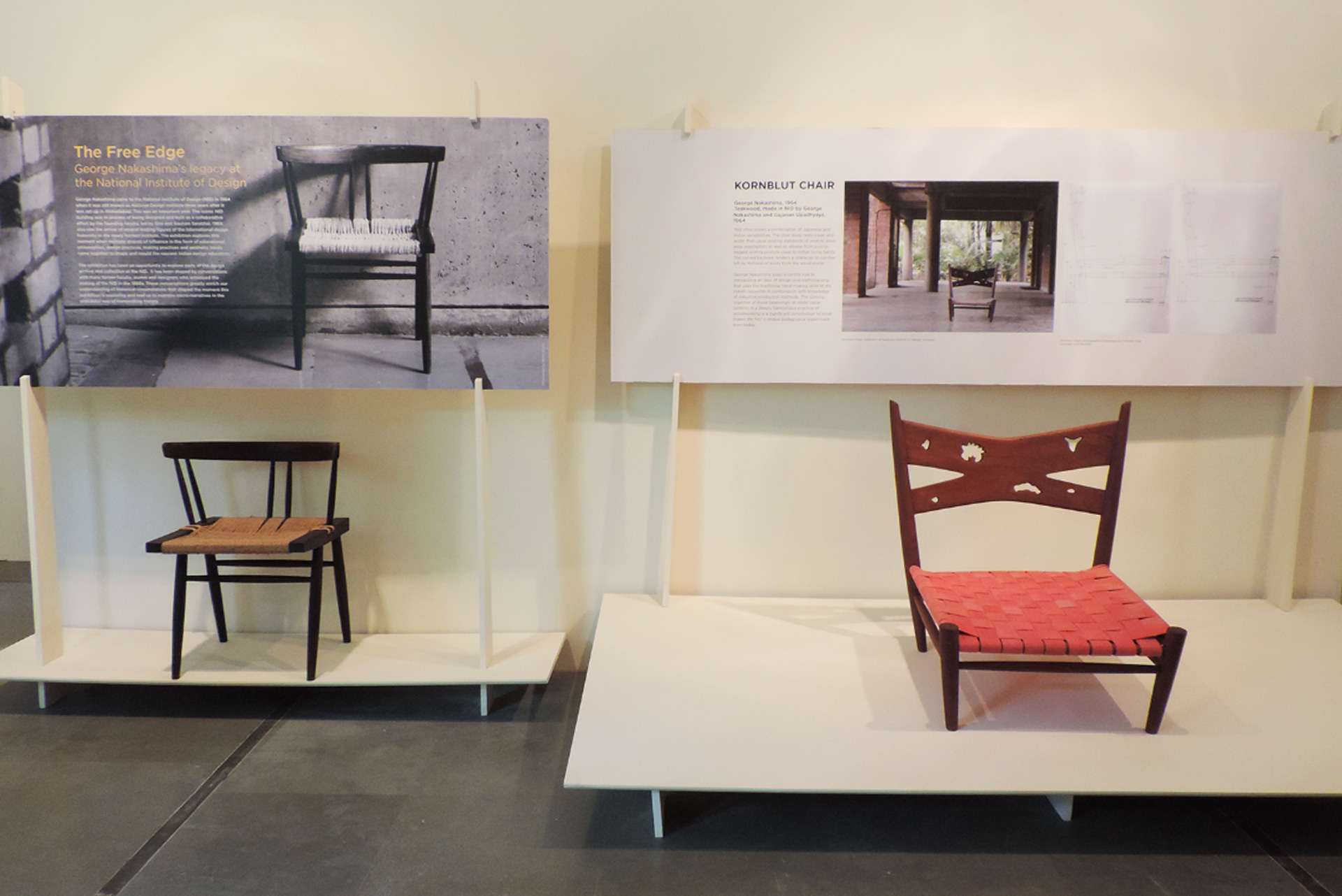
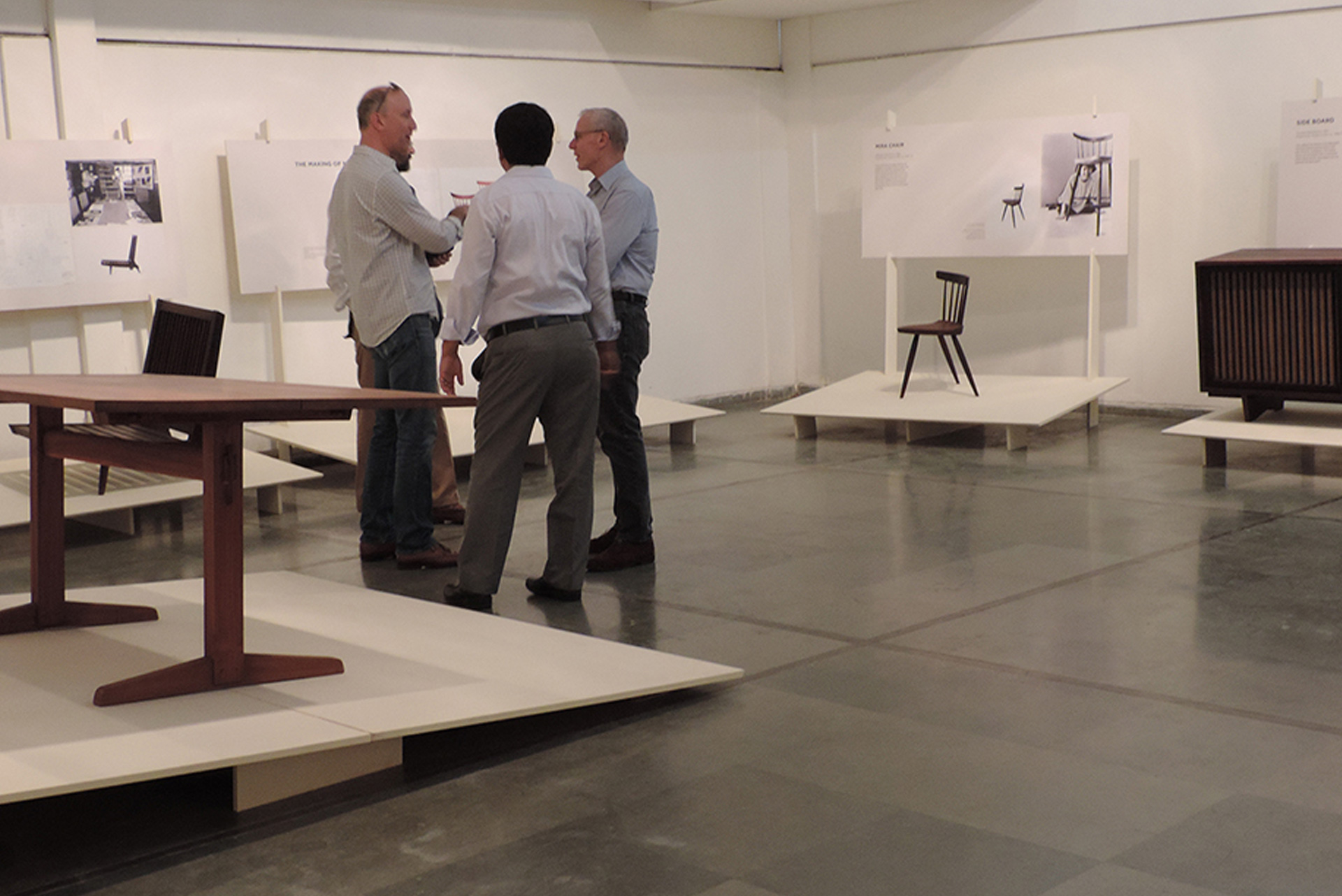
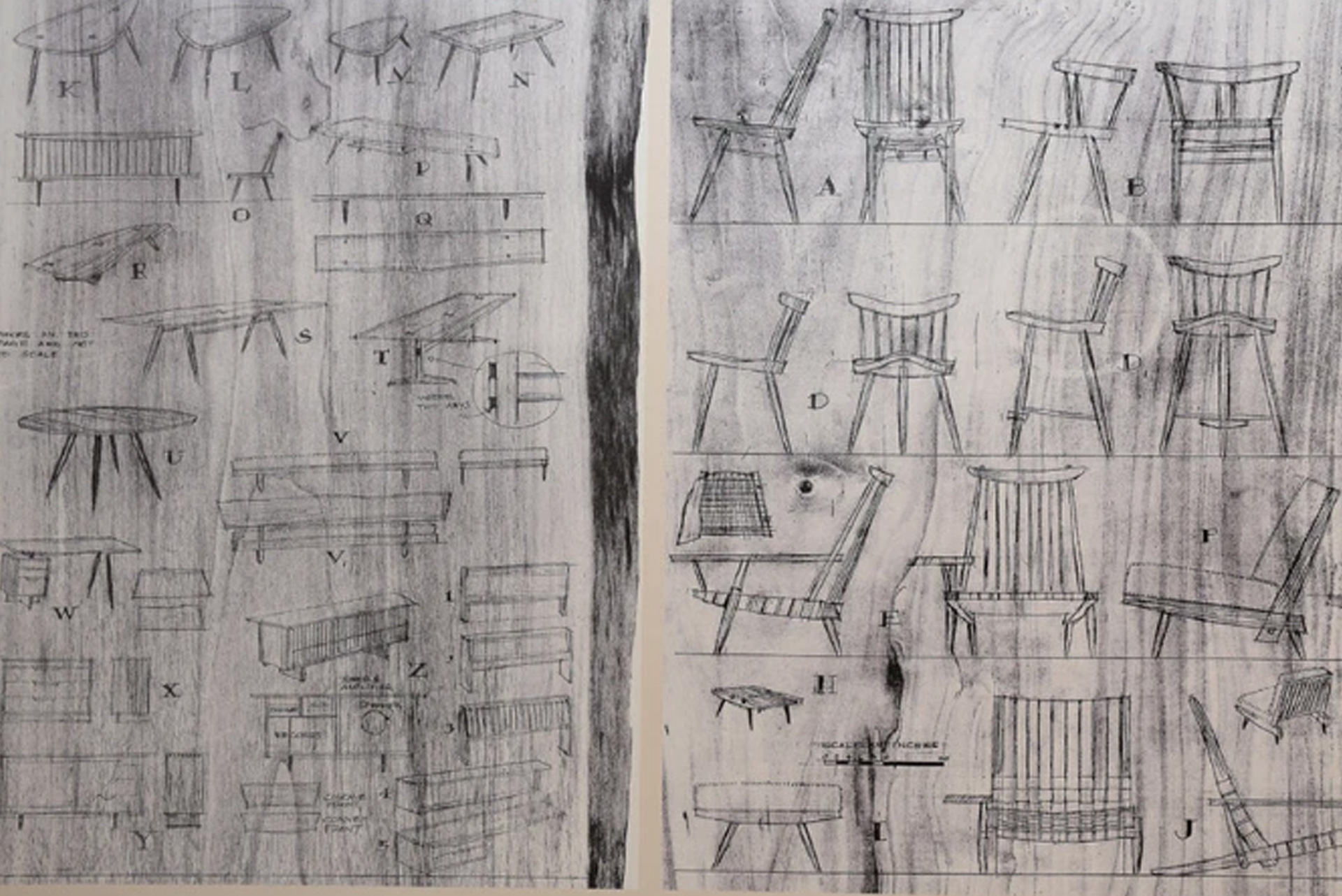
THE FREE EDGE – GEORGE NAKASHIMA’S LEGACY AT NATIONAL INSTITUTE OF DESIGN
NATIONAL INSTITUTE OF DESIGN (NID), AHMEDABAD (INDIA)
2016
MORE INFO
The Free Edge – George Nakashima’s Legacy at National Institute of Design (2016) revisited the designer’s 1964 residency at NID Ahmedabad ((India), situating his furniture production within the broader project of post-independence Indian modernism. Through preserved works and archival materials, the exhibition highlighted Nakashima’s synthesis of craft, spirituality, and modern design pedagogy.



ENQUIRE ABOUT THE DESIGNER