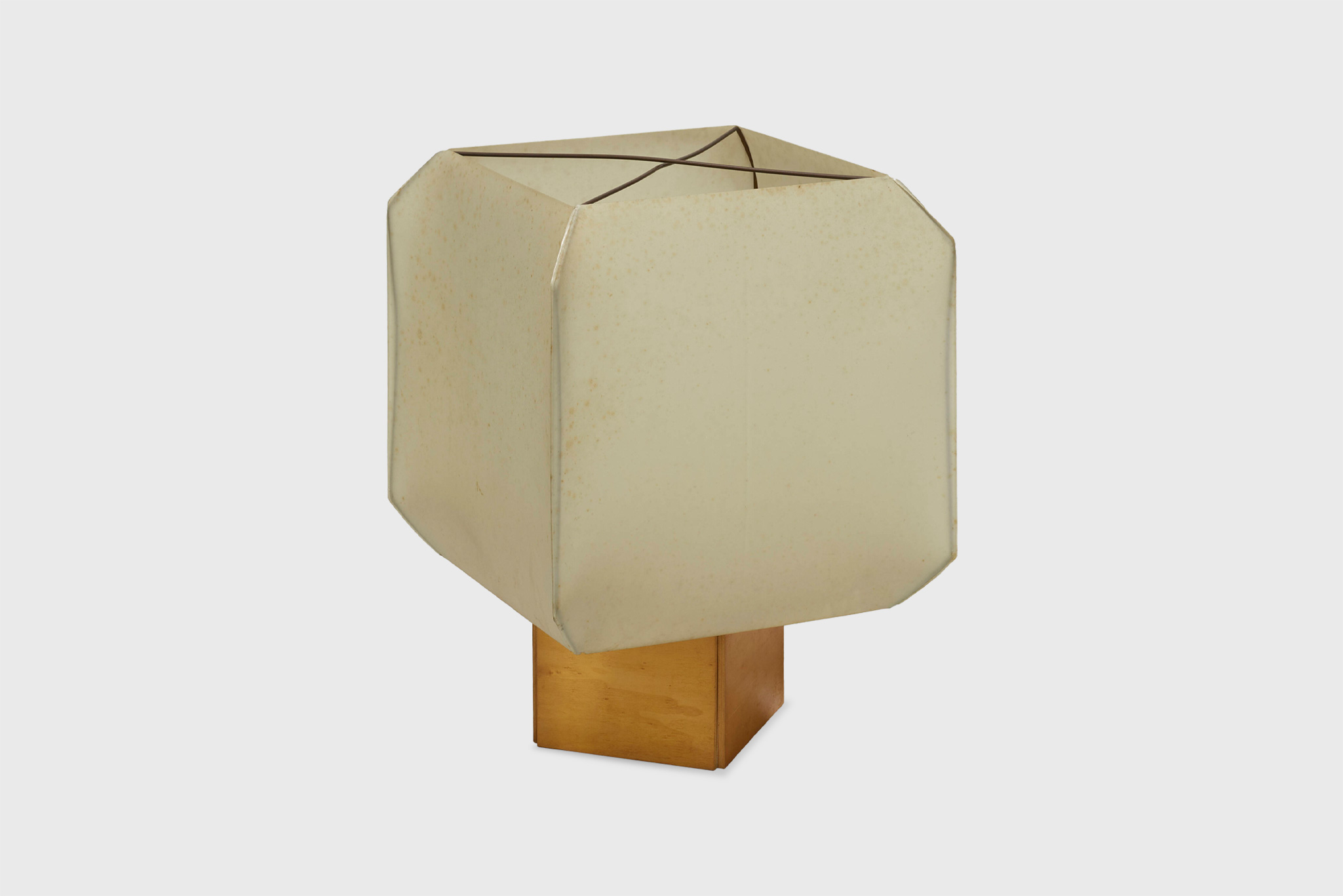
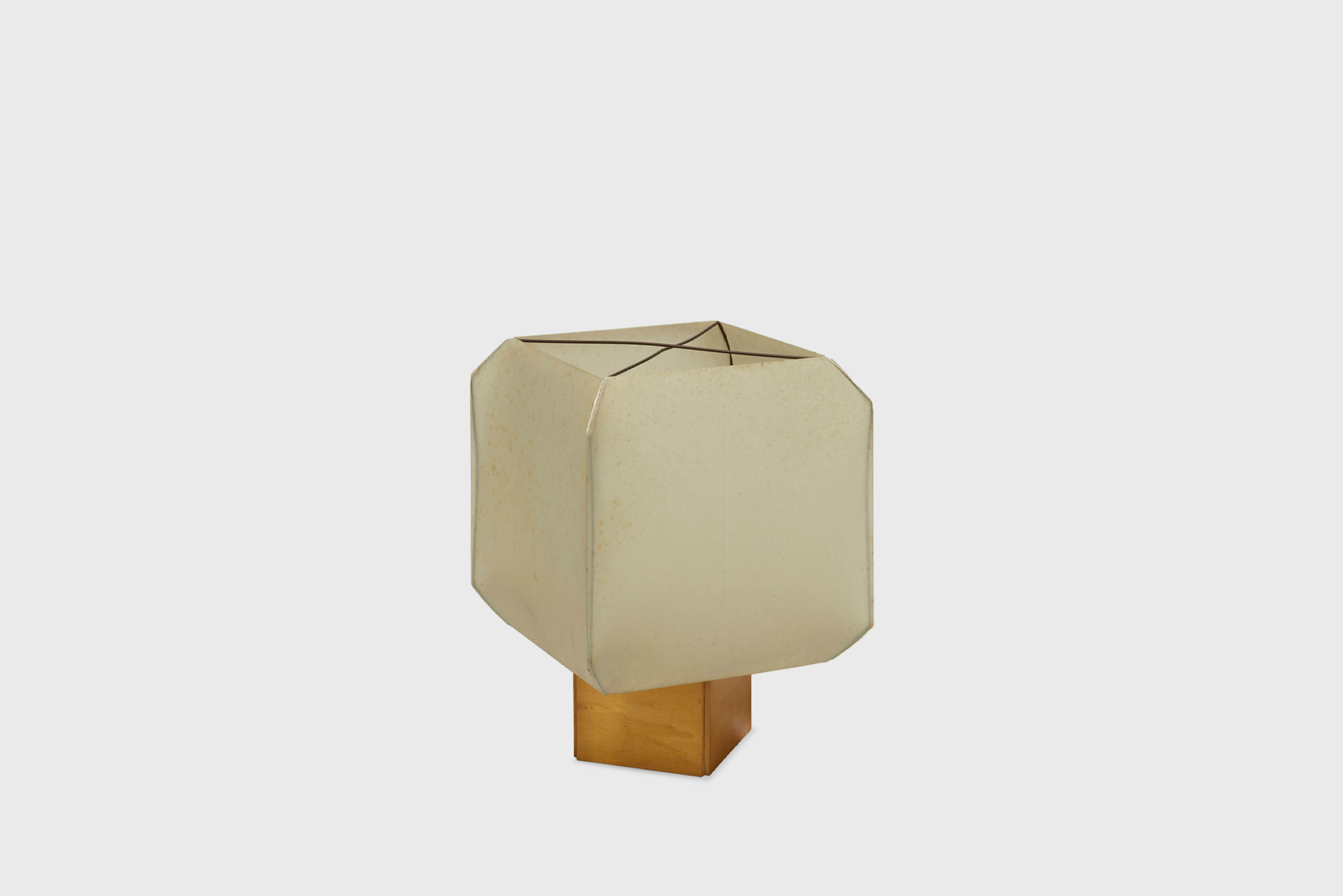
Table Lamp Model "Bali" 2003B
Manufactured by Danese Milano
Italy, 1958
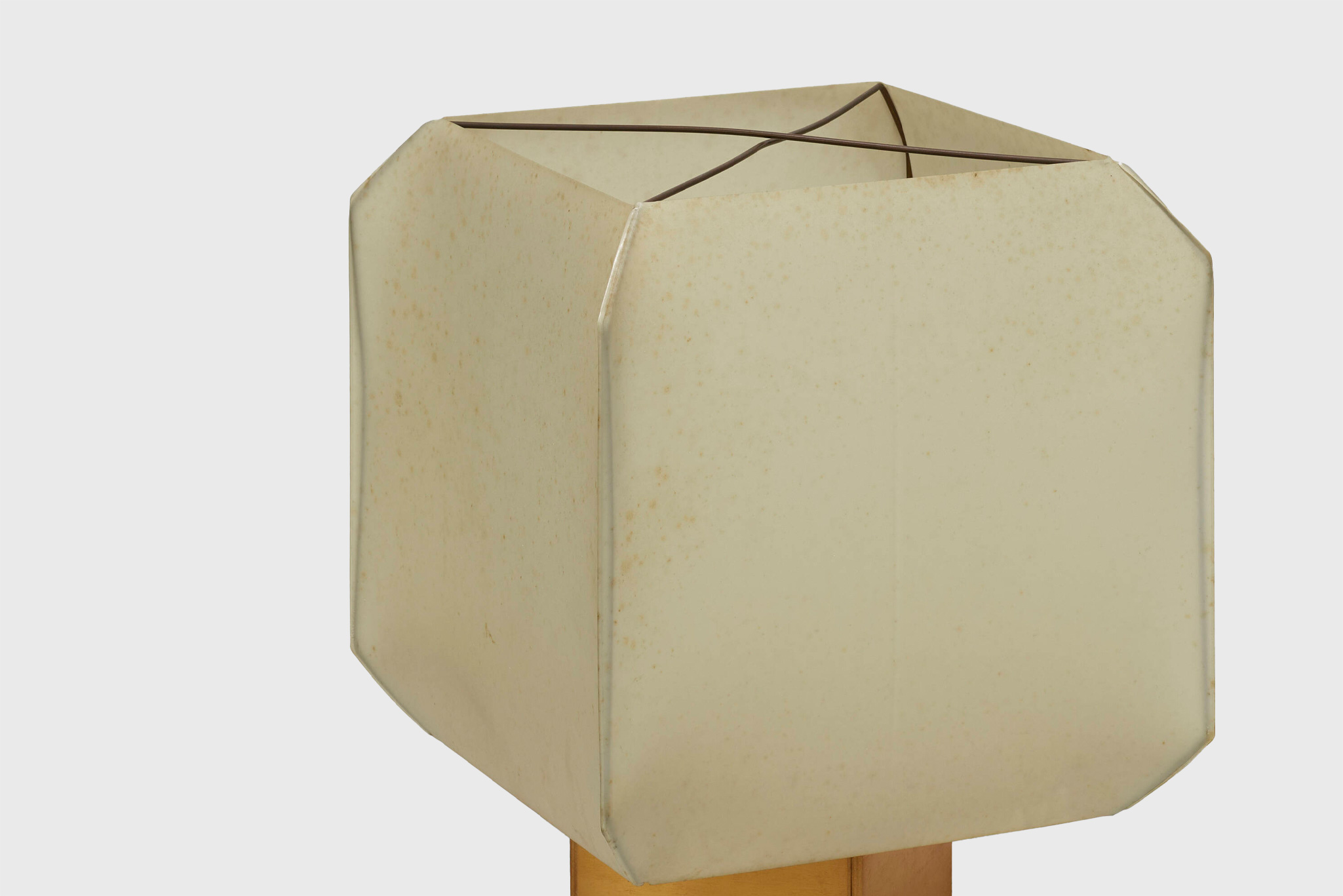
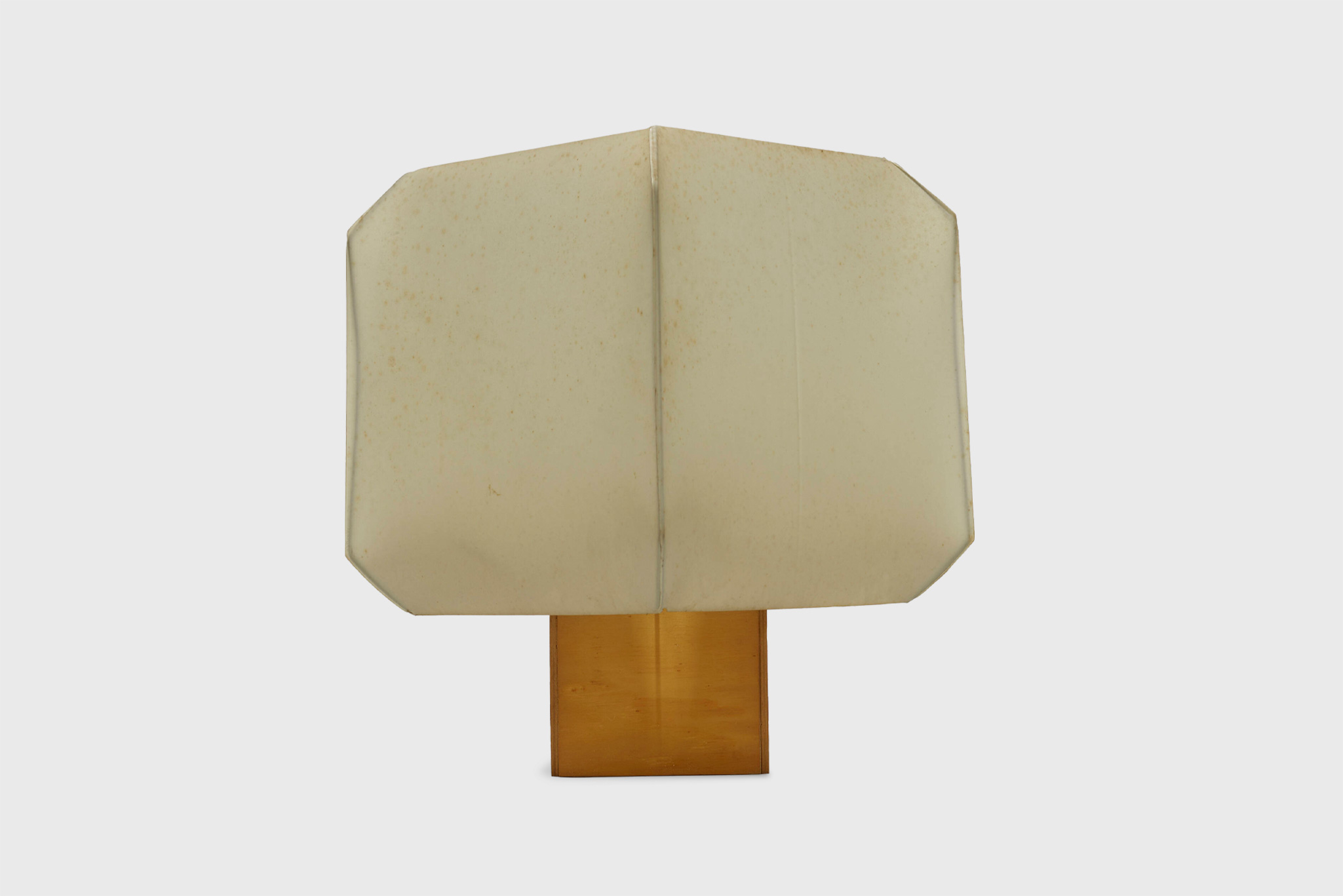
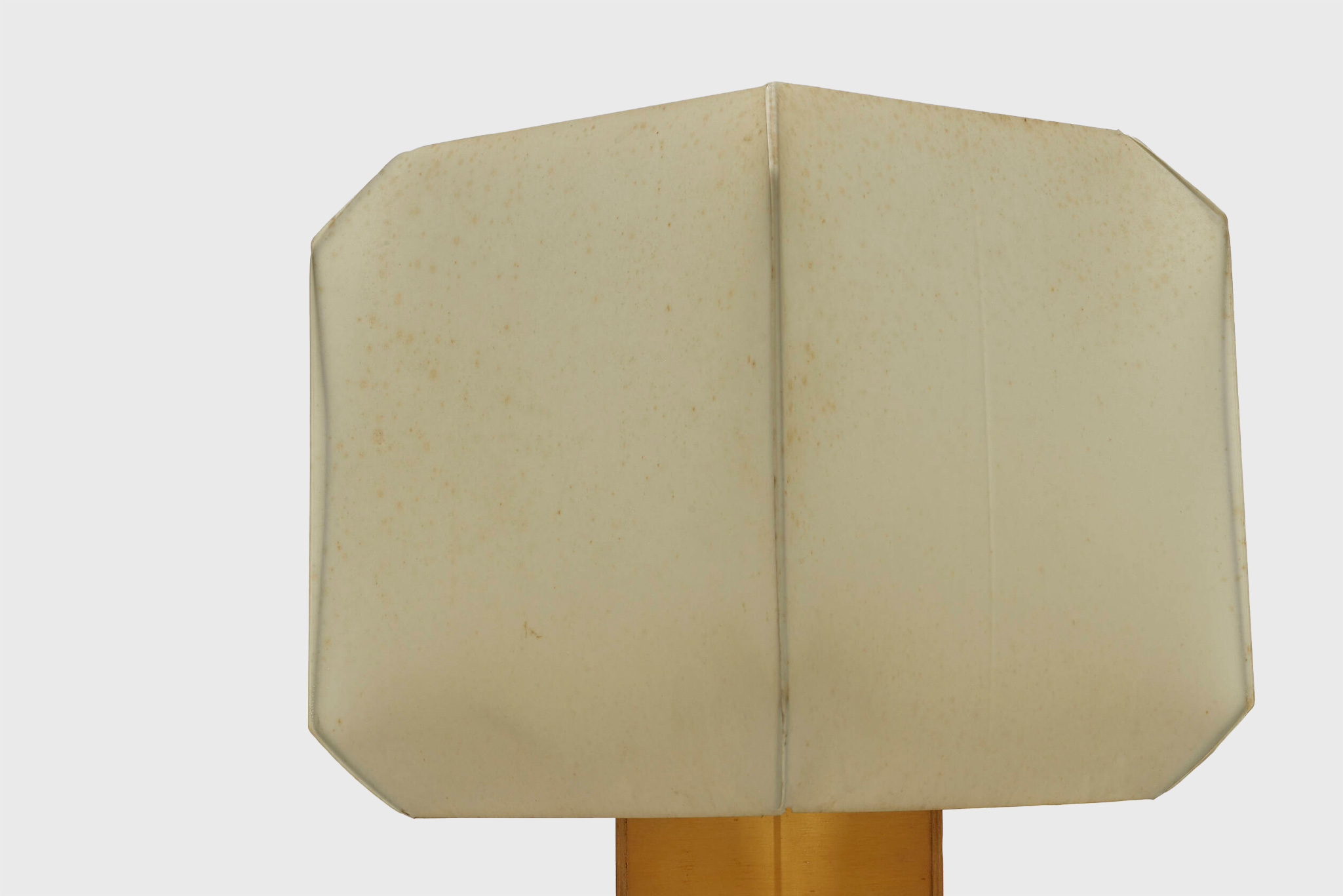
Lacquered metal frame, Rice paper lampshade, Wood
Measurements
29 × 29 × 41h
11,4 × 11,4 × 16h in
Details
Stamped with manufacturer's label
Literature
Danese Milano, Manufacturer’s Catalog, 1976, p. 27
Danese Milano, Price List, 1991, unpaginated
Munari, B. (1980). Design as Art. Penguin Books.
Baroni, D. (2008). Bruno Munari: My Futurist Past. Corraini Edizioni.
Finessi, B. (2008). Danese: Design and Innovation in Italian Lighting. Electa.
Sudjic, D. (2015). Italian Design Since 1945. Thames & Hudson.
About
The Bali lamp, designed by Bruno Munari in 1958 and produced by Danese, embodies the designer’s lifelong investigation into structure, simplicity, and the expressive potential of light. Formed by interlocking birch-plywood planes and thin plastic elements, the lamp creates a volumetric geometry that feels both lightweight and architectural. Its translucent surfaces diffuse illumination softly, producing a dynamic interplay of shadow and rhythm characteristic of Munari’s experiments with modular forms.
Designed during a formative moment in Italian postwar design, the Bali lamp reflects Munari’s belief that objects should arise from clarity, logic, and poetic reduction. Its construction—based on a few essential components—positions the lamp as both functional lighting and a study in visual balance, making it one of the early iconic pieces from Danese Milano’s design-led production.
Biography
Bruno Munari (b. 1907, Milan, Italy - d. 1998, Milan, Italy) was an influential Italian artist, designer, and writer, known for his innovative contributions to various creative fields, including furniture design.
Munari's interest in design and art flourished from an early age. He studied art at the Brera Academy in Milan, where he developed a keen eye for aesthetics and a deep understanding of materials and craftsmanship.
In the 1930s, Munari emerged as a prominent figure in the Italian Futurist movement, which advocated for the integration of art and technology. He explored the possibilities of design in various mediums, including painting, sculpture, and graphic design. Munari's experimental approach to design, characterized by simplicity, functionality, and visual impact, gained him international recognition.
In the realm of furniture design, Munari's creations were marked by their innovative forms and materials. He sought to break away from traditional design conventions, embracing unconventional materials and employing imaginative shapes and structures. Munari's furniture designs reflected his belief in the importance of engaging the viewer's senses and stimulating their interaction with the objects.
Throughout his career, Munari collaborated with renowned manufacturers and architects, including his influential partnership with Angelo Marelli. Together, they created groundbreaking furniture designs that blurred the boundaries between art and design.
In addition to his design work, Munari also authored numerous books on art, design, and visual communication, showcasing his deep knowledge and passion for creative exploration.
Bruno Munari's impact on the world of furniture design and his multidisciplinary approach continue to inspire contemporary designers.