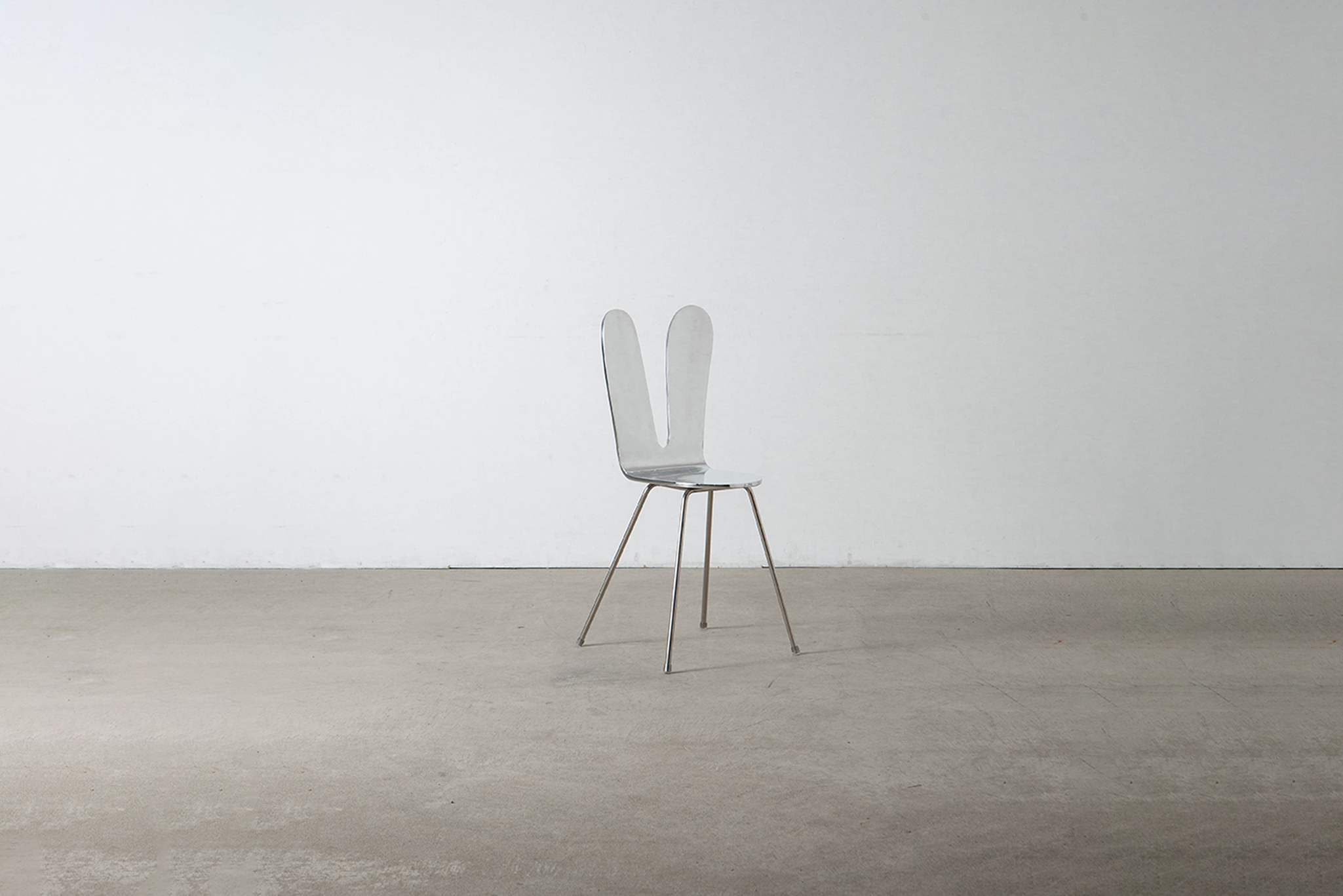
Chair model "Rabbit"
Designed by Kazuyo Sejima and Ryue Nishizawa (SANAA)
Japan, 2025
Metal, mirror-polished chrome finish
Measurements
37 × 50 × 78h cm
14,6 × 19,7 × 30,7h in
Seat height: 41 cm / 16,1 in
About
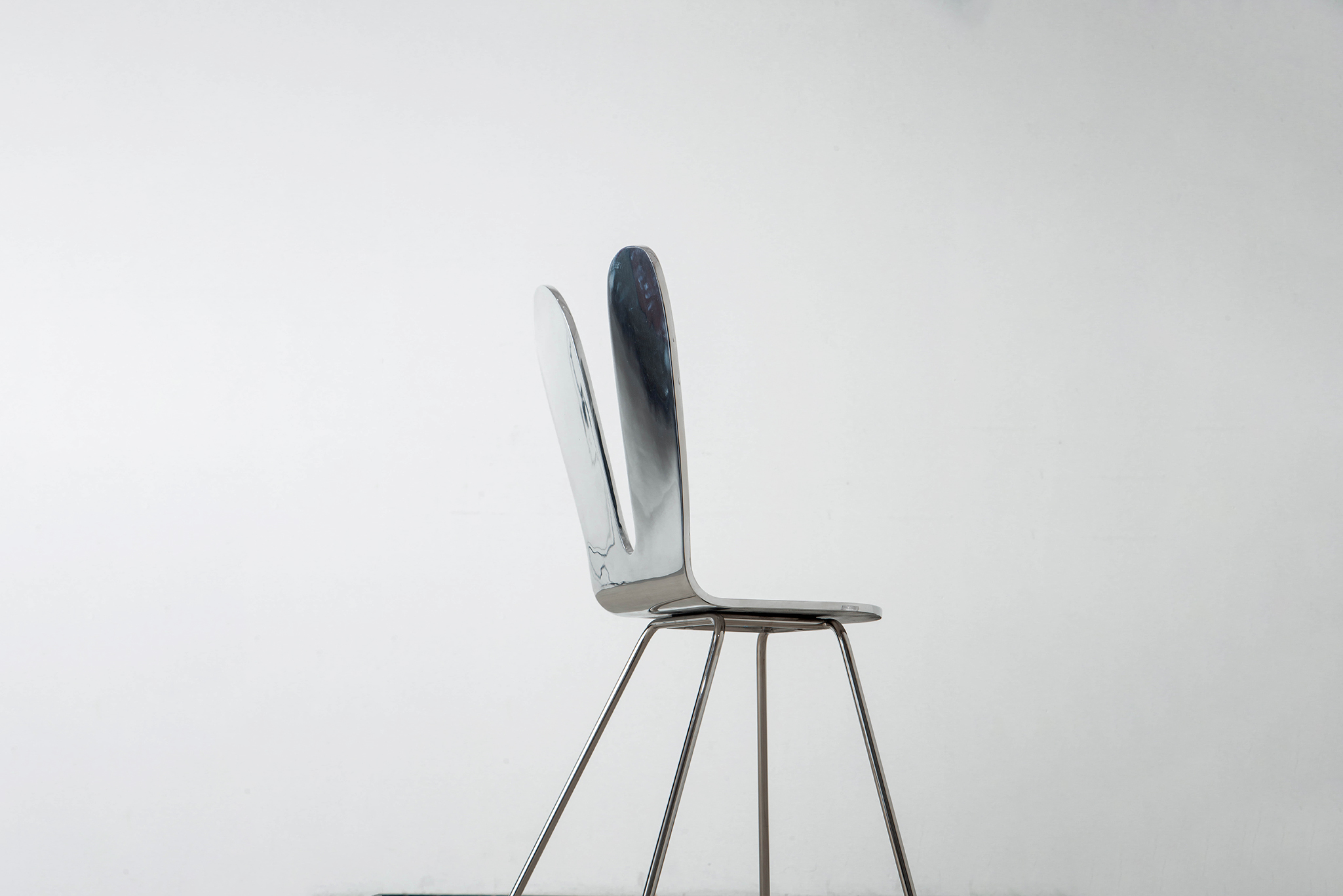
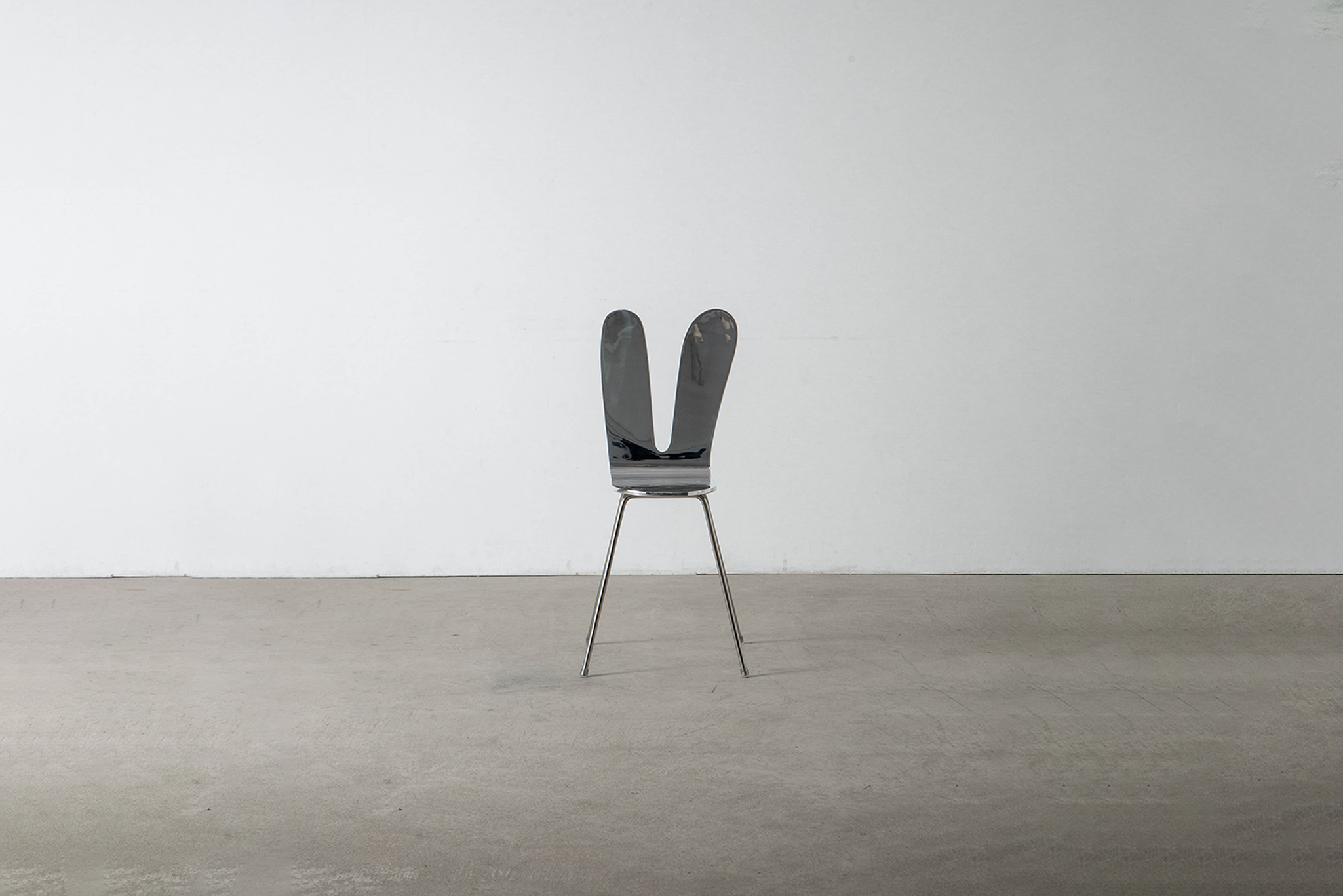
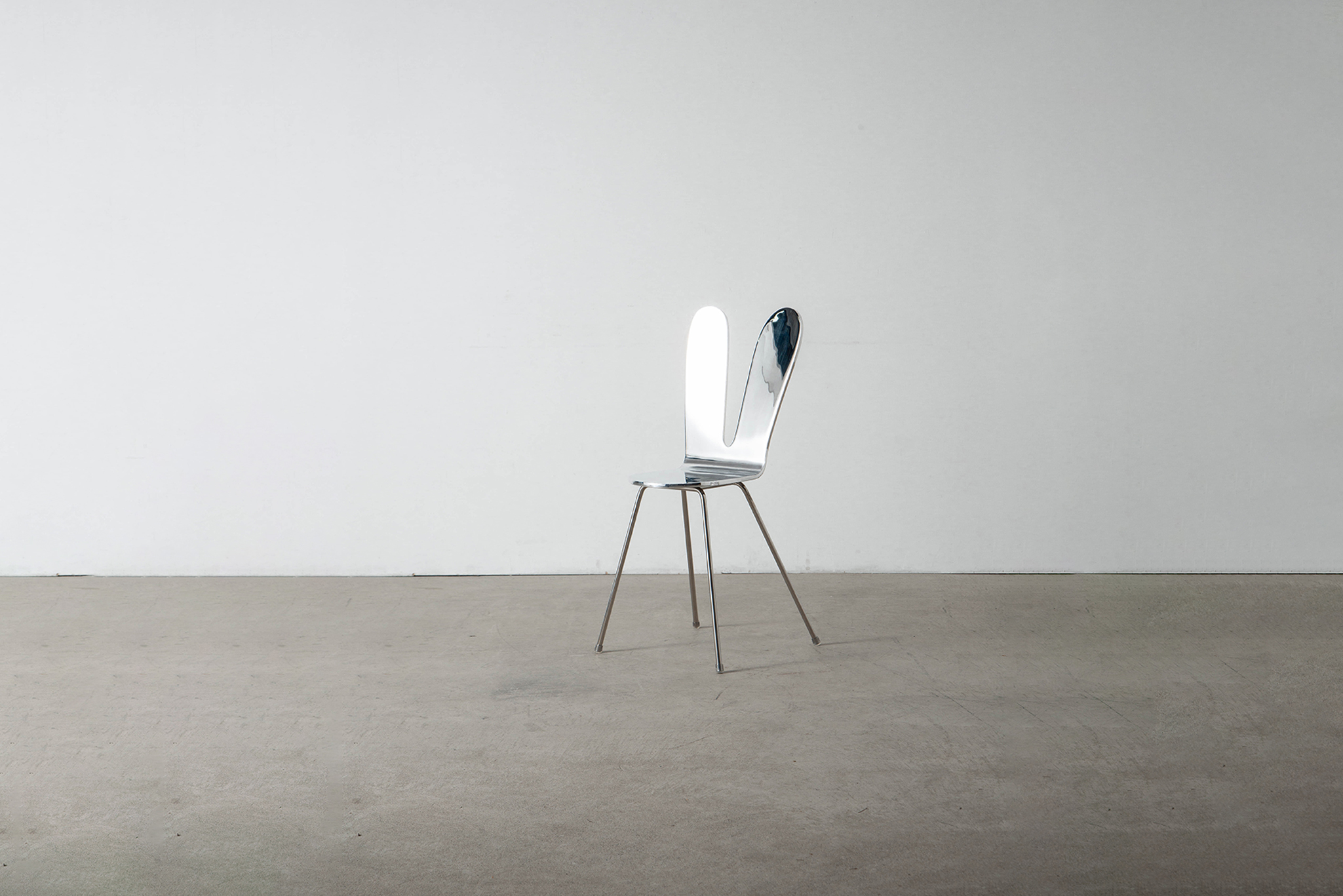
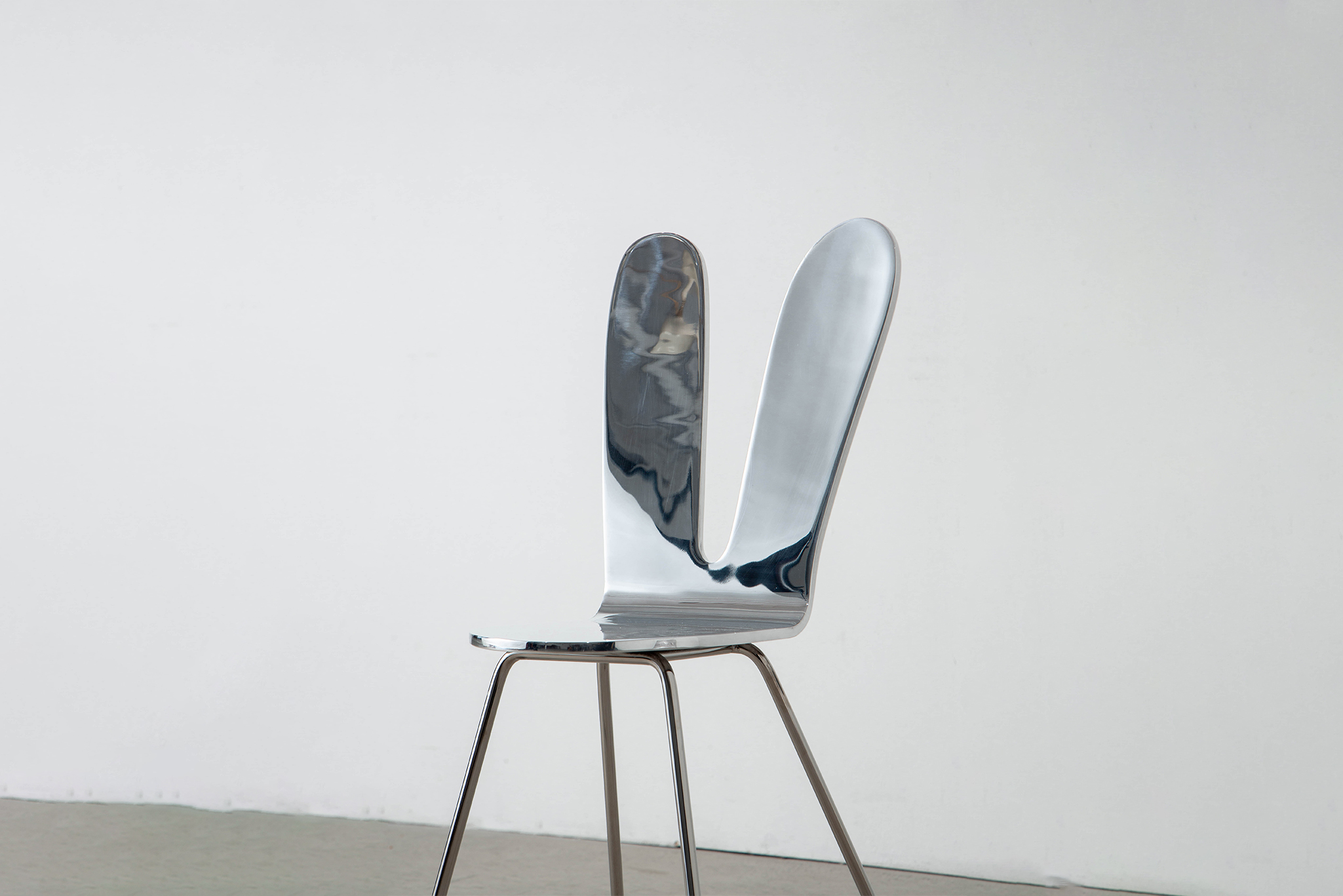
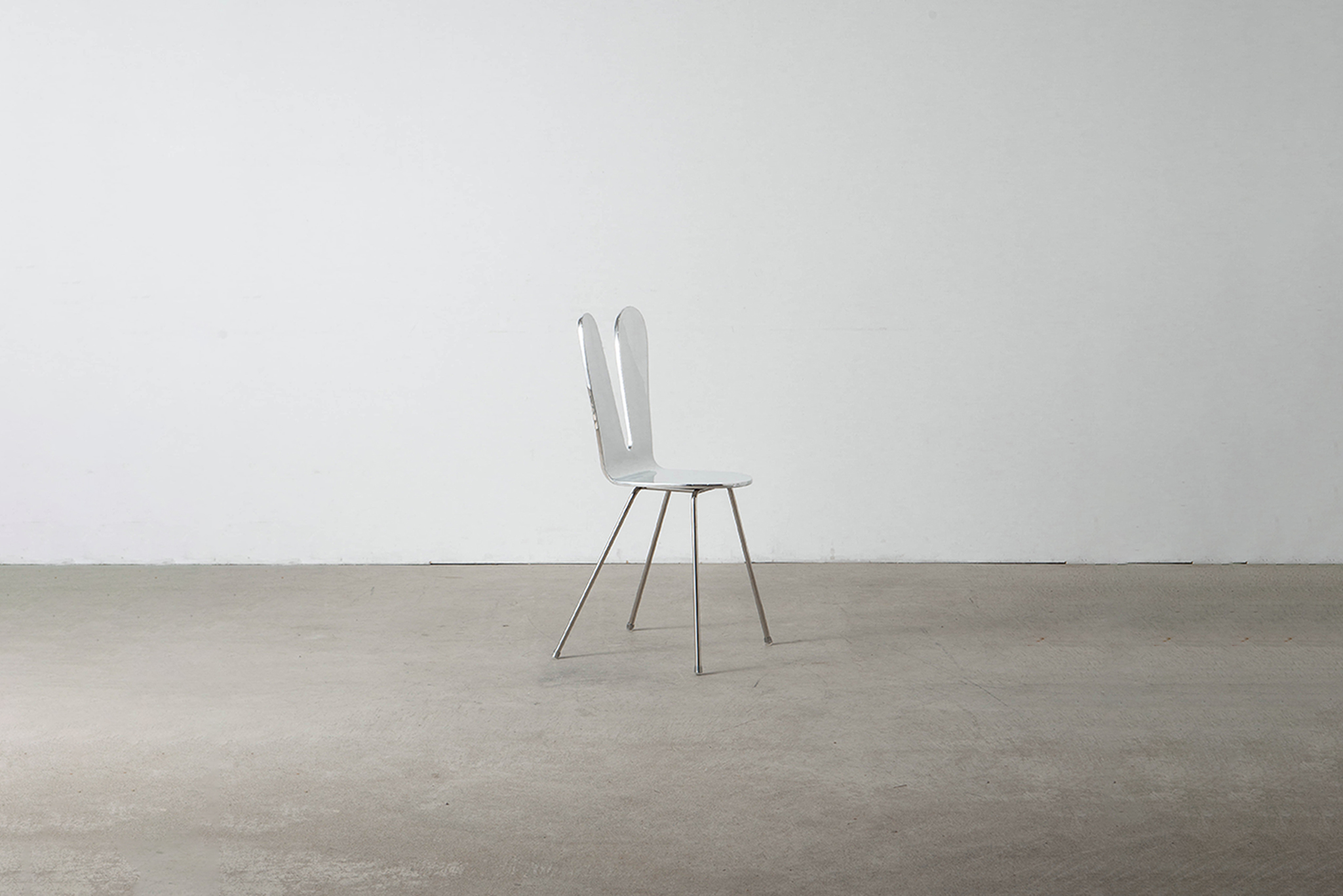
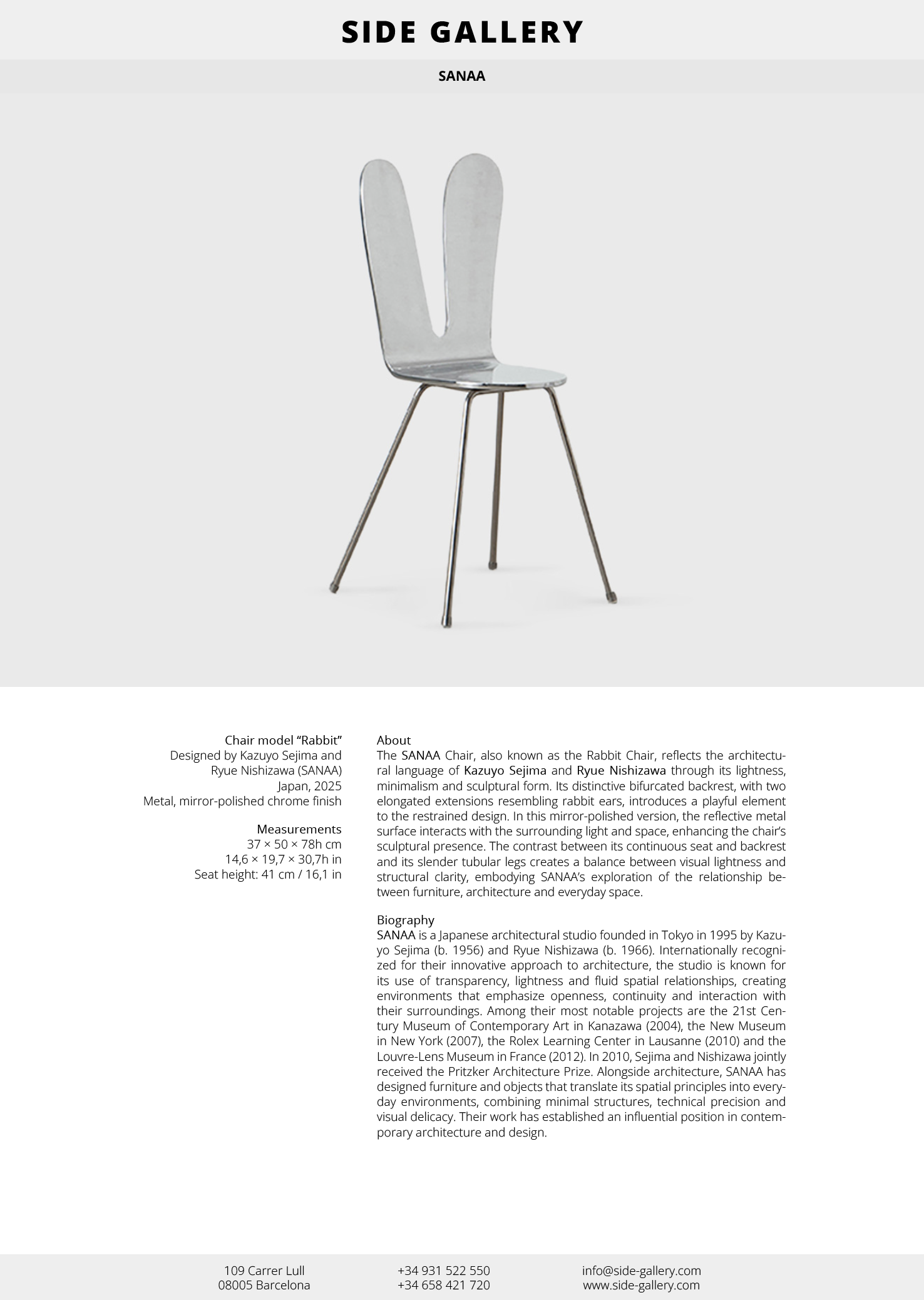
The SANAA Chair, also known as the Rabbit Chair, reflects the distinctive architectural language of Kazuyo Sejima and Ryue Nishizawa, whose work explores lightness, transparency, and the relationship between objects and their surrounding environment. Characterized by its slender proportions and distinctive bifurcated backrest, the chair transforms a familiar domestic object into a sculptural composition. Its two elongated, asymmetrical extensions evoke the ears of a rabbit, introducing a subtle sense of playfulness into an otherwise restrained and minimalist design.
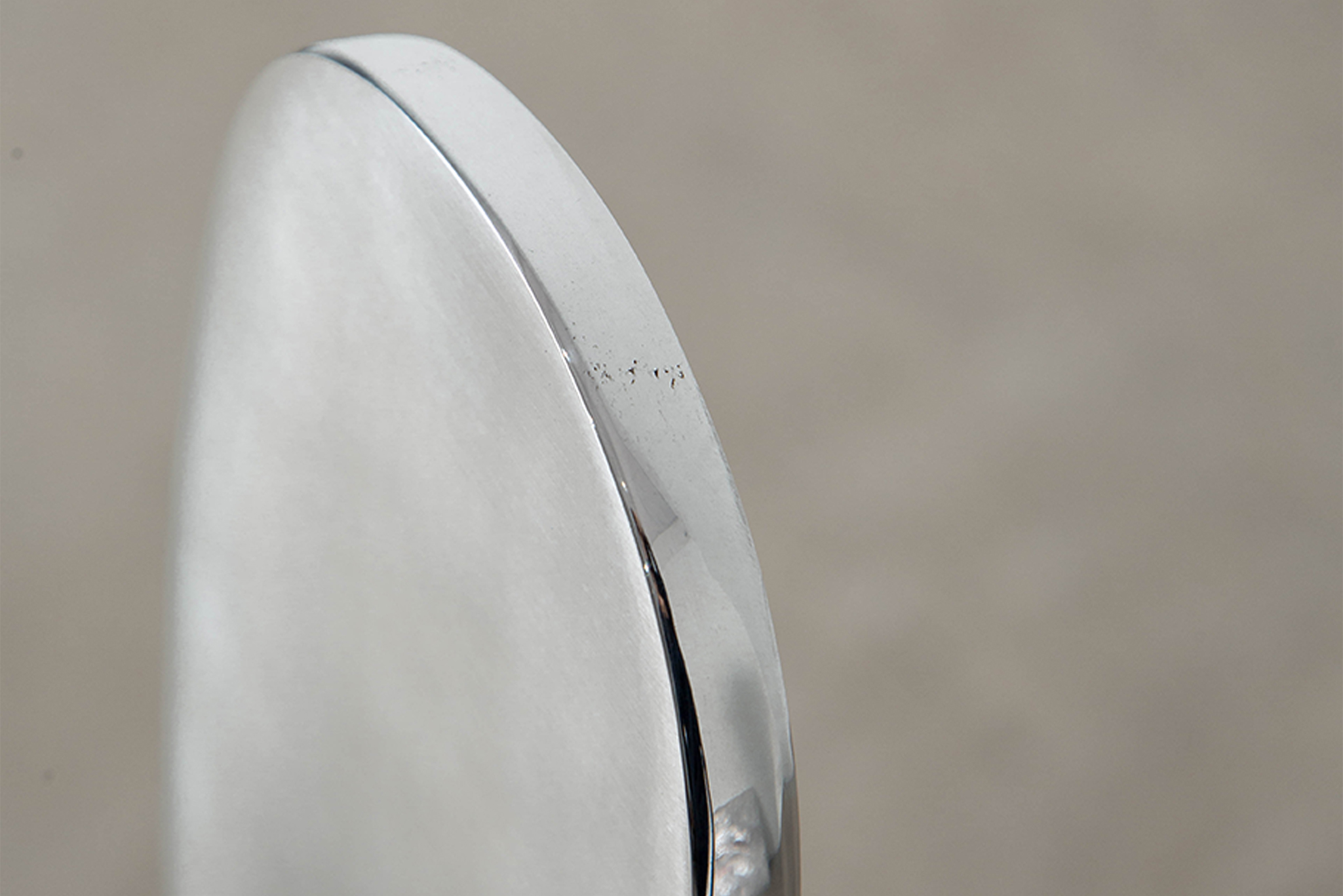
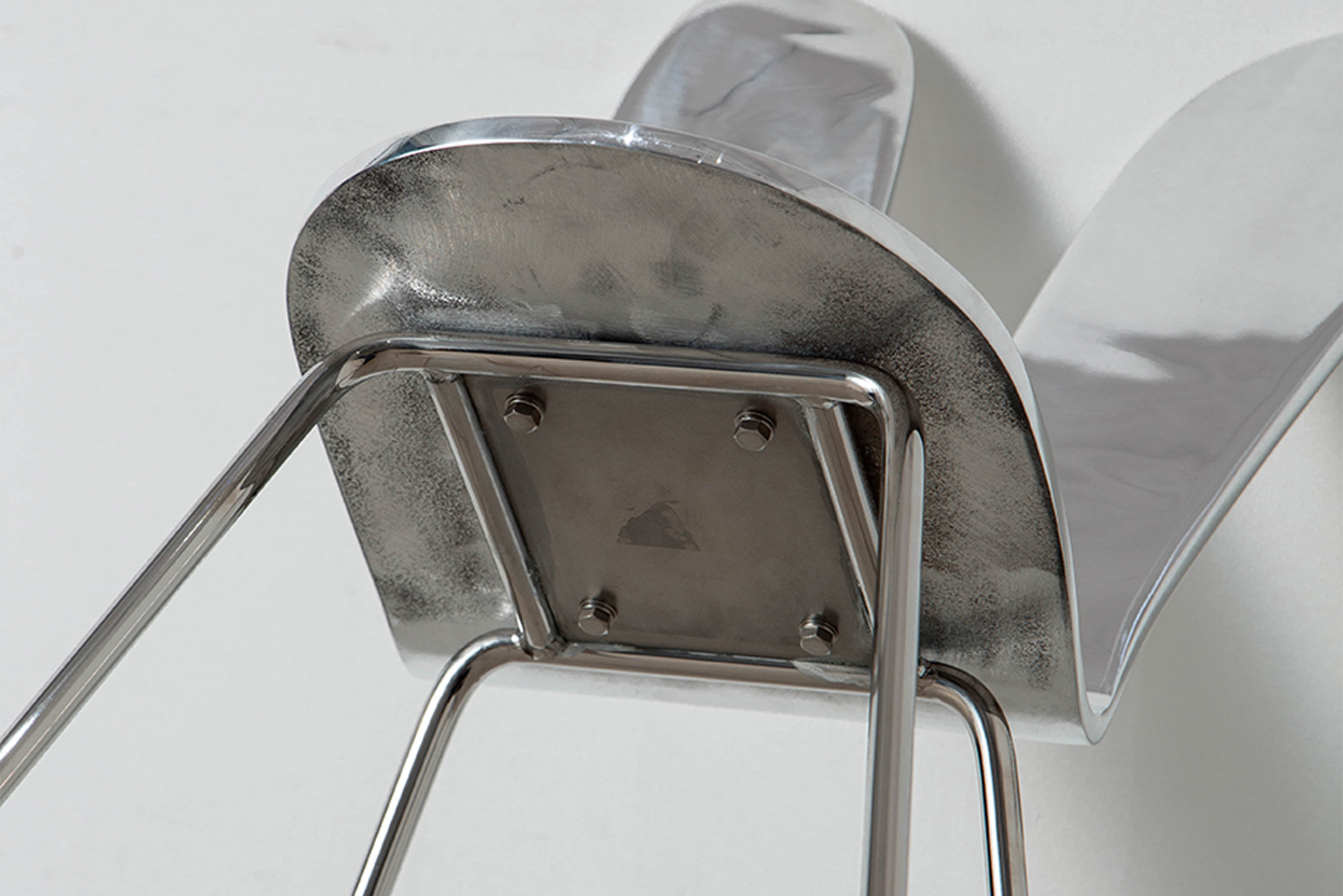
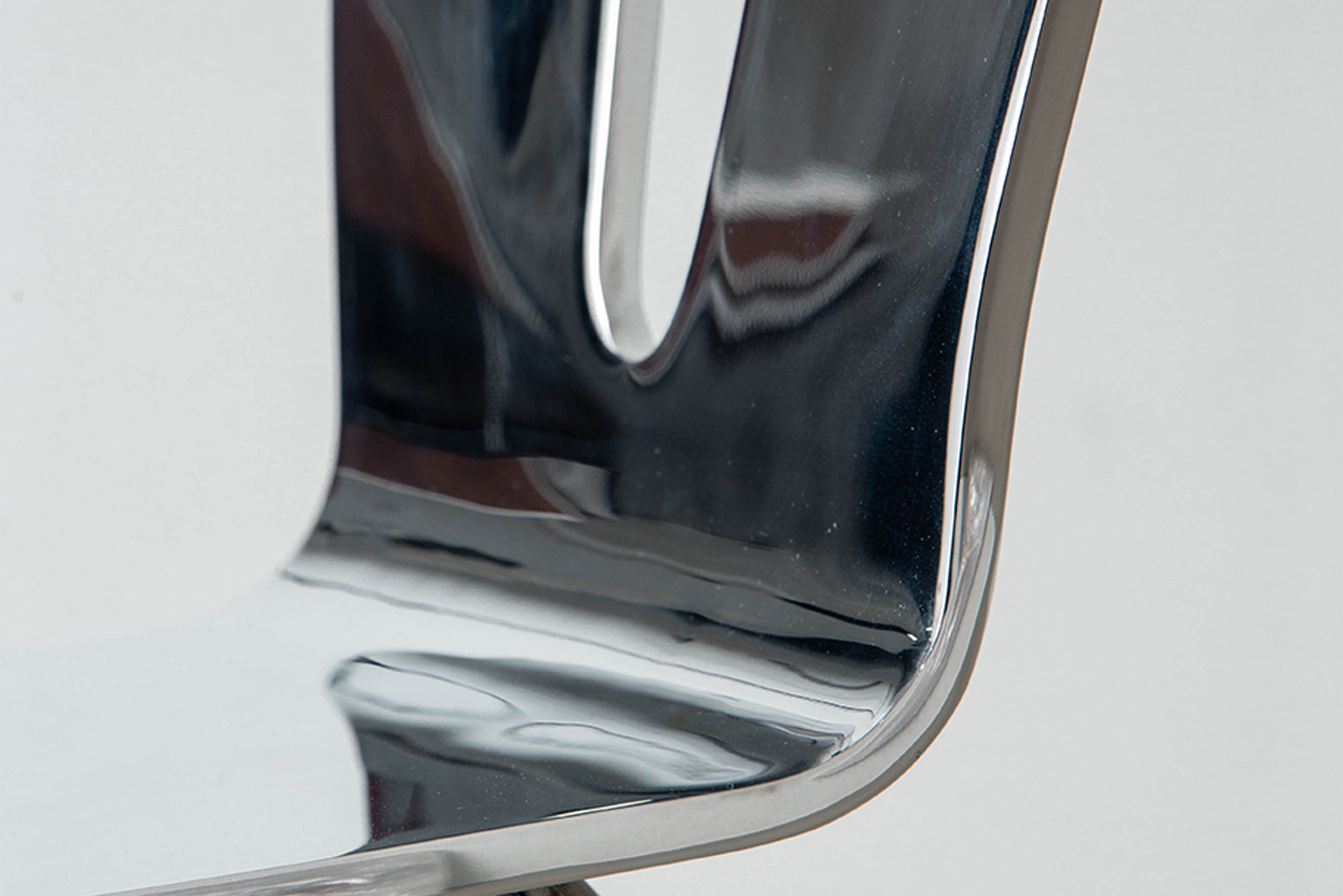
In this mirror-polished version, the reflective metal surface accentuates the chair's sculptural qualities, capturing and distorting the surrounding light and space. The continuous transition between seat and backrest contrasts with the delicate tubular legs, establishing a balance between visual lightness and structural clarity. Through its refined proportions and reflective materiality, the chair embodies SANAA's interest in dissolving the boundaries between furniture, architecture, and the spatial experience of everyday life.
Biography
SANAA is a Japanese architectural studio founded in Tokyo in 1995 by Kazuyo Sejima (b. 1956) and Ryue Nishizawa (b. 1966). Internationally recognized for their innovative approach to architecture, the studio has developed a distinctive design language characterized by transparency, lightness, fluid spatial relationships, and the careful integration of architecture within its surroundings. Their work challenges conventional distinctions between interior and exterior, structure and enclosure, creating environments that emphasize openness, continuity, and human interaction.
Among their most significant architectural projects are the 21st Century Museum of Contemporary Art in Kanazawa (2004), the New Museum in New York (2007), the Rolex Learning Center in Lausanne (2010), and the Louvre-Lens Museum in France (2012). In 2010, Sejima and Nishizawa were jointly awarded the Pritzker Architecture Prize in recognition of their contribution to contemporary architecture.
Alongside their architectural projects, SANAA has developed furniture and objects that translate the studio's spatial principles into a domestic scale. Their designs often combine minimal structural elements with unexpected formal gestures, exploring the relationship between function, material, and perception. Through an approach that balances technical precision with visual delicacy, SANAA has established an influential position within contemporary architecture and design.