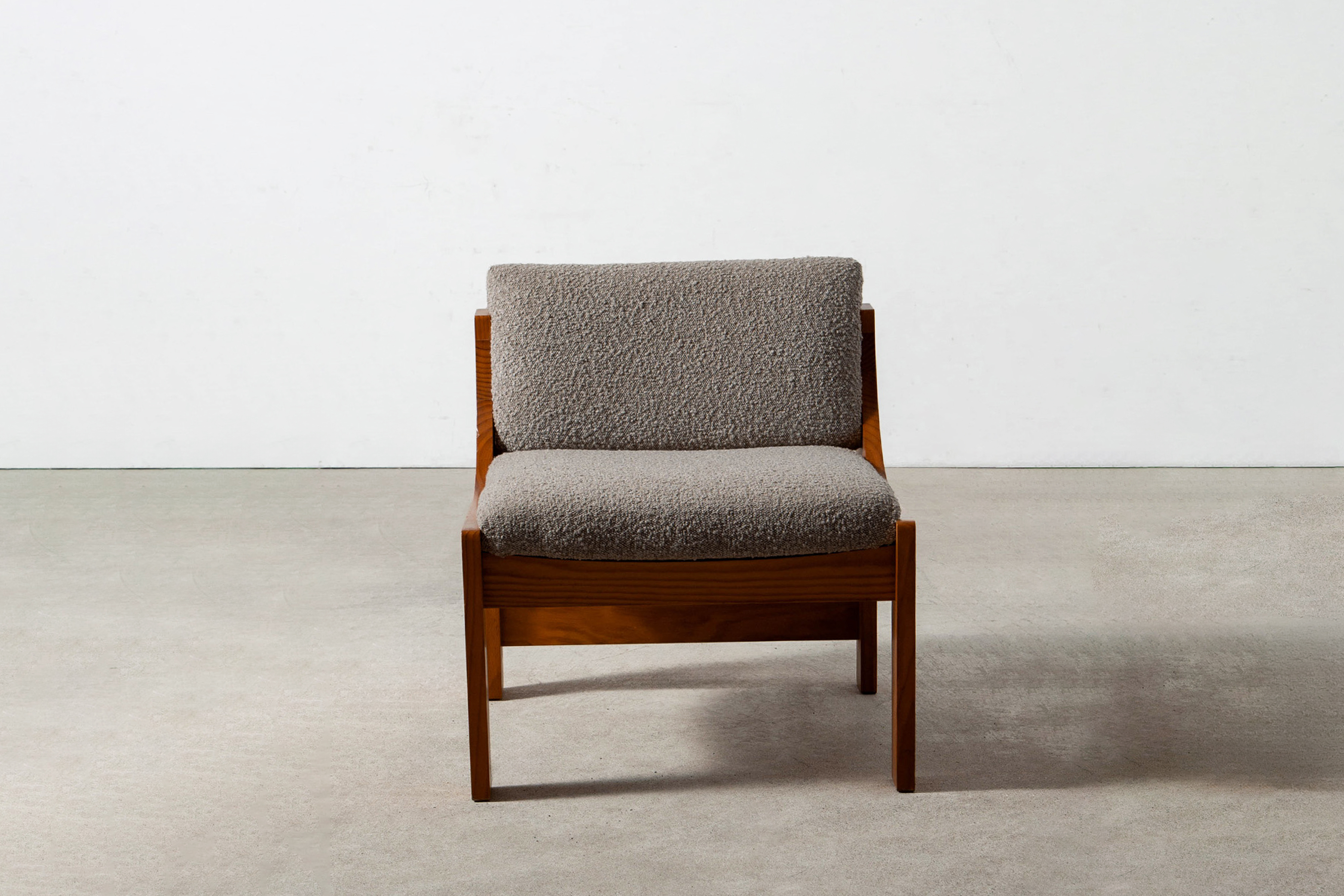
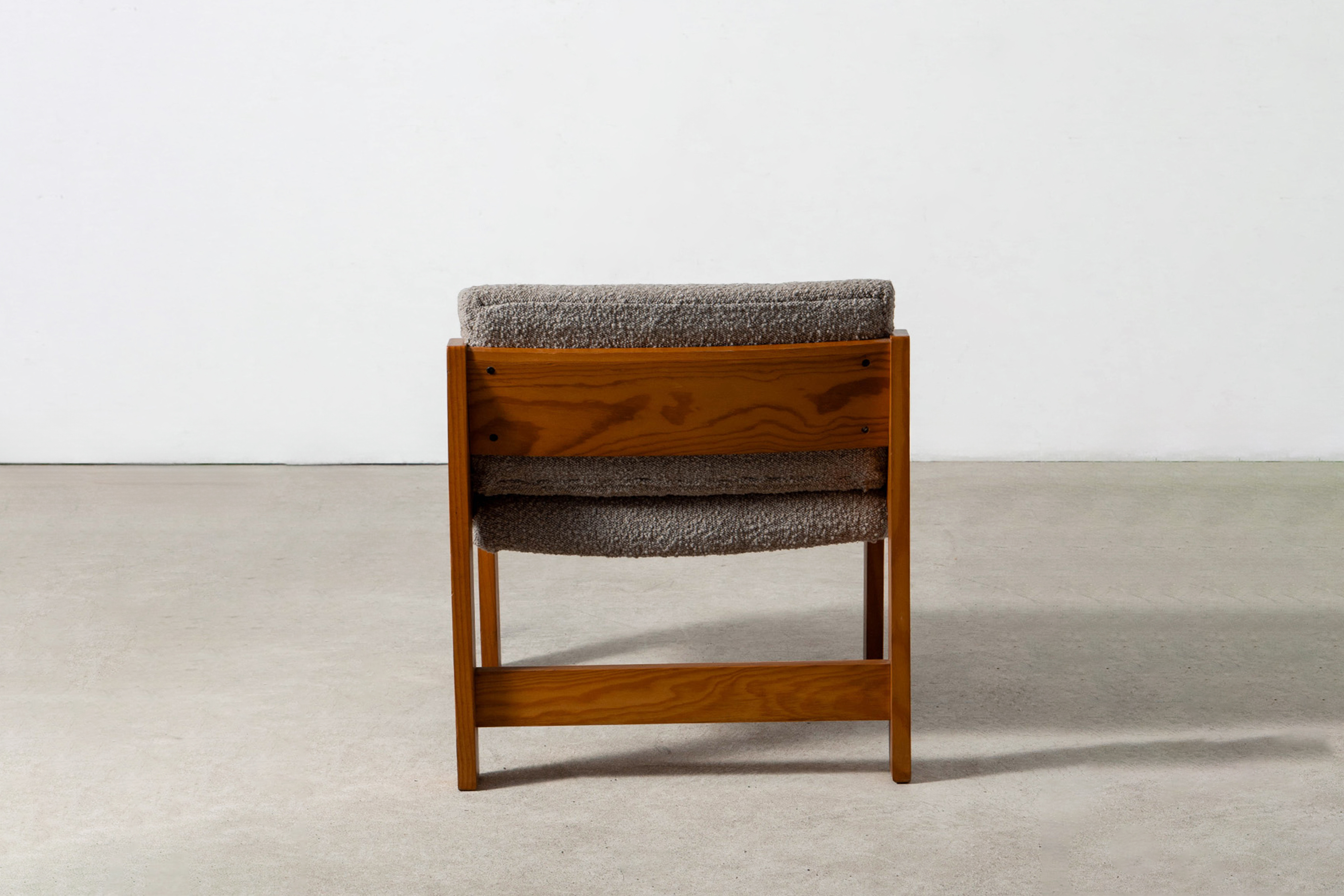
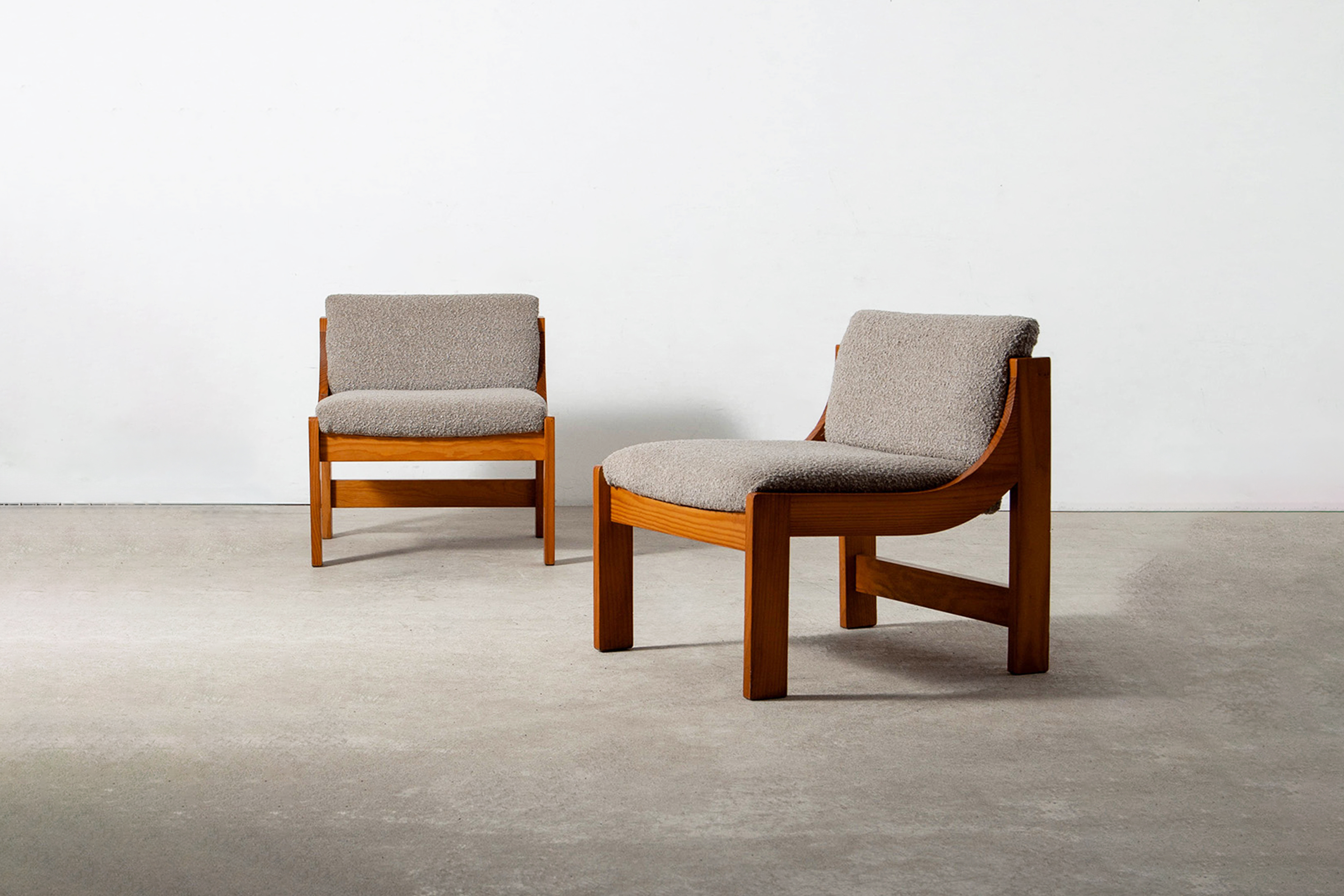
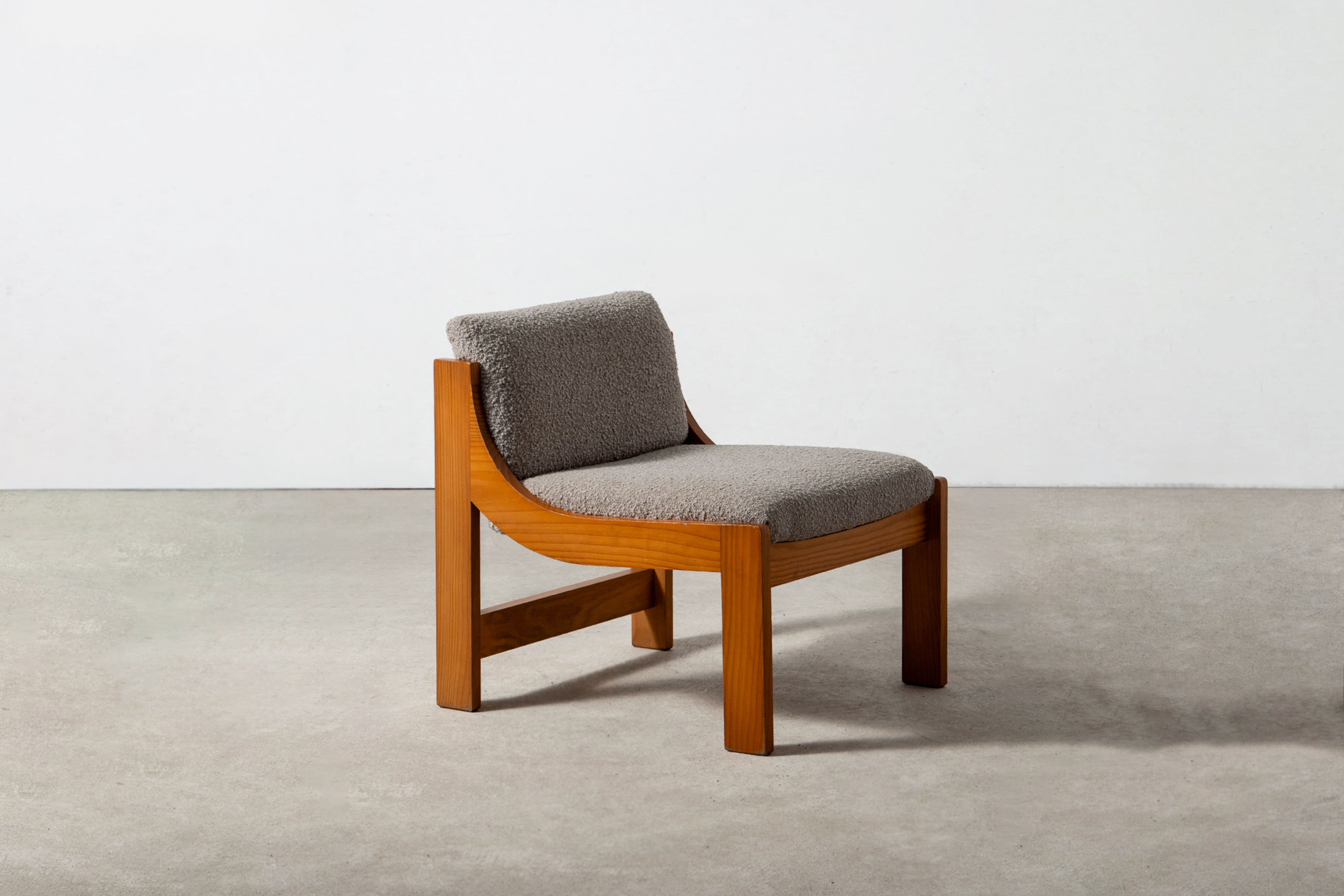
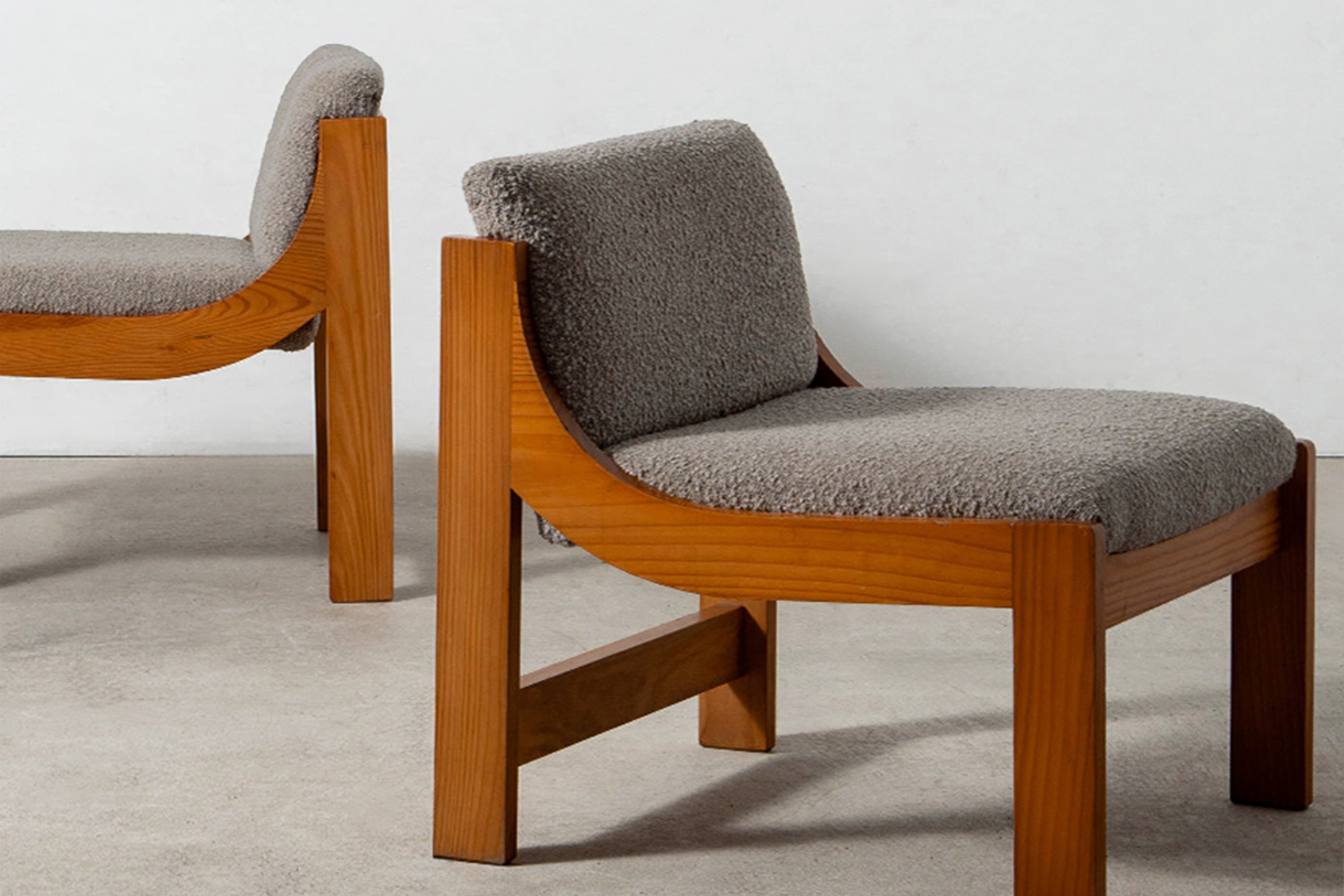
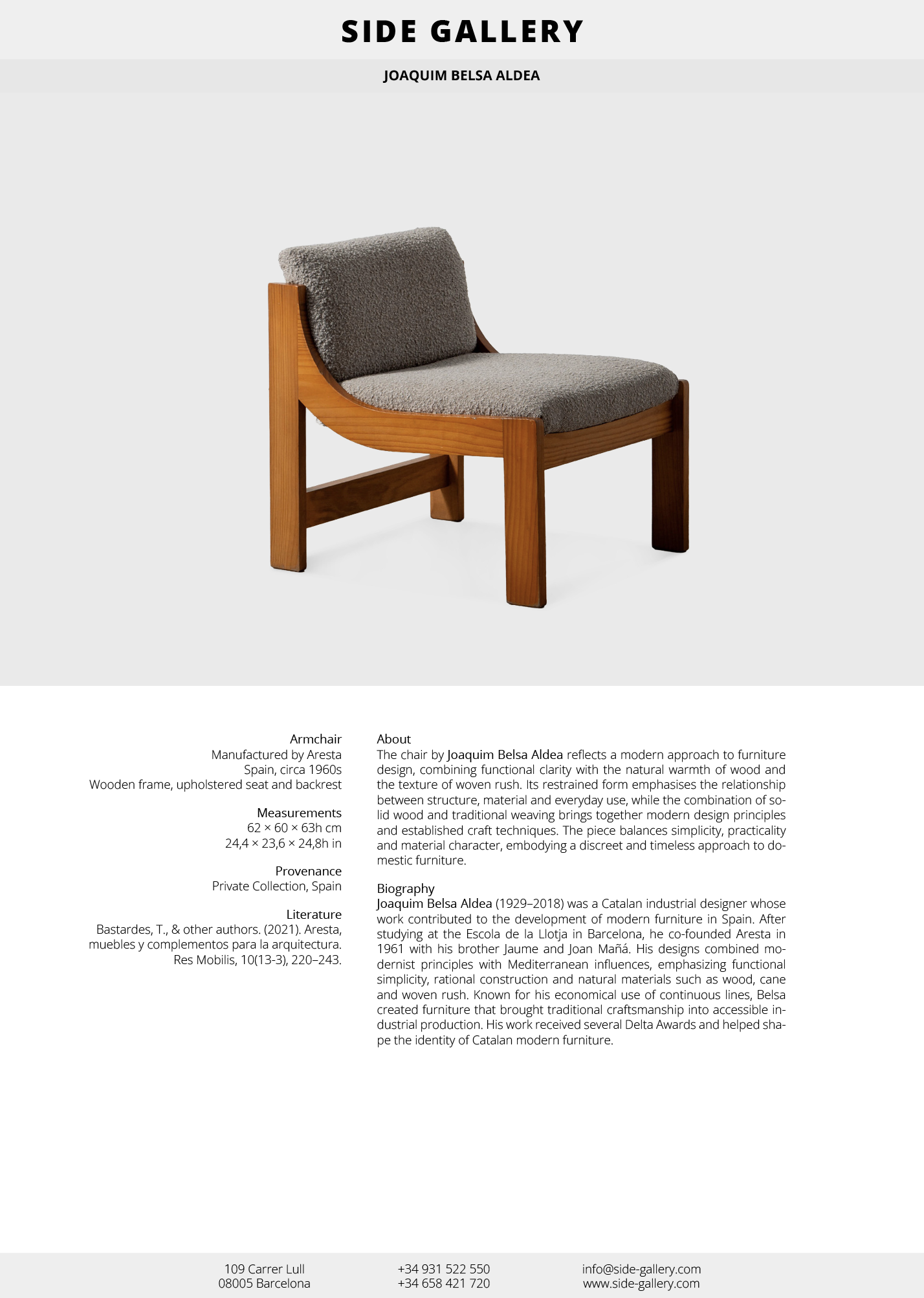
Armchair
Manufactured by Aresta
Spain, circa 1960s
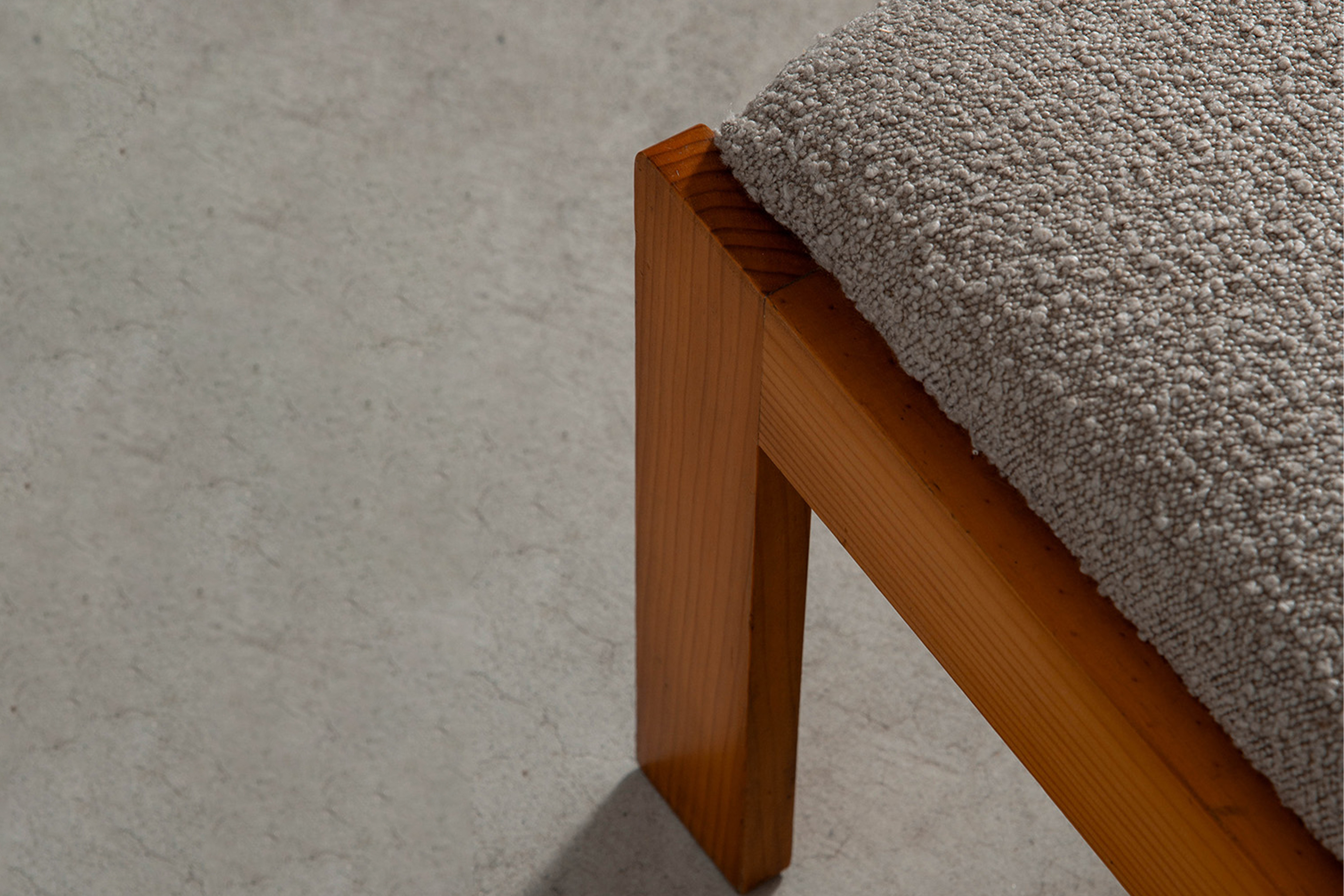
Wooden frame, upholstered seat and backrest
Measurements
62 × 60 × 63h cm
24,4 × 23,6 × 24,8h in
Provenance
Private Collection, Spain
Literature
Bastardes, T., & other authors. (2021). Aresta, muebles y complementos para la arquitectura. Res Mobilis, 10(13-3), 220–243.
About
The chair by Joaquim Belsa Aldea reflects a modern approach to furniture design, combining functional clarity with the natural warmth of wood and the texture of woven rush. Its restrained form emphasises the relationship between structure, material and everyday use, while the combination of solid wood and traditional weaving brings together modern design principles and established craft techniques. The piece balances simplicity, practicality and material character, embodying a discreet and timeless approach to domestic furniture.
Biography
Joaquim Belsa Aldea (1929–2018) was a Catalan industrial designer born in Barcelona, Spain, whose work contributed to the development of modern furniture design in Catalonia during the second half of the twentieth century. He studied at the Escola de la Llotja in Barcelona and began his professional career in a cabinetmaking workshop, where he developed an understanding of traditional materials and furniture construction. He later collaborated with decorator and antiques dealer Ferran Povo and, in the early 1950s, began developing furniture designs with his brother Jaume. From 1956 to 1961, he worked as a designer and interior designer for Manbar, a Barcelona furniture company, before establishing Aresta in 1961 alongside his brother Jaume and Joan Mañá.
Belsa’s design philosophy centred on functional simplicity, accessible production and the expressive potential of materials. His furniture combined modernist principles with Mediterranean influences and references to vernacular craftsmanship, favouring clean lines, rational construction and durable materials such as pine, natural wood, Manila cane and woven rush. A defining characteristic of his work was the concept of the “single stroke”: a continuous, economical line that shaped a piece while minimising unnecessary ornament. Through Aresta, he developed a diverse collection of furniture for contemporary domestic interiors, including chairs, armchairs, benches, folding tables and storage pieces. Among his recognised designs is the Banco 202, originally designed in 1961 and later reissued by Expormim, reflecting his innovative approach to curved cane and the relationship between traditional craft and modern furniture production.
Aresta remained active until 1985, producing furniture intended for a broad audience and demonstrating Belsa’s commitment to the social value of design. He was a member of the first board of ADI-FAD, the association promoting industrial design in Spain, and received Delta Awards in 1961, 1963 and 1970. His work helped establish a distinctive approach to Catalan modern furniture, rooted in local materials, practical use and the integration of craftsmanship into industrial production.