Side Table Model B
Manufactured by Yamagiwa
Japan, 1950s
Beech plywood, solid beechwood, clear lacquer finish
Measurements
60 × 60 × 45h cm
23,6 × 23,6 × 17,7h in
Provenance
Miyako Hotel, Kyoto, designed by Togo Murano
Literature
Kyoto Institute of Technology Museum and Archives, ed. Togo Murano and His Clients: The Architecture and Drawings of Kintetsu (村野藤吾とクライアント:「近鉄」の建築と図面資料). Tokyo: Kokusho Kankokai, 2017.
Kyoto Institute of Technology Museum and Archives. The 11th Exhibition of Togo Murano Architectural Drawings: The World of Togo Murano Revealed through Newly Discovered Materials (村野藤吾建築設計図展 11). Kyoto, 2012.
About
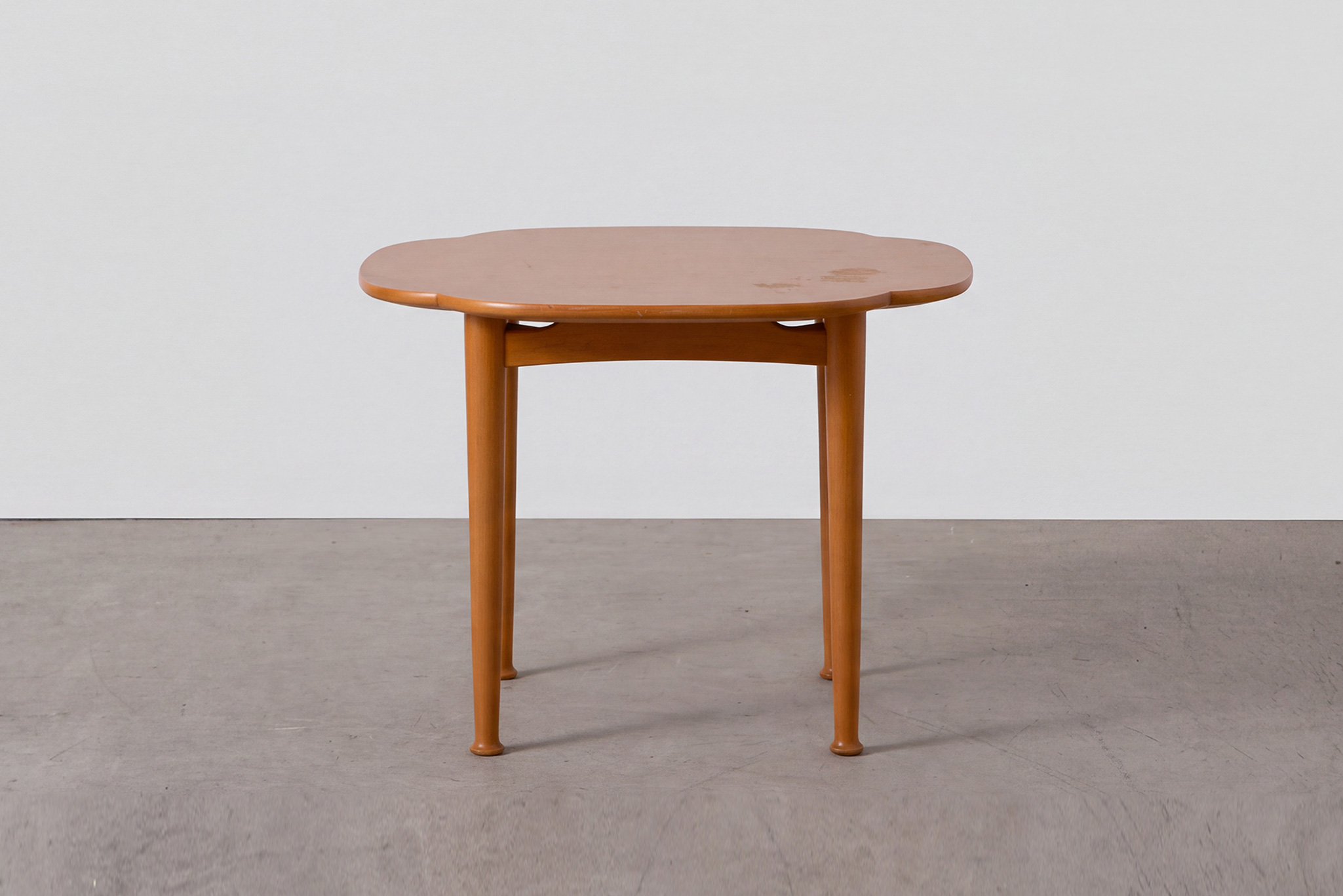
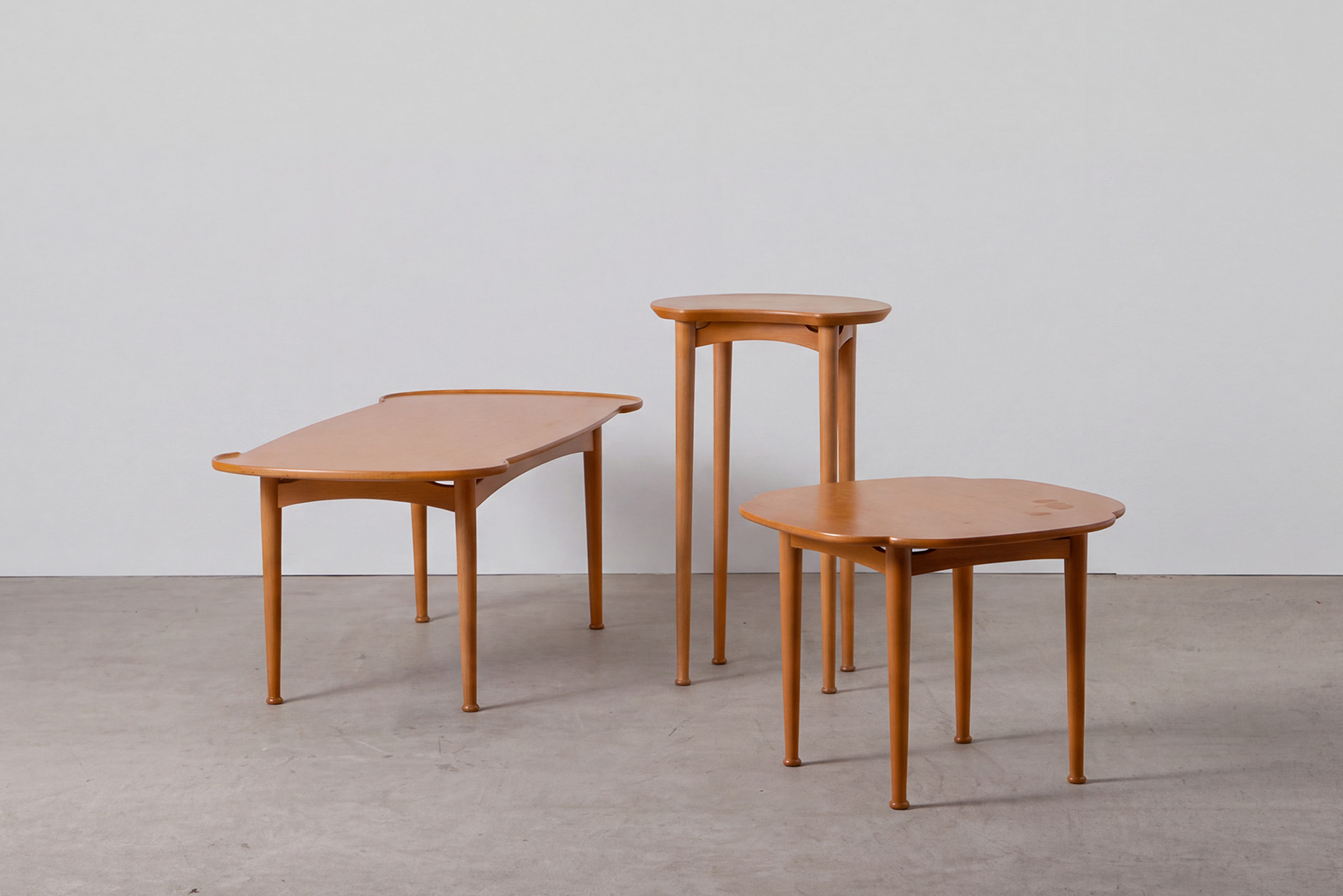
This Side Table Model B, attributed to Japanese architect Togo Murano and dating from the 1950s, reflects his distinctive approach to furniture design, characterized by organic forms, refined proportions, and a sensitive understanding of materials. Associated with the Miyako Hotel in Kyoto, the table illustrates an approach to interior furnishings in which individual objects contribute to the broader architectural composition. Its compact dimensions and sculptural silhouette demonstrate Murano's interest in combining functional simplicity with expressive detailing.
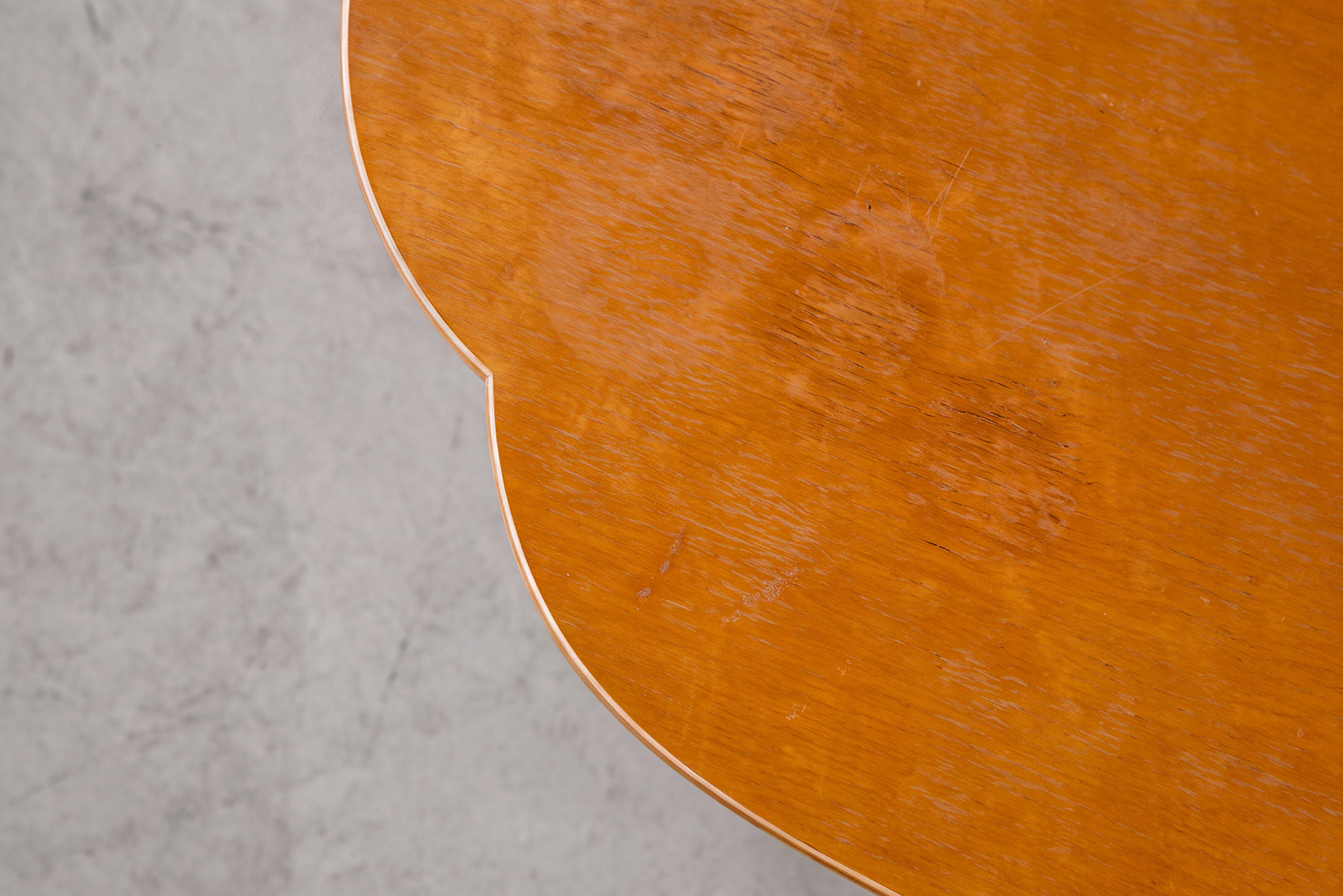
The design is distinguished by its softly rounded tabletop, whose subtly irregular outline introduces a sense of movement and fluidity. The gently curved perimeter, constructed from beech plywood with solid beechwood edging, creates a harmonious relationship between the horizontal surface and the four slender wooden legs. The natural beechwood finish emphasizes the warmth and texture of the material, while the clear lacquer provides a smooth surface that accentuates the table's refined proportions.
The table's construction is deliberately restrained, allowing the organic geometry of the tabletop to remain the central visual element. The tapered legs introduce a sense of lightness and vertical rhythm, contrasting with the broad, softly contoured surface. Its low height and balanced proportions make it particularly suited to lounge and reception settings, where furniture was conceived as an integral component of the architectural environment.
Through its combination of material refinement, functional clarity, and sculptural expression, the Side Table Model B exemplifies the relationship between architecture and furniture that characterized much of Murano's work. The design demonstrates how subtle variations in proportion, curvature, and construction can transform a modest functional object into a distinctive element of a carefully considered interior.
Biography
Togo Murano (1891–1984) was one of the most influential Japanese architects of the twentieth century, recognized for his distinctive architectural language and his ability to reconcile modernist principles with traditional Japanese craftsmanship. After graduating from Waseda University in 1918, he joined the architectural office of Setsu Watanabe, where he developed his early professional experience. In 1929, Murano established his own architectural practice in Osaka, beginning an independent career that would span more than five decades.
Throughout his career, Murano developed an architectural approach that resisted strict adherence to any single movement or style. His work combined the formal innovations of European modernism with a profound appreciation for Japanese architectural traditions, particularly their emphasis on materials, craftsmanship, and spatial refinement. His extensive body of work encompassed public buildings, commercial spaces, hotels, private residences, and cultural institutions, often incorporating furniture, lighting, and decorative elements conceived specifically for their architectural settings.
Murano's architecture is distinguished by its meticulous attention to detail, sophisticated treatment of materials, and sensitivity to the relationship between built environments and the human experience. His designs frequently explored the expressive possibilities of both traditional and modern construction techniques, establishing a dialogue between historical references and contemporary architectural forms. Through his integrated approach to architecture, interiors, and object design, Murano occupies a singular position in the history of Japanese modernism, leaving a legacy that continues to influence architectural practice and design.