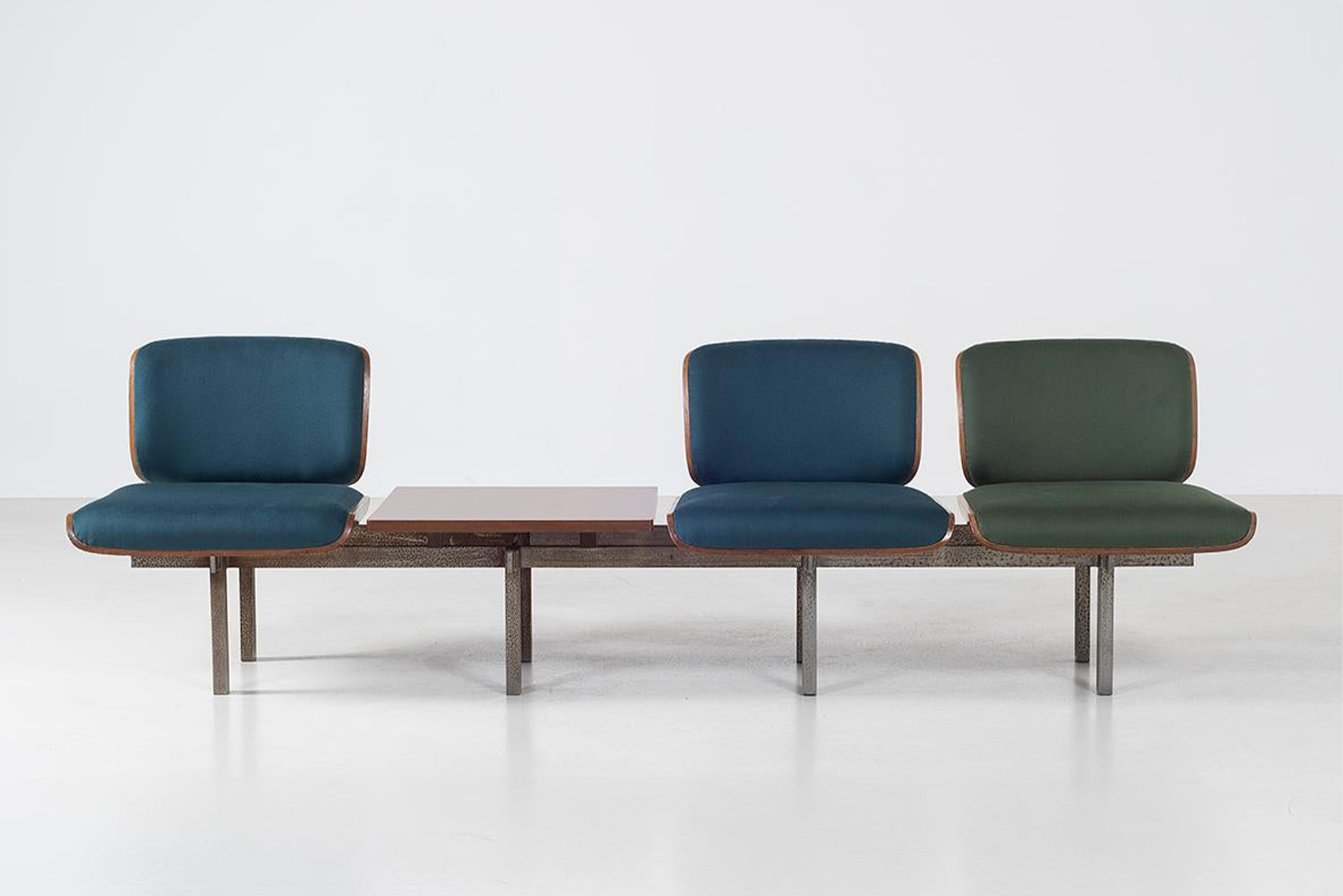
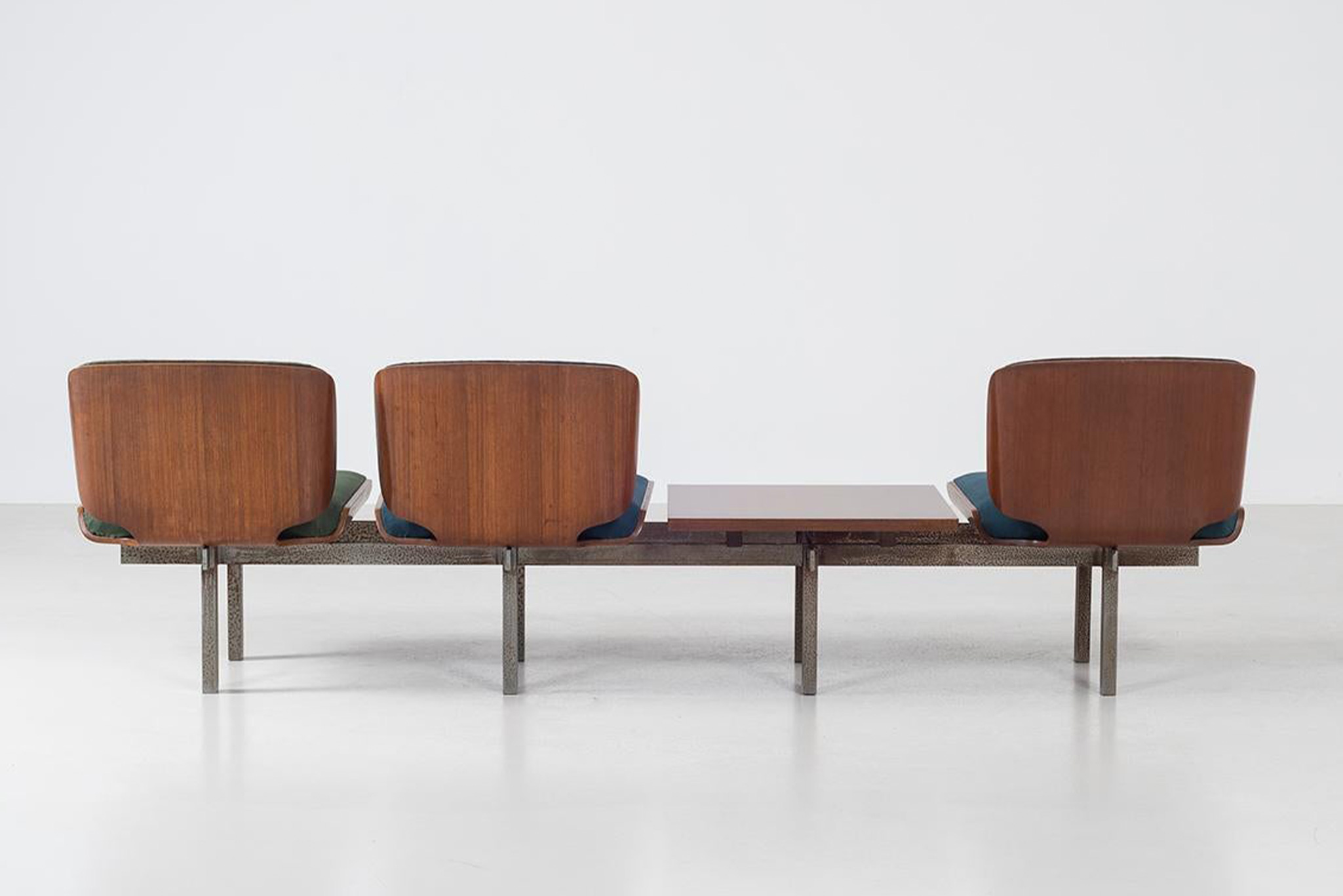
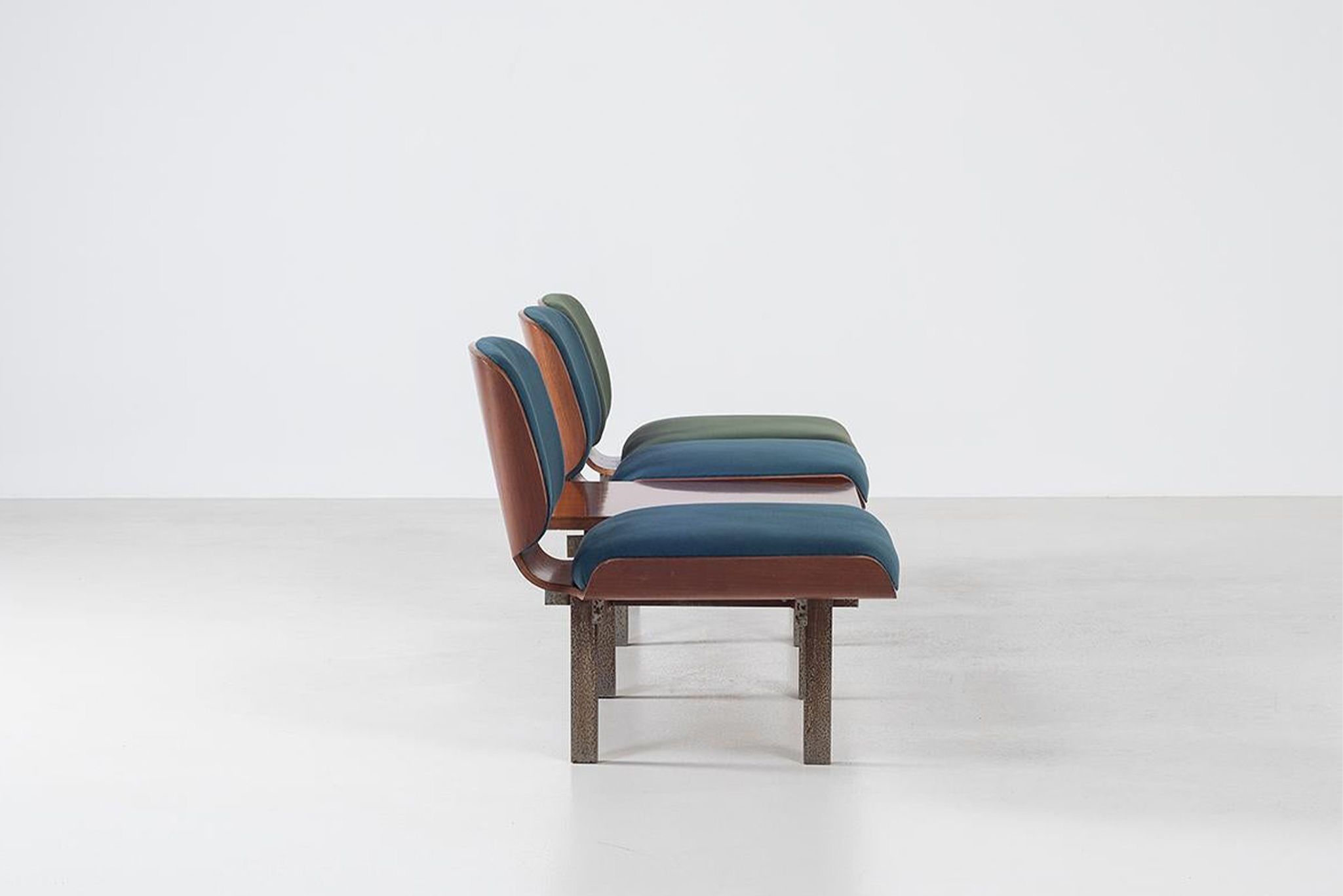
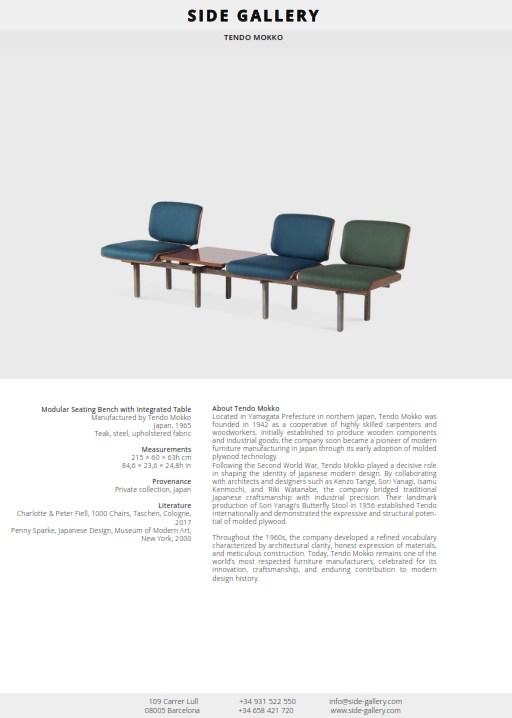
Modular Seating Bench with Integrated Table
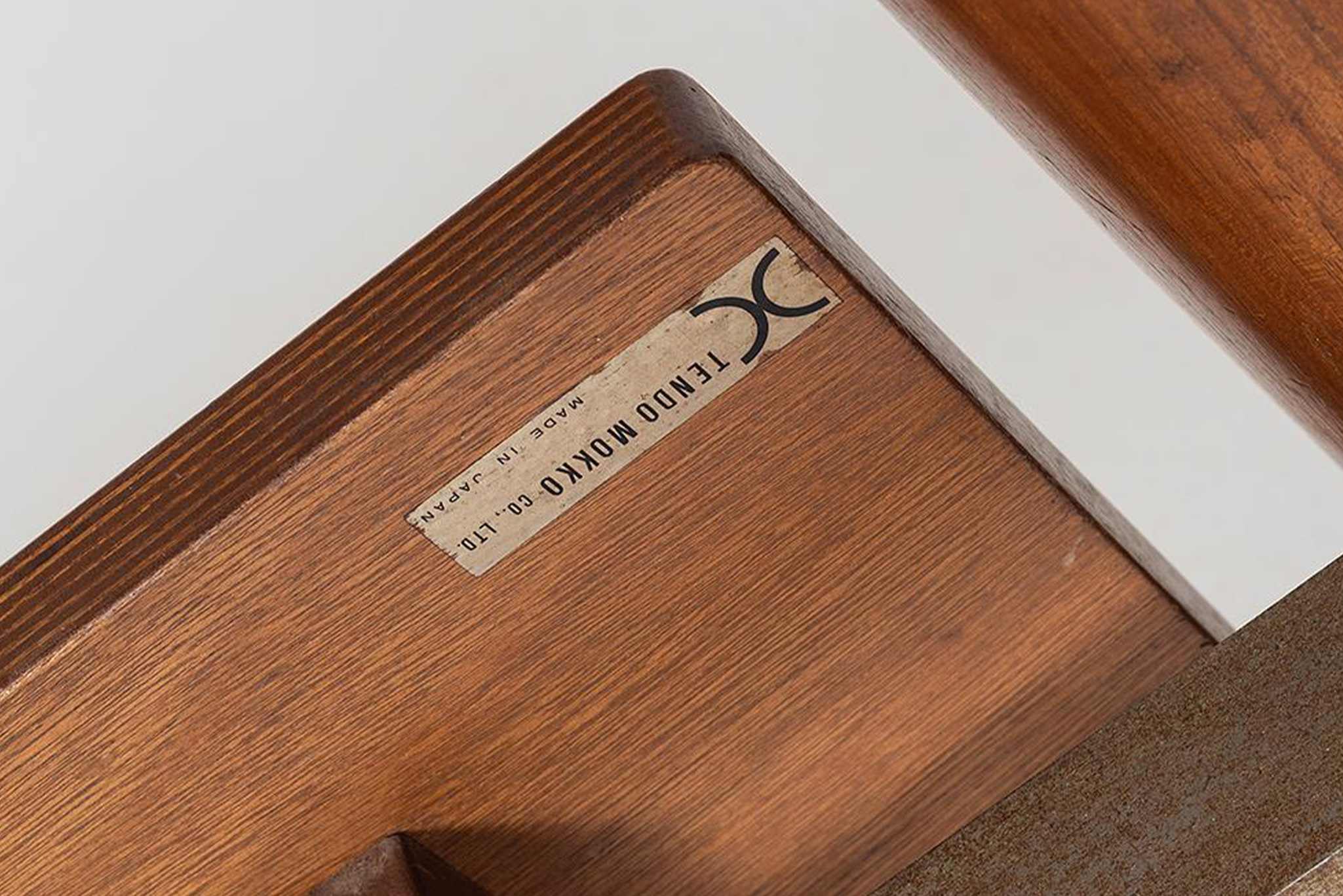
Manufactured by Tendo Mokko
Japan, 1965
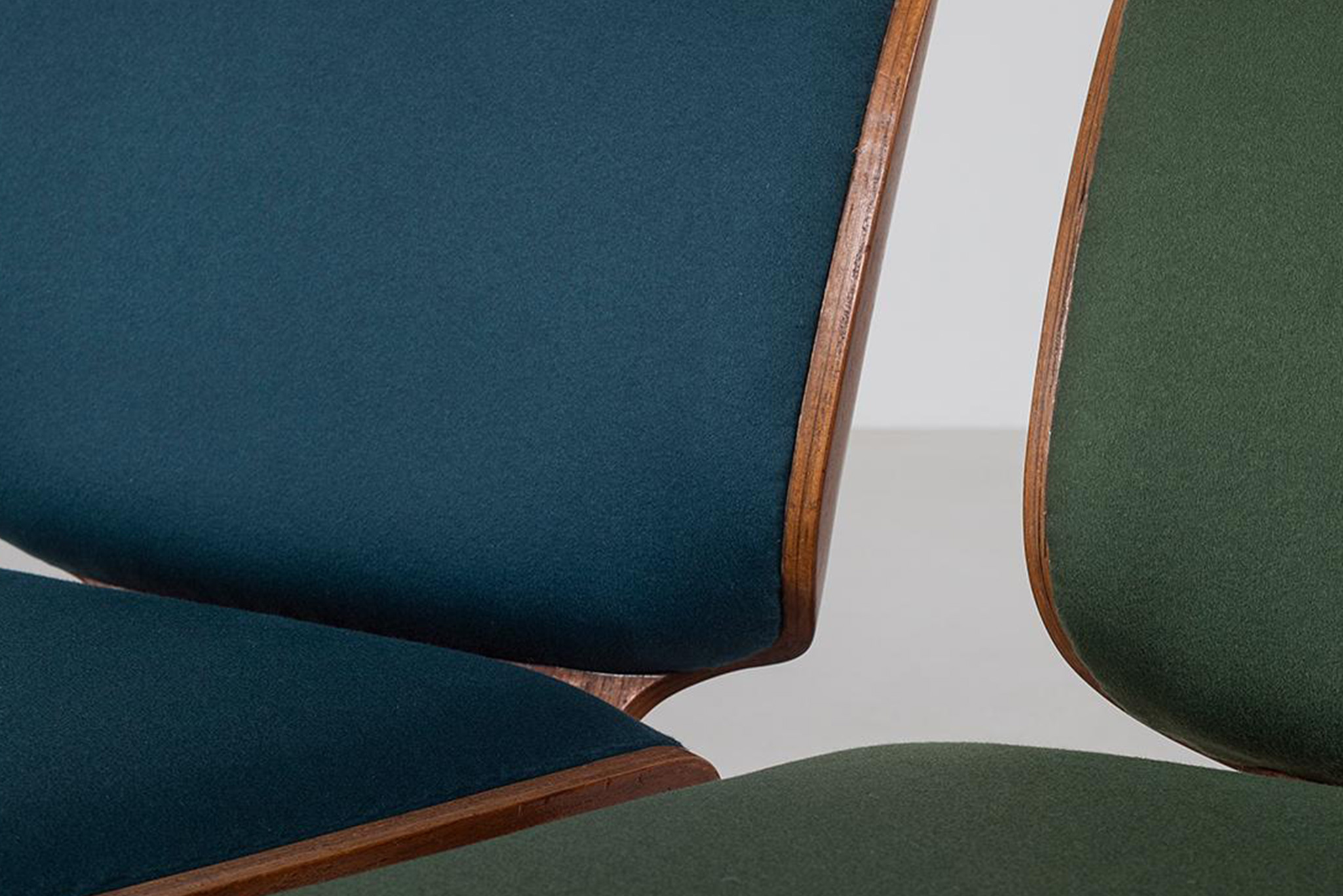
Teak, steel, upholstered fabric
Measurements
215 × 60 × 63h cm
84,6 × 23,6 × 24,8h in
Provenance
Private collection, Japan
Literature
Charlotte & Peter Fiell, 1000 Chairs, Taschen, Cologne, 2017
Penny Sparke, Japanese Design, Museum of Modern Art, New York, 2000
About
This modular seating system illustrates the refinement and functional clarity that defined Japanese modern furniture during the 1960s. Combining individual seating elements with an integrated table surface, the design responds to evolving ideas of shared space and informal interaction that emerged in postwar interiors.
The composition balances soft upholstered forms with a restrained structural framework of teak and steel. While the upholstered seats introduce warmth and comfort, the exposed metal base contributes a visual lightness that prevents the piece from overwhelming a space. Its modular logic reflects an architectural approach to furniture design, where elements are arranged to encourage social interaction while maintaining a clear sense of order.
Furniture of this type was often created for public interiors, lounges, reception areas, and institutional settings during a period when Japanese design increasingly embraced flexibility and human-centered planning. The understated silhouette and careful material balance demonstrate how utility and elegance could coexist within a single object.
More than a seating arrangement, the piece represents an important moment in the evolution of postwar Japanese design, when manufacturers such as Tendo Mokko developed furniture that merged craftsmanship, industrial innovation, and a sophisticated understanding of modern living.
About Tendo Mokko
Located in Yamagata Prefecture in northern Japan, Tendo Mokko was founded in 1942 as a cooperative of highly skilled carpenters and woodworkers. Initially established to produce wooden components and industrial goods, the company soon became a pioneer of modern furniture manufacturing in Japan through its early adoption of molded plywood technology.
Following the Second World War, Tendo Mokko played a decisive role in shaping the identity of Japanese modern design. By collaborating with architects and designers such as Kenzo Tange, Sori Yanagi, Isamu Kenmochi, and Riki Watanabe, the company bridged traditional Japanese craftsmanship with industrial precision. Their landmark production of Sori Yanagi’s Butterfly Stool in 1956 established Tendo internationally and demonstrated the expressive and structural potential of molded plywood.
Throughout the 1960s, the company developed a refined vocabulary characterized by architectural clarity, honest expression of materials, and meticulous construction. Today, Tendo Mokko remains one of the world’s most respected furniture manufacturers, celebrated for its innovation, craftsmanship, and enduring contribution to modern design history.