Side Gallery
Side Gallery
WishlistFollow





Follow
IN CONVERSATION WITH THOMAS TAKADA
DESIGN PARADE 2026
VILLA NOAILLES
HYÈRES (FRANCE)
25 JUN 2026 – 30 AUG 2026
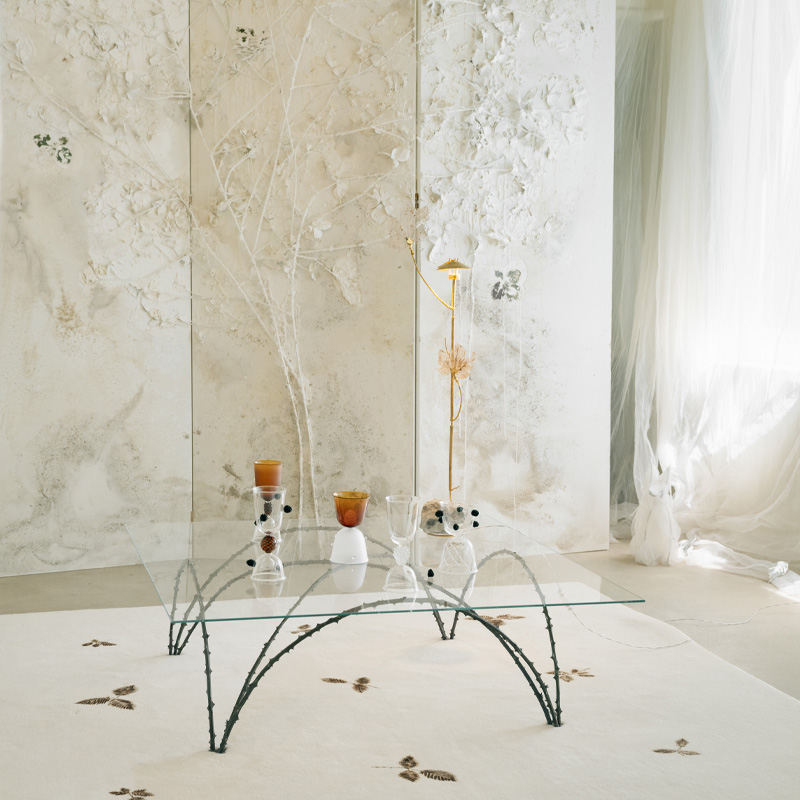
In this conversation recorded on the occasion of Design Parade 2026, Thomas Takada presents Le Buisson Ardent (The Burning Bush), an exhibition that explores the ecology, symbolism, and materiality of the bramble. Often regarded as an invasive or undesirable plant, the bramble becomes, in Takada's hands, a starting point for reflecting on the ways humans classify and interact with the natural world. Rather than accepting inherited perceptions, the designer asks a simple yet fundamental question: what defines a weed?
Drawing inspiration from the spontaneous vegetation surrounding Villa Noailles and the landscapes of Hyères, Takada investigates the ecological intelligence of the bramble as a pioneer species capable of protecting biodiversity and regenerating damaged environments. His research moves beyond botanical observation, revealing the plant as both a living ecosystem and a cultural symbol that embodies resilience, transformation, and coexistence.
Throughout the conversation, Takada also reflects on one of the project's central references: the biblical image of the Burning Bush. In the Old Testament, Moses encounters a bush engulfed in flames that, despite burning, is never consumed. This paradox becomes a conceptual framework for the exhibition, informing works that examine the relationship between destruction and renewal, permanence and change.
The exhibition brings together furniture, textiles, and sculptural installations produced through a wide range of artisanal techniques, including casting, weaving, burning, painting, and surface excavation. For Takada, craftsmanship is not simply a means of production but a way of thinking through materials, allowing each process to reveal different qualities of the bramble while preserving the traces of its transformation. One of the works, for example, involves coating the plant in layers of petrochemical paint before gradually removing the surface to reveal its fossil-like imprint beneath, creating a dialogue between human intervention and the persistence of nature.
Rather than proposing ecological discourse through representation alone, Le Buisson Ardent invites viewers to encounter landscape through material experience. Takada's work suggests that design can become a form of ecological storytelling—one capable of making visible the often-overlooked relationships that sustain living environments and encouraging a more attentive, less anthropocentric understanding of the world around us.