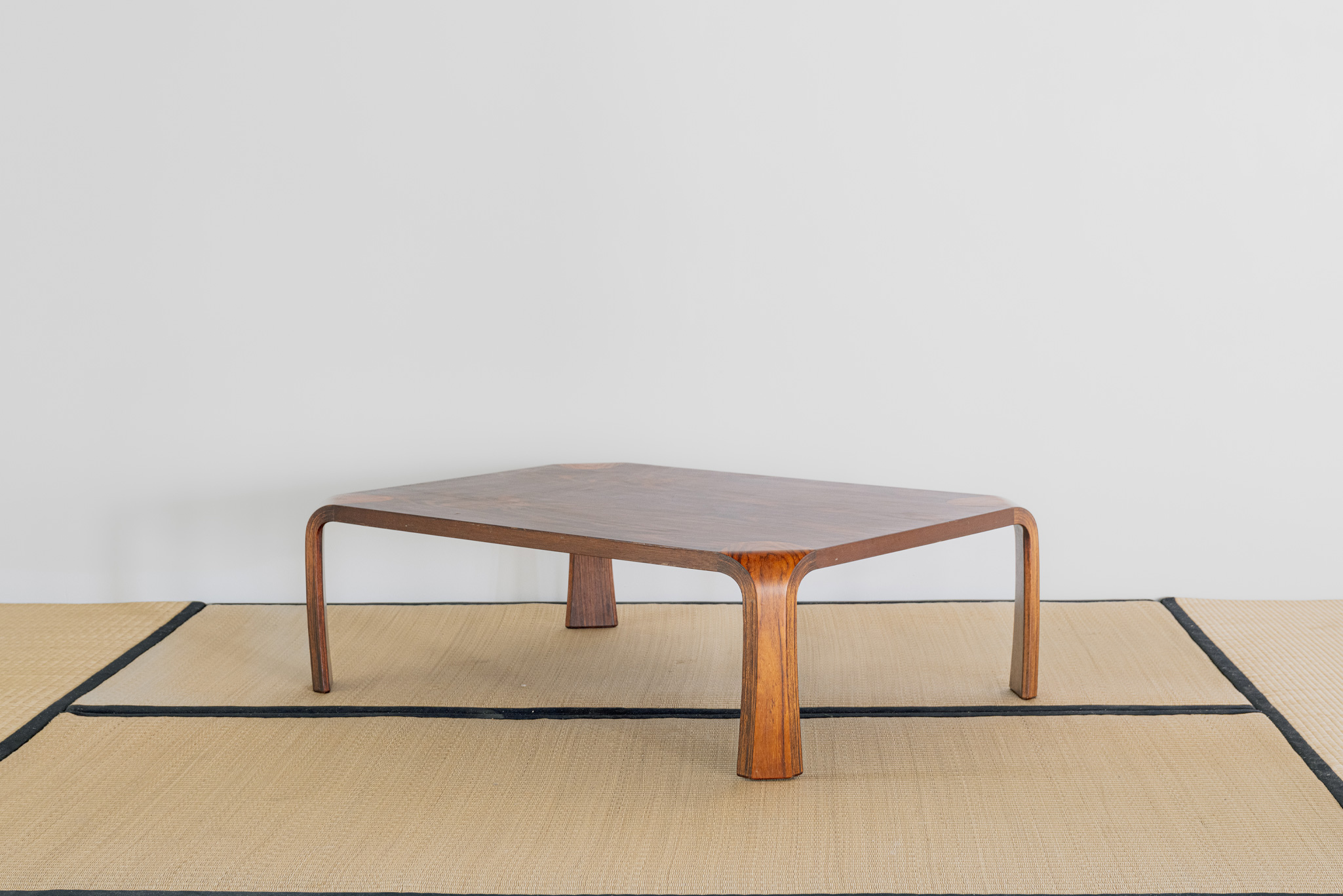
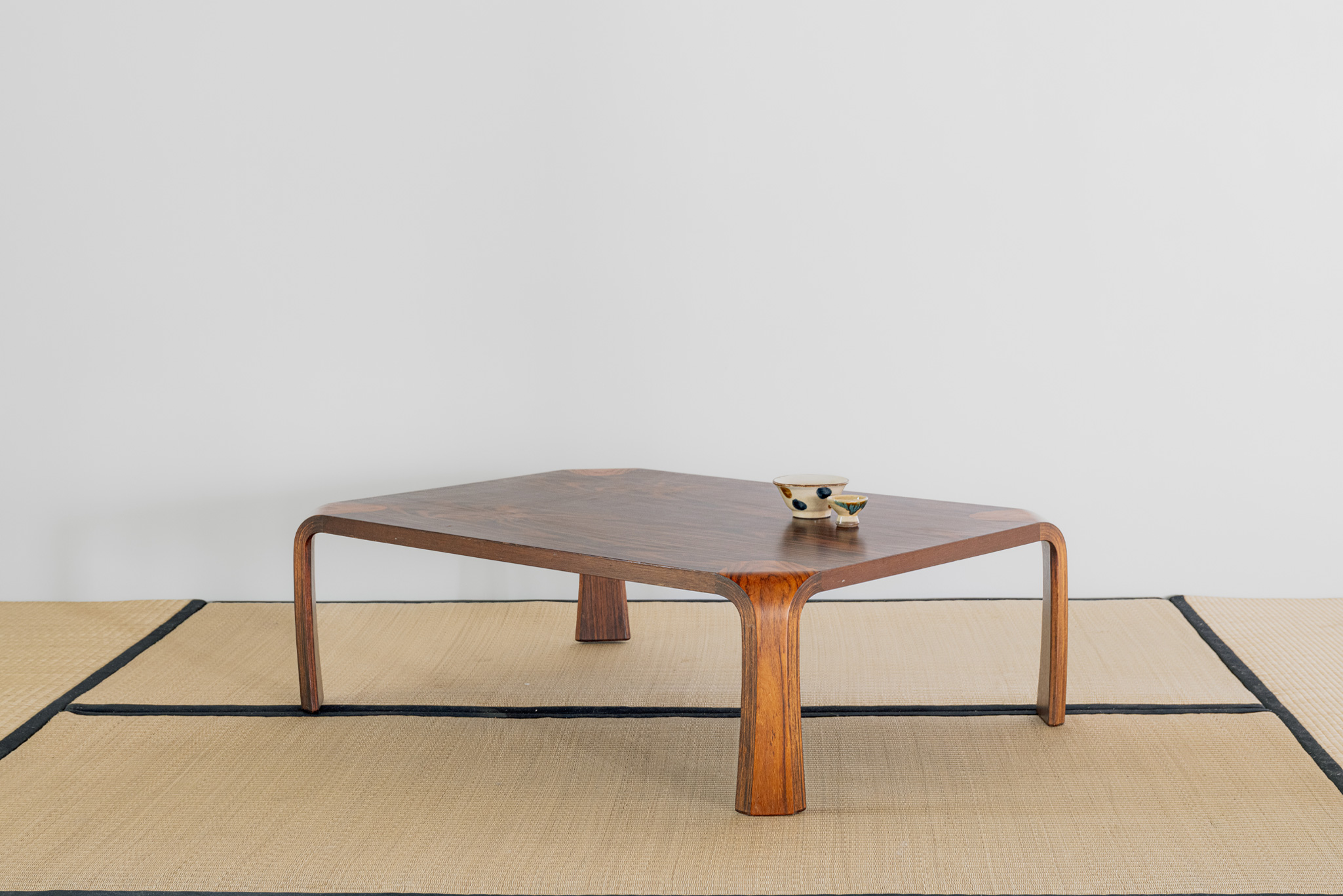
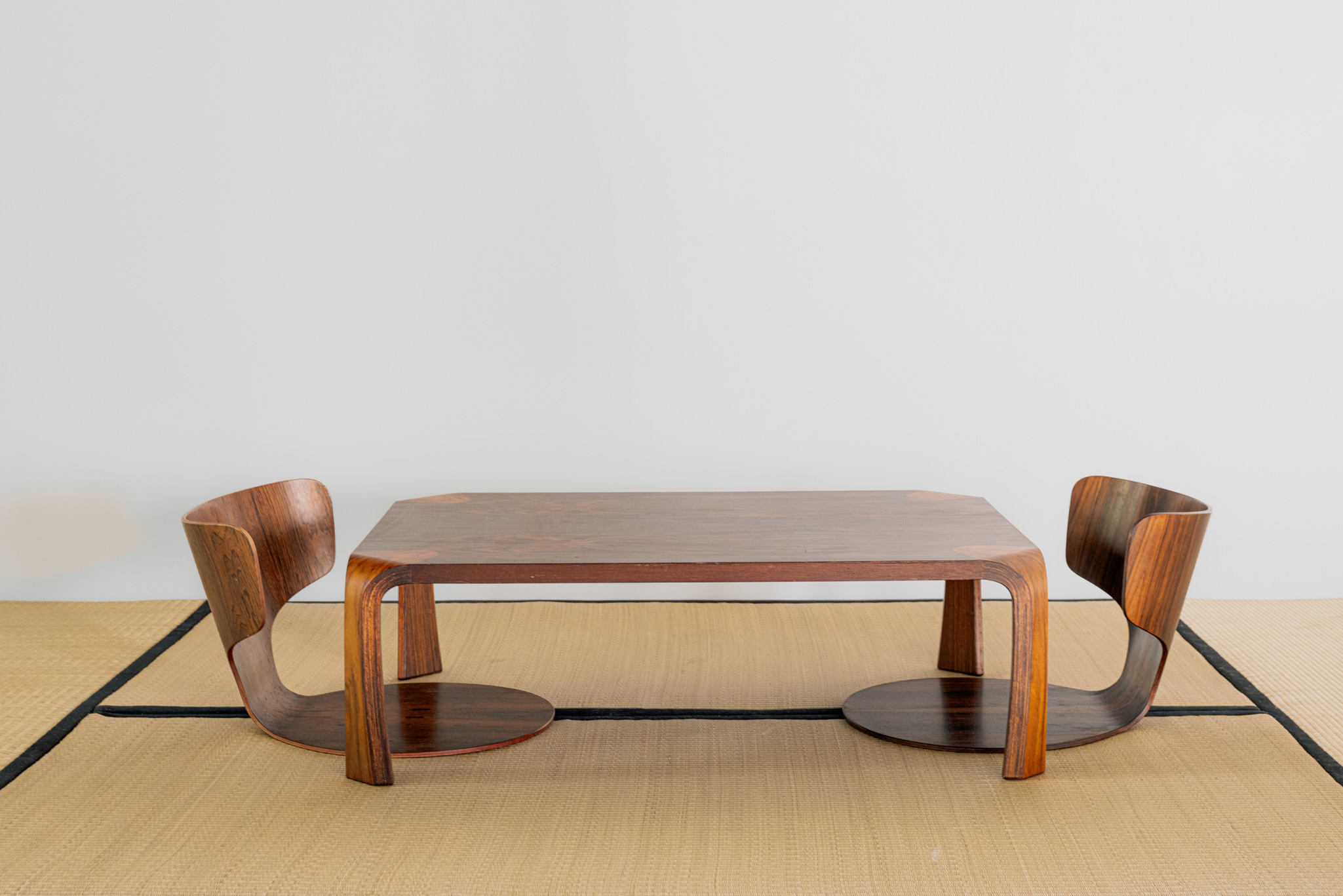
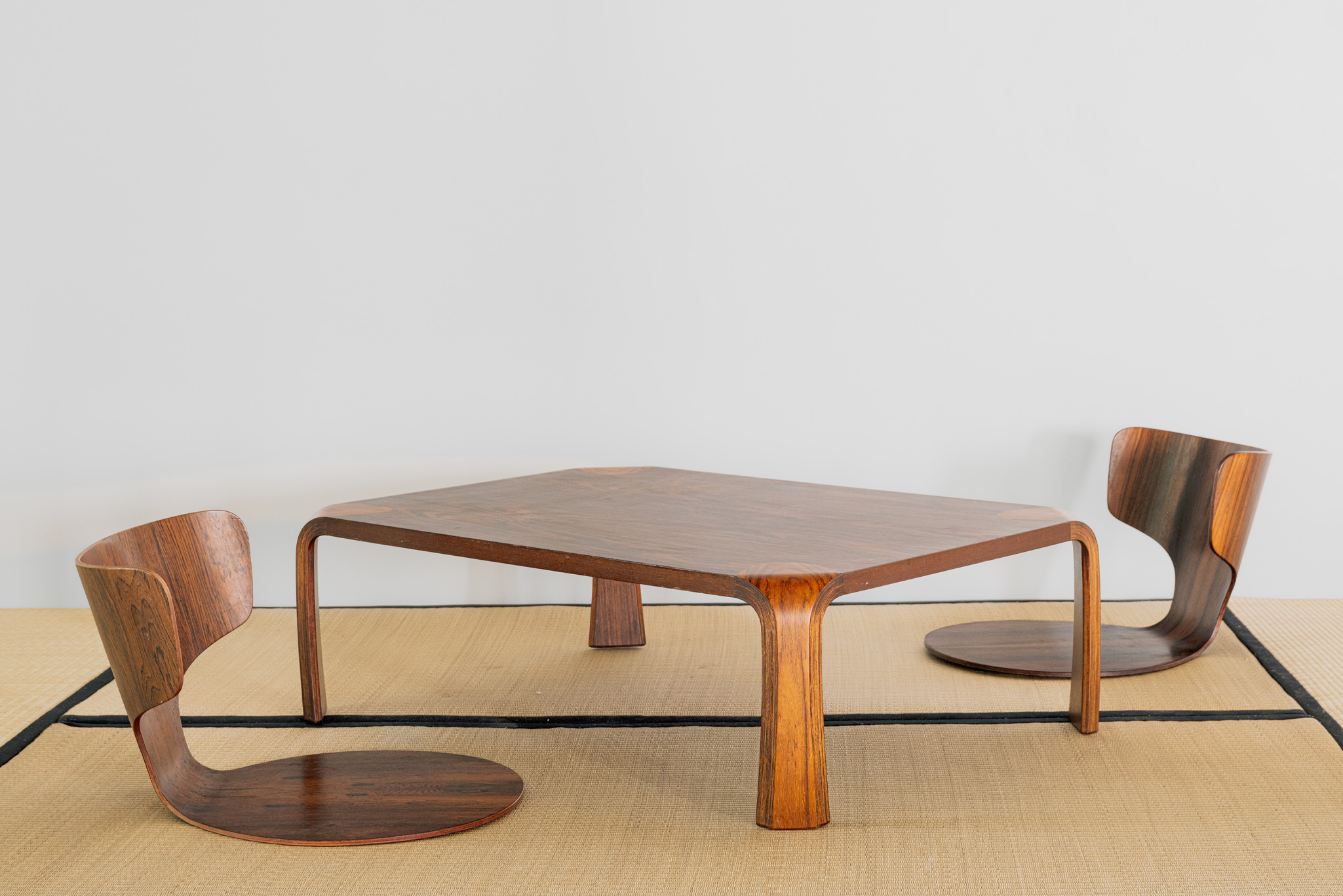
Coffee Table model "Zataku"
Manufactured by Tendo Mokko
Japan, 1960s
Laminated and bent rosewood plywood
Measurements
121 × 76 × 34h cm
47,7 × 29,9 × 13,5h in
Literature
Hiesinger, Kathryn B., and Mio Wakita-Elis. Japanese Design Since 1945: A Complete Sourcebook. Philadelphia Museum of Art, 1990.
Tendo Mokko Co., Ltd. Furniture Catalogue, Yamagata, c. 1960.
Japanese Design: A Survey Since 1950. The Japan Foundation, Tokyo, 1991.
About
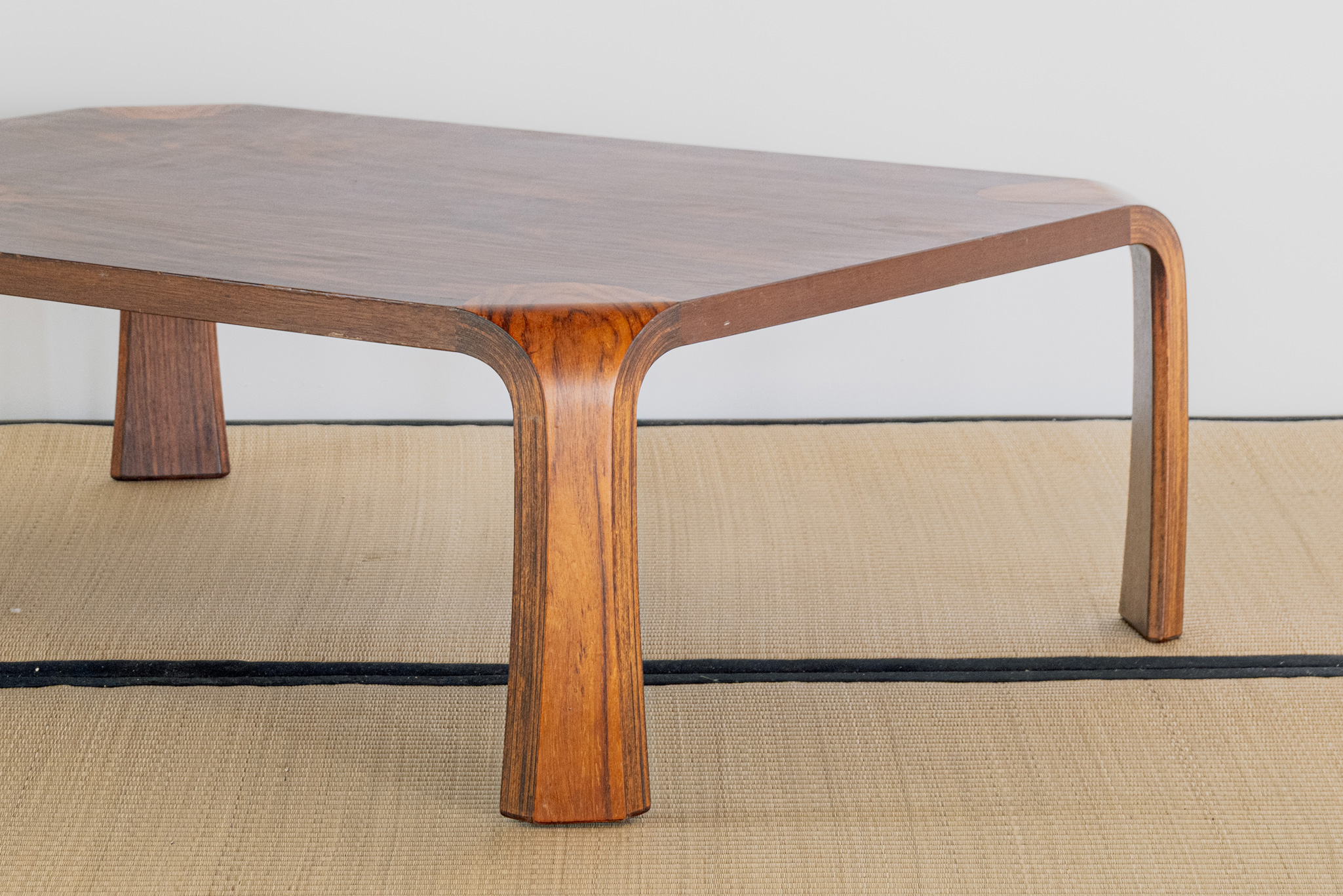
This coffee table exemplifies the sophisticated synthesis of technology and craftsmanship that characterized Japanese modern design during the postwar period. Designed by Saburo Inui and manufactured by Tendo Mokko around 1960, the piece demonstrates the remarkable possibilities of laminated and bent plywood, a technique that had become central to the company's identity.
Its sculptural form is defined by gently curved surfaces and a remarkable sense of visual lightness. Rather than emphasizing mass, the design relies on the expressive qualities of molded plywood, allowing structure and material to become inseparable. The rich rosewood grain further enhances the elegance of the composition, revealing the warmth and refinement that distinguish the finest examples of Japanese furniture from this period.
Like many of the most successful designs produced by Tendo Mokko, the table embodies the ideals of postwar Japanese modernism: clarity, functionality, and harmony between object and space. Its understated presence and architectural qualities make it equally suited to domestic interiors and more formal environments.