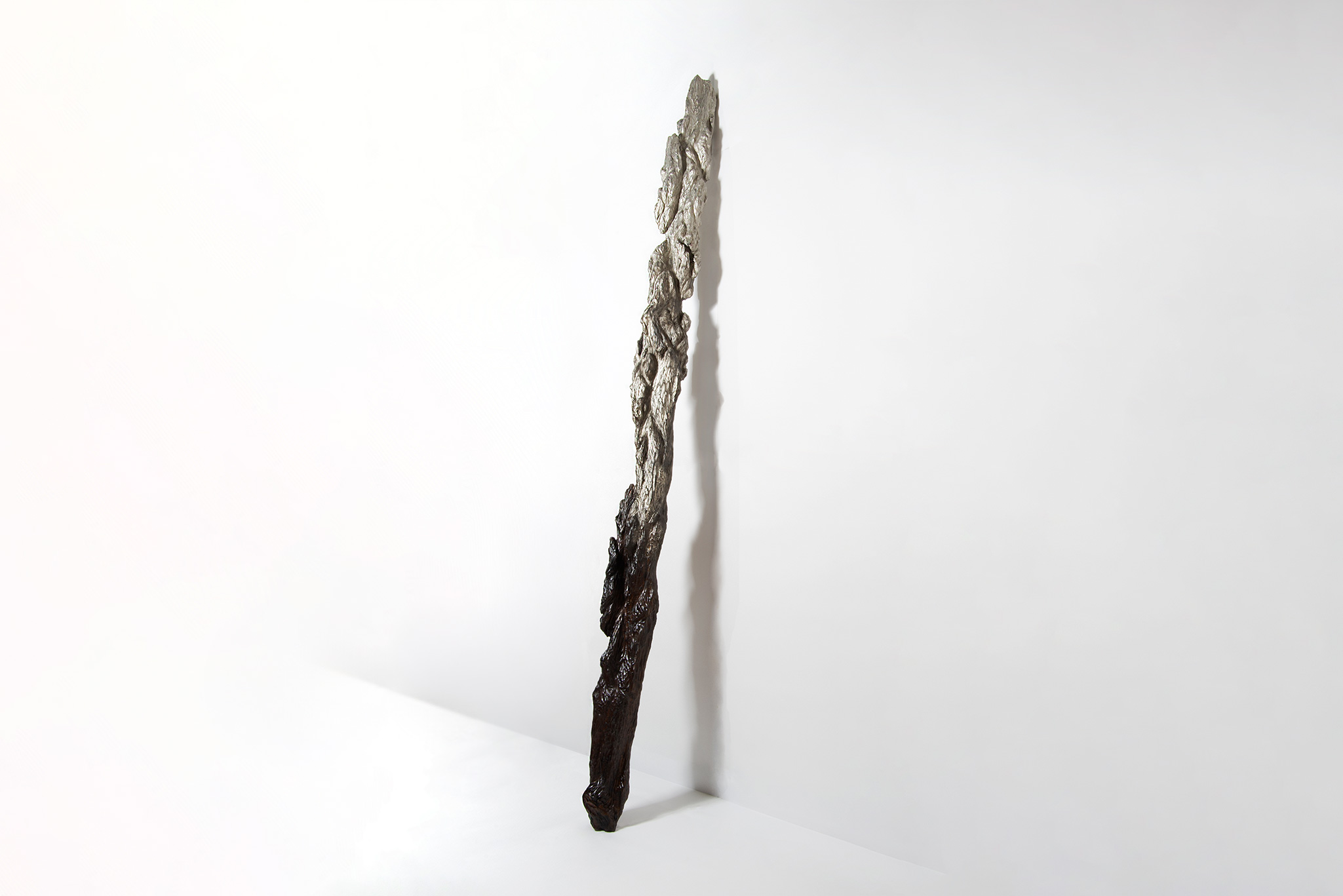
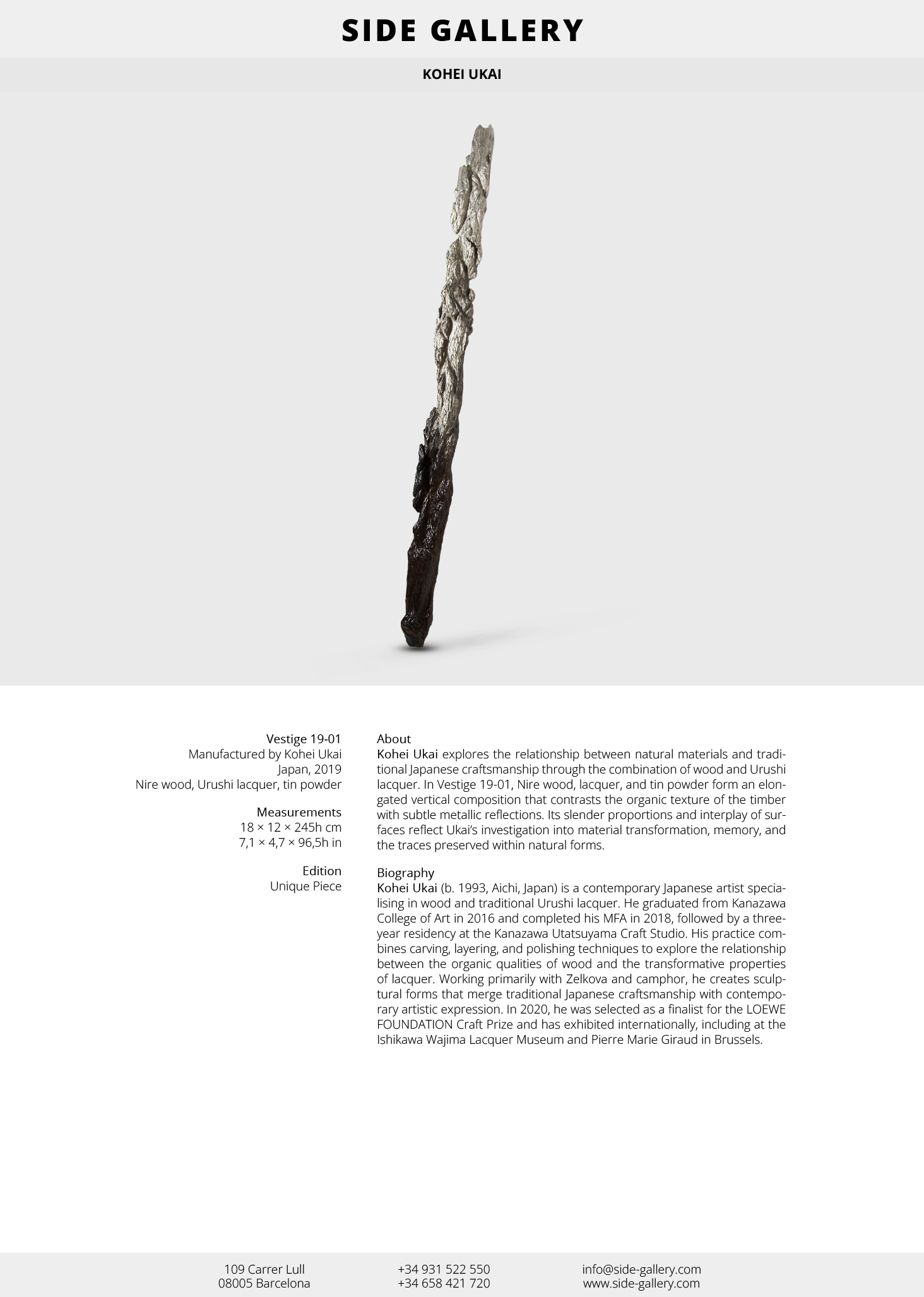
Vestige 19-01
Manufactured by Kohei Ukai
Japan, 2019
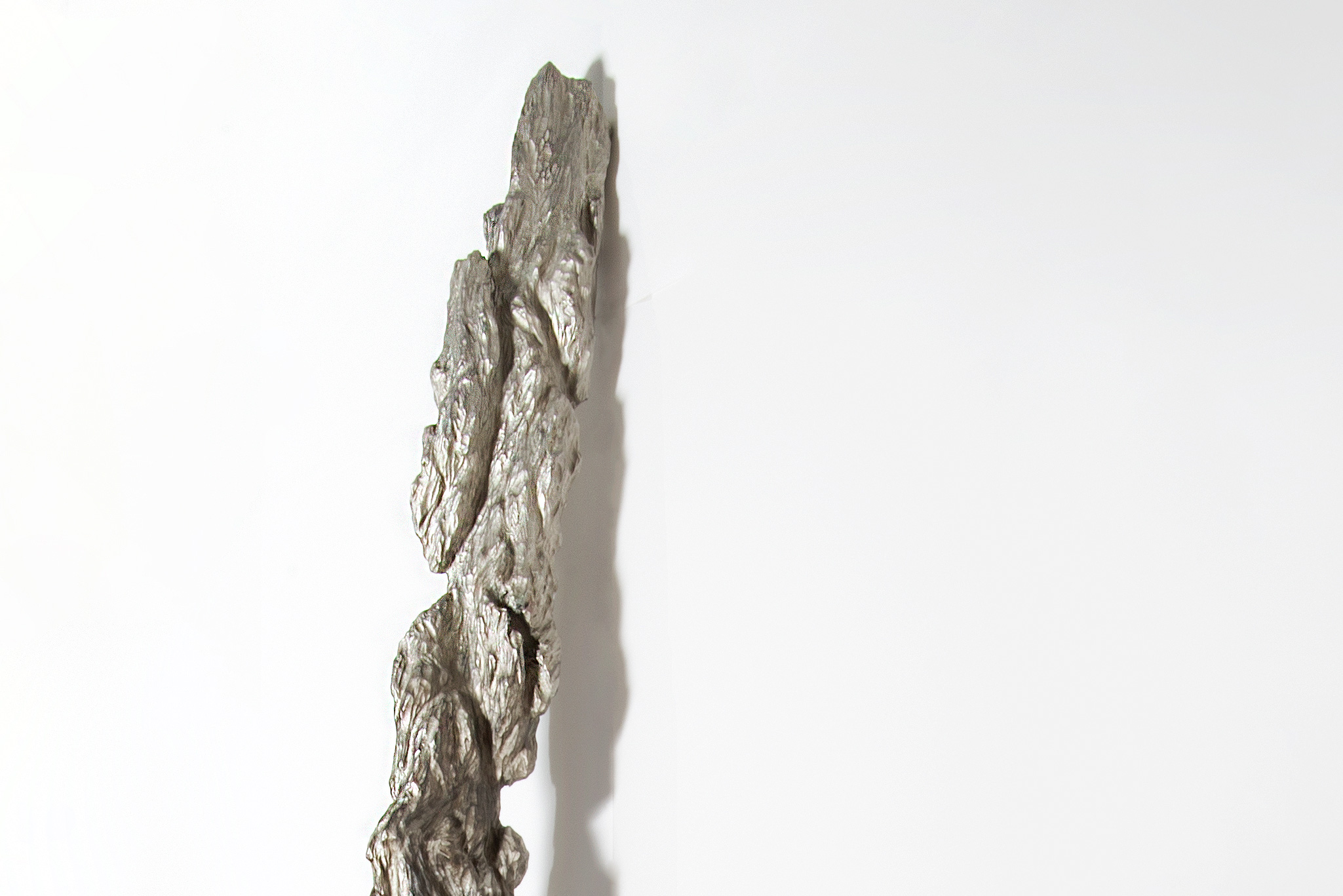
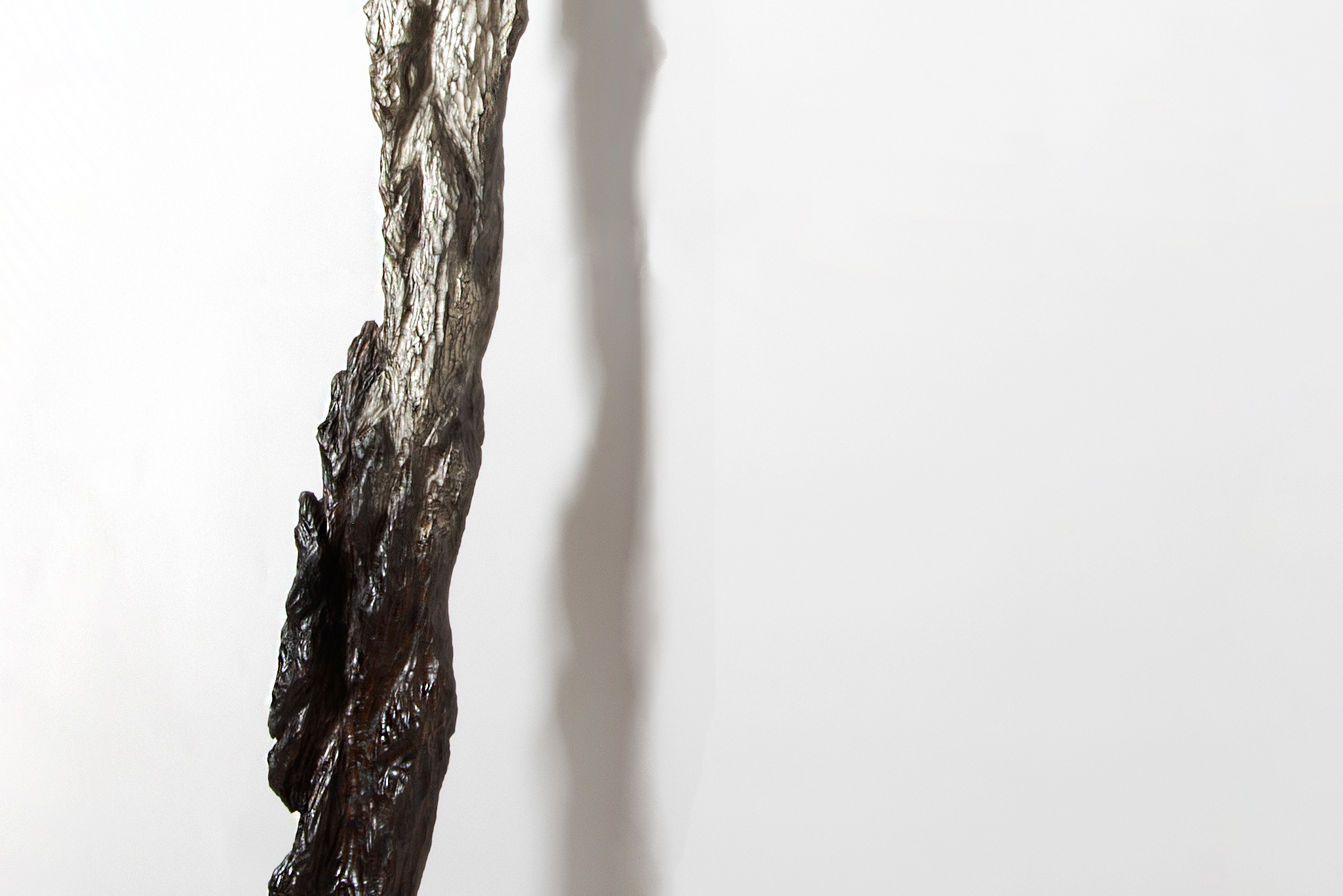
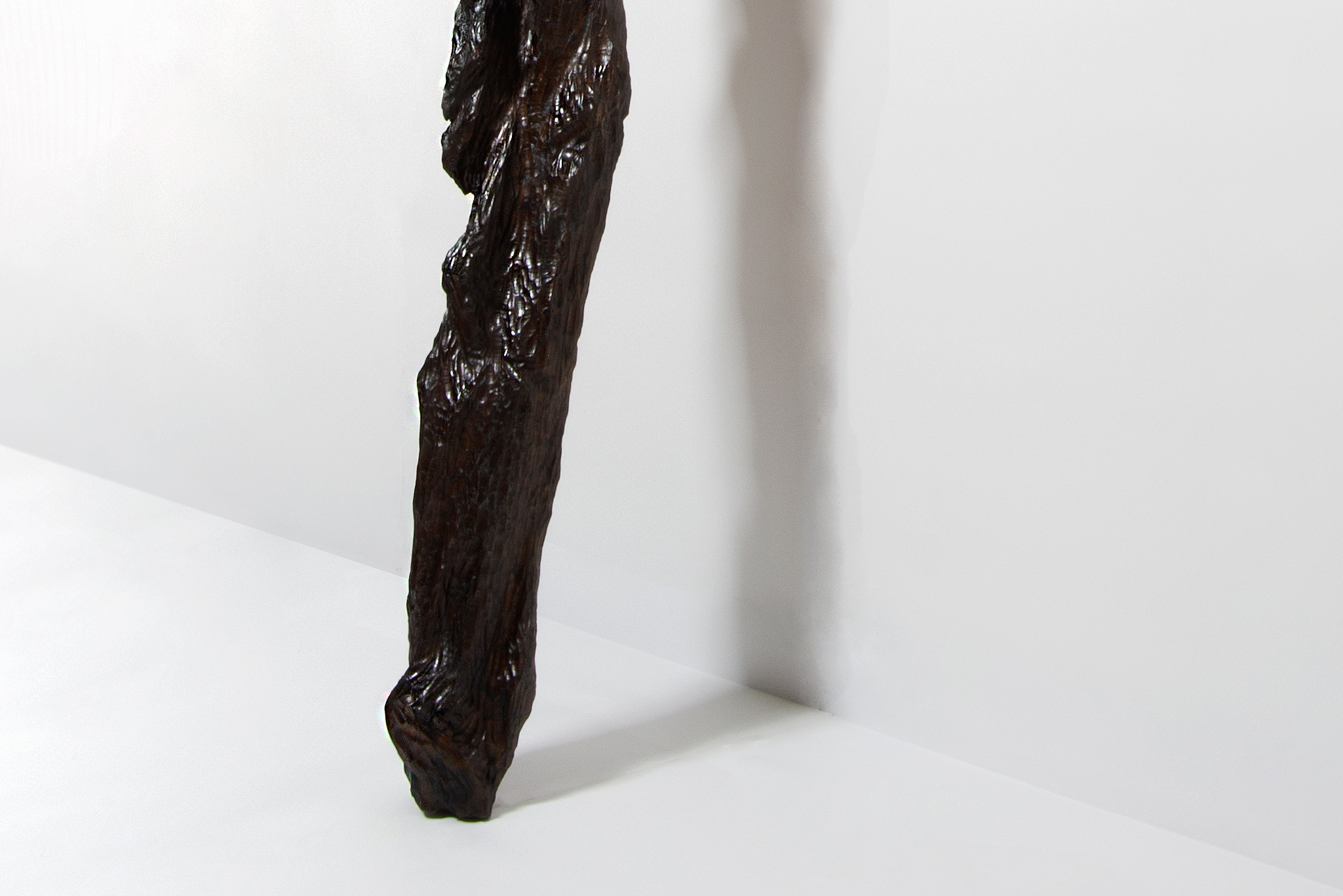
Nire wood, Urushi lacquer, tin powder
Measurements
18 × 12 × 245h cm
7,1 × 4,7 × 96,5h in
Edition
Unique Piece
About
The sculptural works of Kohei Ukai explore the relationship between natural materials and traditional Japanese craftsmanship, combining wood and Urushi lacquer with a contemporary investigation of form, texture, and material transformation. Through processes of carving, layering, and surface treatment, Ukai creates expressive compositions that reveal the inherent qualities of organic materials while exploring the transformative possibilities of traditional lacquer techniques.
In Vestige 19-01, the striking vertical composition brings together Nire wood, Urushi lacquer, and tin powder, establishing a dialogue between natural textures and refined metallic surfaces. Its exceptionally elongated proportions emphasise the sculptural presence of the work, while the incorporation of tin powder introduces subtle reflective qualities that contrast with the organic character of the wood. The interaction between these materials highlights the relationship between structure, surface, and the traces of artistic intervention.
Rooted in Japanese lacquer traditions, Vestige 19-01 reflects Ukai's exploration of memory, materiality, and transformation. The work's title suggests the persistence of traces and remnants, evoking the passage of time and the enduring presence of natural materials. Through the combination of traditional craftsmanship and contemporary sculptural expression, Ukai creates a composition in which the physical characteristics of wood become integral to an exploration of form, texture, and the relationship between nature and human intervention.
Biography
Kohei Ukai (b. 1993, Aichi, Japan) is a contemporary Japanese artist recognised for his sculptural exploration of wood and traditional Urushi lacquer. He graduated from Kanazawa College of Art in 2016 and completed his Master of Fine Arts in 2018. He subsequently undertook a three-year residency at the Kanazawa Utatsuyama Craft Studio, where he further developed his technical knowledge of Japanese lacquer craftsmanship. He currently lives and works in Kanazawa, Japan.
Ukai's artistic practice centres on the symbiotic relationship between wood and lacquer, exploring how these natural materials interact through processes of carving, layering, and polishing. Working with woods such as Zelkova and camphor, he creates sculptural forms that retain the irregularities and textures of the original timber while introducing smooth, reflective surfaces through successive applications of Urushi. His compositions emphasise the contrast between the organic structure of wood and the transformative qualities of lacquer, revealing a dialogue between material, craftsmanship, and artistic intention.
Combining traditional Japanese techniques with a contemporary sculptural language, Ukai has exhibited his work internationally, including exhibitions in Japan, China, Hong Kong, and Europe. In 2020, he was selected as a finalist for the LOEWE FOUNDATION Craft Prize, recognising his innovative approach to traditional craftsmanship. His work has also been presented at the Ishikawa Wajima Lacquer Museum and in a solo exhibition at Pierre Marie Giraud in Brussels, establishing him as a distinctive voice in contemporary Japanese craft and sculpture.