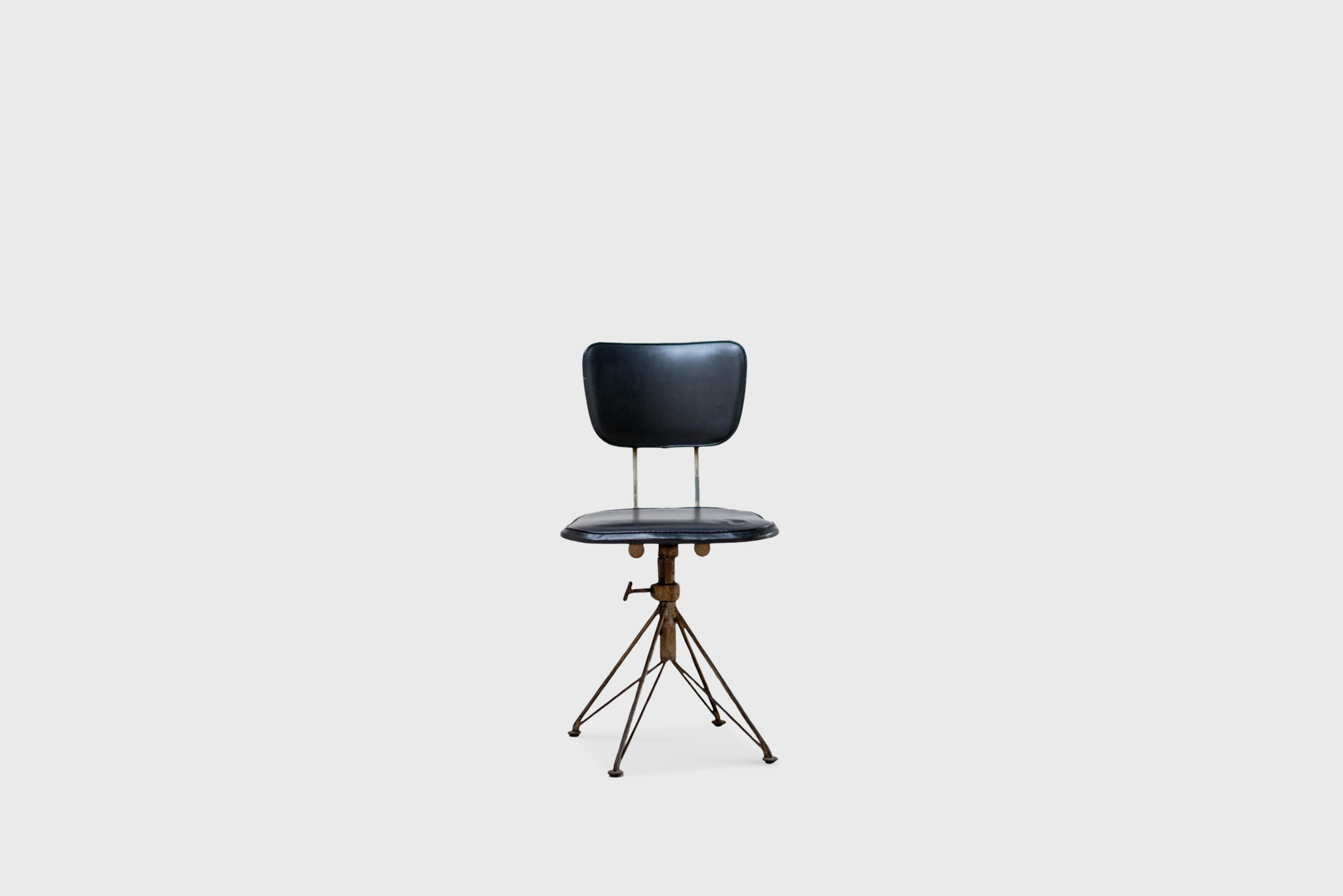
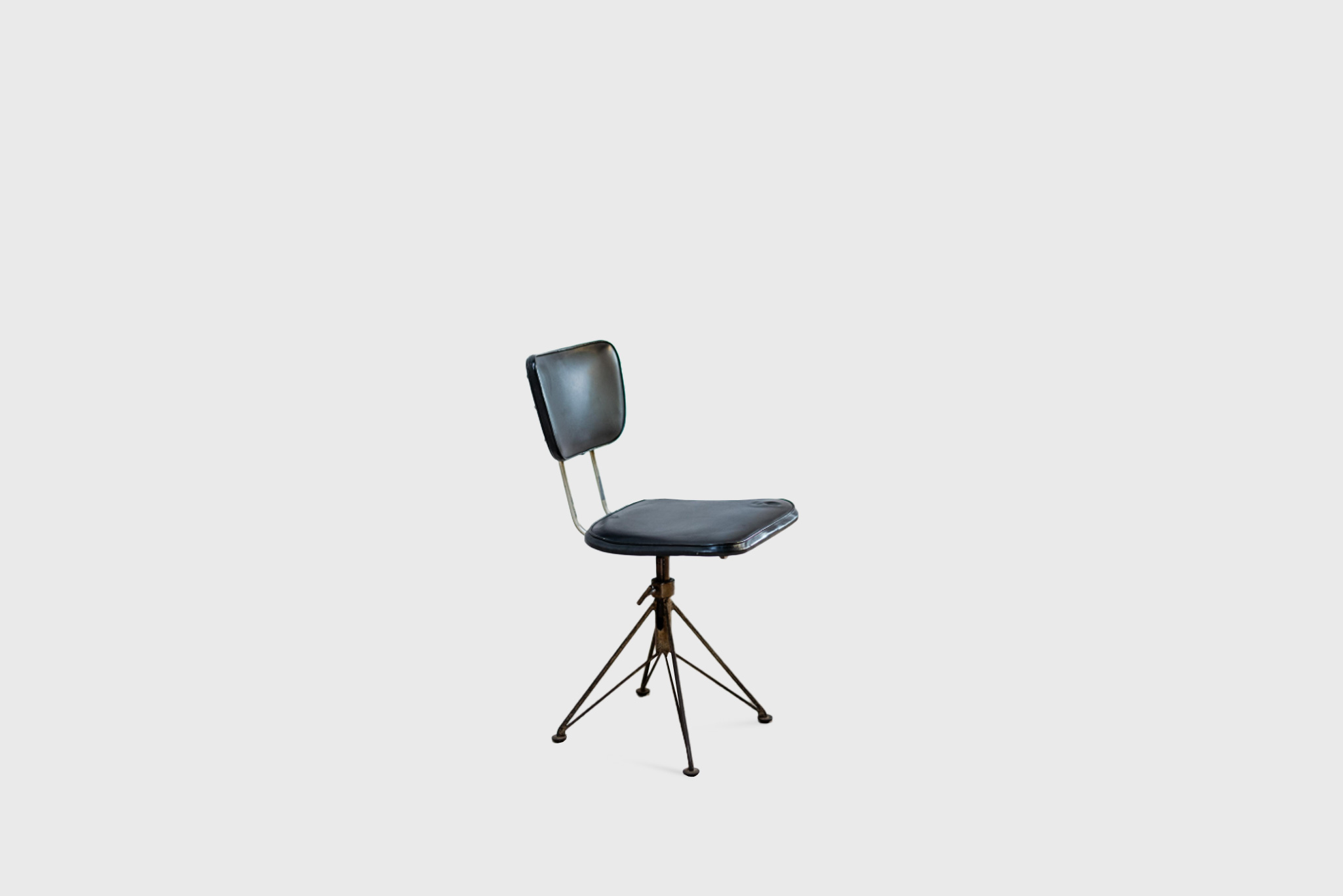
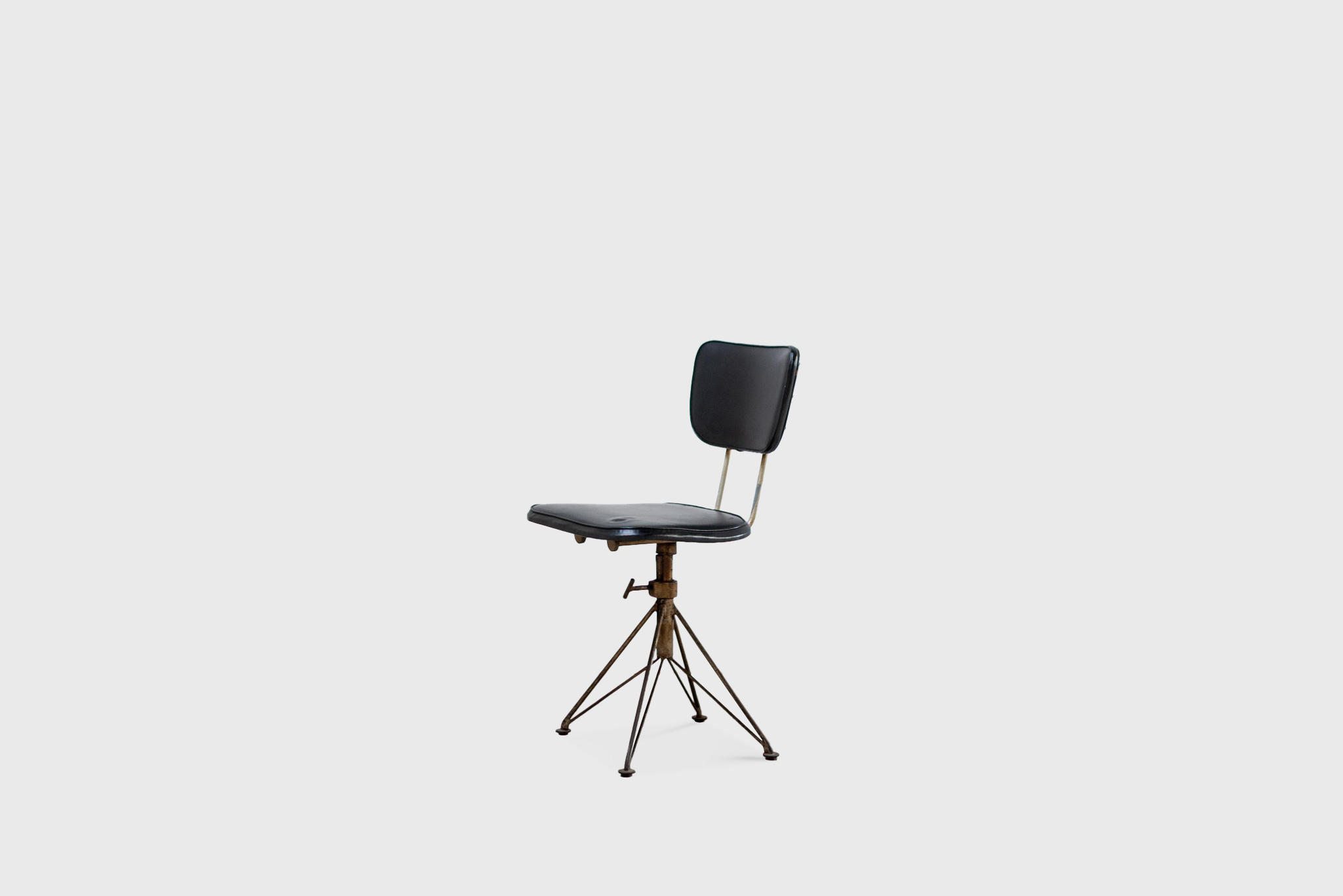
Kenzo Tange 1950s Office Chair

Side Gallery

Side Gallery

Wishlist

Follow

WORKS

KENZO TANGE

Request Pricing Share
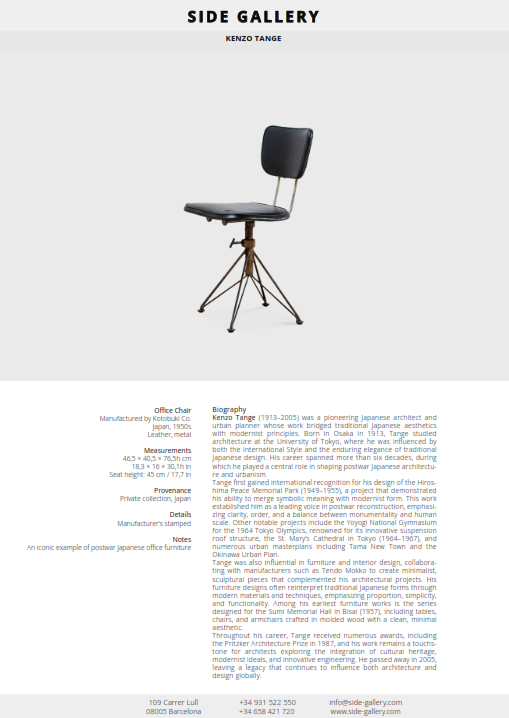
Office Chair
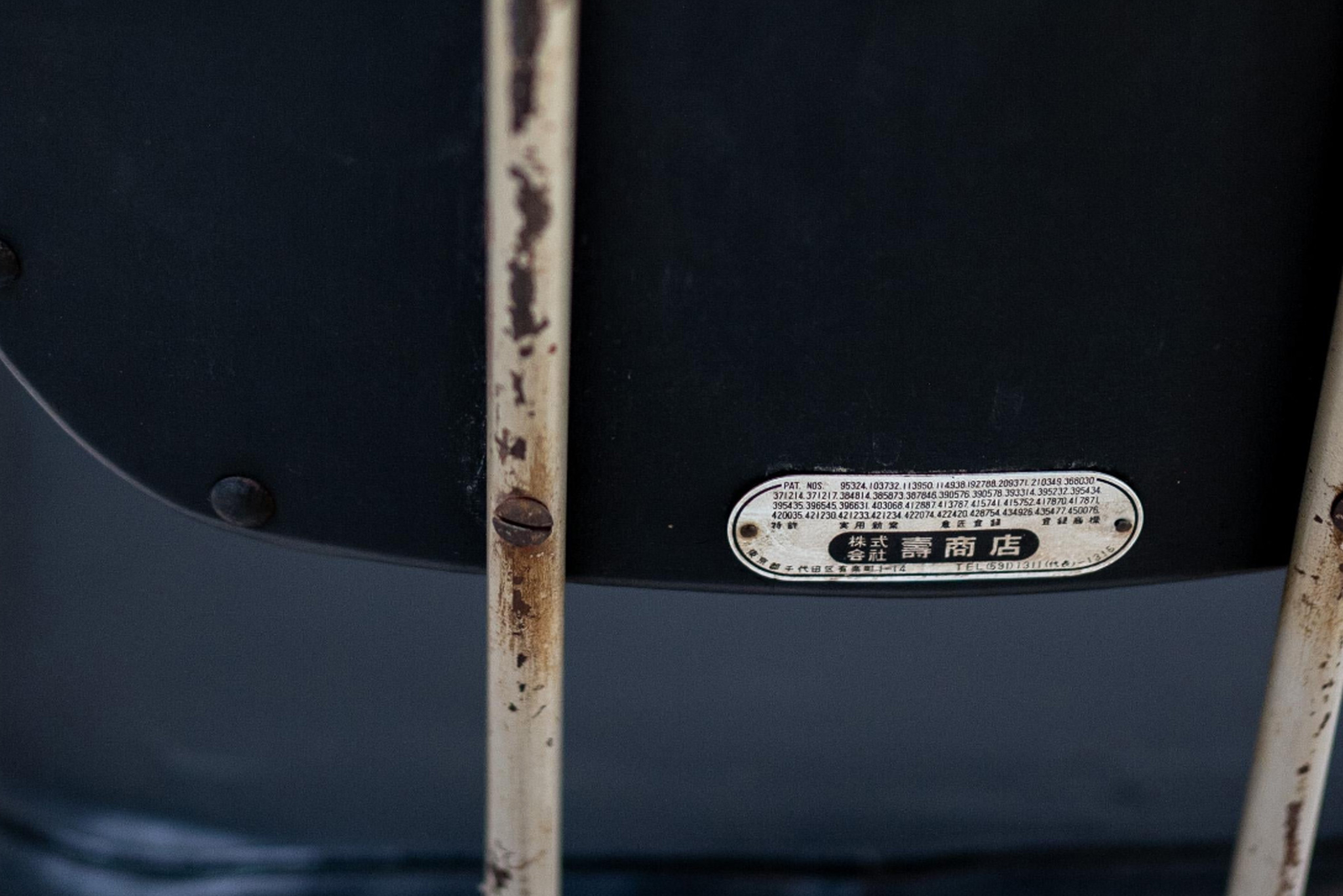
Manufactured by Kotobuki Co.
Japan, 1950s
Leather, metal

Measurements
46,5 × 40,5 × 76,5h cm
18,3 × 16 × 30,1h in
Seat height: 45 cm / 17,7 in

Provenance
Private collection, Japan

Details
Manufacturer’s stamped

Notes
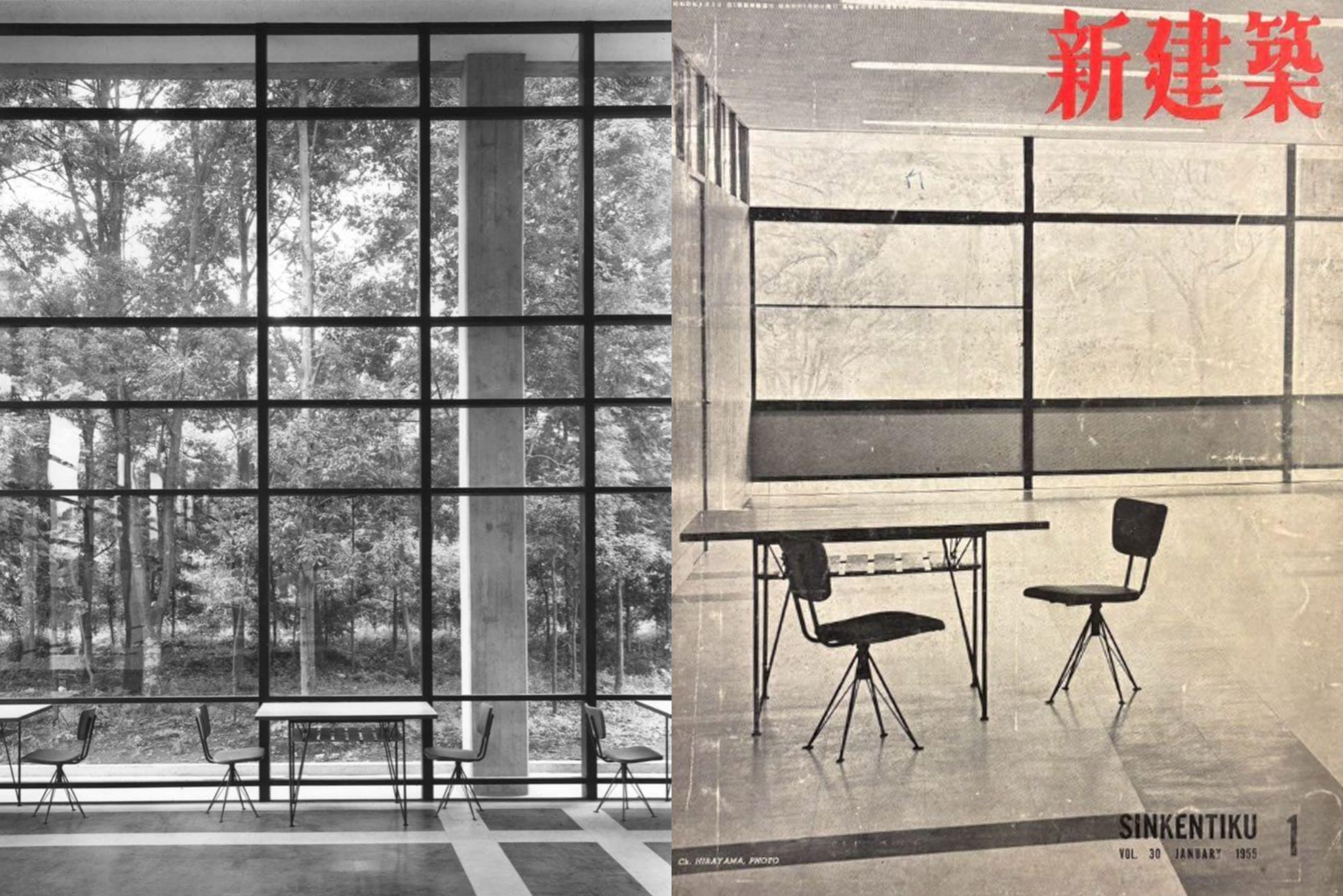
An iconic example of postwar Japanese office furniture

About Kotobuki Co.
Kotobuki Co. represents a lineage of Japanese industrial and manufacturing expertise that spans decades of craftsmanship, precision, and collaboration with notable designers. The name Kotobuki is associated with several Japanese companies rooted in a tradition of quality manufacturing — from precision metalwork and components to specialty seating and design‑oriented products made in Japan (often under the principle of Monozukuri, the craft of making things with care and technical excellence).

One of the most established branches, Kotobuki & Co., Ltd., was founded in 1967 in Kawagoe, Japan, and has built a reputation as an advanced OEM/ODM supplier, especially in the writing instruments and related industries. The company integrates product planning, prototyping, development, and manufacturing under one roof, offering high adaptability and quality — from idea to finished product. Its philosophy emphasizes development capabilities, tailored customer proposals, and reliable production standards that reflect the high expectations of Japanese precision manufacturing.

Another historic facet of the Kotobuki name can be seen in companies like Kotobuki Seating, which trace their origins even earlier (back to 1914) and have played a role in public seating production for theatres, auditoriums, and stadiums across Japan and beyond. In the late 1950s and early 1960s, this group began producing fiber‑reinforced plastic (FRP) chairs, including early seating installations designed by influential architects and designers — for example, chairs designed by Kenzo Tange for the Imabari City Hall, which were among the first large‑scale applications of molded FRP products in Japan.

This period — the rapid postwar growth of Japan’s industrial design culture — saw furniture and product designers such as Isamu Kenmochi, Sori Yanagi, Riki Watanabe and others working with innovative materials like FRP and plywood, often partnering with manufacturing specialists like Kotobuki to realize both experimental and functional pieces. Although Kenzo Tange is best known worldwide as a pioneering architect, his work in the 1950s and 1960s extended into furniture and interior elements, contributing to Japan’s modernist design language that blended architectural vision with product form.

Today, companies bearing the Kotobuki name continue to embody Japan’s dual heritage of traditional craftsmanship and contemporary industrial innovation — producing both specialized components and globally recognized products. Their work reflects a broader narrative of Japanese design: meticulous production processes, collaborations across disciplines, and a commitment to quality that makes “Made in Japan” a mark of both cultural and technical significance.

About Kenzo Tange
Kenzo Tange (1913–2005) was a pioneering Japanese architect and urban planner whose work bridged traditional Japanese aesthetics with modernist principles. Born in Osaka in 1913, Tange studied architecture at the University of Tokyo, where he was influenced by both the International Style and the enduring elegance of traditional Japanese design. His career spanned more than six decades, during which he played a central role in shaping postwar Japanese architecture and urbanism.
Tange first gained international recognition for his design of the Hiroshima Peace Memorial Park (1949–1955), a project that demonstrated his ability to merge symbolic meaning with modernist form. This work established him as a leading voice in postwar reconstruction, emphasizing clarity, order, and a balance between monumentality and human scale. Other notable projects include the Yoyogi National Gymnasium for the 1964 Tokyo Olympics, renowned for its innovative suspension roof structure, the St. Mary’s Cathedral in Tokyo (1964–1967), and numerous urban masterplans including Tama New Town and the Okinawa Urban Plan.
Tange was also influential in furniture and interior design, collaborating with manufacturers such as Tendo Mokko to create minimalist, sculptural pieces that complemented his architectural projects. His furniture designs often reinterpret traditional Japanese forms through modern materials and techniques, emphasizing proportion, simplicity, and functionality. Among his earliest furniture works is the series designed for the Sumi Memorial Hall in Bisai (1957), including tables, chairs, and armchairs crafted in molded wood with a clean, minimal aesthetic.
Throughout his career, Tange received numerous awards, including the Pritzker Architecture Prize in 1987, and his work remains a touchstone for architects exploring the integration of cultural heritage, modernist ideals, and innovative engineering. He passed away in 2005, leaving a legacy that continues to influence both architecture and design globally.


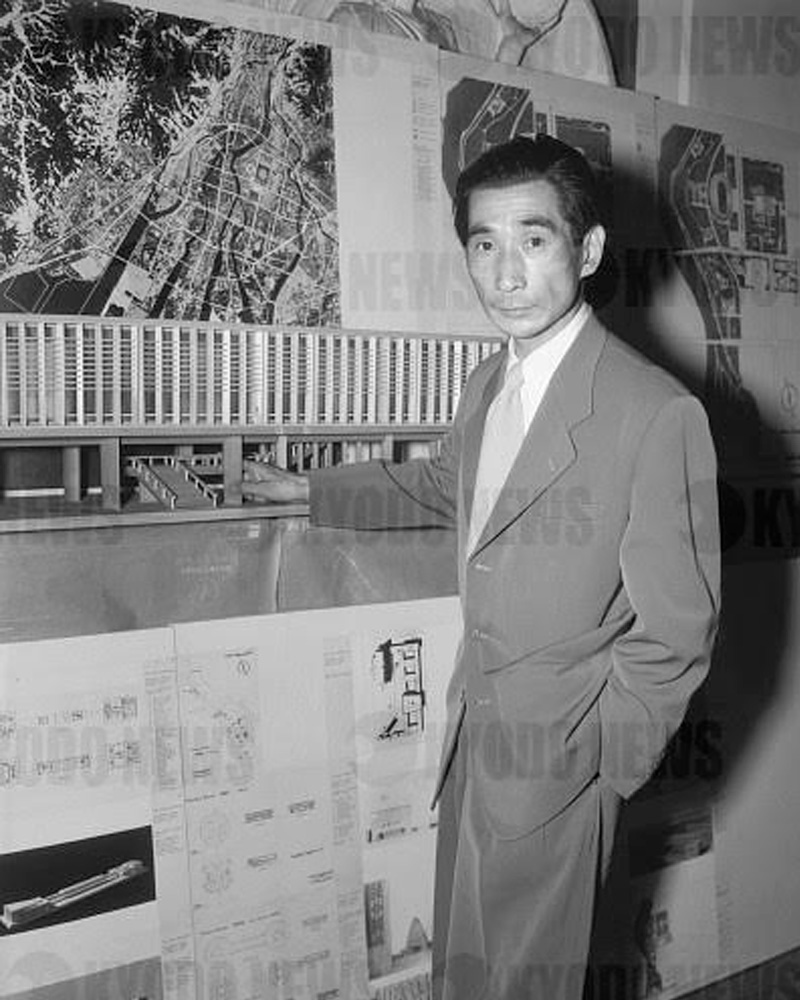
Designer image

Born in Sakai City, Osaka Prefecture in 1913, Kenzo Tange 丹下健三 enrolled in the Department of Architecture at the Faculty of Engineering at Tokyo Imperial University, inspired by Le Corbusier. After working at Kunio Maekawa Architects, he went on to graduate school at the University of Tokyo. After graduating, he taught at his alma mater from 1946 to 1974, presiding over the "Tange Laboratory." He nurtured many outstanding talents, including Takashi Asada, Yukio Otani, Fumihiko Maki, Arata Isozaki, Kisho Kurokawa, and Yoshio Taniguchi. In 1961, he founded the Kenzo Tange + Urban and Architectural Design Institute. Around the same time, he designed numerous masterpieces incorporating architectural beauty, including the Kagawa Prefectural Office Building, the National Indoor Gymnasium (now the Yoyogi National Gymnasium), and St. Mary's Cathedral, Tokyo. Following the proposal for the "Tokyo Plan 1960" in the 1960s, he was involved in Japan's national projects, such as the masterplanning of the venue for the 1970 World Exposition held in Osaka. From then on, he increasingly became involved in national projects overseas, expanding his activities to a global scale. His later masterpiece, the New Tokyo Metropolitan Government Building, incorporated postmodern trends, and throughout his life, he continued to explore new architectural possibilities without clinging to his past works. The Hiroshima Peace Memorial Museum (now the Hiroshima Peace Memorial Museum) was the first building constructed after World War II to be designated an Important Cultural Property, followed by the National Gymnasium. Tange passed away in 2005.

Kenzo Tange worked with furniture manufacturer Tendo Mokko on numerous projects, beginning with the spectator seating for the Ehime Prefectural Civic Center, designed by Tange in 1953. The Kagawa Prefectural Government Building, still considered one of his masterpieces, was Tange's first architectural project, with Isamu Kenmochi responsible for the interior design. Tendo Mokko worked with Tange on numerous projects during Tange's prime, but as Tange's work expanded globally, opportunities for collaboration decreased. However, in 1990, they delivered the largest piece of furniture ever to the Tokyo Metropolitan Government Building, a record that remains in the memory of the present day. Since then, they have supplied furniture to hotels around the country, including Prince Hotels and the Tokyo Dome Hotel. In recent years, they have also reproduced the "T-7304" and have been producing and repairing additional chairs for children, including the one delivered to the Yukari Bunka Kindergarten in 1967. X

Tange’s career spanned continents and decades. He mentored a generation of architects who carried his ideas into new realms. He reshaped Tokyo and left his mark on cities around the world. In 1987, he received the Pritzker Prize, the highest honor in architecture — recognition not only for his buildings, but for his vision of architecture as a bridge between tradition and modernity, humanity and technology.

Kenzo Tange died in Tokyo in 2005, but his legacy endures. His buildings still inspire awe, his plans still provoke debate, and his furniture rare, precise, and quietly powerful serves as a reminder of his belief in design as a total work of art. From the skyline to the chair, Tange sought harmony, innovation, and a future shaped by thoughtful design.

ENQUIRE ABOUT THE DESIGNER