Floor Chair (Zaisu)
Manufactured by Tendo Mokko
Japan, ca. 1960s
Bent plywood, Fabric upholstery
Measurements
50 cm × 57 cm × 46h cm
19,7 in × 22,4 in × 18,1h in
Provenance
Private collection, Japan
Literature
Tendo. Eight decades of masterful designs from leading Japanese furniture maker Tendo Mokko. Published by Tendo Mokko. Japan, 2020.
Details
Manufacturer's Label
Notes
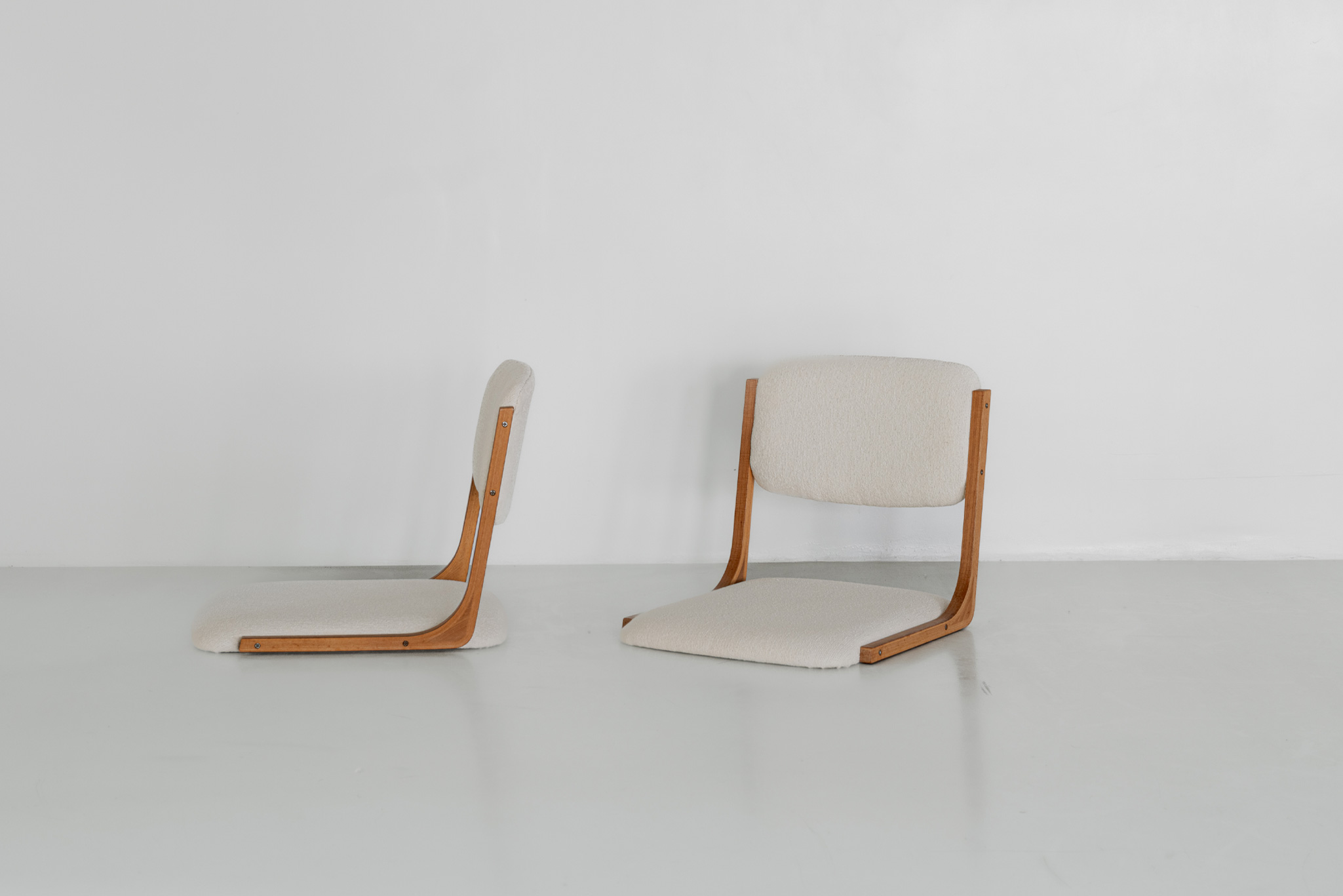
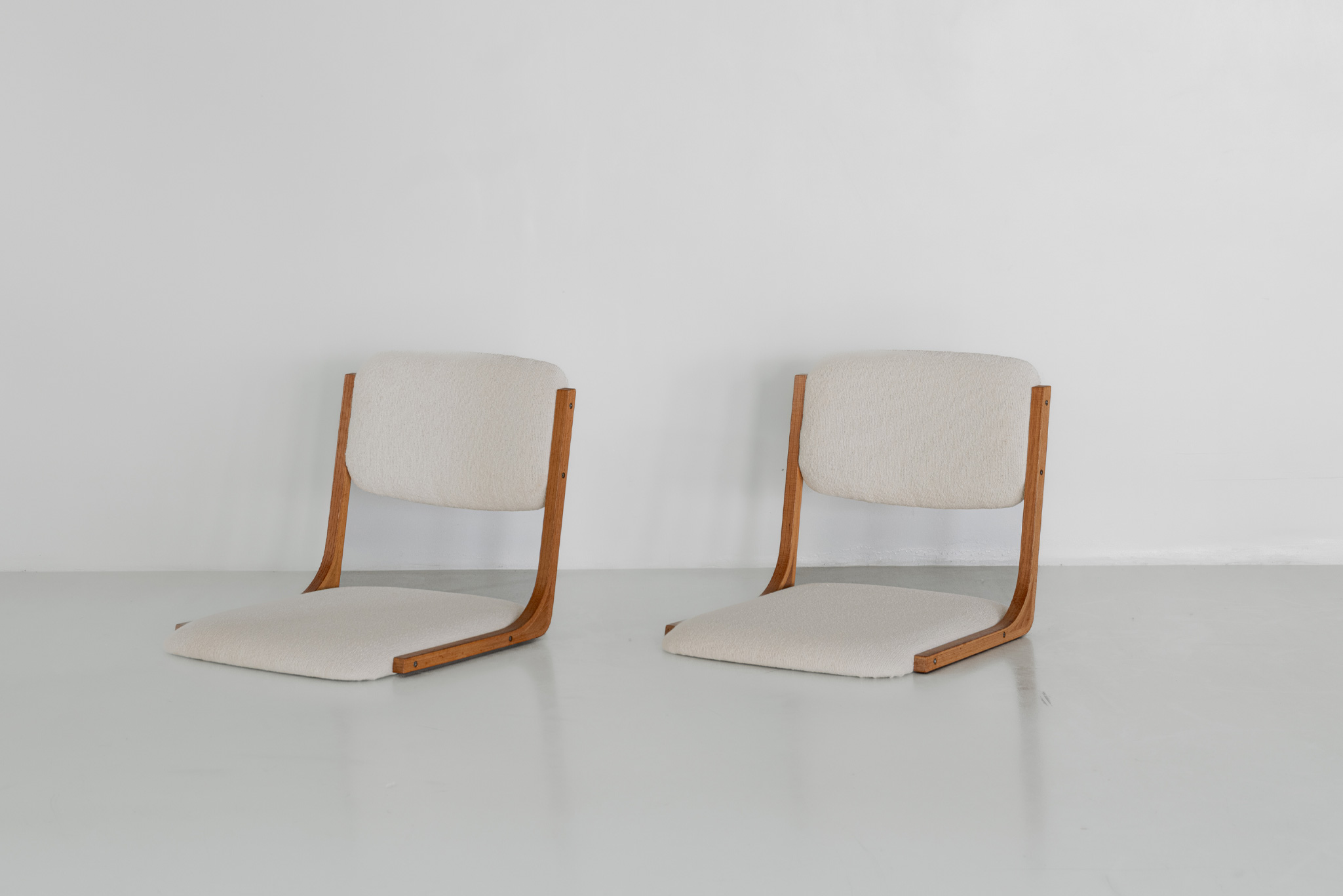
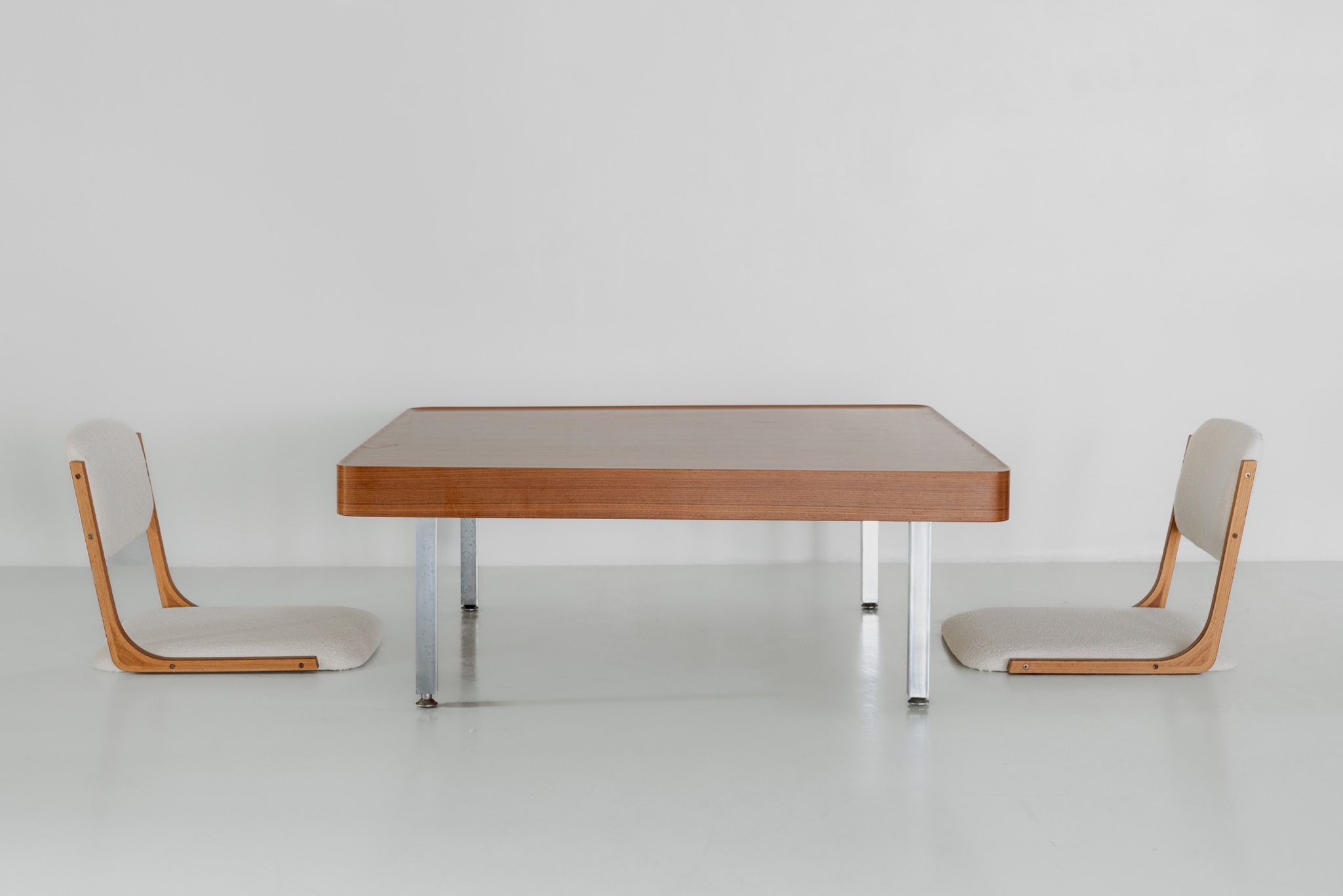
Low chair (zaisu) produced by Tendo Mokko, exemplifying the refined aesthetics of Japanese Modern design. The chair features a sculptural plywood frame with a softly curved seat and backrest upholstered in fabric.
About Tendo Mokko
In northwest Japan, in Yamagata Prefecture, a group of carpenters and joiners created a cooperative that primarily produced wooden objects, ammunition and supply crates for the army. Incorporated in 1942, the cooperative worked with the Sendai Institute of Industrial Arts and used the new molded plywood technology to make decoy aircraft. After the war, Tendo opened an office in Tokyo (1947). It produced furniture for the occupying troops, then turned, in the early 1950s, to furniture for the domestic market One of his first commissions came from the architect Kenzo Tange, who designed plywood seats for the Ehime Prefecture, built in 1953. Plywood was then a new material for designers, and Tendo was one of the first manufacturers to use it for its furniture, notably for the Butterfly stool, created in 1956 by Sori Yanagi. Tendo's policy of paying royalties for design projects attracted many other designers, so much so that, in the sixties, Tendo could boast among its ranks the leading furniture designers Isamu Kenmochi, Daisaku Choh, Riki Watanabe, whose creations are still produced. In addition, Tendo encouraged young designers by funding an annual competition from 1960 to 1967 and by manufacturing some of the winning designs itself, such as Reiko Tanabe's plywood chair. In 1964, Tendo received the Mainichi Prize for Industrial Design for its pivotal role in furniture manufacturing.
Biography
Katsuhira Toyoguchi (1905–1991) was a pioneering Japanese industrial designer and a key figure in the development of modern design in postwar Japan. Known for blending traditional Japanese craftsmanship with modernist principles, Toyoguchi helped shape the identity of contemporary Japanese furniture design in the mid-20th century.
Toyoguchi began his career in the 1930s and later became deeply involved in promoting industrial design as a discipline in Japan. He was instrumental in establishing professional design organizations and contributed significantly to the foundation of the Japan Industrial Designers’ Association (JIDA), advocating for the social and cultural value of good design.
Among his most celebrated works is the Spoke-Back Chair (1961), produced by Tendo Mokko. This chair is considered an icon of Japanese modernism. Its design reinterprets traditional wooden spindle-back chairs through a refined, minimalist lens. The sculptural backrest, composed of evenly spaced vertical spindles, combines visual lightness with structural clarity. The chair exemplifies Toyoguchi’s philosophy of harmonizing ergonomic comfort, craftsmanship, and modern production techniques.
Another significant design is the Stacking Stool (1954), also produced by Tendo Mokko. This piece demonstrates Toyoguchi’s forward-thinking approach to functionality and space efficiency. The stool’s clean lines and stackable form reflect the practical needs of postwar Japan while maintaining aesthetic simplicity and elegance. Its use of molded plywood highlights his interest in innovative materials and manufacturing methods.
Throughout his career, Toyoguchi emphasized the integration of design into everyday life. His work is characterized by restrained forms, careful attention to proportion, and a deep respect for material integrity. Rather than pursuing ornamentation, he focused on clarity, balance, and usability—principles that aligned with both modernist ideals and traditional Japanese sensibilities.