Chest of Drawers From Series C
Manufactured by Mobles i Decoració Casablancas
Spain, 1970s
Oak wood
Measurements
70 × 40 × 110h cm
27,6 × 15,7 × 43,3h in
Provenance
Private Collection, Spain
Literature
Casablancas y su interiorismo didáctico. (1971). Hogares modernos: La revista de la decoración, el mueble y la arquitectura, (56), 74–87.
D. M. A. (1971). Jordi Casablancas, un diseño humanista. Hogares modernos: La revista de la decoración, el mueble y la arquitectura, (104), 18–31.
Details
Manufacturer’s label
About
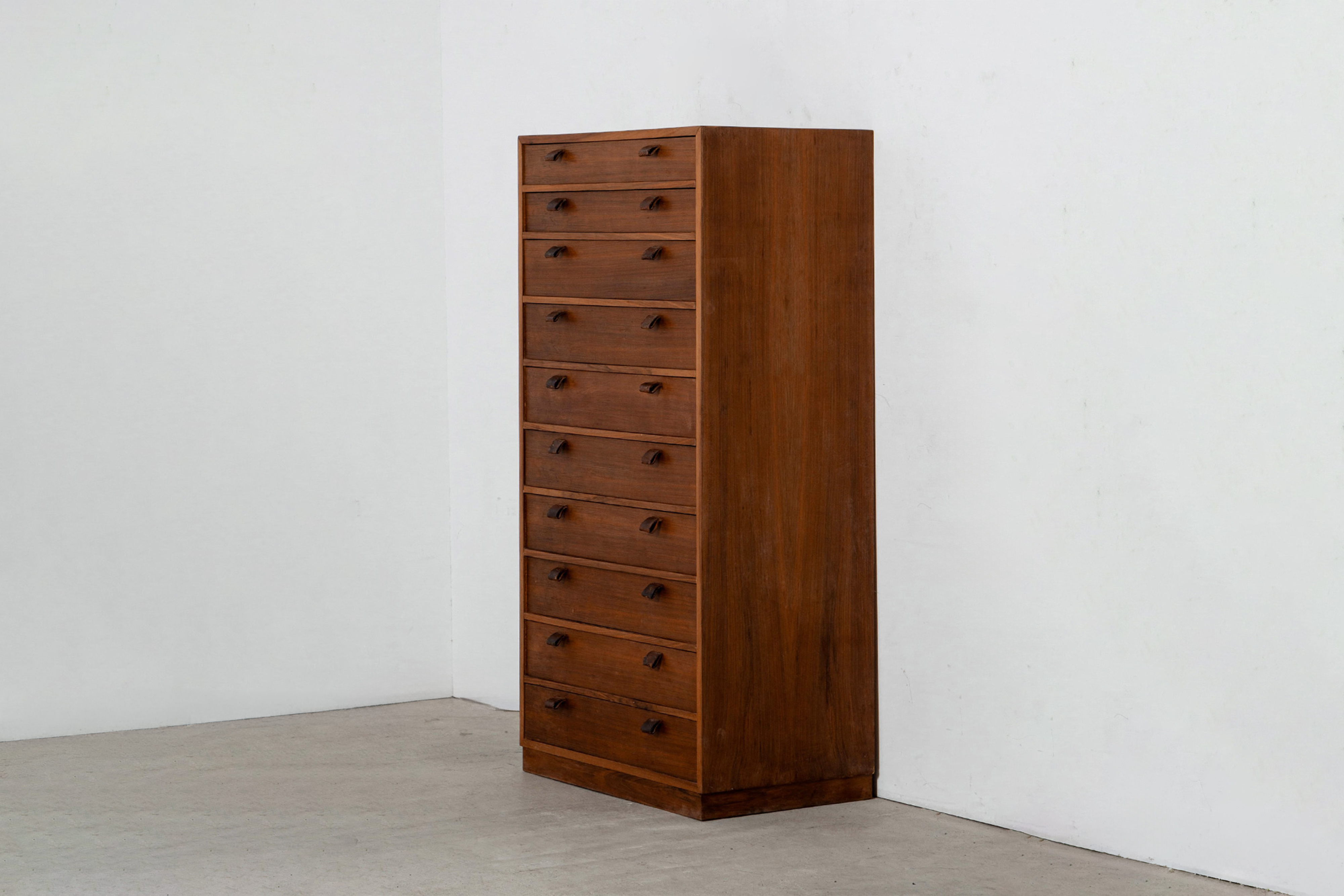
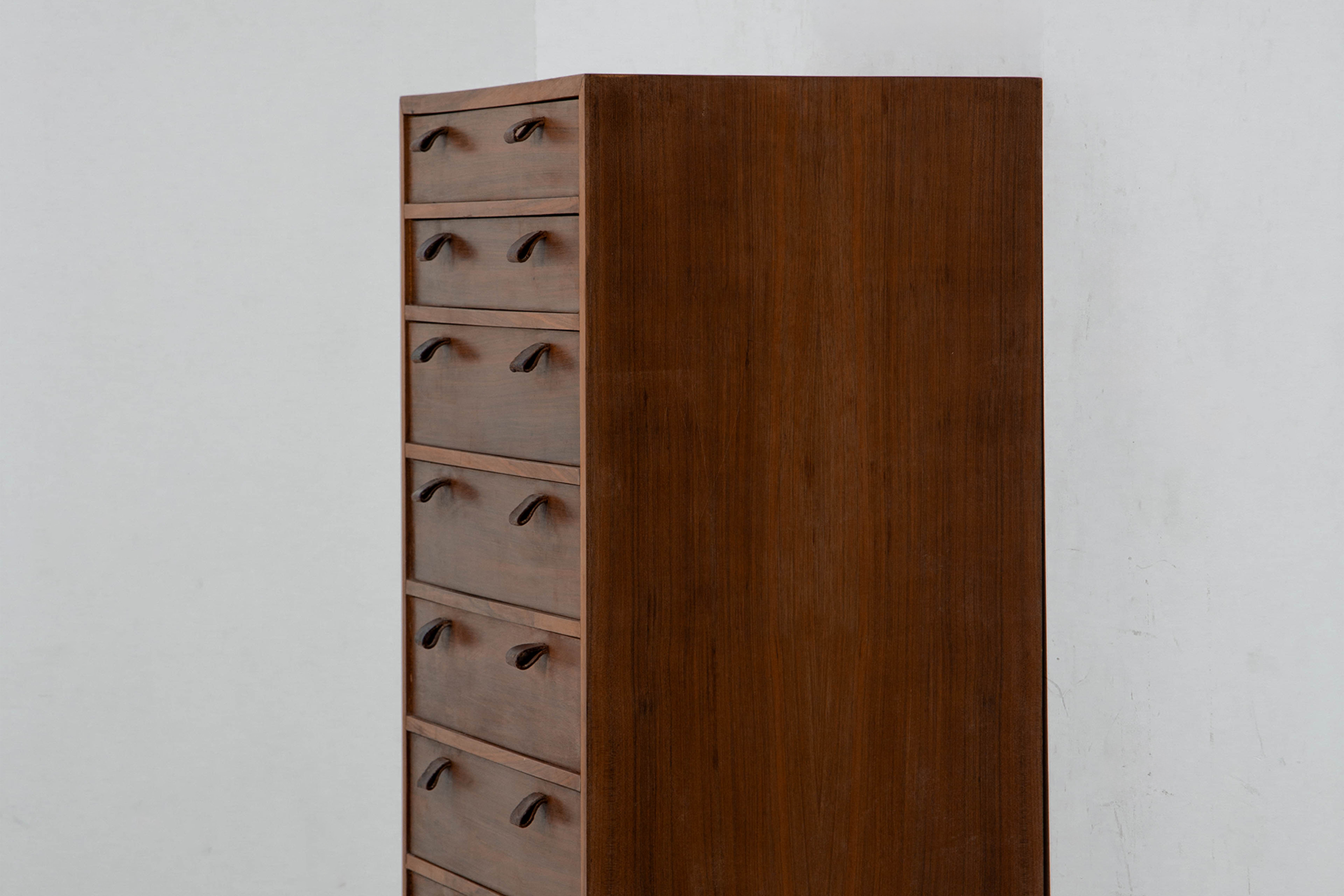
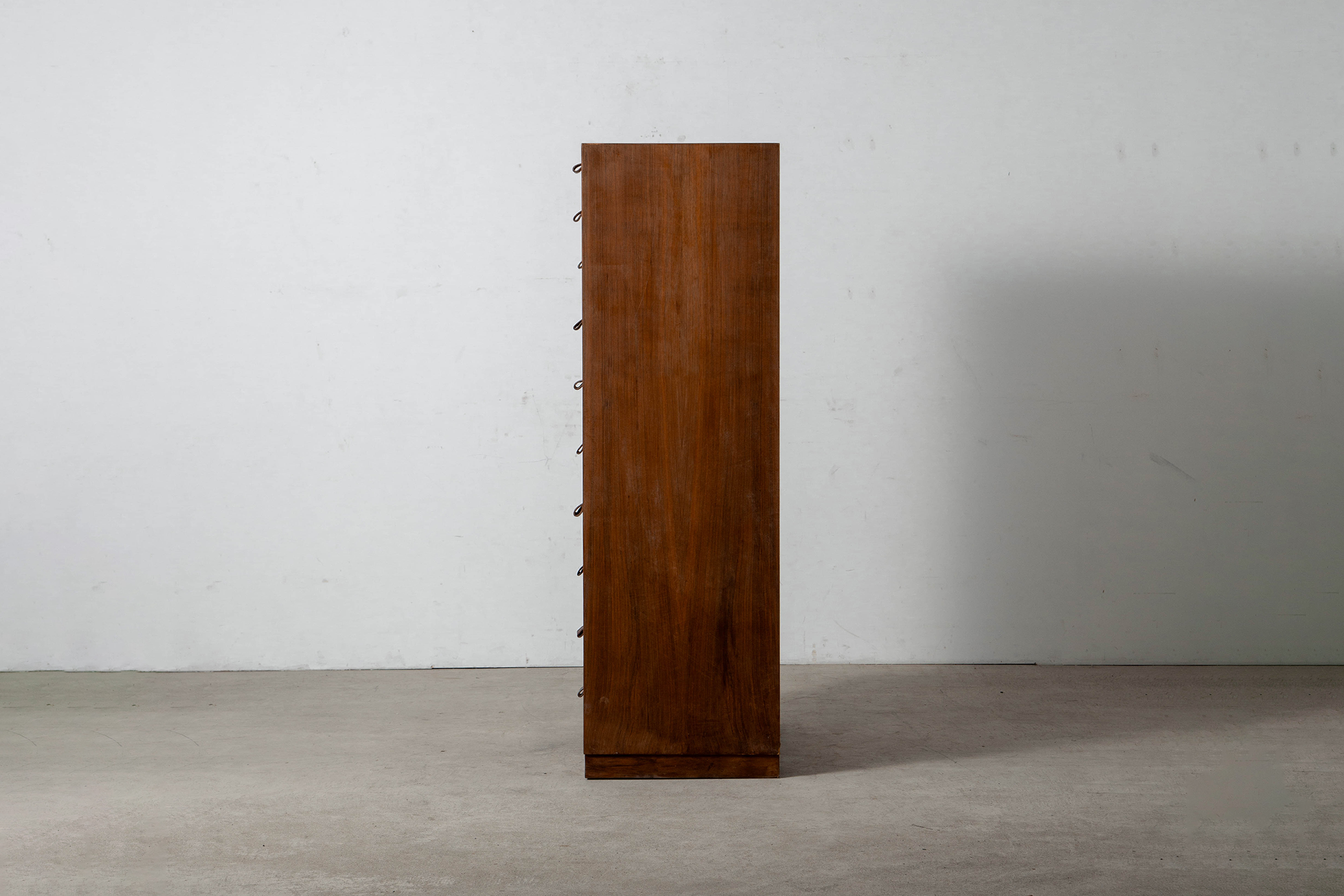
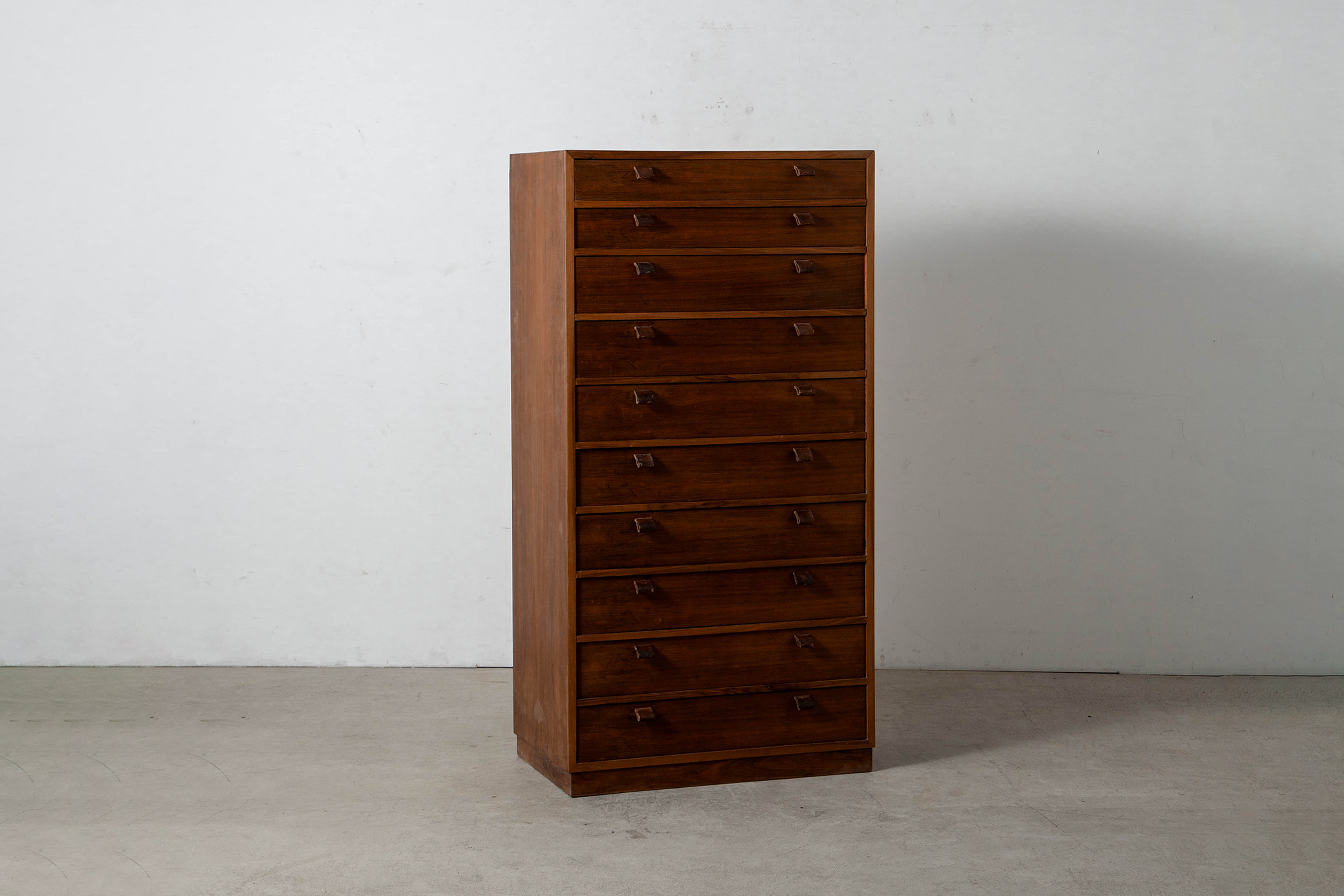
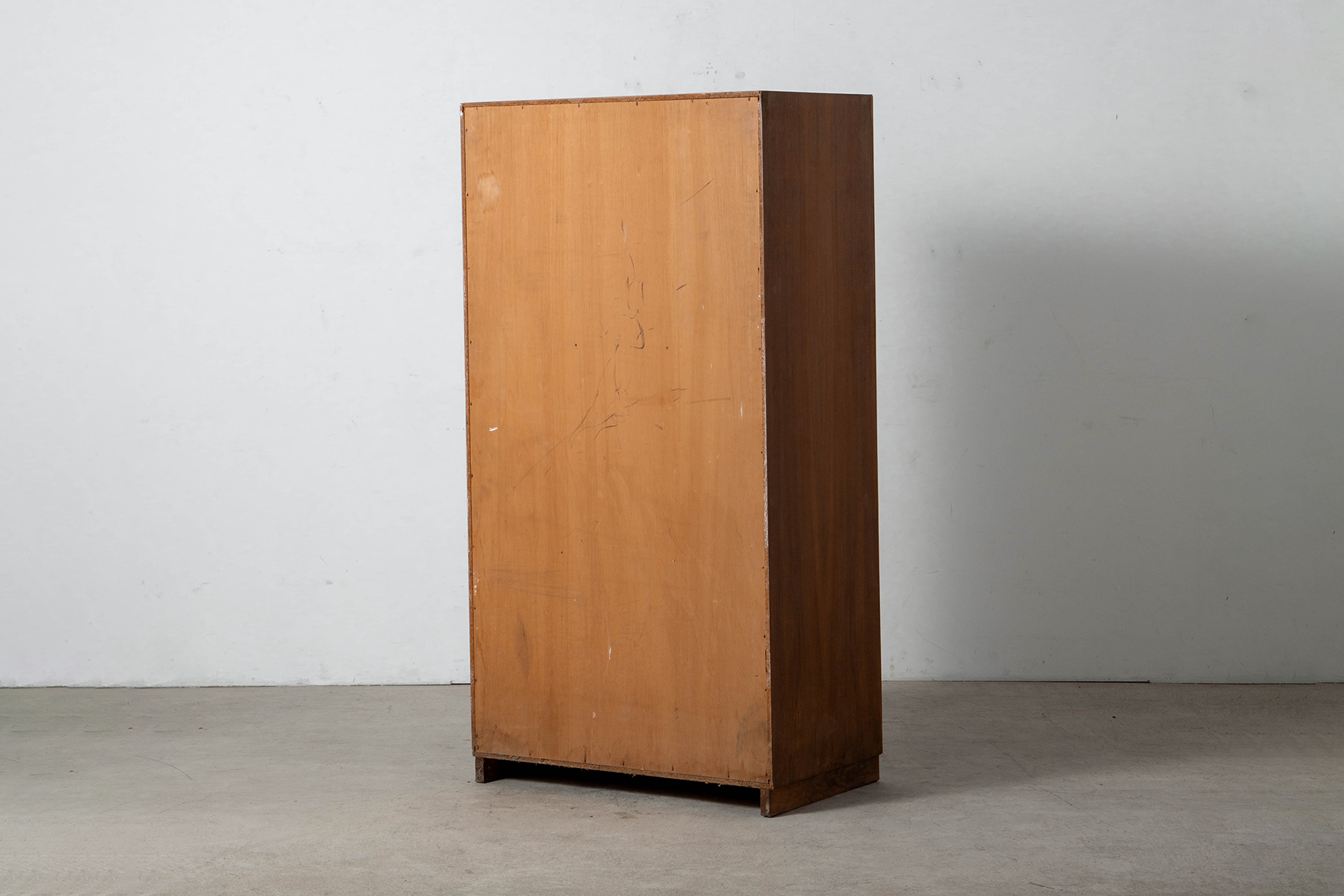
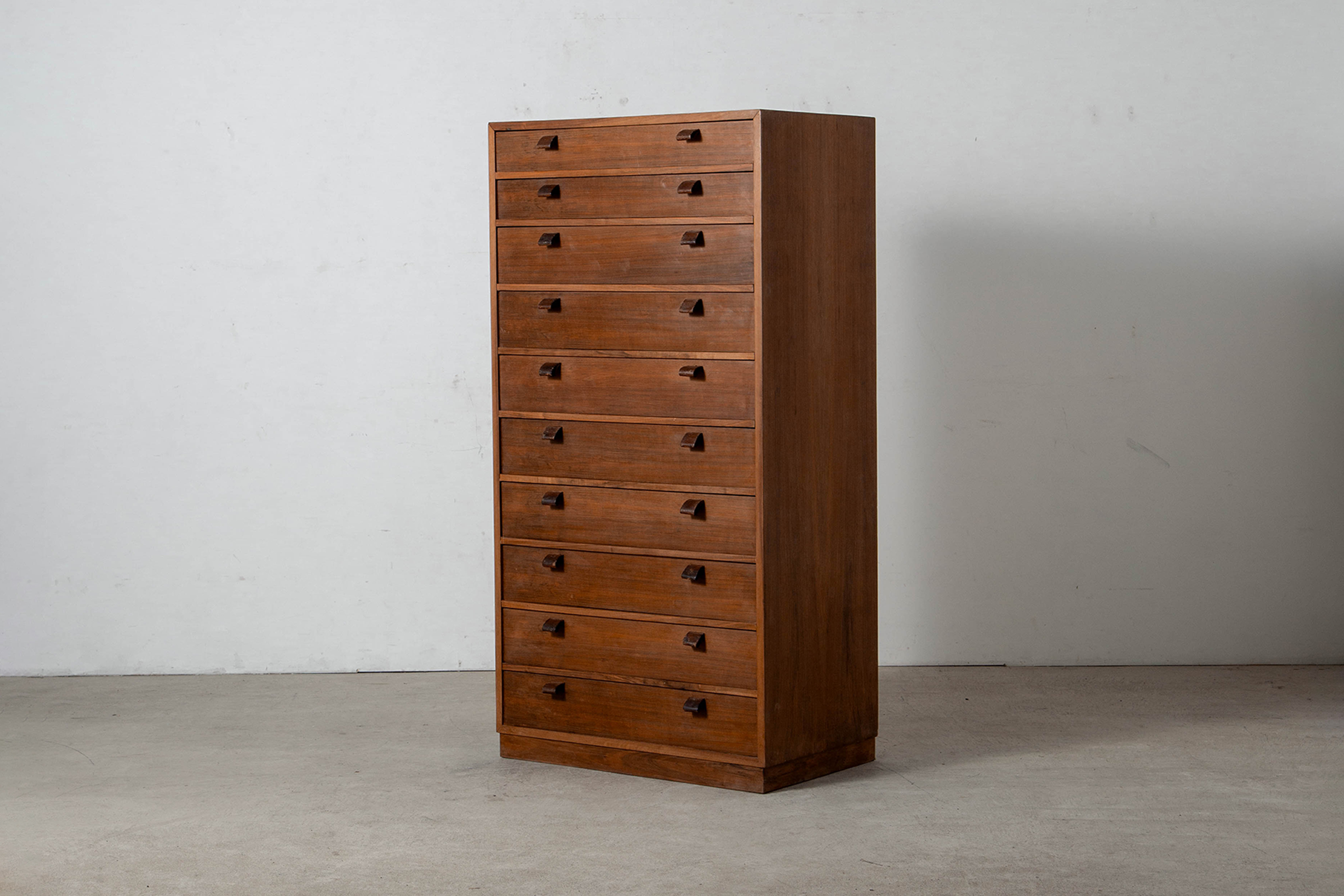
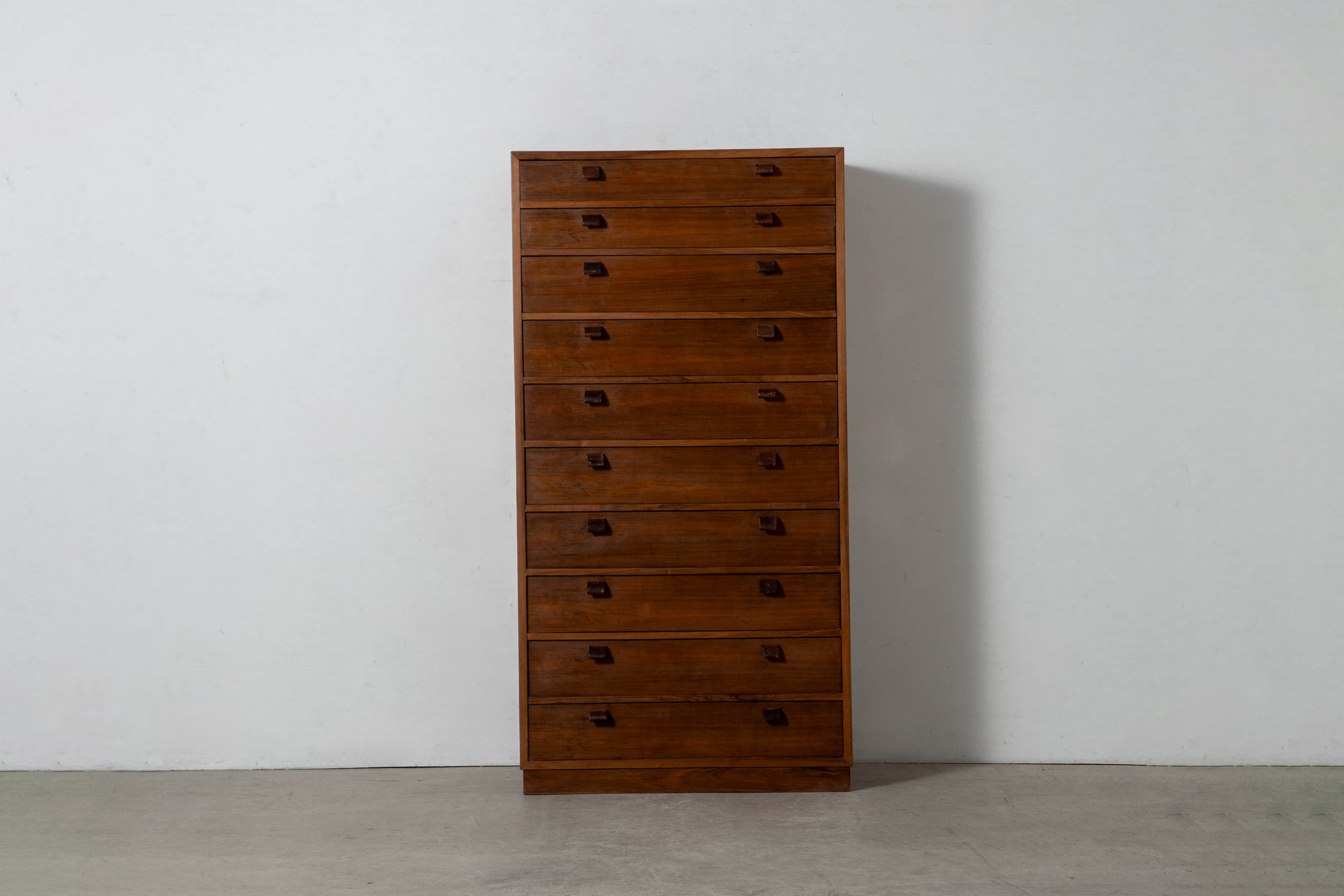
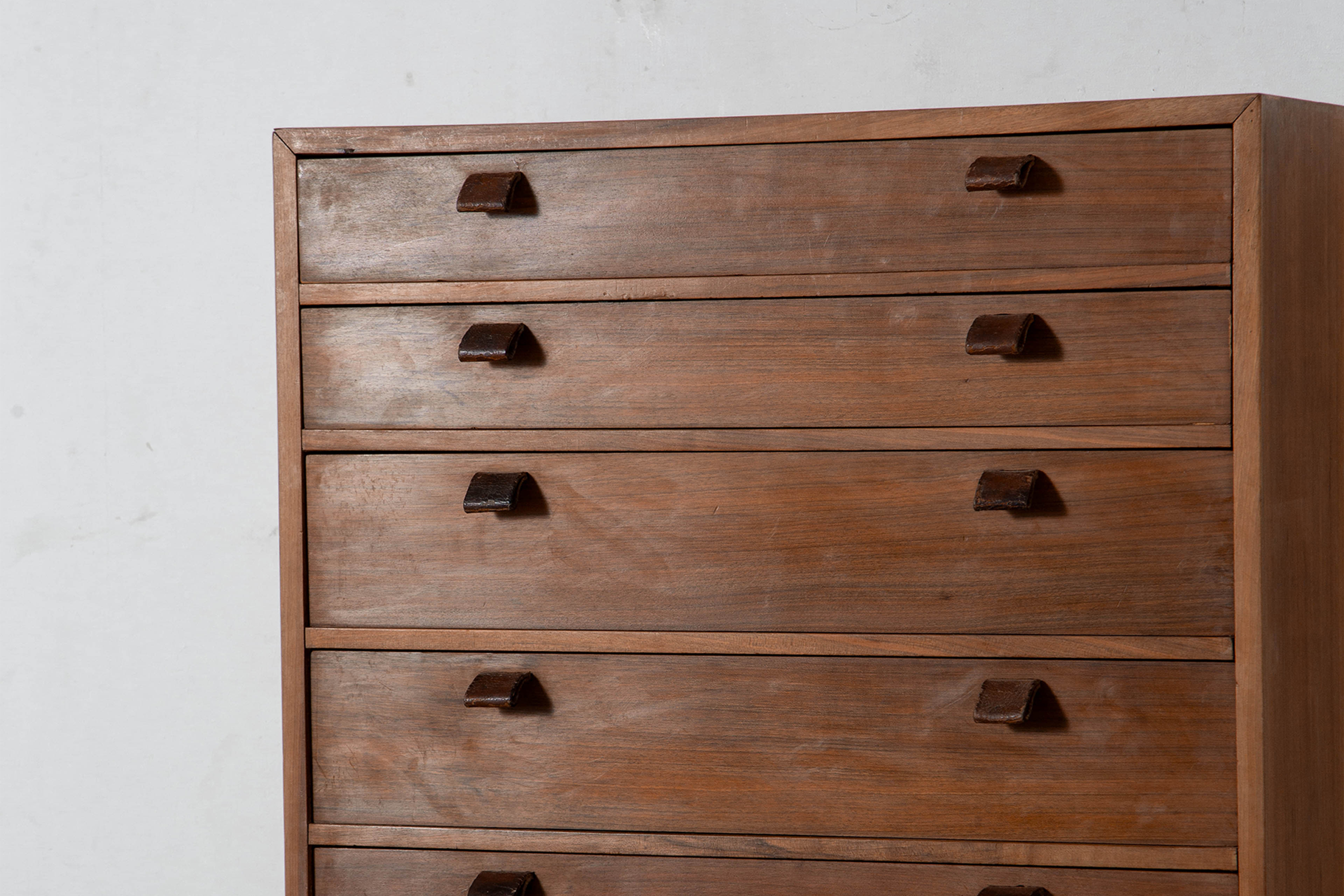
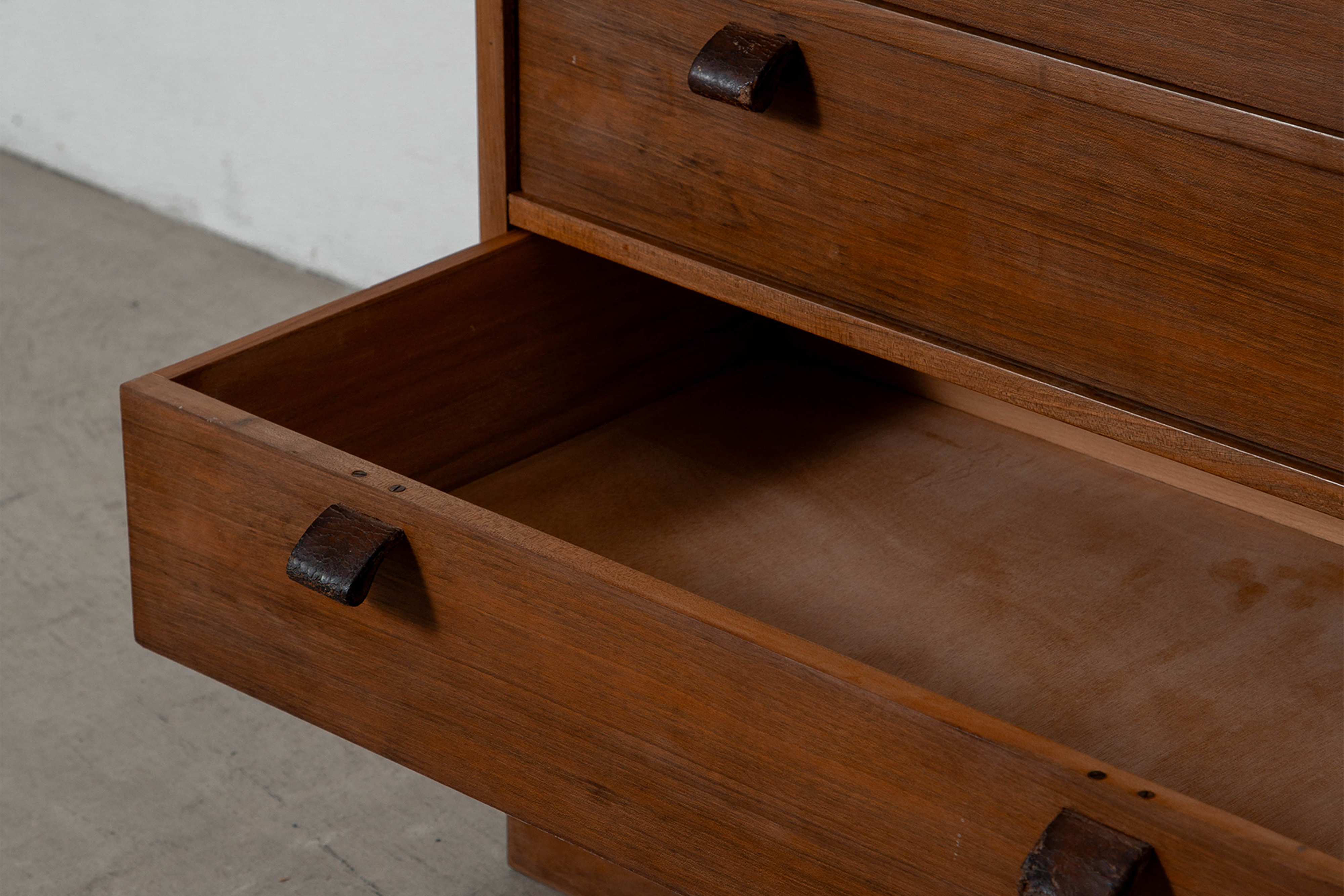
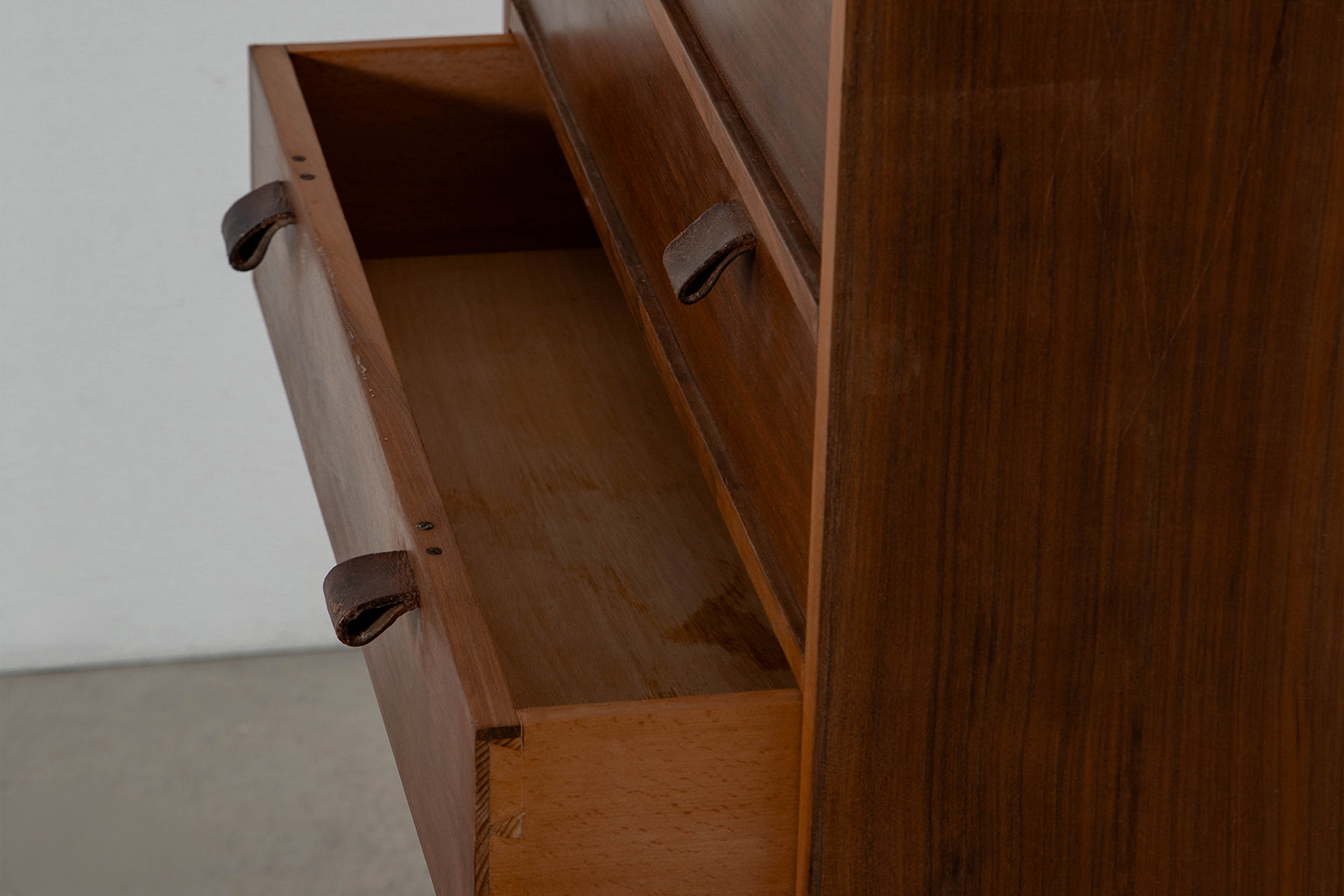
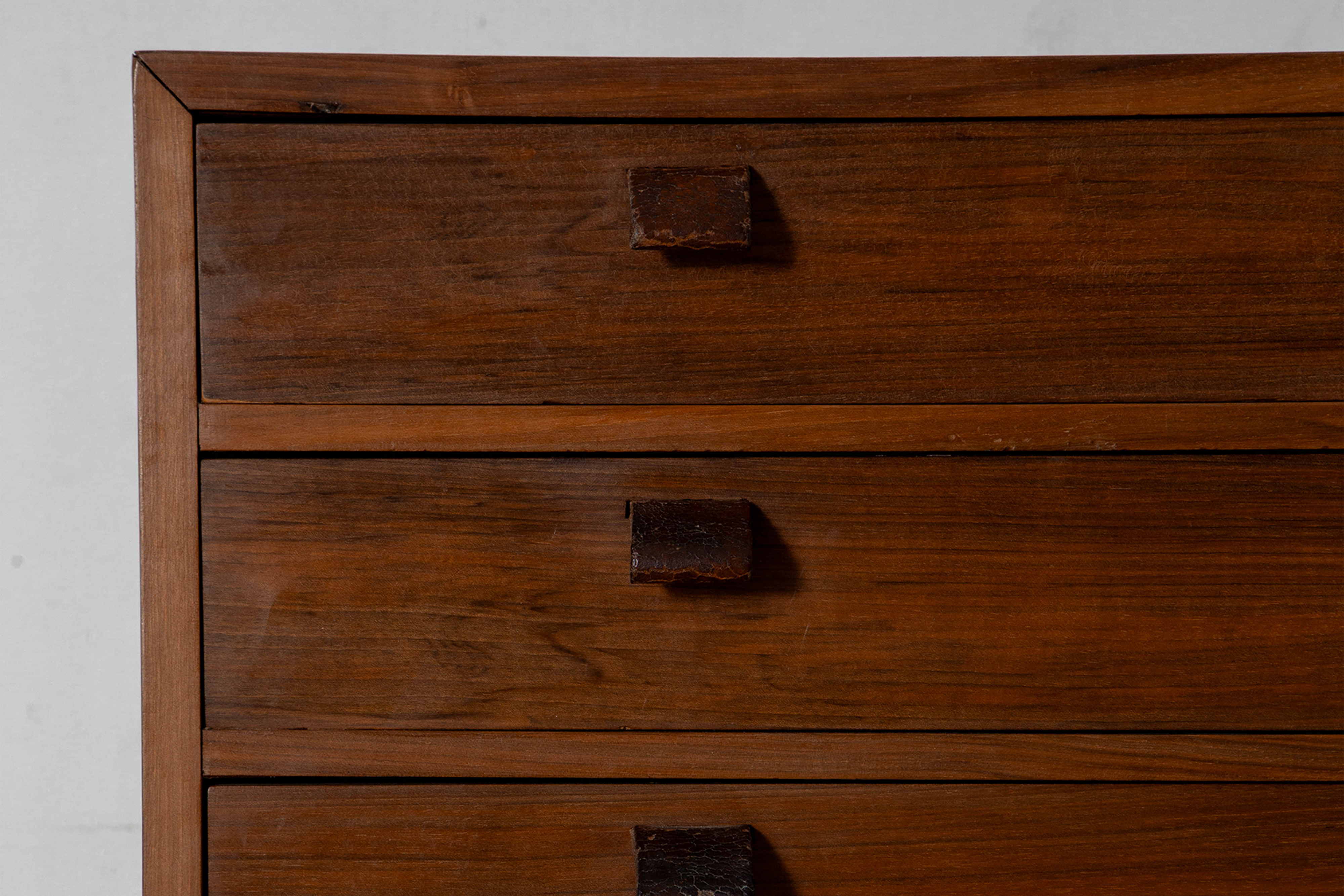
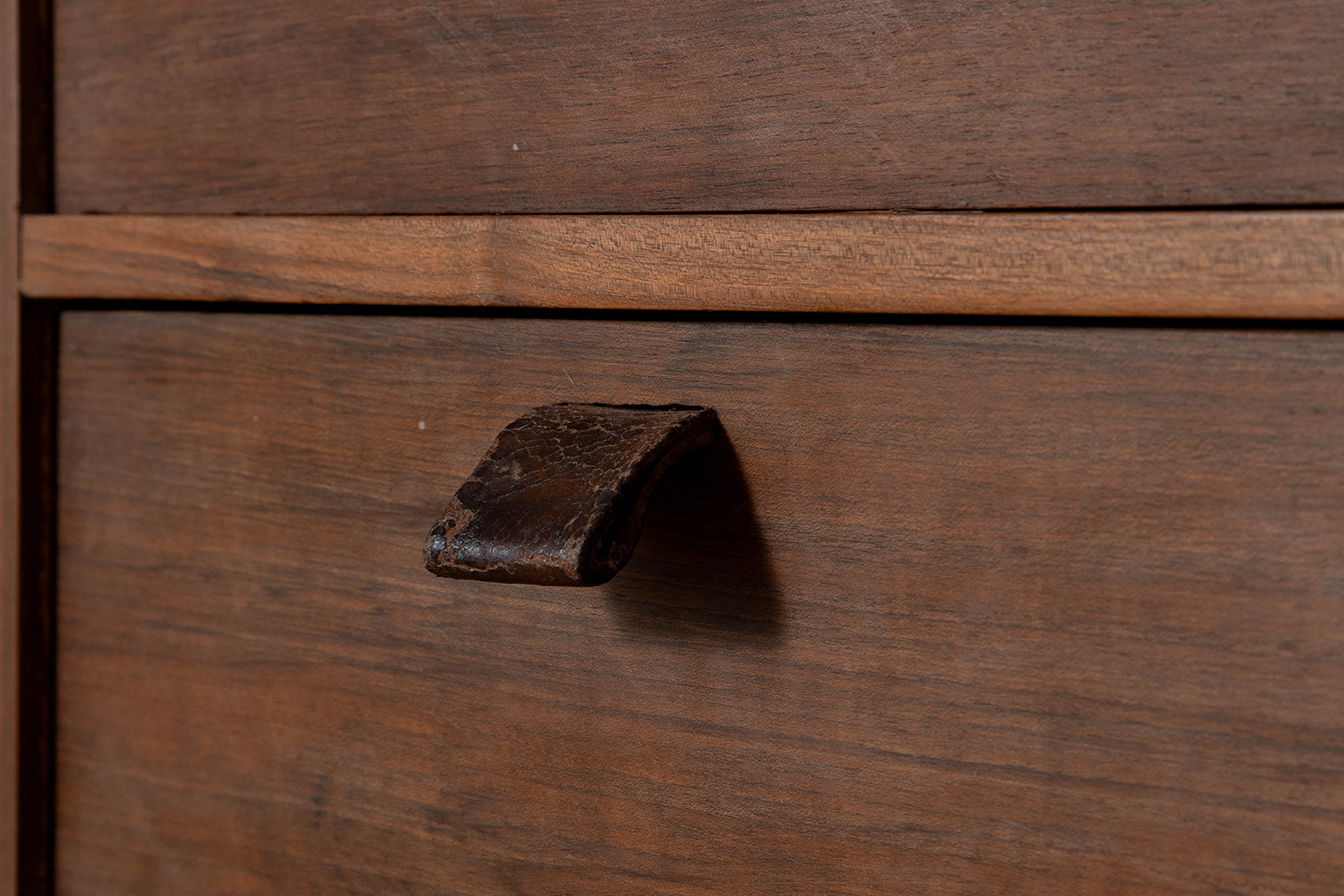
Designed around 1970 and manufactured by the family firm Mobles i Decoració Casablancas, the Chest of Drawers, Series C, by Jordi Casablancas i Muntañola reflects the restrained, functional approach that characterised modern Catalan furniture design during the late 1960s and 1970s. Crafted in oak, the piece is defined by its clean geometry, balanced proportions and orderly arrangement of drawers, creating a strong sense of visual rhythm across the front. The integrated semicircular handles provide a distinctive detail within the otherwise minimal composition, combining practical function with a subtle graphic quality. The natural grain of the oak adds warmth to the design, while the absence of unnecessary ornamentation emphasises the clarity of its construction. Combining generous storage with a disciplined architectural form, the chest exemplifies Casablancas’s approach to domestic furniture, in which material, proportion and everyday utility are brought together in a coherent modern design.
Biography
Jordi Casablancas i Muntañola (1940–2001) was a Catalan industrial, furniture and interior designer born in Barcelona, Spain. He studied economics at the University of Barcelona and, in 1959, undertook a course in wood technology at the Centre Technique du Bois in Paris, where he became familiar with modern production methods and the French cabinetmaking tradition. His early experience in his family’s business, Mobles i Decoració Casablancas, which specialised in office furniture, introduced him to furniture production and shaped his interest in the relationship between design, manufacturing and everyday use. In the late 1960s, he returned to the company as a furniture designer and interior planner, developing a distinctive approach to modern domestic interiors.
Casablancas’s work was characterised by rational construction, geometric clarity and the use of wood combined with high-quality laminates. He developed modular furniture systems designed to make efficient use of space, particularly in children’s and youth bedrooms, reflecting the growing demand for practical, adaptable interiors. Among his notable designs are the S 6 chair (1966), the S 5 armchair (1979) and a changing table designed in 1970. His furniture combined straight lines and restrained forms with practical functionality, drawing on modernist and Scandinavian influences while responding to the needs of contemporary Spanish homes. His interior compositions were presented at the specialist exhibitions Interiorismo 73 and Tecnogar in 1974, 1975 and 1976, as part of the Hogarotel trade fair. Throughout his career, Casablancas’s designs were repeatedly selected for the ADI-FAD design awards: a toy prototype in 1964, children’s furniture in 1966, a puff armchair in 1970, a shelving unit in 1978 and the S chair in 1984. Beyond his professional practice, he played an active role in the development of design culture in Catalonia. Closely involved with the Foment de les Arts Decoratives (FAD) from the 1960s, he served as its president from 1985 to 1991 and received the organisation’s medal in 1992. He also taught at Eina and Elisava in Barcelona, contributing to the education of new generations of designers. His work remains an important example of Catalan modern furniture design, combining modular thinking, functional efficiency and a restrained architectural sensibility.