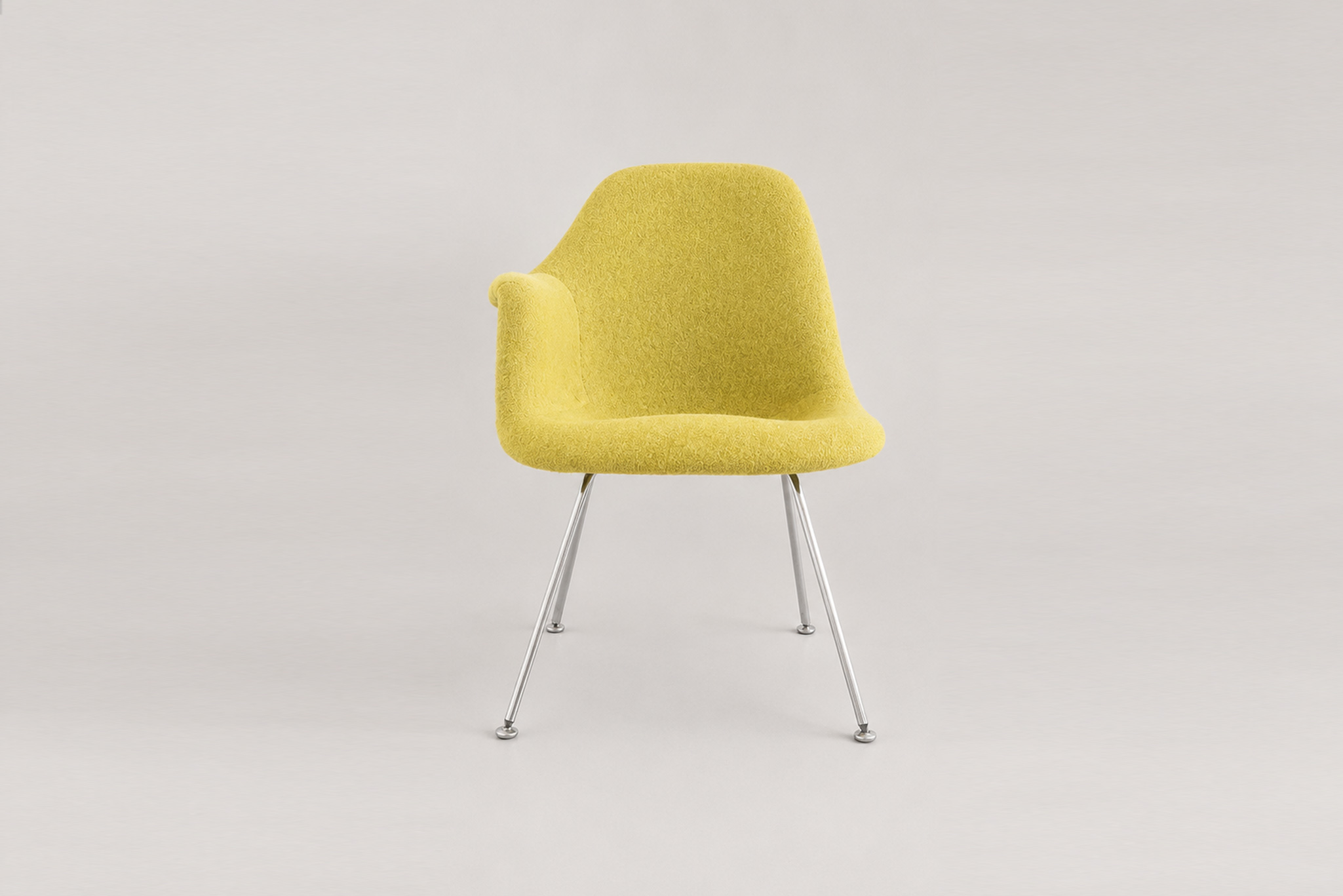
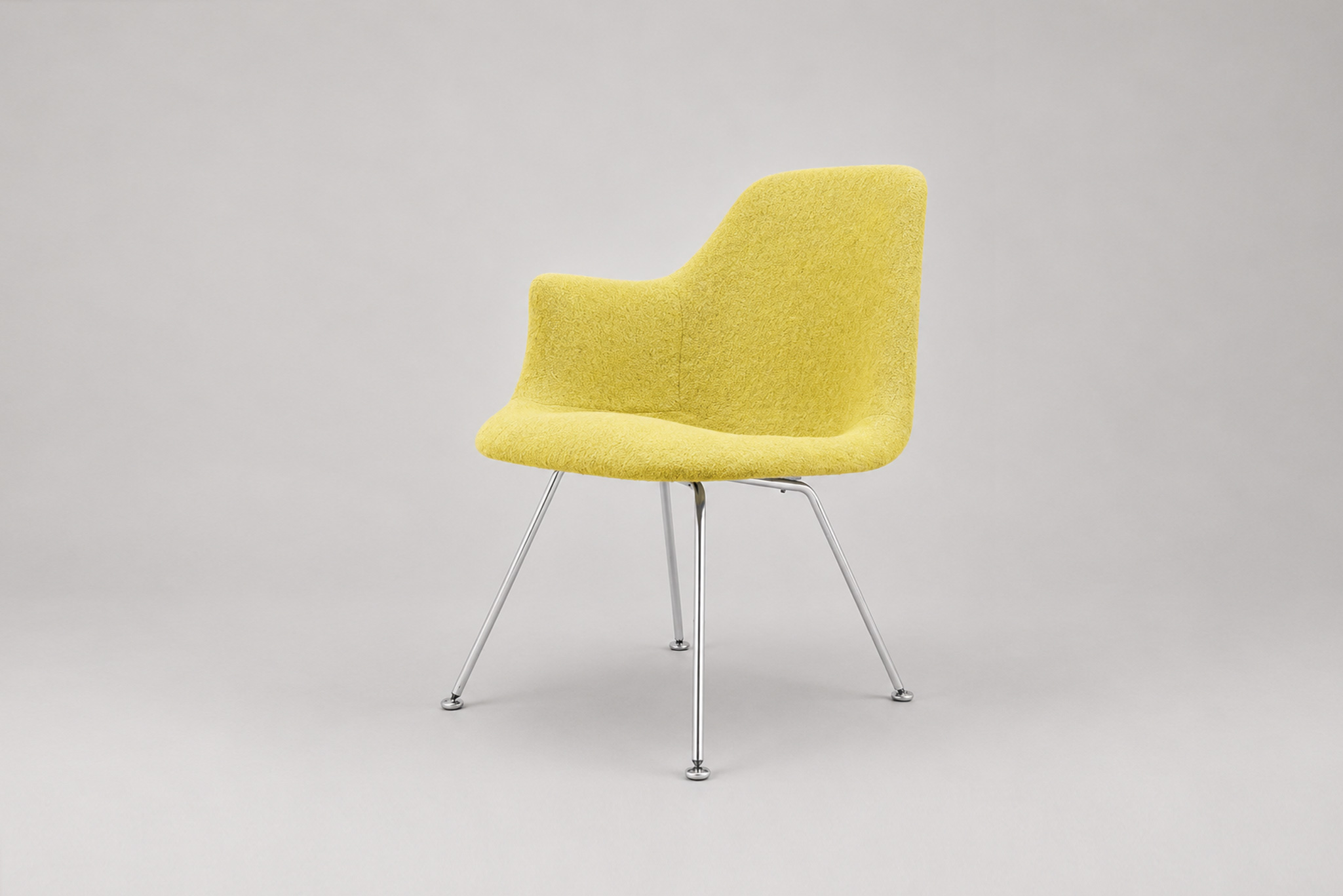
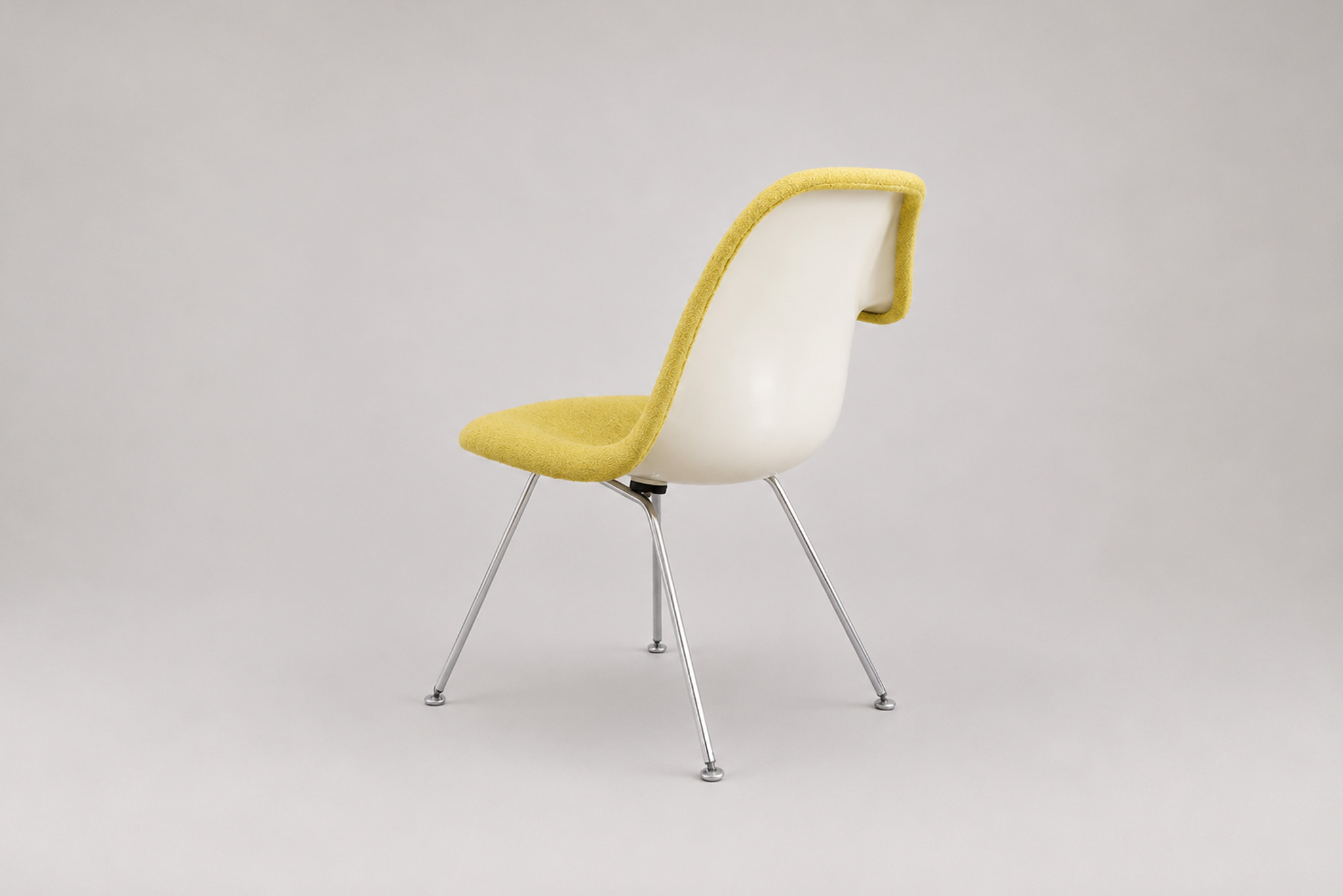
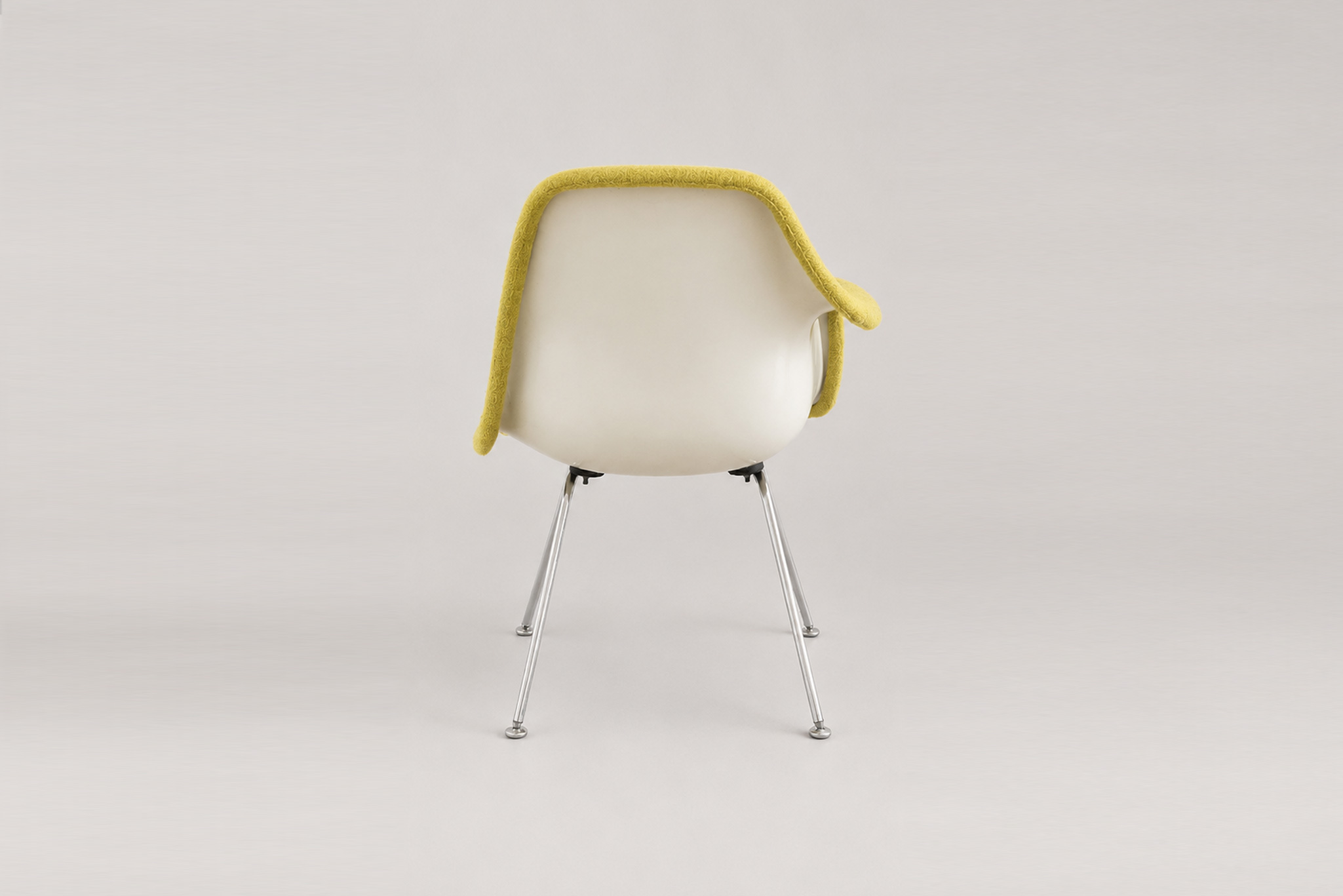
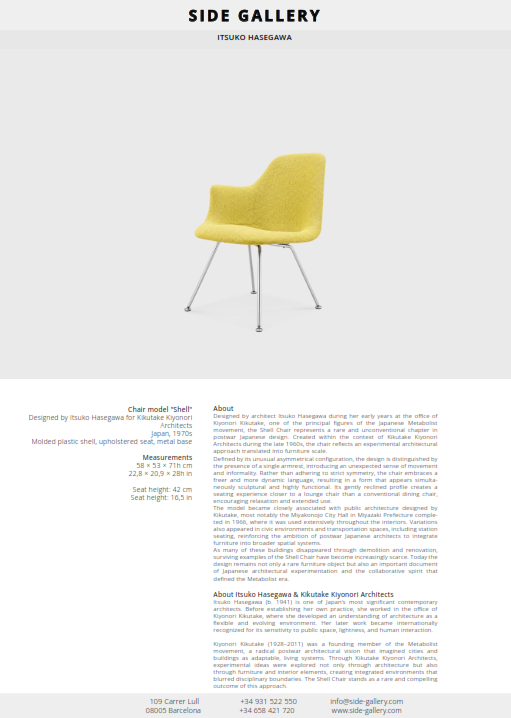
Chair model "Shell"
Designed by Itsuko Hasegawa for Kikutake Kiyonori Architects
Japan, 1970s
Molded plastic shell, upholstered seat, metal base
Measurements
58 × 53 × 71h cm
22,8 × 20,9 × 28h in
Seat height: 42 cm
Seat height: 16,5 in
About
Designed by architect Itsuko Hasegawa during her early years at the office of Kiyonori Kikutake, one of the principal figures of the Japanese Metabolist movement, the Shell Chair represents a rare and unconventional chapter in postwar Japanese design. Created within the context of Kikutake Kiyonori Architects during the late 1960s, the chair reflects an experimental architectural approach translated into furniture scale.
Defined by its unusual asymmetrical configuration, the design is distinguished by the presence of a single armrest, introducing an unexpected sense of movement and informality. Rather than adhering to strict symmetry, the chair embraces a freer and more dynamic language, resulting in a form that appears simultaneously sculptural and highly functional. Its gently reclined profile creates a seating experience closer to a lounge chair than a conventional dining chair, encouraging relaxation and extended use.
The model became closely associated with public architecture designed by Kikutake, most notably the Miyakonojo City Hall in Miyazaki Prefecture completed in 1966, where it was used extensively throughout the interiors. Variations also appeared in civic environments and transportation spaces, including station seating, reinforcing the ambition of postwar Japanese architects to integrate furniture into broader spatial systems.
As many of these buildings disappeared through demolition and renovation, surviving examples of the Shell Chair have become increasingly scarce. Today the design remains not only a rare furniture object but also an important document of Japanese architectural experimentation and the collaborative spirit that defined the Metabolist era.
About Itsuko Hasegawa & Kikutake Kiyonori Architects
Itsuko Hasegawa (b. 1941) is one of Japan’s most significant contemporary architects. Before establishing her own practice, she worked in the office of Kiyonori Kikutake, where she developed an understanding of architecture as a flexible and evolving environment. Her later work became internationally recognized for its sensitivity to public space, lightness, and human interaction.
Kiyonori Kikutake (1928–2011) was a founding member of the Metabolist movement, a radical postwar architectural vision that imagined cities and buildings as adaptable, living systems. Through Kikutake Kiyonori Architects, experimental ideas were explored not only through architecture but also through furniture and interior elements, creating integrated environments that blurred disciplinary boundaries. The Shell Chair stands as a rare and compelling outcome of this approach.