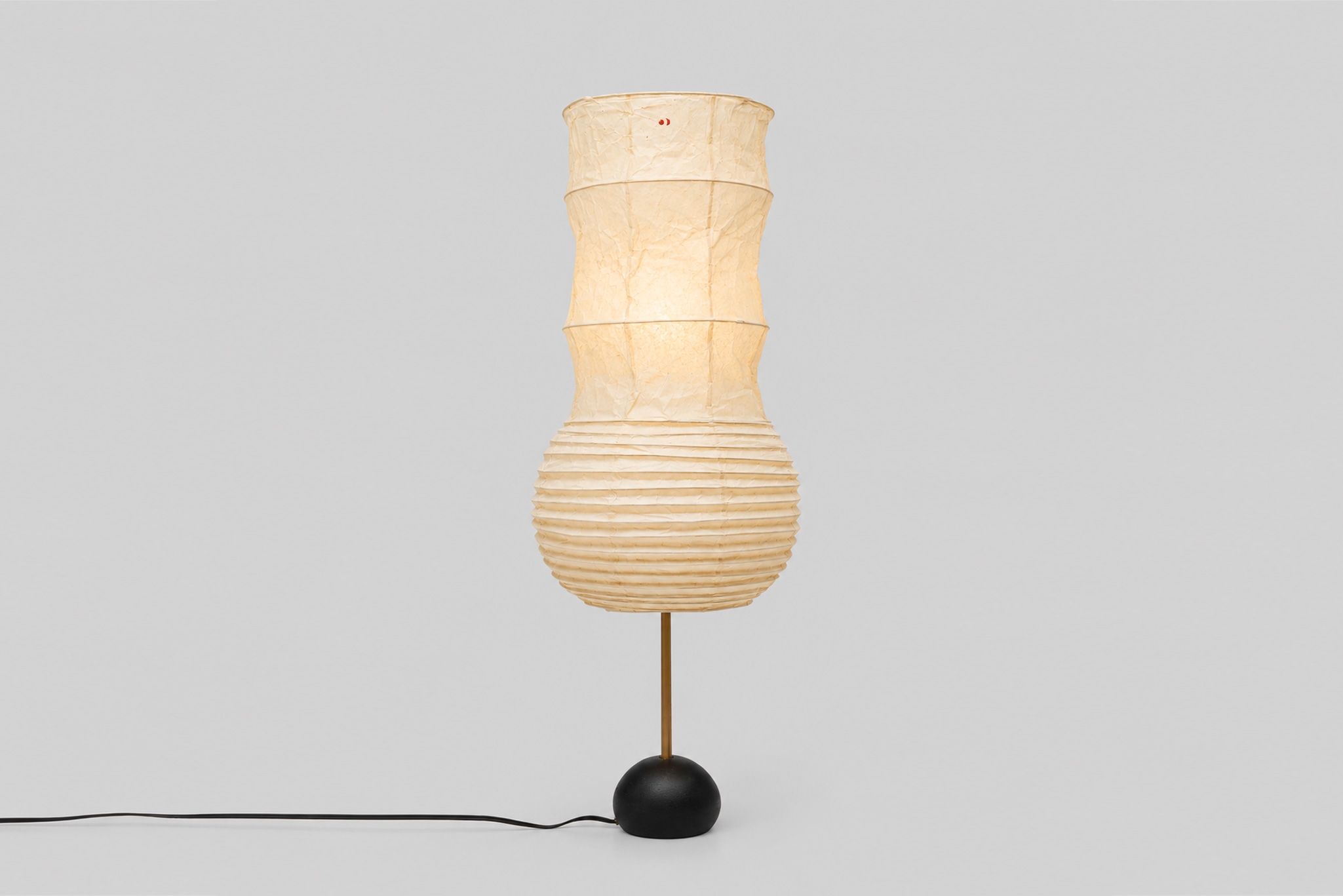
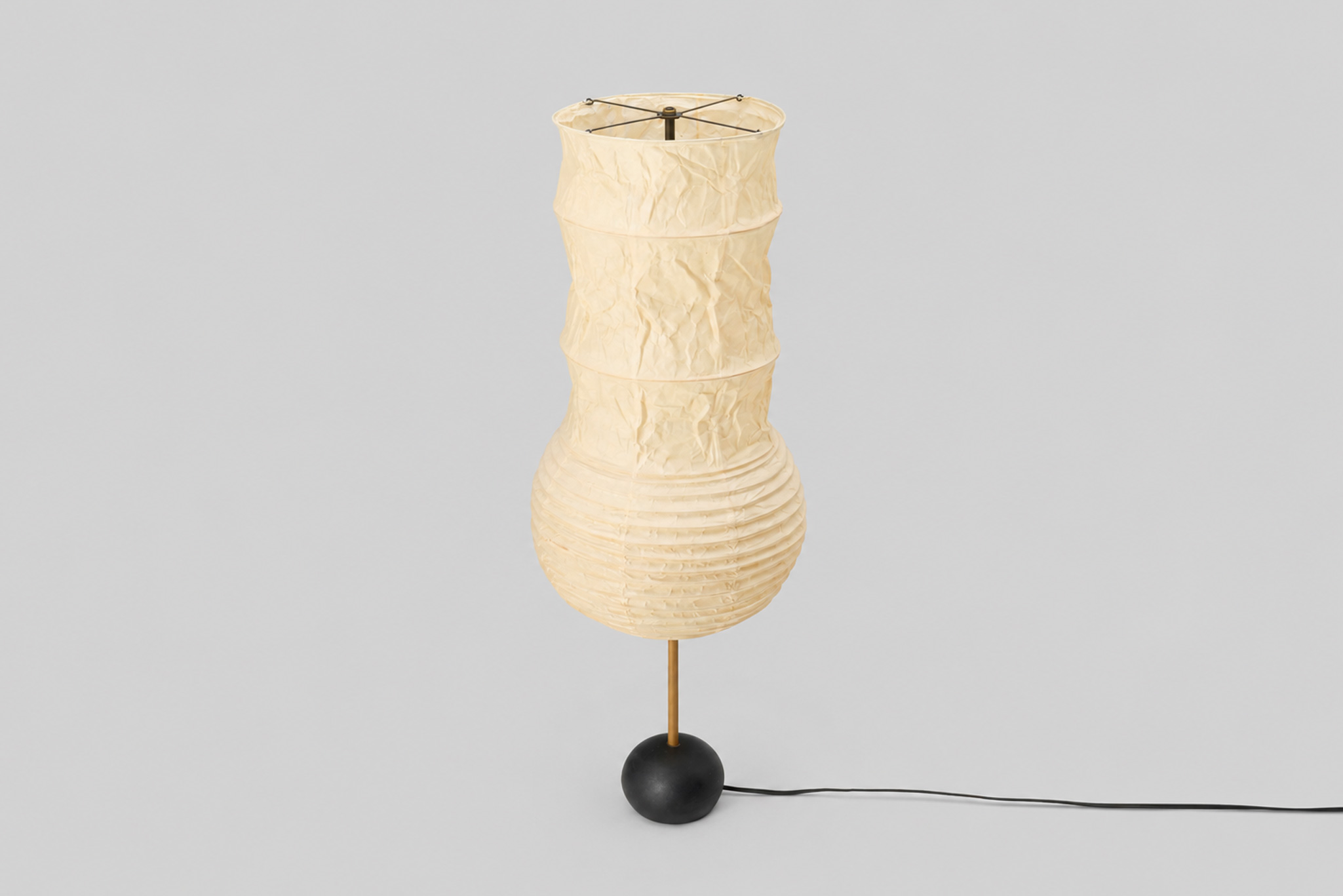
Akari Light Sculpture, Model BB2-S1
Manufactured by Ozeki & Co., Ltd.
Japan, 1979
Washi paper, enameled cast iron, bamboo, enameled steel
Measurements
27 cm diameter × 79h cm
10,5 in diameter ×31h in
Details
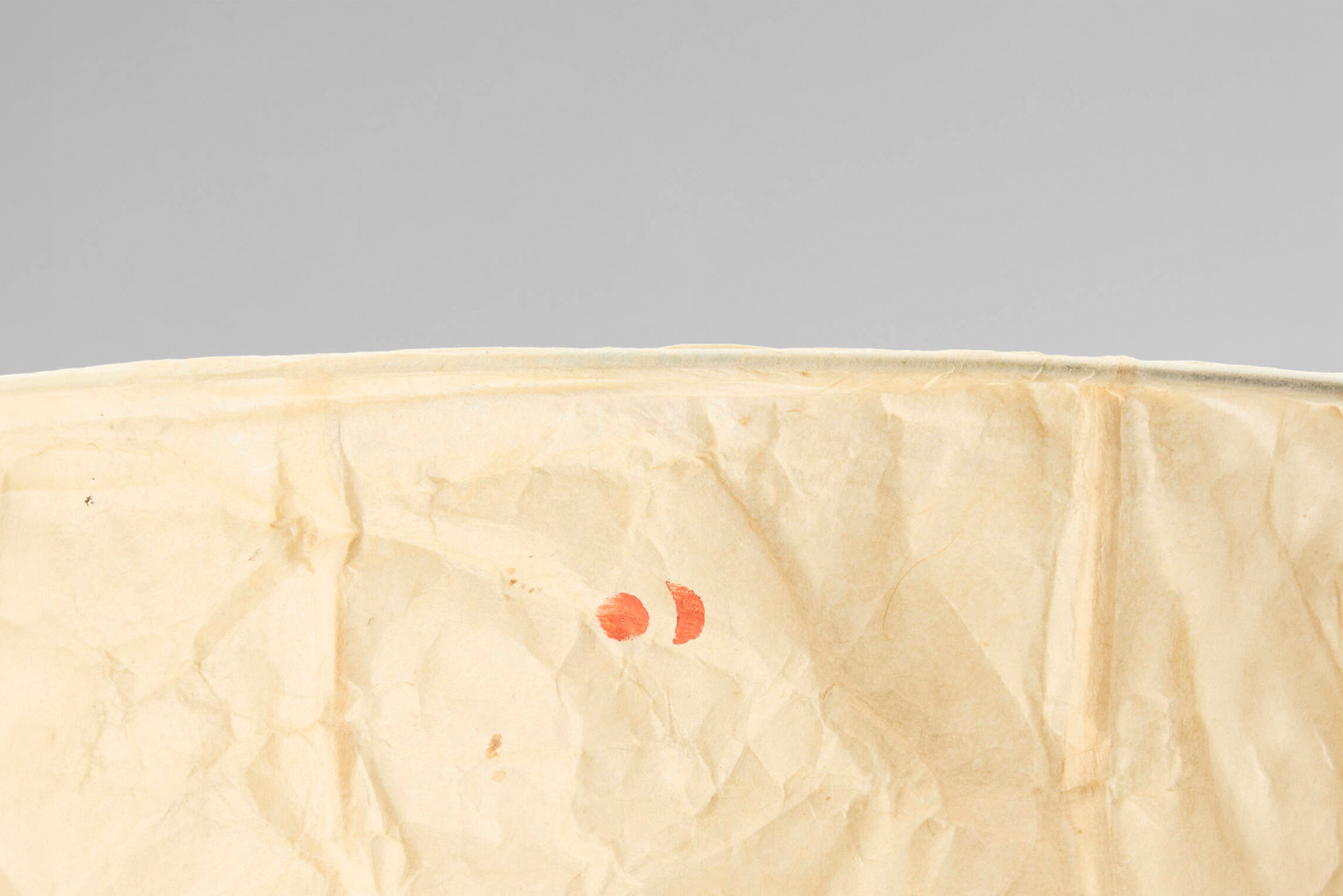
Manufacturer's Label
Provenance
Private Collection, Japan
Literature
Design: Isamu Noguchi and Isamu Kenmochi, Rychlak, Mori, Murayama and Matsumoto, p.102
Catalog of Latest Akari, 1988, dimension and assembly brochure
Akari, les chemins de la lumière, Varaillon, Magnan, Brieallard, p.48, illustrates a similar design
About
The Akari Light Sculptures represent one of Isamu Noguchi’s most poetic and enduring bodies of work, embodying his belief that light itself could function as sculpture. Initiated in 1951 after a visit to Gifu, Japan—a city celebrated for its traditional lantern-making craft—the Akari series transformed vernacular paper lanterns into modern sculptural objects that merged centuries-old craftsmanship with contemporary abstraction.
Model BB1-30DL, produced in the late 1970s, reflects Noguchi’s continued exploration of verticality and luminous form. Constructed from handmade washi paper over a delicate bamboo structure and anchored by an enameled cast iron base, the lamp achieves a subtle balance between weight and lightness. The warm glow diffused through the paper surface creates an atmosphere that extends beyond illumination, transforming surrounding space through softness and shadow.
For Noguchi, lighting was never merely functional. He described Akari as an attempt to bring sunlight into domestic interiors, creating objects capable of shaping emotion and perception. The visible structure and handmade qualities reveal the collaboration between artist and artisan, emphasizing process as an essential aspect of the design itself.
Today the Akari series remains one of the most celebrated lighting projects of the twentieth century, recognized for its timeless ability to reconcile modernism with tradition and sculpture with everyday life.
Biography
Isamu Noguchi (1904–1988) was one of the most important and intellectually ambitious artists of the twentieth century, whose work moved fluidly between sculpture, architecture, landscape, furniture, and industrial design. Born in Los Angeles to the Japanese poet Yone Noguchi and the American writer Leonie Gilmour, he grew up between the United States and Japan, an experience that profoundly shaped his artistic vision. Noguchi never accepted the division between East and West, art and utility, or sculpture and design; instead, he sought to create a unified visual language capable of shaping how people live, move, and experience space.
Noguchi’s early artistic formation took place in New York, where he studied at Columbia University before training as a sculptor. In 1927 he traveled to Paris on a Guggenheim Fellowship to apprentice with Constantin Brancusi, an experience that proved decisive for his understanding of form and abstraction. Throughout his life he expanded sculpture beyond conventional limits, creating furniture, stage sets, landscapes, and environments that redefined the role of design in daily life.
His Akari Light Sculptures, begun in 1951, remain among his most influential creations and continue to embody his lifelong pursuit of harmony between tradition, technology, material, and human experience.