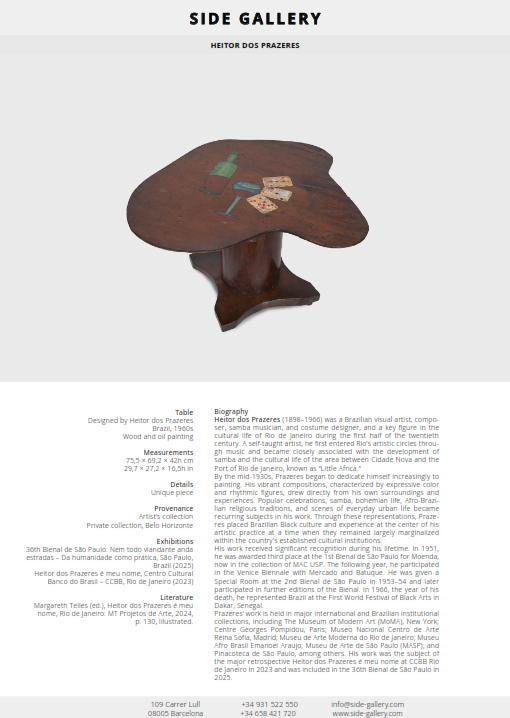
Table
Designed by Heitor dos Prazeres
Brazil, 1960s
Wood and oil painting
Measurements
75,5 × 69,2 × 42h cm
29,7 × 27,2 × 16,5h in
Details
Unique piece
Provenance
Artist’s collection
Private collection, Belo Horizonte
Exhibitions
36th Bienal de São Paulo: Nem todo viandante anda estradas – Da humanidade como prática, São Paulo, Brazil (2025)
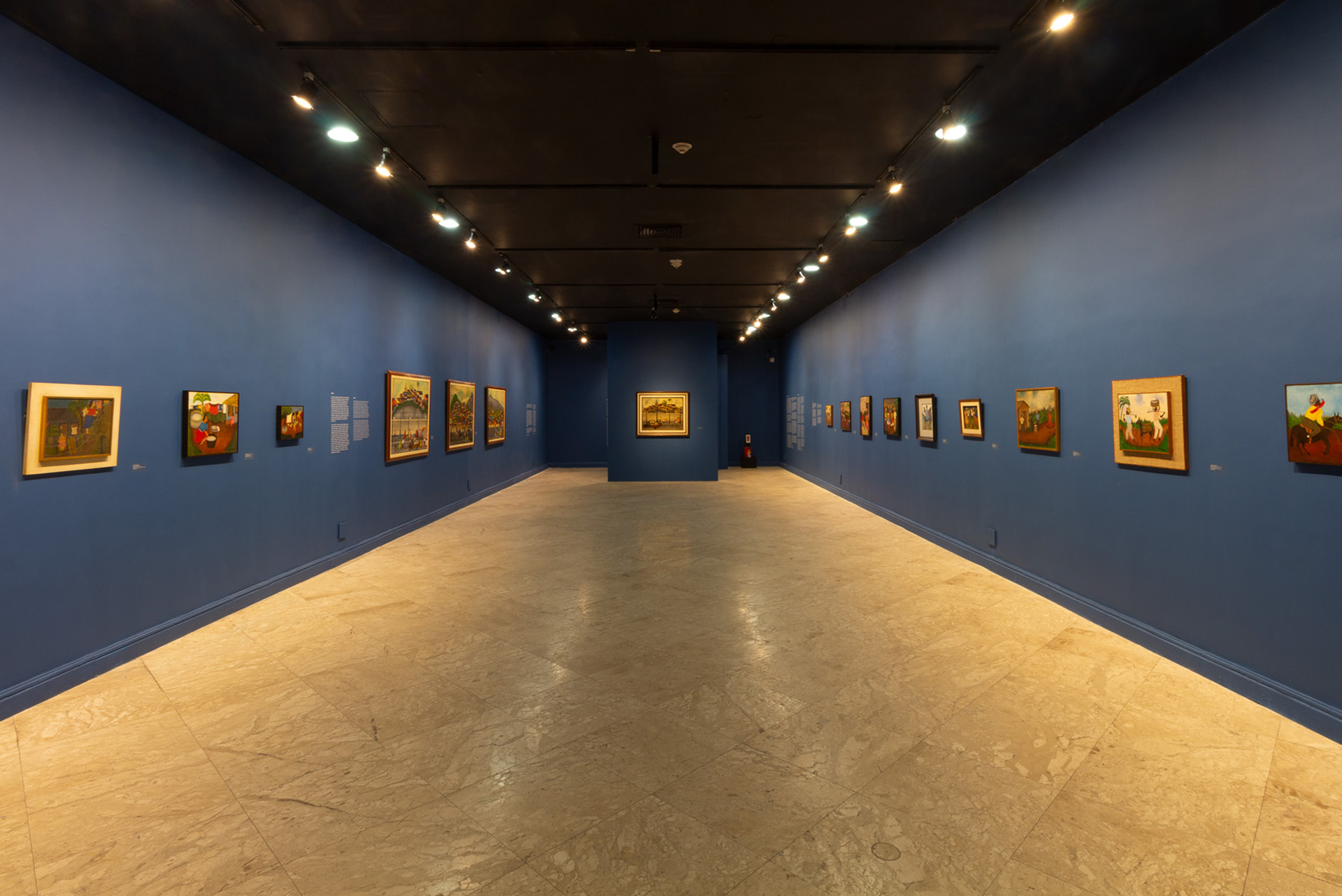
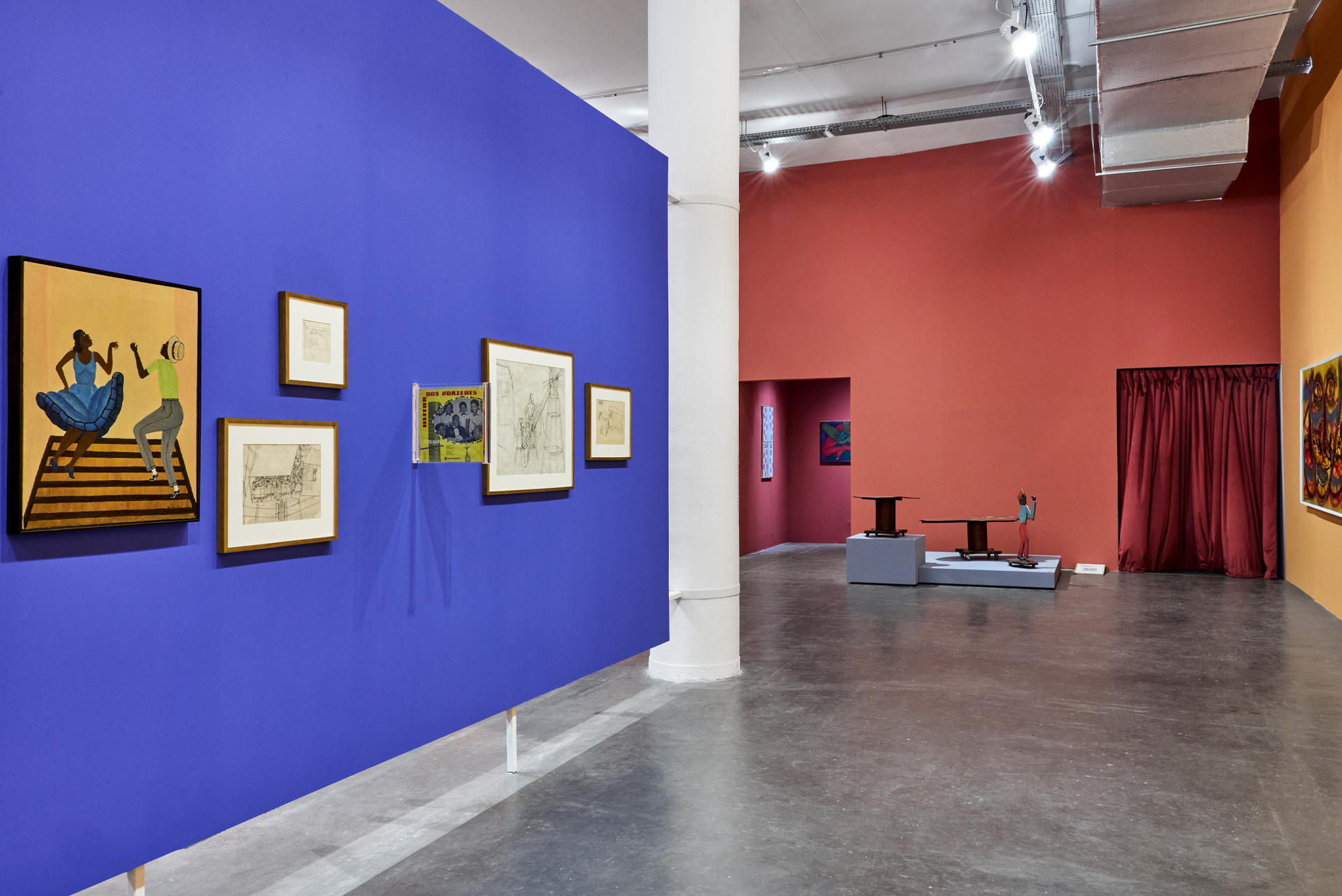
Heitor dos Prazeres é meu nome, Centro Cultural Banco do Brasil – CCBB, Rio de Janeiro (2023)
Literature
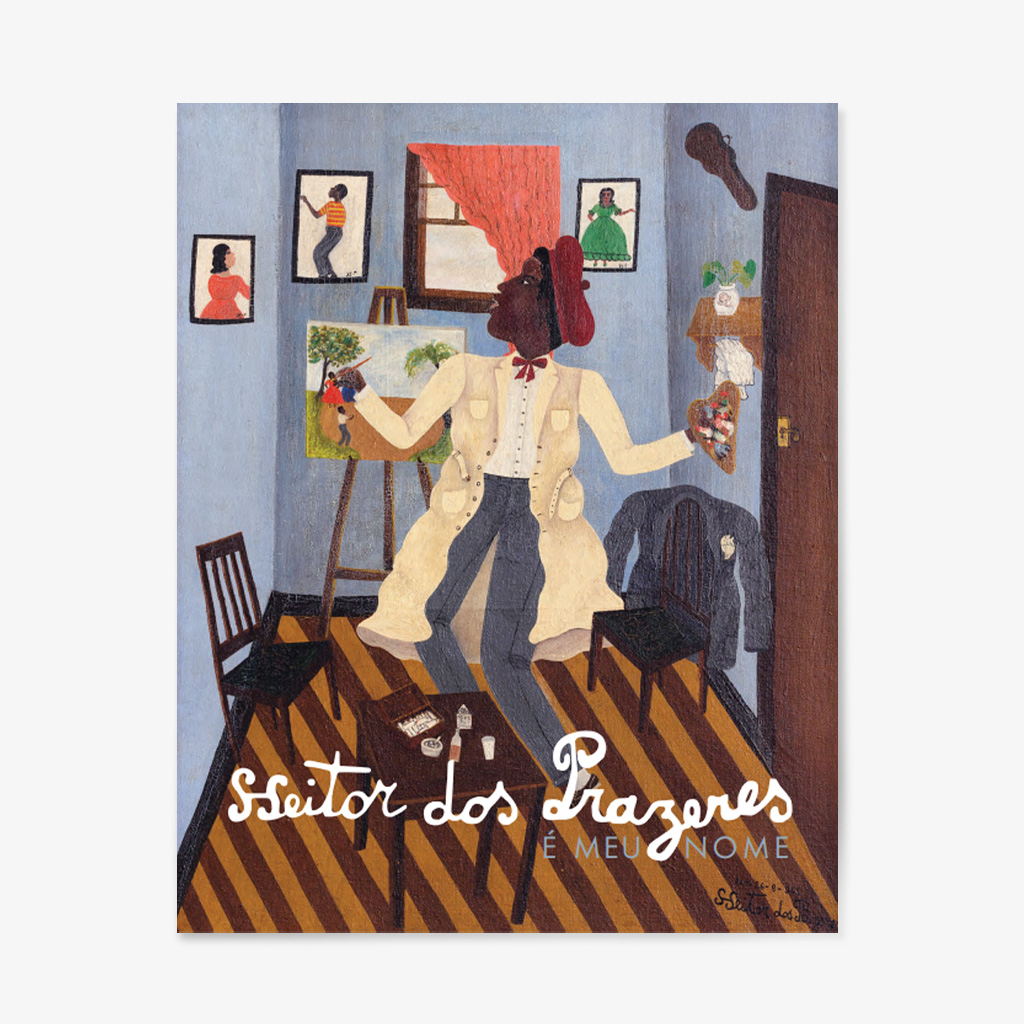
Margareth Telles (ed.), Heitor dos Prazeres é meu nome, Rio de Janeiro: MT Projetos de Arte, 2024, p. 130, illustrated.
About
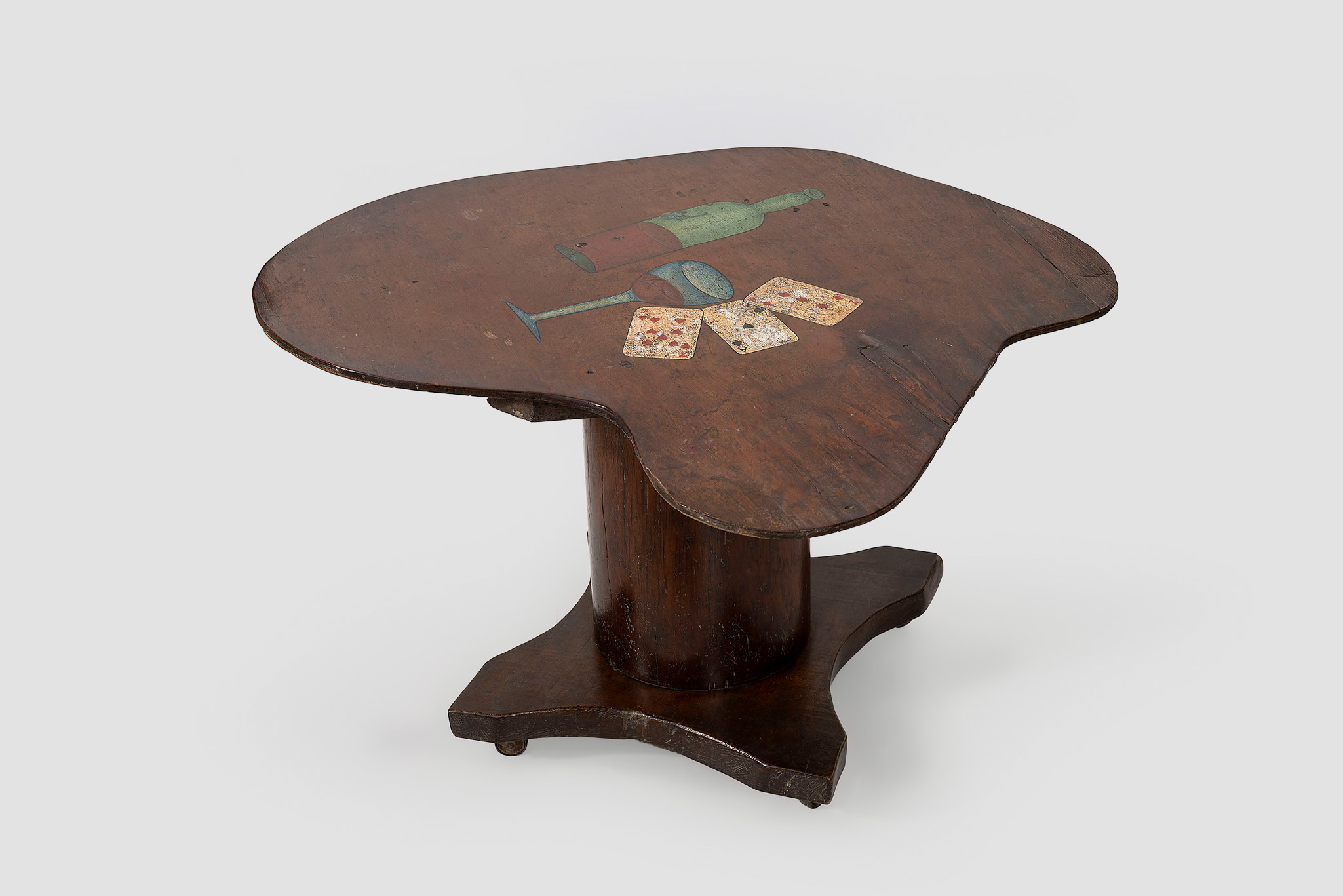
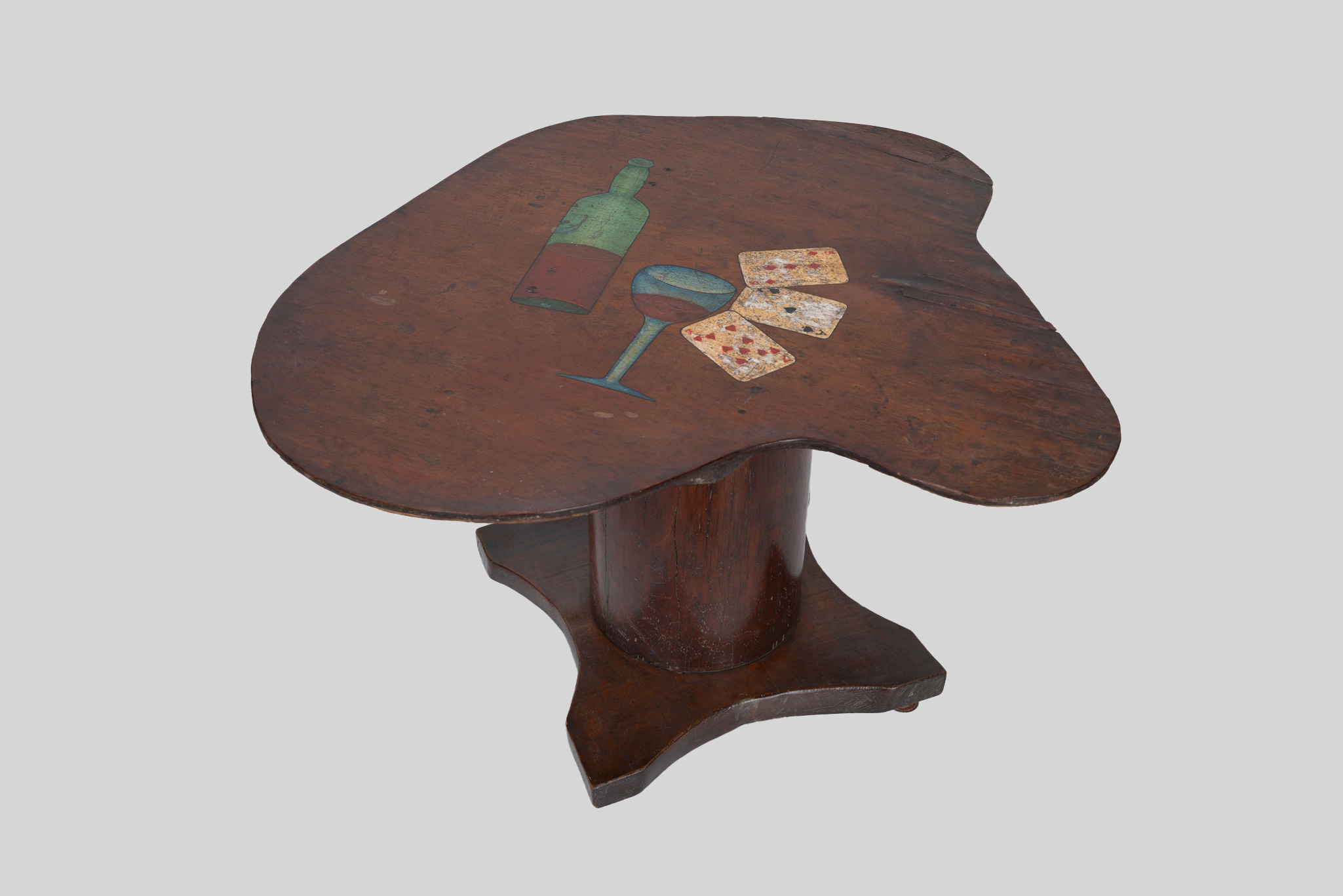
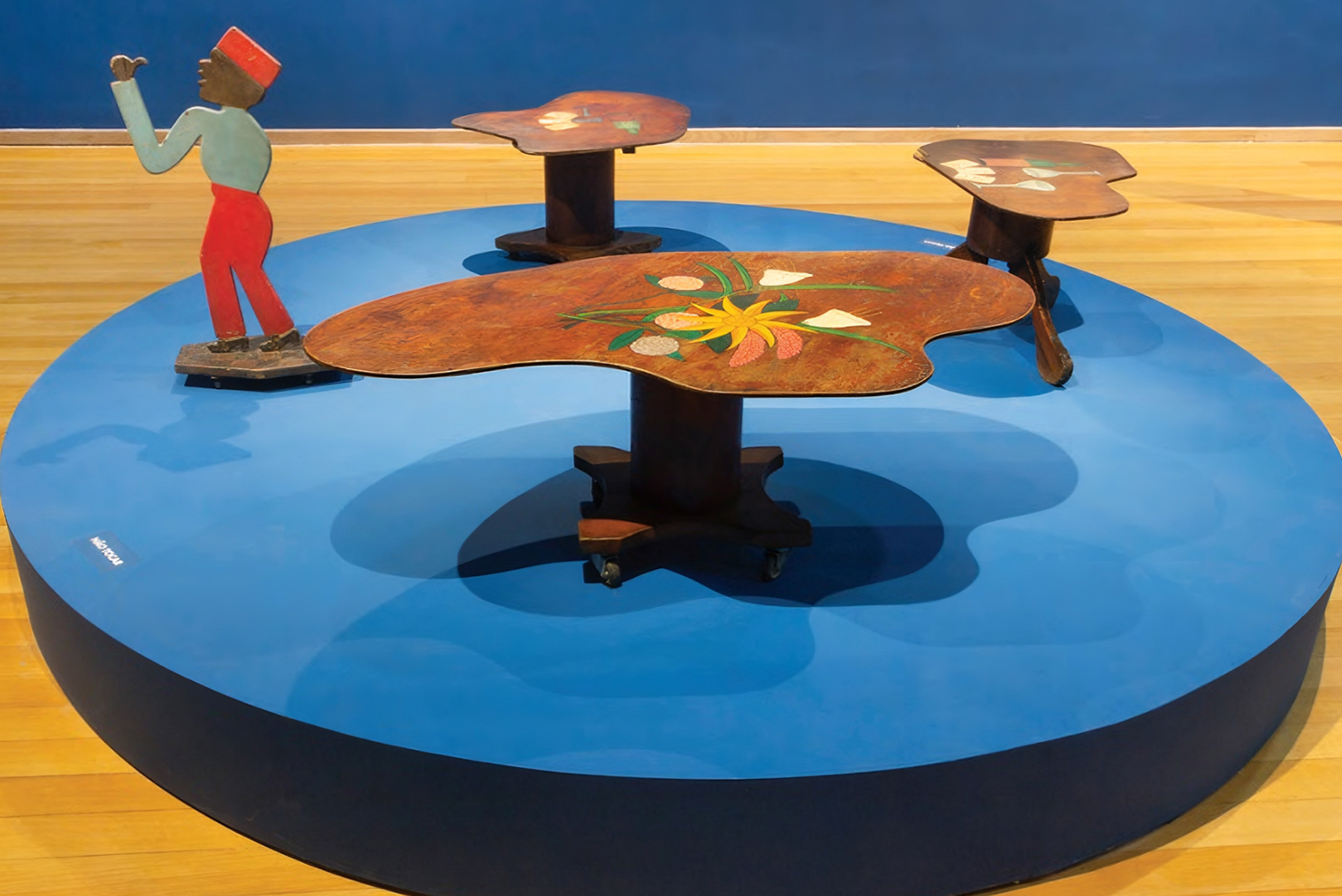
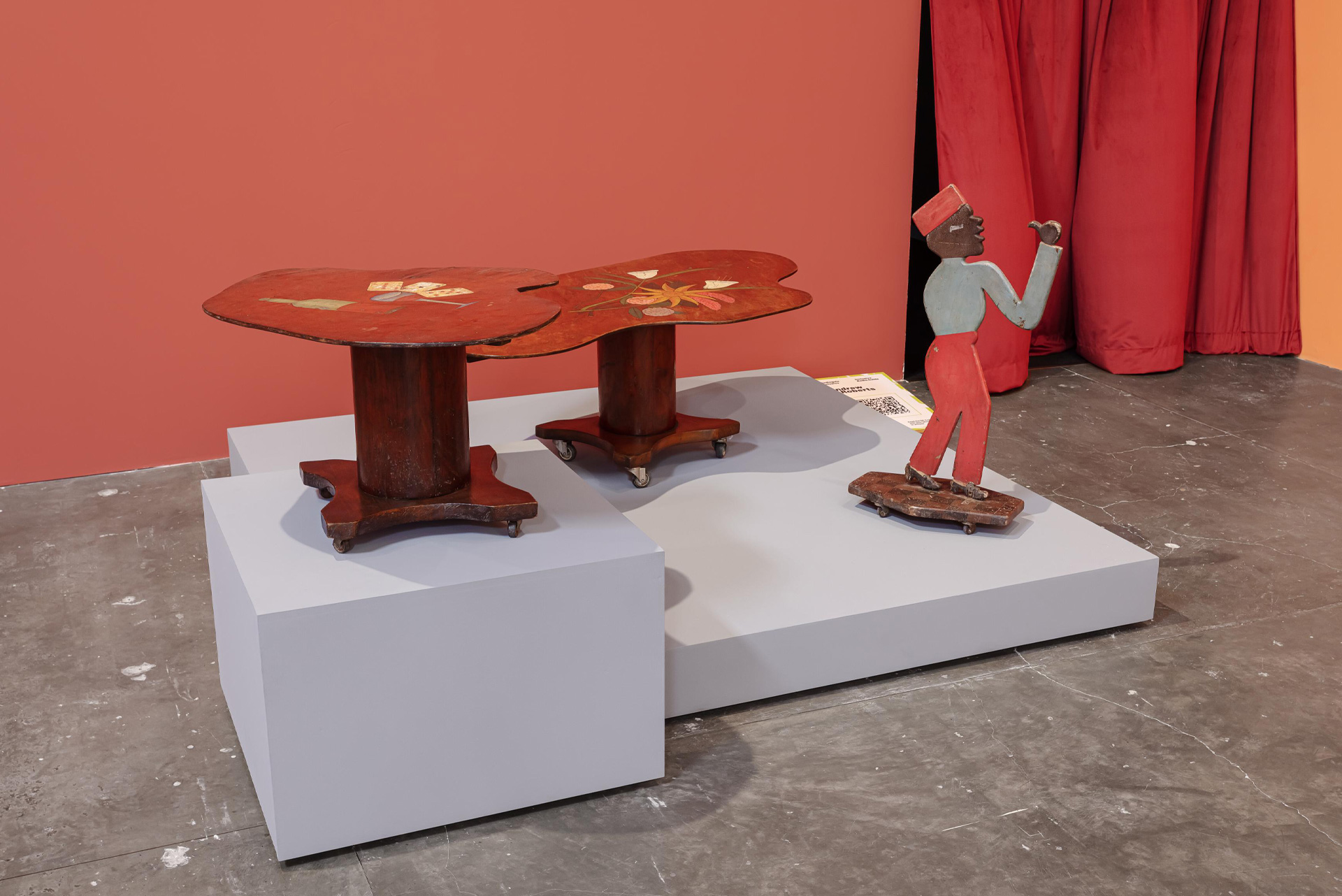
Created during the 1960s, this Table exemplifies the distinctive intersection between painting, craftsmanship, and furniture in the work of Brazilian This Untitled Table exemplifies the distinctive intersection between painting, craftsmanship, and furniture in the work of Brazilian artist Heitor dos Prazeres. Conceived simultaneously as a functional object and a pictorial surface, the piece belongs to a lesser-known but significant aspect of his practice: the creation of furniture that he constructed and decorated himself.
Cabinetmaking formed an important part of Prazeres’ life from an early age. His father, Eduardo dos Prazeres, was both a musician and a cabinetmaker, and Heitor inherited the trade from him. He later worked professionally as a carpenter and became particularly skilled in polishing, regarding woodworking not only as a source of financial stability but also as an important part of his identity as a member of the working class. The accompanying documentation records that he produced furniture ornamented with his own paintings, employing subjects ranging from flowers to playing cards.
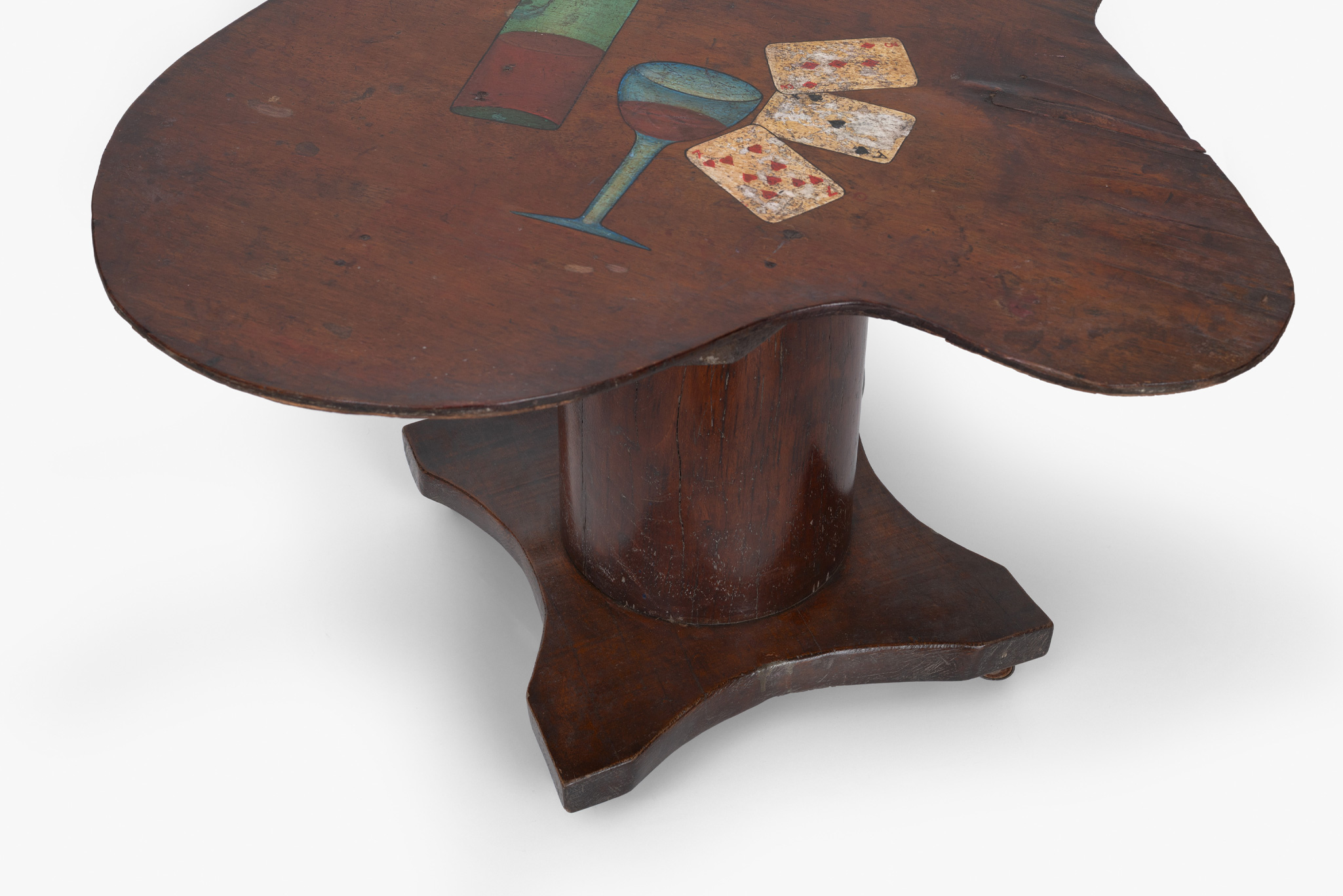
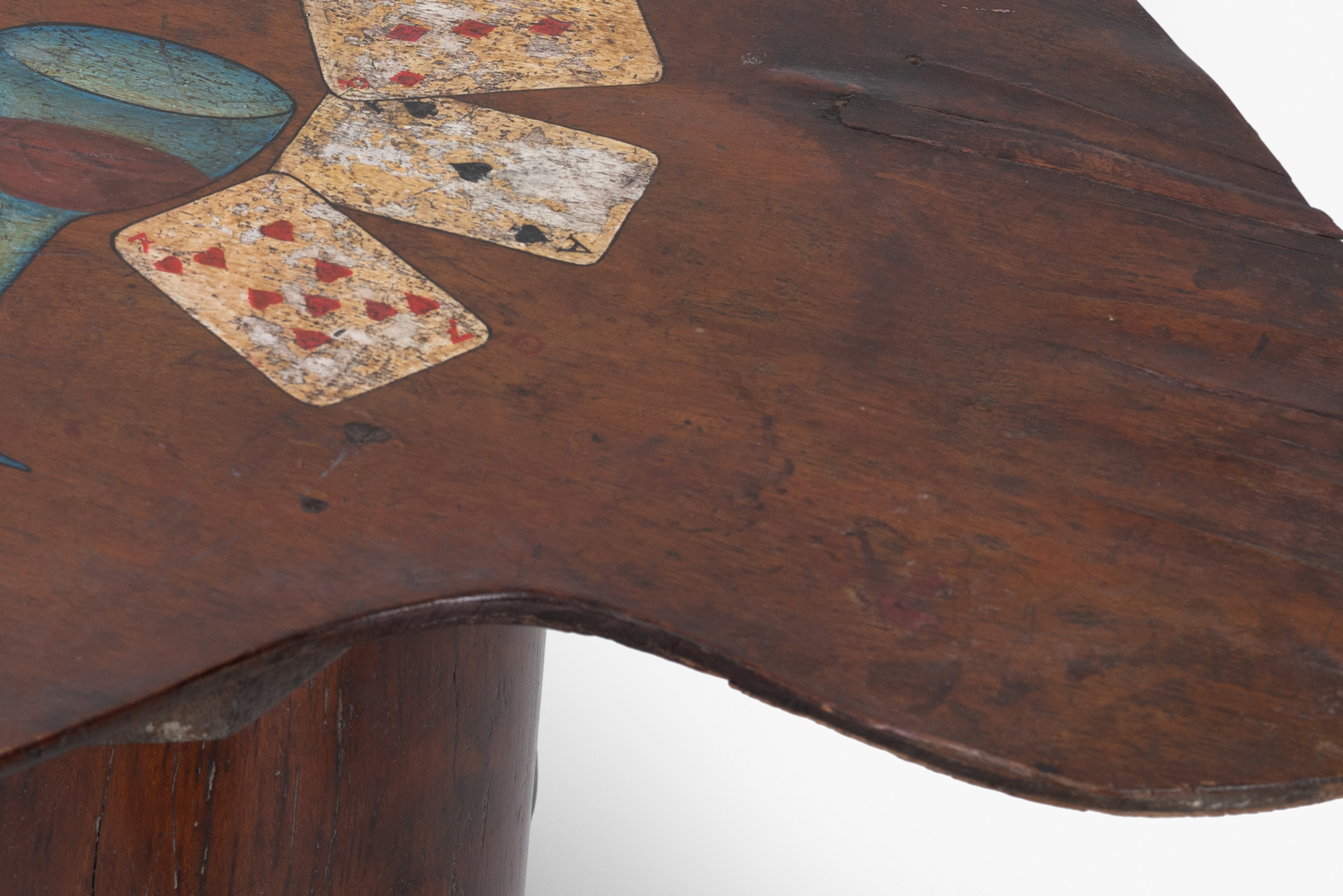
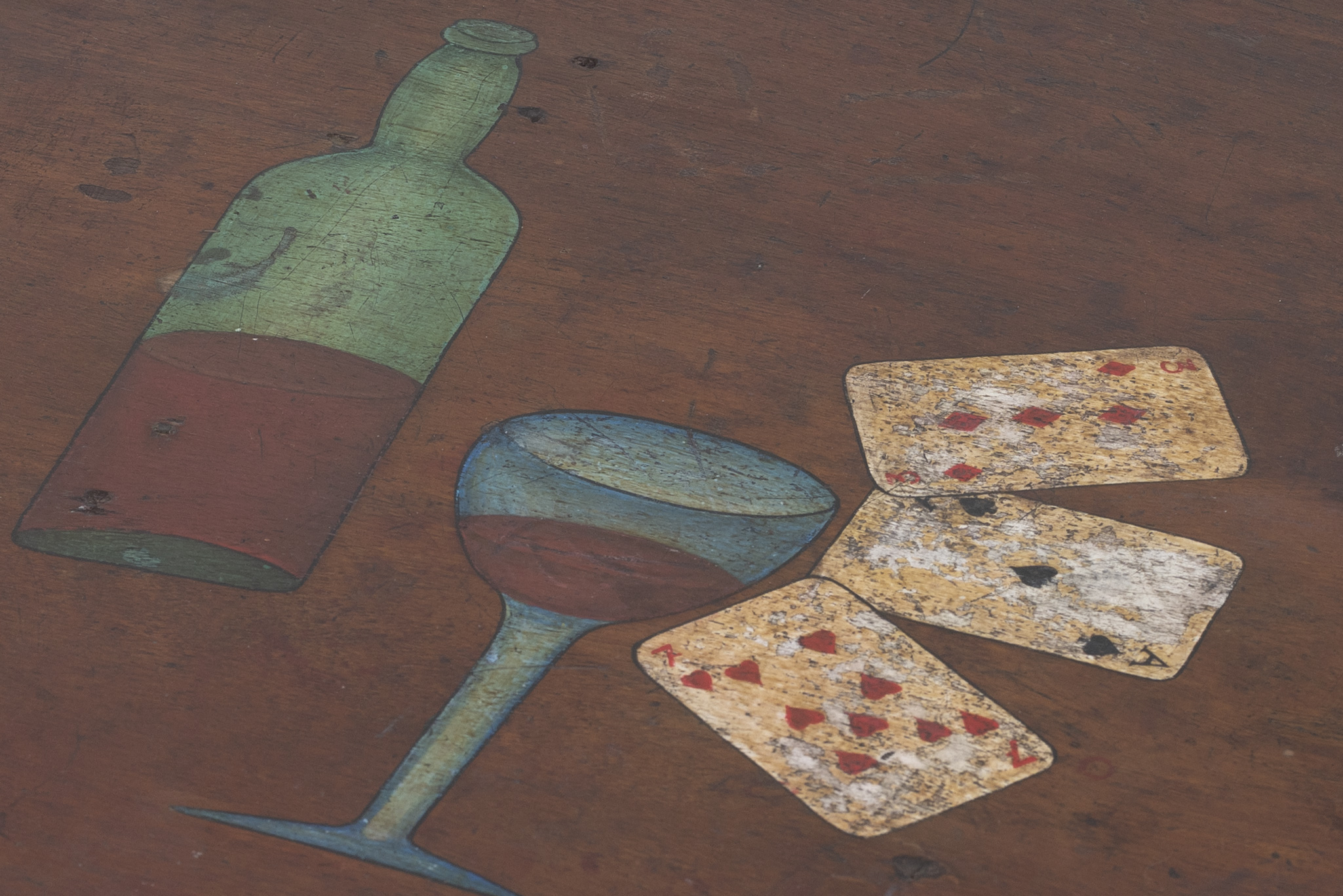
In this example, the irregular wooden tabletop is painted with a still-life composition depicting a bottle, a glass, and playing cards. These motifs transform the surface of the table into an image while retaining its function as furniture, dissolving conventional distinctions between painting, craft, and design. The organically shaped top is supported by a substantial cylindrical wooden pedestal and an equally expressive irregular base, emphasizing the handmade character of the work.
The table has a particularly significant exhibition history. It was presented in the 2023 retrospective Heitor dos Prazeres é meu nome at the Centro Cultural Banco do Brasil in Rio de Janeiro and subsequently included in the 36th Bienal de São Paulo in 2025, Nem todo viandante anda estradas – Da humanidade como prática. It is also reproduced in the 2024 exhibition catalogue on page 130.
Biography
Heitor dos Prazeres (1898–1966) was a Brazilian visual artist, composer, samba musician, and costume designer, and a key figure in the cultural life of Rio de Janeiro during the first half of the twentieth century. A self-taught artist, he first entered Rio’s artistic circles through music and became closely associated with the development of samba and the cultural life of the area between Cidade Nova and the Port of Rio de Janeiro, known as “Little Africa.”
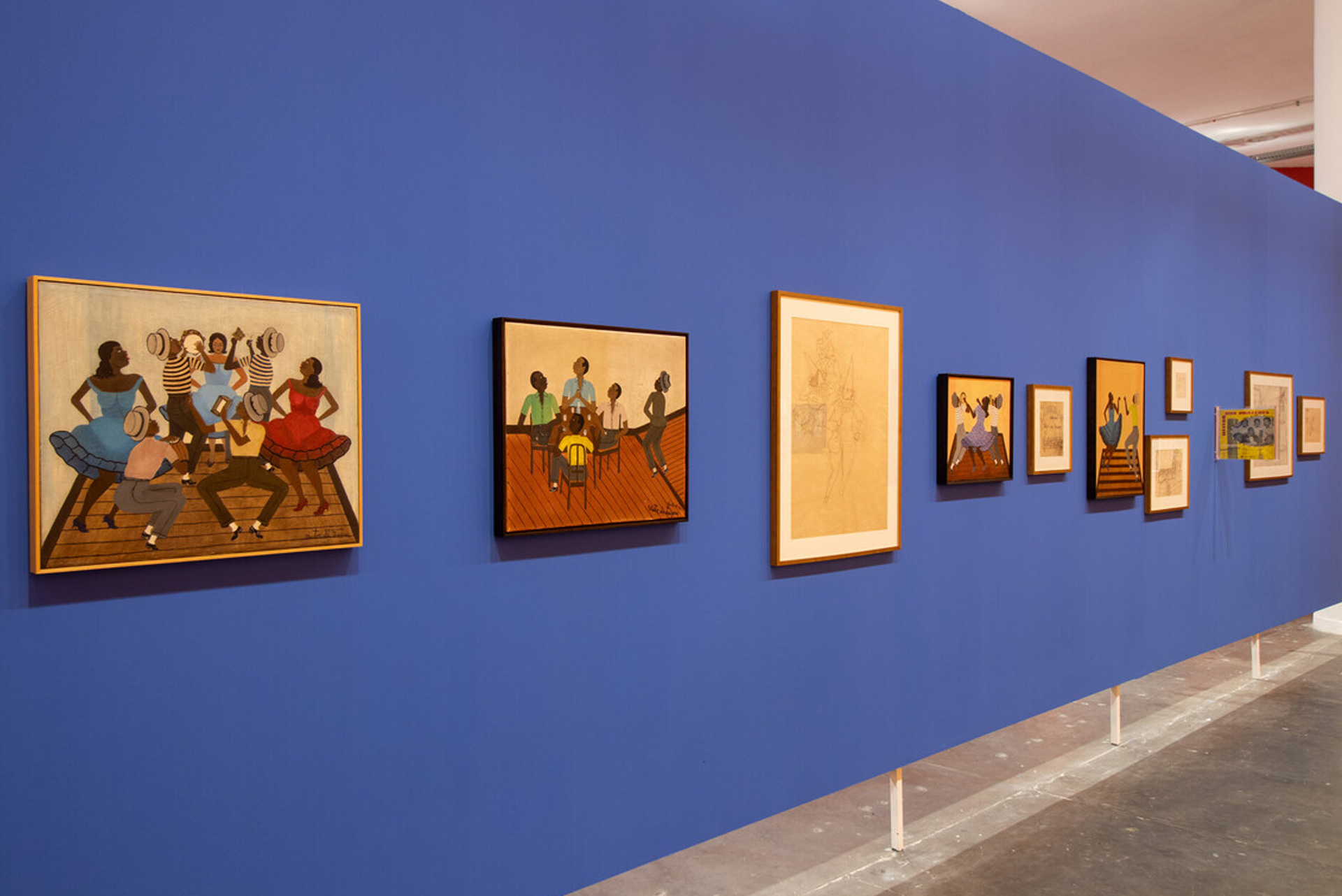
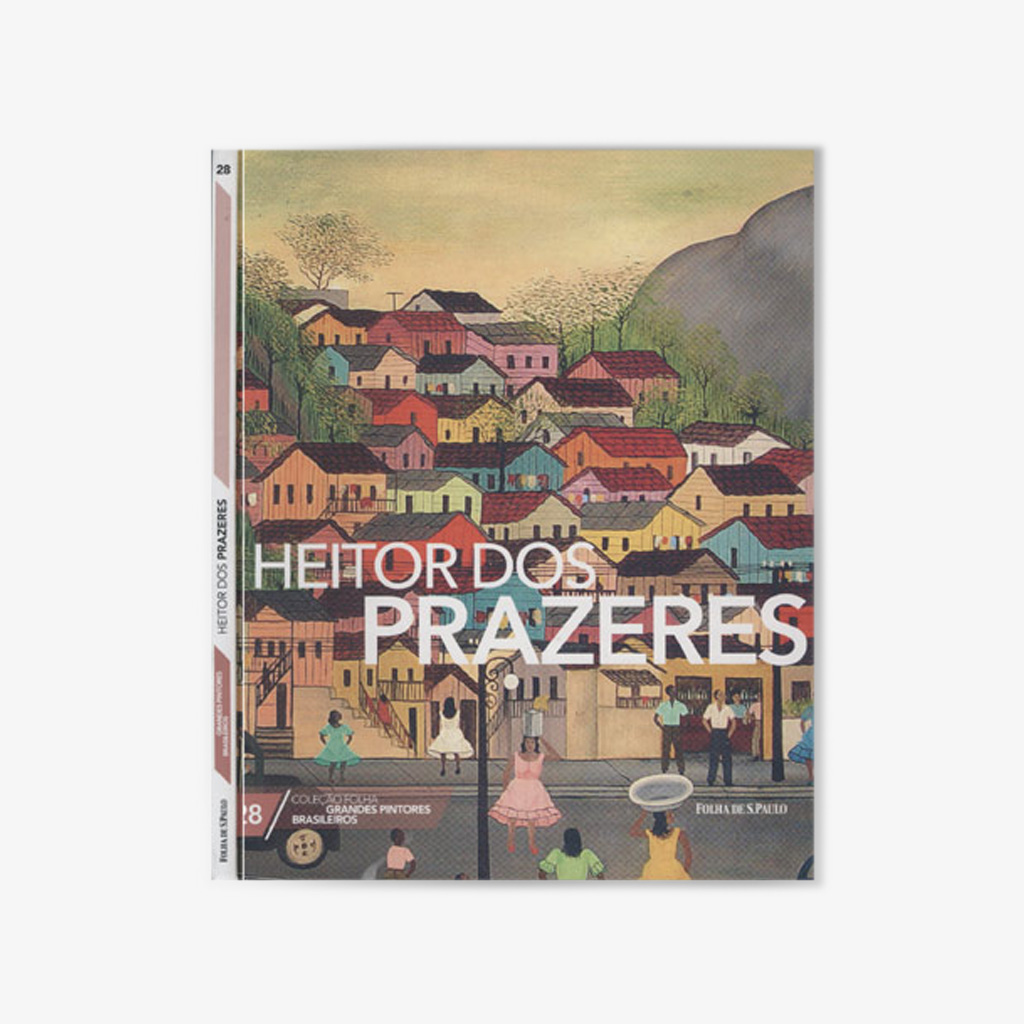
By the mid-1930s, Prazeres began to dedicate himself increasingly to painting. His vibrant compositions, characterized by expressive color and rhythmic figures, drew directly from his own surroundings and experiences. Popular celebrations, samba, bohemian life, Afro-Brazilian religious traditions, and scenes of everyday urban life became recurring subjects in his work. Through these representations, Prazeres placed Brazilian Black culture and experience at the center of his artistic practice at a time when they remained largely marginalized within the country's established cultural institutions.
His work received significant recognition during his lifetime. In 1951, he was awarded third place at the 1st Bienal de São Paulo for Moenda, now in the collection of MAC USP. The following year, he participated in the Venice Biennale with Mercado and Batuque. He was given a Special Room at the 2nd Bienal de São Paulo in 1953–54 and later participated in further editions of the Bienal. In 1966, the year of his death, he represented Brazil at the First World Festival of Black Arts in Dakar, Senegal.
Prazeres’ work is held in major international and Brazilian institutional collections, including The Museum of Modern Art (MoMA), New York; Centre Georges Pompidou, Paris; Museo Nacional Centro de Arte Reina Sofía, Madrid; Museu de Arte Moderna do Rio de Janeiro; Museu Afro Brasil Emanoel Araujo; Museu de Arte de São Paulo (MASP); and Pinacoteca de São Paulo, among others. His work was the subject of the major retrospective Heitor dos Prazeres é meu nome at CCBB Rio de Janeiro in 2023 and was included in the 36th Bienal de São Paulo in 2025.