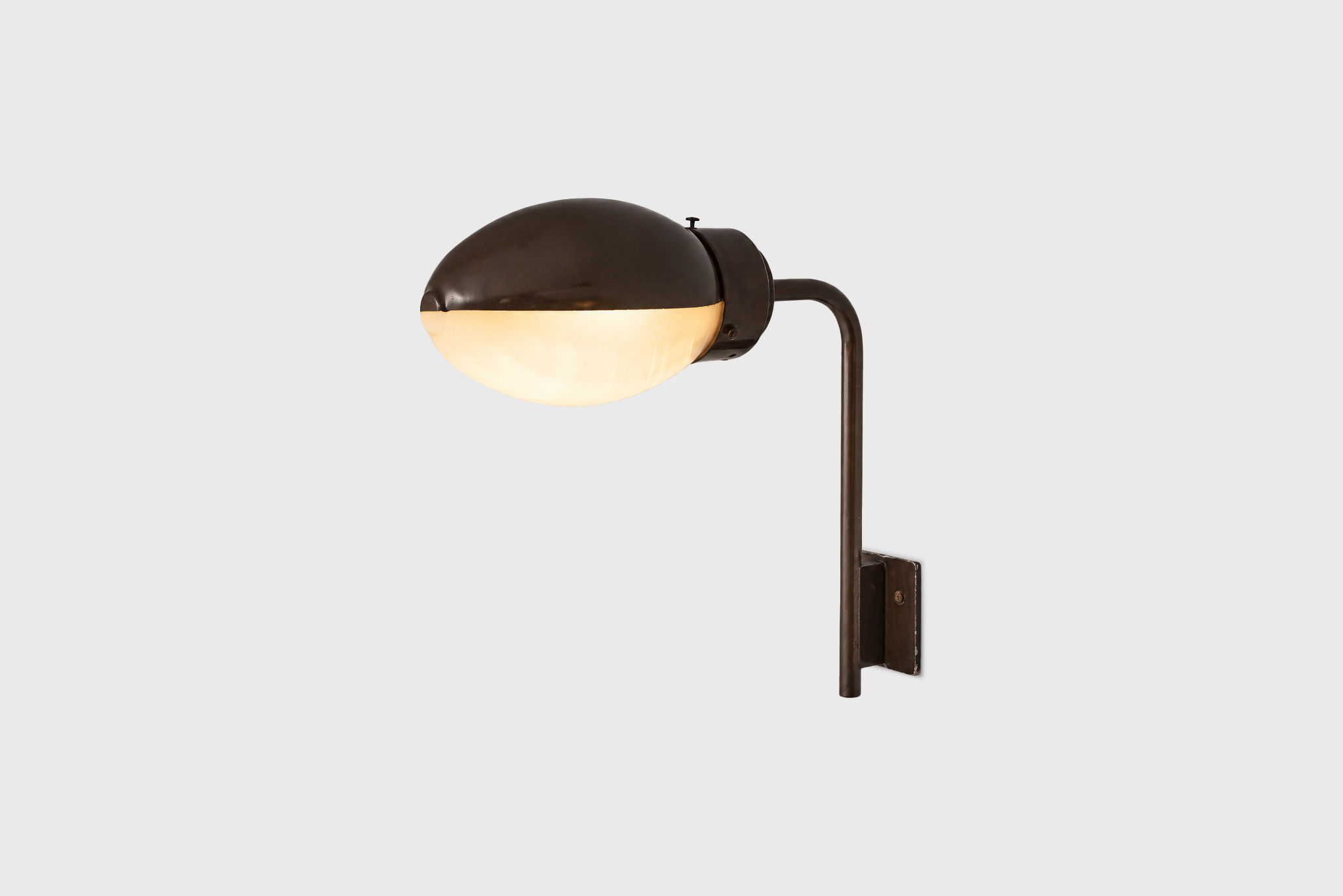
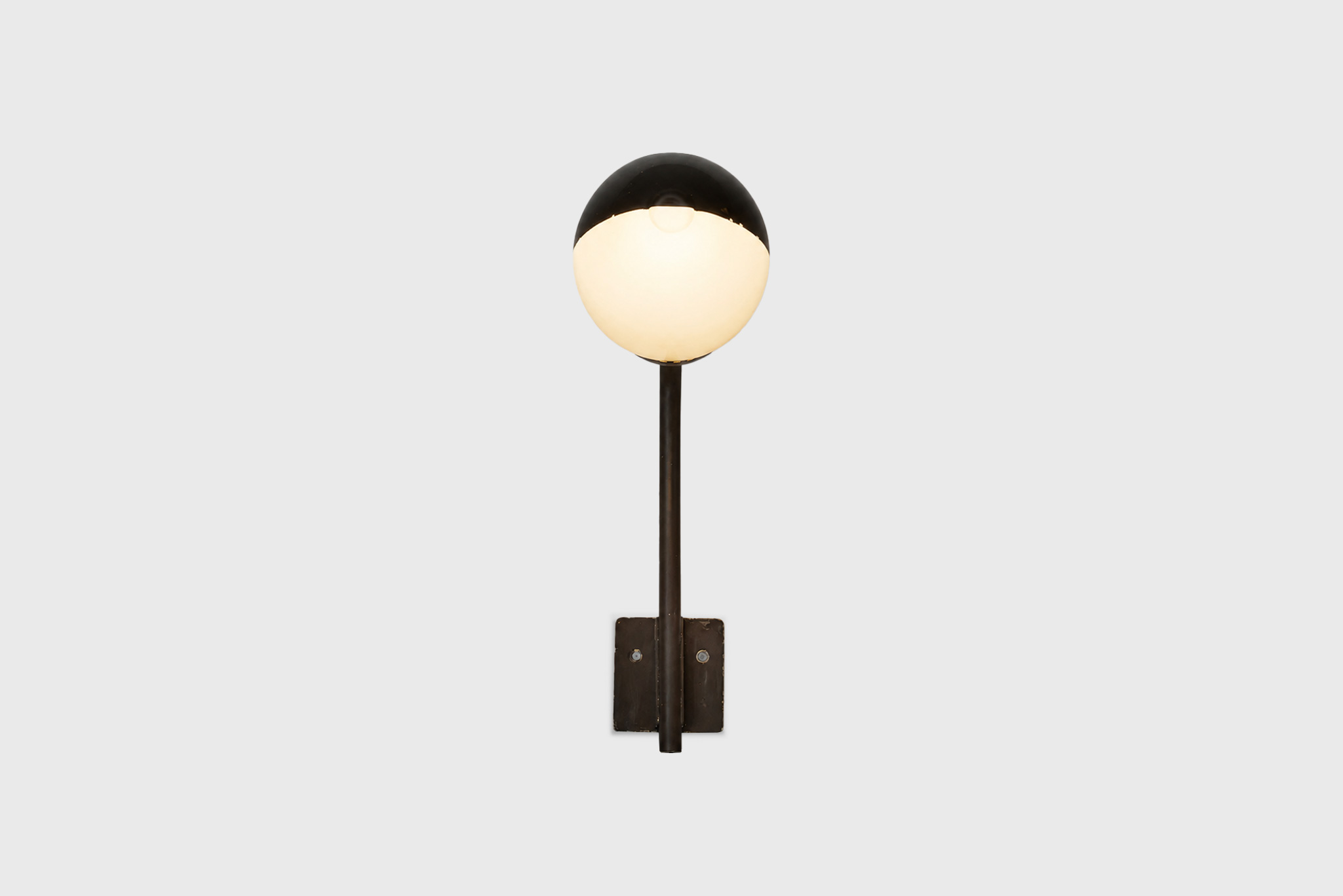
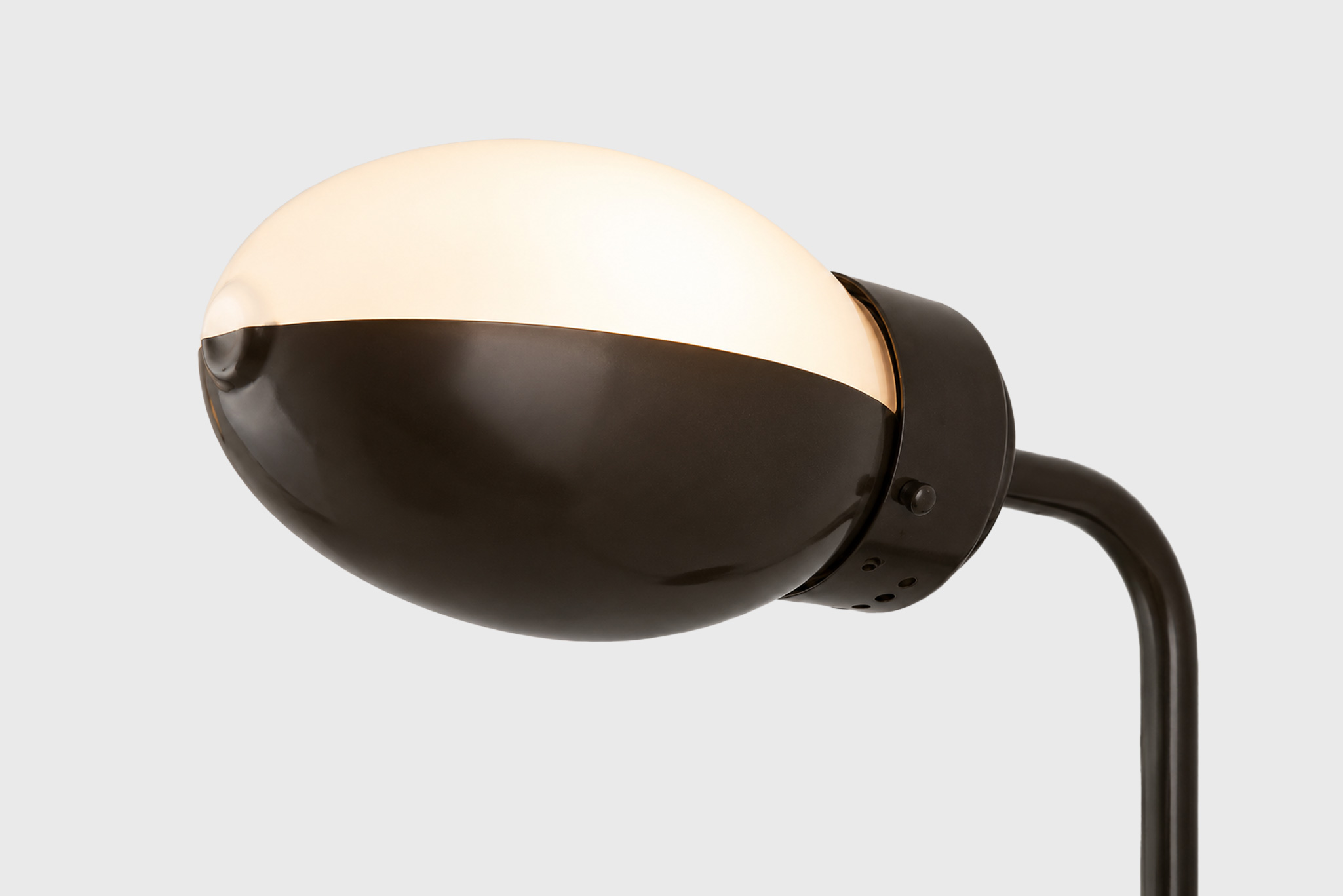
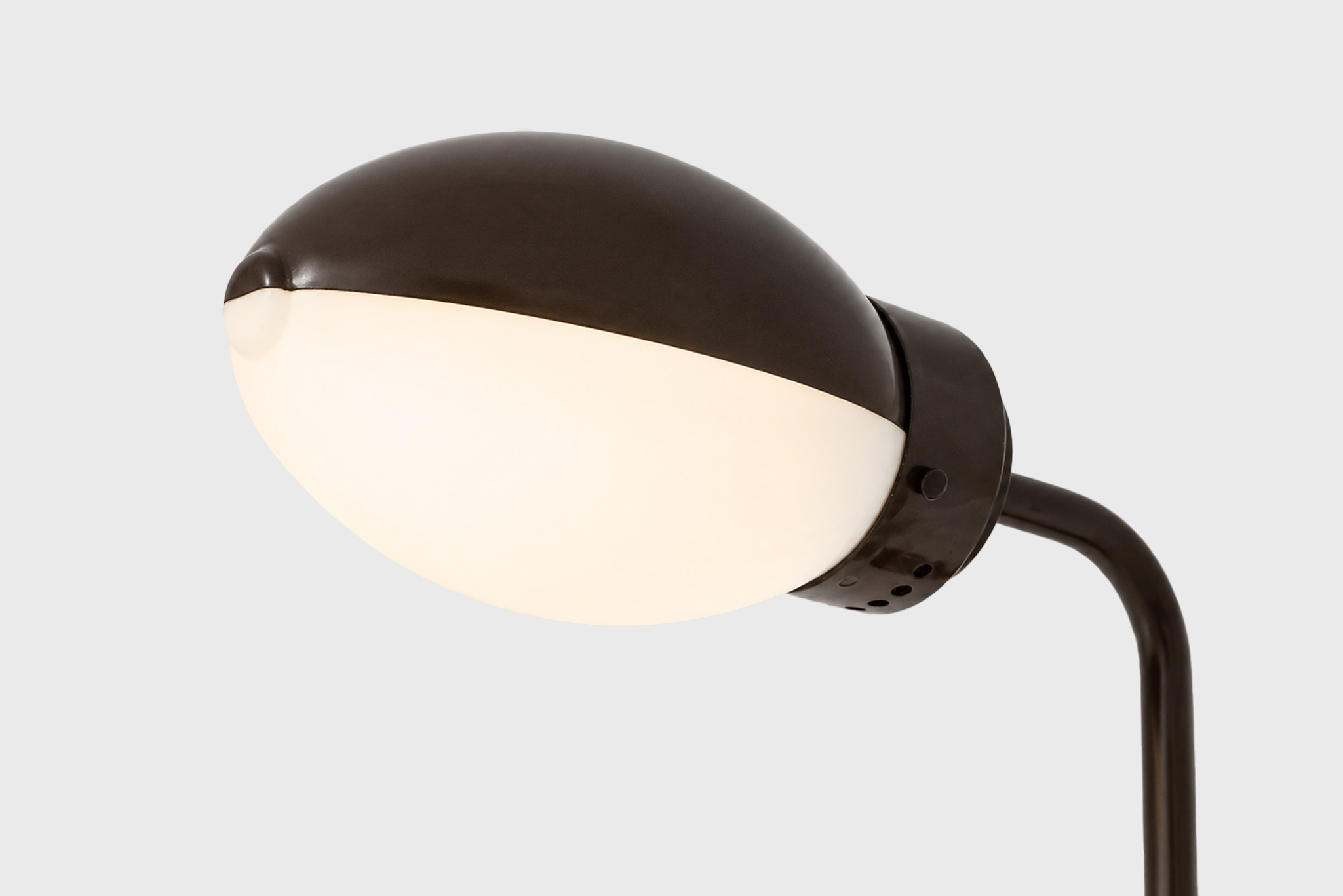
Wall Light Model "Ochetta" No. 141
Manufactured by Arteluce
Italy, 1962
Metal, Frosted glass
Measurements
16 × 50 × 45h cm
6,3 × 19,7 × 17,7h in
Provenance
Private Collection
Literature
Federico Bucci and Patrizia Bonifazio, Franco Albini, Electa, Milan, 2009.
Maria Vittoria Capitanucci (ed.), Franco Albini, Mondadori Electa, Milan, 2006.
Giampiero Bosoni, Il Modo Italiano: Italian Design and Avant-Garde in the 20th Century, Skira, Milan, 2007.
Arteluce Catalogue, Milan, 1962.
About
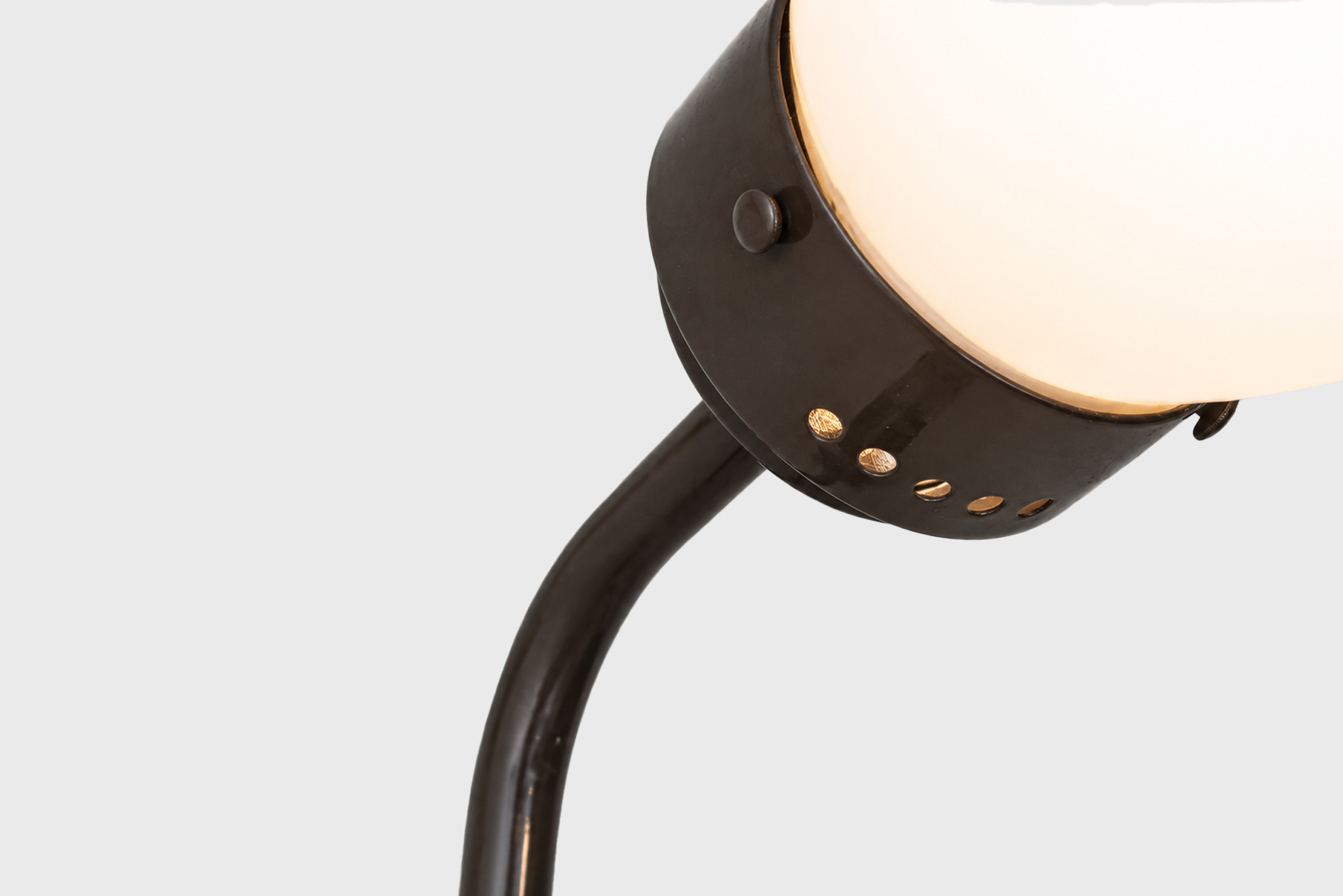
The Ochetta wall light, model 141, exemplifies the sophisticated approach to lighting design developed by Franco Albini and Franca Helg during their long collaboration with Arteluce. Designed in 1962, the fixture reflects the pair’s commitment to clarity, functional rigor, and refined material expression, principles that defined postwar Italian modernism.
Combining painted metal with a frosted glass diffuser, the lamp achieves a delicate balance between structural precision and visual softness. The elongated arm and carefully proportioned shade create an elegant silhouette that appears almost weightless, while the diffused light produces a warm and intimate atmosphere. Like much of Albini and Helg’s work, the design avoids unnecessary ornamentation, allowing proportion and craftsmanship to become the primary means of expression.
Throughout the 1950s and 1960s, Arteluce established itself as one of the most important lighting manufacturers in Europe, collaborating with leading architects and designers to create fixtures that merged technological innovation with architectural sensibility. The Ochetta model belongs to this remarkable period and illustrates the timeless quality that characterizes the best examples of Italian modern design.
Biography
Franco Albini (1905–1977) was one of the leading figures of Italian Rationalism and among the most influential architects and designers of the twentieth century. After graduating from the Politecnico di Milano, he developed a body of work distinguished by structural clarity, technical innovation, and exceptional attention to detail. His furniture, lighting, and architectural projects reveal a refined modernism rooted in honesty of materials and functional elegance.
Beginning in the early 1950s, Albini collaborated closely with architect Franca Helg (1920–1989), forming one of the most important partnerships in postwar Italian design. Together they produced numerous architectural projects, interiors, and furnishings that combined rationalist principles with a sophisticated sensitivity toward materials and human experience.
Their collaboration with Arteluce, founded by Gino Sarfatti, resulted in some of the most elegant lighting designs of the period. Through their work, Albini and Helg contributed significantly to establishing Italy's international reputation for excellence in architecture and industrial design.