Side Gallery
Side Gallery
WishlistFollow





Follow
THE FREE EDGE – GEORGE NAKASHIMA’S LEGACY AT NATIONAL INSTITUTE OF DESIGN
NATIONAL INSTITUTE OF DESIGN (NID), AHMEDABAD (INDIA)
2016
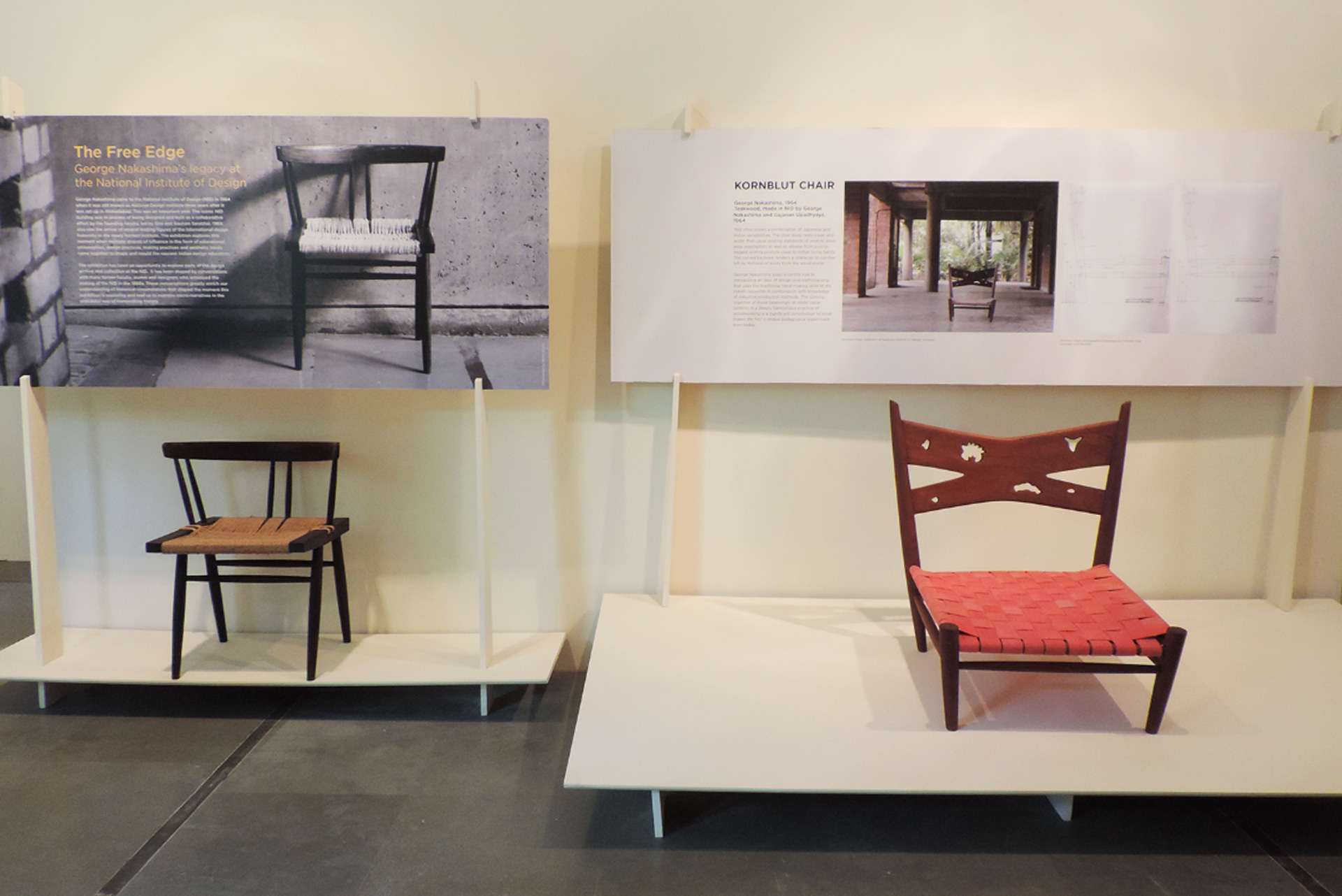
The Free Edge – George Nakashima’s Legacy at National Institute of Design, presented at the National Institute of Design in 2016, examined a pivotal yet often overlooked chapter in the global history of modern design: the encounter between George Nakashima and post-independence India. The exhibition revisited Nakashima’s residency at NID in November 1964, initiated by Gira Sarabhai, at a moment when the institution was defining its pedagogical and ideological foundations.
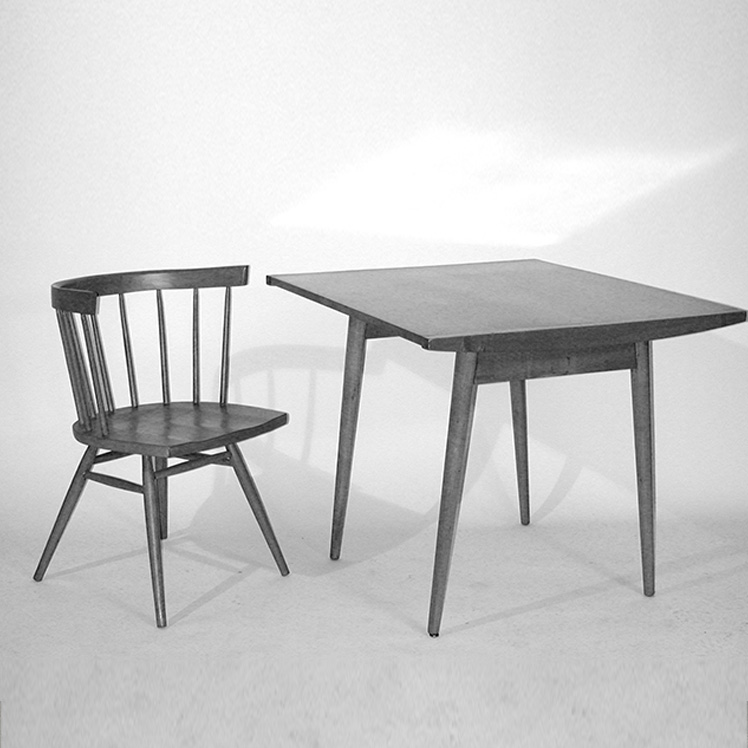
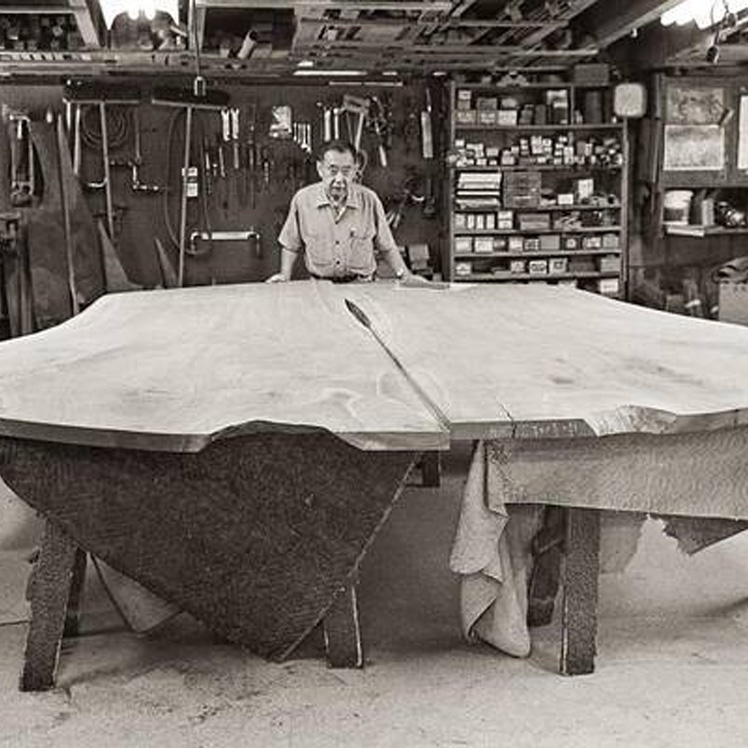
Founded in 1961, NID emerged as a central project in India’s cultural modernization, advocating for a synthesis between industrial development and craft traditions. Nakashima’s presence must be understood within this broader framework of nation-building and international exchange. During several intensive weeks on campus, he worked closely with students and faculty to produce 32 pieces of furniture—of which 26 remain preserved within the institute. These works, ranging from chairs and benches to daybeds and tables, embody a rare confluence of Japanese woodworking philosophy, American studio craft, and Indian material culture.
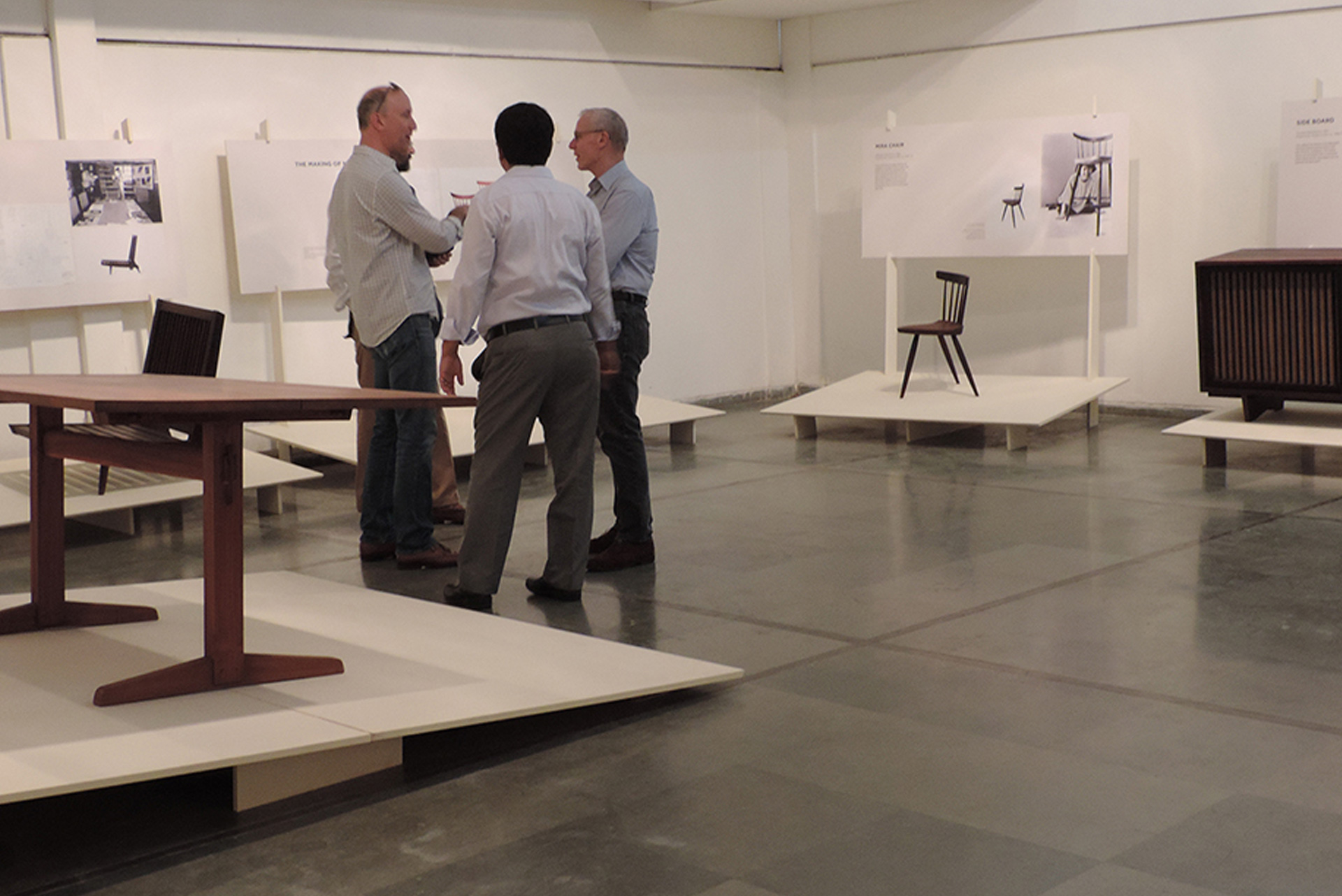
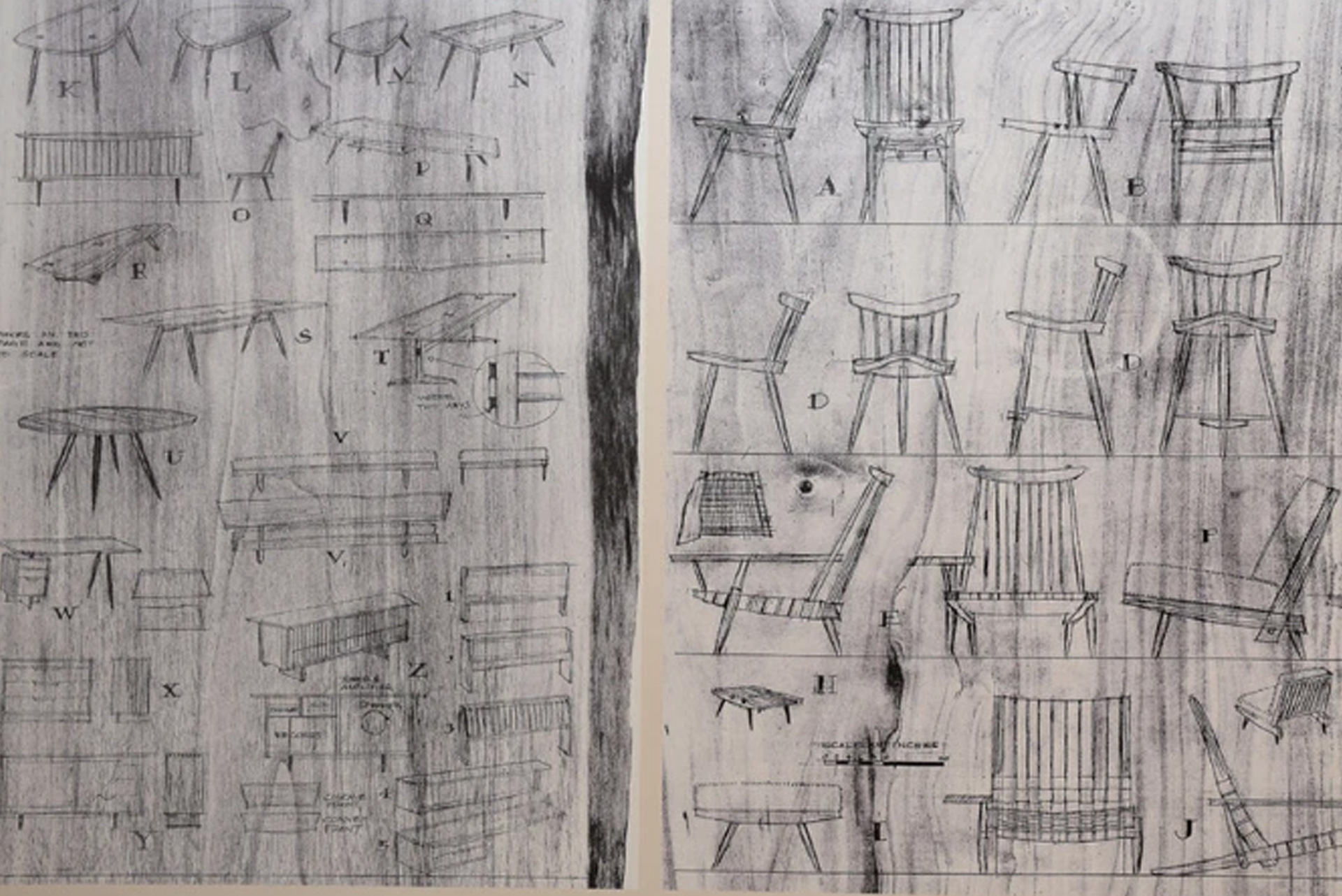
The exhibition assembled these extant pieces alongside archival documentation, positioning them not merely as functional objects but as pedagogical instruments and historical witnesses. Through their exposed joinery, reverence for the “free edge” of timber, and disciplined structural clarity, the works articulated an alternative modernism—one grounded in material authenticity and ethical craftsmanship rather than industrial anonymity.
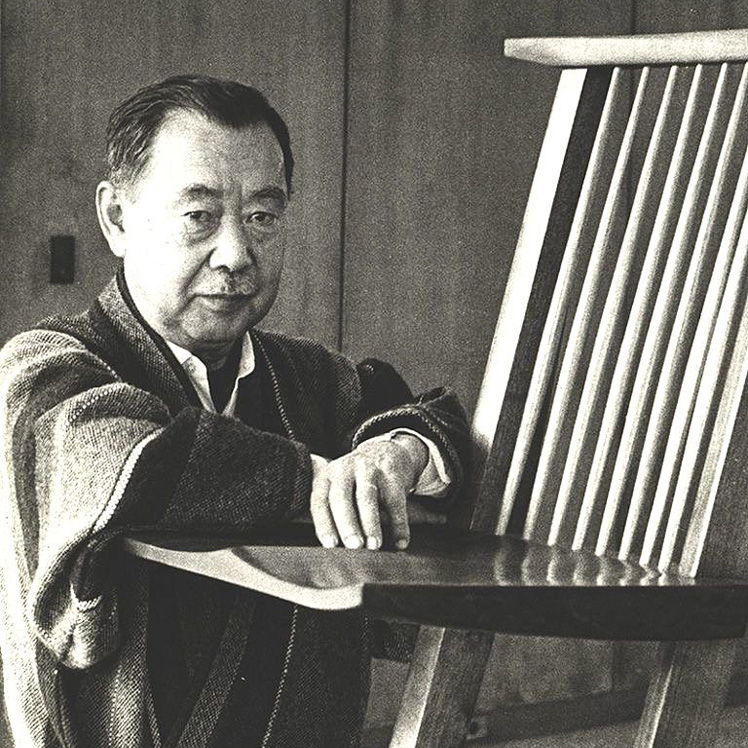
The exhibition also foregrounded the philosophical trajectory that shaped Nakashima’s engagement with India. Prior to his collaboration with NID, he had resided at the Sri Aurobindo Ashram in Pondicherry, where he adopted the name Sunder Nanda and contributed to the construction of the Golconde Dormitory in collaboration with Antonin Raymond. This formative period reinforced his conviction that craftsmanship carried both spiritual and social responsibility—an ethos that would permeate his later furniture practice.
At NID, this philosophy materialized in objects that responded sensitively to local modes of living. Low seating forms acknowledged Indian floor culture, while the careful articulation of structure reflected his lifelong commitment to making process visible. Rather than exporting a fixed aesthetic, Nakashima entered into dialogue with context—negotiating between Japanese tradition, American studio craft, and the aspirations of a newly independent nation seeking its modern identity.
By framing these works within the intellectual climate of the 1960s—when handcraft was increasingly marginalized by mass production—the exhibition proposed Nakashima’s intervention as historically prescient. His brief yet resonant engagement with NID contributed to shaping the institute’s early design discourse and stands today as a testament to a model of modernism built on exchange, restraint, and material integrity.