Side Gallery
Side Gallery
WishlistFollow





Follow
KENZO TANGE & KENGO KUMA: ARCHITECTS OF THE TOKYO GAMES
MAISON DE LA CULTURE DU JAPON À PARIS (MCJP), PARIS (FRANCE)
02 MAY – 29 JUNE 2024
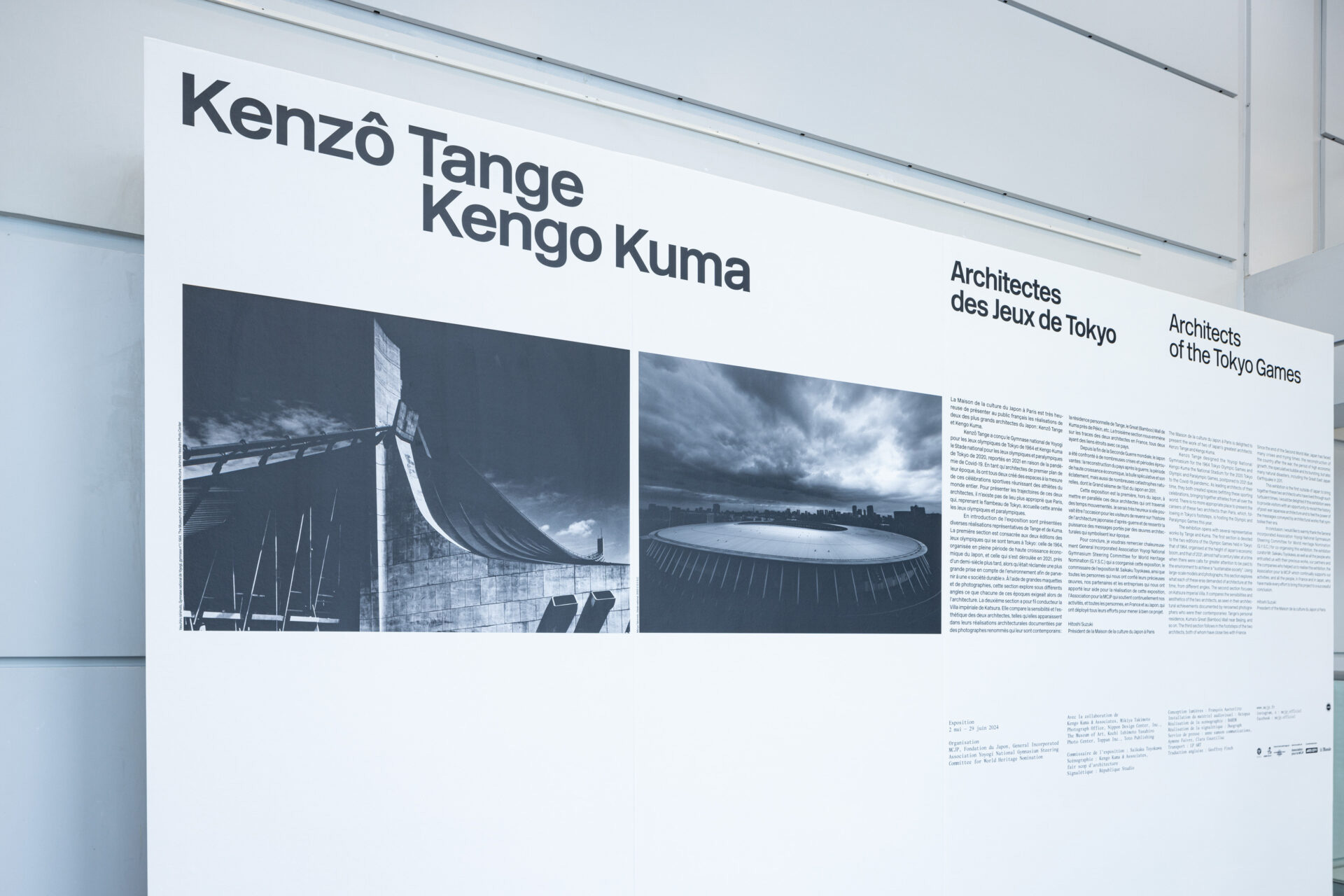
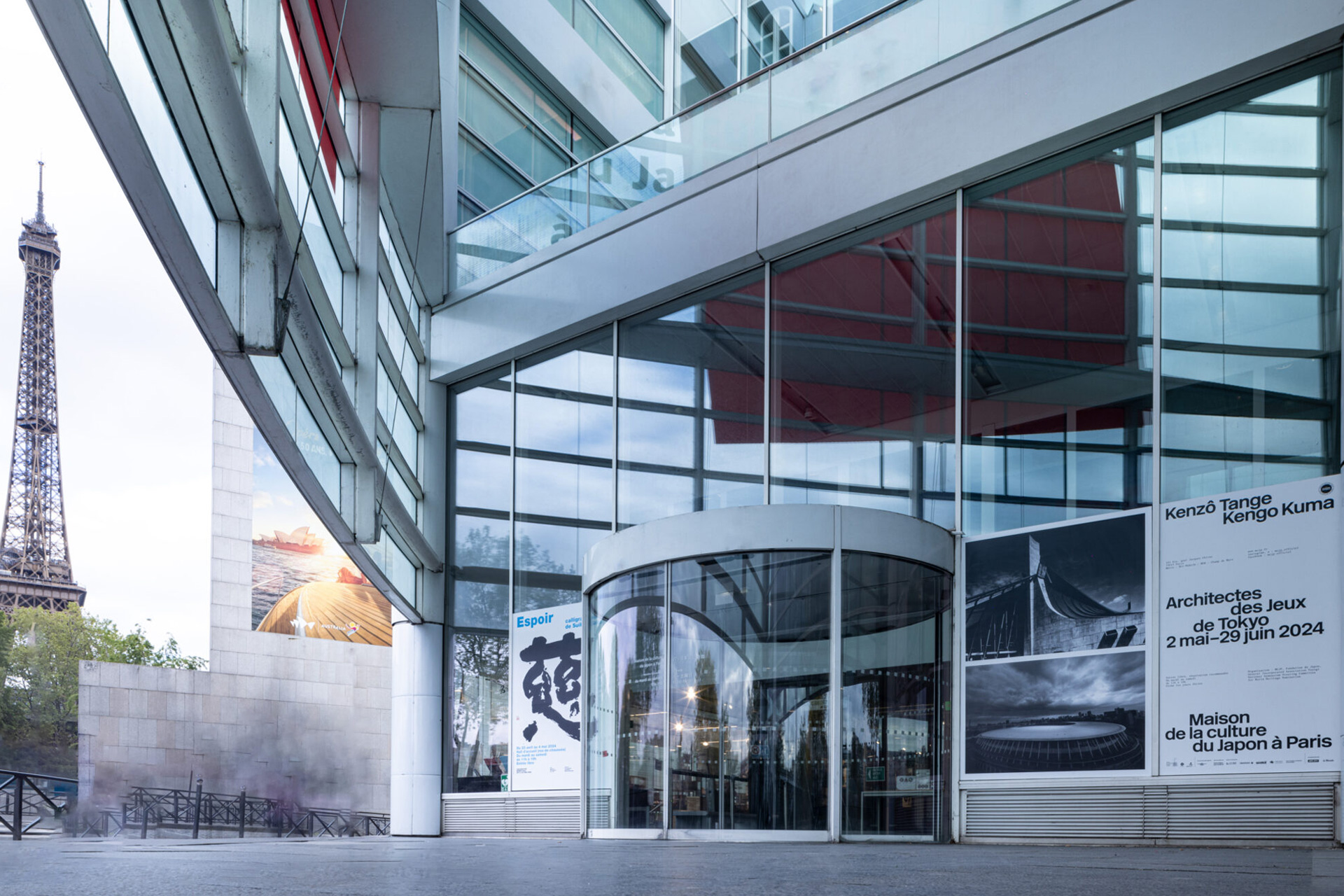
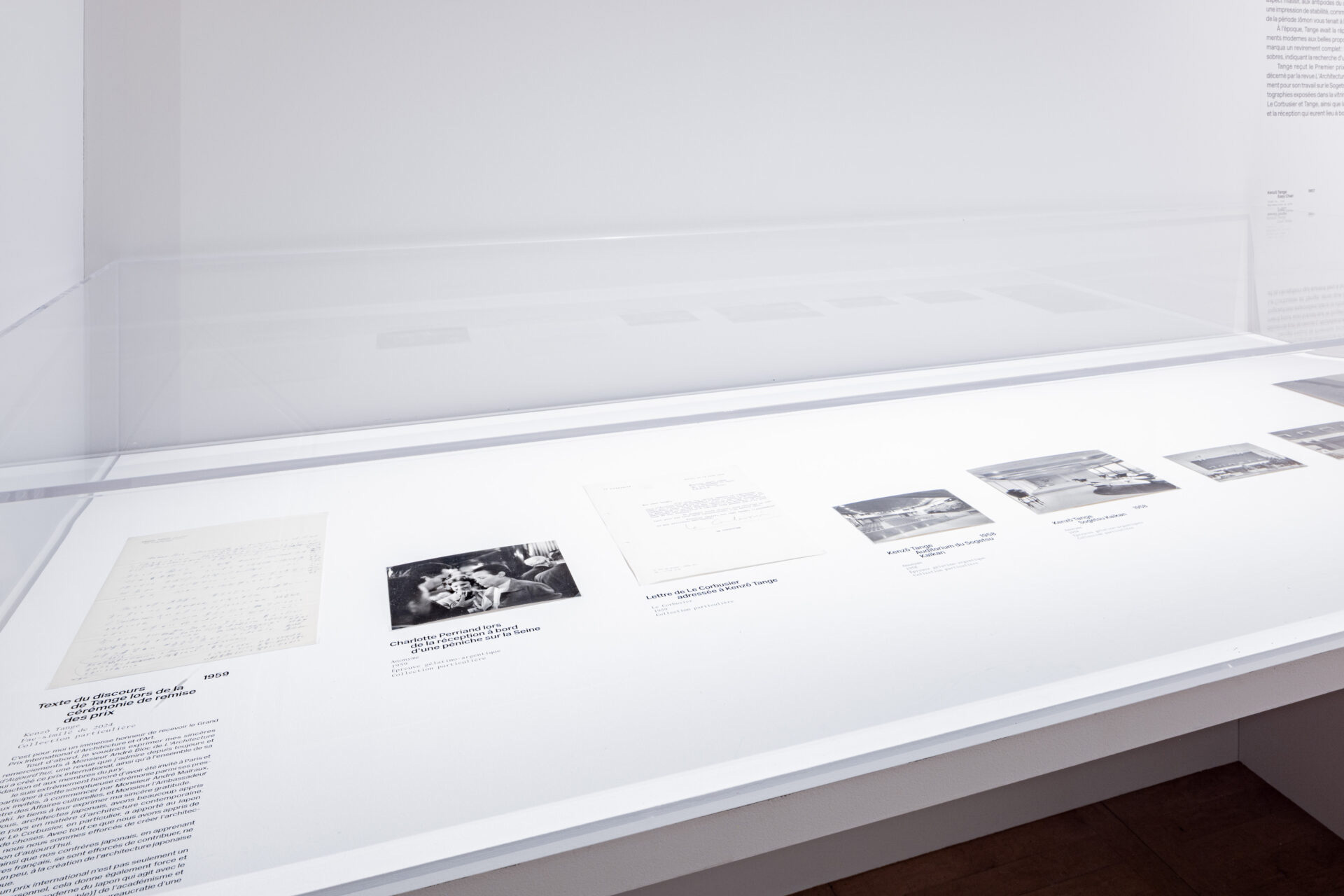
The exhibition Kenzo Tange & Kengo Kuma: Architects of the Tokyo Games, presented at the Maison de la Culture du Japon in Paris in 2024, examined the architectural legacy of two stadiums that symbolize different moments in Japan’s modern history. Through photographs, models, and archival materials, the exhibition explored the dialogue between the Yoyogi National Gymnasium designed by Kenzo Tange for the 1964 Tokyo Olympic Games and the Japan National Stadium designed by Kengo Kuma for the Tokyo 2020 Olympic and Paralympic Games.
By placing these two landmark projects in conversation, the exhibition revealed how architecture reflects the social and cultural contexts of its time. Tange’s Yoyogi National Gymnasium, with its dramatic suspended roof structure and monumental concrete form, embodied the spirit of postwar reconstruction and the optimism of Japan’s period of rapid economic growth. The building became an international symbol of modern Japanese architecture, demonstrating how advanced engineering and expressive form could redefine the possibilities of large-scale public architecture.
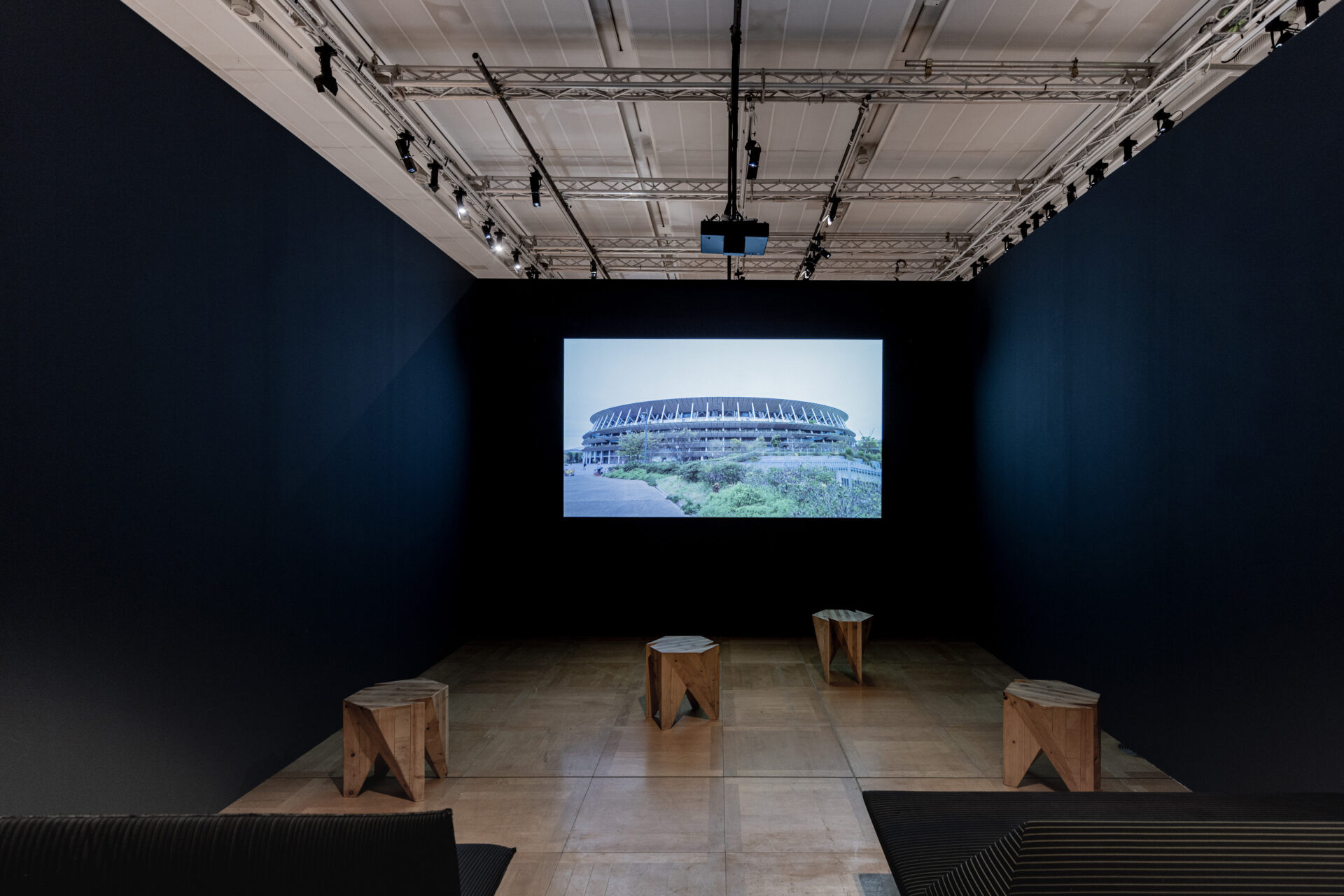
In contrast, the Japan National Stadium designed by Kengo Kuma reflects the values of a contemporary society shaped by environmental awareness and changing demographic realities. With its horizontal composition, integration with the surrounding landscape, and extensive use of natural materials such as timber, the stadium presents a more restrained and ecological vision of national architecture. By juxtaposing these two projects, the exhibition highlighted how each architect translated the aspirations of his era into architectural form.
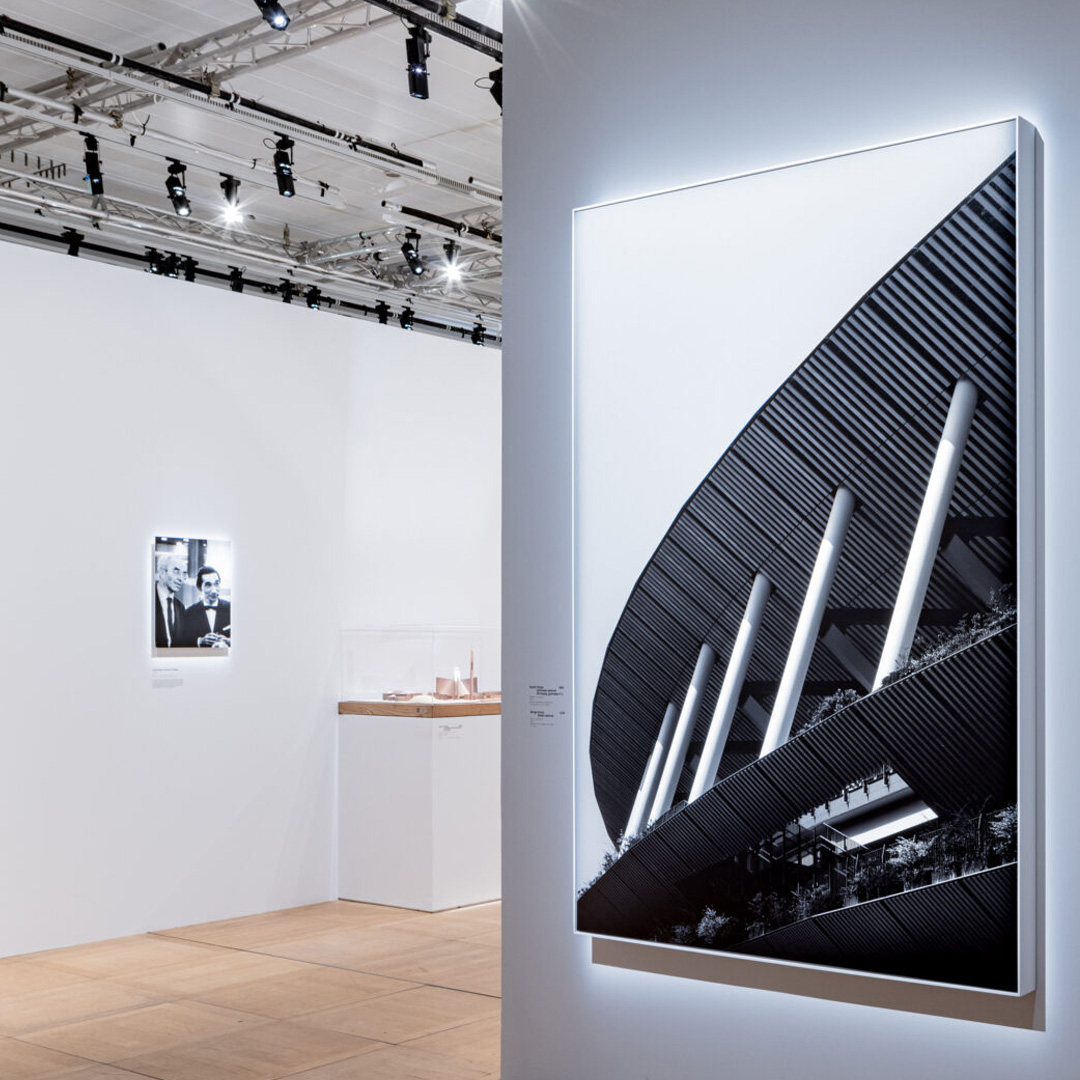
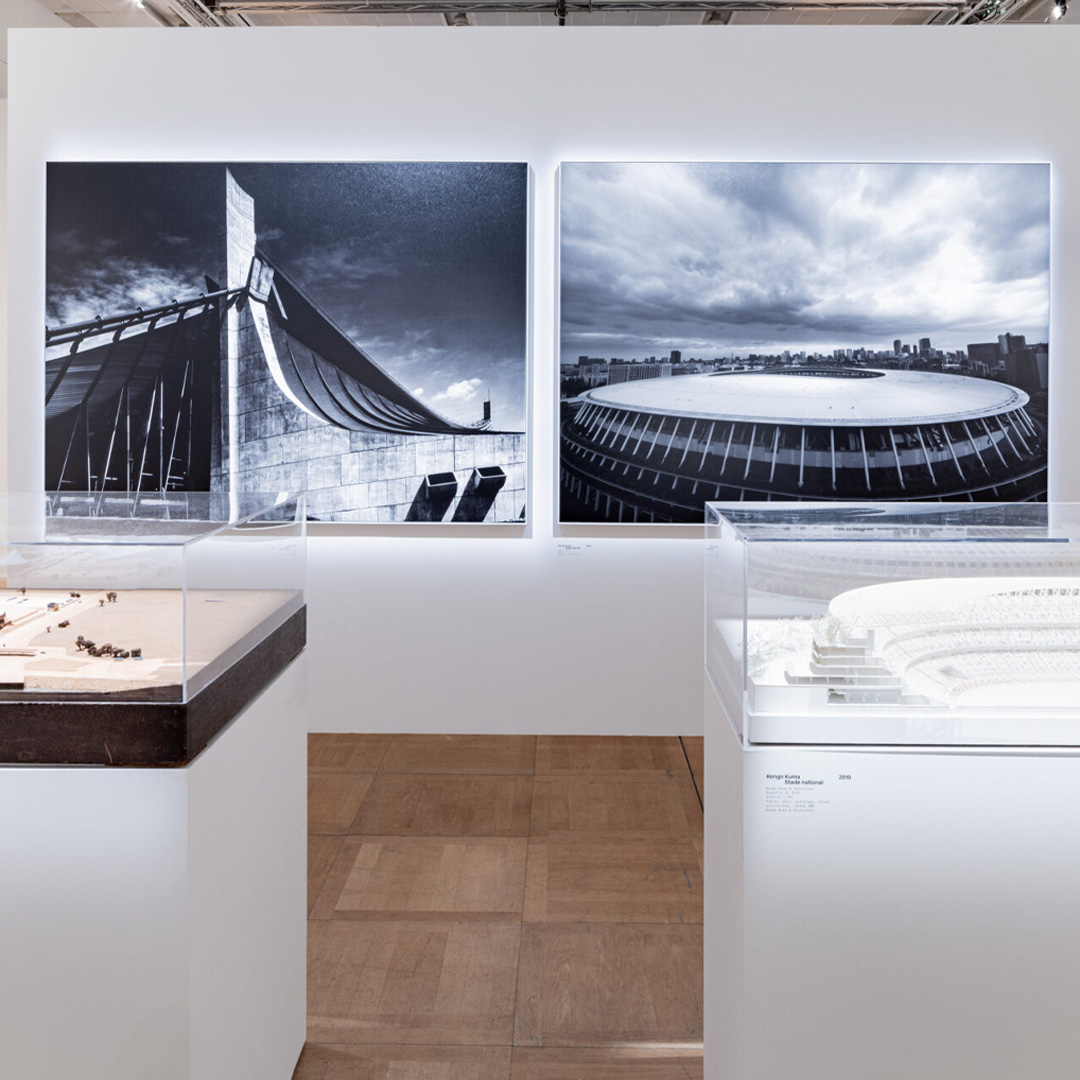
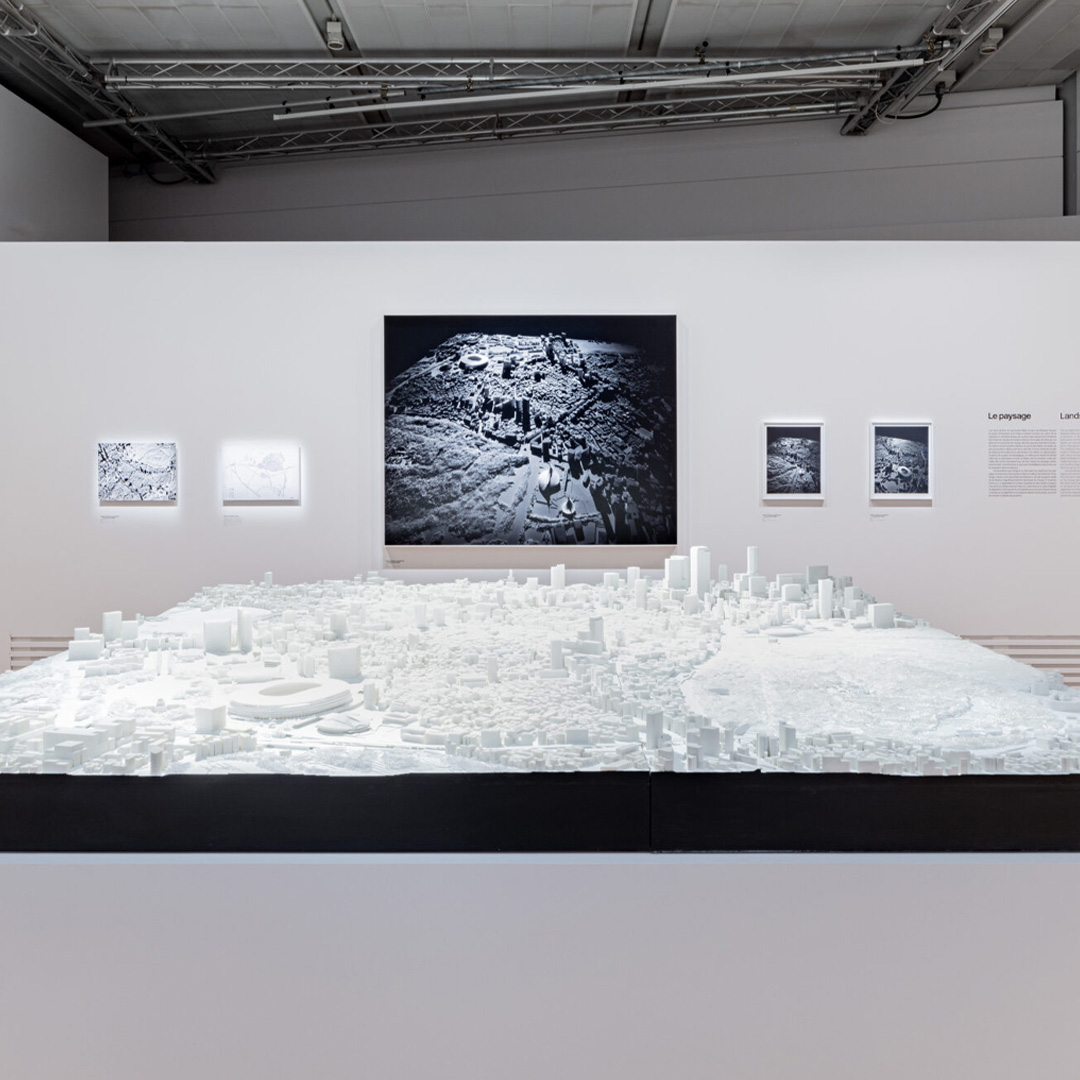
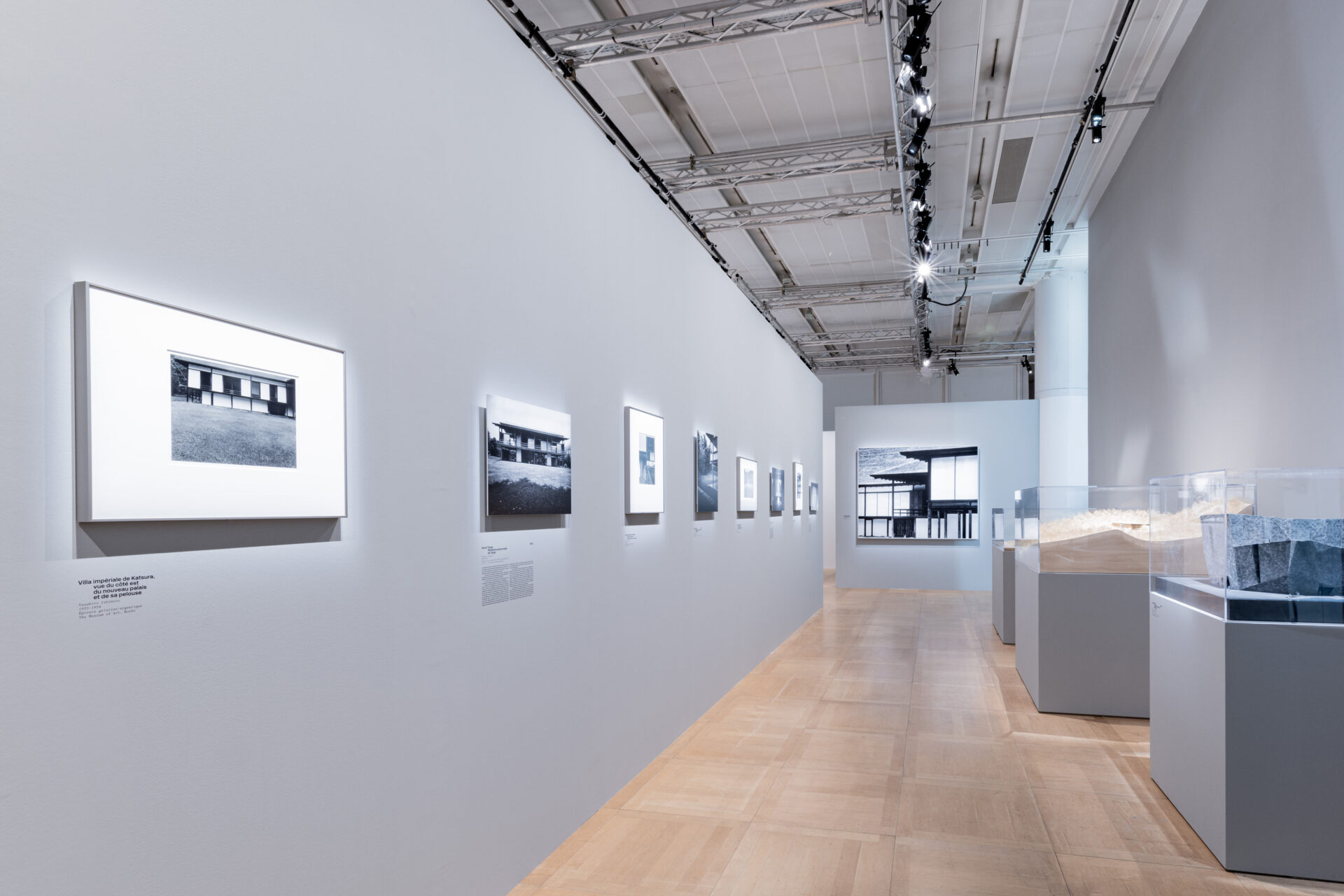
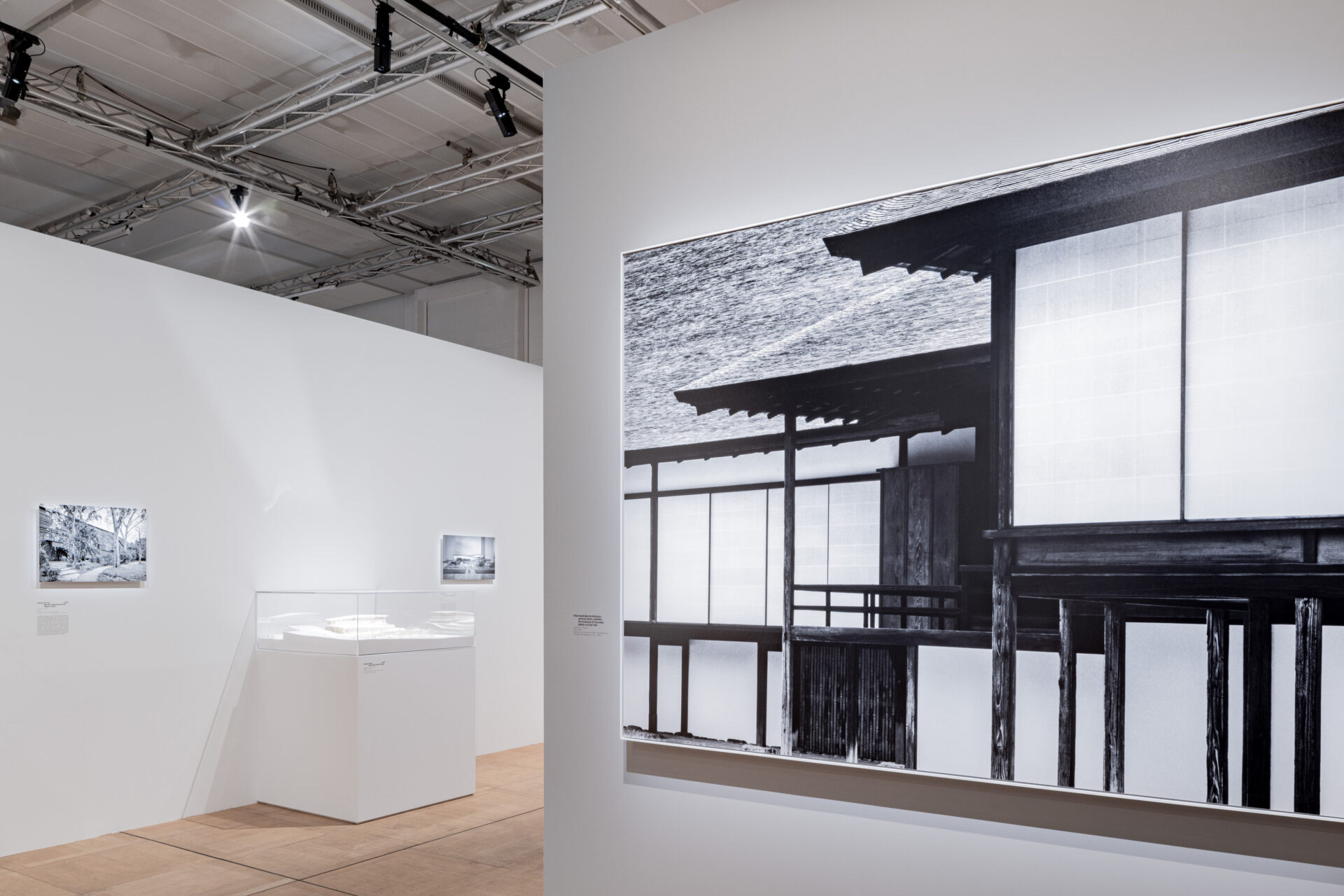
A central element of the exhibition was the dialogue established through photography. Images of the Yoyogi National Gymnasium taken by photographer Yasuhiro Ishimoto—who worked closely with modernist architects during the postwar period—were presented alongside contemporary photographs of the Japan National Stadium by Mikiya Takimoto. This visual comparison revealed how each building articulates its architectural language through form, structure, and relationship to the surrounding landscape.
The exhibition further identified four architectural themes shared by both architects: line, eaves, arch, and landscape. These elements were explored through drawings, models, and photographic documentation, demonstrating how Tange and Kuma each interpreted them within the context of their respective eras. While Tange’s work emphasized bold structural expression and monumental scale, Kuma’s approach focused on material warmth, environmental integration, and a more human-centered spatial experience.
By examining these two stadiums side by side, the exhibition offered a broader reflection on the evolution of Japanese architecture across six decades. It revealed how successive generations of architects have responded to changing cultural, technological, and environmental conditions while maintaining a continuous dialogue with tradition. Kenzo Tange & Kengo Kuma: Architects of the Tokyo Games ultimately framed architecture as a mirror of society, capable of expressing both national identity and the shifting values of the time in which it is built.