Side Gallery
Side Gallery
WishlistFollow





Follow




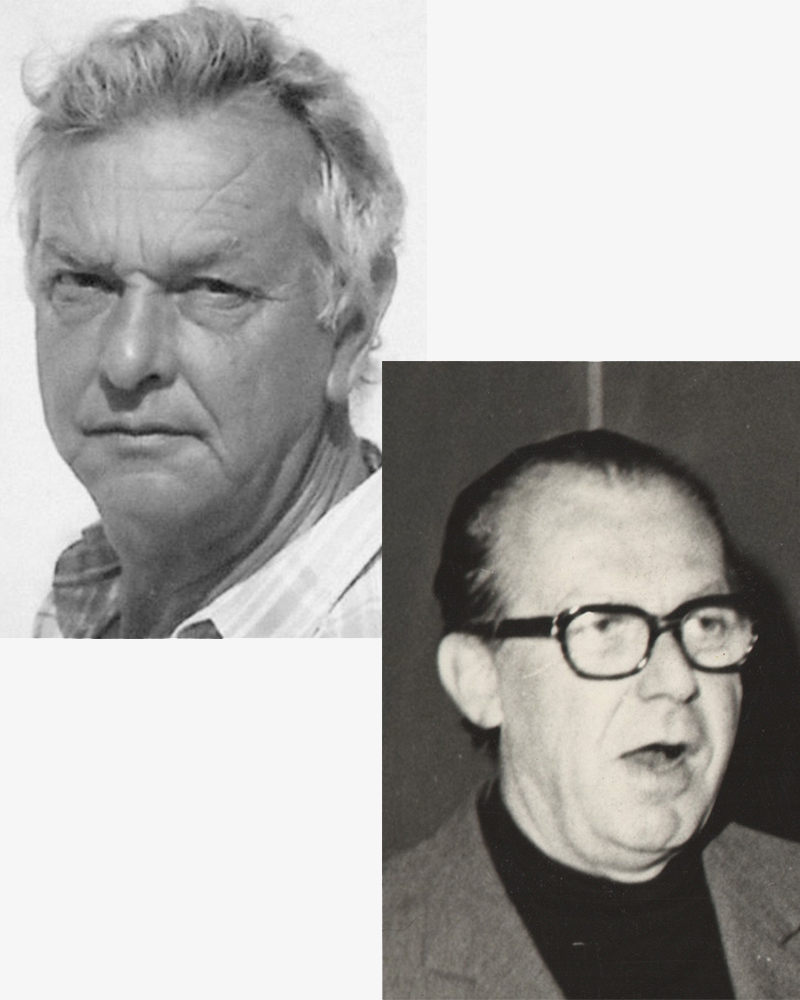
Martin Eisler (Vienna, Austria, 1913 - São Paulo, Brazil, 1977) was an architect and furniture designer. He was part of a group of European architects and designers who left Europe during the chaos of the Second World War and went to live and work in Brazil. Eisler stood out amongst this group of creatives. His work was at the forefront of modern furniture design in Brazil, which flourished through the 50s and 60s. Eisler's work in partnership with Carlo Hauner (1927-1996) was of particular significance.
Eisler left Europe in 1938 due to the rise of fascist regimes. He first lived in Argentina, where he was settled and worked as an architect, set designer, and interior designer. Eisler opened up an interior design firm Interieur Forma. In 1940, he married Rosl Wolf, the daughter of German immigrants.
Born in Brescia in 1927, Carlo Hauner studied technical drawing and drawing at the Brera Academy in Milan, Italy. In 1948 he successfully participated in the Venice Biennale, after which he moved to Brazil, where he dedicated himself to the design of textile, ceramics, furniture, and architecture. After purchasing a factory from Lina Bo Bardi and her husband Pietro Bardi, he quickly founded a furniture production company, renaming it Móveis Artesanal.
In 1953 Hauner met Martin Eisler, who was looking for help to produce furniture for the home of his brother-in-law, Ernesto Wolf. Eisler reached out to Hauner, marking the beginning of a flourishing partnership. The two men connected, and with Wolf's financial backing, they opened Galeria Artesanal (a store for their company Móveis Artesanal) on a busy street in São Paulo.
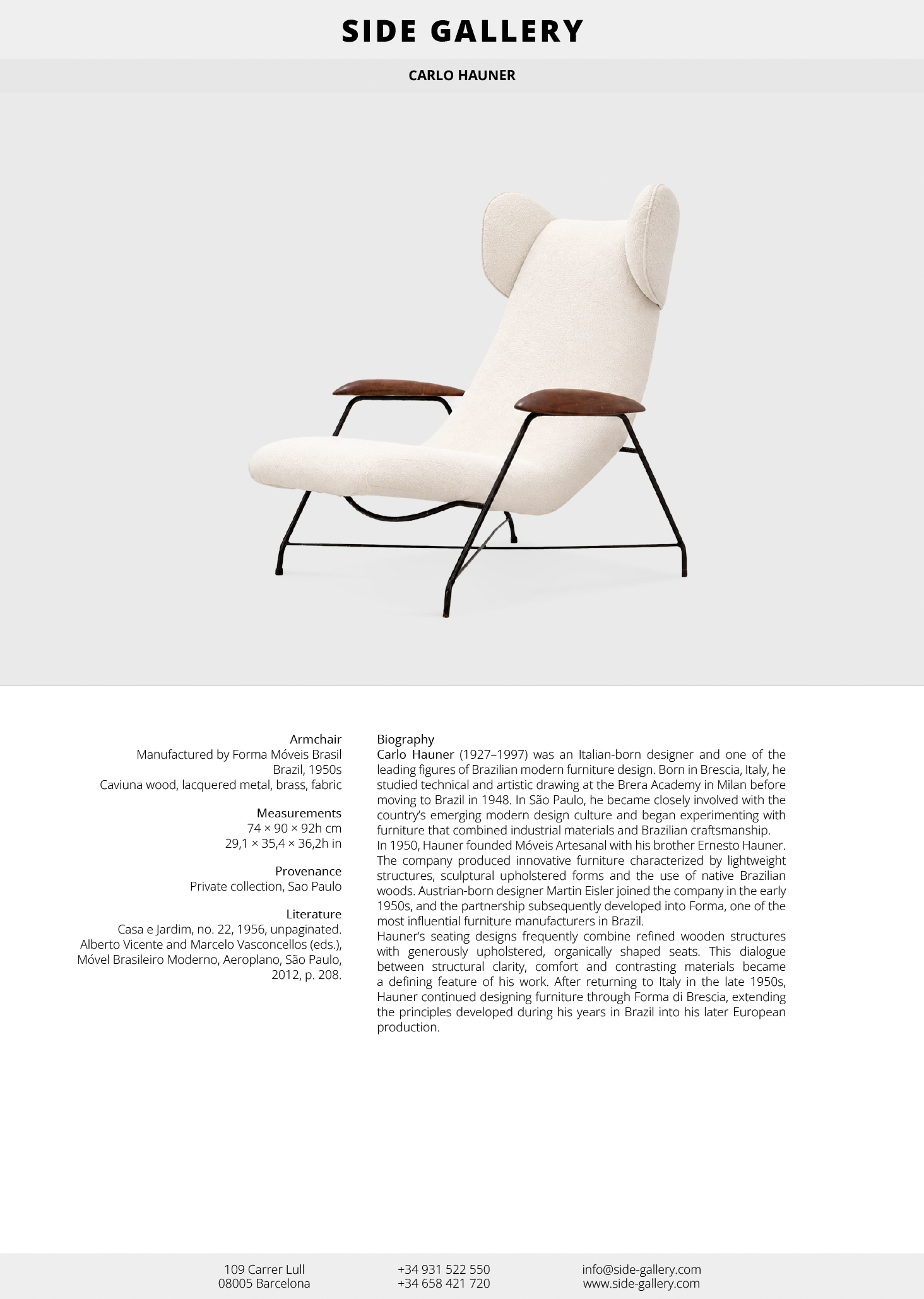
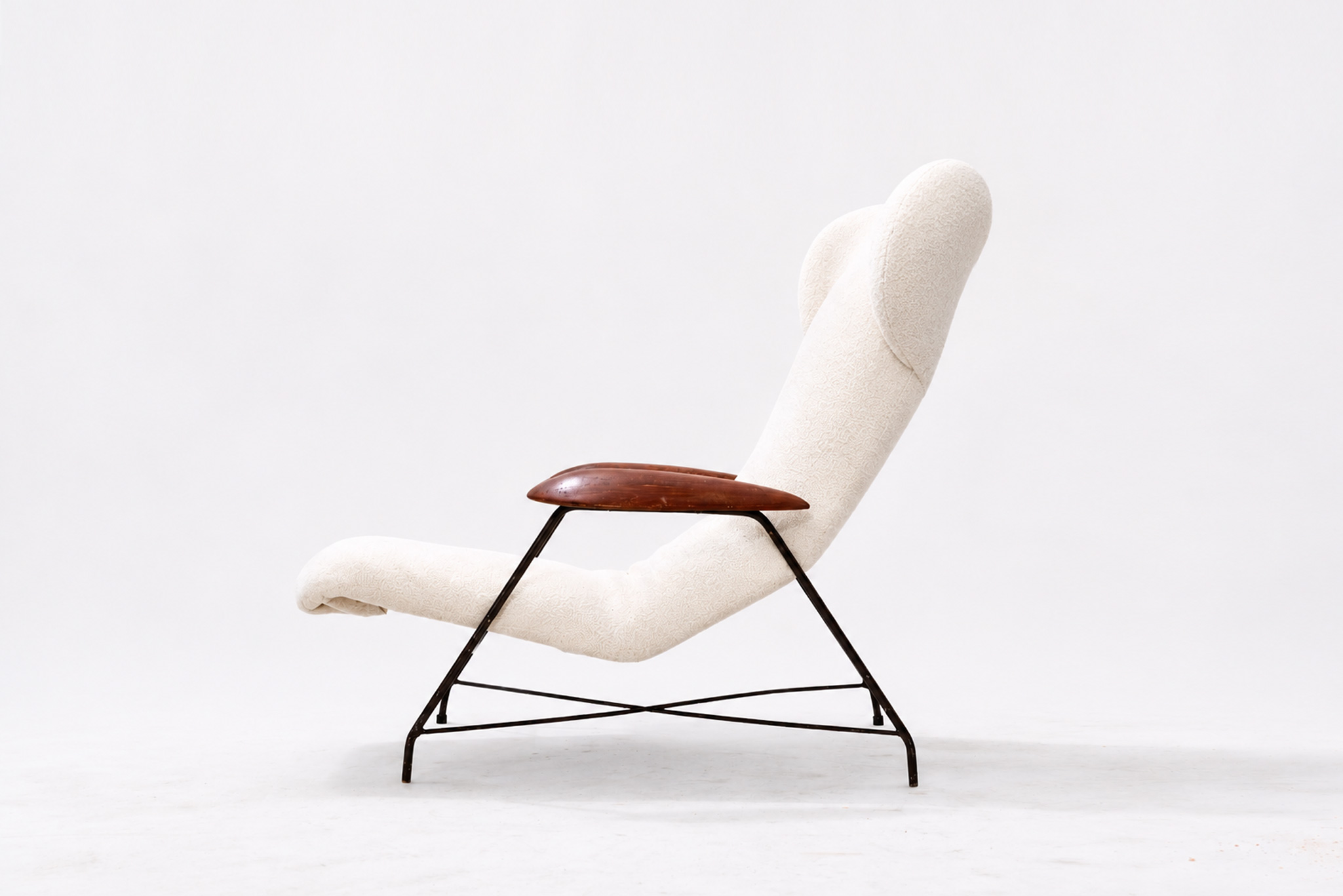
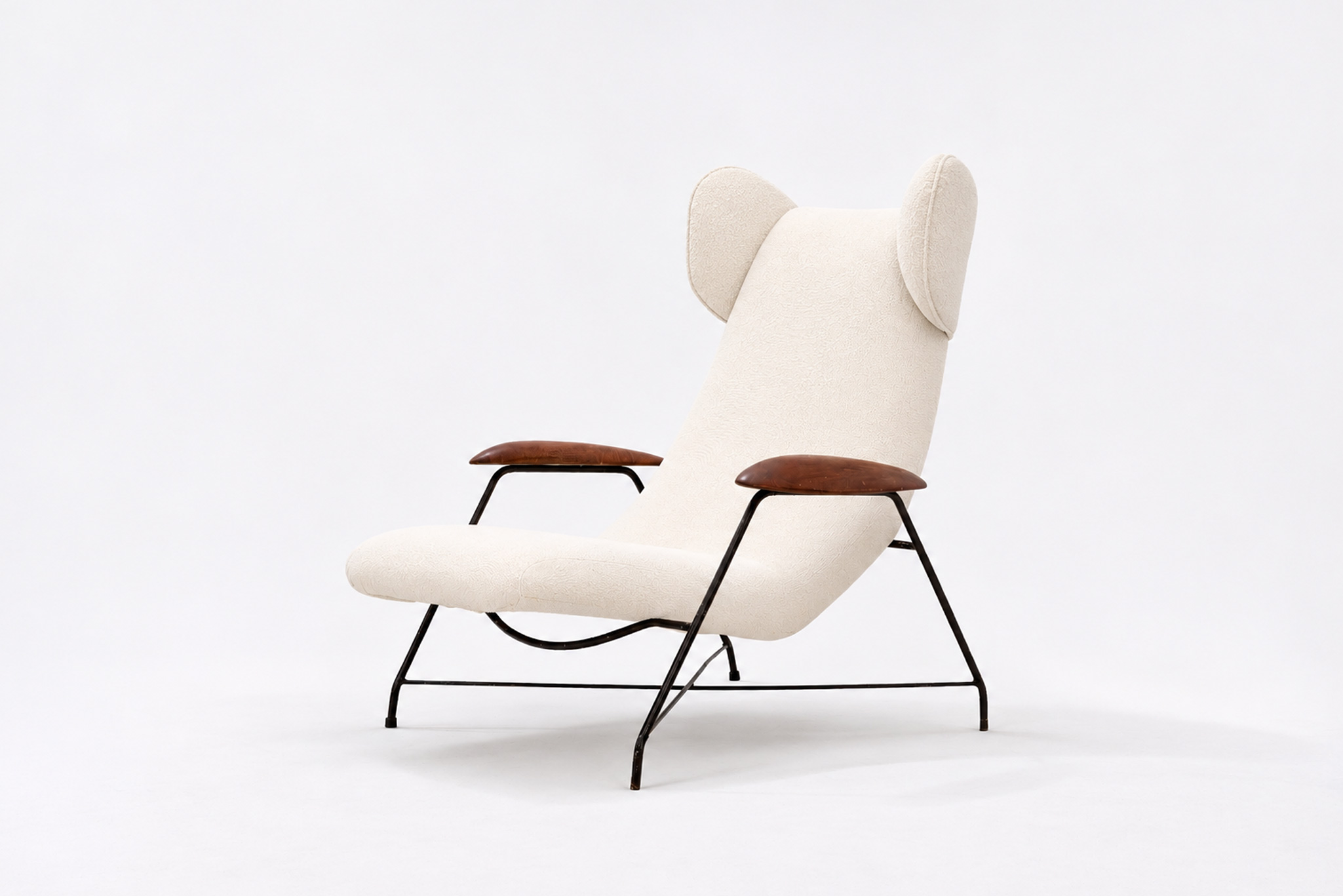
Being highly ambitious and with an eye on the international market and the upcoming office market, Móvies Artesanal later changed into Forma. Along with Oca, Forma became one of the biggest names in Brazilian furniture production. Eisler attracted exclusive license to sell Knoll furniture, bringing big names in international design such as Mies Van Der Rohe, Charles Eames, and Harry Bertoia to the Brazilian furniture market. Hauner and Eisler's designs are characterized by Brazilian woods, thin tubular frames, and range from furniture to ceramics and textiles. Some of their most famous designs are the "rib" lounge chair, the "concha/haia" chair or "reversible" lounge chair, both shown in this exhibition. In 1958 Hauner decided to return to Italy to open Forma di Brescia, which catered to, e.g., the embassy of Brazil in Rome and Vatican City. Eventually, Hauner sold his part of the company, leaving Eisler solely at the helm to paint and make wine on Salina, a little isle just above Sicily. After a fulfilled life, the artist, designer, and serial entrepreneur died in 1997. Forma prospered during the 60's and 70's, until Martin Eisler died in 1977. His original company in Argentina still exists and, at the moment, is the sole heir to Hauner and Eisler's Heritage. Although Hauner and Eisler designed and produced many pieces, the depth and quality of their work outlined is only the beginning of their lasting impact on the design world.
ENQUIRE ABOUT THE DESIGNER