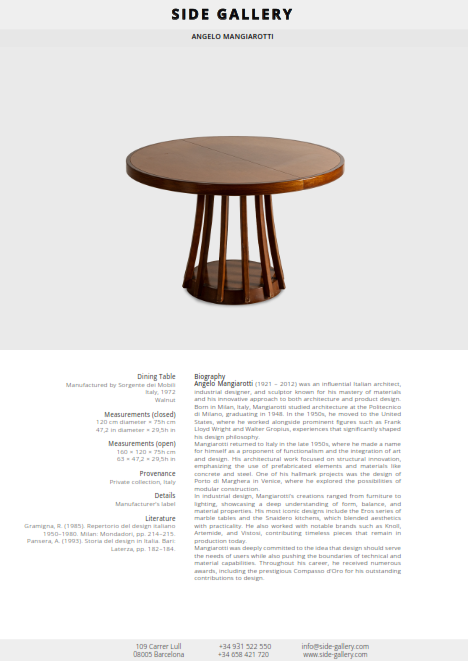
Dining Table
Manufactured by Sorgente dei Mobili
Italy, 1972
Walnut
Measurements (closed)
120 cm diameter × 75h cm
47,2 in diameter × 29,5h in
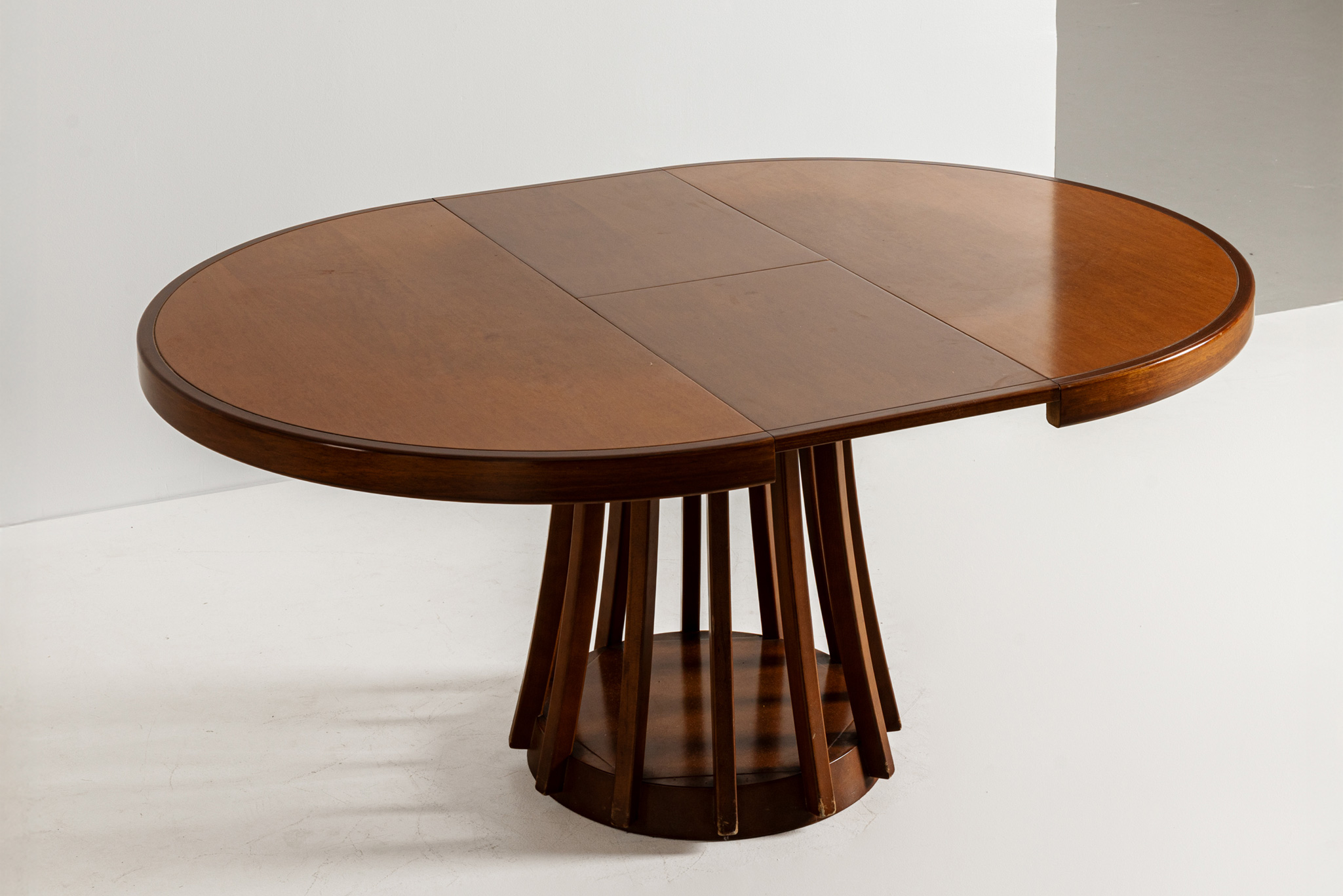
Measurements (open)
160 × 120 × 75h cm
63 × 47,2 × 29,5h in
Provenance
Private collection, Italy
Details
Manufacturer’s label
Literature
Gramigna, R. (1985). Repertorio del design italiano 1950–1980. Milan: Mondadori, pp. 214–215.
Pansera, A. (1993). Storia del design in Italia. Bari: Laterza, pp. 182–184.
About
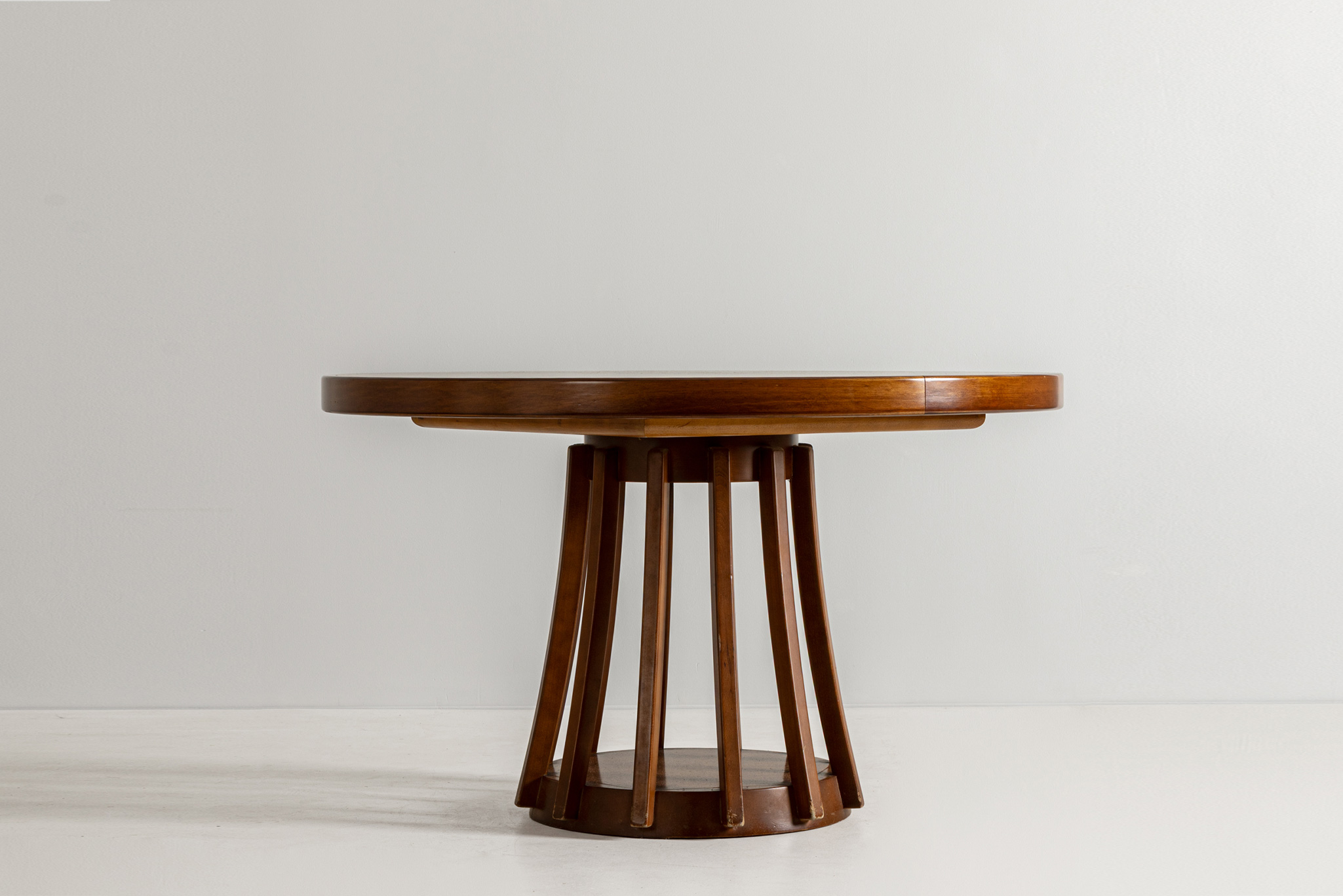
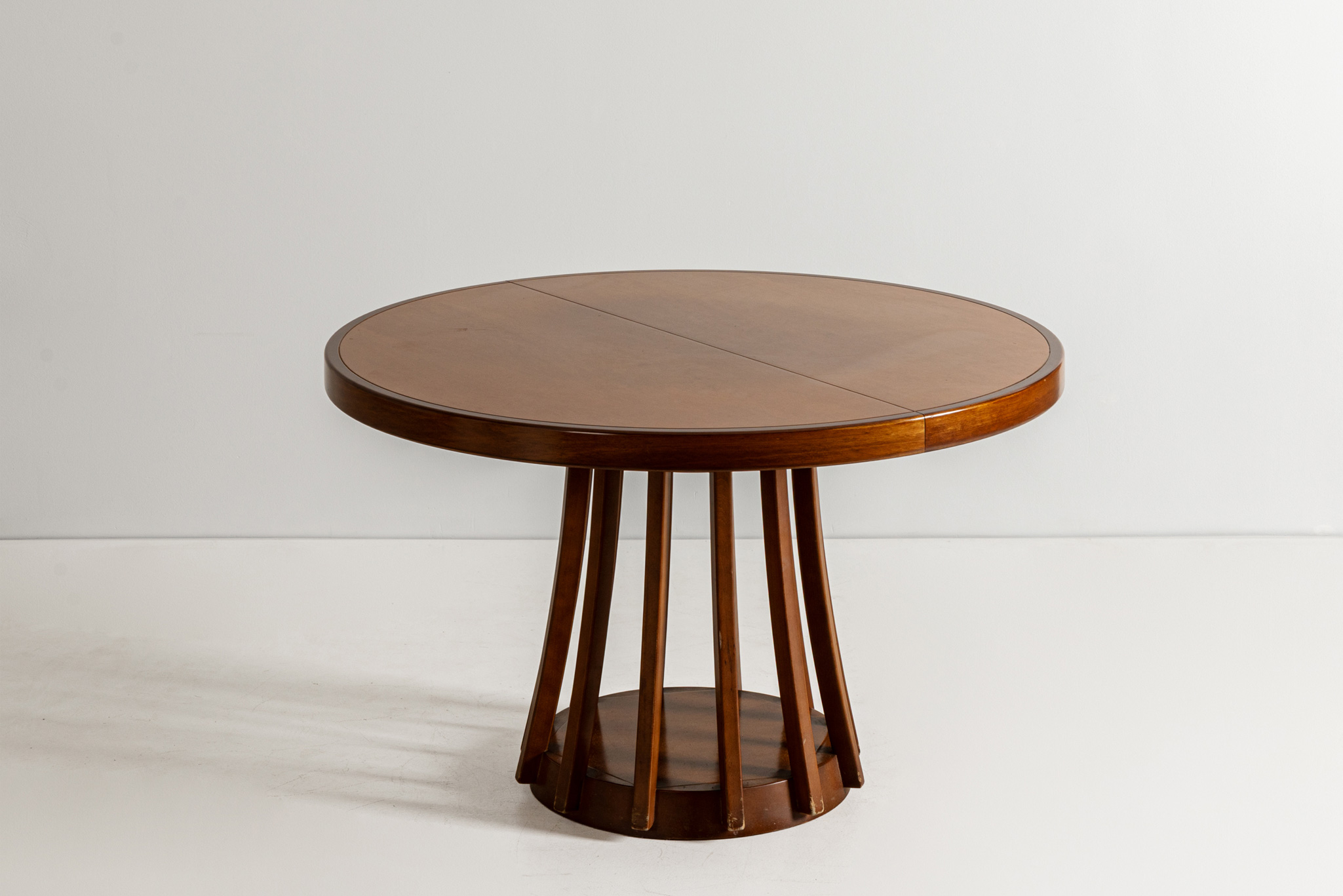
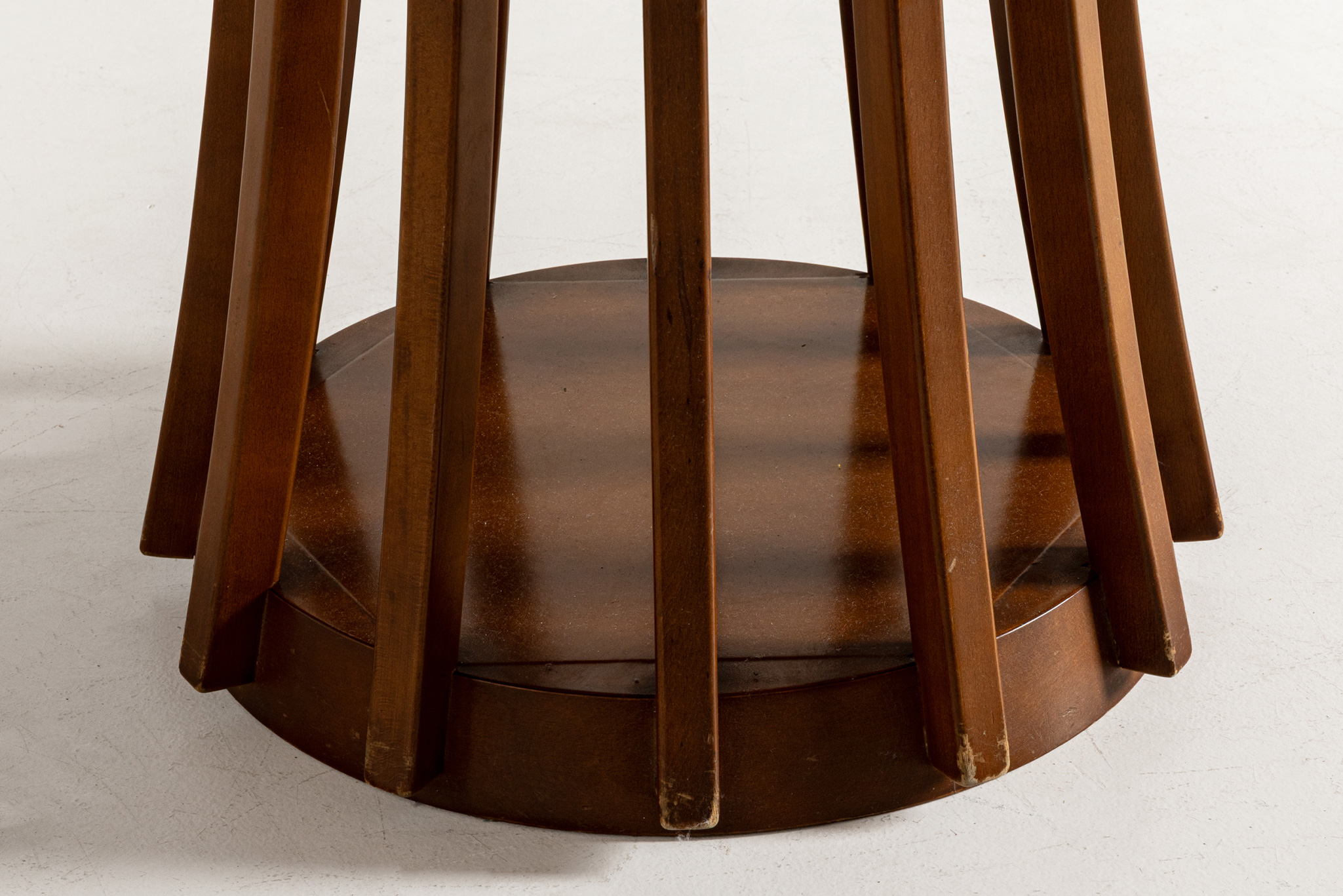
This extendable table, designed by Angelo Mangiarotti and produced by Sorgente dei Mobili in 1972, reflects the designer’s rigorous structural logic and refined material sensibility. Executed in walnut, the table embodies Mangiarotti’s characteristic approach: clarity of construction, modular intelligence, and a deep respect for the expressive qualities of natural materials.
In its closed configuration, the table maintains compact proportions suited to domestic settings. When extended, the structure expands seamlessly to accommodate a larger surface, demonstrating a precise mechanical resolution integrated within the architectural integrity of the design. The transformation remains discreet, preserving the table’s formal balance and proportional harmony.
Mangiarotti’s work consistently sought to eliminate superfluous elements, allowing structure itself to generate form. Here, the warmth and grain of the walnut enhance the rational geometry, creating a piece that is at once functional, sculptural, and timeless—an exemplary expression of Italian modern design in the early 1970s.
Biography
Angelo Mangiarotti (1921 – 2012) was an influential Italian architect, industrial designer, and sculptor known for his mastery of materials and his innovative approach to both architecture and product design. Born in Milan, Italy, Mangiarotti studied architecture at the Politecnico di Milano, graduating in 1948. In the 1950s, he moved to the United States, where he worked alongside prominent figures such as Frank Lloyd Wright and Walter Gropius, experiences that significantly shaped his design philosophy.
Mangiarotti returned to Italy in the late 1950s, where he made a name for himself as a proponent of functionalism and the integration of art and design. His architectural work focused on structural innovation, emphasizing the use of prefabricated elements and materials like concrete and steel. One of his hallmark projects was the design of Porto di Marghera in Venice, where he explored the possibilities of modular construction.
In industrial design, Mangiarotti's creations ranged from furniture to lighting, showcasing a deep understanding of form, balance, and material properties. His most iconic designs include the Eros series of marble tables and the Snaidero kitchens, which blended aesthetics with practicality. He also worked with notable brands such as Knoll, Artemide, and Vistosi, contributing timeless pieces that remain in production today.
Mangiarotti was deeply committed to the idea that design should serve the needs of users while also pushing the boundaries of technical and material capabilities. Throughout his career, he received numerous awards, including the prestigious Compasso d'Oro for his outstanding contributions to design.