Anonymous
Manufactured by Akita Mokko
Japan, 1953
Wood and upholstered seat
Measurements
45,7 × 33 × 71,1h cm
18 × 13 × 28h in
Seat Height: 33 cm / 13 in
About
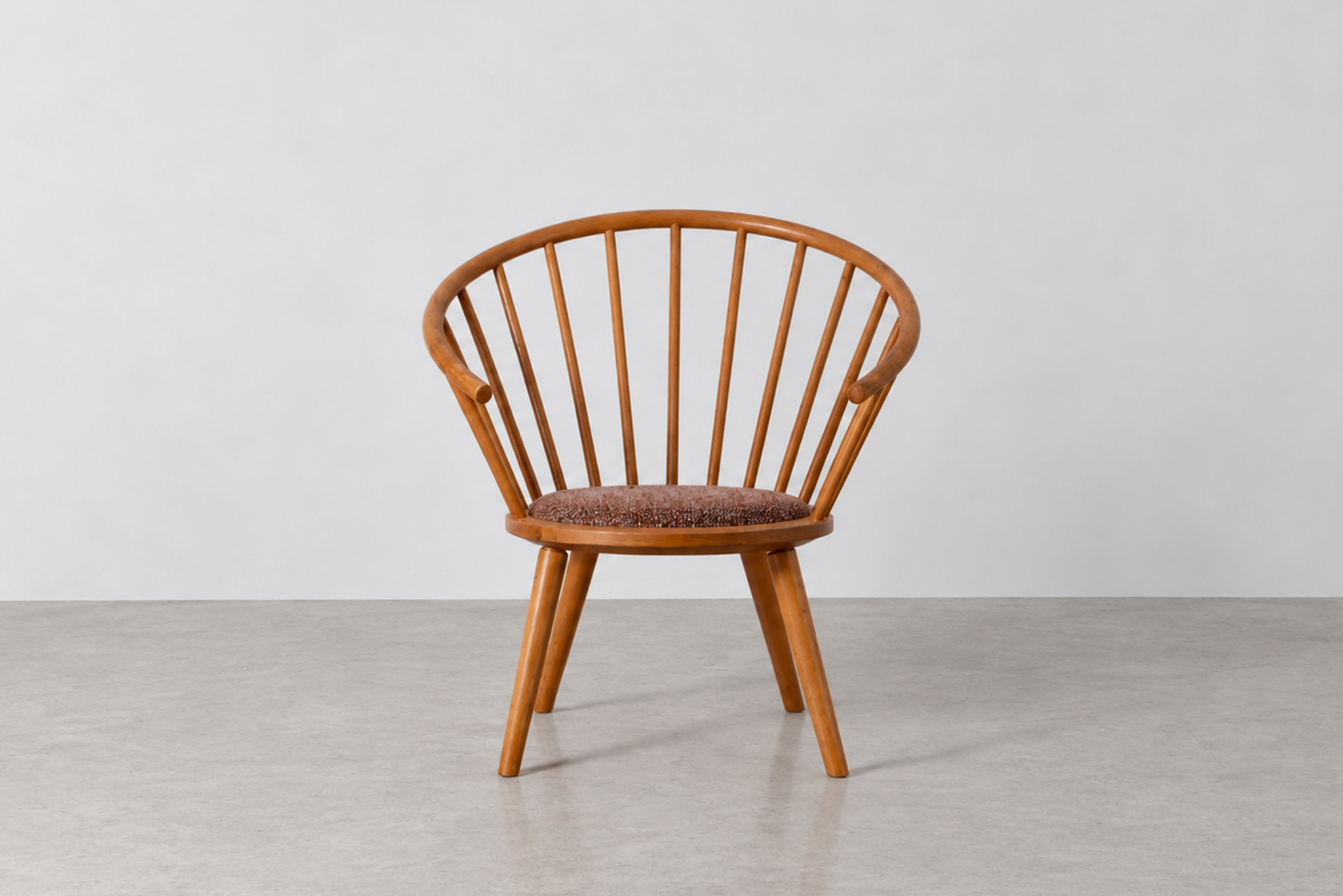
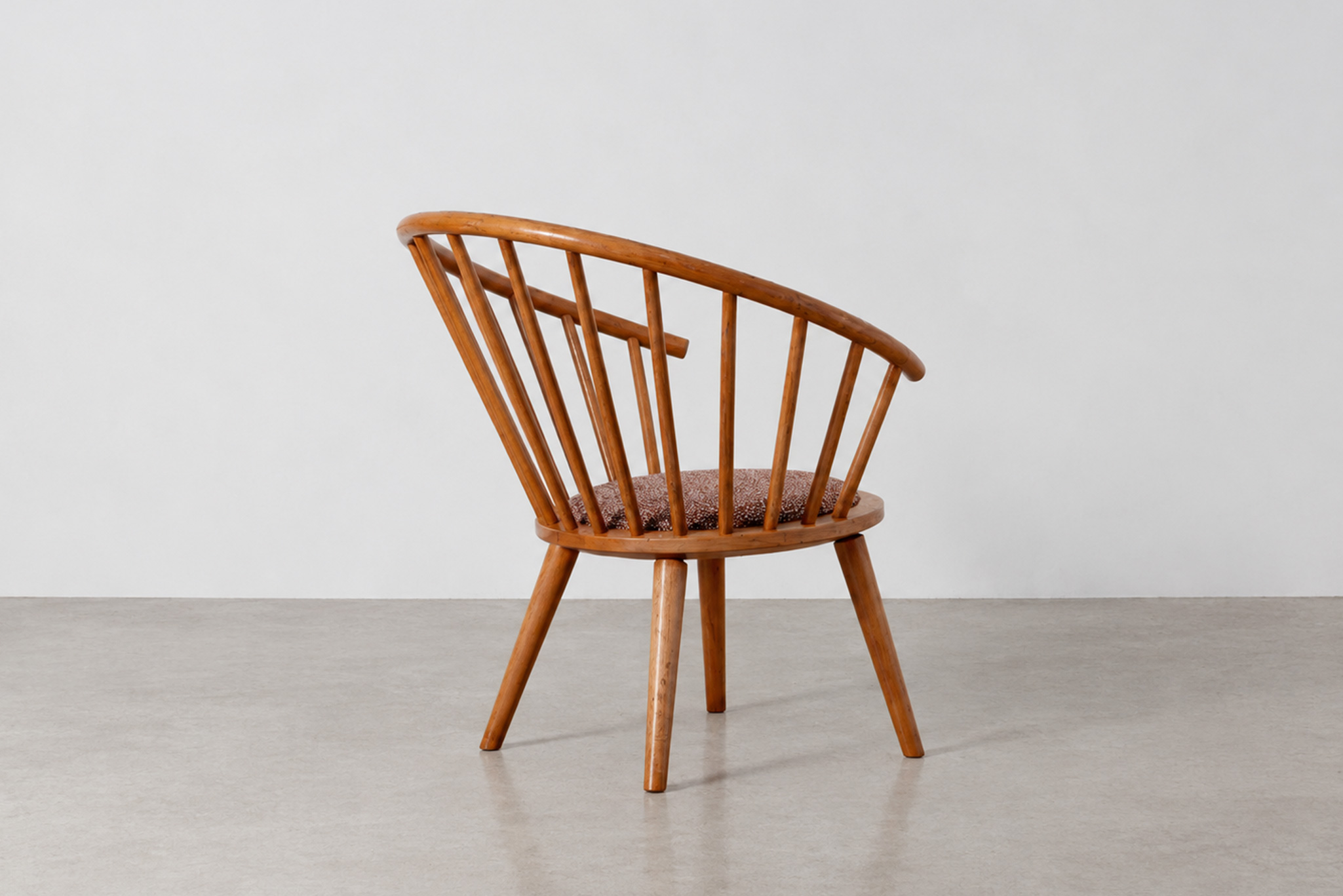
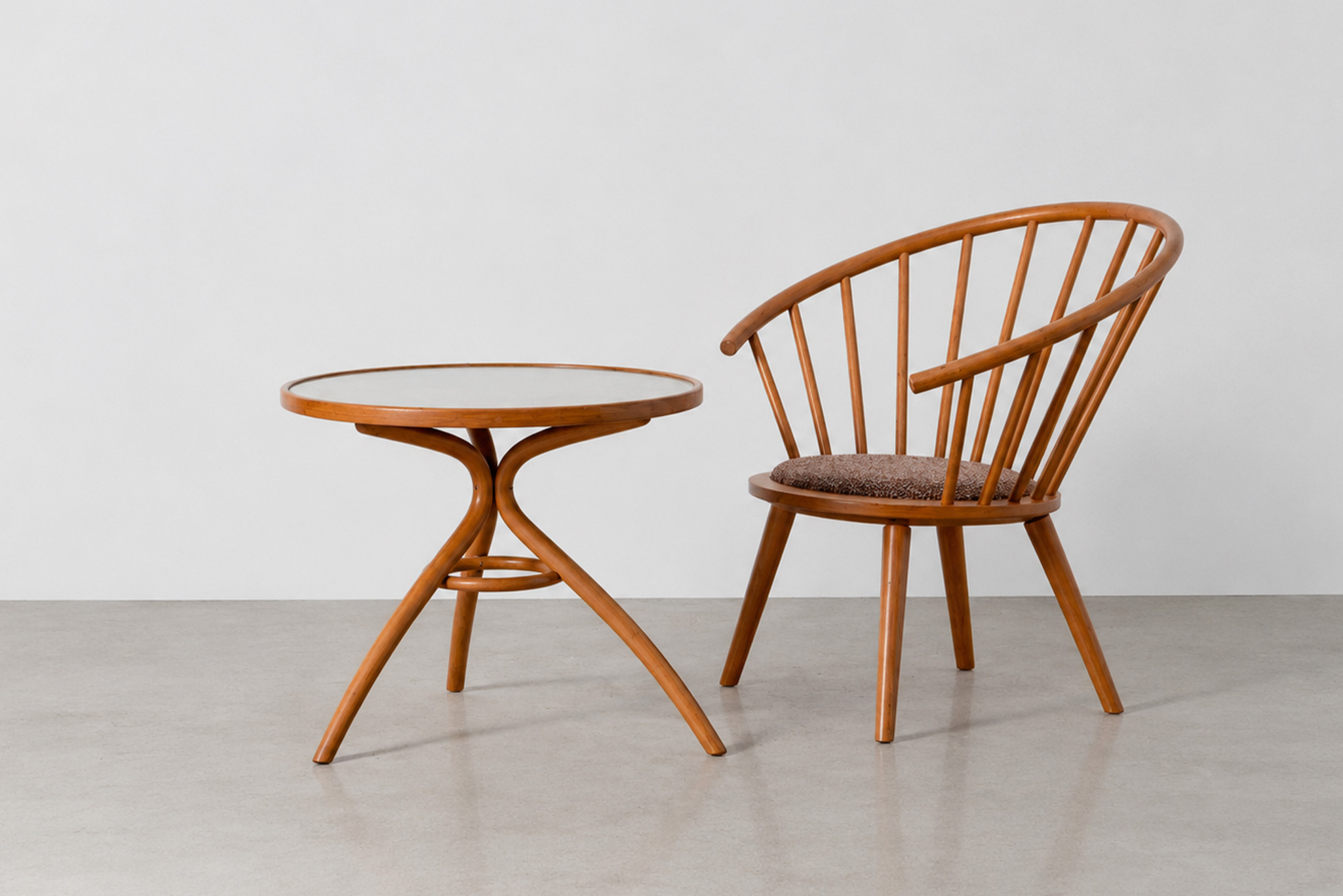
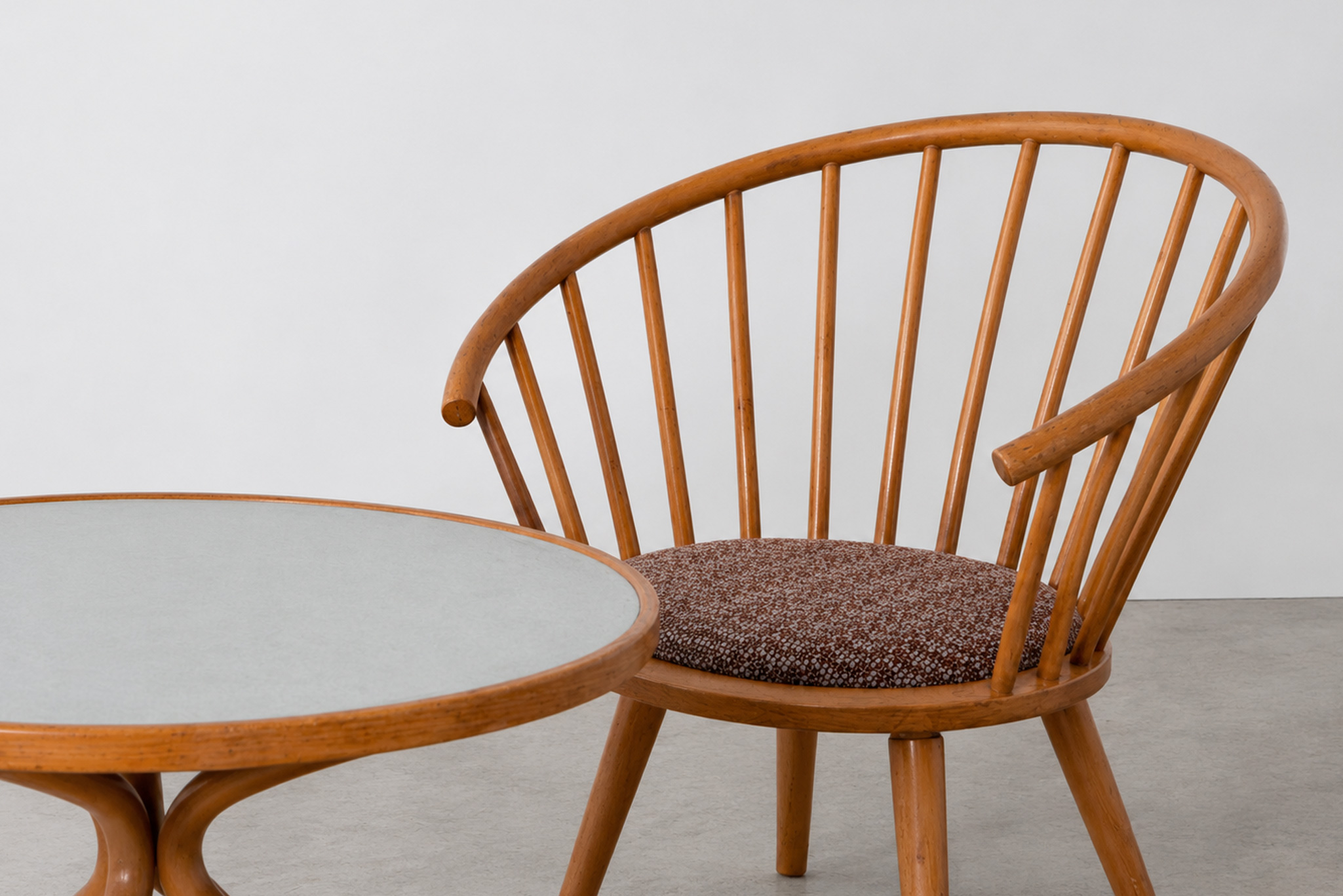
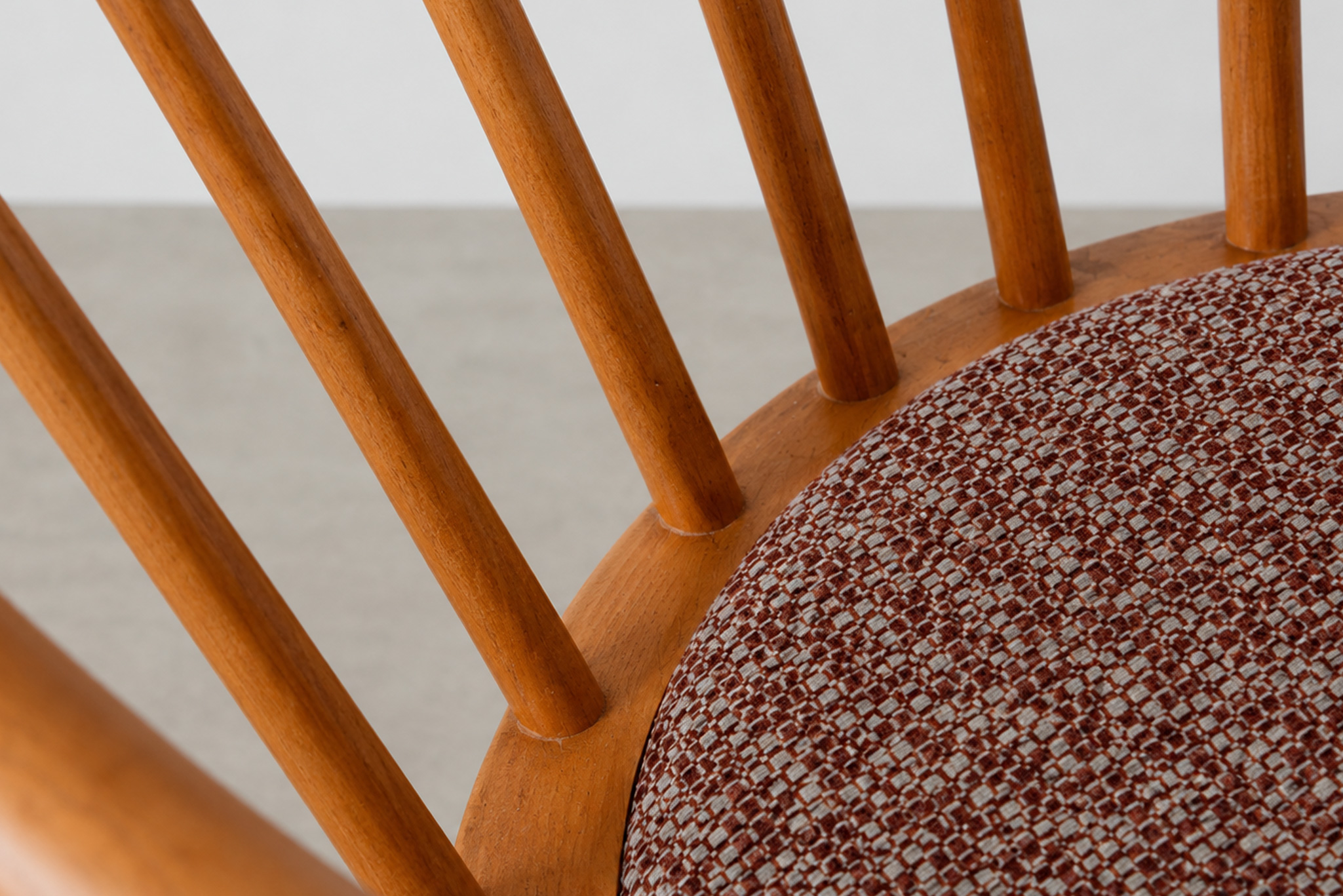
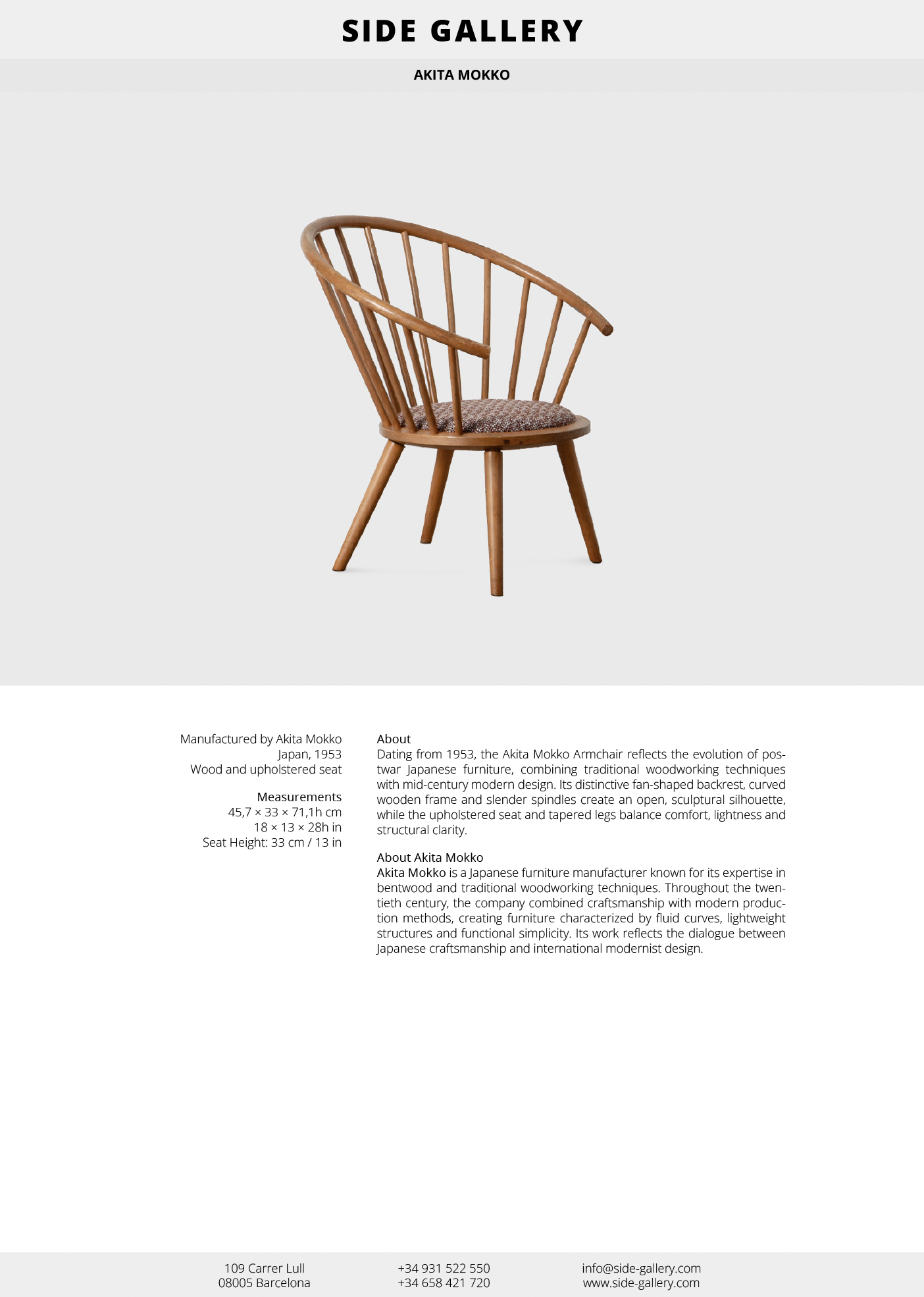
The Akita Mokko Armchair, dating from 1953, reflects the development of modern Japanese furniture during the postwar period, when traditional woodworking techniques were increasingly adapted to contemporary domestic interiors. Its distinctive fan-shaped backrest, composed of slender vertical spindles framed by a continuous curved wooden rail, creates an open and expressive silhouette that combines structural simplicity with sculptural elegance.
The chair's gently enveloping backrest extends into integrated armrests, establishing a fluid relationship between support, comfort, and form. Its upholstered seat introduces a contrasting texture against the warm tones of the wooden structure, while the outward-angled, tapered legs lend the composition a sense of lightness and stability. The arrangement of the spindles emphasizes rhythm and transparency, allowing the chair to maintain a strong visual identity without appearing heavy.
Characteristic of the broader evolution of Japanese modern furniture, the armchair illustrates a dialogue between traditional craftsmanship and the functional principles of mid-century design. Its restrained construction, organic curves, and carefully balanced proportions reflect an approach in which material, technique, and everyday use are brought together through a coherent design language.
About Manufacturer
Akita Mokko is a Japanese furniture manufacturer associated with the development of bentwood furniture and modern woodworking techniques. Established in Akita Prefecture, the company became known for producing chairs and tables characterized by curved wooden structures, lightweight construction, and an emphasis on craftsmanship.
Throughout the twentieth century, Akita Mokko contributed to the evolution of Japanese furniture by adapting established wood-bending techniques to changing domestic environments. Its production combined the expressive possibilities of curved timber with functional considerations, resulting in furniture distinguished by fluid silhouettes, structural clarity, and an economy of materials.
The company's work reflects the broader dialogue between Japanese craftsmanship and international modernist design during the mid-twentieth century. Its furniture continues to be appreciated for the balance between traditional manufacturing knowledge, organic form, and the enduring practicality of everyday objects.