Rattan Lounge Chair model C-309
Manufactured by Yamakawa Rattan
Japan, 1960s
Rattan, Wood
Measurements
75 × 85 × 100h cm
29,5 × 33,5 × 39,4h in
Seat Height: 38h cm / 15h in
Provenance
Private collection, Japan
Literature
Arai, Ryuji. “A Brief Outline of Yamakawa Rattan's History, Design and Technique.” Proceedings of the 66th Annual Conference of the Japanese Society for the Science of Design, 2019.
Yamakawa Rattan. Yamakawa Rattan: Our History. Manufacturer's catalogue, n.d.
About
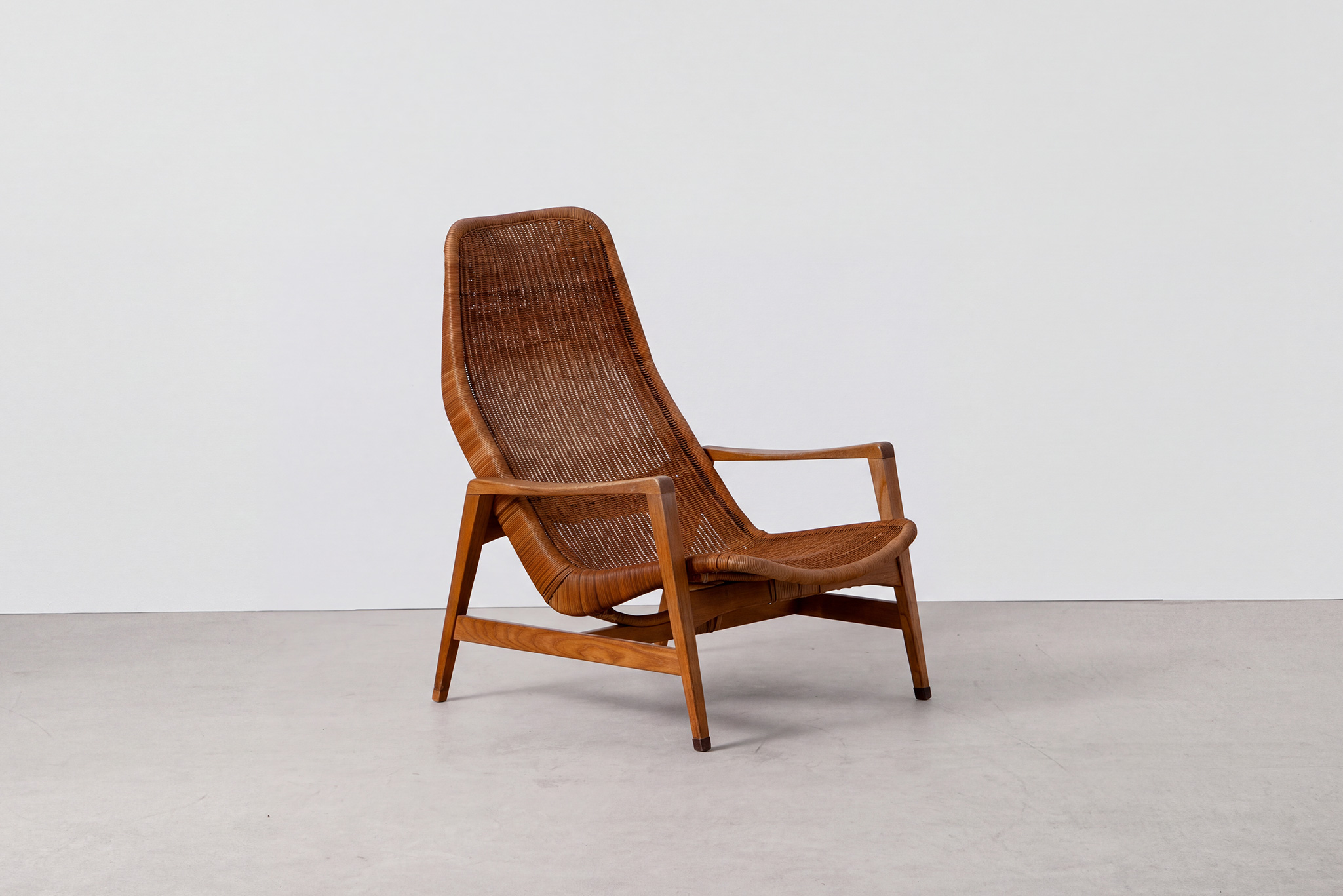
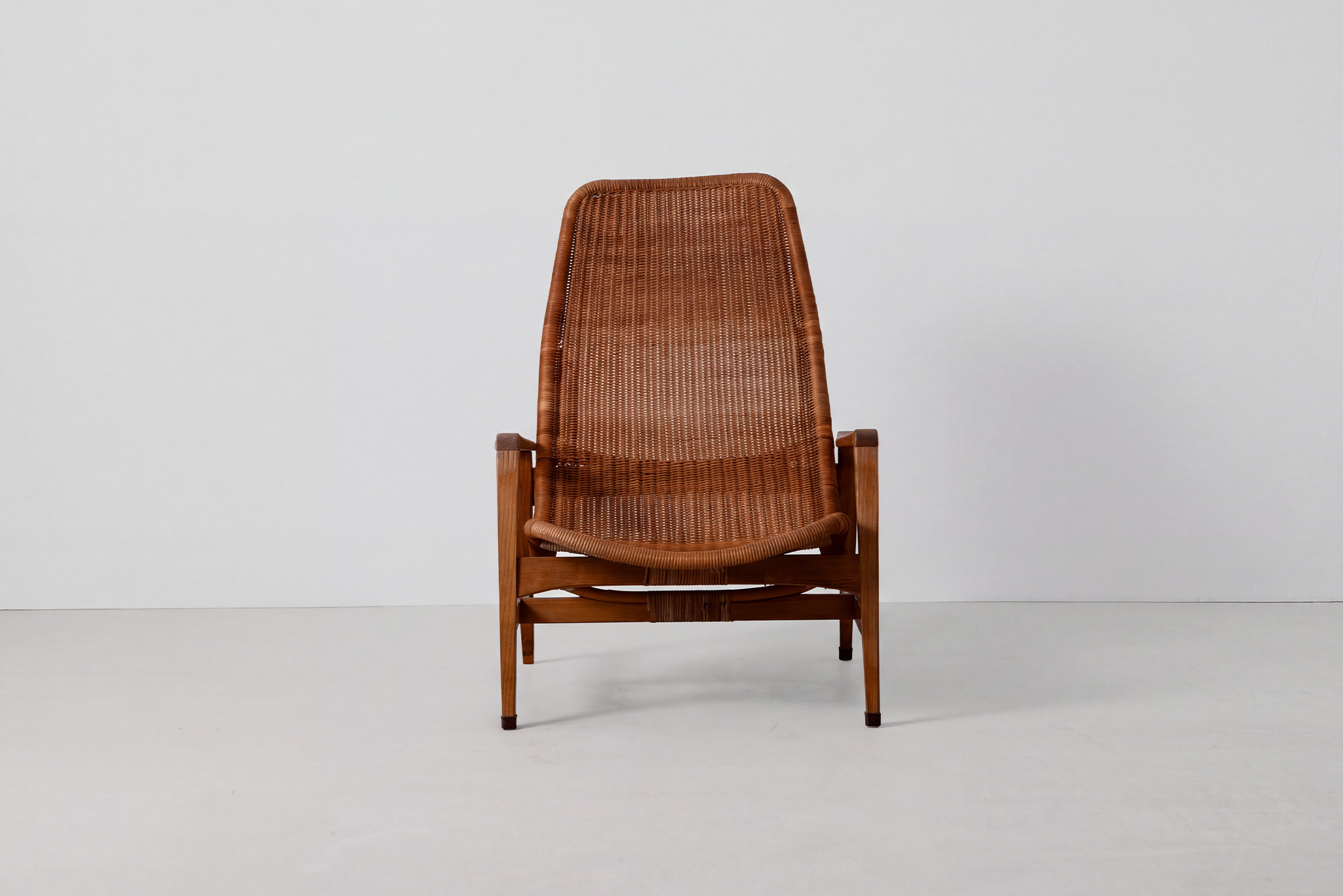
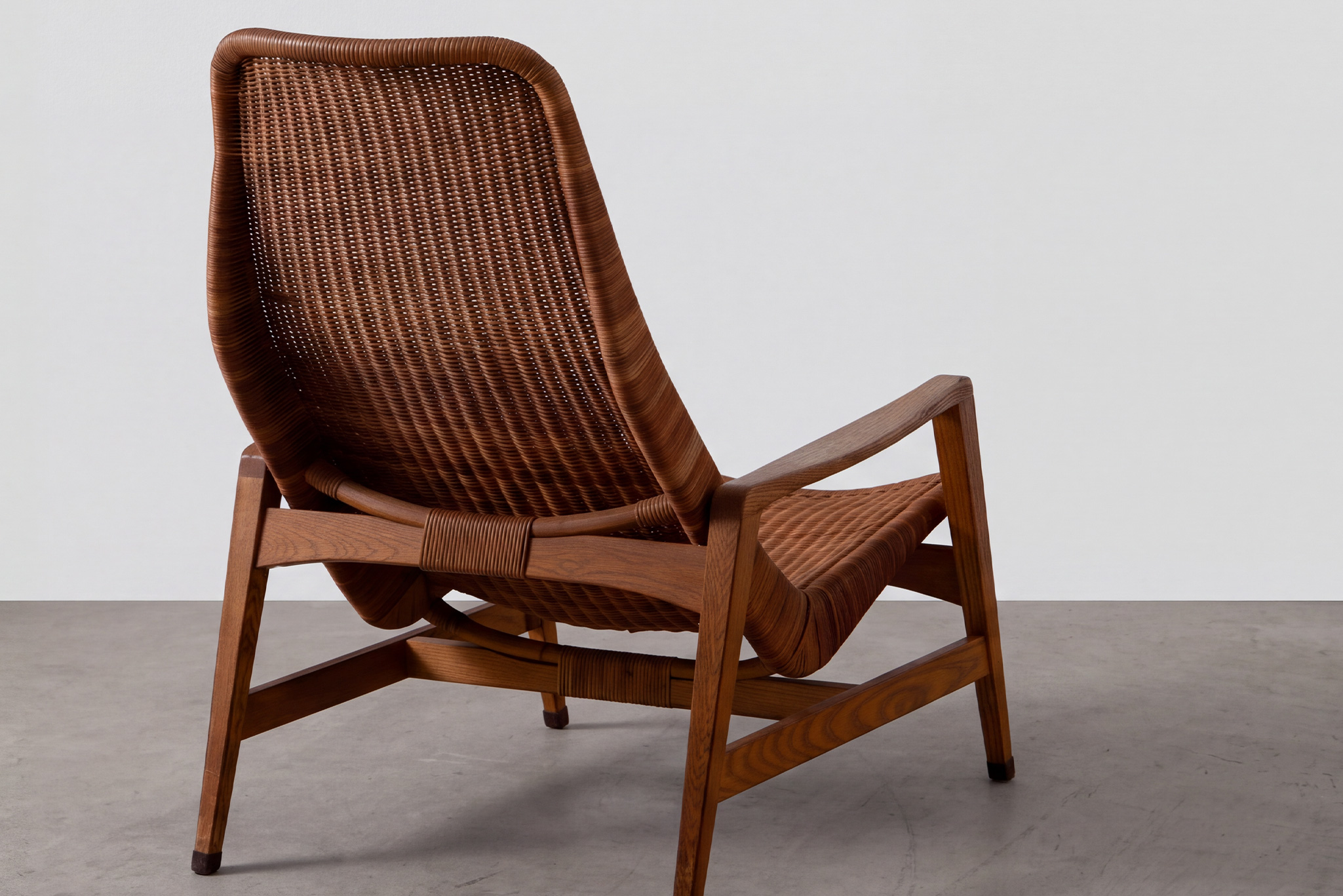
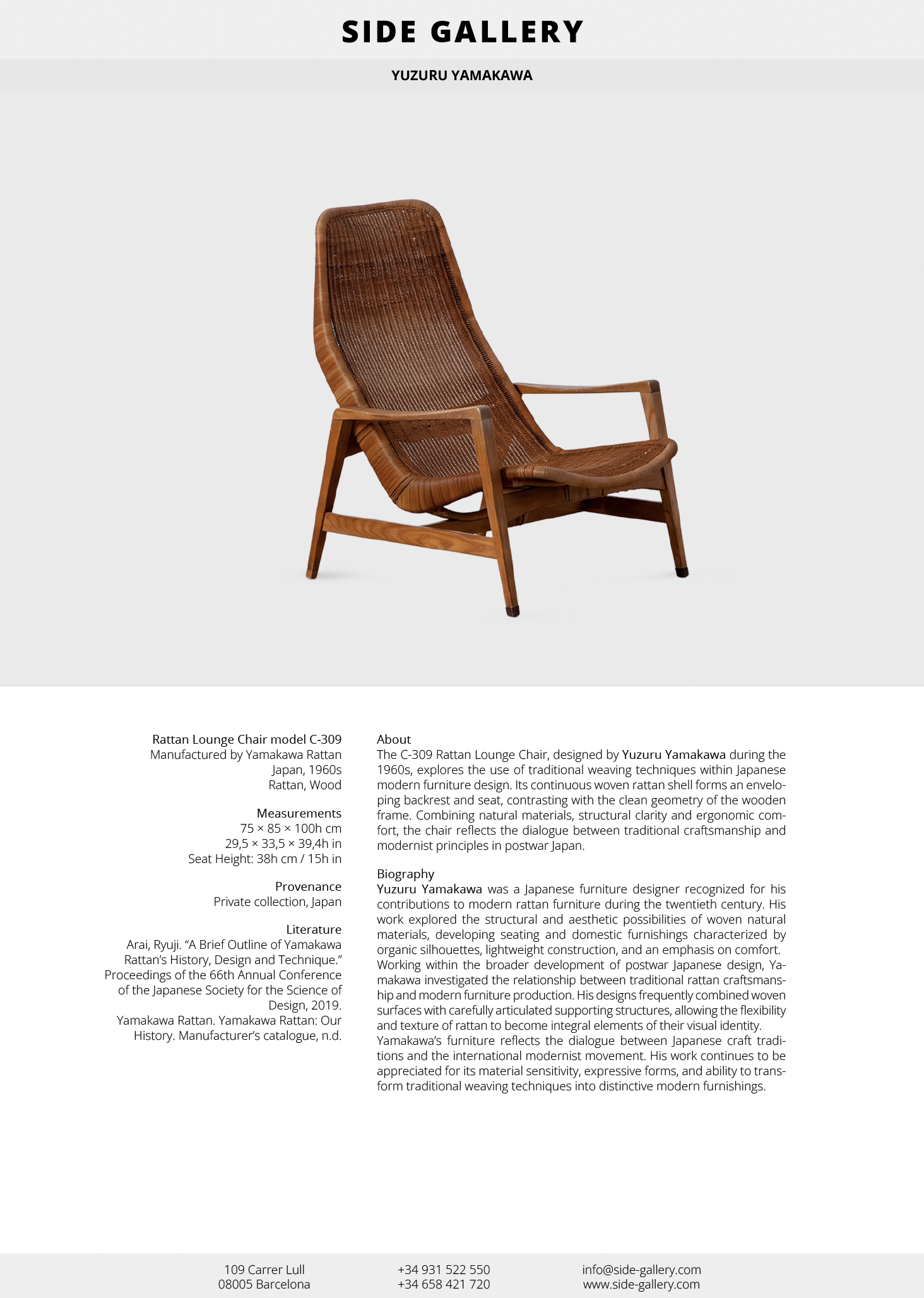
The C-309 Rattan Lounge Chair, designed by Yuzuru Yamakawa during the 1960s, represents an exploration of traditional weaving techniques within the development of Japanese modern furniture. Combining a sculptural rattan shell with a carefully articulated wooden structure, the chair reflects an approach to design in which natural materials, ergonomic considerations, and architectural clarity coexist. Its elongated proportions and gently reclining silhouette emphasize the relationship between craftsmanship, comfort, and the expressive potential of organic forms.
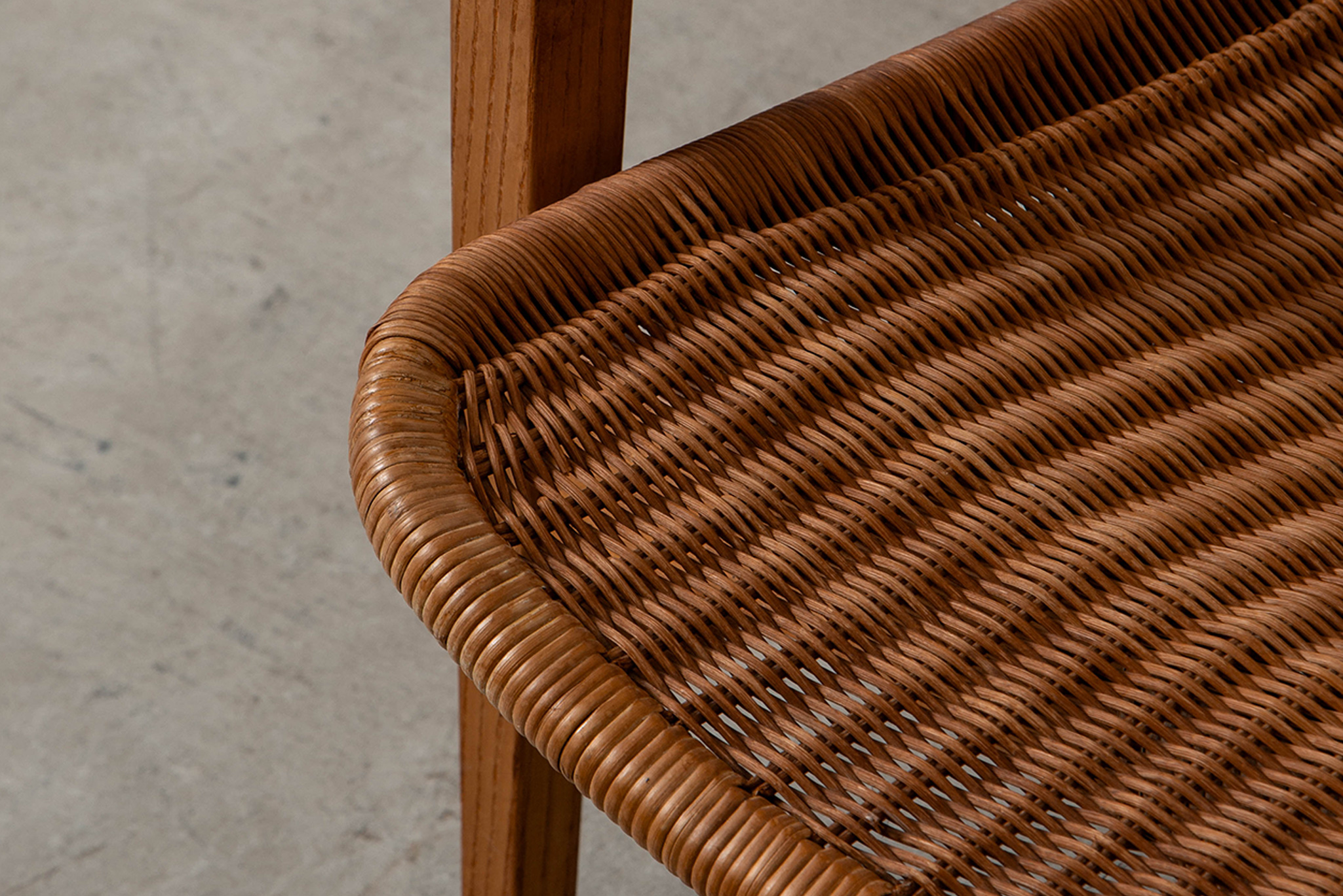
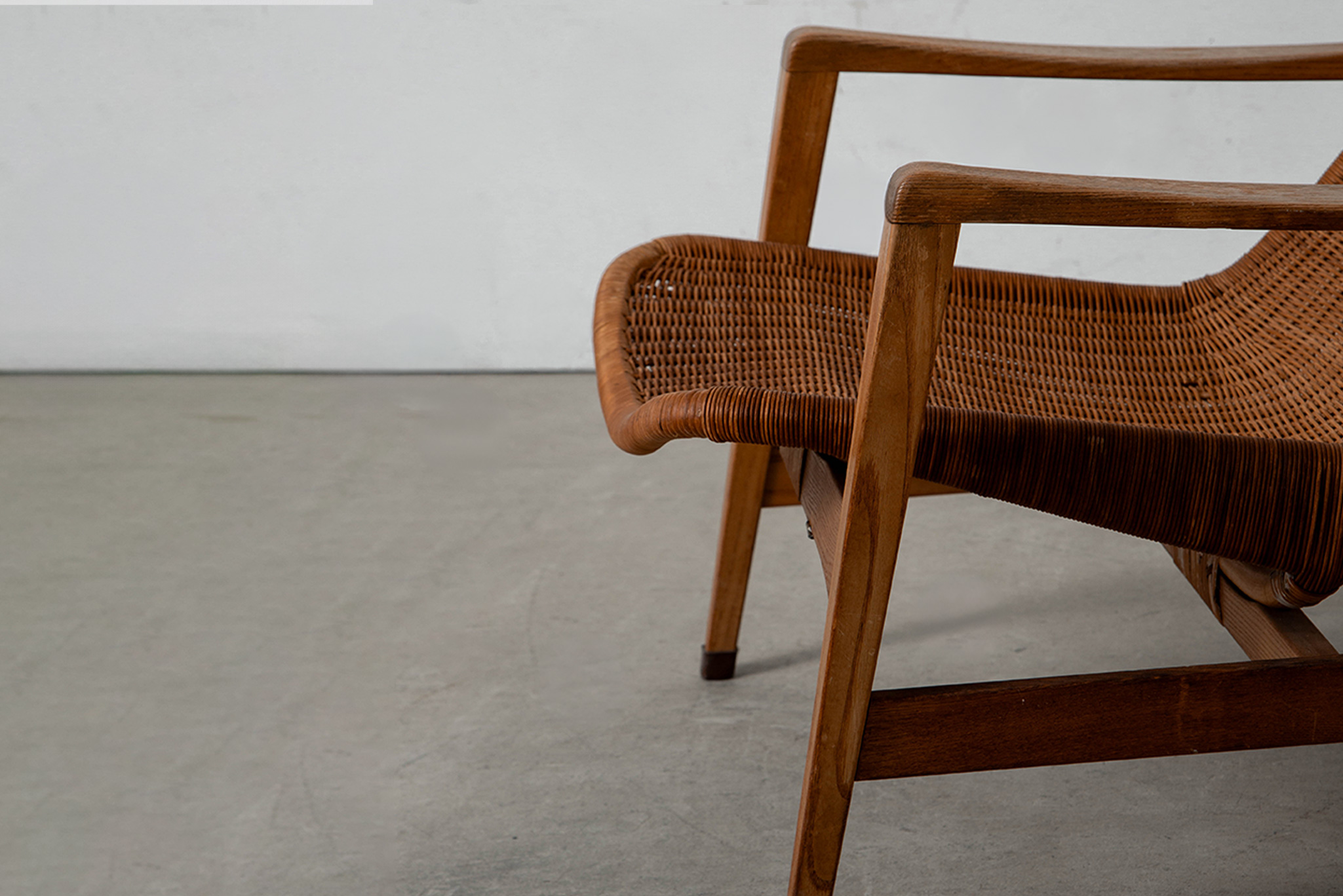
The chair is distinguished by its continuous woven rattan surface, which extends from the high backrest into a deeply curved seat, creating a fluid and enveloping profile. The closely woven strands form a flexible, breathable surface, while the thicker wrapped perimeter defines the chair's sculptural outline. This organic construction contrasts with the angular geometry of the wooden frame, whose slender armrests, tapered legs, and horizontal crossbars establish a precise structural rhythm. Rattan bindings secure the seating shell to the supporting structure, revealing the relationship between the chair's construction and its visual identity.
Produced within the context of postwar Japanese modernism, the C-309 Rattan Lounge Chair demonstrates the reinterpretation of traditional materials through contemporary furniture design. Its combination of lightweight woven surfaces and a geometrically defined wooden frame creates a balance between visual delicacy and structural stability. The design embodies a dialogue between artisanal knowledge and modernist principles, transforming the familiar language of rattan furniture into an elegant and distinctive expression of twentieth-century Japanese design.
Biography
Yuzuru Yamakawa was a Japanese furniture designer recognized for his contributions to modern rattan furniture during the twentieth century. His work explored the structural and aesthetic possibilities of woven natural materials, developing seating and domestic furnishings characterized by organic silhouettes, lightweight construction, and an emphasis on comfort.
Working within the broader development of postwar Japanese design, Yamakawa investigated the relationship between traditional rattan craftsmanship and modern furniture production. His designs frequently combined woven surfaces with carefully articulated supporting structures, allowing the flexibility and texture of rattan to become integral elements of their visual identity.
Yamakawa's furniture reflects the dialogue between Japanese craft traditions and the international modernist movement. His work continues to be appreciated for its material sensitivity, expressive forms, and ability to transform traditional weaving techniques into distinctive modern furnishings.