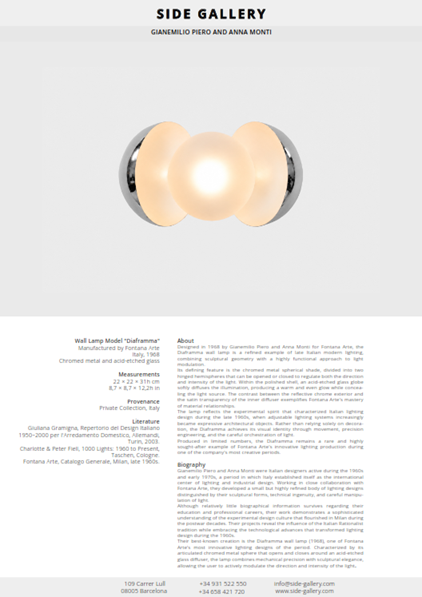
Wall Lamp Model "Diaframma"
Manufactured by Fontana Arte
Italy, 1968
Chromed metal and acid-etched glass
Measurements
22 × 22 × 31h cm
8,7 × 8,7 × 12,2h in
Provenance
Private Collection, Italy
Literature
Giuliana Gramigna, Repertorio del Design Italiano 1950–2000 per l'Arredamento Domestico, Allemandi, Turin, 2003.
Charlotte & Peter Fiell, 1000 Lights: 1960 to Present, Taschen, Cologne.
Fontana Arte, Catalogo Generale, Milan, late 1960s.
About
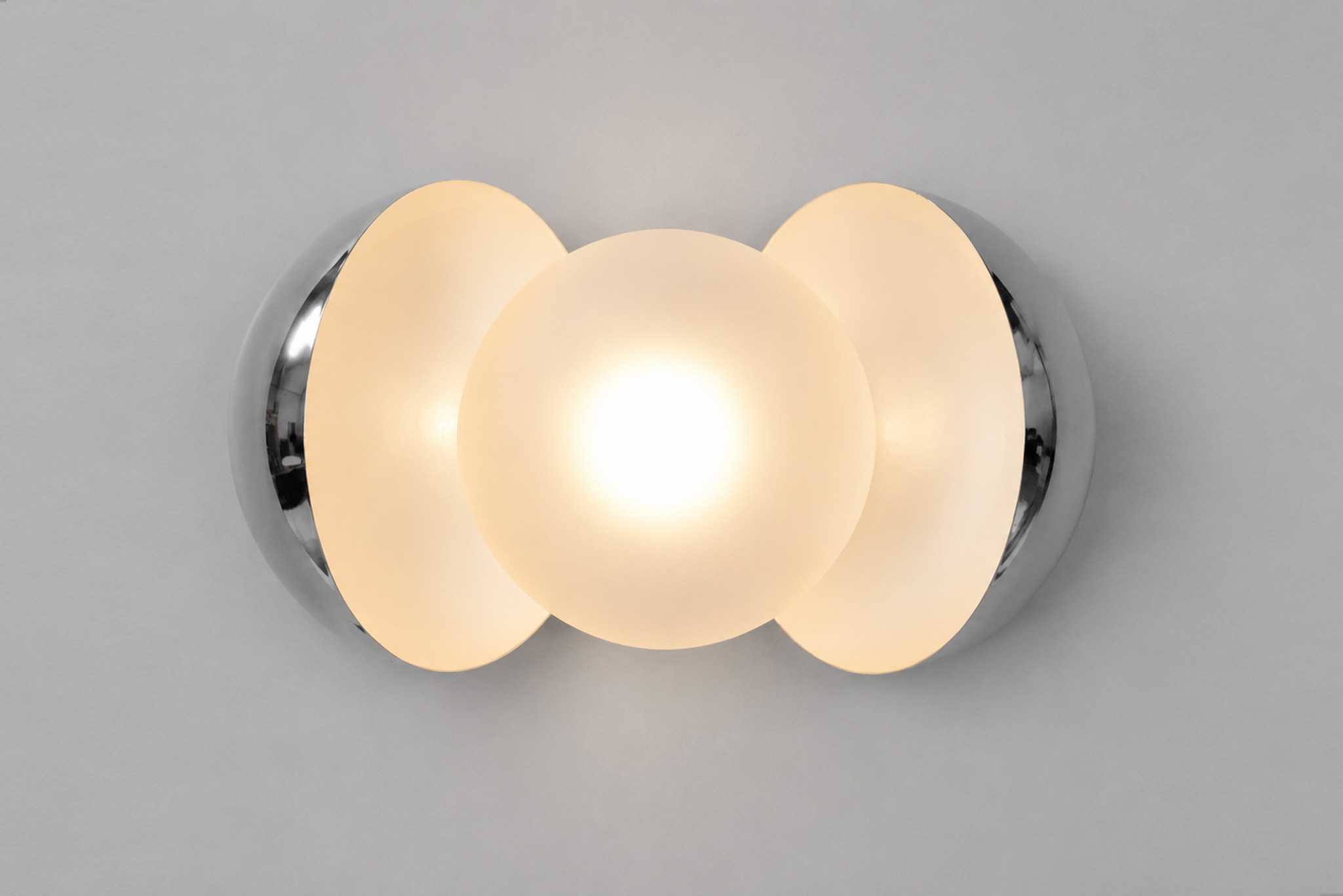
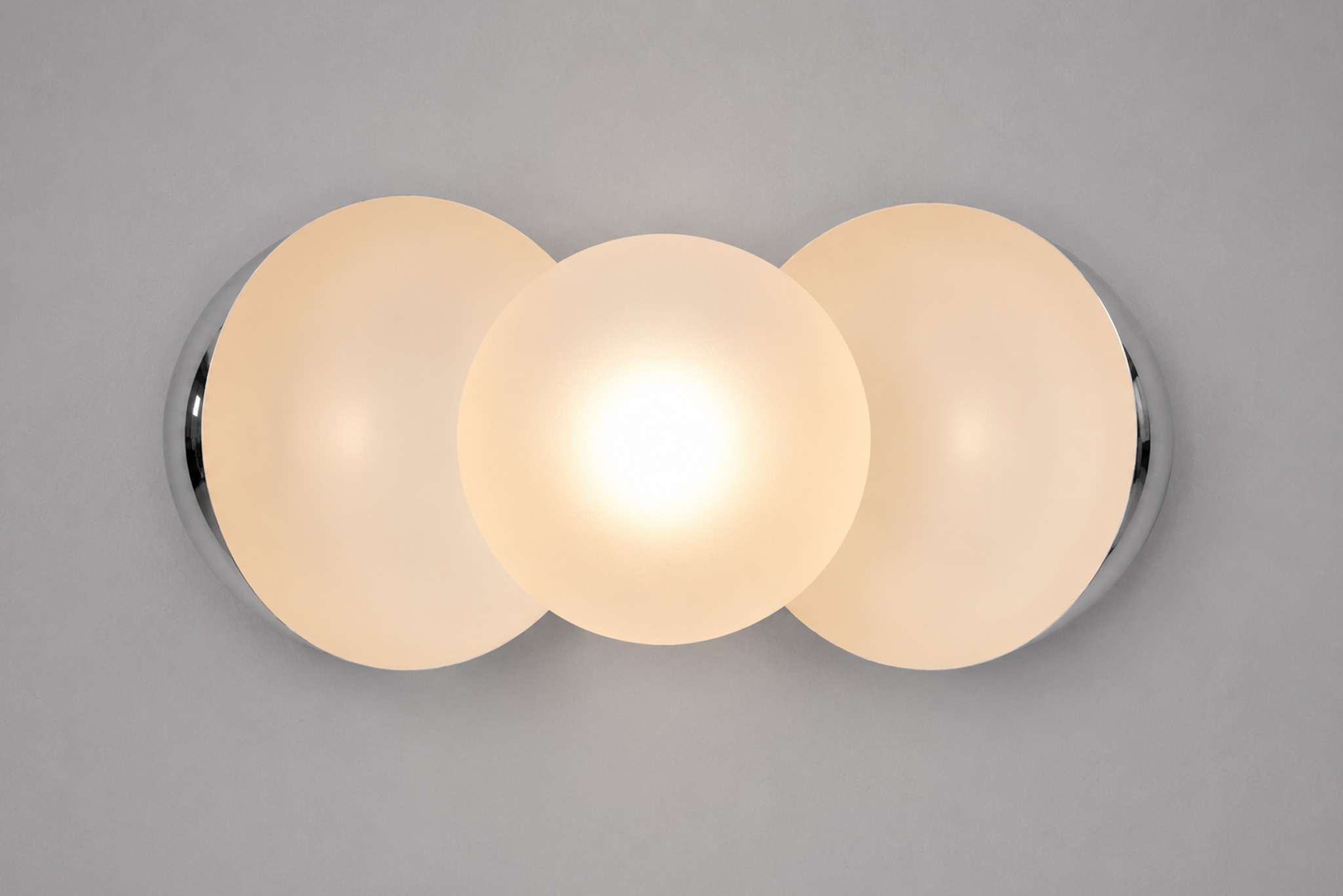
Designed in 1968 by Gianemilio Piero and Anna Monti for Fontana Arte, the Diaframma wall lamp is a refined example of late Italian modern lighting, combining sculptural geometry with a highly functional approach to light modulation.
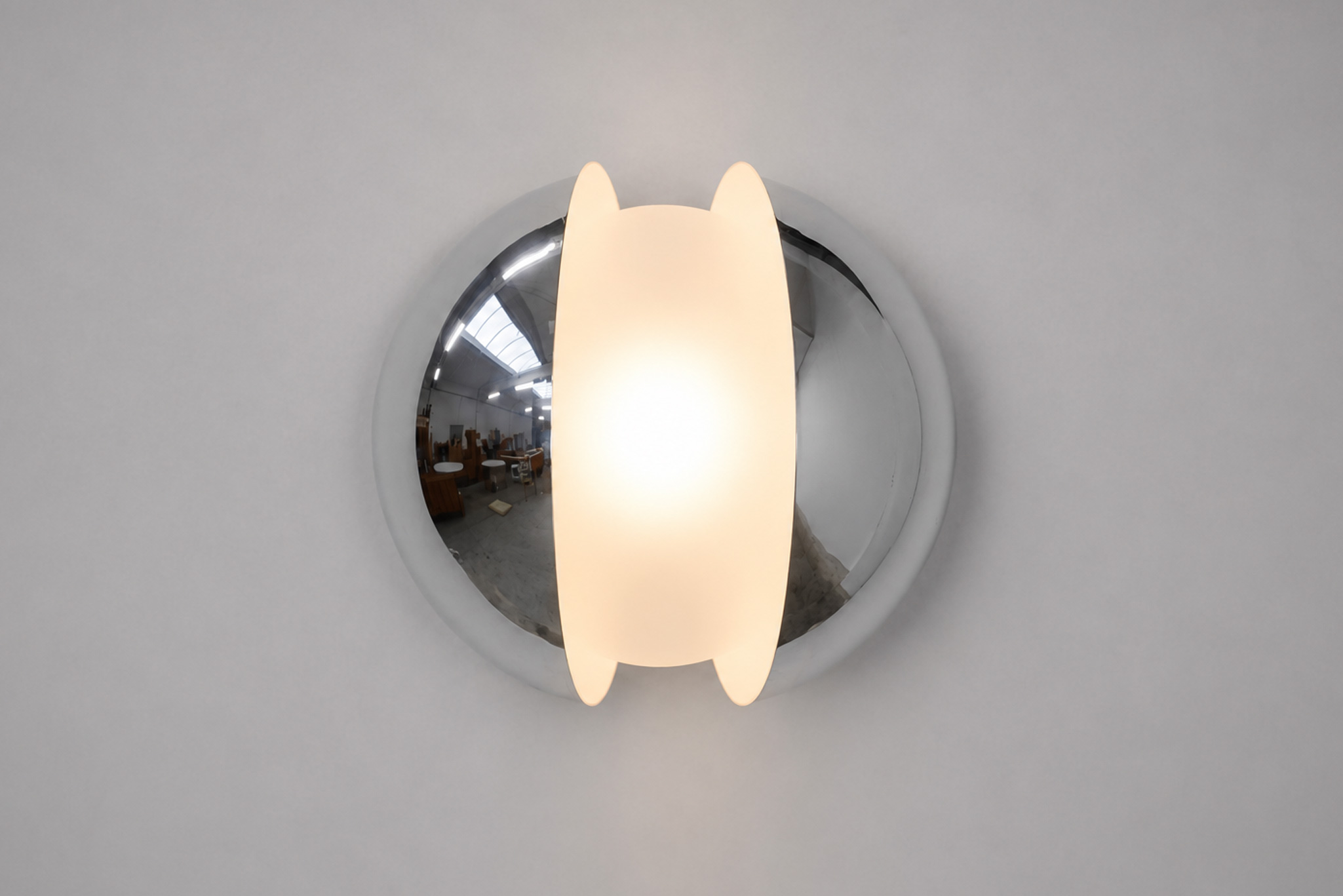
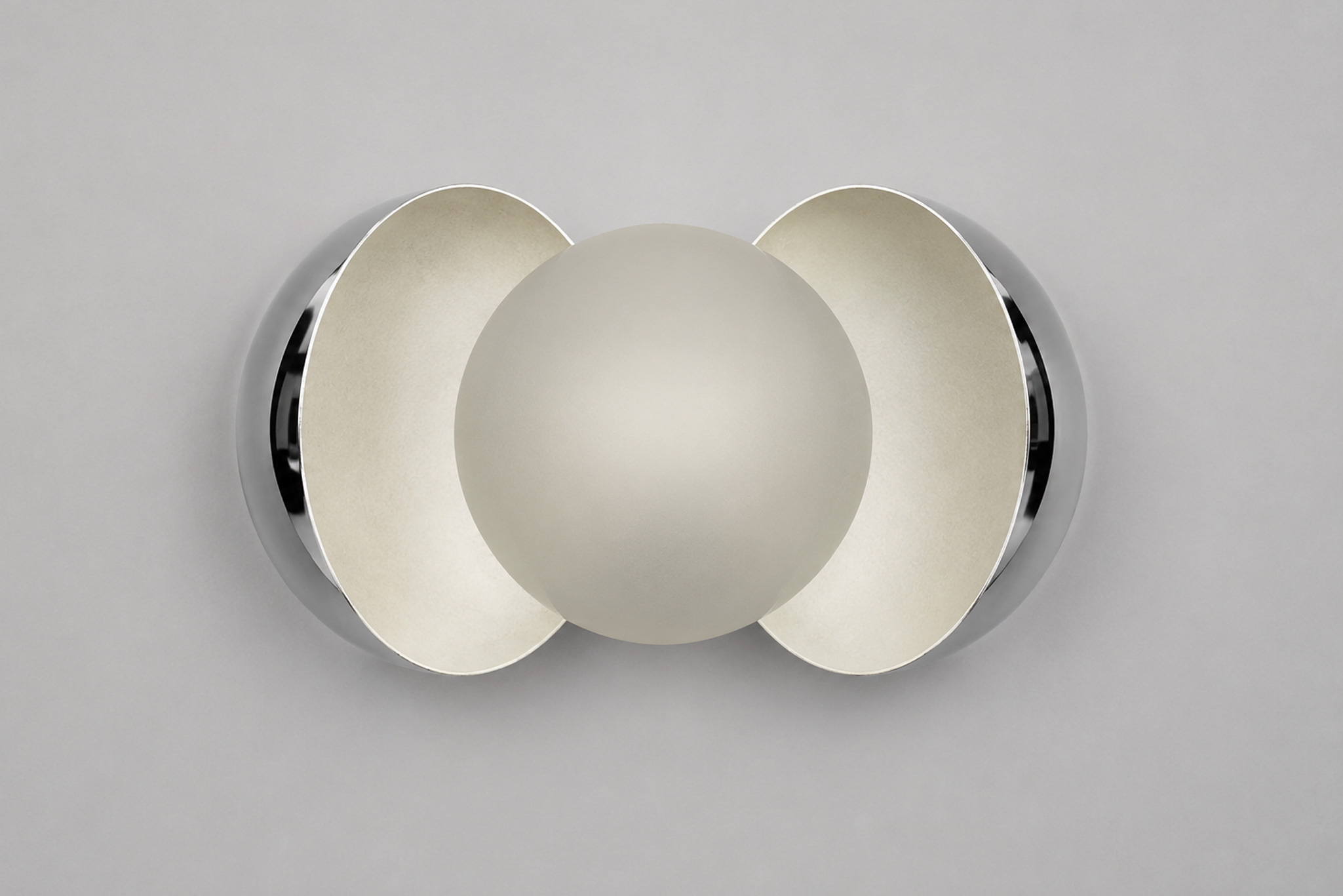
Its defining feature is the chromed metal spherical shade, divided into two hinged hemispheres that can be opened or closed to regulate both the direction and intensity of the light. Within the polished shell, an acid-etched glass globe softly diffuses the illumination, producing a warm and even glow while concealing the light source. The contrast between the reflective chrome exterior and the satin transparency of the inner diffuser exemplifies Fontana Arte's mastery of material relationships.
The lamp reflects the experimental spirit that characterized Italian lighting design during the late 1960s, when adjustable lighting systems increasingly became expressive architectural objects. Rather than relying solely on decoration, the Diaframma achieves its visual identity through movement, precision engineering, and the careful orchestration of light.
Produced in limited numbers, the Diaframma remains a rare and highly sought-after example of Fontana Arte's innovative lighting production during one of the company's most creative periods.
Biography
Gianemilio Piero and Anna Monti were Italian designers active during the 1960s and early 1970s, a period in which Italy established itself as the international center of lighting and industrial design. Working in close collaboration with Fontana Arte, they developed a small but highly refined body of lighting designs distinguished by their sculptural forms, technical ingenuity, and careful manipulation of light.
Although relatively little biographical information survives regarding their education and professional careers, their work demonstrates a sophisticated understanding of the experimental design culture that flourished in Milan during the postwar decades. Their projects reveal the influence of the Italian Rationalist tradition while embracing the technological advances that transformed lighting design during the 1960s.
Their best-known creation is the Diaframma wall lamp (1968), one of Fontana Arte's most innovative lighting designs of the period. Characterized by its articulated chromed metal sphere that opens and closes around an acid-etched glass diffuser, the lamp combines mechanical precision with sculptural elegance, allowing the user to actively modulate the direction and intensity of the light. The design perfectly reflects Fontana Arte's longstanding commitment to treating light as an architectural material rather than merely a functional necessity.
Working alongside the generation of designers that included Max Ingrand, Gae Aulenti, Pietro Chiesa, and later Vico Magistretti, Piero and Monti contributed to Fontana Arte's reputation as one of the world's leading manufacturers of modern lighting. Their designs are characterized by clean geometric forms, restrained material palettes, and an exceptional sensitivity to the relationship between glass, metal, and illumination.
Although their production was comparatively limited, surviving examples of their work—particularly the Diaframma series—are today regarded as rare and important examples of late Italian modernism. Their designs continue to be appreciated for their ability to combine engineering, movement, and light into objects of enduring sculptural quality.