Side Gallery
Side Gallery
WishlistFollow





Follow
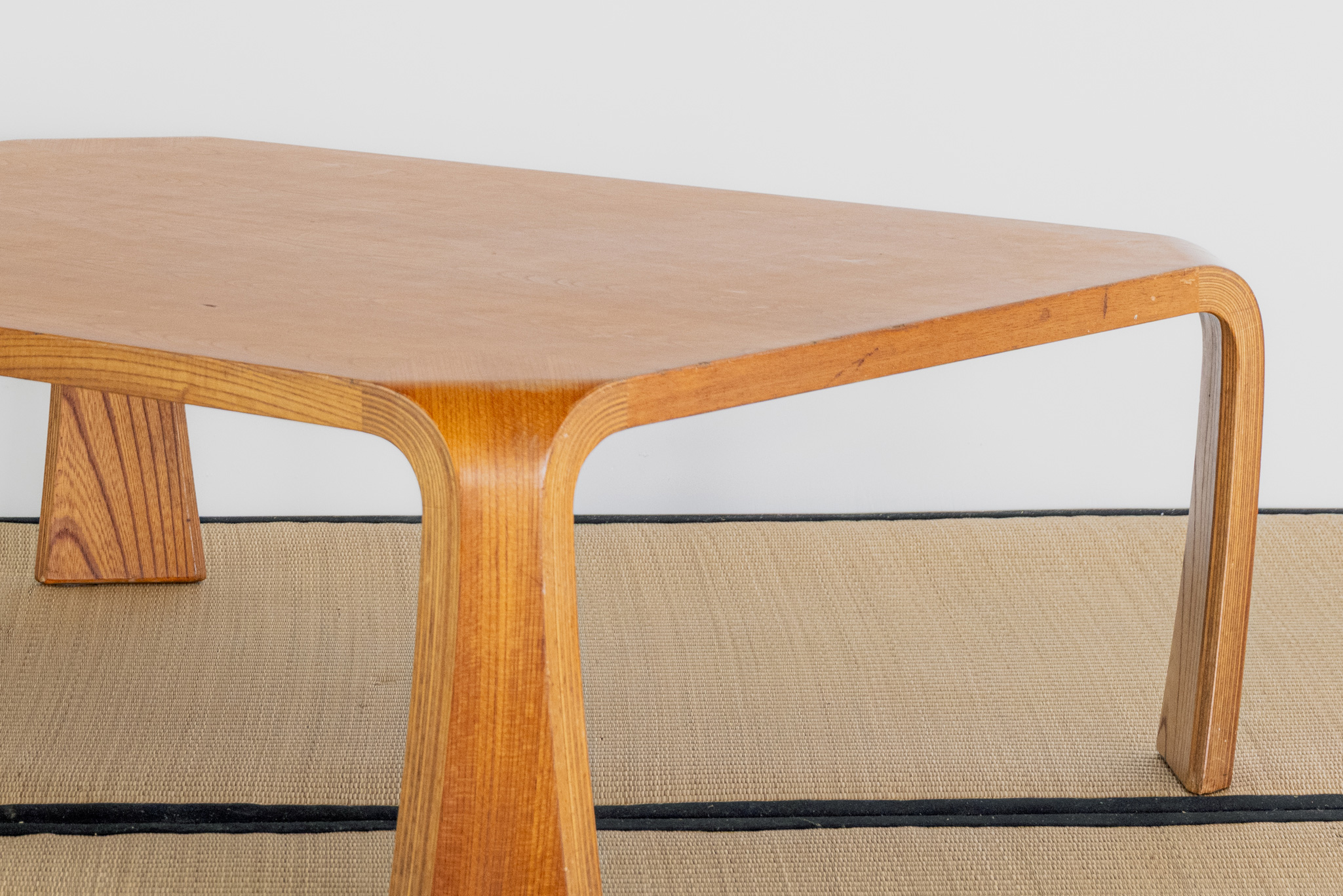




Saburo Inui (1911–1991) was a Japanese industrial designer and craftsman, recognized as one of the pioneers of modern furniture design in Japan, especially through his innovative work with molded plywood. He was born in 1911 in Hsinchu, Taiwan, which at the time was under Japanese colonial rule. Inui later moved to Japan, where around 1936 he joined the Industrial Arts Institute (IAI), working in the wood department. There he began to explore and develop the possibilities of bent and molded plywood, a material that would become central to his life’s work. Within the Institute, he collaborated closely with other designers such as Kenmochi Isamu, and this professional relationship would influence his career deeply.
During his years at the IAI, Inui became a key figure in the technical development of plywood furniture, helping to establish methods that allowed Japanese design to compete with the international modernist movement while retaining a uniquely Japanese sensibility. One of his most significant early contributions was his role in bringing to life the iconic Butterfly Stool designed by Sōri Yanagi. Although Yanagi had created a prototype, no factory in Japan was capable of producing the elegant, curved form. Inui took on the challenge at the IAI and, after two years of experimentation and refinement, successfully oversaw its production with the furniture manufacturer Tendō Mokko in 1956.
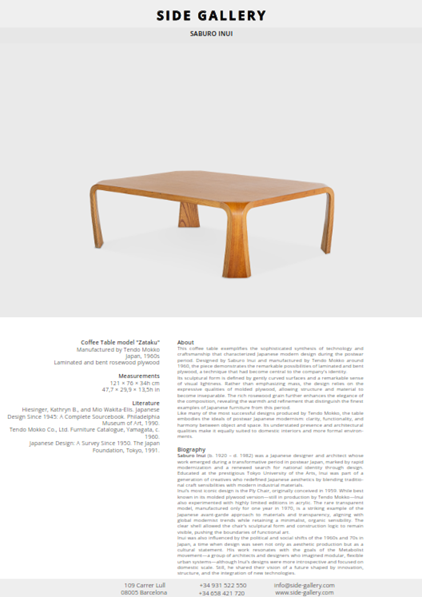
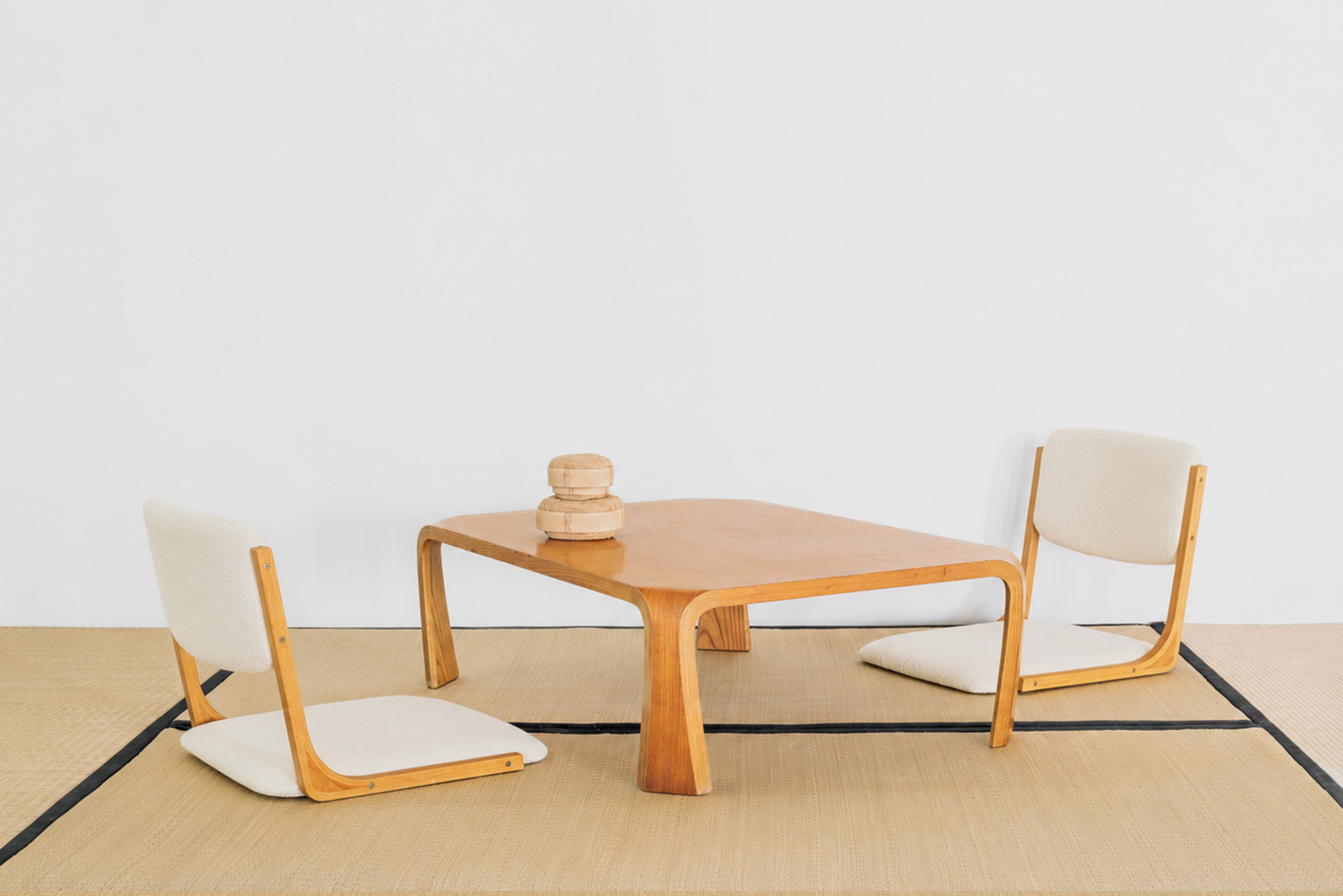
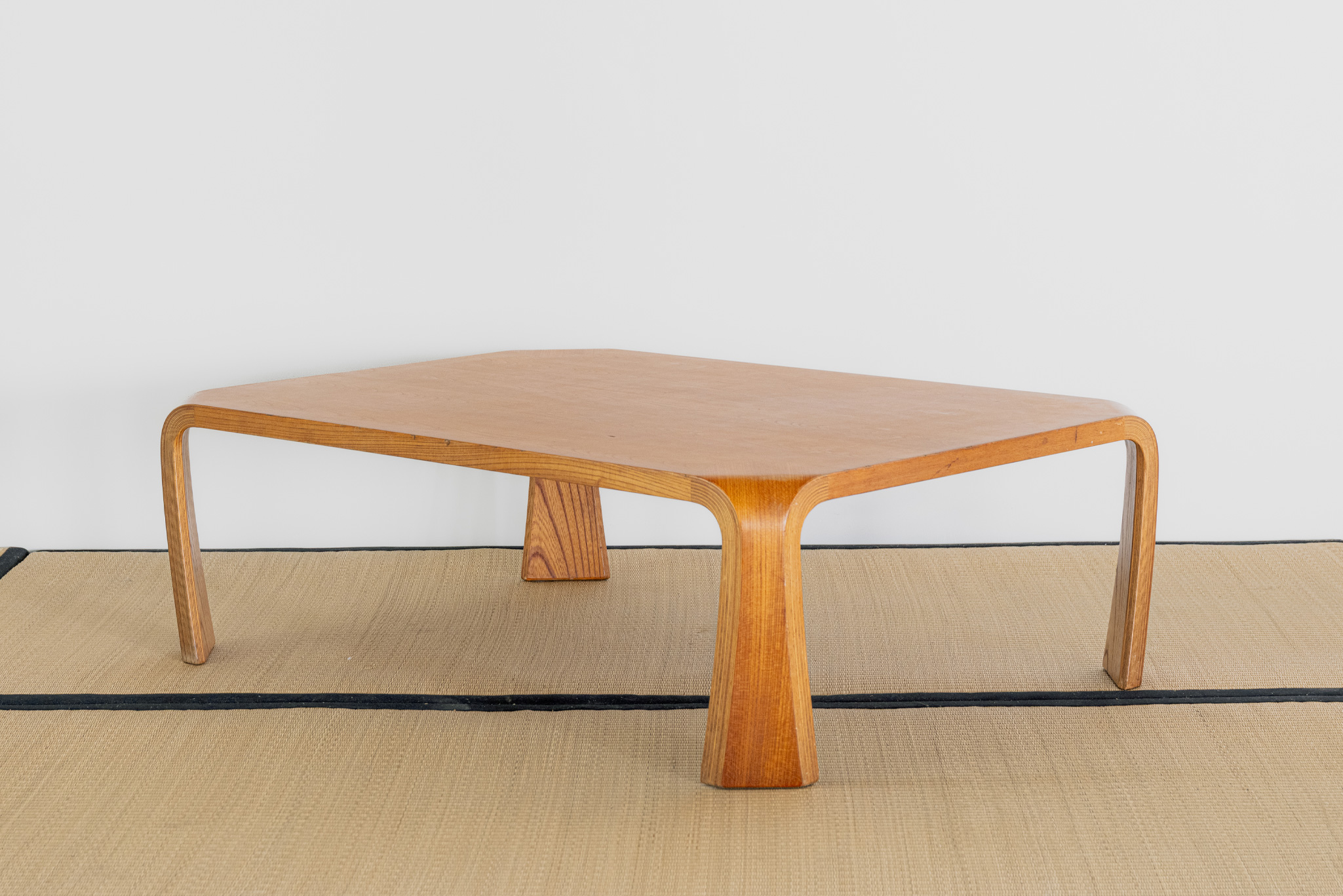
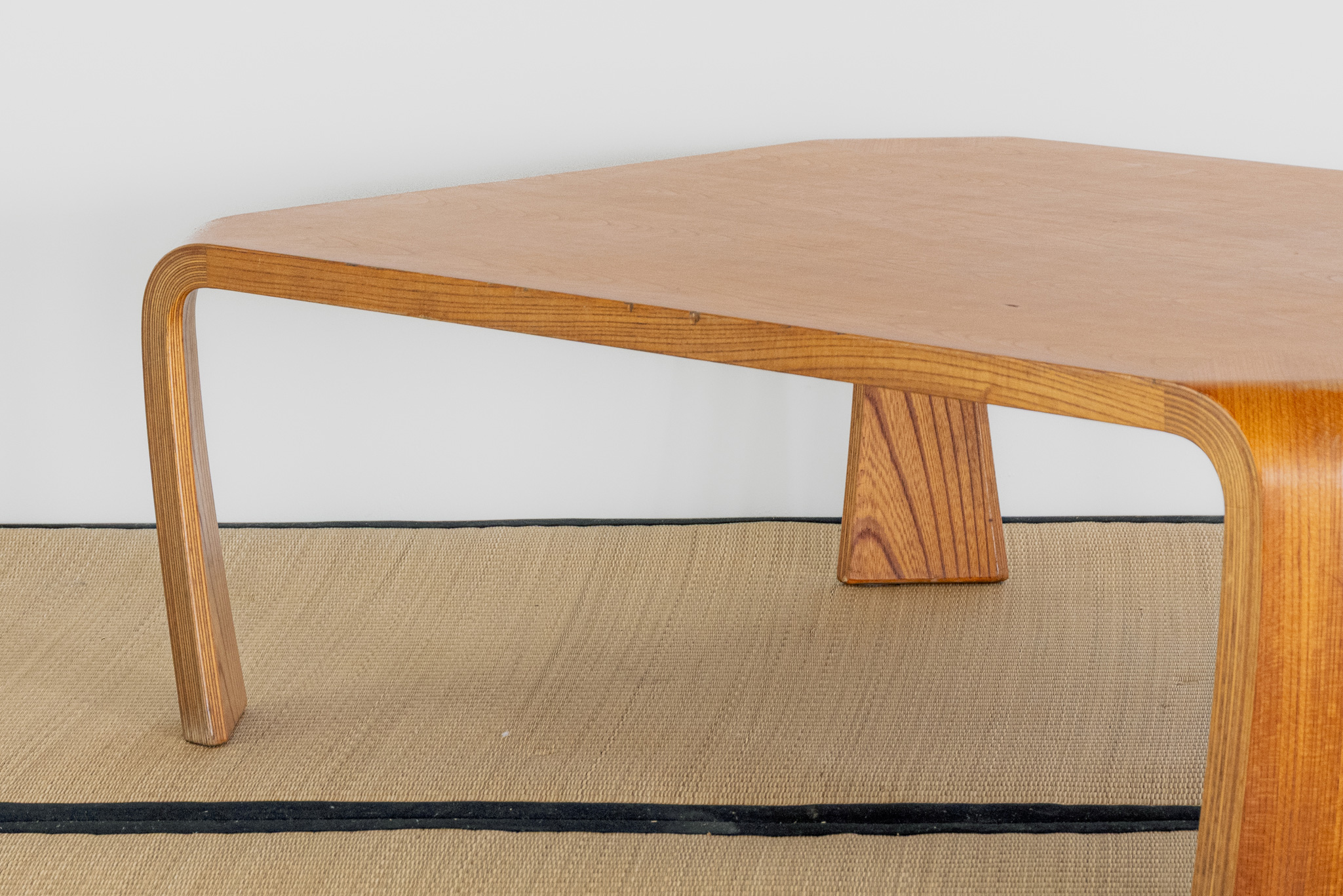
In 1958, Inui left the Institute to work directly for Tendō Mokko, where he would spend the most important years of his career. At Tendō Mokko he designed furniture that combined technical ingenuity with a sense of simplicity, elegance, and everyday usability. Among his most celebrated works is the Zataku low table, created in 1959, which became one of Tendō Mokko’s classic pieces. Other notable designs include the Ply Chair and contributions to the development of the Teiza chair, showing his versatility in adapting plywood to different forms and purposes. His furniture was characterized by clean lines, soft curves, rounded edges, and a minimalist aesthetic that placed emphasis on the material itself rather than decoration. He was deeply committed to the idea that plywood, often regarded as a purely utilitarian material, could embody both functionality and beauty.
Inui’s contributions were recognized during his lifetime with several important awards. His Zataku table won the Good Design Award in 1964, and later the Long Life Design Award in 1981, acknowledging its enduring relevance. In 1973, he received the prestigious Kitaro Kunii Industrial Arts Award, further establishing his reputation as a master of Japanese modern design.
Beyond the awards, Saburo Inui’s true legacy lies in how he bridged tradition and modernity. His work harmonized Japanese craftsmanship and aesthetic sensibility with the industrial techniques of the twentieth century. By mastering molded plywood, he created furniture that was light, durable, and graceful, and his designs remain admired and collected today. Many of his pieces continue to be produced, exhibited, and sold at auctions as iconic examples of postwar Japanese modernism. Inui’s vision helped shape the direction of Japanese furniture design in the second half of the twentieth century, leaving a lasting mark on both Japanese design history and global design culture.
ENQUIRE ABOUT THE DESIGNER