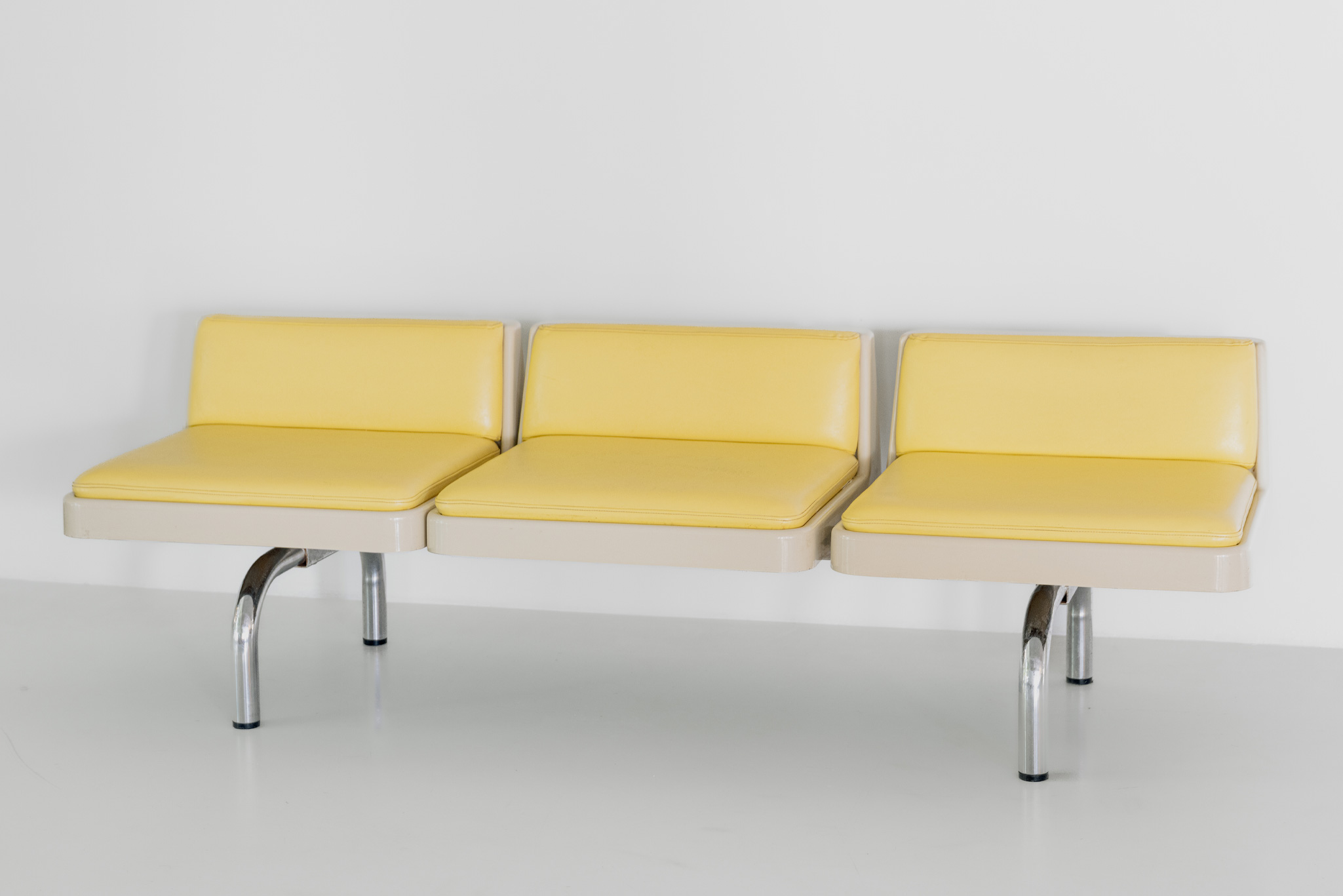
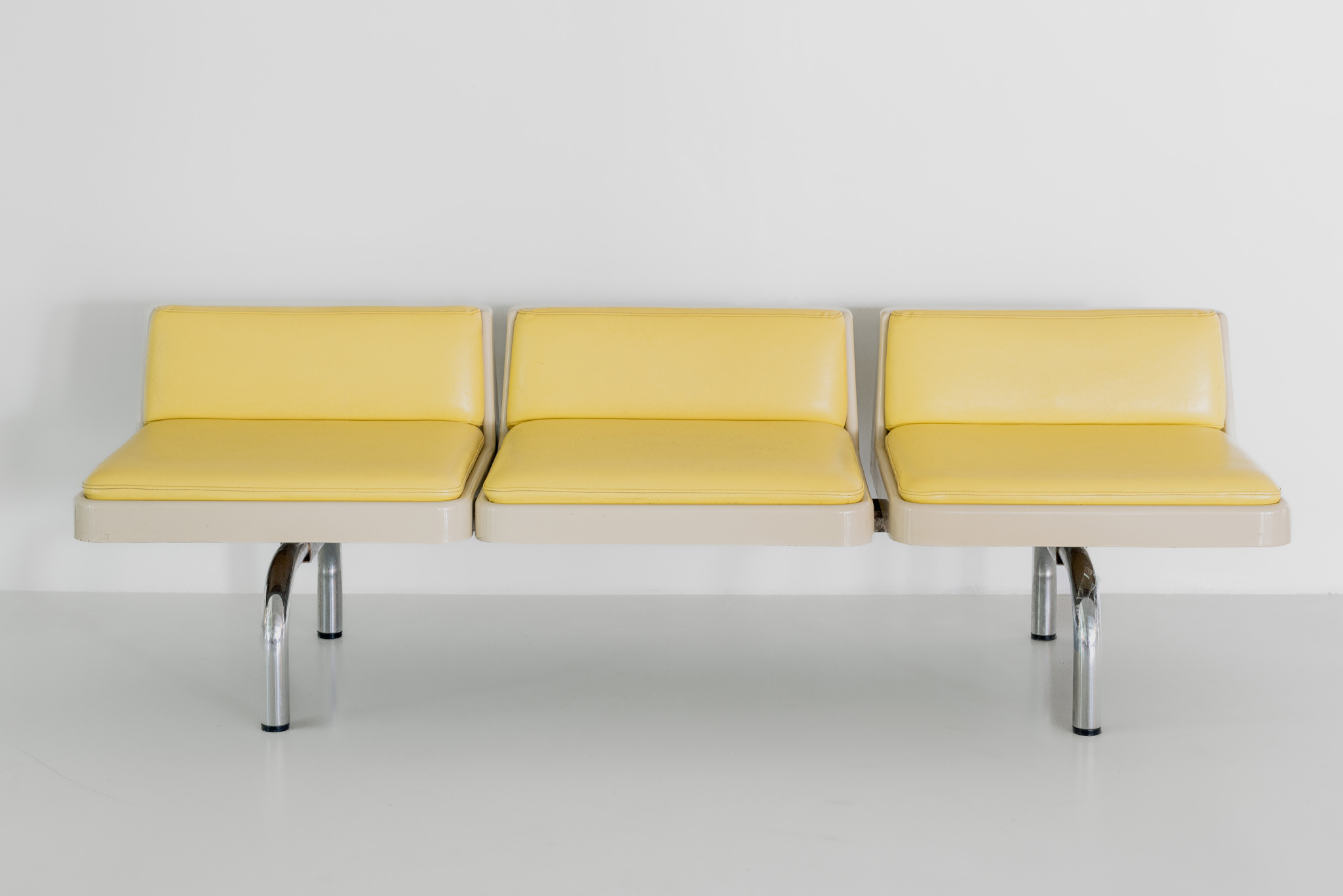
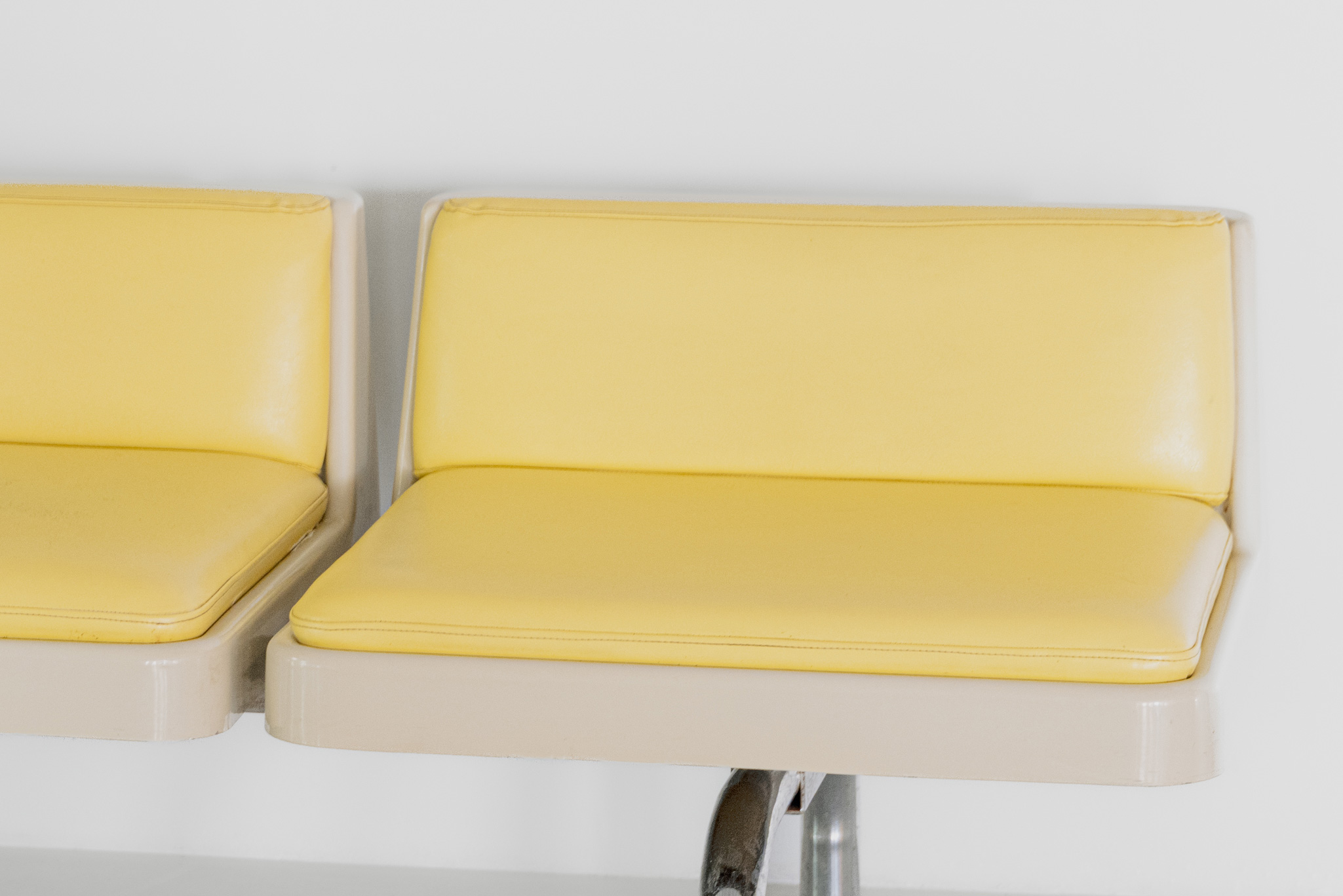
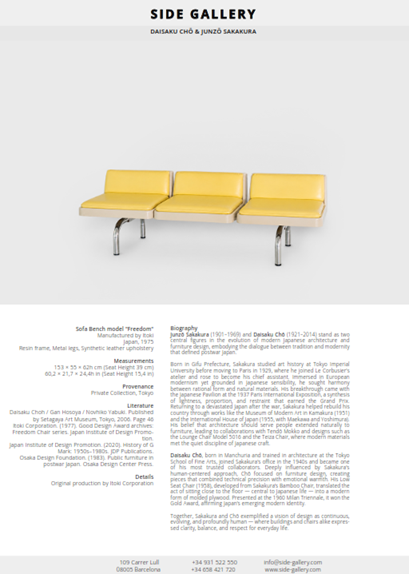
Sofa Bench model "Freedom"
Manufactured by Itoki
Japan, 1975
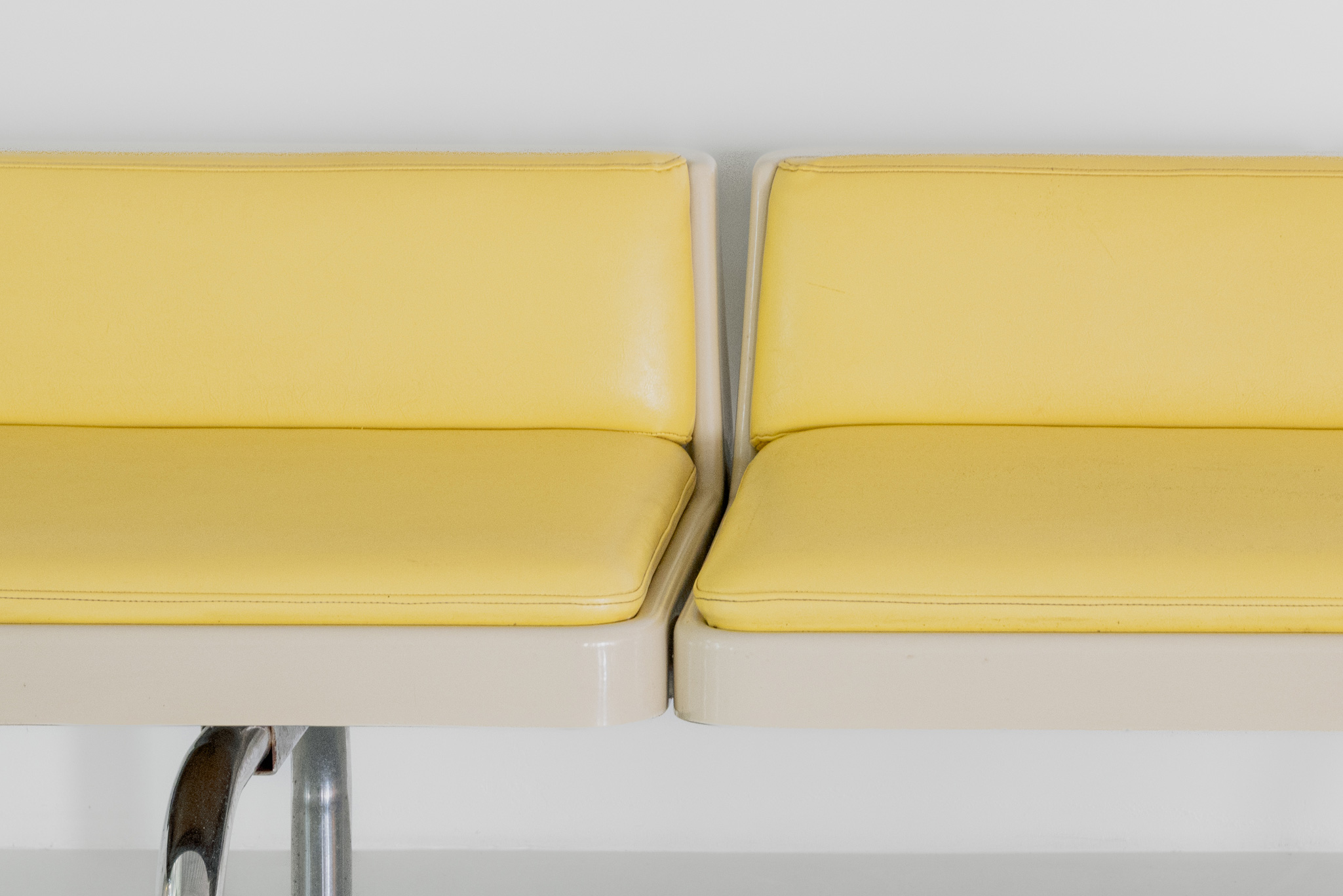
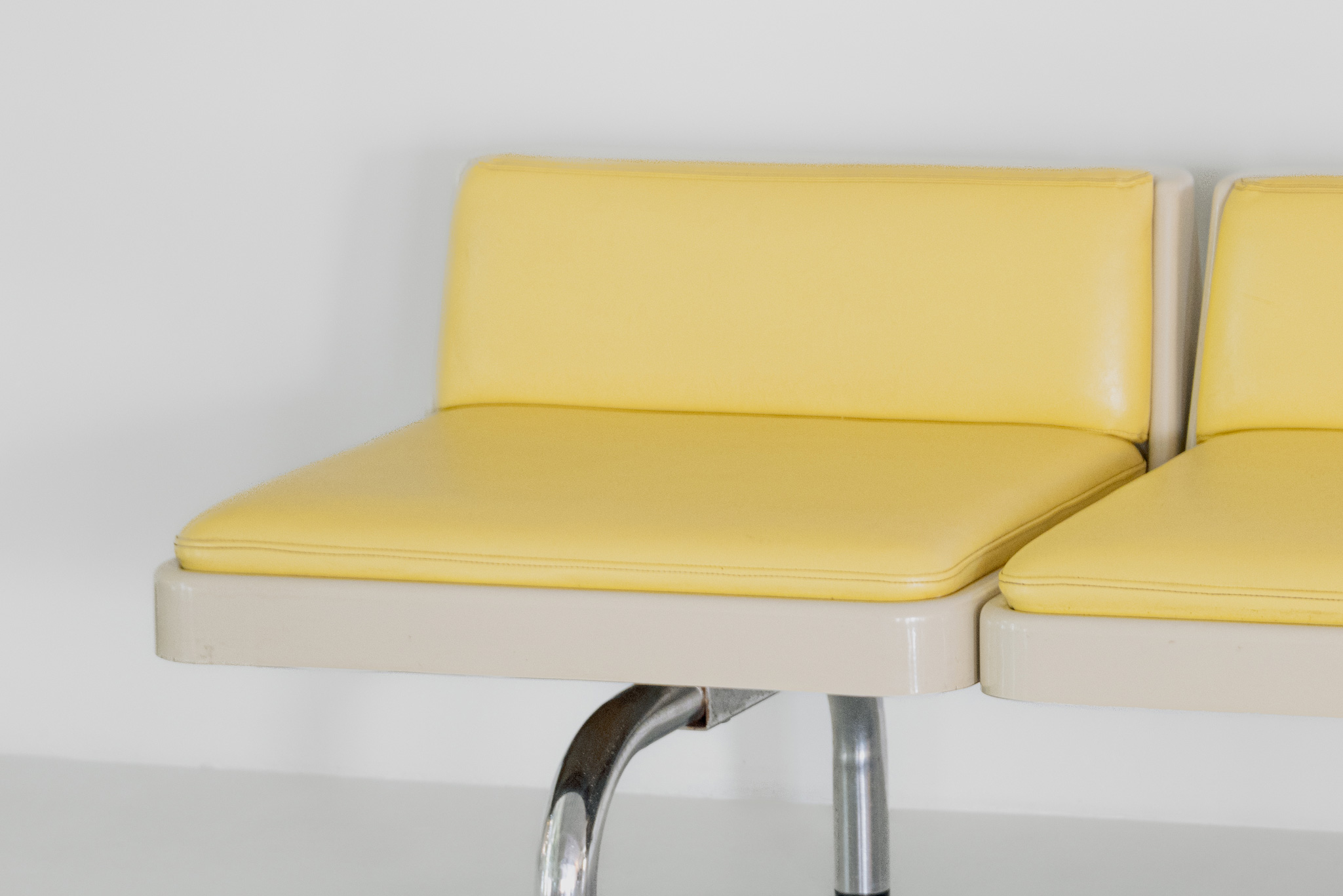
Resin frame, Metal legs, Synthetic leather upholstery
Measurements
153 × 55 × 62h cm (Seat Height 39 cm)
60,2 × 21,7 × 24,4h in (Seat Height 15,4 in)
Provenance
Private Collection, Tokyo
Literature
Daisaku Choh / Gan Hosoya / Novhiko Yabuki. Published by Setagaya Art Museum, Tokyo, 2006. Page 46
Itoki Corporation. (1977). Good Design Award archives: Freedom Chair series. Japan Institute of Design Promotion.
Japan Institute of Design Promotion. (2020). History of G Mark: 1950s–1980s. JDP Publications.
Osaka Design Foundation. (1983). Public furniture in postwar Japan. Osaka Design Center Press.
Details
Original production by Itoki Corporation
Notes
Designed in 1975 by renowned Japanese designer Daisaku Choh, the Freedom Chair series represents one of the emblematic achievements of Japanese public furniture design in the mid-20th century. Awarded the Good Design Award (G Mark) in 1977, the bench combines curved, soft forms with a lightweight resin frame, reflecting the influence of Space Age aesthetics in Japan.
The model’s compact dimensions—unusual for a three-seater—made it ideal for public institutions such as waiting rooms, medical facilities and civic buildings. The green synthetic leather upholstery paired with the beige resin frame conveys a playful retro-pop character, typical of Japan’s Showa-era approach to modernity.
Itoki, one of Japan’s oldest and most respected office furniture manufacturers, produced the Freedom Chair as part of an effort to modernize public interiors through accessible, ergonomic, and visually distinctive seating systems. Daisaku Choh’s design stands out for its clarity, structural honesty and friendliness of form, making it both a practical and highly collectible example of Japanese mid-century design today.