Side Gallery
Side Gallery
WishlistFollow





Follow
ANTONIO ATTOLINI LACK: ARCHITECTURE AND FURNITURE DESIGN
CLÁSICOS MEXICANOS, MEXICO CITY
2024
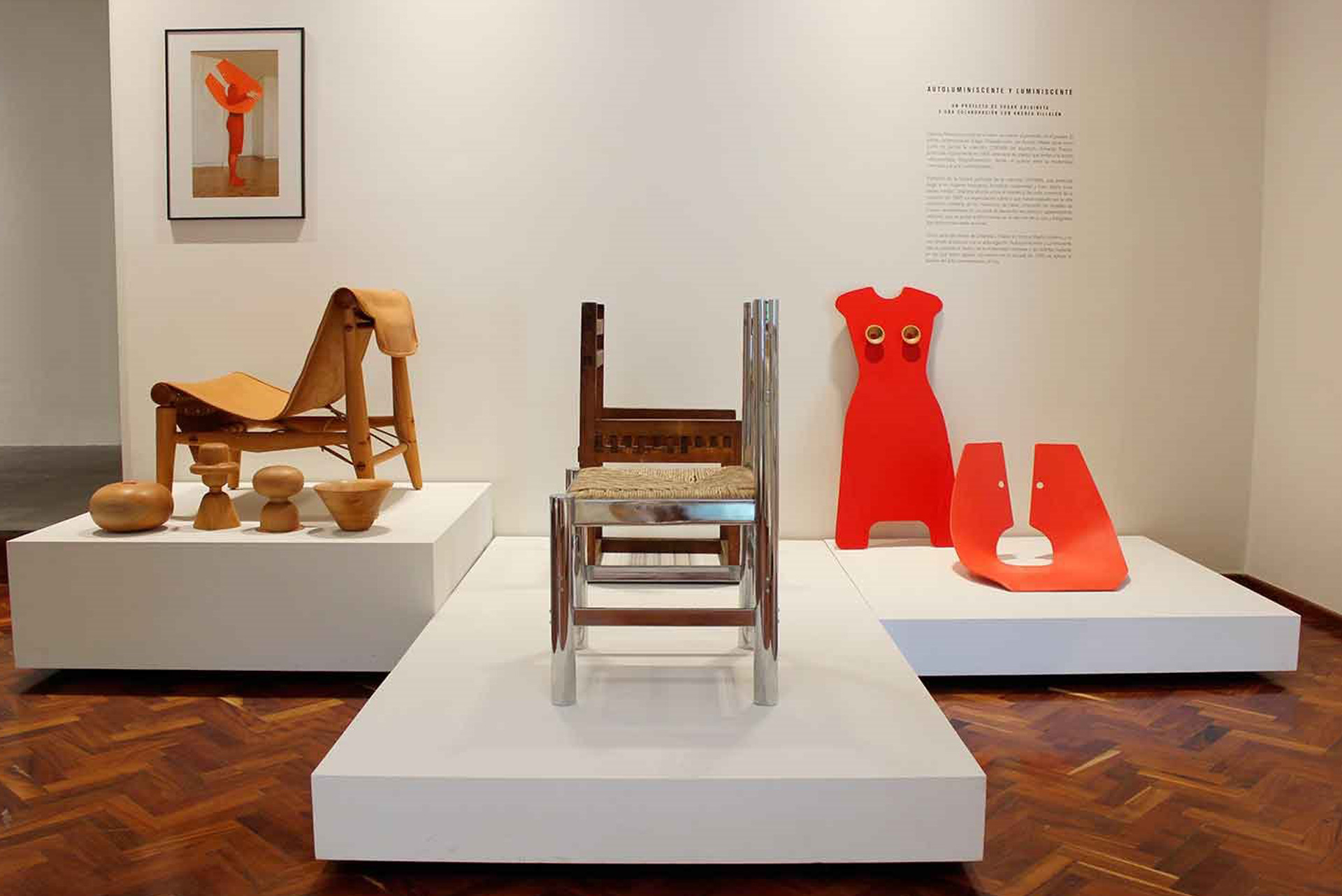
The exhibition Antonio Attolini Lack: Architecture and Furniture Design, presented by Clásicos Mexicanos in Mexico City, focused on the architect’s work beyond architecture, highlighting his contributions to furniture and object design throughout a career that spanned more than sixty years. Bringing together fourteen furniture pieces alongside accessories and archival materials, the exhibition revealed how deeply Attolini understood architecture as a total artistic practice.
Antonio Attolini Lack (1931–2012) occupies a singular place within twentieth-century Mexican architecture. Working between modern functionalism and Mexican regionalist traditions, he developed an architectural language that synthesized both influences into a distinctive and highly personal vision. The exhibition demonstrated how this same sensibility extended into the domestic scale through chairs, armchairs, lighting, textiles, handles, hinges, and custom-designed interior elements.
Among the architect’s most celebrated works is the Church of Santa Cruz del Pedregal in Mexico City, a project originally initiated by José Villagrán and completed by Attolini after his mentor’s death. For the church, Attolini designed not only the architecture itself but also every interior detail, from furniture and lighting to rugs and liturgical objects. This holistic approach became central to his practice and was reflected throughout the exhibition.
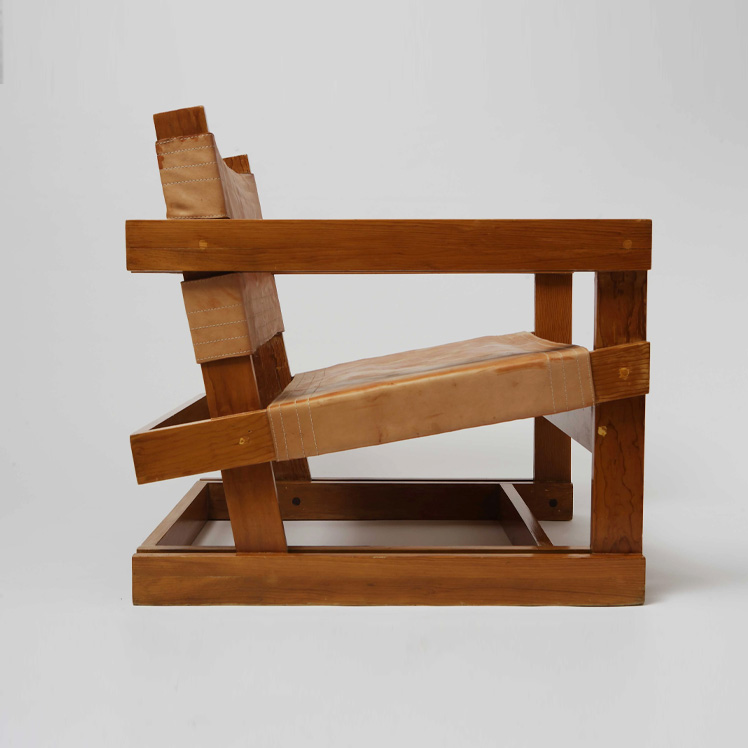
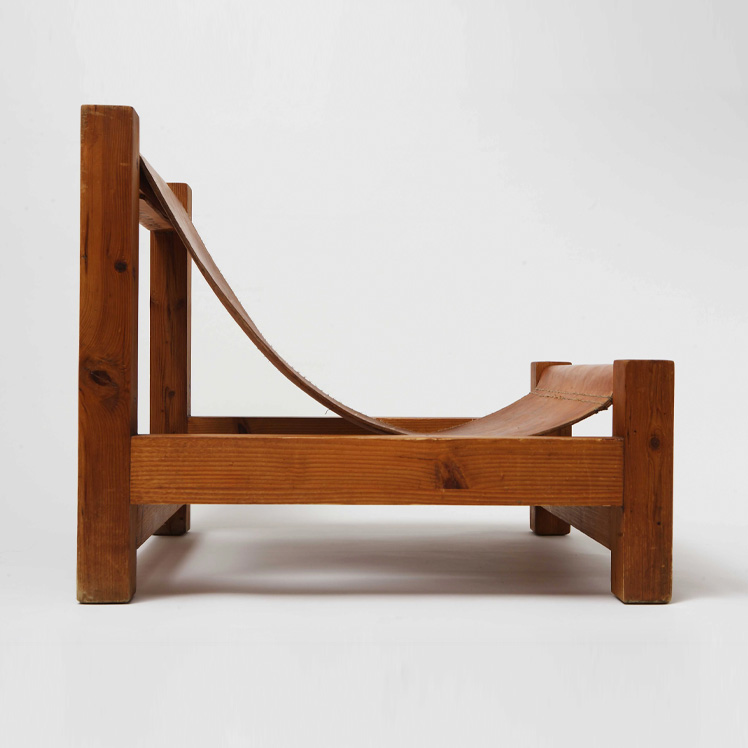
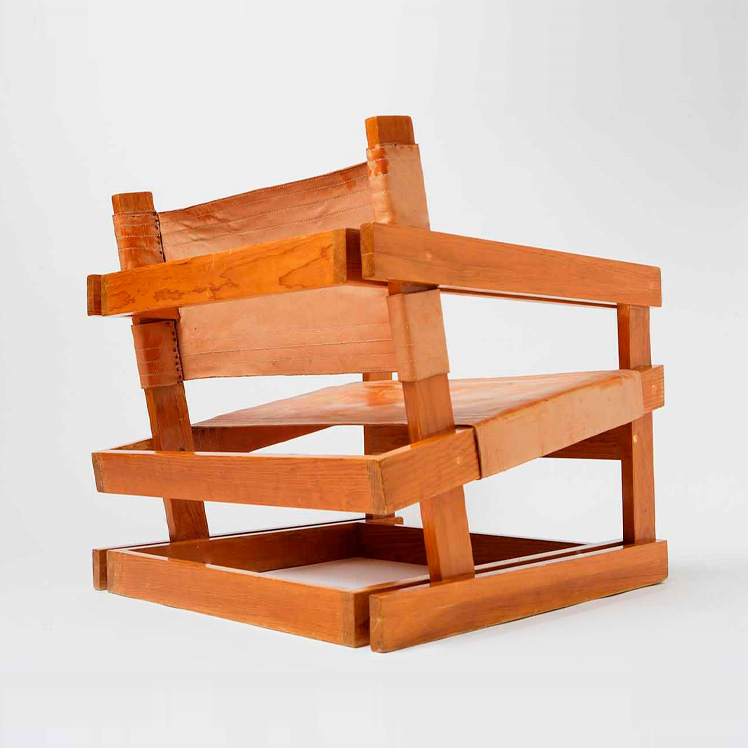
Curated by Aldo Solano, the exhibition proposed furniture as a key to understanding Attolini’s architectural thinking. Through the pieces on display, visitors could observe how his approach balanced abstraction and material honesty with references to vernacular Mexican craftsmanship. Many of the works combined brutalist geometries with warm natural materials such as pine and leather, creating objects that felt both modern and deeply rooted in local traditions.
Notable pieces included the Butaca Attolini (1969), crafted in pine with a leather seat, and the Silla Attolini (1985), composed of solid pine planks and leather upholstery. These designs revealed the architect’s preference for preserving the raw and imperfect qualities of materials rather than pursuing excessive refinement or ornamentation. His furniture reflects an understanding of design in which construction, texture, and proportion communicate a complete architectural philosophy.
The exhibition ultimately emphasized Attolini’s belief that architecture should be experienced from within — through atmosphere, light, texture, and human interaction. By presenting furniture as an extension of architectural space, Antonio Attolini Lack: Architecture and Furniture Design offered a deeper understanding of the architect’s modern Mexican sensibility and his enduring contribution to both architecture and design culture.
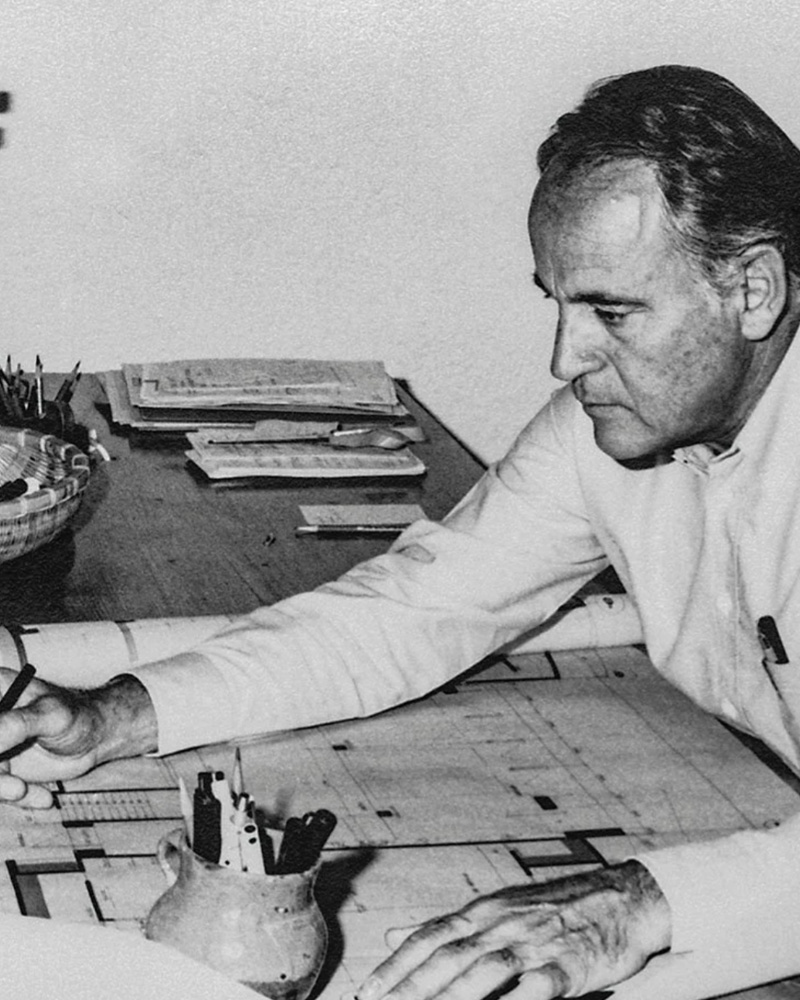
Antonio Attolini Lack was one of the most singular and refined figures in twentieth-century Mexican architecture. Born in Ciudad Juárez, Chihuahua, on April 24, 1931, and educated in Mexico City, Attolini developed a body of work distinguished by its emotional use of light, austere geometry, artisanal craftsmanship, and profound understanding of space as a human and spiritual experience. Although he is primarily remembered as an architect, his legacy also extends deeply into furniture design, lighting, decorative arts, textiles, and handcrafted objects, fields in which he pursued the idea of a “total work of art,” where architecture and every object within it formed part of one coherent vision.
Attolini studied architecture at the Escuela Nacional de Arquitectura of the Universidad Nacional Autónoma de México (UNAM), graduating in 1955 with honors after presenting his thesis Vertical Cemetery in Mexico City. During his formative years he studied under important masters such as José Villagrán García, Vladimir Kaspé, Francisco J. Serrano, and Carlos Lazo. He also worked in the studios of Manuel Parra and Francisco Artigas, whose modernist sensibilities strongly influenced his early development. Yet Attolini gradually distanced himself from orthodox International Style modernism and evolved toward a deeply personal language rooted in Mexican materials, vernacular traditions, monastic spatiality, and the poetic use of natural light.
From the beginning of his career, Attolini demonstrated extraordinary attention to detail. Unlike many architects who limited themselves to designing buildings, he believed architecture should encompass every element of lived experience. Doors, hinges, lamps, furniture, rugs, handrails, fountains, hardware, and even ceremonial objects became extensions of architectural thought. This holistic philosophy would become one of the defining characteristics of his work and places him within the lineage of architects such as Frank Lloyd Wright, Luis Barragán, and Carlo Scarpa, who conceived architecture as an inseparable union of space, object, material, and atmosphere.
His architecture evolved through several important phases. Early projects reflected modernist influences and the legacy of Mexican functionalism, but by the mid-1960s his work had developed a more introspective and monumental character. One of the decisive moments in his career was the completion of the Church of Santa Cruz del Pedregal in Mexico City, a project originally initiated by his teacher José Villagrán García. In this building, Attolini articulated many of the ideas that would define his mature language: controlled light entering from above, dramatic shadow, geometric purity, thick textured walls, silence, and a spiritual sense of enclosure. The church also demonstrated his commitment to total design because he conceived not only the architecture itself, but also the lamps, furnishings, liturgical objects, carpets, and interior details.
Among the residential projects that best synthesize Attolini’s mature philosophy is the celebrated Casa Atrio, considered one of the masterpieces of late twentieth-century Mexican residential architecture. Conceived around an interior courtyard that functioned as the emotional and spatial center of the house, Casa Atrio exemplified Attolini’s extraordinary ability to sculpt light, shadow, silence, and movement through architecture. Thick walls, hidden openings, textured materials, patios, and carefully choreographed transitions between interior and exterior created an atmosphere of contemplation and intimacy that distinguished the project from the more extroverted tendencies of international modernism. The residence also embodied his philosophy of total design: Attolini conceived not only the architectural structure, but also many of the furnishings, lighting elements, and decorative details that inhabited the space. Casa Atrio became an ideal expression of his belief that architecture should elevate everyday life through serenity, proportion, craftsmanship, and emotional depth.
Throughout his career, Attolini rejected superficial formalism and fashionable trends. He insisted that architecture must improve human life and create emotionally meaningful environments. His buildings avoided spectacle; instead, they cultivated intimacy, serenity, contemplation, and tactile richness. Water, patios, skylights, textured masonry, white walls, and handcrafted materials became recurring elements in his projects. Critics often compared his work to that of Barragán and Ricardo Legorreta, but Attolini’s architecture possessed a distinct austerity and structural honesty that made it uniquely his own. His interiors were frequently more minimal and monastic, stripped of decorative excess in favor of spatial intensity and carefully orchestrated light.
An equally important dimension of Attolini’s legacy is his work as a furniture designer. In recent years, scholars and collectors have increasingly recognized that his furniture was not secondary to his architecture but rather an essential continuation of it. His chairs, benches, tables, lamps, and objects reveal the same concern for proportion, material integrity, and emotional atmosphere found in his buildings. Many of his designs combined references to Bauhaus rationalism with Mexican artisanal traditions, producing works that were simultaneously brutalist, regionalist, minimalist, and deeply tactile. Pieces such as the famous “Attolini Chair,” originally designed for his own home in 1955, demonstrate this synthesis. Constructed in pinewood and leather, the chair combines monumental simplicity with artisanal warmth and structural clarity.
Attolini often designed furniture specifically for individual architectural commissions rather than for industrial production. As a result, many of his pieces existed only inside private residences, churches, or custom interiors for decades before being rediscovered by contemporary galleries and historians. Exhibitions organized after his death revealed the remarkable breadth of his design practice, including chairs, tables, rugs, textiles, jewelry, hinges, door handles, and lighting fixtures. Curators noted that his furniture offered an abstracted version of his architectural thinking: massive yet restrained, rustic yet refined, modern yet profoundly Mexican.
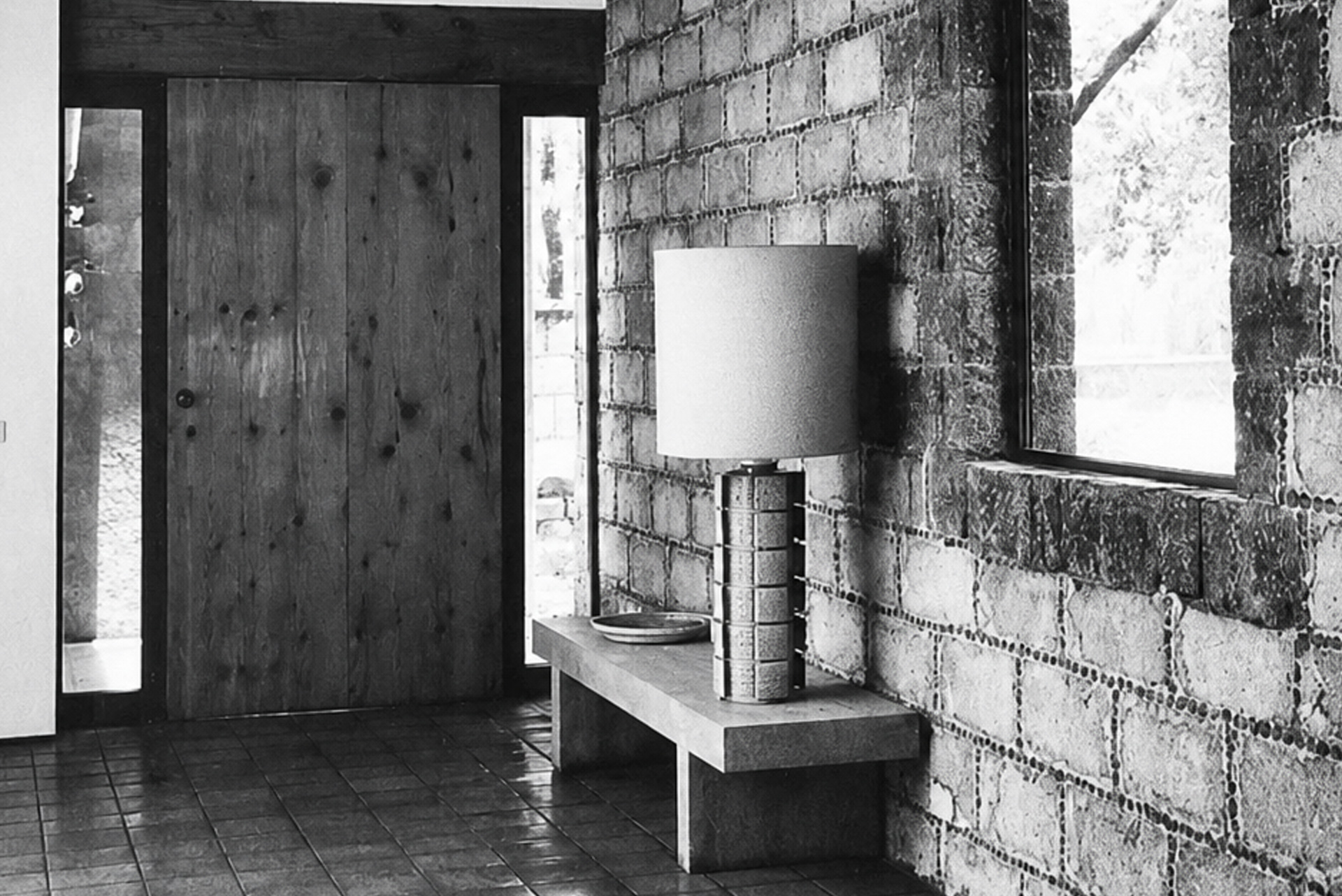
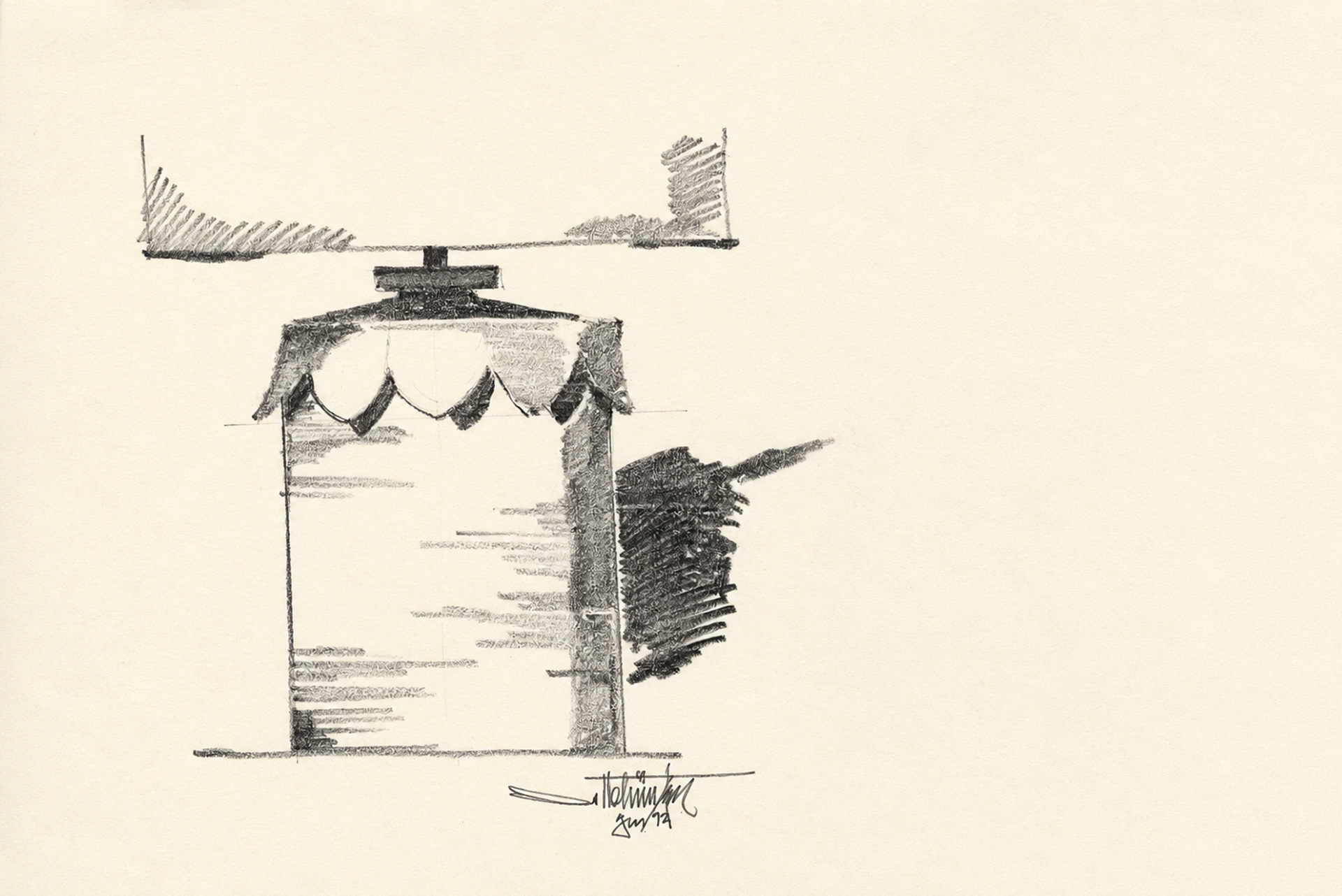
Particularly significant were his ceramic lamps, many of which explored sculptural forms inspired by vernacular pottery, pre-Hispanic volumetry, and the material honesty of handcrafted clay. These works occupied a space between sculpture and functional design. Their heavy geometric bodies, textured surfaces, and diffused light transformed illumination into an architectural experience. Rather than treating lamps as decorative accessories, Attolini conceived them as luminous volumes capable of shaping mood, shadow, and spatial rhythm.
Among the most admired examples are the ceramic lamps developed in collaboration with Hugo Velázquez. These pieces have become increasingly valued within Mexican collectible design circles because they represent Attolini’s commitment to artisanal production and interdisciplinary collaboration. Working with Velázquez, Attolini explored high-temperature ceramics and handcrafted glazing techniques, producing lamps that combined brutalist solidity with an almost meditative softness of light. The pieces reflected his fascination with the intersection of craft and architecture: they were objects meant not merely to illuminate rooms but to construct atmosphere and emotional presence.
The ceramic lamps with Hugo Velázquez also reveal Attolini’s broader philosophy regarding materials. He believed that architecture and design should preserve traces of human labor and regional identity. For this reason, he preferred handcrafted surfaces, imperfect textures, stone, wood, brick, leather, and ceramic materials that carried visible evidence of making. In the lamps, the tactile quality of clay became inseparable from the quality of light itself. The resulting objects embodied what many critics describe as Attolini’s “Mexican modernity”: modern in abstraction and geometry, yet deeply rooted in local craftsmanship and cultural memory.
His studio and workshop in San Nicolás Totolapan, built in 1969, became an important laboratory for this experimental approach to design. There he developed furniture, ornamental objects, rugs, and lighting pieces alongside architectural projects, often collaborating directly with artisans and craftspeople. The workshop environment reinforced his belief that architecture should remain tied to making, construction, and material experimentation rather than becoming a purely theoretical discipline.
In addition to his professional practice, Attolini was a highly influential educator. Beginning in 1955, he taught at UNAM and later at Universidad La Salle and Universidad Anáhuac del Sur, where he shaped generations of Mexican architects. His teaching philosophy centered on learning through practice and cultivating passion for the craft of architecture. Former students frequently recalled his insistence that architecture required discipline, honesty, and emotional conviction.
Throughout his lifetime, Attolini received numerous distinctions, including the Gold Medal at the Second Mexican Architecture Biennale in 1992 and the Mexican National Prize of Architecture in 2002.
Antonio Attolini Lack died in Mexico City on February 28, 2012. Yet his influence has continued to grow in the years following his death, especially as historians and collectors have rediscovered the richness of his furniture and object design. Today he is increasingly regarded not simply as an architect, but as a complete designer whose work dissolved the boundaries between architecture, furniture, sculpture, craftsmanship, and light.
His buildings remain extraordinary spatial experiences, but his furniture and ceramic lamps reveal another dimension of his genius: an ability to transform everyday objects into vessels of atmosphere, silence, and human warmth. In both architecture and design, Attolini pursued the same goal throughout his life — to create spaces and objects capable of elevating daily existence through beauty, proportion, light, and emotional depth.