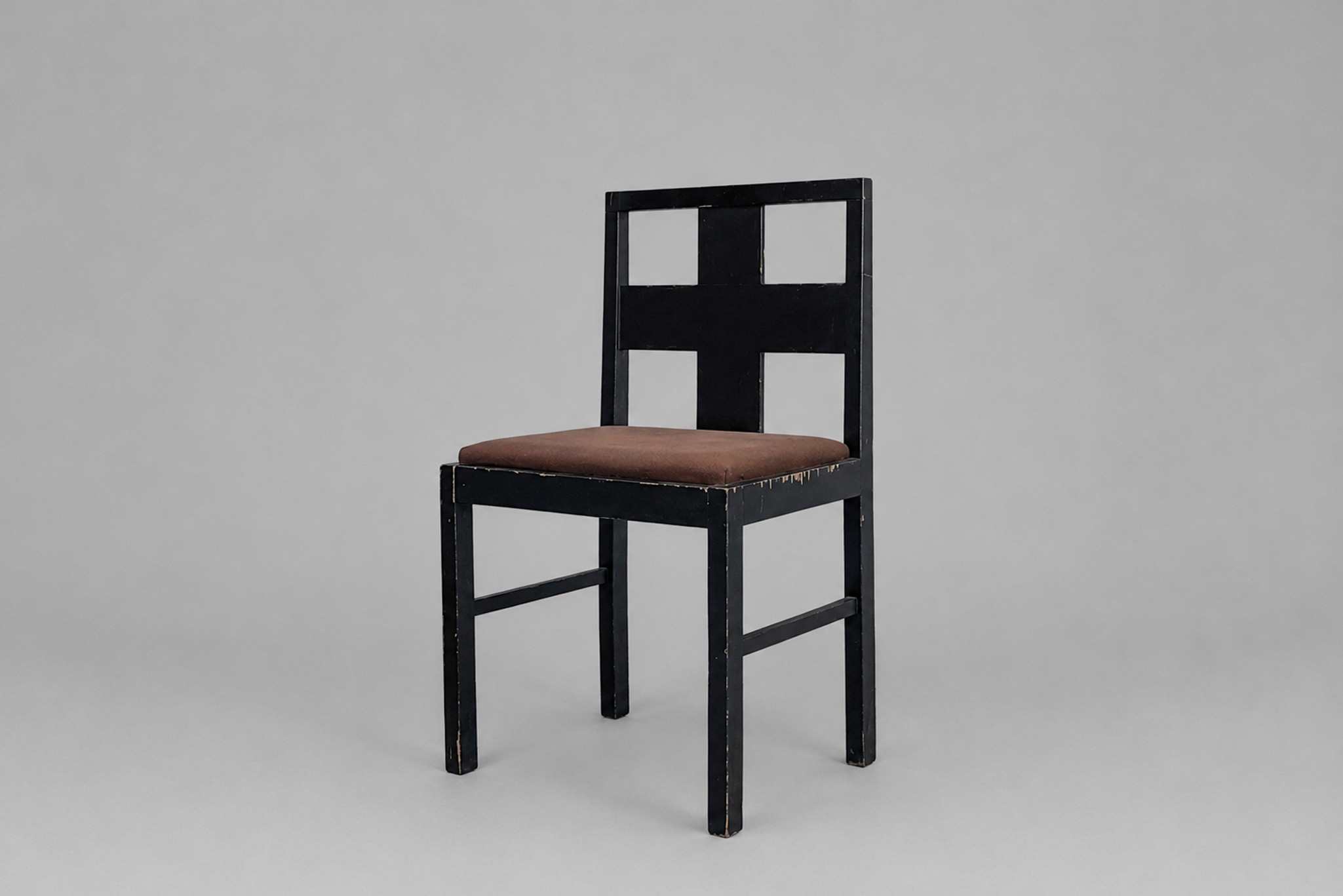
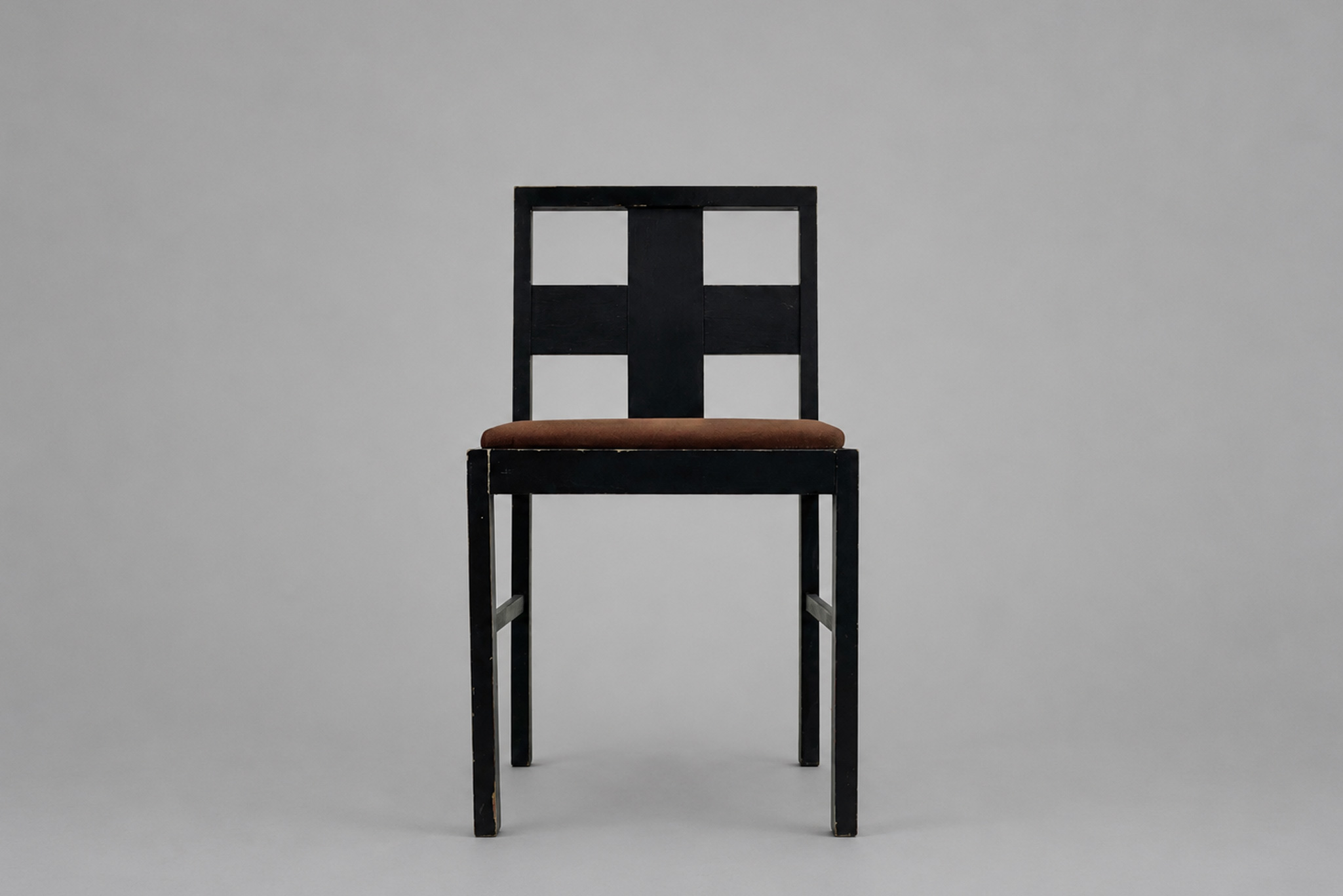
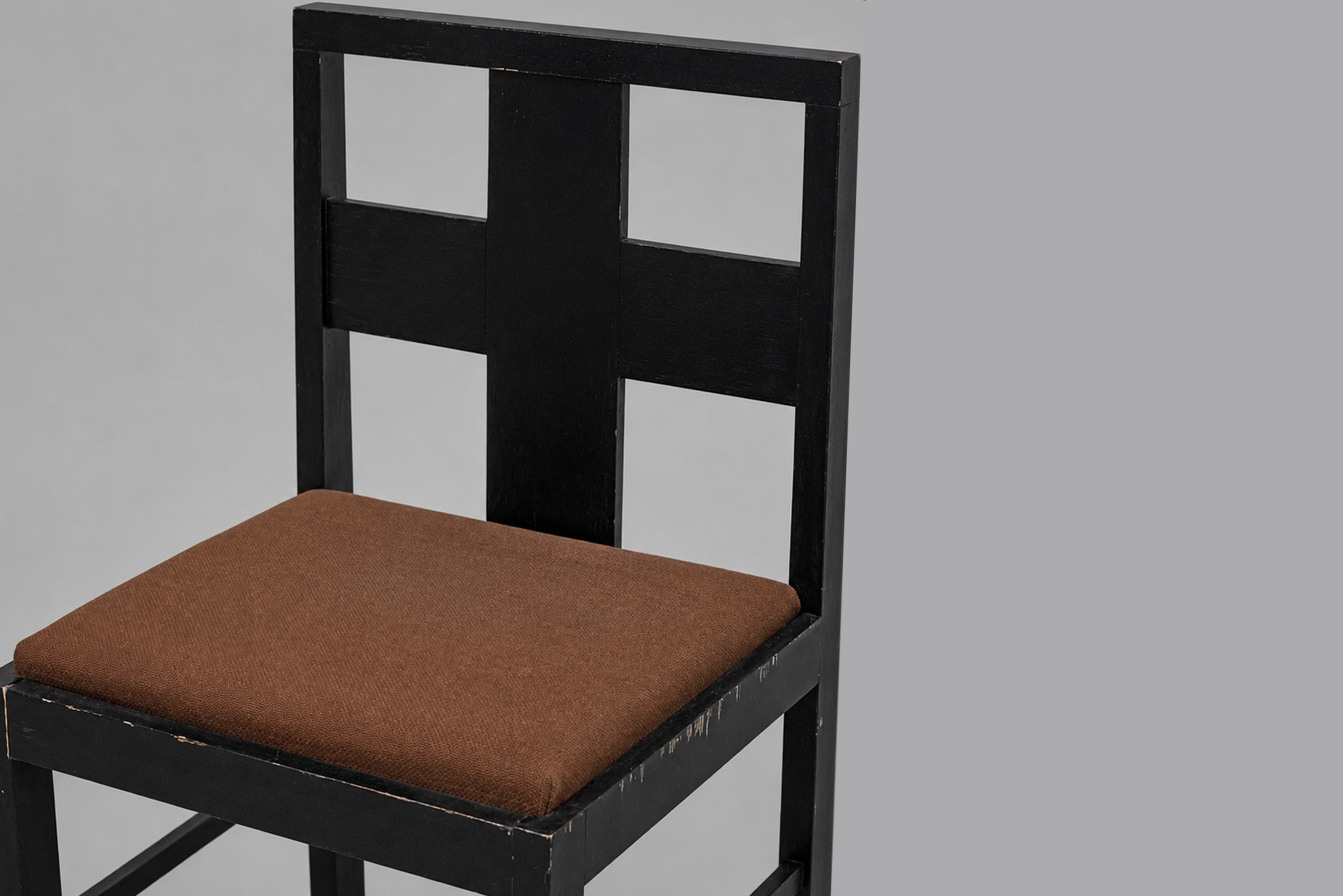
Dining Chair
Designed by Shiro Kuramata
Exclusively produced for the restaurant Ume no Ki in Akanaka
Japan, 1970s
Lacquered wood, upholstered seat
Measurements
43 × 40 × 79h cm
16,9 × 15,9 × 31,2h in
Seat height: 44 cm
Seat height: 17,3 in
Literature
Deyan Sudjic, Shiro Kuramata, Phaidon Press, London, 2013
Takahiko Mori, Shiro Kuramata, Seigensha, Kyoto, 2011
Provenance
Restaurant Ume no Ki in Akanaka
About
This dining chair exemplifies Shiro Kuramata’s singular approach to furniture design, where ordinary objects are transformed through conceptual clarity and visual restraint. Constructed from simple rectilinear elements, the design acquires a sculptural presence through its carefully proportioned geometry and striking graphic silhouette.
The open backrest composition—formed by intersecting planes and voids—creates an effect reminiscent of modernist architecture and Japanese spatial principles. The balance between mass and emptiness, a recurring theme in Kuramata’s work, allows the chair to appear simultaneously solid and lightweight.
Rather than emphasizing ornament, Kuramata focused on the emotional and perceptual qualities of furniture. His work often sought to dematerialize objects, creating designs that interacted with light, space, and movement. Even in early wooden works such as this chair, his interest in visual experimentation and structural poetry is already evident.
Today, Kuramata’s designs are considered among the most important contributions to twentieth-century Japanese design and are represented in major museum collections worldwide.
About Shiro Kuramata
Shiro Kuramata (1934–1991) was one of Japan’s most influential postwar designers and an internationally celebrated figure in contemporary design. After studying cabinetmaking and interior design in Tokyo, he established the Shiro Kuramata Design Office in 1965 and developed a body of work that challenged conventional ideas of furniture and materiality.
Throughout his career, Kuramata experimented with industrial materials including acrylic, aluminum mesh, and glass, often creating pieces that appeared to dissolve visually into space. Works such as How High the Moon and Miss Blanche became icons of late twentieth-century design and demonstrated his ability to merge Japanese sensitivity with radical experimentation.
His work received international recognition through collaborations with Memphis Milano and exhibitions across Europe, the United States, and Japan. Today Kuramata remains one of the defining voices of modern Japanese design, admired for transforming furniture into poetic objects suspended between function and art.