Side Gallery
Side Gallery
WishlistFollow





Follow




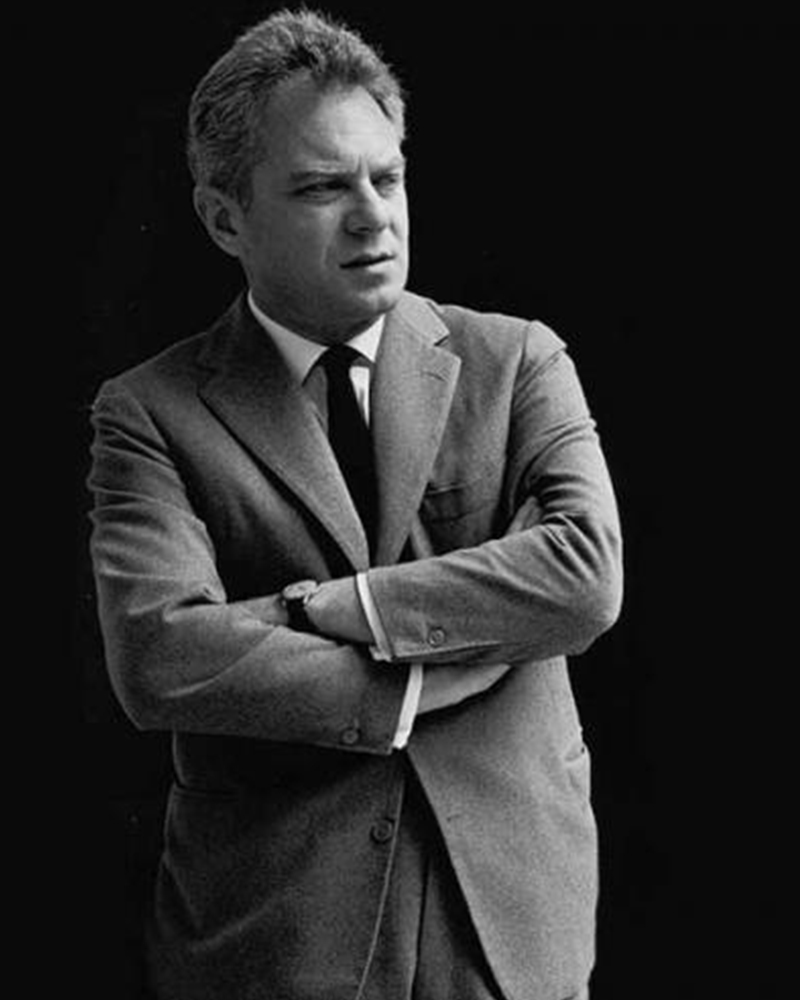
Jorge Zalszupin (b.Warsaw, Poland 1922 - d.São Paulo, Brasil 2020) graduated as an architect in Romania in 1945. His importance in Brazilian design is not yet fully documented. Besides owning the L'Atelier furniture factory, dedicated to modern furniture design, Zalszupin led a unique initiative: he coordinated a team of designers who worked for four different factories owned by the same business group, the Forsa group.
Zalszupin immigrated to Brazil in 1949 and, after a brief stay in the capital of the Republic, settled in São Paulo, a city beginning to commence a grand cycle of industrial growth and significant cultural transformations. In the early 1950s, he opened an architecture firm in partnership with José Gugliota. After some time, he tired of design pieces exclusively for the homes of elite clients and decided to join a group of joiners and produce small series, leading to the formulation of the L'Atelier factory, which soon began to manufacture office furniture and went from being a joinery of handmade production to an industry of mass production. The first piece of the series was made in 1959; it was an armchair, nicknamed 'Danish' by the staff. Composed of rosewood and upholstery, it features toothpick legs, and the arms and front feet resemble the columns designed by Niemeyer for the Palace of Dawn.
In the early 1970s, with serious financial problems, L'Atelier was sold to a business group, which already owned Laminação Brasil (hardware), the Hevea plastic products industry, and the Labo computer factory. The sale was negotiated with Zalszupin to maintain the position as director of product research and development. Zalszupin expanded the team of designers - which already had Oswaldo Mellone - incorporating Paulo Jorge Pedreira and Lílian Weimberg permanently. The designers baptized the business group and began to act as a creative laboratory.
The team of designers enhanced the technical possibilities offered by four different industrial plants. Hevea, which produced plastic commodities, started to produce a very sophisticated line of design products resulting in the establishment of the brand, Hevea, specializing in household items sold in supermarkets. L'Atelier started incorporating plastic into its product line, producing panels for offices and licensing the Hille polypropylene shell chair designed by Robin Day. In addition to the products sent to the market, the design team of the Forsa group tested new ideas, which form an extraordinary collection and that certainly influenced the work of Oswaldo Mellone and Paulo Jorge Pedreira.
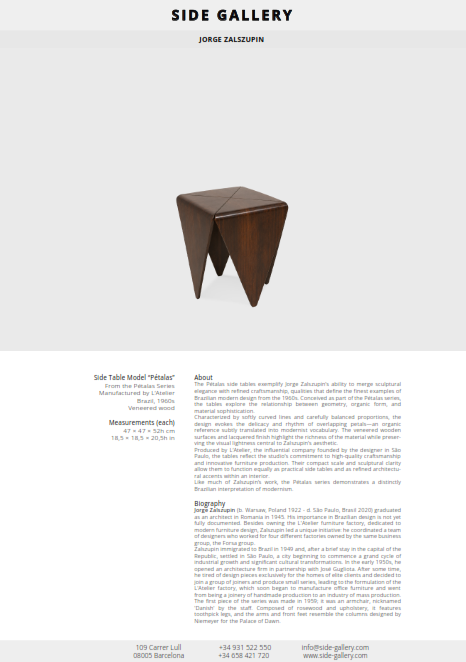
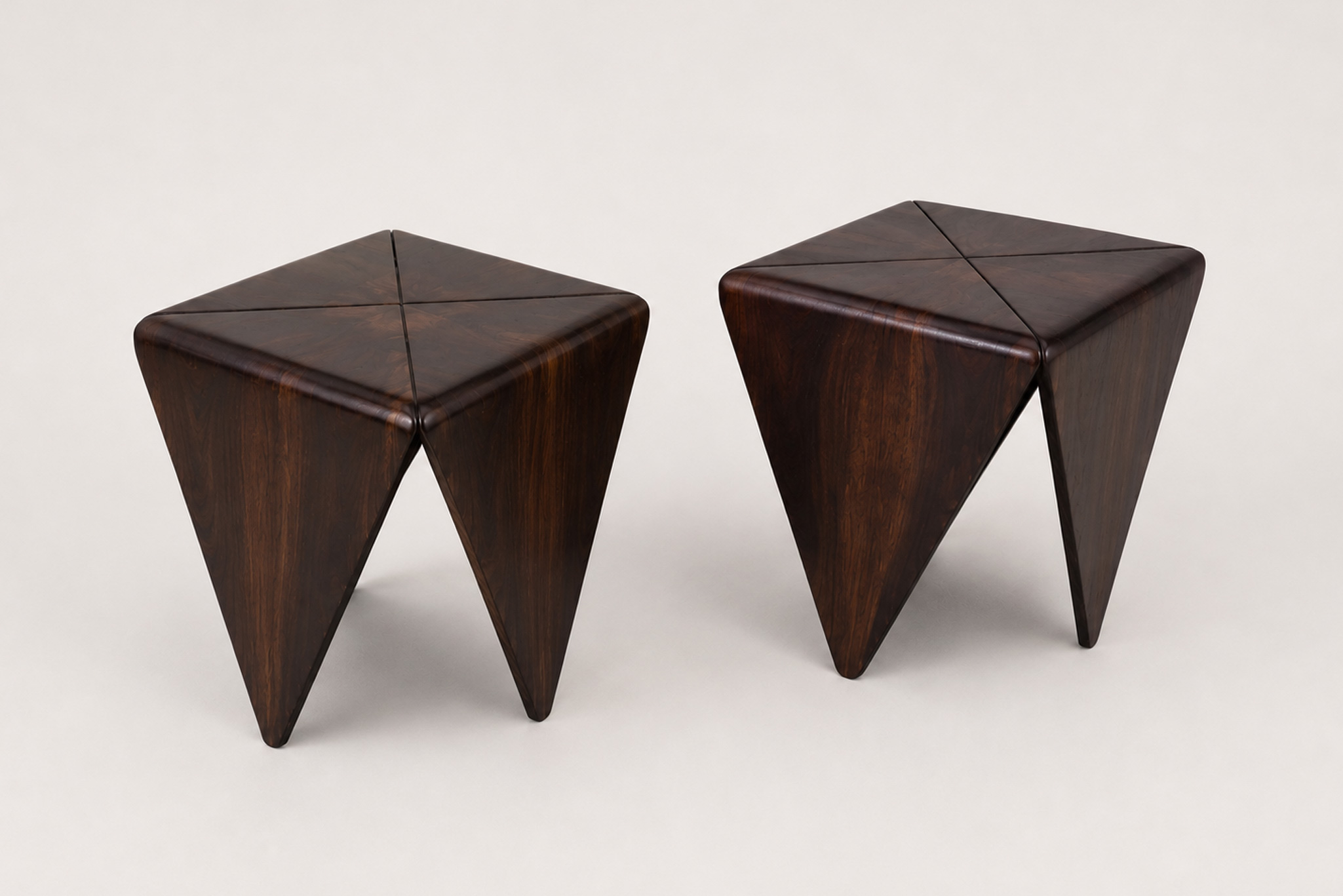
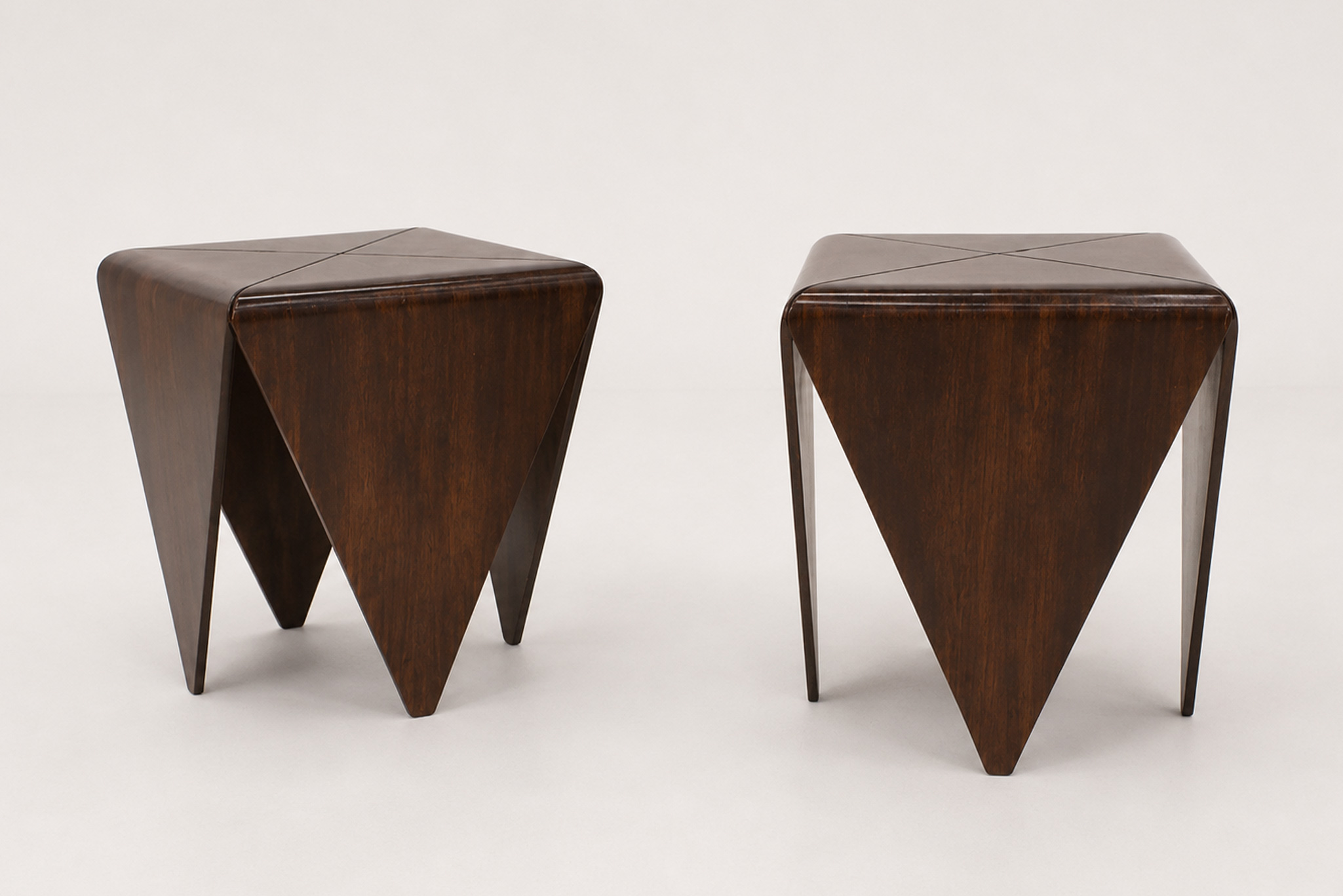
Among his most acclaimed works is the Limestone Table, the success of the piece was determined by the materials. It consists of two simple wooden structures that support a large marble tabletop. Zalszupin lets the material speak for itself. Another renowned design of his was the Romana coffee table, based on a similar design. It has a long marble top affixed to thin, exquisitely curved wooden legs. In his work the Petalas, Zalszupin plays with an organic form inspired by flower petals. The idea works both as a large octagonal table and for a smaller one made of only four elements. Moreover, there is Zalszupin's Andorinha table, another design inspired by nature, taking the form of a swallow. He transforms this inspiration into a multifunctional table with ease, cutting out an opening in the tabletop in which he places a double 'hanger' to be used as a newspaper holder. A newspaper holder can also be seen in his Onda bench. Its sensual lines hint at waves, although Zalszupin does not allow this inspiration to be too obvious. Simple, straight metal legs balance the ergonomic waves of the seat.
His experimentation in the conjoining of different materials resulted in projects such as Veranda or 720. In both armchair designs, Zalszupin explores the possibilities of stretching leather over wooden frames. He exposes the connecting joints and elements of the structures, creating an intriguing visual element.
In his flagship project entitled Dinamarquesa or Danish Zalszupin again played with the idea of a wooden structure and leather seat pulled across the frame. However, in this model, he placed more emphasis on the elegance of the silhouette. His attention to detail and high-quality materials are reminiscent of jewellery, the lower part of its supporting legs are wrapped in what seem to be metal bracelets. The connecting joints are not exposed, yet there is a well-thought-out frame and distinctively curved armrests. Dinamarquesa may be the embodiment of what is best in Zalszupin's designs: where discipline meets the beauty of a liberated, clear line resulting in a harmonious whole that is full of emotion.
The crisis of the 1980s profoundly affected the performance of Forsa group. The design team abandoned the company at the end of the decade. Oswaldo Mellone and Paulo Jorge Pedreira opened their offices, and Jorge Zalszupin dedicated himself exclusively to architecture, an activity he never left.
ENQUIRE ABOUT THE DESIGNER