Side Gallery
Side Gallery
WishlistFollow





Follow
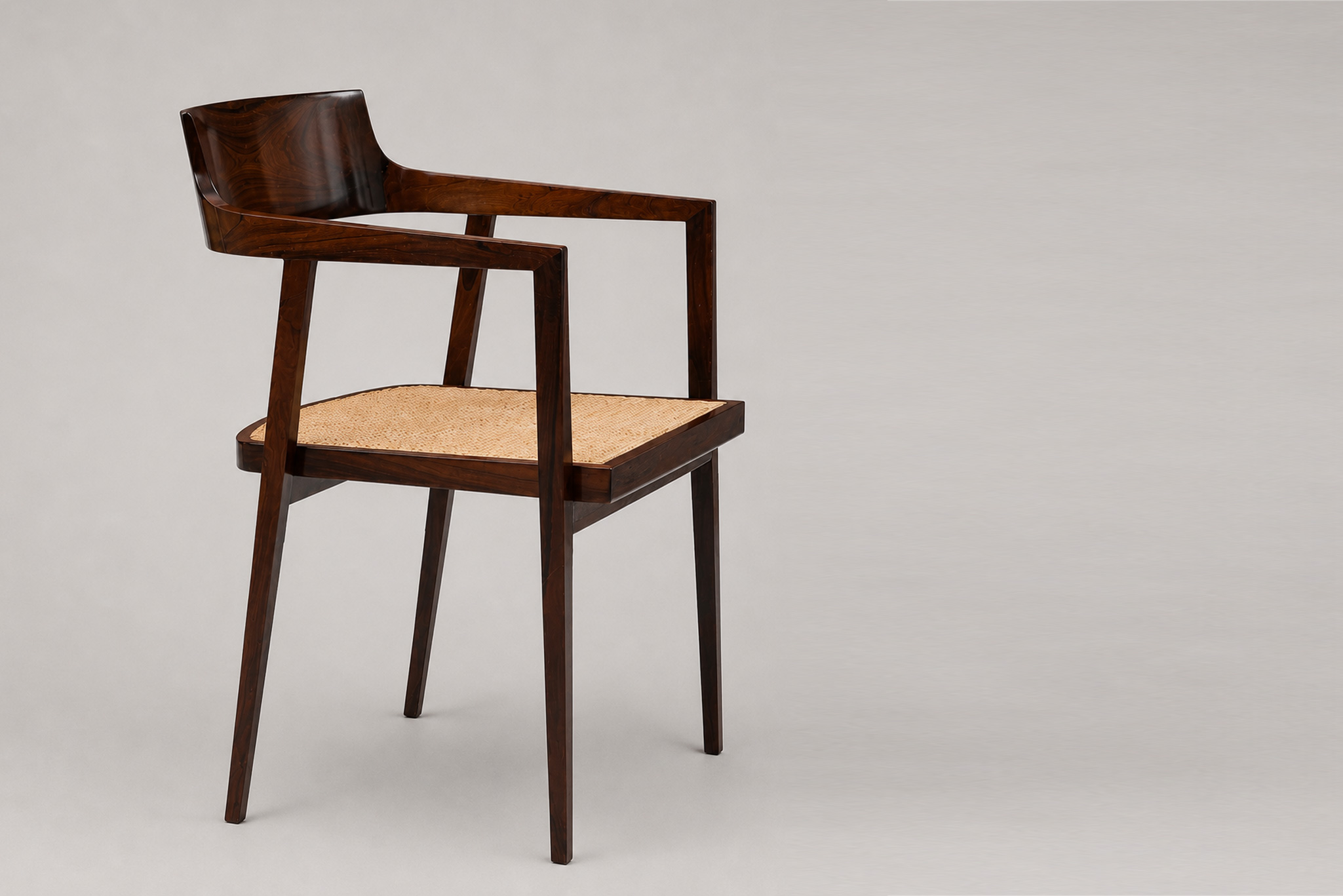
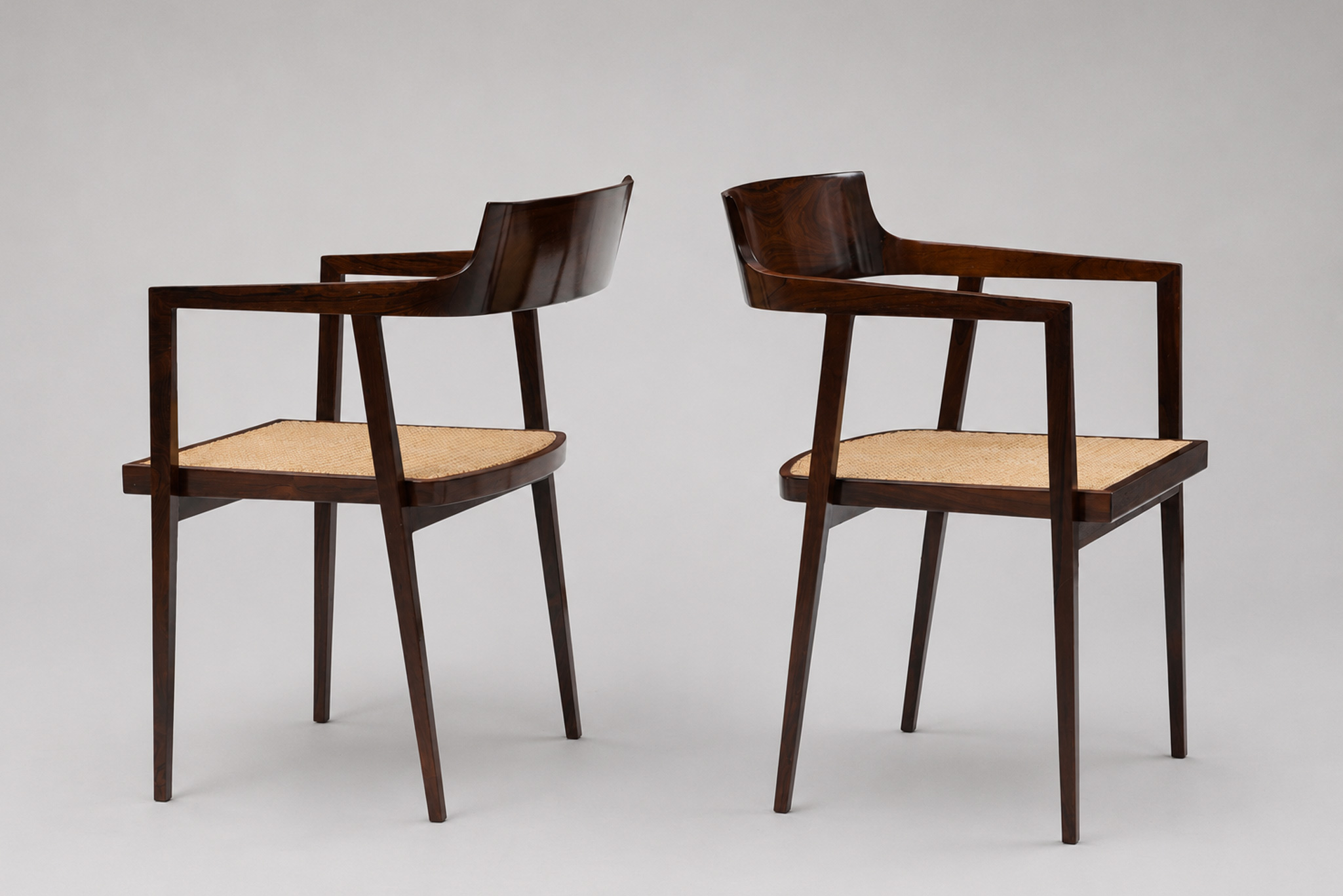




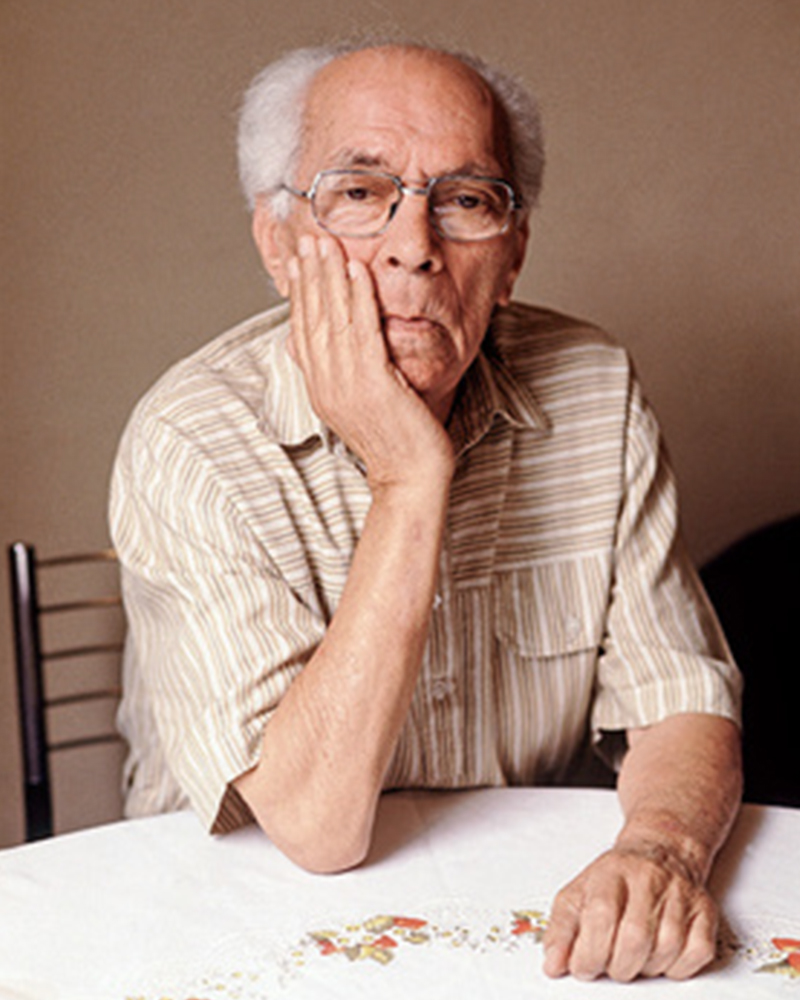
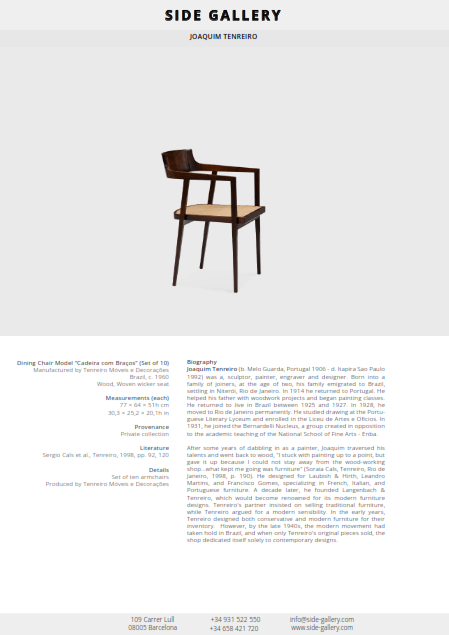
Joaquim Tenreiro (Melo Guarda, Portugal 1906 - Itapira Sao Paulo 1992) was a, sculptor, painter, engraver and designer. Born into a family of joiners, at the age of two, his family emigrated to Brazil, settling in Niterói, Rio de Janeiro. In 1914 he returned to Portugal. He helped his father with woodwork projects and began painting classes. He returned to live in Brazil between 1925 and 1927. In 1928, he moved to Rio de Janeiro permanently. He studied drawing at the Portuguese Literary Lyceum and enrolled in the Liceu de Artes e Ofícios. In 1931, he joined the Bernardelli Nucleus, a group created in opposition to the academic teaching of the National School of Fine Arts - Enba.
After some years of dabbling in as a painter, Joaquim traversed his talents and went back to wood, "I stuck with painting up to a point, but gave it up because I could not stay away from the wood-working shop...what kept me going was furniture" (Soraia Cals, Tenreiro, Rio de Janeiro, 1998, p. 190). He designed for Laubish & Hirth, Leandro Martins, and Francisco Gomes, specializing in French, Italian, and Portuguese furniture. A decade later, he founded Langenbach & Tenreiro, which would become renowned for its modern furniture designs. Tenreiro's partner insisted on selling traditional furniture, while Tenreiro argued for a modern sensibility. In the early years, Tenreiro designed both conservative and modern furniture for their inventory. However, by the late 1940s, the modern movement had taken hold in Brazil, and when only Tenreiro's original pieces sold, the shop dedicated itself solely to contemporary designs.
His success as a designer commenced in 1942 when he was commissioned to design and manufacture the furniture for the residence of Francisco Inácio Peixoto, in Cataguases, in the interior of Minas Gerais. The residence was designed by architect Oscar Niemeyer (1907 - 2012), to whose work Joaquim identified beautifully, creating the commissioned pieces in assimilation with the purity of Niemeyer's architectural forms. The furniture Tenreiro designed for this project were the first pieces made by him in which it is possible to distinguish the sober beauty of form and the wise use of Brazilian wood so identifiable in his works throughout the next two decades.
The Light Armchair (ca.1942), made in ivory wood, with a darker version in imbuia, was upholstered in fabric stamped by Fayga Ostrower (1920 - 2001) and one of his most famous pieces. The chair was conceived according to his principle that Brazilian furniture should be light; in Tenreiro's words, lightness has nothing to do with the weight itself but with grace and functionality. Testimony to the ideological alignment of modern Brazilian furniture, Tenreiro's design is rooted in the principle of stripping back the unnecessary to demonstrate the true beauty of an object while maintaining the utmost function.
His acclaimed Three-legged Chair (ca.1947) associates geometry with colour through the particular use of Brazilian woods. It is chromatically innovative composed of a combination of timbers (imbuia, roxinho, rosewood, ivory, and cabreúva), all with varying shades. Tenreiro spoke of the technical difficulties in creating these chairs—of combining woods that retain different levels of humidity, dry at varying rates, and expand and shrink differently—but the design's success speaks to his technical prowess and to his artistic vision. Like other Tenreiro furniture of this period, it has a light and luminous appearance, contrasting with the solid and sober furniture he previously created for Laubisch & Hirth.
In some chairs and armchairs, Joaquim explored weaving natural materials such as straw that evoke indigenous braiding and basketry. The use of wood and natural fibers is generally associated with adapting furniture to a tropical climate; together with these organic compositions, other works of Tenreiro's, such as the Structural Chair, present straight lines, and geometric elements, creating structures from both wood (1957) and metal (1961). Tenreiro's deep knowledge of wood is illustrated through the poetic features in his works.
At the end of the 1960s, he closed his stores and stopped manufacturing furniture for personal and market reasons. Instead, he returned to the realms of painting and dedicated himself to sculpture. Techniques discovered during his design days can be seen in his sculptures. For example, the chromatic composition of woods he employed in the Three-Foot Chair was later resumed in some sculptural reliefs, in which the artist explores the differences in color, textures, and the veins of wood; his work Circles (1979) demonstrated this.
Tenreiro's productions are renowned for their combination of modern characteristics that define mid-century Brazilian furniture, such as simplicity, the use of local materials, function, and artistic beauty.
ENQUIRE ABOUT THE DESIGNER