Swing Chair
Manufactured by Government Workshops, Chandigarh
India, 1953
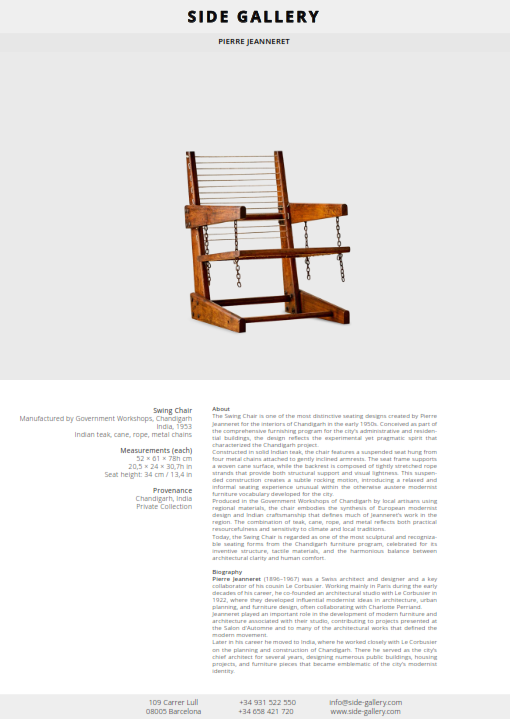
Indian teak, cane, rope, metal chains
Measurements (each)
52 × 61 × 78h cm
20,5 × 24 × 30,7h in
Seat height: 34 cm / 13,4 in
Provenance
Chandigarh, India
Private Collection
About
The Swing Chair is one of the most distinctive seating designs created by Pierre Jeanneret for the interiors of Chandigarh in the early 1950s. Conceived as part of the comprehensive furnishing program for the city’s administrative and residential buildings, the design reflects the experimental yet pragmatic spirit that characterized the Chandigarh project.
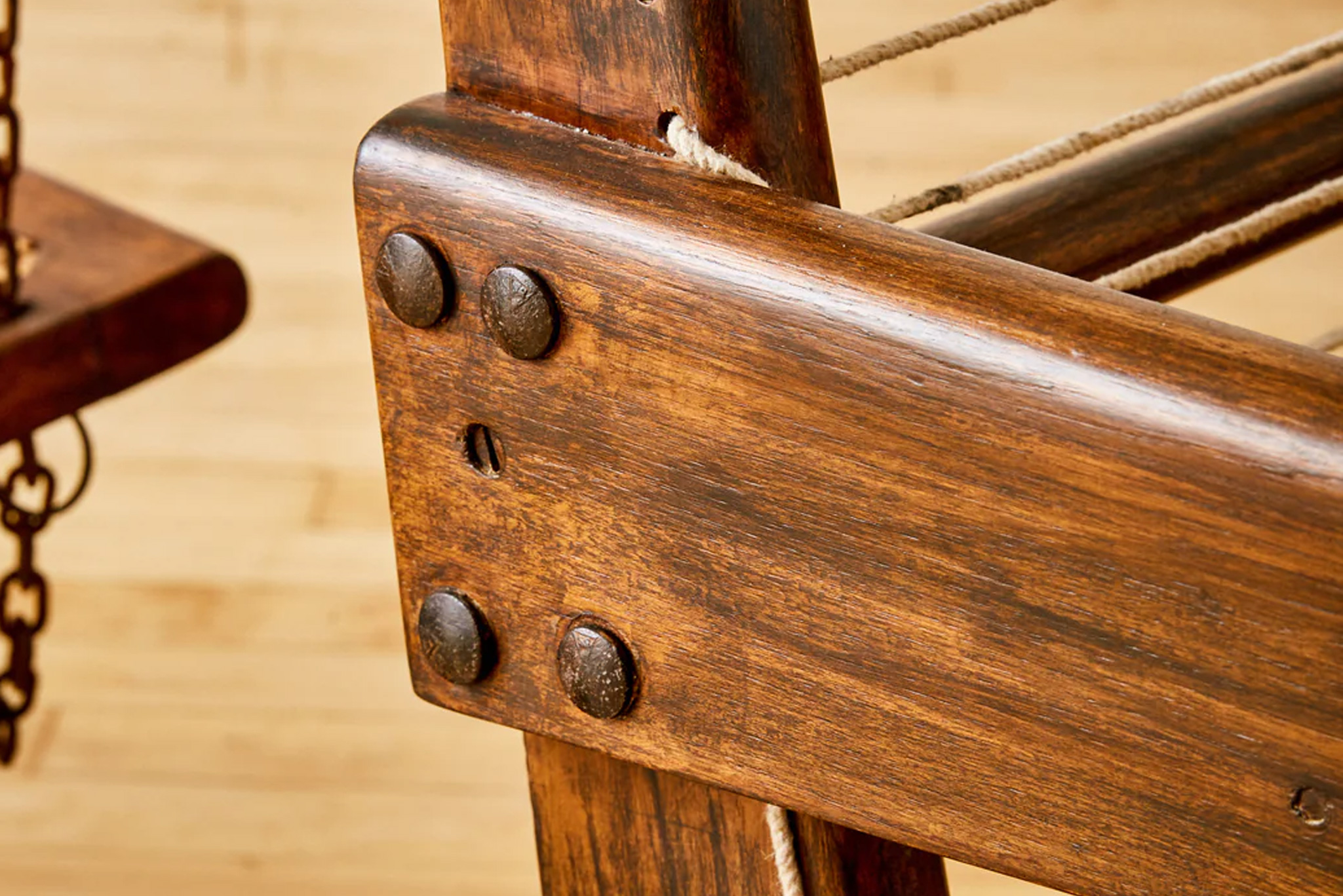
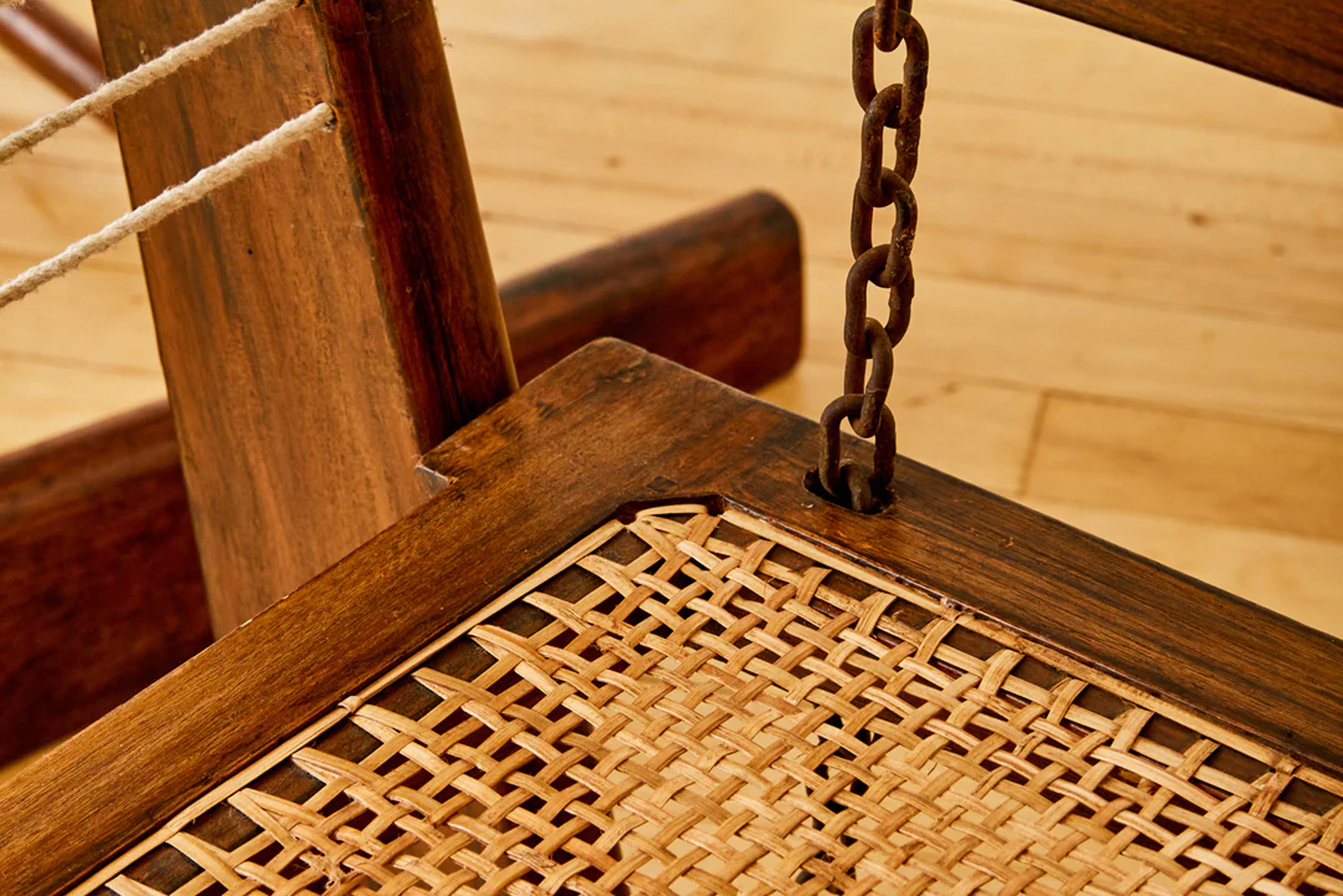
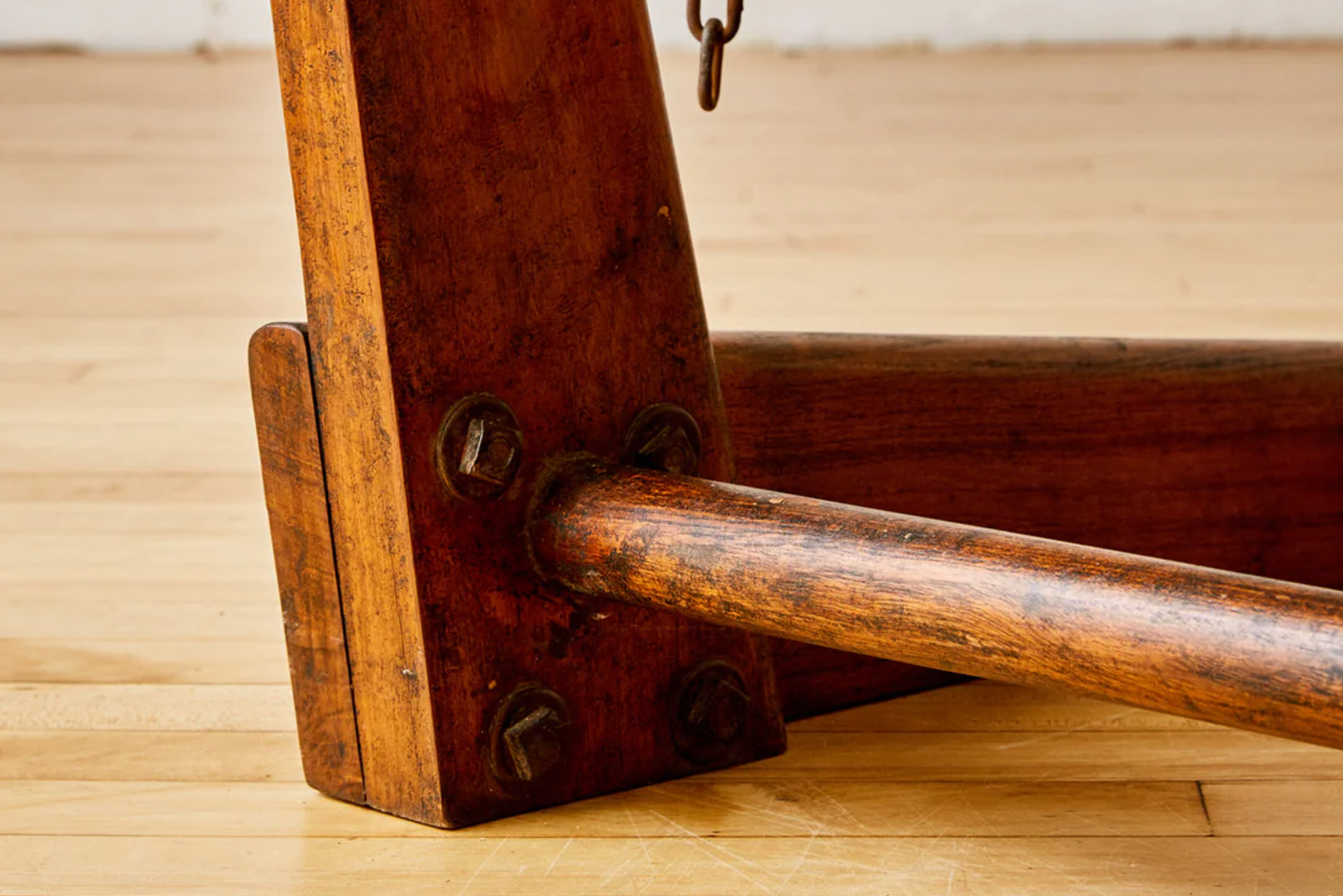
Constructed in solid Indian teak, the chair features a suspended seat hung from four metal chains attached to gently inclined armrests. The seat frame supports a woven cane surface, while the backrest is composed of tightly stretched rope strands that provide both structural support and visual lightness. This suspended construction creates a subtle rocking motion, introducing a relaxed and informal seating experience unusual within the otherwise austere modernist furniture vocabulary developed for the city.
Produced in the Government Workshops of Chandigarh by local artisans using regional materials, the chair embodies the synthesis of European modernist design and Indian craftsmanship that defines much of Jeanneret’s work in the region. The combination of teak, cane, rope, and metal reflects both practical resourcefulness and sensitivity to climate and local traditions.
Today, the Swing Chair is regarded as one of the most sculptural and recognizable seating forms from the Chandigarh furniture program, celebrated for its inventive structure, tactile materials, and the harmonious balance between architectural clarity and human comfort.
Biography
Pierre Jeanneret (1896–1967) was a Swiss architect and designer and a key collaborator of his cousin Le Corbusier. Working mainly in Paris during the early decades of his career, he co-founded an architectural studio with Le Corbusier in 1922, where they developed influential modernist ideas in architecture, urban planning, and furniture design, often collaborating with Charlotte Perriand.
Jeanneret played an important role in the development of modern furniture and architecture associated with their studio, contributing to projects presented at the Salon d'Automne and to many of the architectural works that defined the modern movement.
Later in his career he moved to India, where he worked closely with Le Corbusier on the planning and construction of Chandigarh. There he served as the city’s chief architect for several years, designing numerous public buildings, housing projects, and furniture pieces that became emblematic of the city’s modernist identity.