Standard floor lamp
Manufactured by Government Workshops, Chandigarh
India, 1955
Solid teak, Lacquered aluminum
Measurements
72 × 43 × 169h cm
28,3 × 16,9 × 66,5 h in
Provenance
Chandigarh, India
Private Collection
Details
Manufacturer’s Label
Literature
Le Corbusier Pierre Jeanneret: The Indian Adventure, Design-Art-Architecture, Touchaleaume and Moreau, p. 598
About
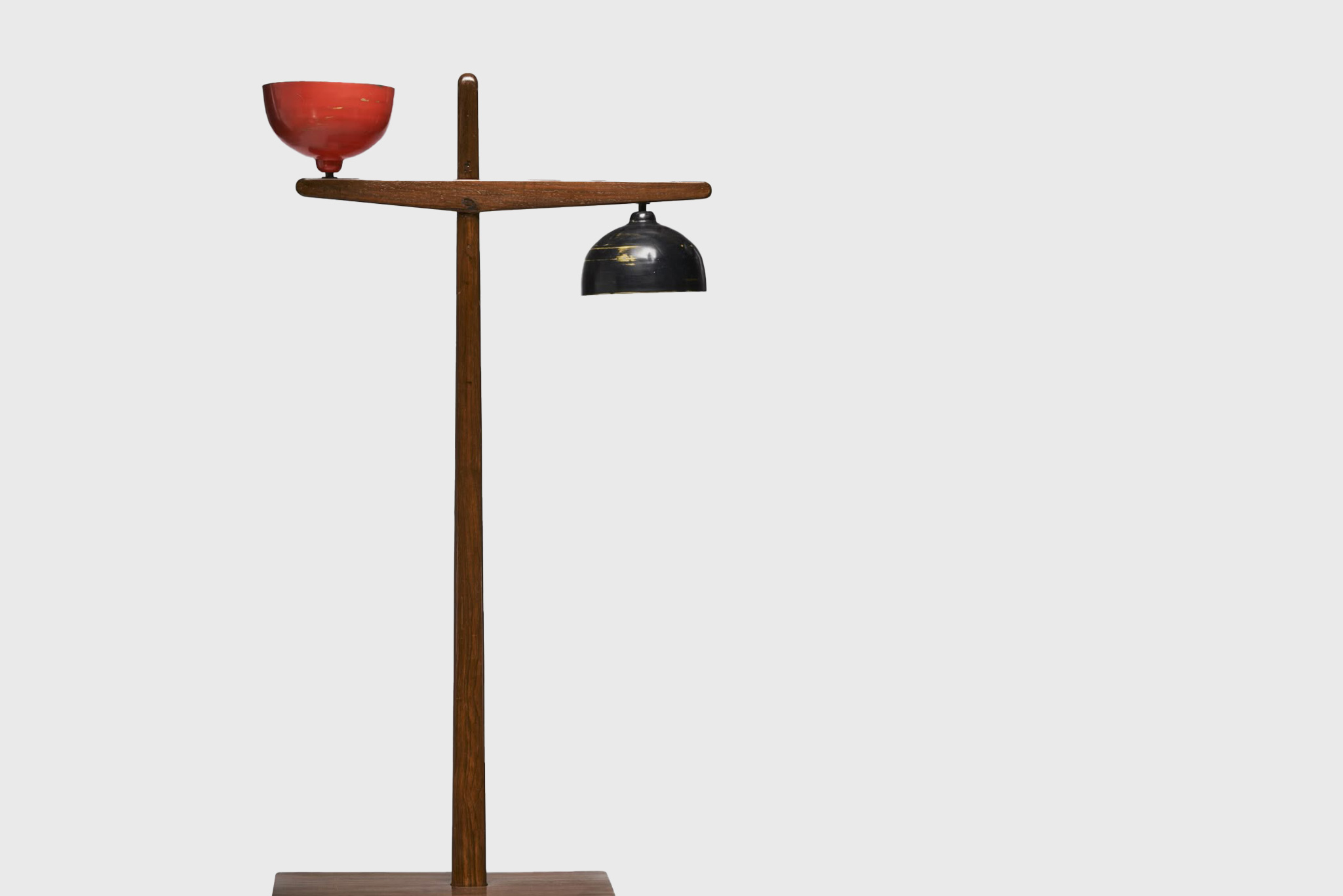
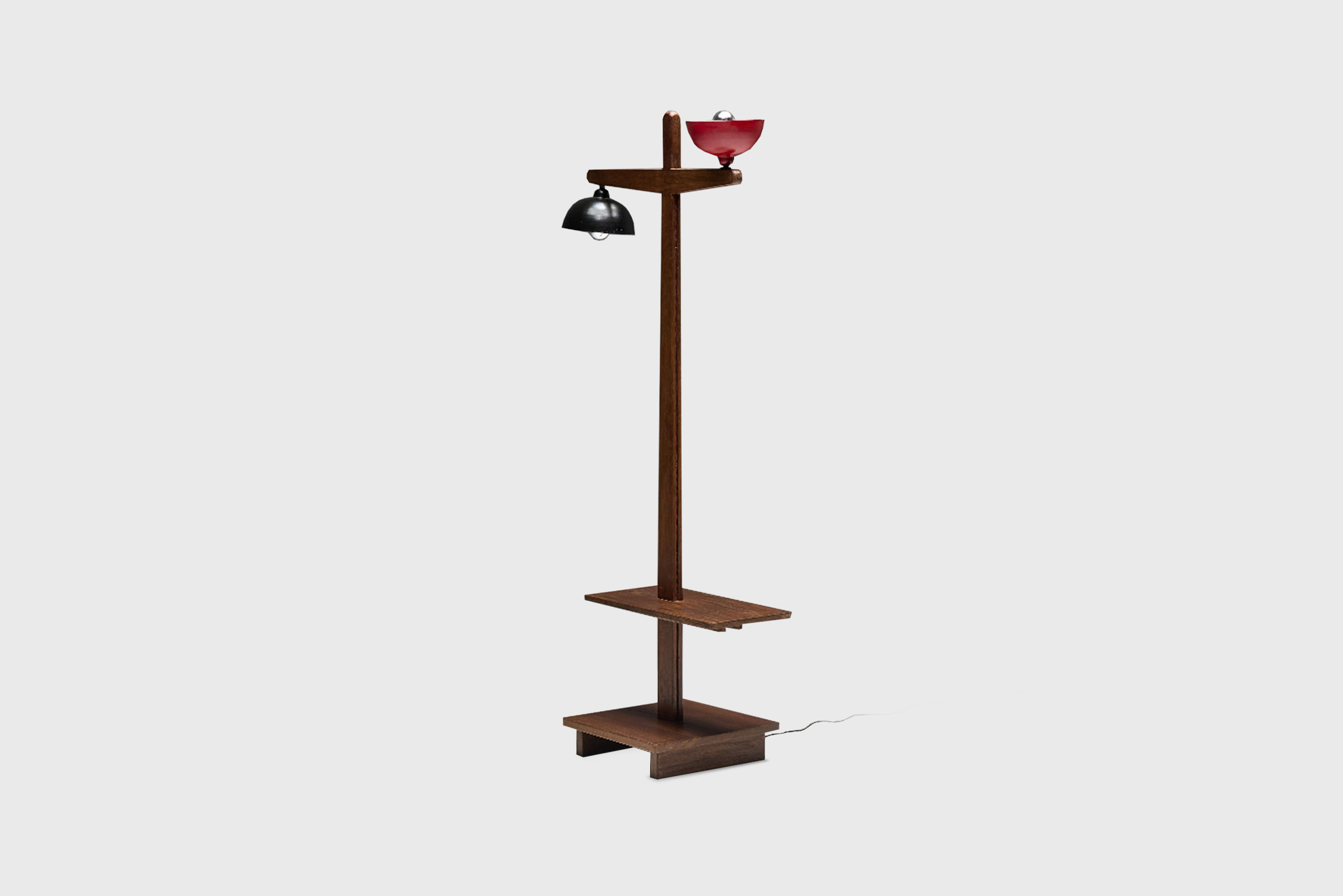
This iconic floor lamp, designed in 1955 by Pierre Jeanneret for the civic buildings of Chandigarh, exemplifies the integrated approach to architecture and furniture that defined the city’s modernist identity.
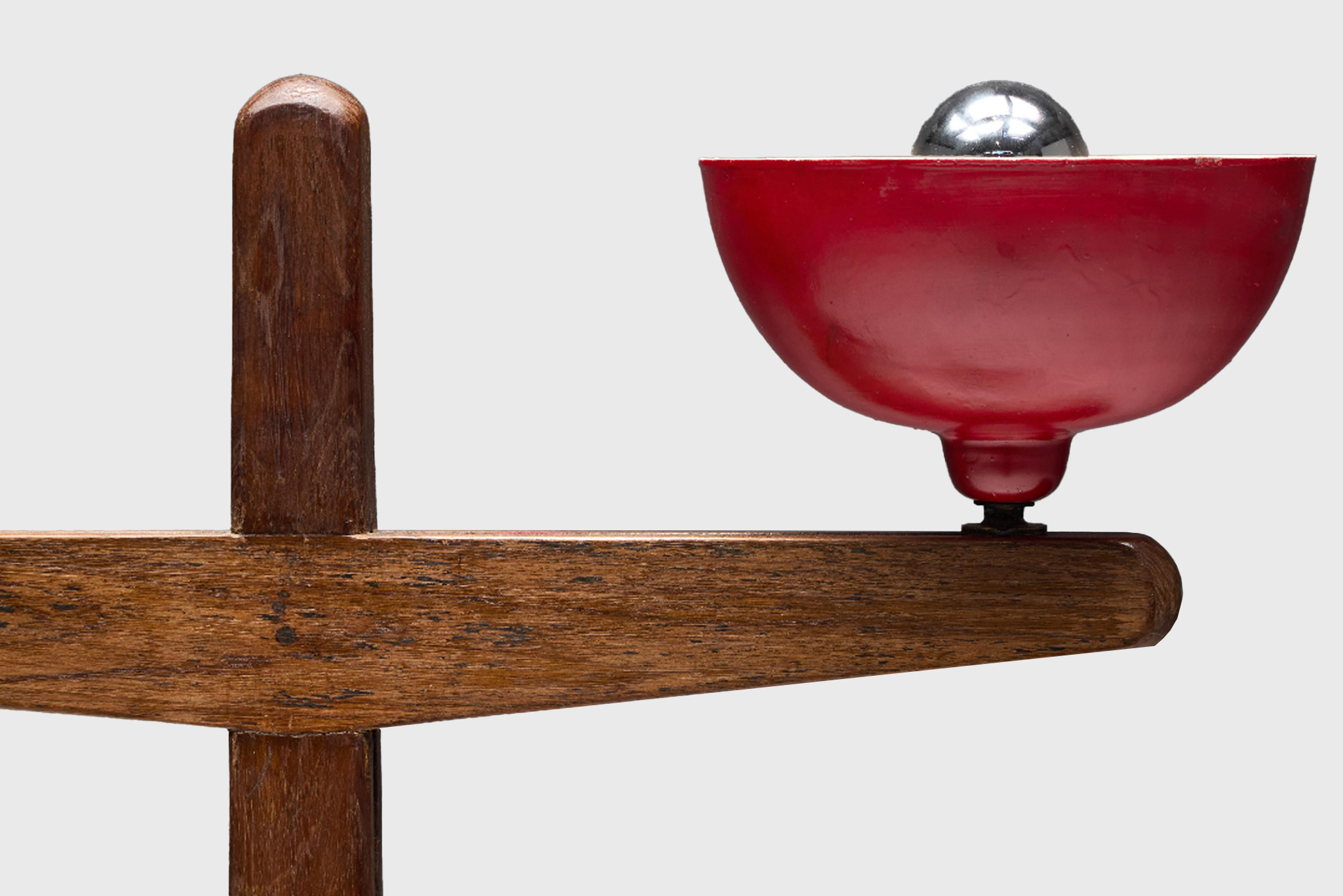
Crafted in solid teak, the lamp features a conical central shaft intersected by a horizontal arm supporting two embossed aluminum dome shades lacquered in black and red. The opposing orientation of the shades creates a dynamic sculptural balance while providing bidirectional illumination.
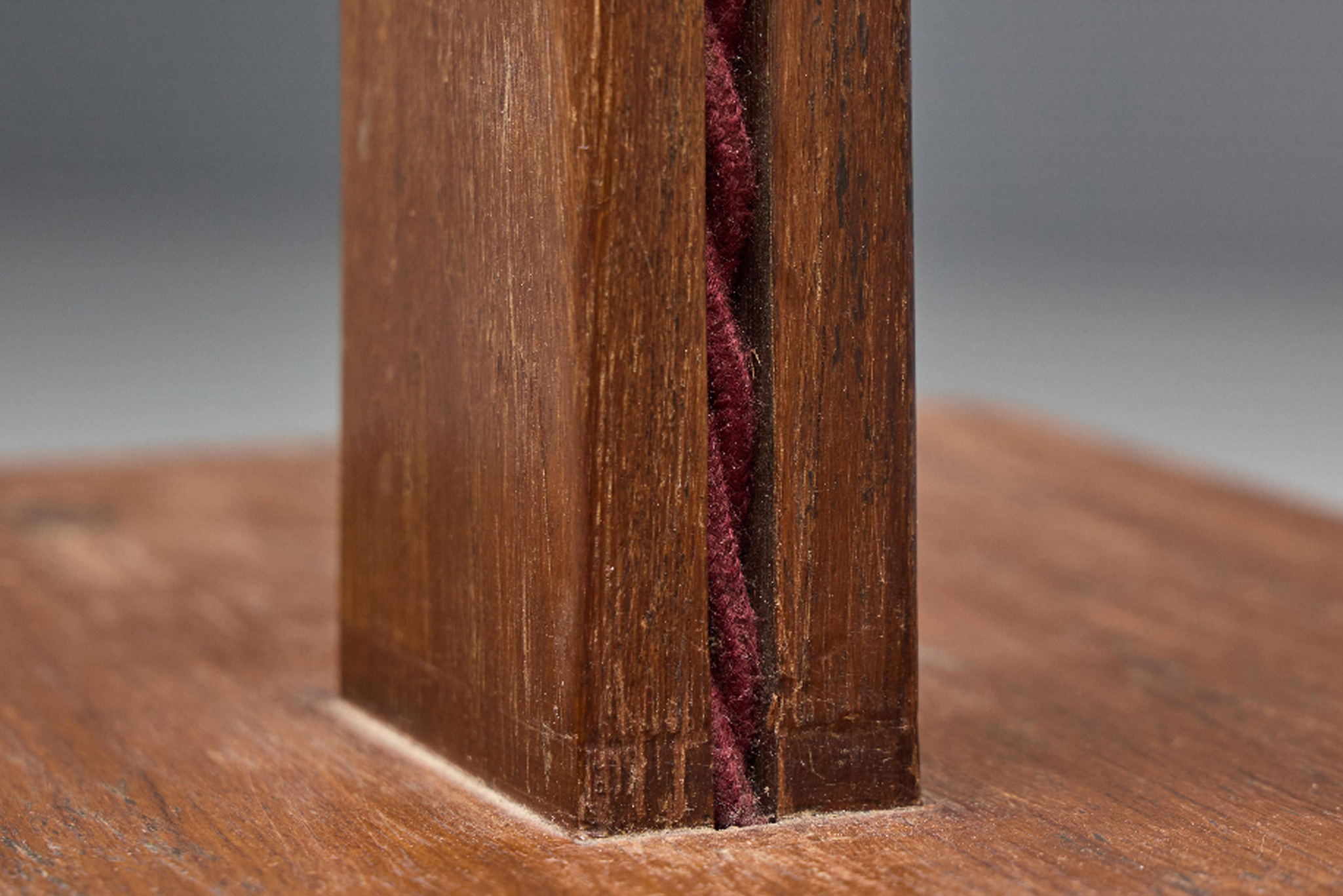
The structure rises from a square base articulated with two plank-like supports and incorporates an offset rectangular teak side table, seamlessly merging lighting and functional surface within a single architectural gesture. The teak used in these lamps was sourced locally during the construction of Chandigarh, reflecting early ecological considerations and the pragmatic resourcefulness characteristic of the project. Originally conceived for administrative interiors, this model embodies the clarity of form, structural honesty, and material intelligence that define Jeanneret’s contribution to mid-century modern design in India.
Biography
Pierre Jeanneret (1896–1967) was a Swiss architect and designer and a key collaborator of his cousin Le Corbusier. Working mainly in Paris during the early decades of his career, he co-founded an architectural studio with Le Corbusier in 1922, where they developed influential modernist ideas in architecture, urban planning, and furniture design, often collaborating with Charlotte Perriand.
Jeanneret played an important role in the development of modern furniture and architecture associated with their studio, contributing to projects presented at the Salon d'Automne and to many of the architectural works that defined the modern movement.
Later in his career he moved to India, where he worked closely with Le Corbusier on the planning and construction of Chandigarh. There he served as the city’s chief architect for several years, designing numerous public buildings, housing projects, and furniture pieces that became emblematic of the city’s modernist identity.