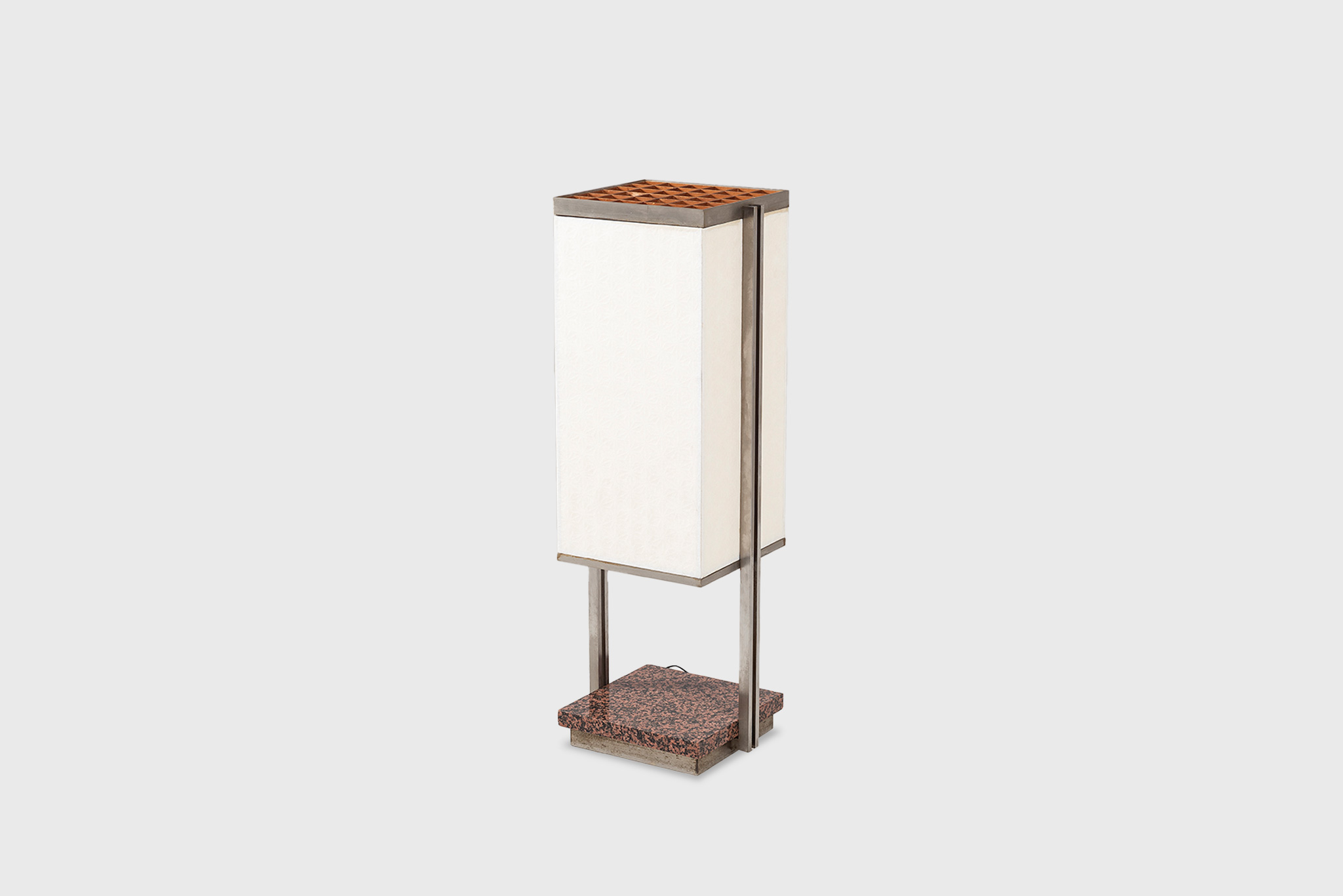
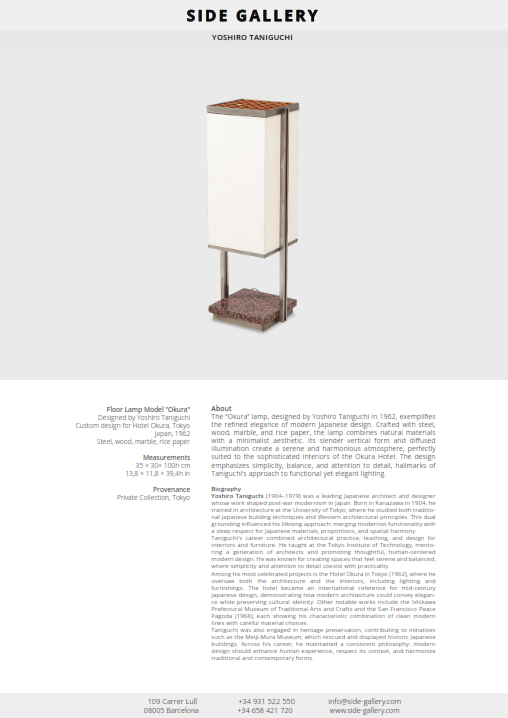
Floor Lamp Model "Okura"
Designed by Yoshiro Taniguchi
Custom design for Hotel Okura, Tokyo
Japan, 1962
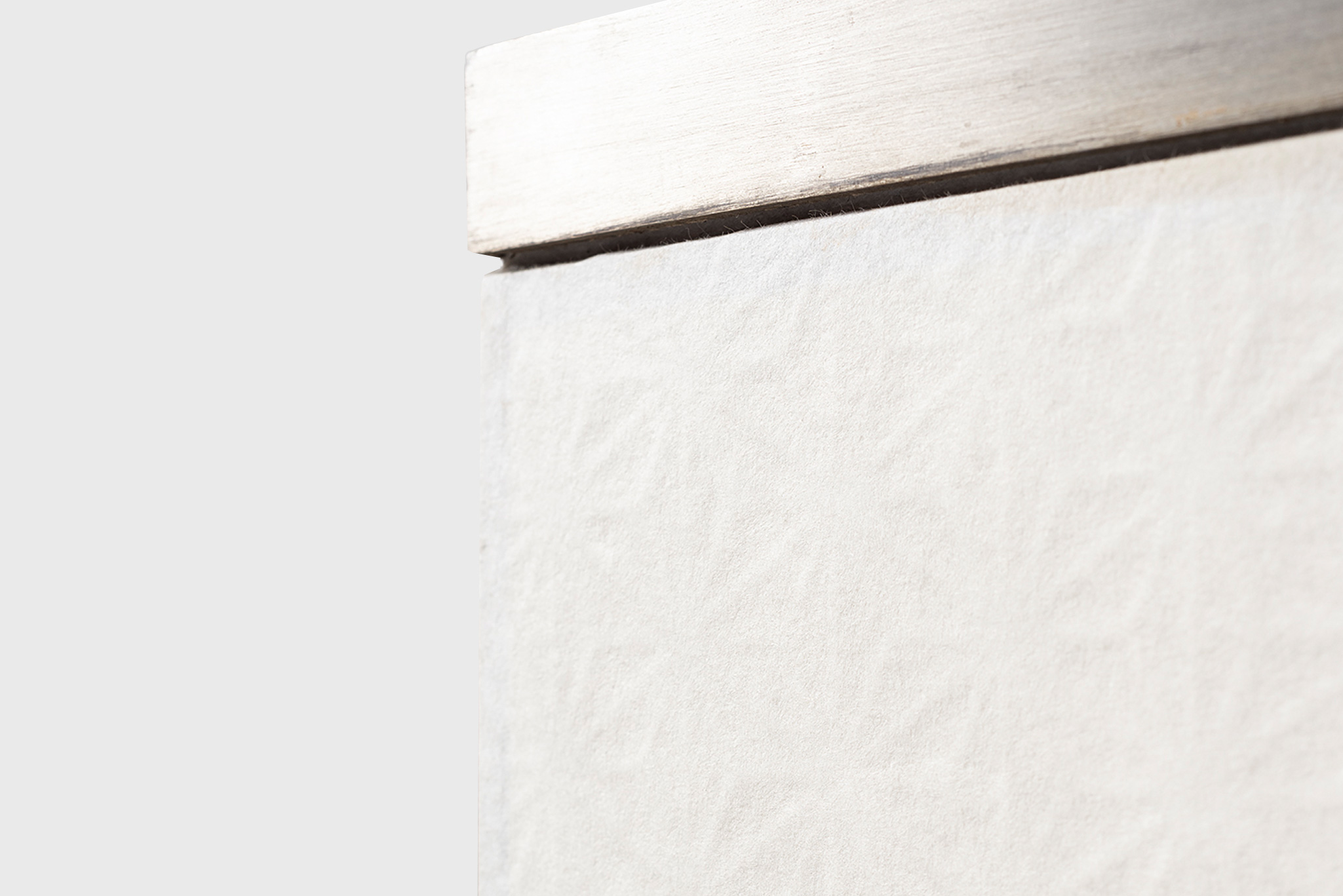
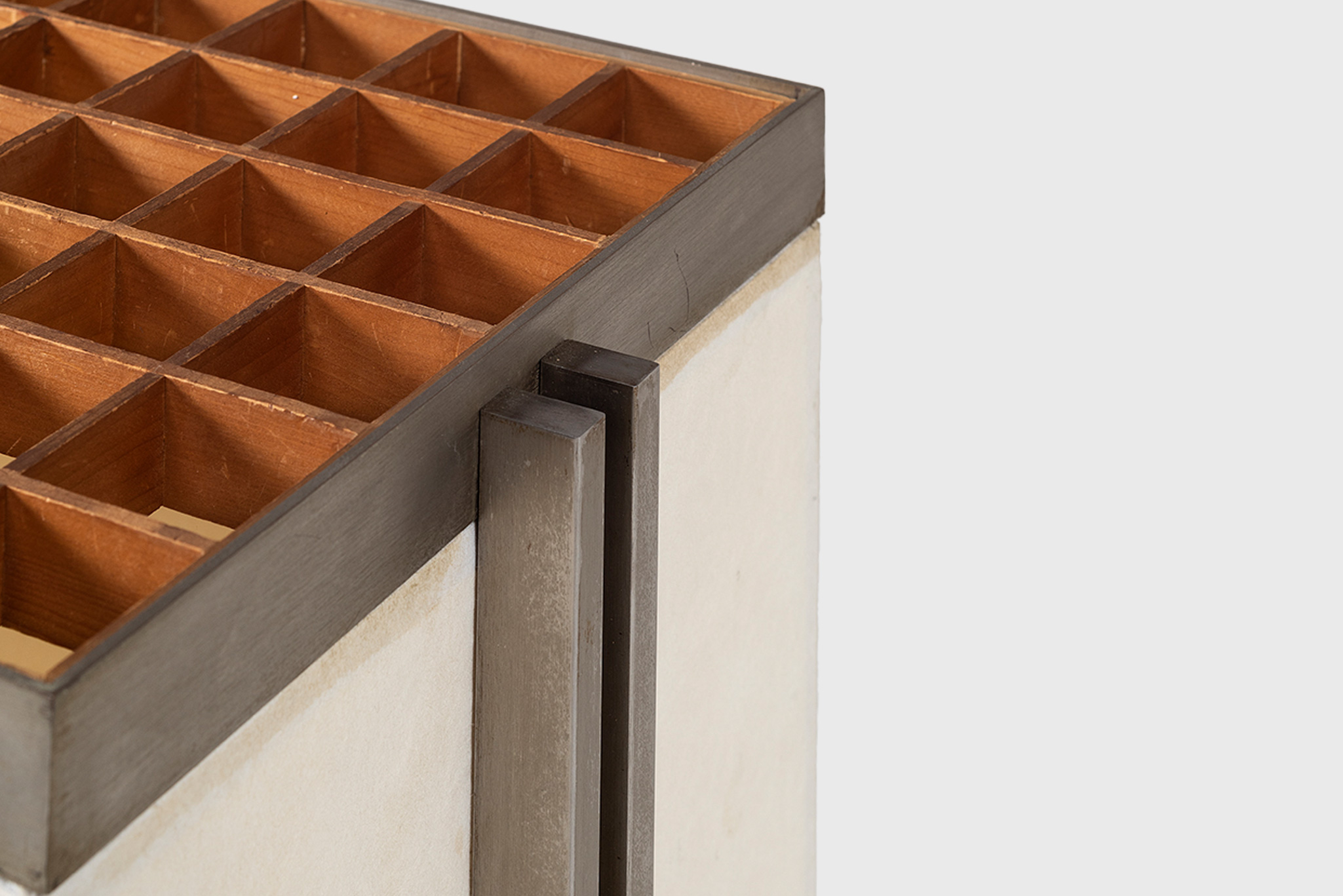
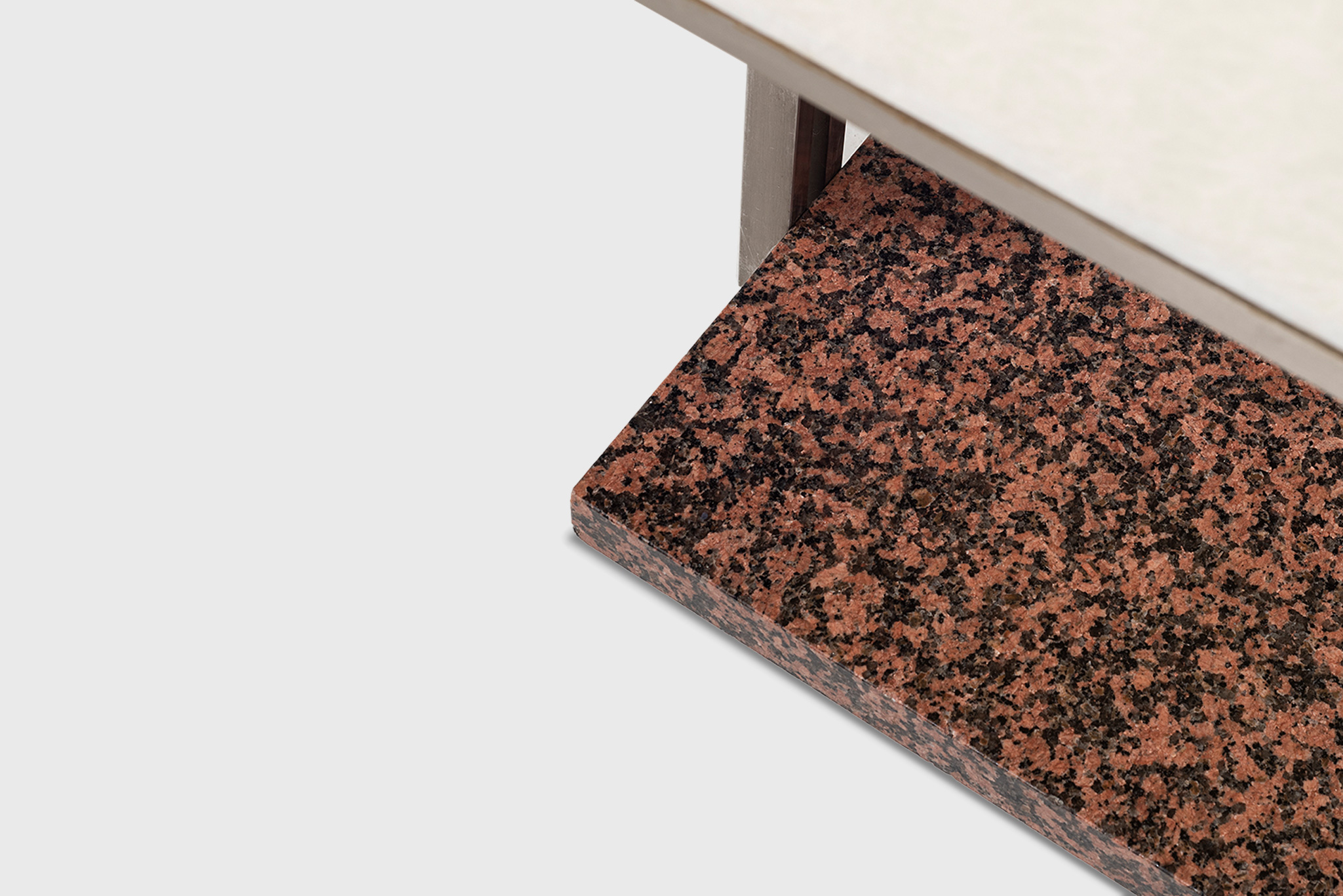
Steel, wood, marble, rice paper
Measurements
35 × 30× 100h cm
13,8 × 11,8 × 39,4h in
Provenance
Private Collection, Tokyo
About
The “Okura” lamp, designed by Yoshiro Taniguchi in 1962, exemplifies the refined elegance of modern Japanese design. Crafted with steel, wood, marble, and rice paper, the lamp combines natural materials with a minimalist aesthetic. Its slender vertical form and diffused illumination create a serene and harmonious atmosphere, perfectly suited to the sophisticated interiors of the Okura Hotel. The design emphasizes simplicity, balance, and attention to detail, hallmarks of Taniguchi’s approach to functional yet elegant lighting.
Biography
Yoshiro Taniguchi (1904–1979) was a leading Japanese architect and designer whose work shaped post‑war modernism in Japan. Born in Kanazawa in 1904, he trained in architecture at the University of Tokyo, where he studied both traditional Japanese building techniques and Western architectural principles. This dual grounding influenced his lifelong approach: merging modernist functionality with a deep respect for Japanese materials, proportions, and spatial harmony.
Taniguchi’s career combined architectural practice, teaching, and design for interiors and furniture. He taught at the Tokyo Institute of Technology, mentoring a generation of architects and promoting thoughtful, human‑centered modern design. He was known for creating spaces that feel serene and balanced, where simplicity and attention to detail coexist with practicality.
Among his most celebrated projects is the Hotel Okura in Tokyo (1962), where he oversaw both the architecture and the interiors, including lighting and furnishings. The hotel became an international reference for mid-century Japanese design, demonstrating how modern architecture could convey elegance while preserving cultural identity. Other notable works include the Ishikawa Prefectural Museum of Traditional Arts and Crafts and the San Francisco Peace Pagoda (1968), each showing his characteristic combination of clean modern lines with careful material choices.
Taniguchi was also engaged in heritage preservation, contributing to initiatives such as the Meiji‑Mura Museum, which rescued and displayed historic Japanese buildings. Across his career, he maintained a consistent philosophy: modern design should enhance human experience, respect its context, and harmonize traditional and contemporary forms.