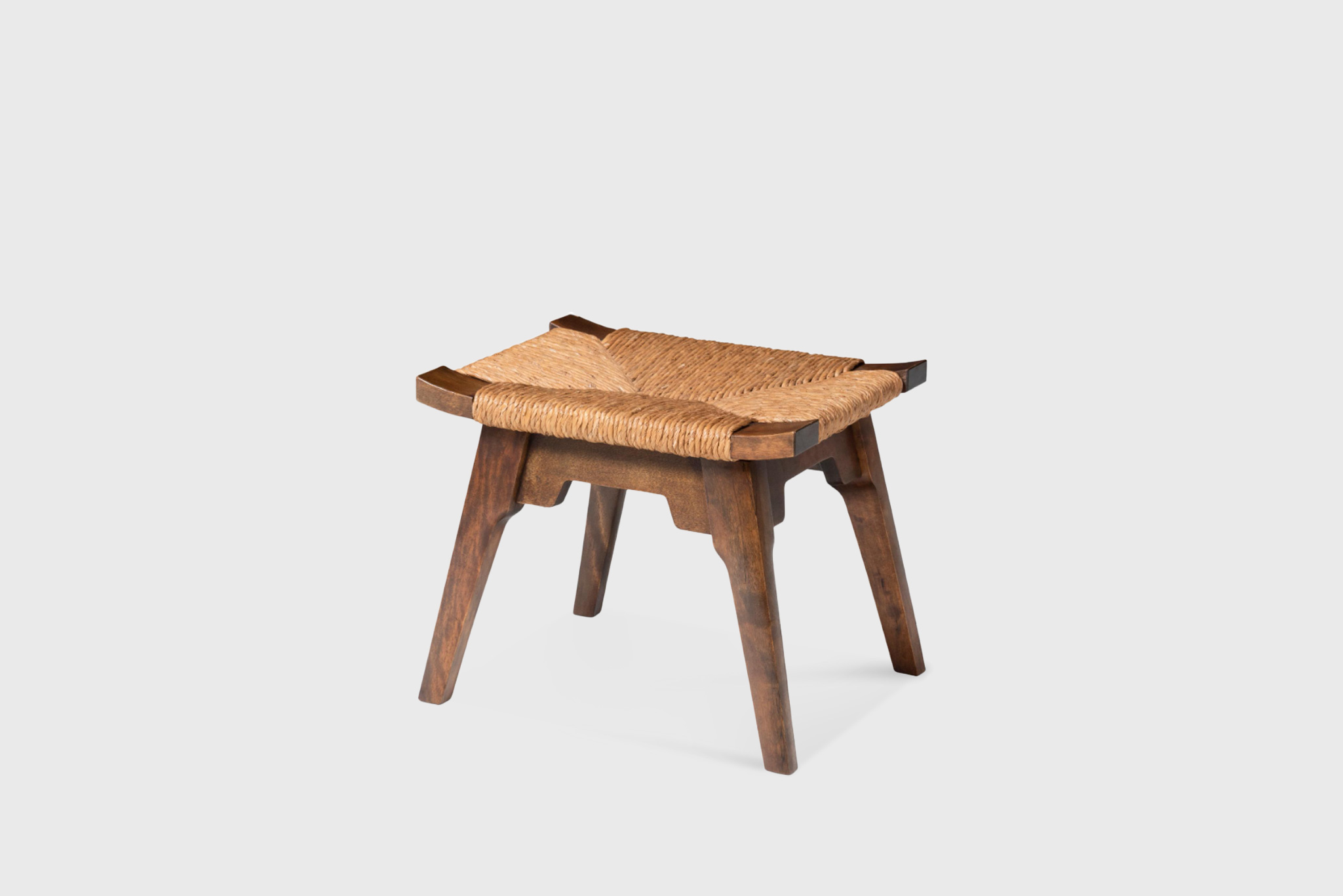
Low Stool
Manufactured by Matsumoto Mingei Furniture
Japan, 1936
Cherry wood, seagrass
Measurements
41 × 34 × 34h cm
16,1 × 13,4 × 13,4h in
Seat height: 33,5 cm / 13,2 in
Provenance
Private collection, Japan
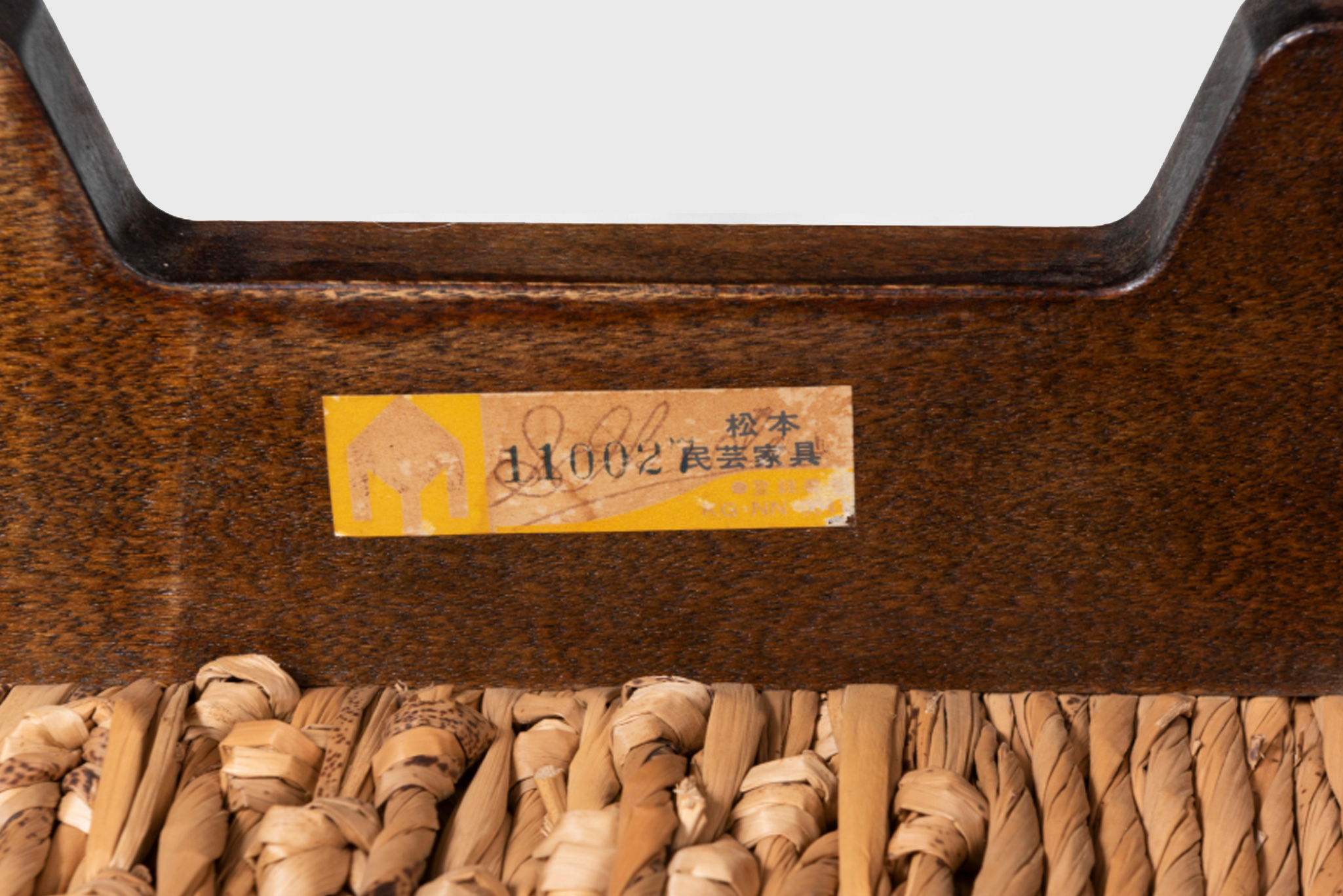
Details
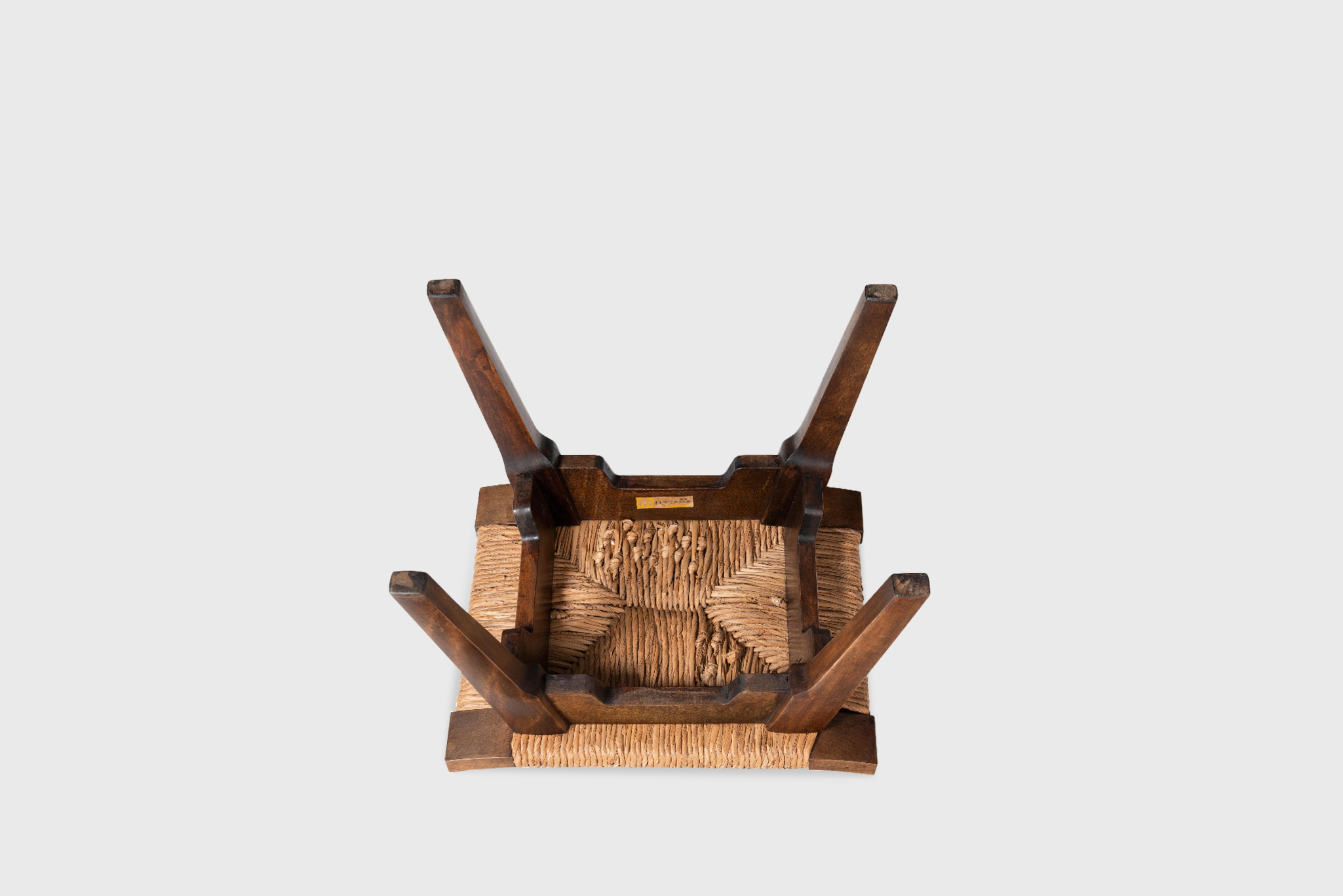
Manufacturer's Label
Literature
Yanagi, S. (1983). Sori Yanagi’s Works and Philosophy. Tokyo: Yobisha, pp. 22–23.
Japan Design Committee. (1989). Modern Japanese Furniture 1945–1970. Tokyo: Heibonsha, p. 18.
About
This early low stool, designed by Soetsu Yanagi in 1936, represents one of the designer’s formative experiments prior to his postwar industrial work. Conceived during a period when Yanagi was deeply influenced by both the Mingei movement and European functionalism, the piece reflects an emphasis on honest materials, human scale, and everyday utility.
Constructed from cherry wood with a woven seagrass seat, the stool demonstrates a restrained, almost archetypal form. The low seat height aligns with traditional Japanese modes of sitting, while the clarity of structure anticipates Yanagi’s later pursuit of universal, timeless design. The visible joinery and natural fiber seating underscore a respect for craft and material integrity rather than decorative effect.
Although produced in limited numbers by small workshops rather than industrial manufacturers, pieces from this early period are particularly rare. They document the intellectual foundations that would later inform Yanagi’s iconic designs and reveal his lifelong commitment to reconciling tradition, function, and modernity.
Biography
Soetsu Yanagi (1889–1961) was a Japanese philosopher and art critic, best known as the founder of the Mingei (Folk Craft) movement. Born in Tokyo, Yanagi studied philosophy in Japan and England, where he developed an appreciation for the beauty of everyday objects made by ordinary craftsmen. He believed that true beauty lies in simplicity, utility, and the hands of anonymous artisans rather than in works by famous artists. Yanagi’s writings, including The Unknown Craftsman, emphasized the cultural and spiritual significance of traditional crafts and helped preserve Japan’s folk art heritage. His work profoundly influenced design and craft appreciation both in Japan and internationally.