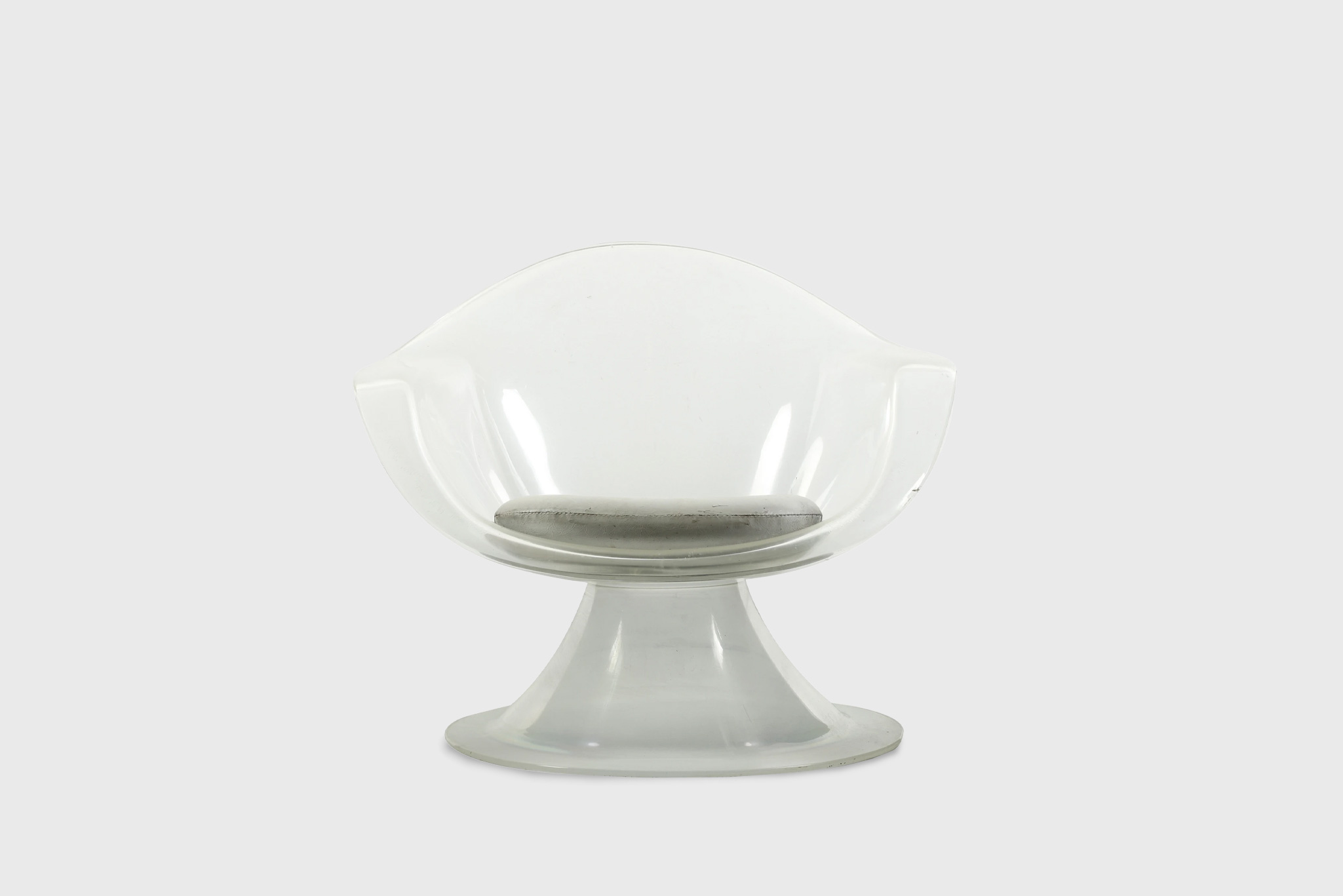
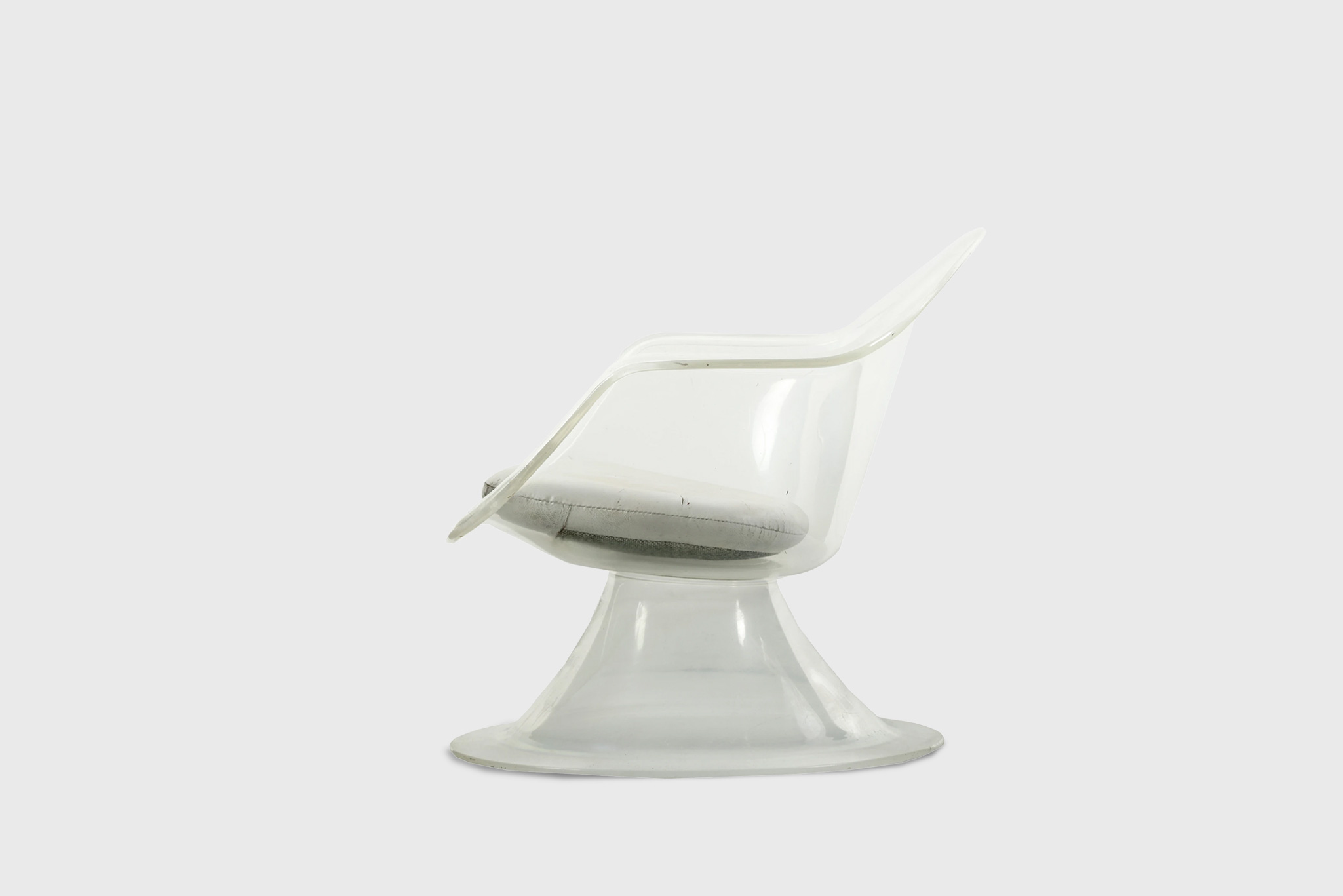
Chair model "Daffodil"
Manufactured by Laverne Originals Inc., USA
United States, 1960s
Acrylic
Measurements
80 × 64 × 69h cm
31,5 × 25 × 27h in
Provenance
Private collection, United States
Literature
Laverne: Furniture, Textiles & Wallcoverings, Krzyzanokski, ppg. 120, 188
Details
Manufacturer's Label
About
The Daffodil Chair is an iconic example of American modernist furniture design, created around 1960 by the husband-and-wife design team Erwine and Estelle Laverne. Conceived at the height of the Space Age, the chair embodies the optimistic spirit of postwar American design, combining sculptural form with advanced materials.
Molded in translucent acrylic, the chair’s fluid, petal-like silhouette evokes the organic elegance of a blooming flower, giving the piece both its name and its distinctive visual identity. Its seamless construction and futuristic material reflect the Lavernes’ pioneering exploration of plastics, positioning the chair at the intersection of furniture, sculpture, and industrial design.
Highly collectible today, the Daffodil Chair is emblematic of mid-century experimentation with synthetic materials and remains a landmark of Space Age and Pop-era interiors.
Biography
Erwine (1916–1996) and Estelle Laverne (1915–1997) were influential figures in mid-century American design, best known for their innovative use of acrylic and other synthetic materials. Working primarily during the 1950s and 1960s, the Lavernes embraced new manufacturing technologies to create furniture that challenged traditional notions of form, weight, and materiality.
Their work is closely associated with the Space Age aesthetic, characterized by transparency, fluid lines, and futuristic optimism. Pieces such as the Daffodil Chair exemplify their ability to merge industrial processes with sculptural expression. Today, their designs are represented in major museum collections and are considered defining works of American modernist and Space Age furniture.