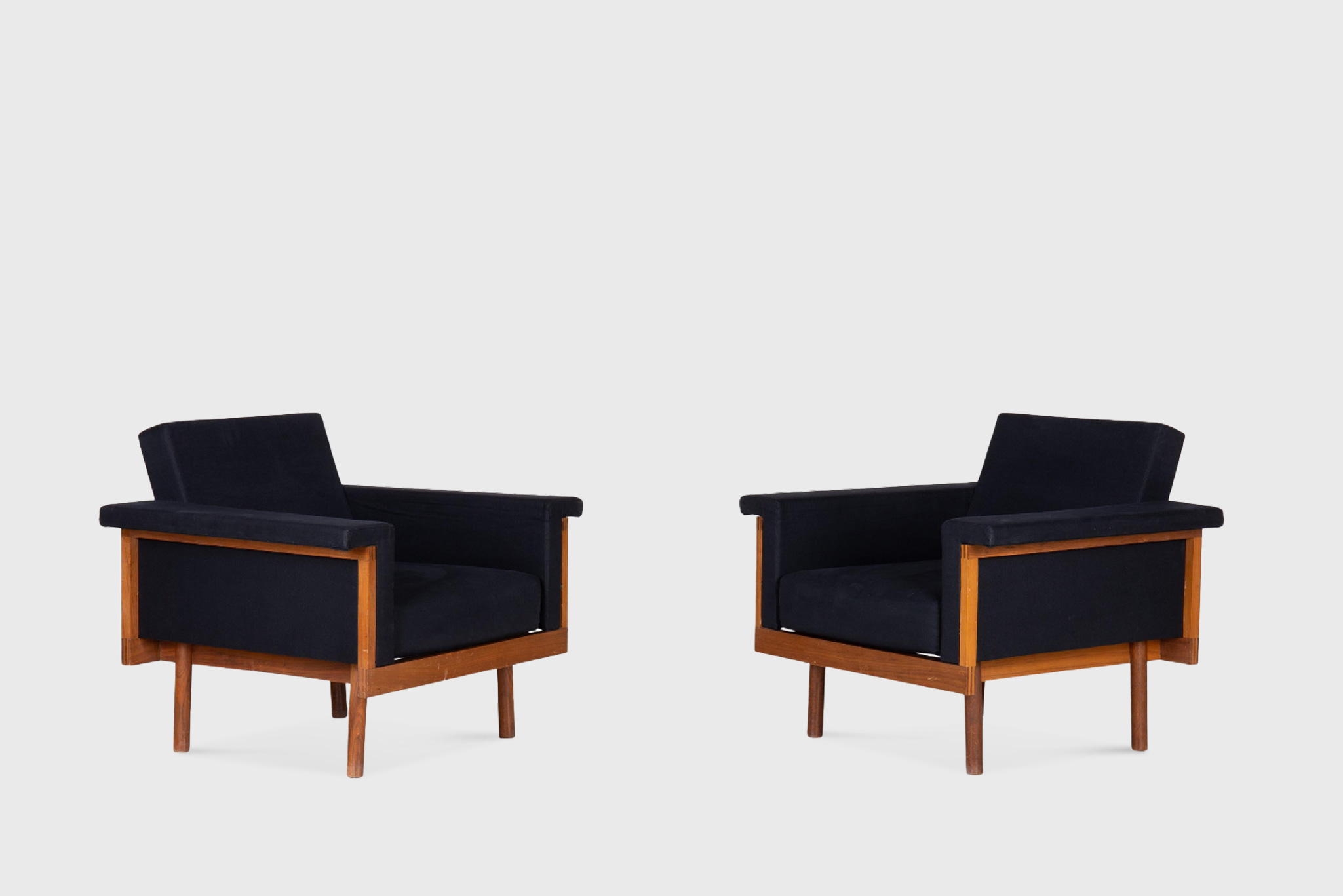
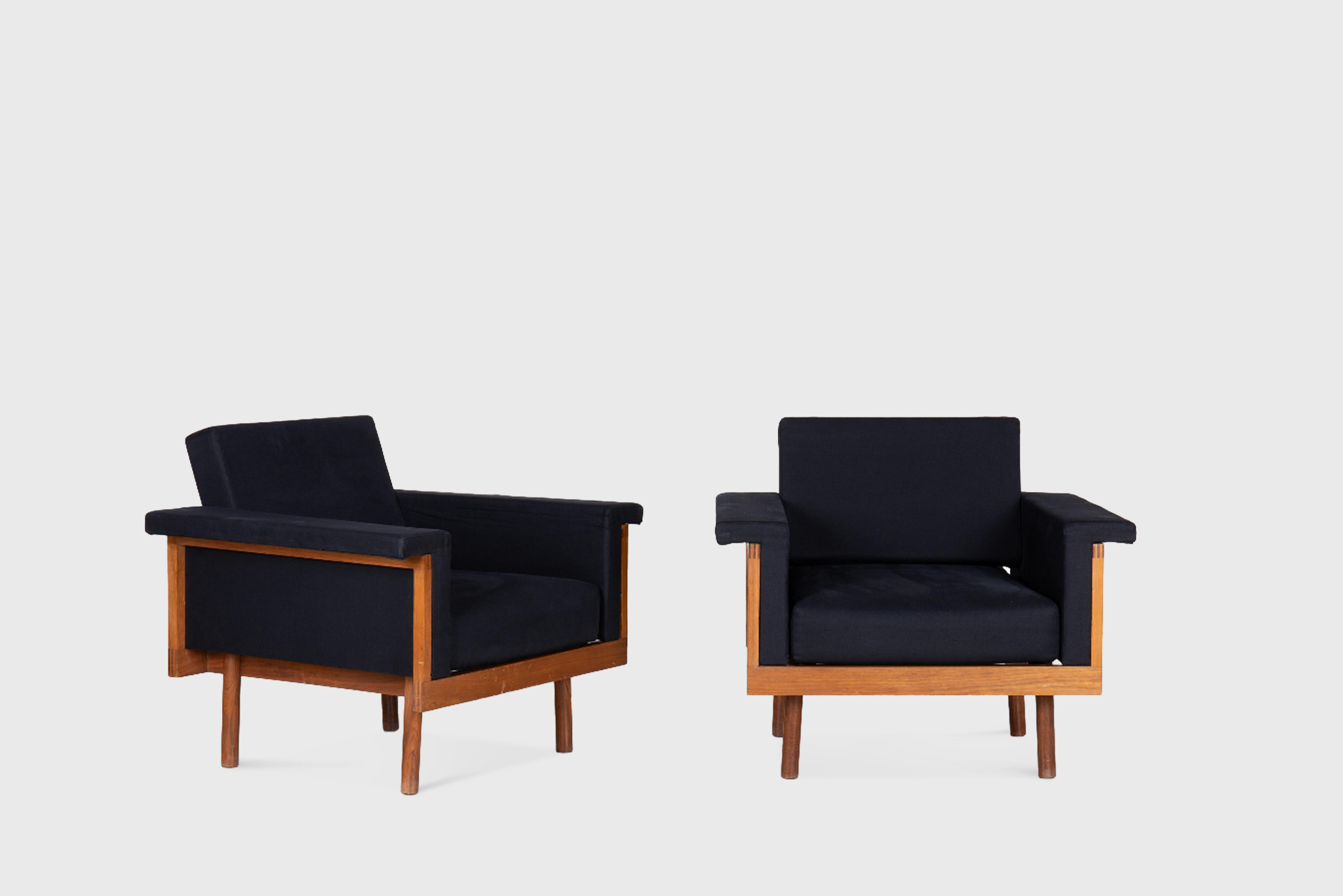
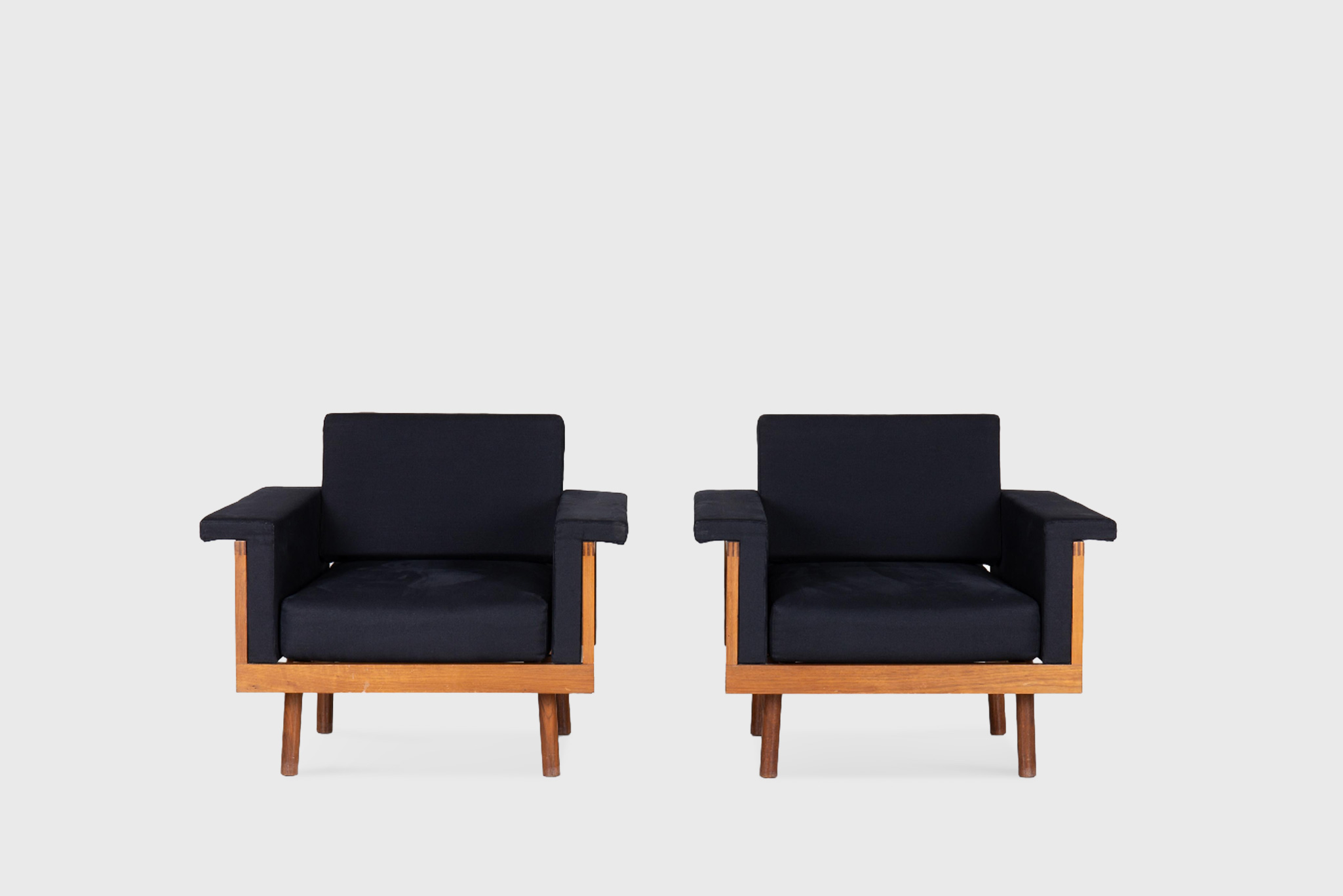
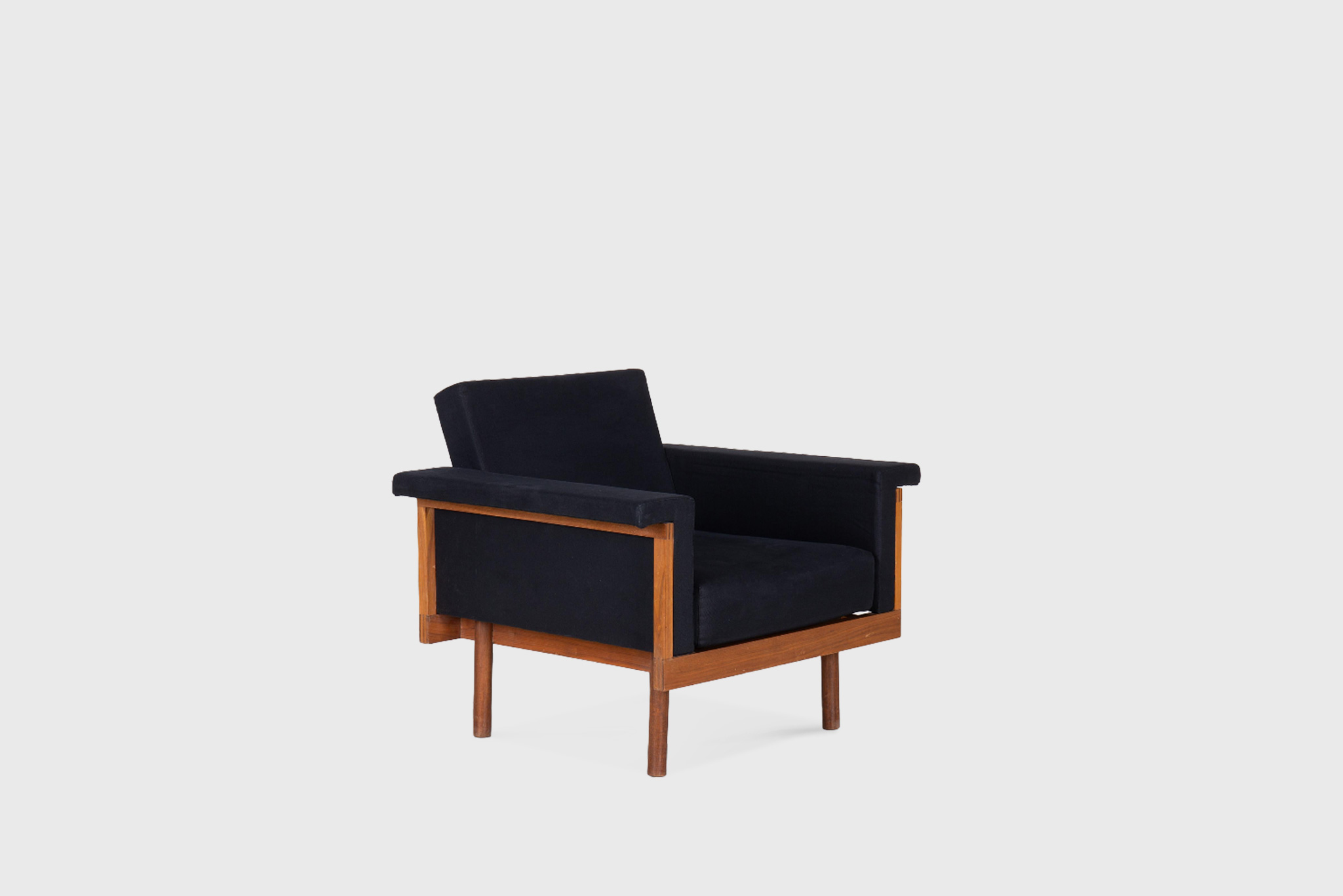
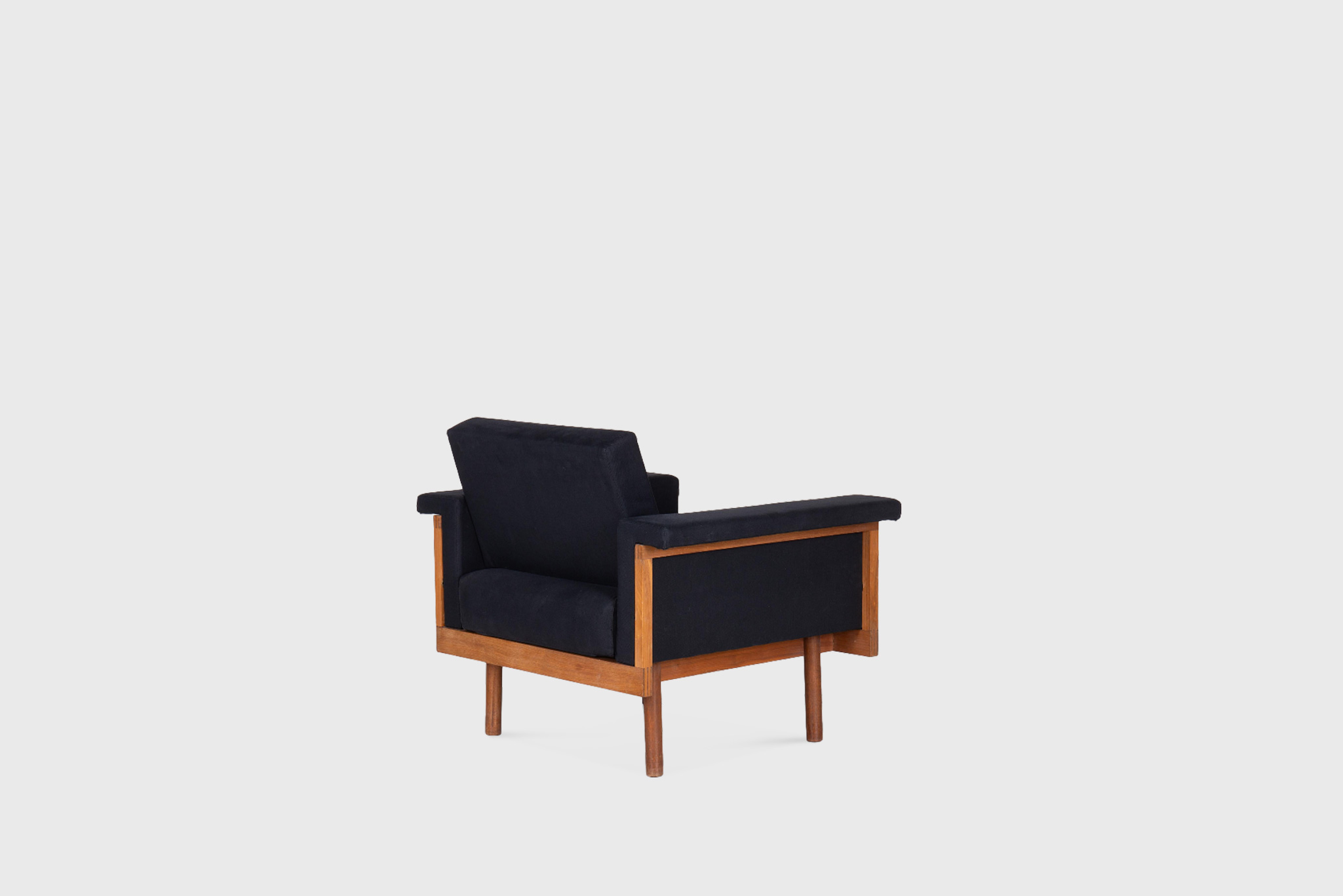
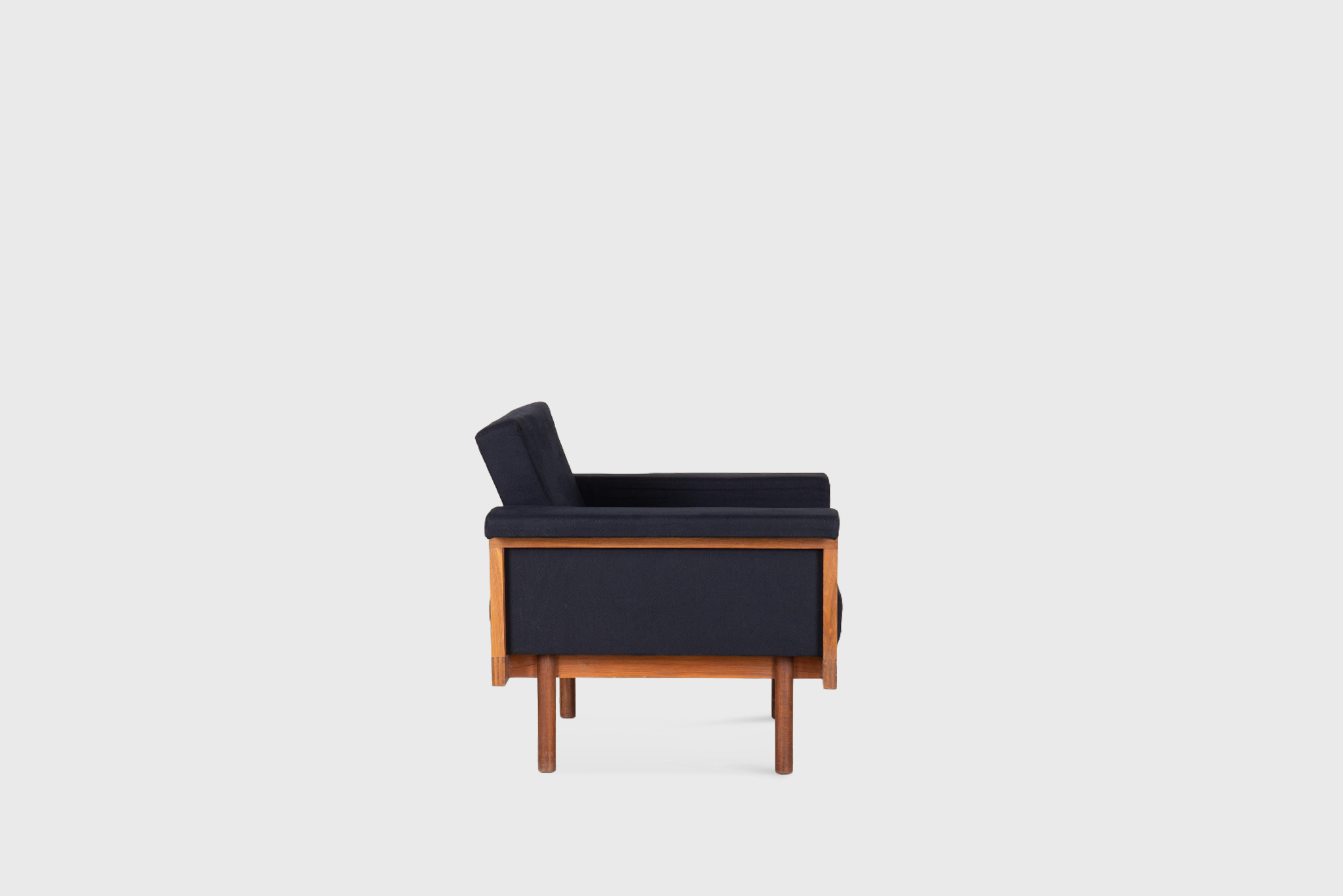
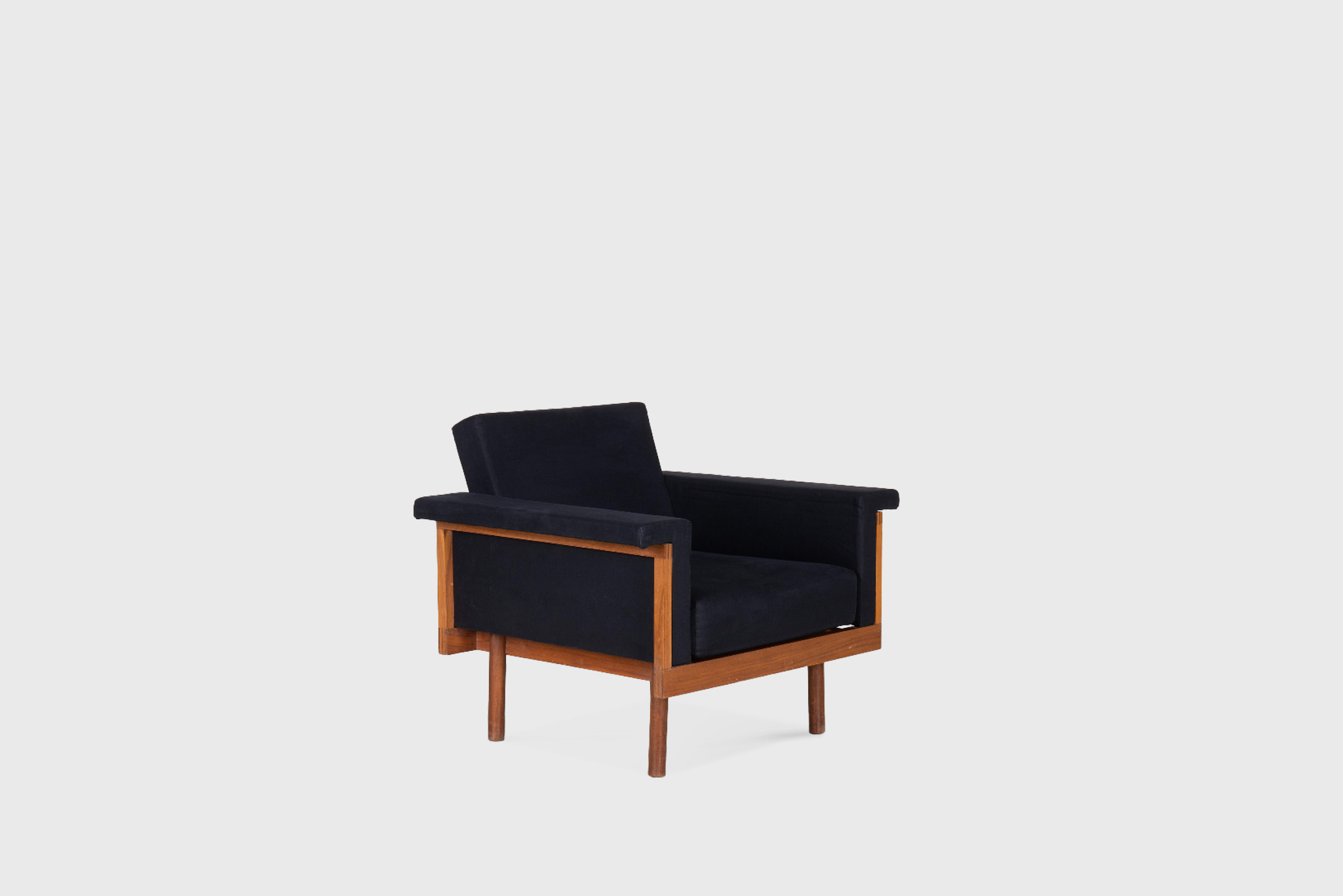
Pair of armchairs model "Naeko"
Manufactured by Gavina
Italy, 1958
Cherry wood structure, Upholstered fabric
Measurements (each)
86 × 77 × 73h cm
33,9 × 30,3 × 28,7h in
Provenance
Private collection, Italy
Details
Manufacturer’s label
Literature
Accademia delle Belle Arti di Brera. (1998). Dino Gavina: Ultrarazionale Ultramobile. Milan: Editrice Compositori, p. 163.
Fondazione Scientifica Querini Stampalia. (1992). Dino Gavina: collezioni emblematiche del moderno dal 1950 al 1992. Milan: Jaca Book, p. 39.
Vercelloni, V. (1987). La avventura del design: Gavina. Milan: Jaca Book, p. 49.
About
The Naeko armchairs form part of one of the most important early collaborations between Japanese architect Kazuhide Takahama and the Italian manufacturer Gavina. Designed in 1958 during Takahama’s stay in Italy for the Japanese Pavilion at the XI Triennale di Milano, these chairs mark the beginning of a lifelong creative partnership with Dino Gavina that would profoundly influence postwar European design.
Like the Naeko sofa, the armchairs were named after Naeko, who later became Takahama’s wife, lending the project an intimate and personal dimension. Their low, horizontally oriented structure reflects Takahama’s architectural sensibility, combining Japanese spatial restraint with the rationalist clarity of Italian modernism. The finely crafted cherrywood frame establishes a calm structural rhythm, while the original upholstery softens the geometry and enhances the human scale of the piece.
Produced during Gavina’s first and most experimental period, the Naeko armchairs exemplify the company’s ambition to redefine furniture as a form of architectural and cultural expression. Today they are recognized as seminal works in the history of international modern design, embodying a rare synthesis of Japanese sensitivity and European avant-garde thinking.
Biography
Kazuhide Takahama (1930–2010) was one of the most important cultural mediators between Japanese and Italian modern design in the postwar period. Trained as an architect in Japan, Takahama belonged to a generation that sought to redefine modernity not as a stylistic import from the West, but as a flexible system capable of absorbing multiple cultural traditions. His work is distinguished by a rare balance between structural rigor, emotional restraint, and material refinement.
Takahama studied architecture at the University of Tokyo, where he was exposed to both modernist theory and traditional Japanese spatial principles. His early career coincided with Japan’s rapid postwar reconstruction, a period in which architecture and design were seen as tools for rebuilding not only cities but also cultural identity. In 1957, he was selected to work on the Japanese Pavilion for the XI Triennale di Milano, a turning point that brought him into direct contact with the European avant-garde. During this project he met Dino Gavina, the visionary Italian entrepreneur who would become his most important collaborator.
Through Gavina, Takahama entered the radical world of Italian design, where furniture was no longer conceived as a purely functional object but as an intellectual and artistic proposition. Unlike many designers working in Italy at the time, Takahama approached furniture as an architectural system: volumes, voids, surfaces, and proportions were treated with the same seriousness as in building design. His early works for Gavina, including the Naeko sofa (1958), reveal this approach. They are characterized by low, horizontal compositions, carefully calibrated structural frames, and a quiet, contemplative presence that reflects both Japanese domestic culture and European rationalism.
In the 1960s and 1970s, Takahama became one of the key figures in Italian high design, working not only with Gavina but also later with Simon, producing iconic pieces such as the Saori, Suzanne, and Tulu seating systems. His furniture rejected decorative excess in favor of clarity, precision, and tactile quality. Wood, lacquer, leather, and upholstery were used not as surface treatments but as integral components of a coherent spatial language.
Takahama’s work is particularly significant for its cultural hybridity. While deeply modernist in its geometry and discipline, it also carries the influence of Japanese concepts such as ma (interval), modularity, and the importance of the body in space. This allowed his designs to avoid the coldness sometimes associated with European rationalism, replacing it with a subtle warmth and human scale.
Today, Kazuhide Takahama is recognized as a major figure in postwar international design, whose work helped redefine modern furniture as a bridge between architecture, craft, and lived experience. His designs remain highly sought after by collectors and museums for their intellectual depth, timeless elegance, and rare synthesis of East and West.