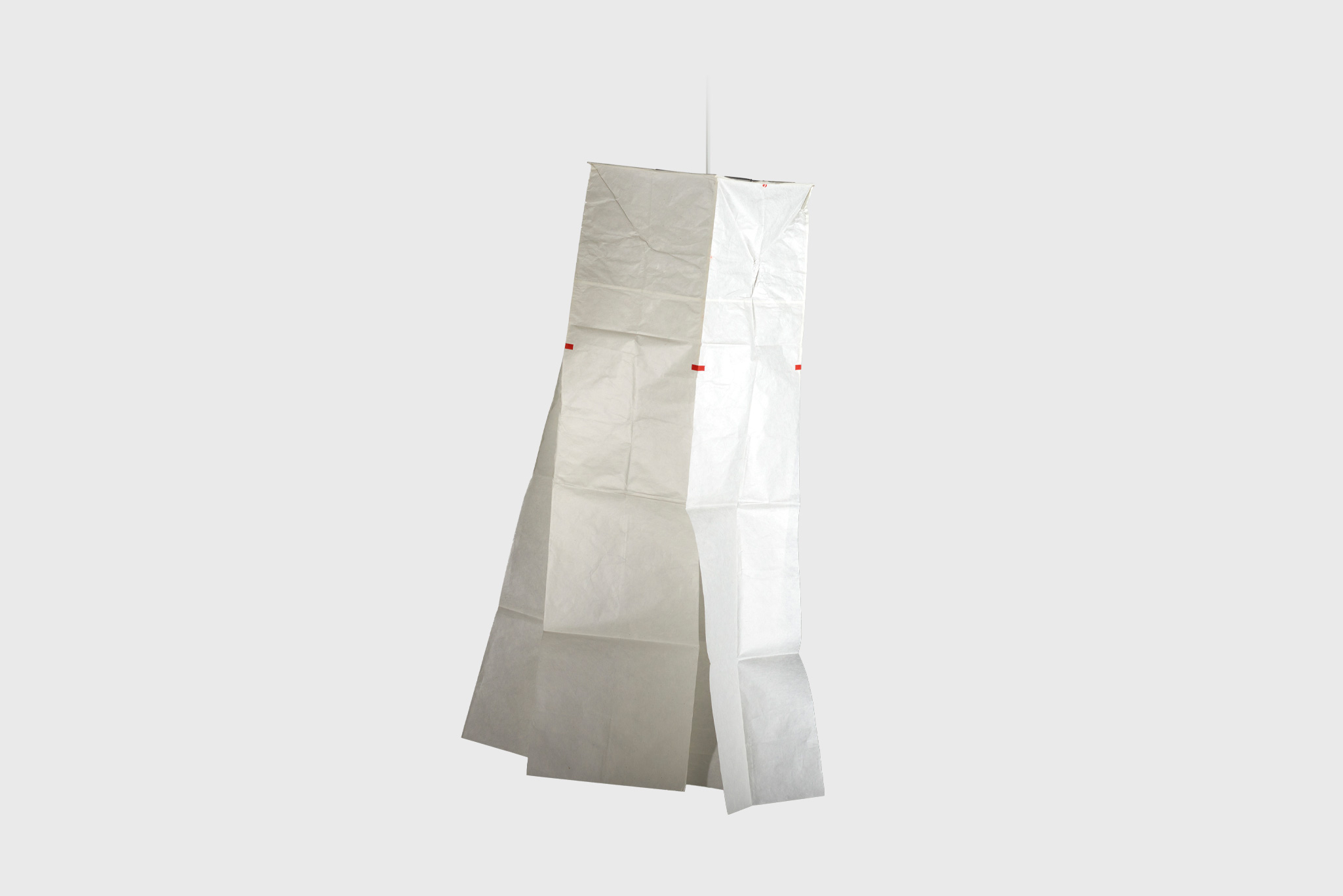
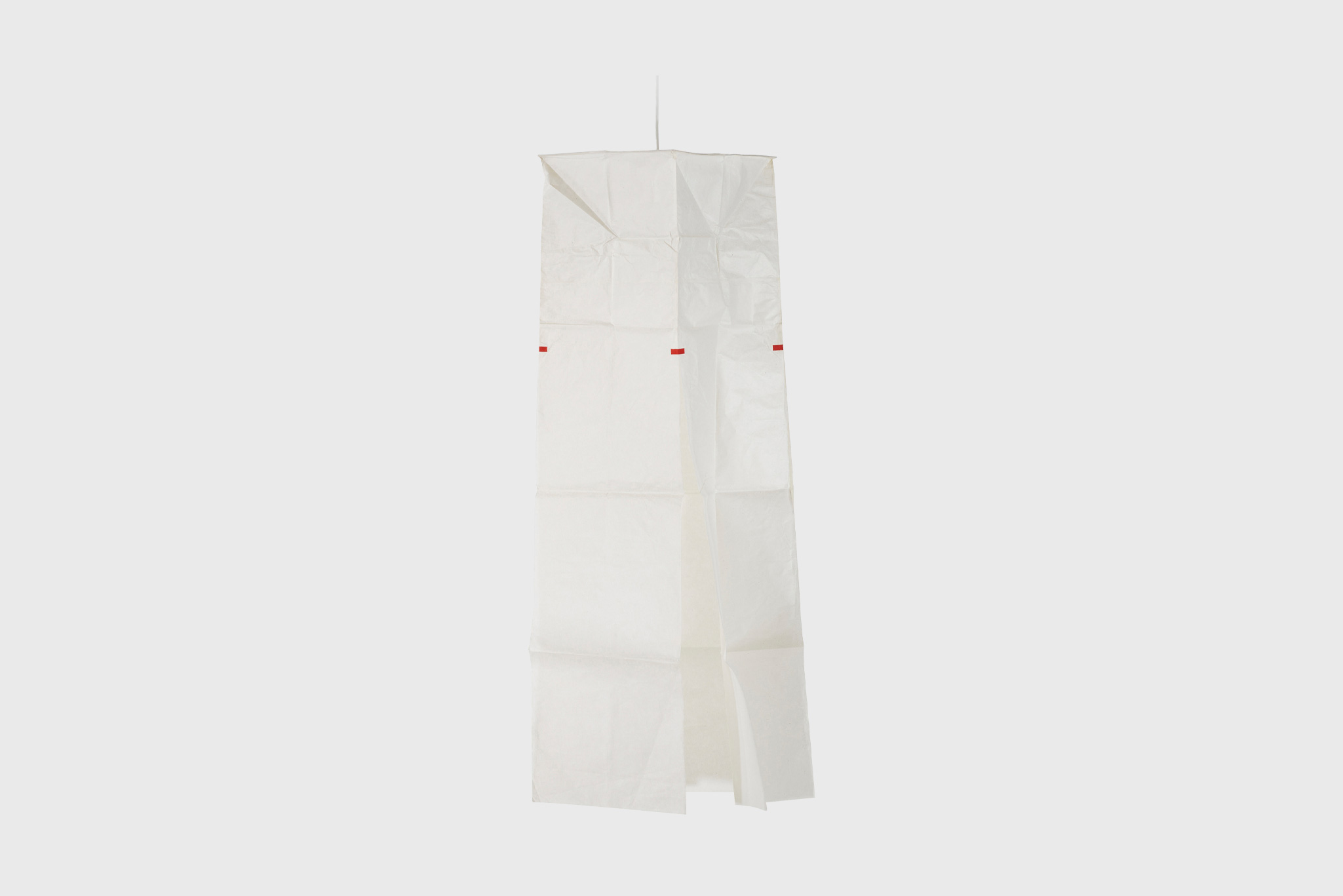
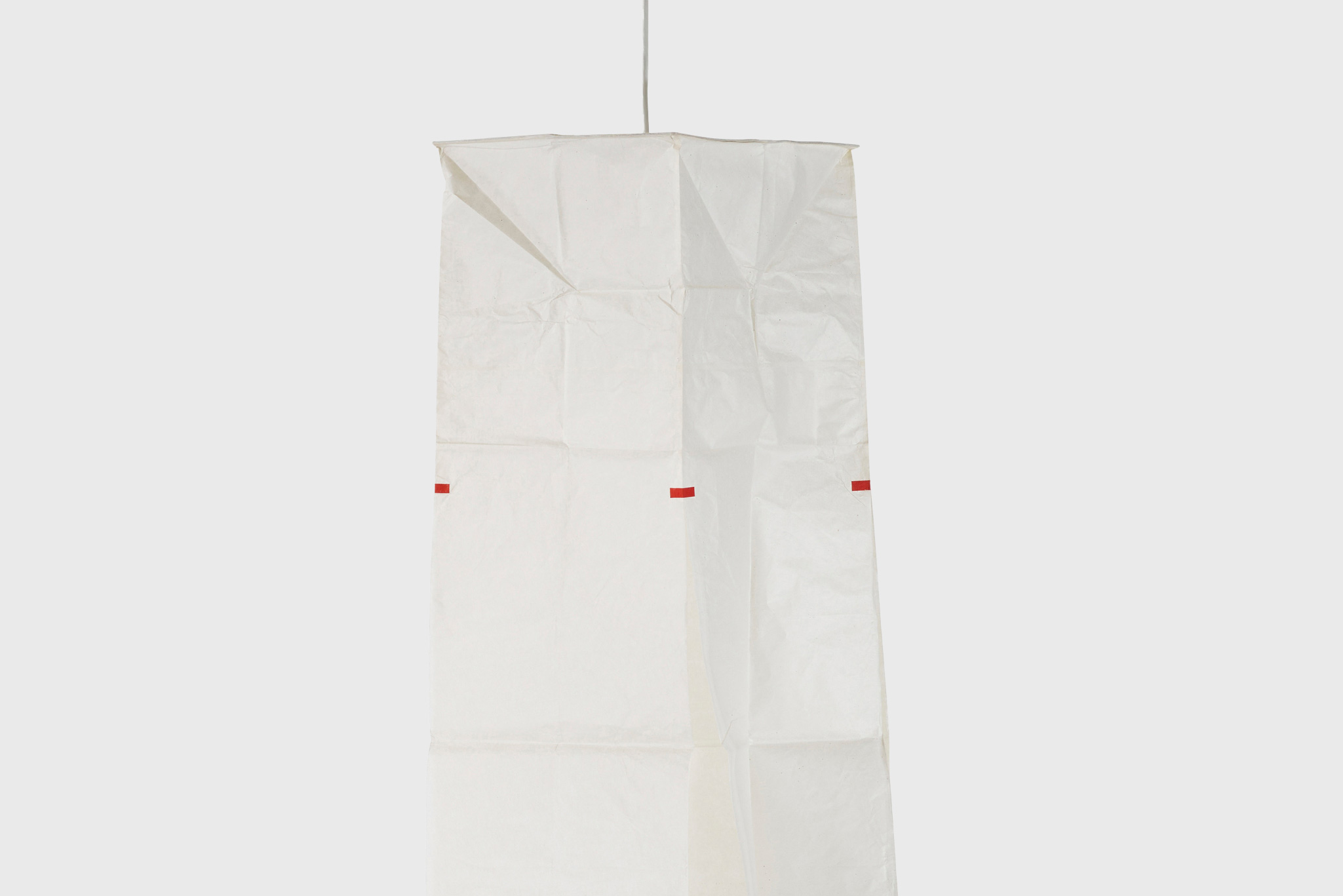
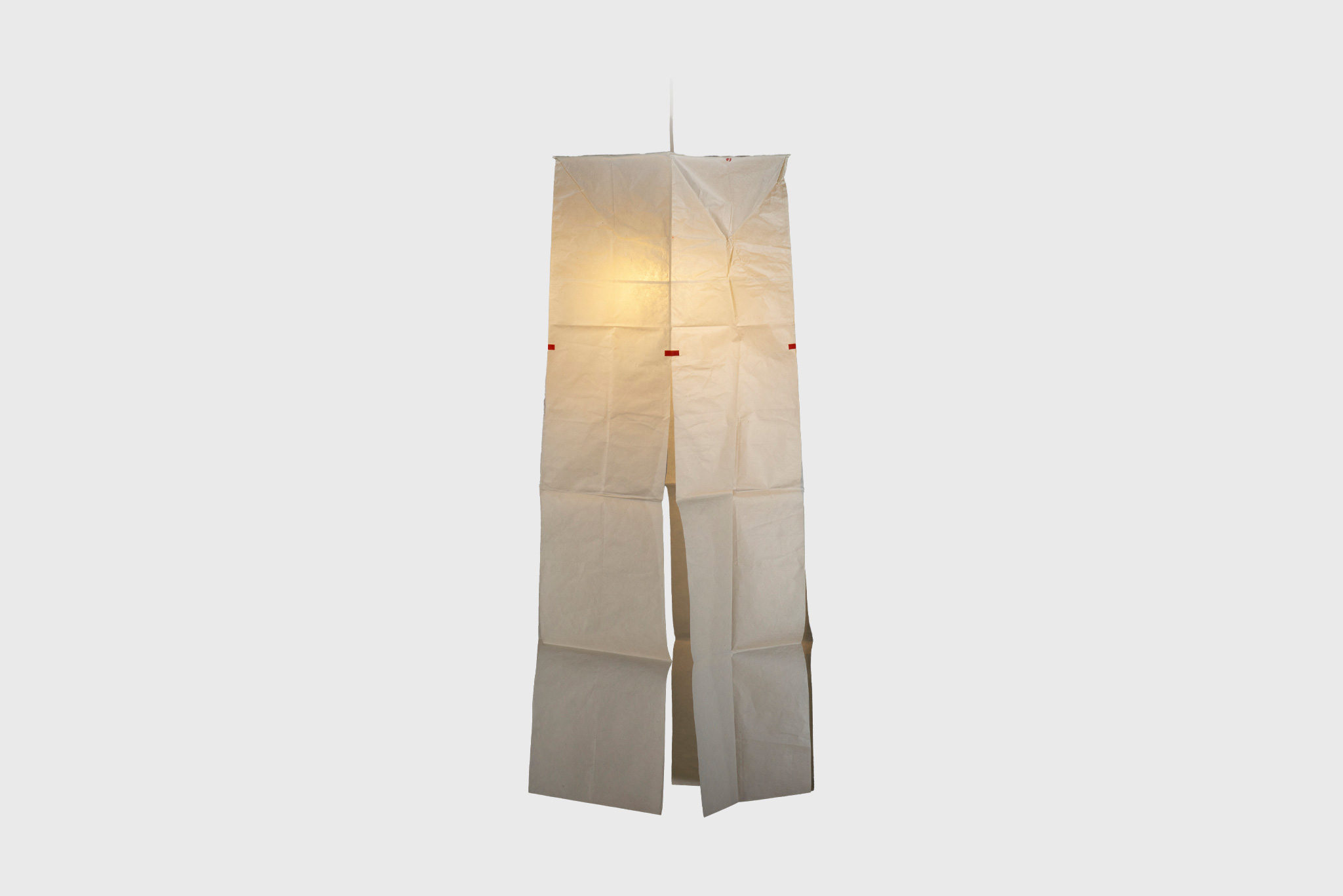
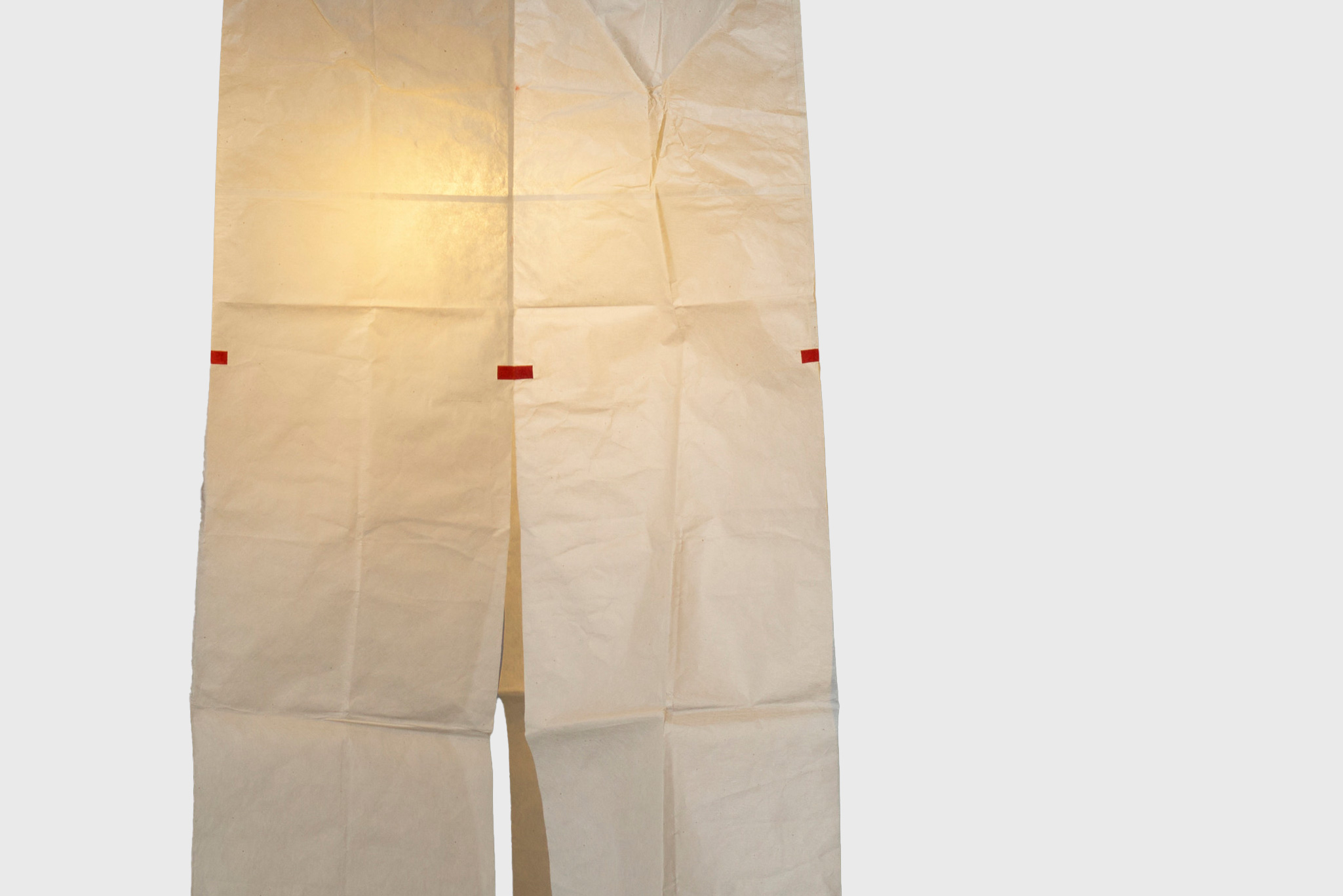
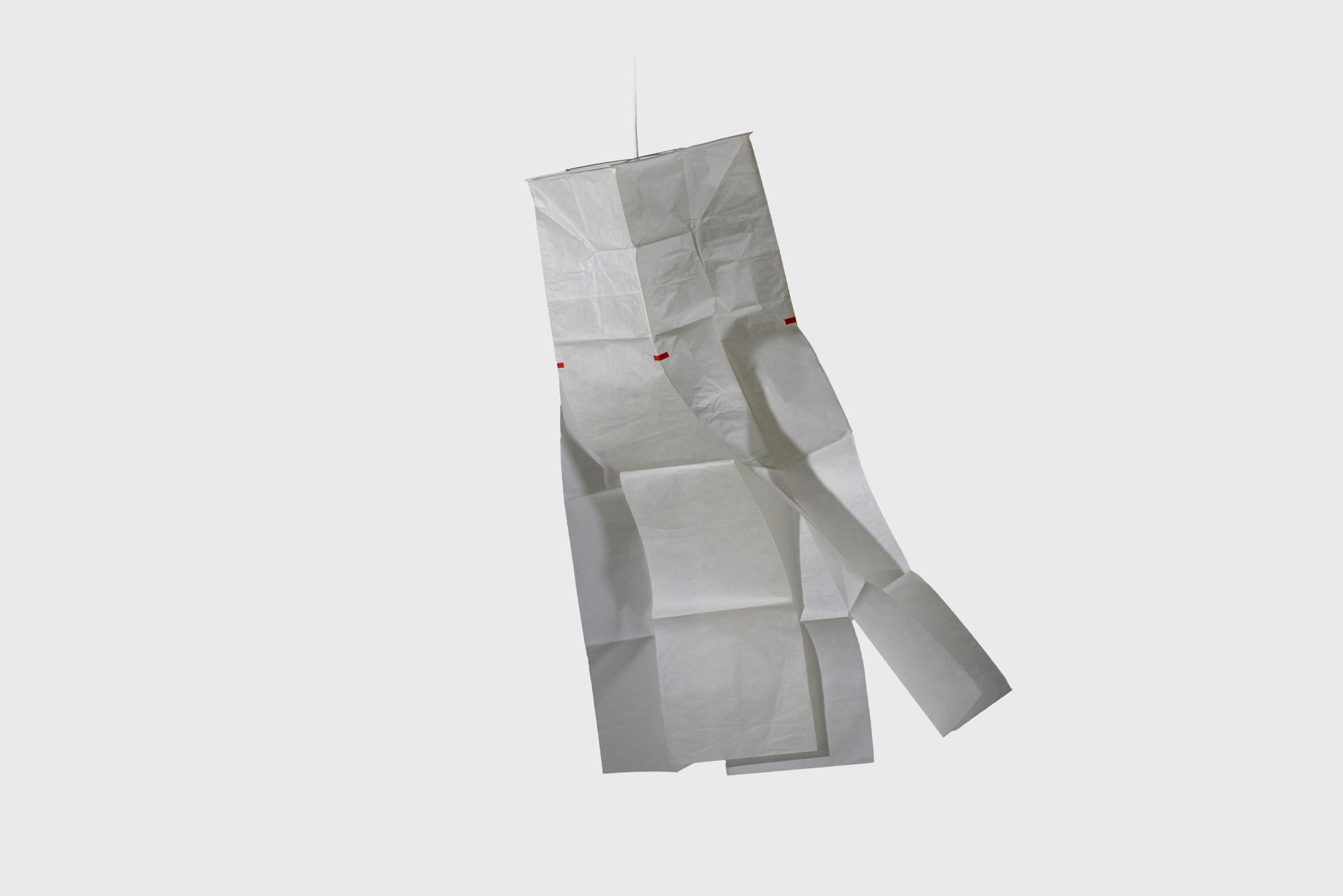
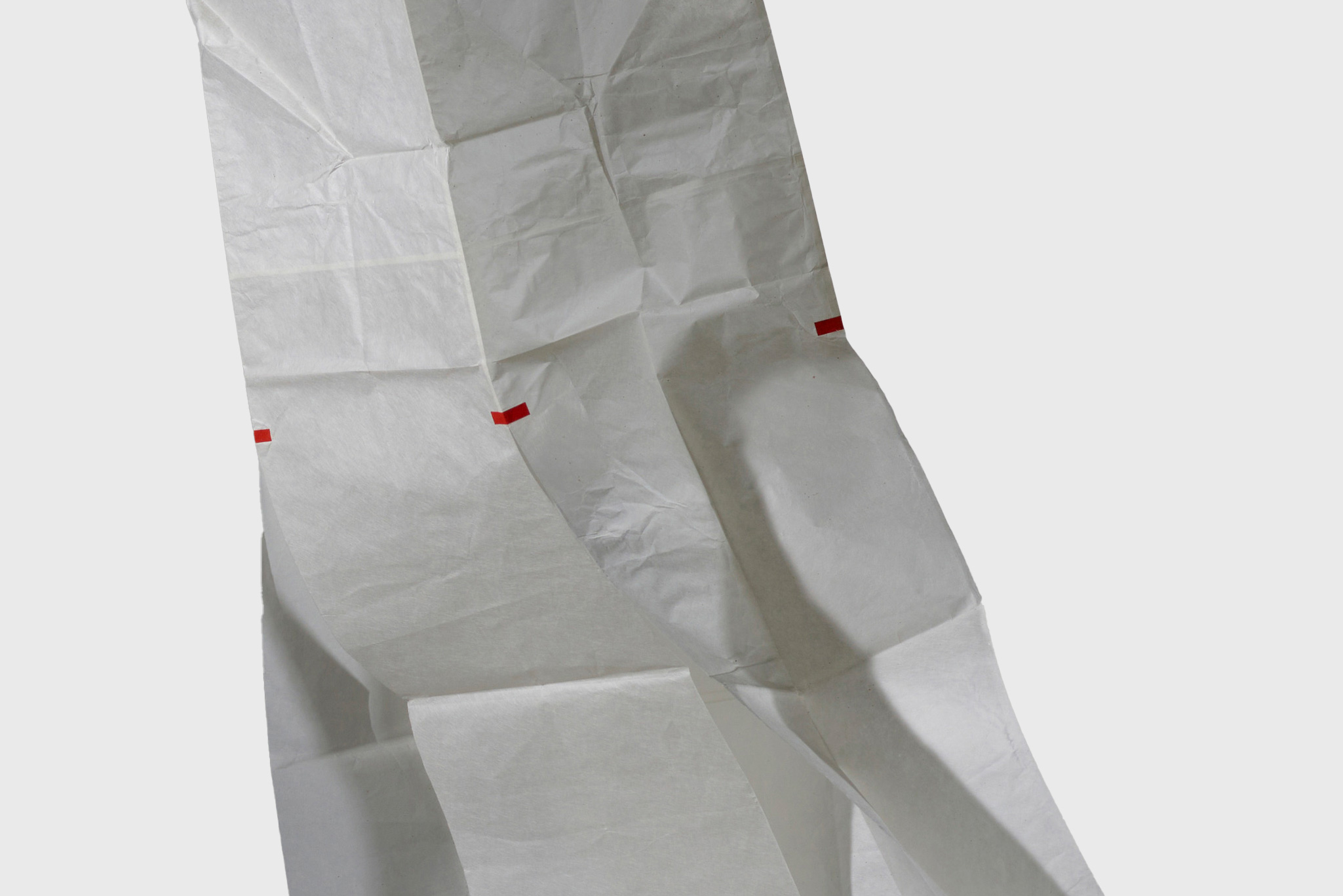
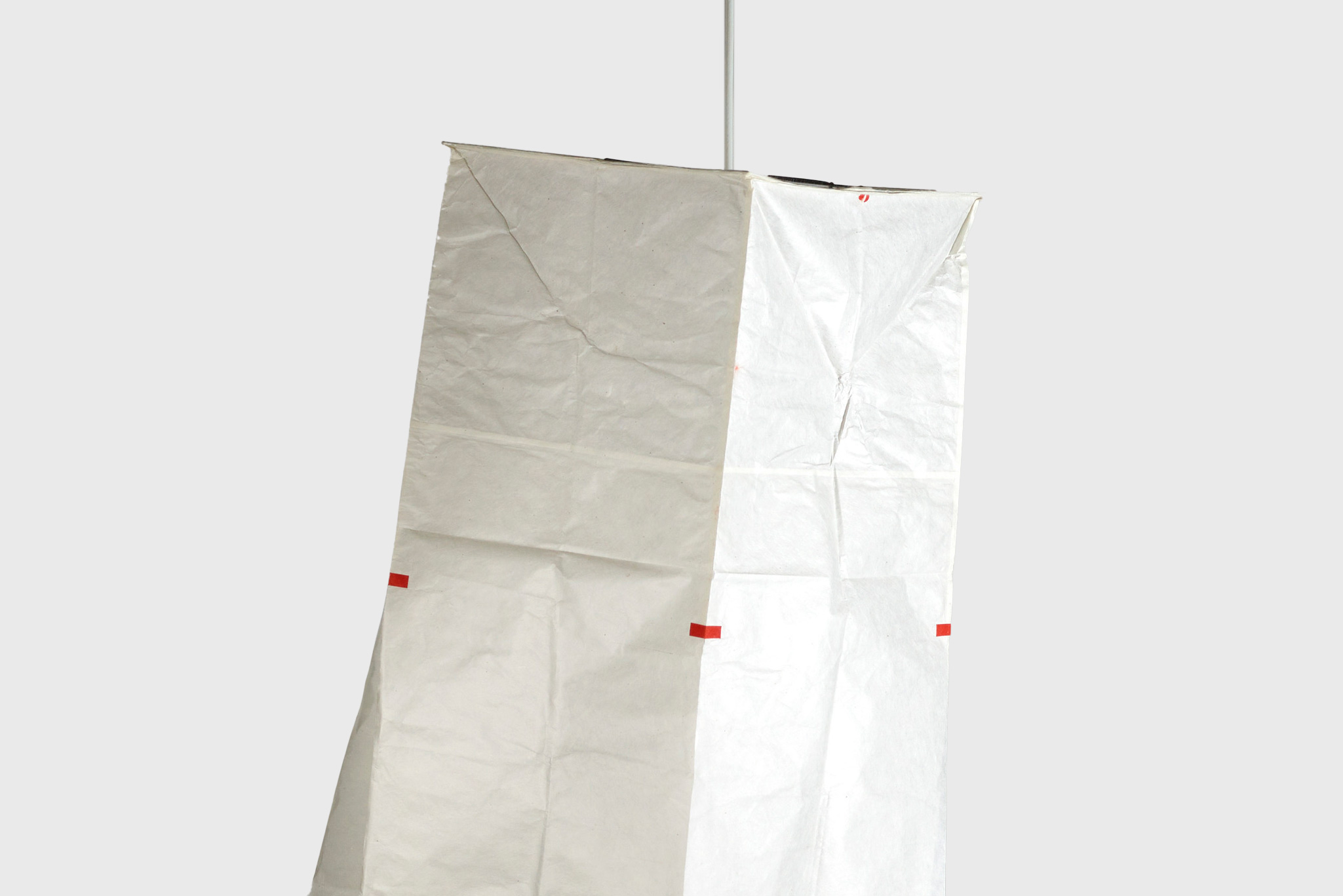
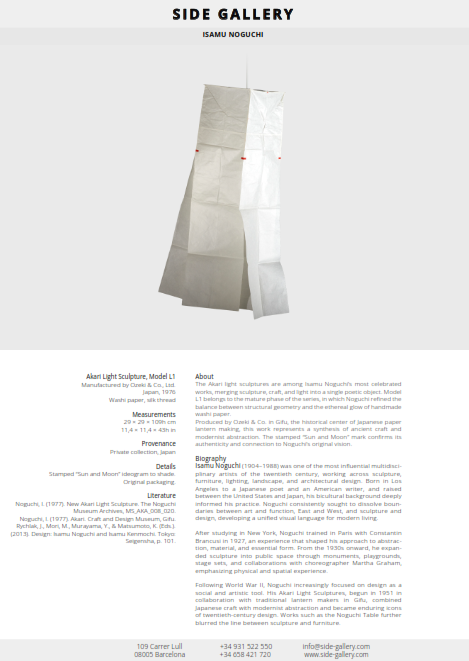
Akari Light Sculpture, Model L1
Manufactured by Ozeki & Co., Ltd.
Japan, 1976
Washi paper, silk thread
Measurements
29 × 29 × 109h cm
11,4 × 11,4 × 43h in
Provenance
Private collection, Japan
Details
Stamped “Sun and Moon” ideogram to shade.
Original packaging.
Literature
Noguchi, I. (1977). New Akari Light Sculpture. The Noguchi Museum Archives, MS_AKA_008_020.
Noguchi, I. (1977). Akari. Craft and Design Museum, Gifu.
Rychlak, J., Mori, M., Murayama, Y., & Matsumoto, K. (Eds.). (2013). Design: Isamu Noguchi and Isamu Kenmochi. Tokyo: Seigensha, p. 101.
About
The Akari light sculptures are among Isamu Noguchi’s most celebrated works, merging sculpture, craft, and light into a single poetic object. Model L1 belongs to the mature phase of the series, in which Noguchi refined the balance between structural geometry and the ethereal glow of handmade washi paper.
Produced by Ozeki & Co. in Gifu, the historical center of Japanese paper lantern making, this work represents a synthesis of ancient craft and modernist abstraction. The stamped “Sun and Moon” mark confirms its authenticity and connection to Noguchi’s original vision.
Biography
Isamu Noguchi (1904–1988) was one of the most important and intellectually ambitious artists of the twentieth century, whose work moved fluidly between sculpture, architecture, landscape, furniture, and industrial design. Born in Los Angeles to the Japanese poet Yone Noguchi and the American writer Leonie Gilmour, he grew up between the United States and Japan, an experience that profoundly shaped his artistic vision. Noguchi never accepted the division between East and West, art and utility, or sculpture and design; instead, he sought to create a unified visual language capable of shaping how people live, move, and experience space.
Noguchi’s early artistic formation took place in New York, where he studied at Columbia University before training as a sculptor. In 1927 he traveled to Paris on a Guggenheim Fellowship to apprentice with Constantin Brancusi, an experience that was decisive for his understanding of form, material, and abstraction. From Brancusi he absorbed the idea that sculpture should not merely represent the world, but reveal its underlying structure through simplified, essential forms. This philosophical approach remained central to Noguchi’s work throughout his life.
In the 1930s and 1940s, Noguchi developed a body of work that expanded sculpture beyond the pedestal. He became deeply interested in the relationship between art, society, and the environment, producing playground designs, public monuments, and stage sets that treated space itself as a sculptural medium. His collaborations with choreographer Martha Graham, for whom he created some of the most innovative stage designs of the twentieth century, demonstrated his belief that sculpture should be lived in, moved through, and physically experienced.
After World War II, Noguchi increasingly turned toward design and architecture as vehicles for artistic expression. He rejected the notion that furniture or lighting were secondary to “fine art,” arguing instead that everyday objects had the power to shape human consciousness. This philosophy found its most enduring expression in the Akari Light Sculptures, begun in 1951. Produced in collaboration with Japanese lantern makers in Gifu, the Akari series transformed traditional washi paper lanterns into modern sculptural forms, combining ancient craft with modernist abstraction. These luminous objects became global icons of twentieth-century design and remain in production today.
Noguchi also created some of the most influential furniture of the modern era, including the Noguchi Table (1947), whose biomorphic glass top and sculptural wooden base redefined the relationship between furniture and sculpture. His designs blurred the boundary between functional object and artwork, establishing a model that would profoundly influence later generations of designers.
In addition to furniture and lighting, Noguchi was a pioneering landscape architect. Projects such as the Gardens for UNESCO in Paris (1956–58) and the Moerenuma Park in Sapporo, completed posthumously, demonstrate his vision of landscape as a total work of art. For Noguchi, stone, earth, water, and vegetation were not decorative elements but sculptural materials capable of shaping collective experience.
Throughout his career, Noguchi struggled against rigid artistic categories. He saw himself not as a sculptor, designer, or architect, but as a creator of environments for human life. His work reflects a lifelong effort to reconcile modern technology with traditional craftsmanship, and abstract form with emotional resonance. Today, Isamu Noguchi is recognized as a central figure in modern art and design, whose vision continues to shape how we understand the relationship between objects, space, and the human body.