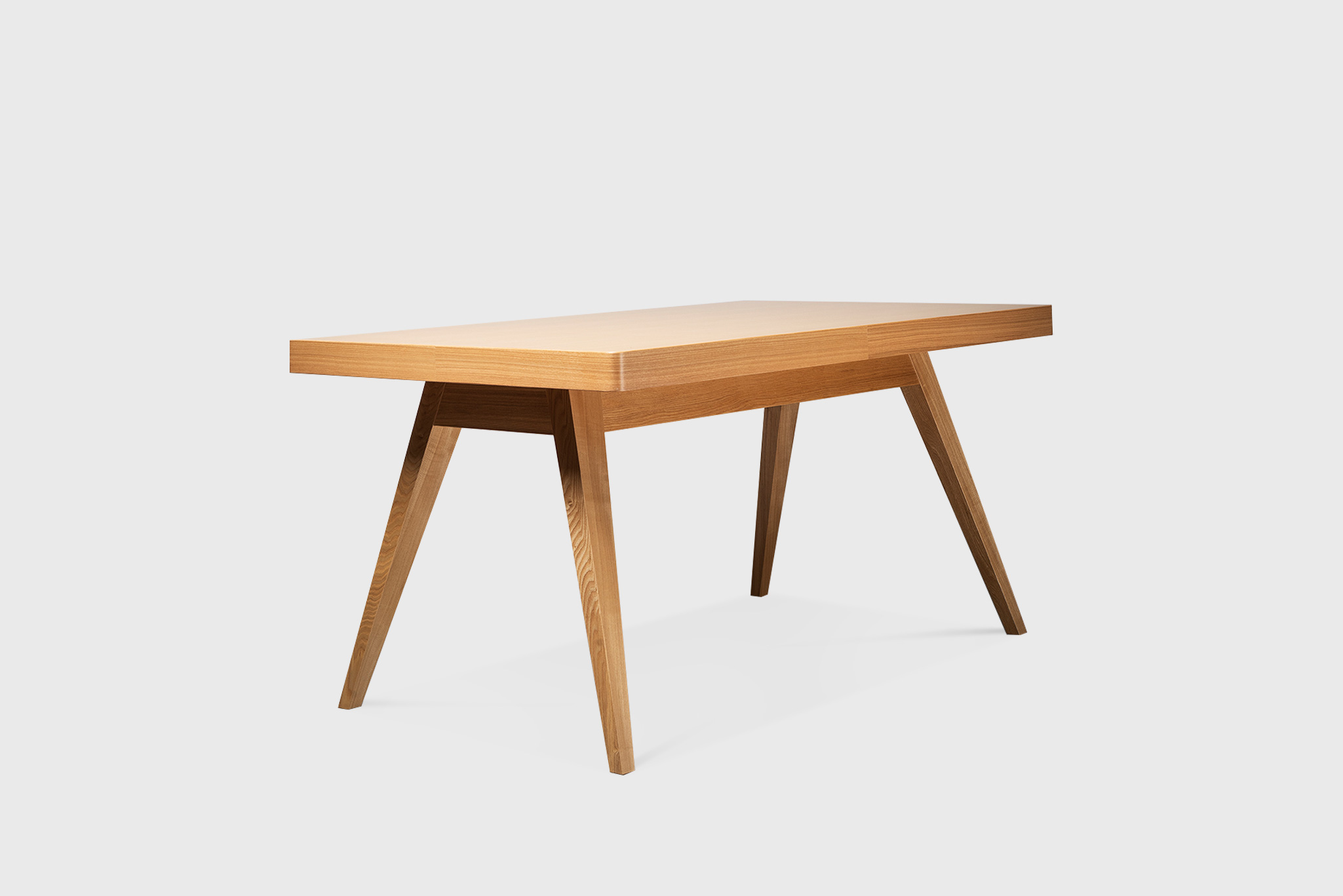
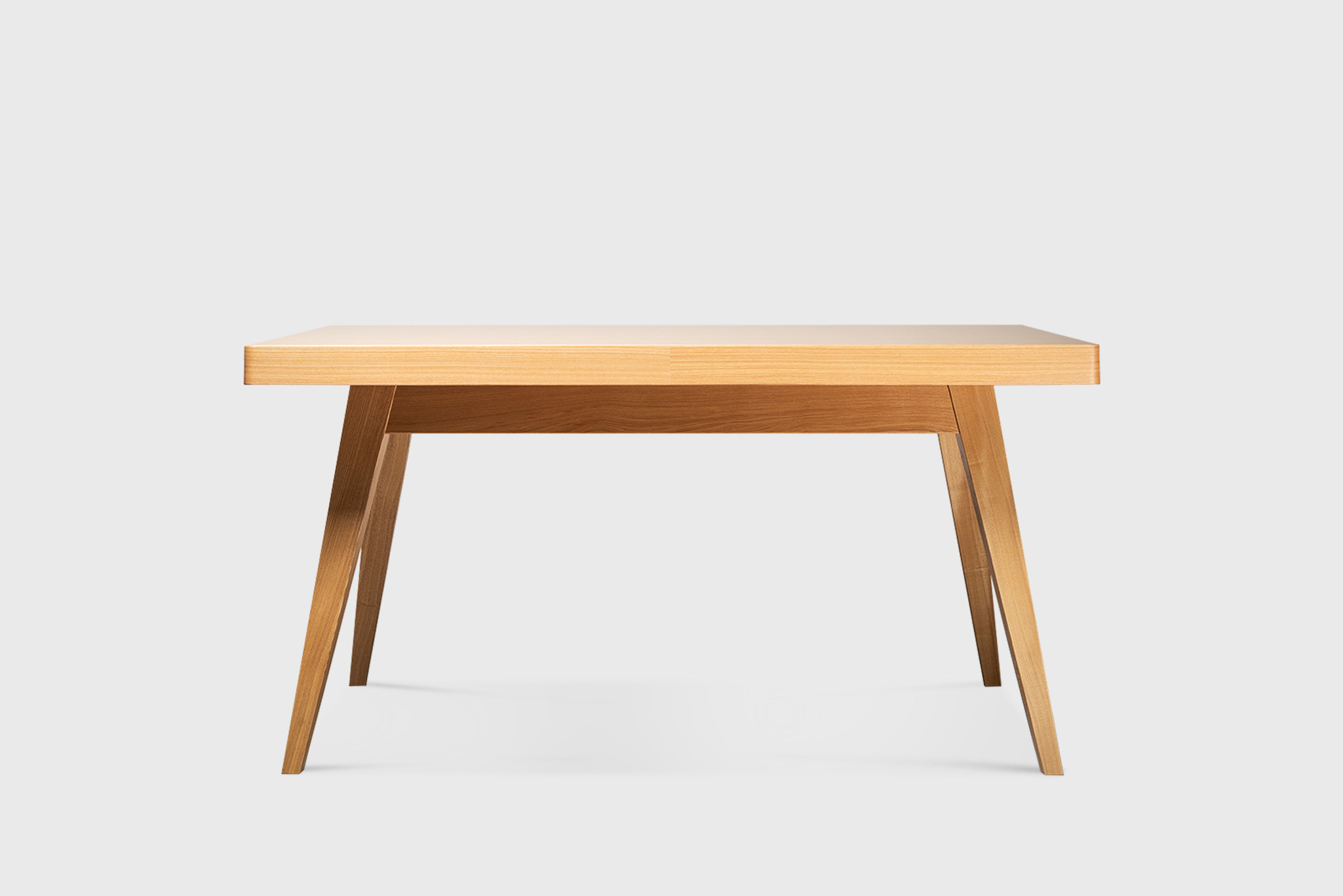
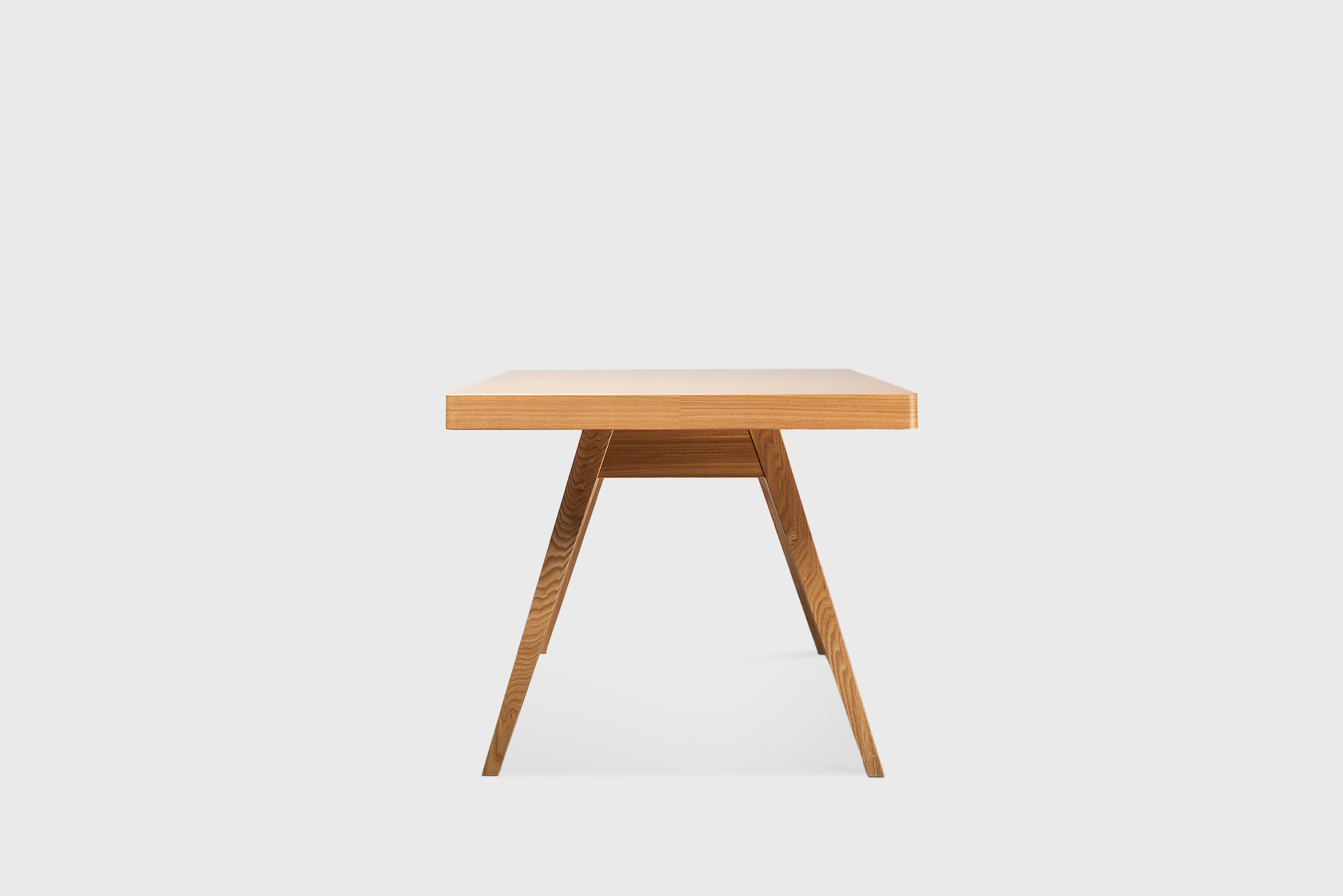
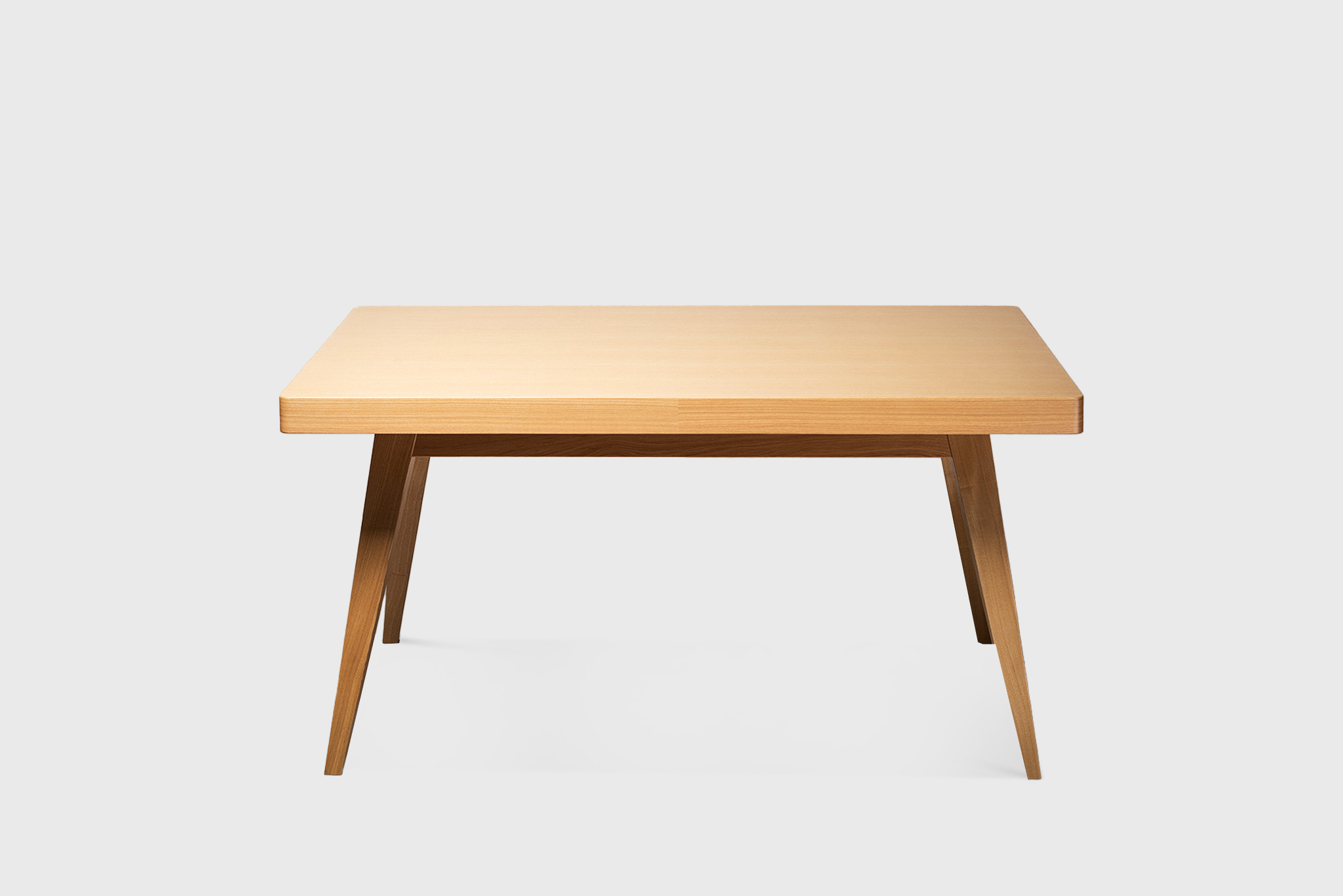
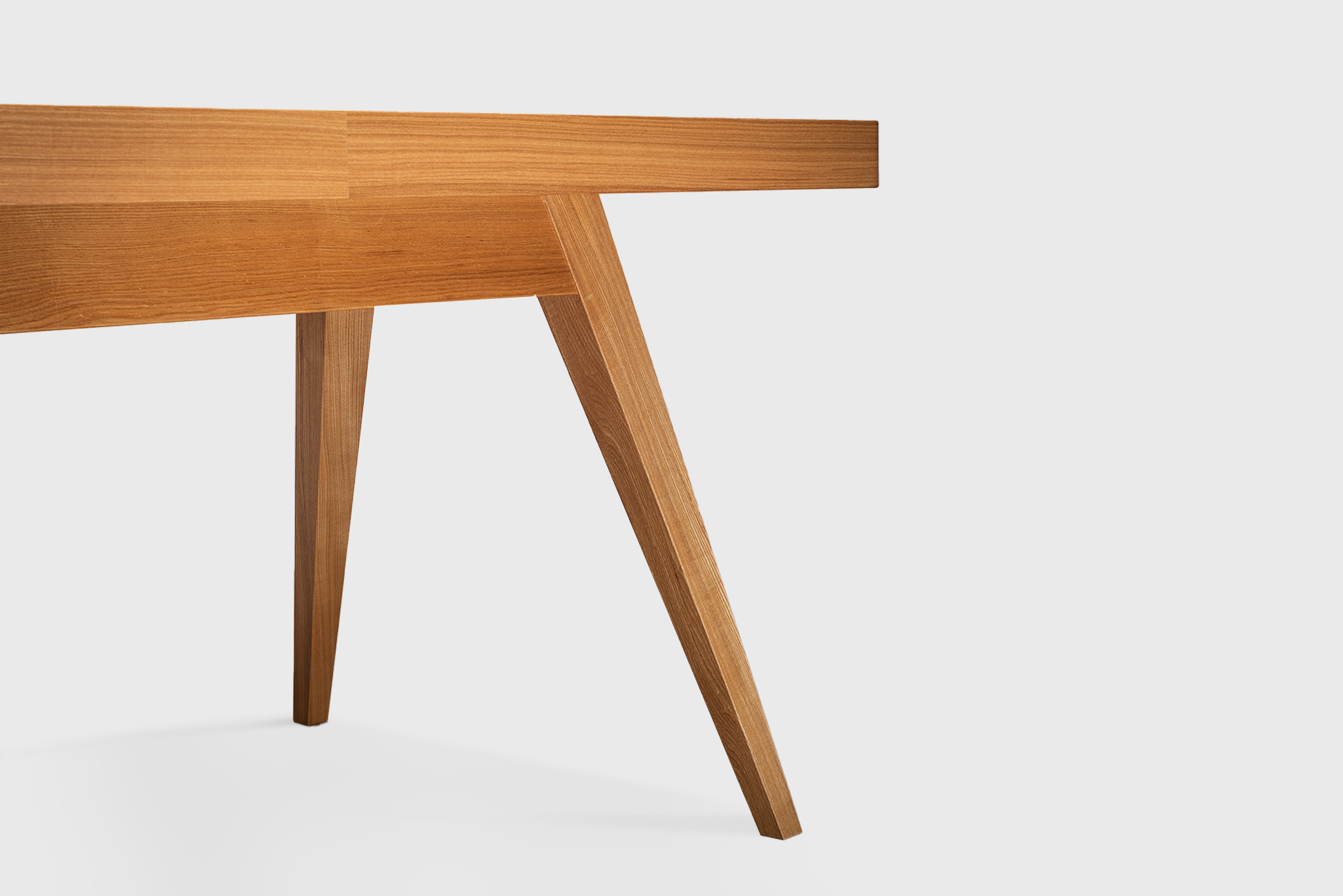
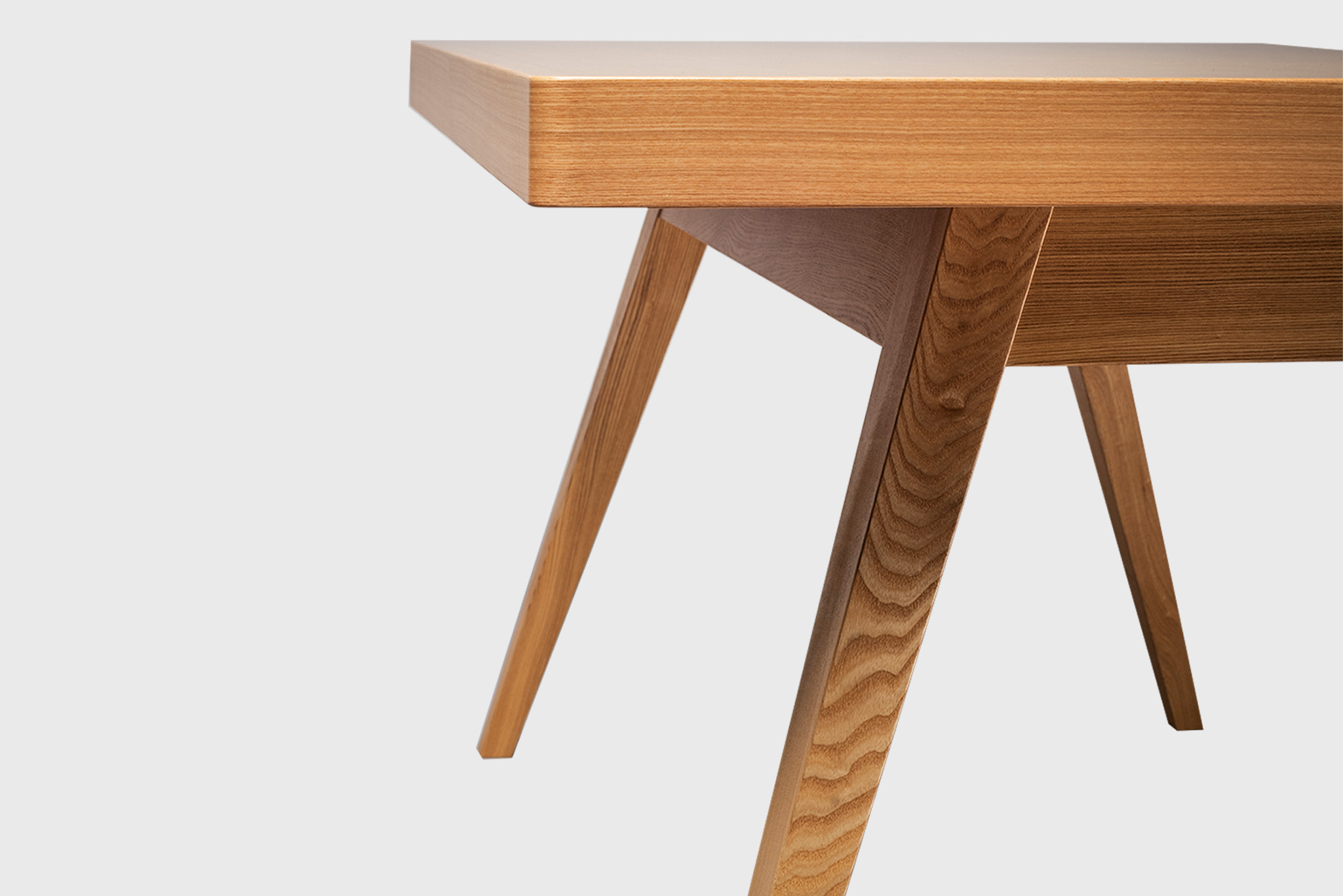
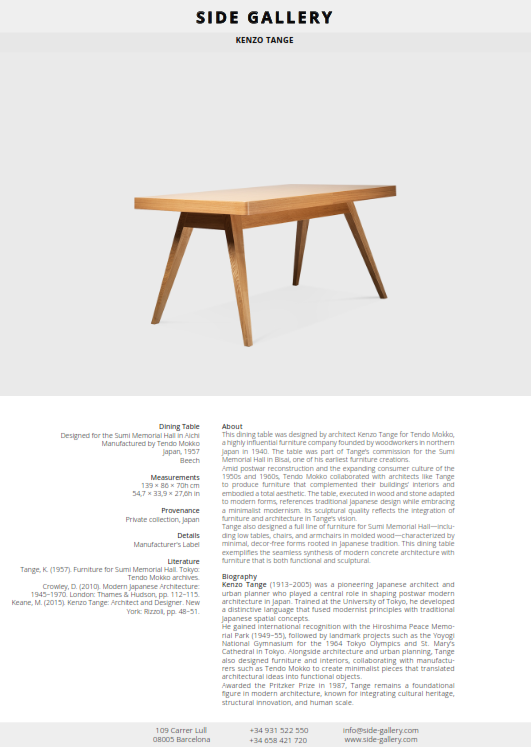
Dining Table
Designed for the Sumi Memorial Hall in Aichi
Manufactured by Tendo Mokko
Japan, 1957
Beech
Measurements
139 × 86 × 70h cm
54,7 × 33,9 × 27,6h in
Provenance
Private collection, Japan
Details
Manufacturer's Label
Literature
Tange, K. (1957). Furniture for Sumi Memorial Hall. Tokyo: Tendo Mokko archives.
Crowley, D. (2010). Modern Japanese Architecture: 1945–1970. London: Thames & Hudson, pp. 112–115.
Keane, M. (2015). Kenzo Tange: Architect and Designer. New York: Rizzoli, pp. 48–51.
About
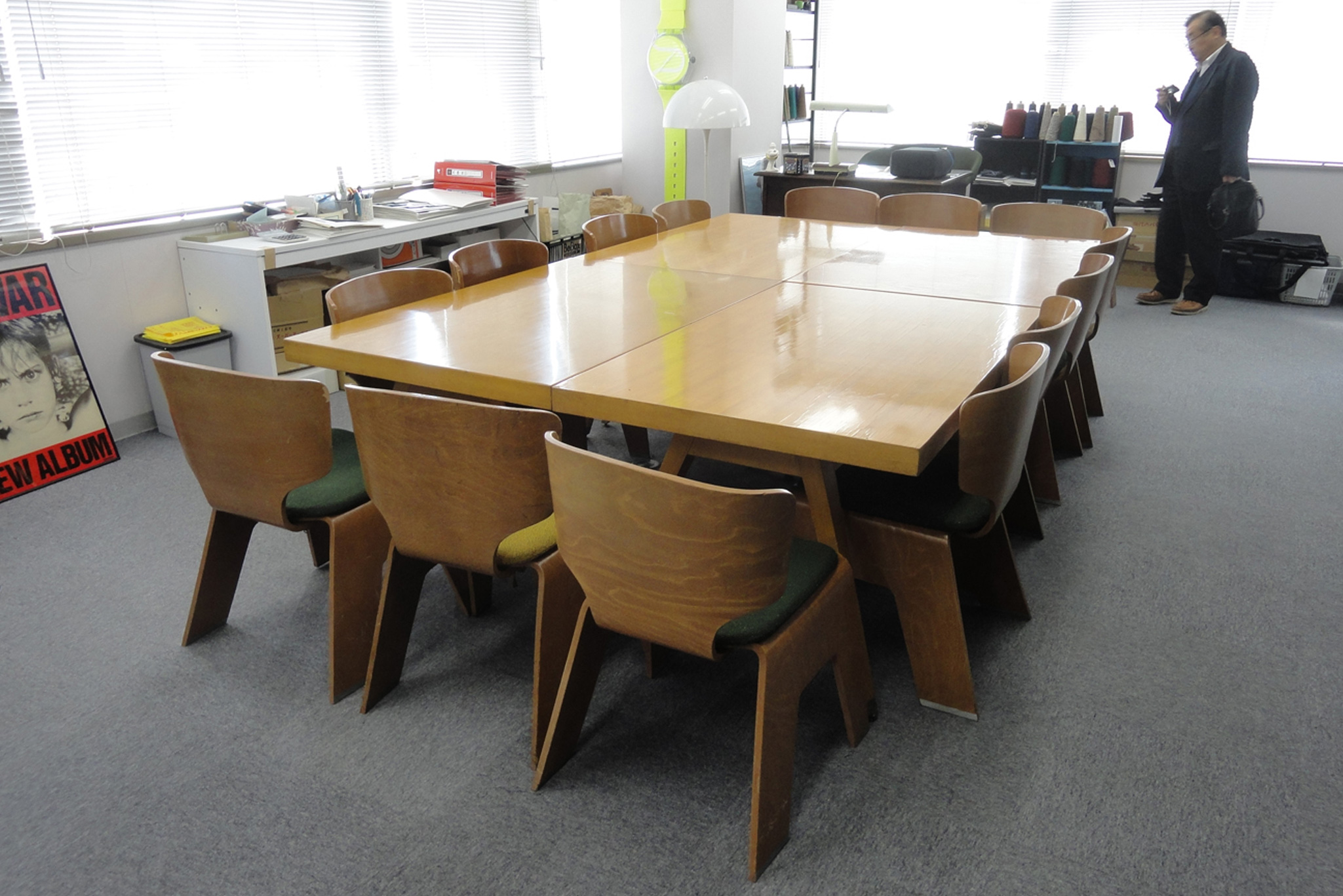
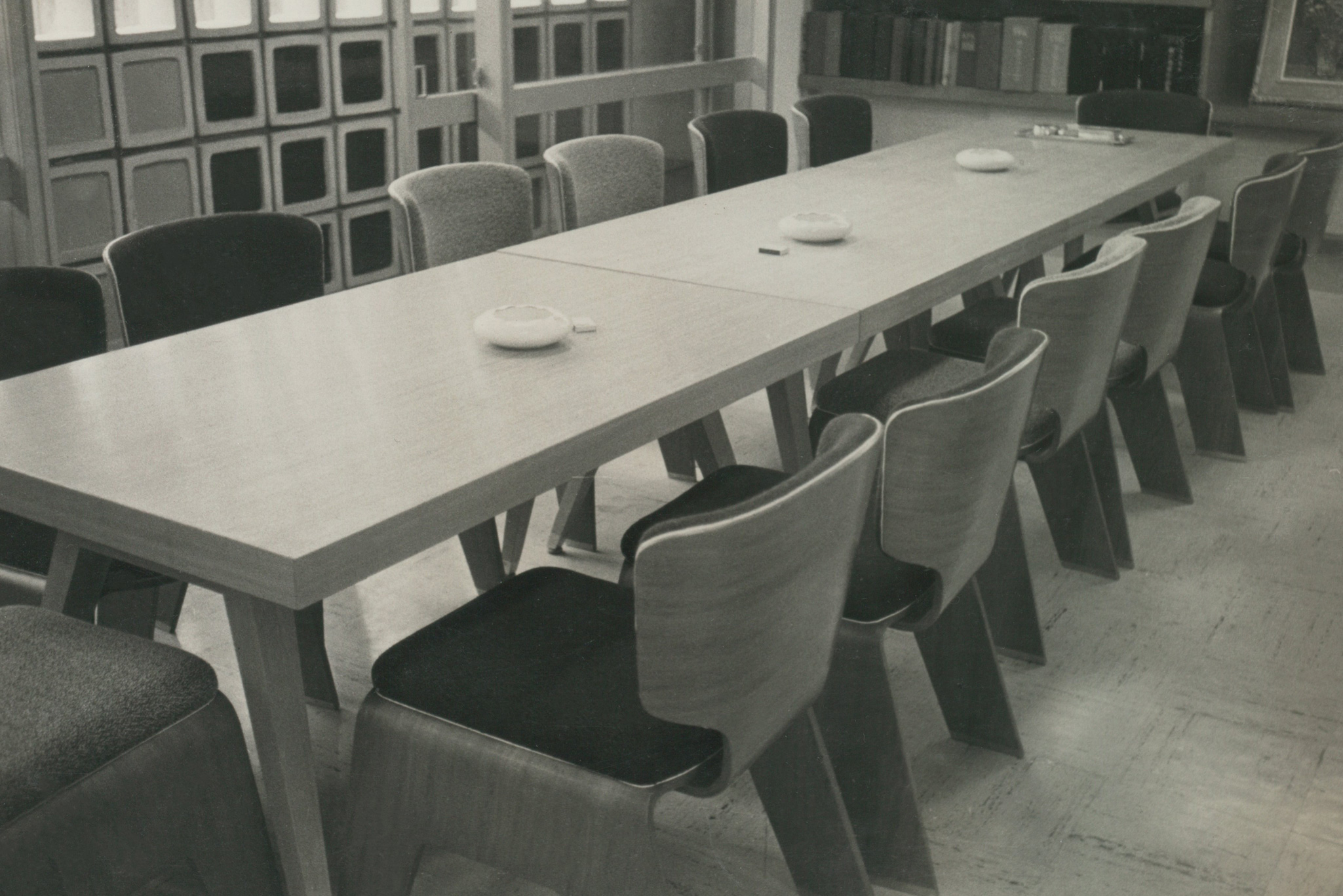
This dining table was designed by architect Kenzo Tange for Tendo Mokko, a highly influential furniture company founded by woodworkers in northern Japan in 1940. The table was part of Tange’s commission for the Sumi Memorial Hall in Bisai, one of his earliest furniture creations.
Amid postwar reconstruction and the expanding consumer culture of the 1950s and 1960s, Tendo Mokko collaborated with architects like Tange to produce furniture that complemented their buildings’ interiors and embodied a total aesthetic. The table, executed in wood and stone adapted to modern forms, references traditional Japanese design while embracing a minimalist modernism. Its sculptural quality reflects the integration of furniture and architecture in Tange’s vision.
Tange also designed a full line of furniture for Sumi Memorial Hall—including low tables, chairs, and armchairs in molded wood—characterized by minimal, decor-free forms rooted in Japanese tradition. This dining table exemplifies the seamless synthesis of modern concrete architecture with furniture that is both functional and sculptural.
About Kenzo Tange
Kenzo Tange (1913–2005) was a pioneering Japanese architect and urban planner whose work bridged traditional Japanese aesthetics with modernist principles. Born in Osaka in 1913, Tange studied architecture at the University of Tokyo, where he was influenced by both the International Style and the enduring elegance of traditional Japanese design. His career spanned more than six decades, during which he played a central role in shaping postwar Japanese architecture and urbanism.
Tange first gained international recognition for his design of the Hiroshima Peace Memorial Park (1949–1955), a project that demonstrated his ability to merge symbolic meaning with modernist form. This work established him as a leading voice in postwar reconstruction, emphasizing clarity, order, and a balance between monumentality and human scale. Other notable projects include the Yoyogi National Gymnasium for the 1964 Tokyo Olympics, renowned for its innovative suspension roof structure, the St. Mary’s Cathedral in Tokyo (1964–1967), and numerous urban masterplans including Tama New Town and the Okinawa Urban Plan.
Tange was also influential in furniture and interior design, collaborating with manufacturers such as Tendo Mokko to create minimalist, sculptural pieces that complemented his architectural projects. His furniture designs often reinterpret traditional Japanese forms through modern materials and techniques, emphasizing proportion, simplicity, and functionality. Among his earliest furniture works is the series designed for the Sumi Memorial Hall in Bisai (1957), including tables, chairs, and armchairs crafted in molded wood with a clean, minimal aesthetic.
Throughout his career, Tange received numerous awards, including the Pritzker Architecture Prize in 1987, and his work remains a touchstone for architects exploring the integration of cultural heritage, modernist ideals, and innovative engineering. He passed away in 2005, leaving a legacy that continues to influence both architecture and design globally.