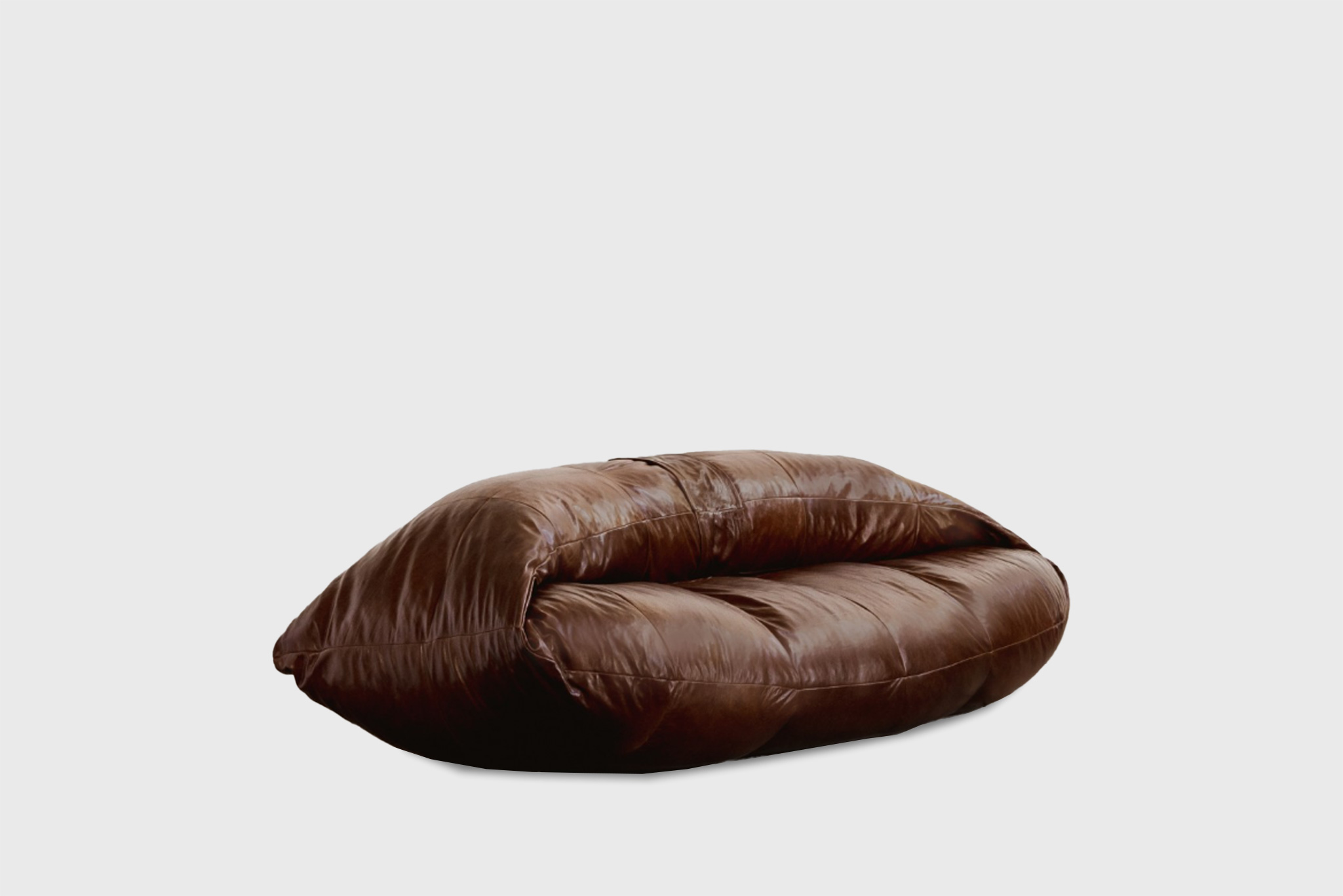
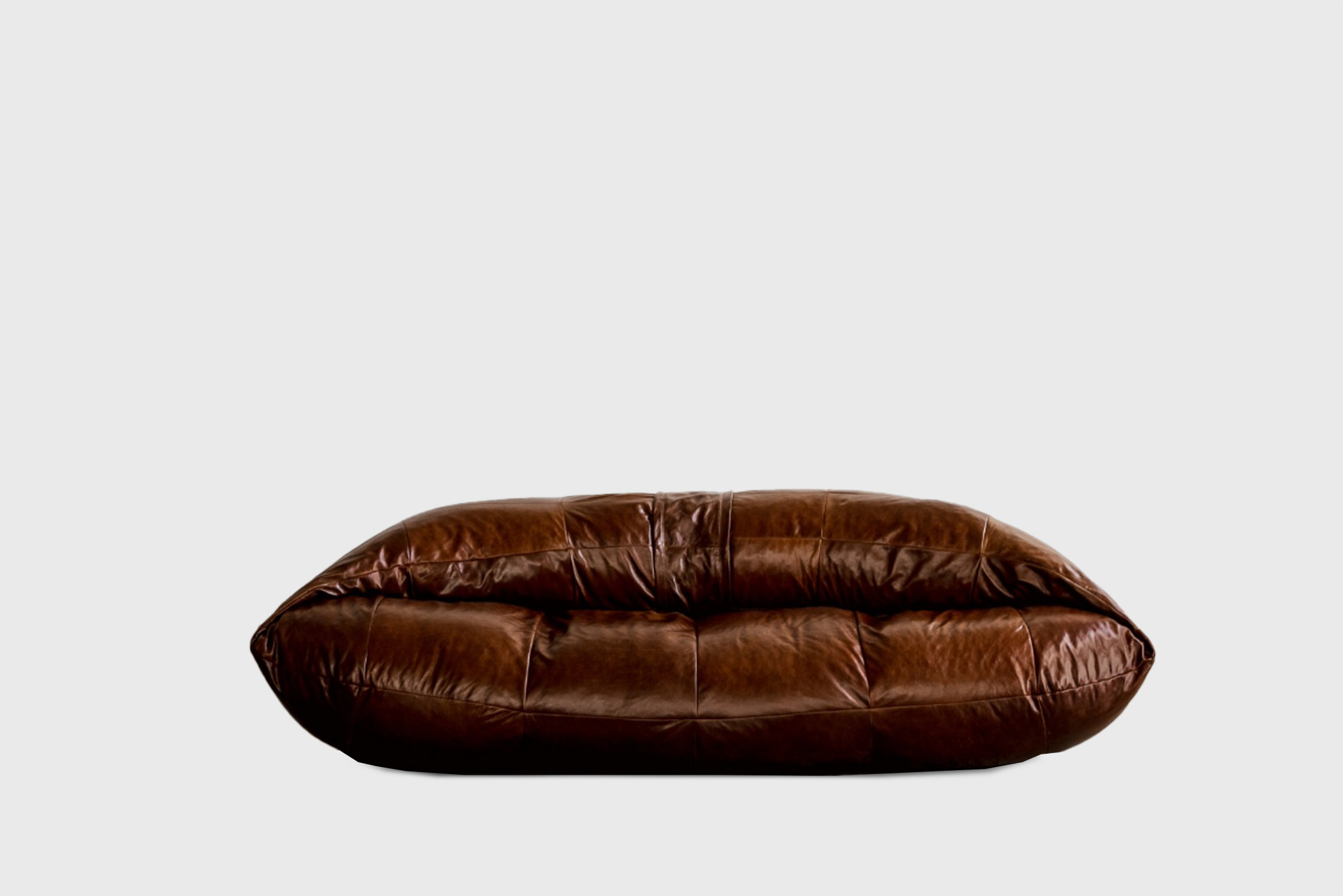
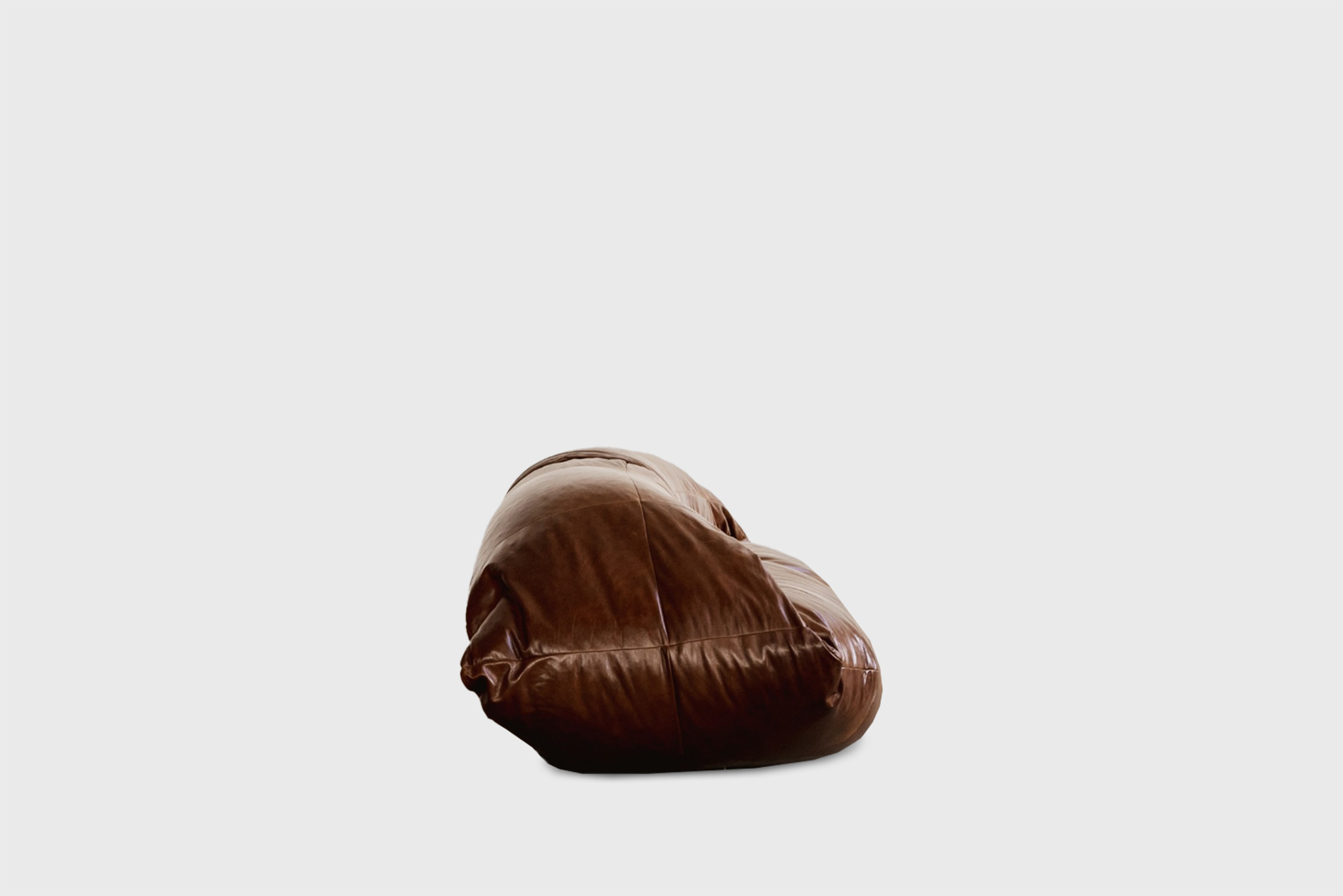
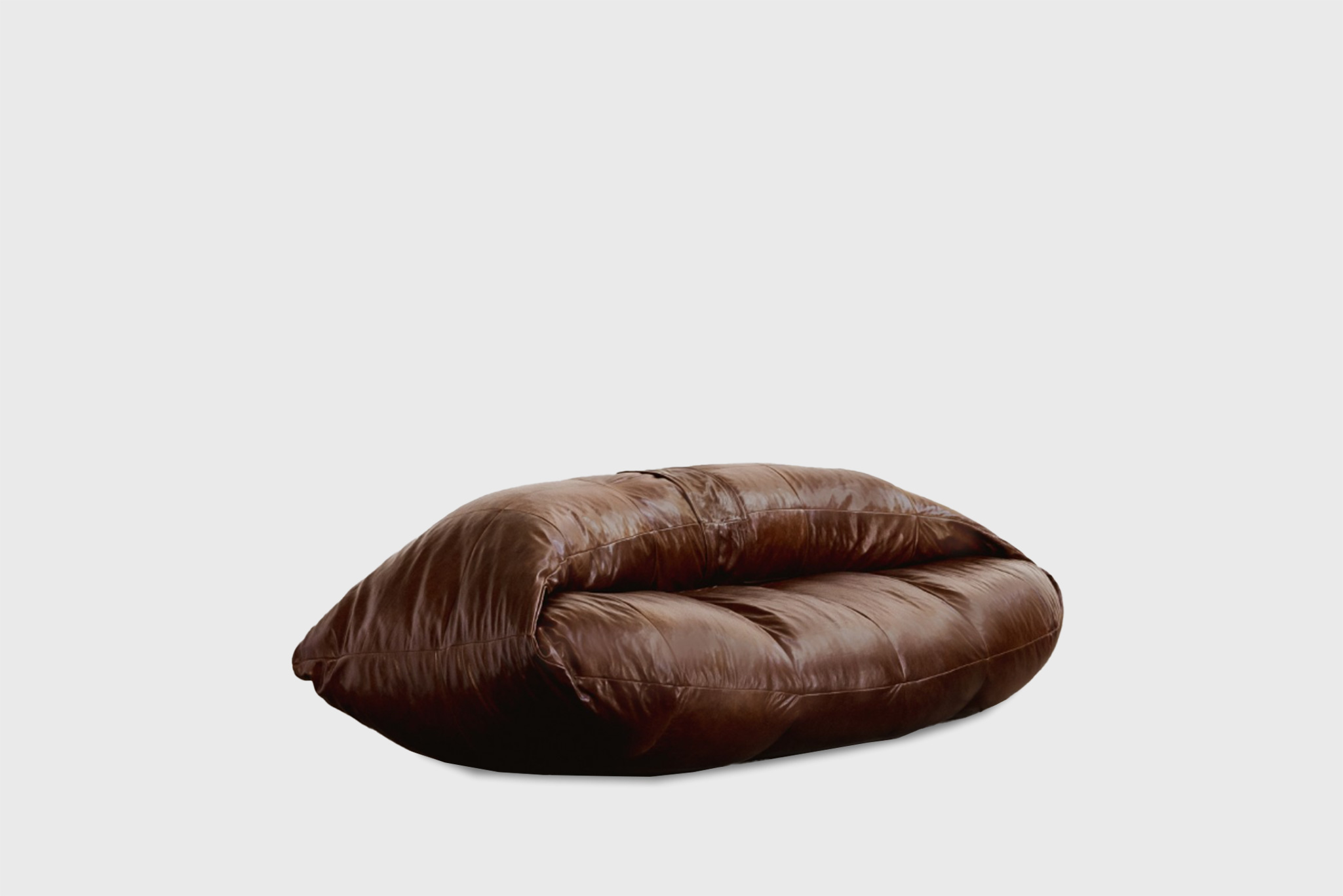
Sofa model "Croissant"
Manufactured by Atelier Raffel
France, 1970s
Leather
Measurements
260 × 100 × 78h cm
102,4 × 39,4 × 30,7h in
Seat height: 43 cm | 16,9 in
Provenance
Private collection, Italy
About
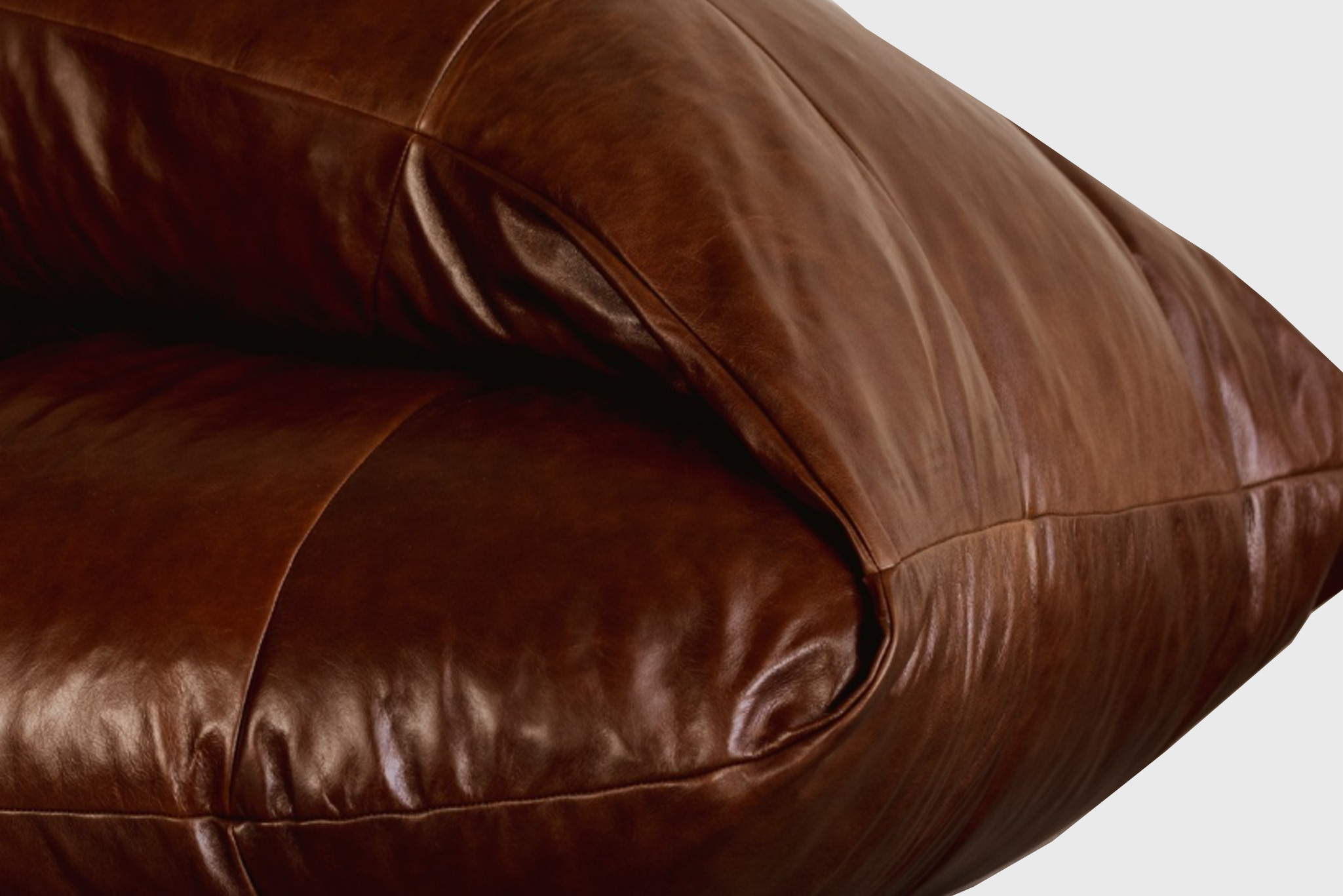
The "Croissant" sofa, designed by Raphael Raffel in the early 1970s, is an icon of postmodern French design. Its voluminous, pillow-like form is inspired by the curvature and comfort of a croissant, resulting in a bold sculptural shape that prioritizes softness, support, and flexibility. Handcrafted in France and upholstered in dark brown full grain leather, the sofa features a detailed patchwork construction with invisible seams and a concealed zipper system, allowing easy access to the internal foam structure.
Intended to accommodate up to three people, the sofa can be rotated to allow for various lounging postures, further reinforcing its emphasis on comfort and versatility. The model stands as a testament to Raffel’s experimental design ethos and his desire to blur the line between function and form.
Biography
Raphael Raffel (b. 1912 – d.2000) was a French interior designer and decorator whose avant-garde vision helped shape a lesser-known but highly distinctive facet of postwar European design. Born in 1912, Raffel established his atelier in Paris during a period of rapid cultural and aesthetic transformation. He began his career as a decorator but soon gained recognition for his innovative approach to furniture design, developing sculptural pieces that blurred the boundary between utility and expression.
His work is defined by bold experimentation with form and material. Eschewing conventional structures, Raffel embraced asymmetry, soft organic shapes, and voluminous forms that challenged traditional ideas of domestic comfort. During the 1960s and 70s, he produced a number of unique and limited-edition pieces, many of which were handcrafted in his own workshop. Among his most iconic creations is the "Croissant" sofa, a sensuous and enveloping design upholstered in leather, emblematic of his desire to create immersive environments that engaged both the body and the senses.
Raffel’s designs were often made to order, allowing for individual customization and a high level of artisanal detail. Despite working somewhat outside of the dominant design movements of his time, his work resonates with the radical softness and body-centric focus of contemporaries like Michel Ducaroy or Olivier Mourgue. His designs have been rediscovered in recent years by collectors, galleries, and scholars interested in postmodernism’s more experimental and tactile expressions.
Though he never achieved widespread fame, Raffel’s contributions to the design landscape of 20th-century France are increasingly being recognized for their originality, emotional depth, and commitment to material craftsmanship. His pieces remain rare and highly sought after today, prized for their sculptural quality and the quiet elegance of their execution.